Category Archives: global

New UN Decade on Ecosystem Restoration offers unparalleled opportunity for job creation, food security and addressing climate change

. . SUSTAINABLE DEVELOPMENT . .

A press release from the Food and Agriculture Organization of the United Nations

The UN Decade on Ecosystem Restoration, declared today [March 1] by the UN General Assembly, aims to massively scale up the restoration of degraded and destroyed ecosystems as a proven measure to fight the climate crisis and enhance food security, water supply and biodiversity.


Preparing trees for planting at a nursery in Senegal.

The degradation of land and marine ecosystems undermines the well-being of 3.2 billion people and costs about 10 per cent of the annual global gross product in loss of species and ecosystems services. Key ecosystems that deliver numerous services essential to food and agriculture, including supply of freshwater, protection against hazards and provision of habitat for species such as fish and pollinators, are declining rapidly.

“We are pleased that our vision for a dedicated Decade has become reality,” said Lina Pohl, Minister of Environment and Natural Resources of El Salvador, a regional restoration leader. “We need to promote an aggressive restoration program that builds resilience, reduces vulnerability and increases the ability of systems to adapt to daily threats and extreme events.”

Restoration of 350 million hectares of degraded land between now and 2030 could generate USD 9 trillion in ecosystem services and take an additional 13-26 gigatons of greenhouse gases out of the atmosphere.

“The UN Decade on Ecosystem Restoration will help countries race against the impacts of climate change and biodiversity loss,” said José Graziano da Silva, Director-General of the Food and Agriculture Organization of the United Nations (FAO). “Ecosystems are being degraded at an unprecedented rate. Our global food systems and the livelihoods of many millions of people depend on all of us working together to restore healthy and sustainable ecosystems for today and the future.”

(article continued in right column)

Question for this article:


Despite the vested interests of companies and governments, Can we make progress toward sustainable development?

(Article continued from the left column)

“UN Environment and FAO are honored to lead the implementation of the Decade with our partners,” said Joyce Msuya, Acting Executive Director of the UN Environment Programme. “The degradation of our ecosystems has had a devastating impact on both people and the environment. We are excited that momentum for restoring our natural environment has been gaining pace because nature is our best bet to tackle climate change and secure the future.”

The Decade, a global call to action, will draw together political support, scientific research and financial muscle to massively scale up restoration from successful pilot initiatives to areas of millions of hectares. Research shows that more than two billion hectares of the world’s deforested and degraded landscapes offer potential for restoration.

The Decade will accelerate existing global restoration goals, for example the Bonn Challenge, which aims to restore 350 million hectares of degraded ecosystems by 2030 – an area almost the size of India. Currently, 57 countries, subnational governments and private organizations have committed to bring over 170 million hectares under restoration. This endeavour builds on regional efforts such as the Initiative 20×20 in Latin America that aims to restore 20 million hectares of degraded land by 2020, and the AFR100 African Forest Landscape Restoration Initiative that aims to bring 100 million hectares of degraded land under restoration by 2030.

Ecosystem restoration is defined as a process of reversing the degradation of ecosystems, such as landscapes, lakes and oceans to regain their ecological functionality; in other words, to improve the productivity and capacity of ecosystems to meet the needs of society. This can be done by allowing the natural regeneration of overexploited ecosystems, for example, or by planting trees and other plants.

Ecosystem restoration is fundamental to achieving the Sustainable Development Goals, mainly those on climate change, poverty eradication, food security, water and biodiversity conservation. It is also a pillar of international environmental conventions, such as the Ramsar Convention on wetlands and the Rio Conventions on biodiversity, desertification and climate change.

Currently, about 20 per cent of the planet’s vegetated surface shows declining trends in productivity with fertility losses linked to erosion, depletion and pollution in all parts of the world. By 2050 degradation and climate change could reduce crop yields by 10 per cent globally and by up to 50 per cent in certain regions.     

UN event: Women’s Equality and Empowerment Advances the Culture of Peace

FREE FLOW OF INFORMATION

Concept note from calendar of side events of the Commission on the Status of Women published by UN Women

Meeting date: March 21st, 2019 | Time: 10.00 AM to 11.15 AM
Venue: Conference Room-A, UNHQs

The United Nations came into being at the end of the devastating World War II as a forum for resolving conflicts peacefully between nations and for promoting sustainable peace and development in all parts of the world. Over the years, the UN has discussed many ways and means to reach its broader objectives of peace, human rights and sustainable development. For that, its Member States have agreed on some consensus frameworks and instruments to promote human rights and sustainable peace. One such remarkable instrument is UN General Assembly’s decision on the concept of “Culture of Peace” taken in 1999. Year 2019 will observe the 20th anniversary of that landmark decision.


Photo of event from Bangladesh News USA

Since wars begin in the minds of men, it is in the minds of men that the defenses of peace must be constructed. These famous words were codified in UNESCO’s constitution and defined the mandate that peace not only is the absence of armed conflict or war. After nine-months long intense negotiations among all UN Member States, on 13 September 1999, the General Assembly adopted, by consensus and without reservation, the seminal resolution 53/243 on the ‘Declaration and Programme of Action on a Culture of Peace’ [that had been drafted and submitted by UNESCO – editor’s note].

(continued in right column)

Question(s) related to this article:

What is the United Nations doing for a culture of peace?

(continued from left column)

The Declaration and Programme of Action on a Culture of Peace tried to provide a pathway following which international community could develop a mindset and modes of behaviour that will not allow conflict, violence and hatred to undermine the overarching goals of sustainable peace. Developing a culture of peace requires a positive, dynamic participatory process where dialogue is encouraged among various stakeholders, to find out root causes of conflicts and through mediation and moderation as well as in a spirit of mutual understanding and cooperation, solve those conflicts to advance peace. An essential foundation of the culture of peace is inclusivity, equality and solidarity of all peoples, races, religions, class, and importantly, gender. Gender inequality, conflict and fragility are key challenges to sustainable peace. Peace is inextricably linked to equality between women and men. Women’s equality and empowerment is, therefore, critical to advancing the culture of peace.

This very idea resonates both in General Assembly and the Security Council. In 2000, the important role of women in peace and security was emphasized in the Council’s Resolution 1325 on Women Peace and Security (UNSCR 1325) which asked for full and equal involvement of women at all levels for the maintenance and promotion of peace and security. Today, despite the consensus agreement by the international community, women still face many challenges and inequalities that prevent their representation and participation in all stages of life.

Women bring a new breadth, quality and balance of vision to our common efforts to move away from the cult of war and towards the culture of peace. Increasing gender equality has positive effects on food security, extremism, health, education and numerous other key global concerns. Women’s equality makes our planet safe and secure. Empowering women and girls and strengthening gender equality prepare the foundation of inclusive societies, sustainable peace and development. Greater involvement of women in decision making be it in conflict or peace time will bring different perspectives and priorities than men thereby changing the nature of the dialogue, an essential element in advancing the culture of peace.

Objectives

– Discuss experiences and lessons learned on empowering women in all stages of socio-economic and political lives;

– Identify challenges that prevent women from engaging and participating in processes hindering their social inclusion;

– Discuss the role and contribution of women in promoting the culture of peace;

Greta Thunberg—Swedish Teen who Inspired School Climate Strikes—Nominated for Nobel Peace Prize

. . SUSTAINABLE DEVELOPMENT . .

An article from Ecowatch

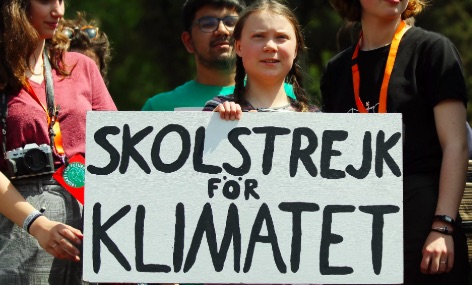
Greta Thunberg, the Swedish teenager who jump started the climate strike movement, has been nominated for the Nobel Peace Prize. The news comes as Thunberg is helping to organize a massive global school strike March 15 that is expected to involve at least 1,659 towns or cities in 105 countries, The Guardian reported.


(click on image to enlarge)

“We have proposed Greta Thunberg because if we do nothing to halt climate change it will be the cause of wars, conflict and refugees,” Norwegian Socialist MP Freddy André Øvstegård said, The Guardian reported. “Greta Thunberg has launched a mass movement which I see as a major contribution to peace.”

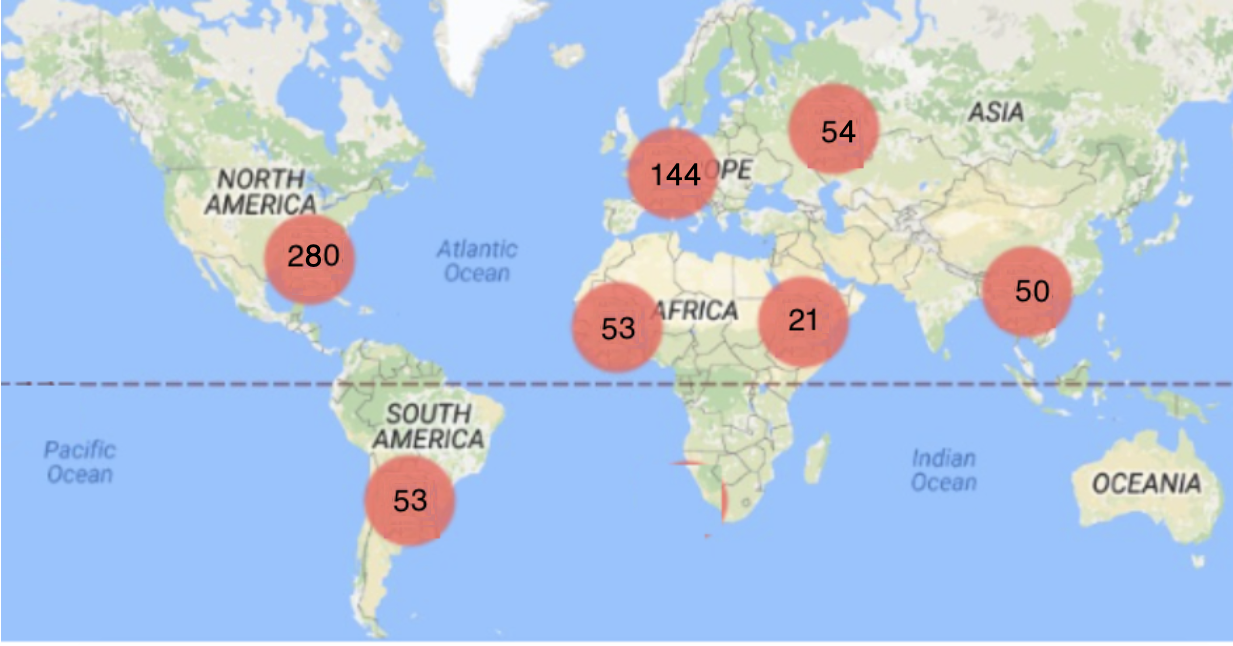
Øvstegård was one of three members of members of Norway’s Socialist Left Party to nominate Thunberg, The Associated Press reported. Peace Prize nominations can come from anyone who meets the criteria, including national government officials, former winners and some academics. Nominations for the 2019 prize were due by February 1, and the winner will be announced in October and awarded in December. There are 301 nominations for the 2019 prize, including 223 individuals and 78 groups, according to the Nobel Prize website.

If Thunberg won, the 16-year-old would be the youngest winner ever and the second after 2007 co-winners former U.S. Vice President Al Gore and the Intergovernmental Panel on Climate Change to be honored for work on climate change, New Scientist reported. The current youngest winner is Malala Yousafzai, who was awarded the prize at age 17 in 2014.

“Honoured and very grateful for this nomination,” Thunberg said in a tweet.

(continued in right column)

Question for this article:


Are we seeing the dawn of a global youth movement?

(continued from left column)

Thunberg started a movement with a one-woman school strike in front of Swedish parliament last August. Thunberg had been part of a group inspired by the Parkland students’ movement against gun violence who wanted to do something similar around climate change. When the group could not agree on a plan, Thunberg was motivated by wildfires in Sweden’s Arctic region and a record northern European heat wave to go it alone, according to a recent profile in The Guardian.

“I painted the sign on a piece of wood and, for the flyers, wrote down some facts I thought everyone should know. And then I took my bike to the parliament and just sat there,” she said. “The first day, I sat alone from about 8.30am to 3pm – the regular schoolday. And then on the second day, people started joining me. After that, there were people there all the time.”

Her action inspired student strikes from Australia to Brussels, and earned her invitations to speak at the COP24 talks in Katowice, Poland in December 2018 and at Davos this year, where she excoriated world leaders for their lack of action.

“Our civilization is being sacrificed for the opportunity of a very small number of people to continue making enormous amounts of money,” she said at the Poland conference, as USA Today reported.

Thunberg told The Guardian that she suffered from depression when she was younger, partly because of climate change and the lack of action it seemed to inspire. It was talking to her parents about the issue and having them listen to her concerns seriously that helped her realize she could persuade others, too.

“That’s when I kind of realised I could make a difference. And how I got out of that depression was that I thought: it is just a waste of time feeling this way because I can do so much good with my life. I am trying to do that still now,” she said.

Friday’s upcoming strike is proof that Thunberg’s activism has had an impact. The Guardian said it was likely to be one of the largest environmental protests in world history.

However, Thunberg is focused on her goal of actually seeing governments take adequate climate action, and will strike every Friday outside the Swedish parliament until her country’s policies match up with the Paris agreement. She told New Scientist that she was frustrated with some of the responses the strikes had generated.

“They talk about our age, our looks and so on. The emissions are still rising and that is all that matters. Nothing has happened, that is crucial to remember,” she said.

Amnesty International: After Christchurch, how to beat Islamophobia and hate

… . HUMAN RIGHTS … .

An article by Osama Bhutta, Communications Director of Amnesty International

Racists and bigots believe that diverse societies don’t work. Frustrated that their howling at the moon wasn’t enough, they’re now picking up weapons in an attempt to prove themselves right. We can’t keep expressing shock and then moving on until the next outrage. We watched in astonished horror last year when a Nazi entered a US synagogue and shot dead 11 worshippers. And yet after the initial alarm, the world carried on like before.

These haters are destabilising our societies and concerted action needs to be taken before things get even worse.

To be clear, this isn’t just about western societies. Many Muslims see Christchurch as a small part of a global rising tide of Islamophobia perpetrated by insecure majorities. Let’s take a whistle-stop world tour from east to west.

In Myanmar, decades of hate speech and persecution culminated in 2017 with over 700,000 predominantly Muslim Rohingya having to flee to neighbouring Bangladesh after a vicious campaign of ethnic cleansing. The implicated military in Myanmar has been given plenty of diplomatic cover by China, whose authorities are currently holding up to 1 million Uighurs, Kazakhs and other predominantly Muslim ethnic groups   in euphemistically titled “transformation-through-education” camps in Xinjiang. It’s one of the stories of our age, subjugation on an epic scale.

India’s historic multi-faith character has taken a hit under the leadership of Narendra Modi, a man who was chief minister during the 2002 Gujarat pogrom, which resulted in the deaths of hundreds of Muslims. His brand of Hindu nationalism has led to divisiveness rather than unity, leading to growing phenomena such as “cow-related violence”.

Many politicians across Europe have been gaining ground by peddling anti-Muslim messages. France’s Marine Le Pen compared Muslims spilling onto pavements from packed mosques after Friday prayers to Nazi occupiers. A key message of the Brexit campaign was the “threat” of Turkey joining the EU. Arch-Brexiteer Nigel Farage once accused British Muslims of having “split loyalties”.

(Article continued in right column)

Question(s) related to this article:

What is the state of human rights in the world today?

(Article continued from left column)

The biggest beneficiary of ballot box Islamophobia though is Donald Trump with his campaign promise of a “total and complete shutdown of Muslims entering the United States”. He said that this ban would stay in place until the country’s representatives “can figure out what the hell is going on”. Presumably, despite all his intelligence, he’s still not got a grasp of it. Trump arrived on the back of a generation of Islamophobia which went hand-in-hand with the controversial wars in Afghanistan and Iraq, which let us not forget, resulted in the still barely acknowledged deaths of hundreds of thousands of Muslims.

When the global picture is this grim, it’s little wonder that many Muslims feel embattled. Especially when they are also being told that despite these tragic numbers, they are actually the aggressors.

This is not, however, a religious conflict. The millions of Muslims who have lost their lives, been put in detention, or repressed in other multifaceted ways, have not been treated this way as part of a religious war. These are not the new crusades. The perpetrators are too diverse and too disparate for this to be case. So are the victims. Christians are also repressed in China, Pakistan and Indonesia. Christian and Muslim Palestinians face violence and discrimination every day in the context of Israel’s occupation of their territory. France and Germany reported disturbingly sharp rises in anti-Semitism last year; who can forget the distressing images of swastikas daubed across graves in Jewish cemeteries in Herrlisheim and Quatzenheim in eastern France? In light of the evidence,  a ‘War on Islam’ thesis doesn’t add up.

This is about how nation states treat their minorities. In this respect, Muslim-majority states are also often found wanting. Infamously there are no churches in Saudi Arabia. Given these circumstances, it was no surprise to see Saudi Arabia’s crown prince giving endorsement  to China’s treatment of Muslim minorities in Xinjiang.

Harmony isn’t going to be achieved if only we had more interfaith dialogue and more mosque open days. Tackling this threat effectively requires a radical rethink about how we talk about freedom, equality and respect for all.

The strength of a nation lies in how well you treat all your people. It’s a mark of strength when you celebrate everyone who lives alongside you. We move forward when everyone has the freedom to live their lives as they wish, to contribute to their society as they see fit, and to be the people they want to be.

I grew up in Scotland and am proud of my nationality and my faith. We used to say that it takes many different coloured threads to make tartan, just as it takes many different types of people to make Scotland.  Every culture around the world must find their language to bring people together, rather than to drive them apart. In 1945, the Nazis were defeated through war. This time, we’ll beat the haters through the force of our love, compassion and shared humanity.

Voices of young climate action activists ‘give me hope’ says UN chief

. . SUSTAINABLE DEVELOPMENT . .

An article from UN News

In the wake of Friday’s demonstrations by schoolchildren across the world against climate change inaction, the UN Secretary-General has said he understands their fears, but is hopeful for the future.


(click on image to enlarge)

In a direct message to the youth activists who took to the streets, UN chief António Guterres said that he understood the anxiety and “fear for the future” behind their actions but added that “humankind is capable of enormous achievements. Your voices give me hope.”

Writing in an opinion piece for The Guardian, Mr. Guterres said that the more he witnessed the “commitment and activism” of young people who were fed up with the pace of the international response to global warming, “the more confident I am that we will win. Together, with your help and thanks to your efforts, we can and must beat this threat and create a cleaner, safer, greener world for everyone,” he added.

(continued in right column)

Question for this article:


Are we seeing the dawn of a global youth movement?

(continued from left column)

“These schoolchildren have grasped something that seems to elude many of their elders”, he said, adding that “we are in a race for our lives, and we are losing. The window of opportunity is closing; we no longer have the luxury of time, and climate delay is almost as dangerous as climate denial.”

The Secretary-General acknowledged that his older generation “has failed to respond properly to the dramatic challenge of climate change.  This is deeply felt by young people. No wonder they are angry.”

Global emissions are reaching record levels, and continuing to rise, he said, adding that concentration of carbon dioxide in our atmosphere is the highest it has been in 3 million years.

“The last four years were the four hottest on record, and winter temperatures in the Arctic have risen by 3°C since 1990,” he added, noting also rising sea levels, the death of coral reefs, and a growing threat to human health worldwide, as made clear in the UN’s Global Environmental Outlook, published this week.

The historic 2015 Paris Agreement  signed by more than 190 countries to keep global emissions well below 2°C, “itself is meaningless without ambitious action,” said the UN chief.

“That is why I am bringing world leaders together at a Climate Action Summit  later this year. I am calling on all leaders to come to New York in September with concrete, realistic plans to enhance their nationally determined contributions by 2020, in line with reducing greenhouse gas emissions by 45 per cent over the next decade, and to net zero by 2050.”

The latest analysis shows that if we act now, we can reduce carbon emissions within 12 years and limit global warming to 1.5°” said Mr. Guterres. “But if we continue along our current path, the consequences are impossible to predict.”
 

“Momentum is building:, he added, “people are listening and there is a new determination to unleash the promise of the Paris Agreement. The Climate Summit must be the starting point to build the future we need.”

Global Climate Strike in Pictures: Millions of Students Walk Out to Demand Planetary Transformation

. . SUSTAINABLE DEVELOPMENT . .

An article by Julia Conley in Common Dreams reprinted according to a Creative Commons Attribution-Share Alike 3.0 License

All over the planet on Friday, millions of children and young adults walked out of their classrooms in an unprecedented collective action to demand a radical and urgent shift in society’s energy and economic systems in order to avert the worst impacts of human-caused global warming and climate change.

In the United Kingdom, thousands of young people were among the millions worldwide who called on their governments to declare a climate emergency and take action to stop the climate crisis. (Photo: Chris J. Ratcliffe/Getty Images)

With demonstrations in more than 100 countries and tens of thousands of schools, the worldwide Climate Strike is the largest since 16-year-old Greta Thunberg sparked a wave of increasingly huge marches and walkouts with her one-person strike outside the Swedish Parliament last year.  

Since then, Thunberg has admonished and appealed to world leaders at COP24 and Davos, successfully securing a commitment from the European Union to fight the climate crisis while inspiring strikes all over the world. European students began holding weekly walkouts in Brussels in December, while Australian, and German young people are among those who have organized strikes as well. 

“We have been born into this world and we have to live with this crisis, and our children and our grandchildren,” Thunberg told a crowd of her peers in Stockholm in Friday. “We are facing the greatest existential crisis humanity has ever faced. And yet it has been ignored. You who have ignored it know who you are.”

In Pictures:


People hold up signs and vent their frustrations during a Climate Change Awareness rally at Sydney Town Hall on March 15, 2019 in Sydney, Australia. The protests are part of a global climate strike, urging politicians to take urgent action on climate change. (Photo by Don Arnold/Getty Images)


The scene on Westminster bridge as school children block traffic and march across the river on March 15, 2019 in London, England. Thousands of pupils from schools, colleges and universities across the UK will walk out today in the second major strike against climate change this year. Young people nationwide are calling on the Government to declare a climate emergency and take action. Similar strikes are taking place around the world today including in Japan and Australia, inspired by 16-year-old Greta Thunberg who criticised world leaders at a United Nations climate conference. (Photo by Guy Smallman/Getty Images)


Environmentalists and concerned citizens gather and hold a picket to voice out concern on environmental and climate issues on March 15, 2019 in Quezon city, Philippines. Students around the world took to the streets on March 15 to protest a lack of climate awareness and demand that elected officials take action on climate change. Inspired by Greta Thunberg, the 16-year-old environmental activist who started skipping school since August 2018 to protest outside Sweden’s parliament, school and university students worldwide have followed her lead and shared her alarm and anger. (Photo by Jes Aznar/Getty Images)


Greta Thunberg participates in a strike outside of the Swedish parliament house, Riksdagen, in order to raise awareness for global climate change on March 15, 2019 in Stockholm, Sweden. (Photo by MICHAEL CAMPANELLA/Getty Images)


Schoolchildren take part in the Global Climate Strike For Future on March 15, 2019 in Rome, Italy. Today, thousands of students took part in the Student Global Climate Strike to demand for urgent measures and concrete action to combat climate change, the global warming and to protect our future. The strike is inspired by Greta Thunberg, a Swedish school girl who in 2018 went on school strike to make adults and lawmakers take climate change action. (Photo: Antonio Masiello/Getty Images)


@Greenpeace #FridaysForFuture #climatestrike #schoolstrike4climate Uganda it’s happening

(continued in right column)

Question for this article:


Are we seeing the dawn of a global youth movement?

(continued from left column)


@MikeHudema LOOK AT THE SIZE OF THE MARCH IN BRUSSELS!!! Young people are rising in 2052 places in 123 countries on every continents.


@EricHolthaus Sign in St. Paul Minnesota:
”If you don’t act like adults, we will.”#climatestrike #FridaysForFuture

@Greenpeace Officially more than 150,000 students on #ClimateStrike in Montreal, the number just came in!! #FridaysForFuture #schoolstrike4climate #YouthStrike4Climate


@lifelearner47 Oh boy, look what happened in Lisbon, Portugal.#FridaysForFuture #ClimateStrike


@350 In Kyiv, Ukraine, 100+ students appealed to Prime Minister Volodymyr Groisman and the govt to recognize climate change as one of the most pressing nationwide problems and to take appropriate action. #Climatestrike took place in six cities in Ukraine.
Photos: Olena Angelova


@MikeHudema HUGE! crowd out in #Barcelona as far as the eye can see. Young people are rising in 2052 places in 123 countries on every continents.


@MauroAstete Mientras algunos discuten por control de identidad a menores, #AdmisiónJusta u otras pequeñeces, los jóvenes solo piden tener un futuro para vivir ¿Se lo daremos? @sebastianpinera @MMAChile @CarolaSchmidtZ #FridaysForFuture #Santiago #climatechange


Oladosu Adenike @the_ecofeminist Its my 16 weeks
”Our earth is on fire”#ClimateStrike#FridaysForFuture in Nigeria.
Now is the time for us to actions.


@AntoineTifine We are thousands of people in #Paris for the global strike for climate ! #Youth4Climate #FridayForFuture @GretaThunberg @FYEG @YouthFrance


@munwarenj #climatestrike #fridaysforfuture #Bangladesh #barishal

(Thank you to Janet Hudgins, the CPNN reporter for this article.)

United Nations: Young People Discuss Change at CSW62 Youth Dialogue

FREE FLOW OF INFORMATION

An article from UN News

Building on the successes and lessons learnt from the Youth Forums of CSW60 and CSW61, the Youth Dialogue at CSW62 held on 17 March 2018 provided a space for cross-regional networking among young people engaged in various areas of gender and social justice. Following the theme of the Commission of the Status of Women, the Youth Dialogue at CSW62 provided a stage for young women, girls, trans, intersex and gender non-conforming youth from rural areas to raise their voices, address the challenges and opportunities in achieving gende equality and empowering their peers.

The opening of the Youth Dialogue was attended by Executive Director of UN Women Ms. Phumzile Mlambo-Ngcuka and moderated by the Secretary-General’s Envoy on Youth Ms. Jayathma Wickramanayake.

(Article continued in right column)

Question for this article

Youth initiatives for a culture of peace, How can we ensure they get the attention and funding they deserve?

What is the United Nations doing for a culture of peace?

(Article continued from left column)

The Youth Envoy framed the conversation by emphasizing that “We are the largest generation of young people that the world has ever seen. We are 1.8 billion strong and if we are to see transformational change, then it is our generation, that can make that change happen.” By sharing their personal stories, the panel of youth activist gave concrete examples of creative ways to open doors and thereby highlighted how young people mobilize to make change in their communities every day.
More than 300 young people participated in the Youth Dialogue, which provided a space to exchange ideas on how young woman and girls from rural areas can be increasingly involved in addressing issues that directly affect them  such as climate change, health, land rights and environment, education, gender-based violence, child marriage, economic justice, and media and technology. With the principle of leaving no one behind as an overarching theme for the conversation, the Youth Dialogue also included young people from various marginalized and vulnerable groups, such as persons with disabilities, indigenous communities and communities in conflict and post-conflict settings.

Based on a series of online youth consultations and break-out sessions during the Dialogue, a set of recommendations to policy makers were developed on how to better include the voices of young women and girls from rural areas in the implementation of the Sustainable Development Goals. Among these were specific recommendations to provide accessible education to enhance skills development for young girls in rural areas; strengthen laws to prevent and respond to all forms of gender-based violence; implement progressive legislation that addresses the gender pay gap; improving connectivity in rural areas to bridge the existing digital gap; and investing in quality and inclusive youth-friendly healthcare, including mental health and sexual and reproductive health and rights services in rural areas.

World animal protection: Five amazing Sea Warrior women tackling ghost gear on a global scale

. . SUSTAINABLE DEVELOPMENT . .

An article from World Animal Protection

Five sea warriors – women from different corners of the globe are leading our work to tackle the problem of ghost gear in our oceans.


Left to right: Chris Dixon, Elizabeth Hogan and Ingrid Giskes

*Note: While job titles and roles may have changed, we continue to applaud and celebrate the work of these five inspiring women.*

This remarkable group of women – and their colleagues across the world – are fighting together to stop the unnecessary slow and painful deaths of millions of animals.

Every year, more than 100,000 whales, dolphins, seals and turtles are caught in ‘ghost gear’ – abandoned, lost and discarded fishing nets, lines and traps which can take up to 600 years to decompose.

A staggering 640,000 tons of fishing equipment is left in our oceans each year. The vast majority of ghost gear is made of plastics that take centuries to degrade.

Animals caught in this incredibly durable fishing gear then suffer a prolonged and painful death, usually suffocating or starving to death over several months. Devastating reports show that over 817 species of marine life are affected by this marine litter. Some lost nets drifting in the oceans are enormous – far bigger than football pitches. The nets drift stealthily under the surface trapping and killing marine life under the surface.

Lynn Kavanagh is our Oceans and Wildlife Campaign Manager and is based here in Canada.

One of the most exciting projects Lynn was involved in for the Sea Change campaign was working to remove a 25-year-old purse seine net situated near Pender Island, BC. The derelict net had been in the same location for many years where it killed large numbers of marine animals. Lynn’s team removed a whopping 4,600 pounds of deadly netting.

Elizabeth Hogan works for World Animal Protection in the United States, where she specializes in marine wildlife entanglement, reducing marine debris, working on whaling policy and wildlife in captivity.

For the last five years, she has researched the impact of derelict fishing gear on marine mammals and worked on establishing rescue networks and protocols for entangled marine life.

Elizabeth is a contributing author to two books on corporate social responsibility. She has a degree in Foreign Service from Georgetown University and a dual Master of Science in Marine & Coastal Natural Resources as well as a Master of Science in Sustainable Development from the University for Peace in Costa Rica and American University in Washington, DC.

(continued in right column)

Question for this article:

What is the relation between the environment and peace

Do women have a special role to play in the peace movement?

(continued from left column)

Elizabeth recently traveled to Alaska on a mission to rescue and free entangled seals and sea lions along the Alaskan coastline, an area where animals are especially vulnerable to entanglement.

Ingrid Giskes leads the global Sea Change Campaign at World Animal Protection. Originally from Belgium, she has worked for the organization for more than six years and is now based in Sydney, Australia.

On any one day, Ingrid could be talking to governments at the United Nations, working with companies such as Young’s Seafood on corporate social responsibility, and meeting with generous supporters.

Ingrid has worked on projects all over the world, but the start of a project in Indonesia earlier this year was a highlight. Ingrid went to Jakarta with an idea of what a project on gear marking could look like but developed the actual project proposal with local partners over several days to ensure it would be practical and sustainable. Hearing about the realities of the local people, considering their livelihoods and food security was eye opening.

Ingrid previously worked for Amnesty International on refugee issues after a stint of studying and working in Hangzhou, China.

Ingrid lives in a cottage next to the beach and is a keen swimmer, runner and snorkeler – the ocean and the life within it, inspires her every day.

Christina Dixon is based in London and is World Animal Protection’s Oceans Campaign Manager. Chris has worked on a huge number of projects to help remove ghost gear from the oceans.

From joining a dive vessel in Wales to remove ghost gear, writing a proposal for a project in Scotland to map and recover lost gear, and organizing meetings with seafood companies to talk about how addressing ghost gear can be beneficial to their supply chains, Chris’ job is varied.

Her most inspiring trip was working with a team of divers in Scapa Flow in Orkney, Scotland where she spent five days eating, sleeping and working on a boat at sea to problem solve the issue of lost gear collected on the WW2 wrecks in Scapa Flow. The project is now entering its third year and a staggering amount of gear has been removed.

When not saving whales and dolphins and campaigning at the United Nations, Chris plays bass in two punk bands and is a roller derby athlete, hoping to compete in the world cup next year.

Chiara Vitali is the wildlife campaigner for our UK office. Chiara has been passionate about animal welfare since starting her first petition at the age of 11 against the fur industry in Italy, where she grew up. Chiara spends lots of time with the amazing people who are working on the ground at the local level to remove ghost gear from the sea, where they rescue entangled animals and prevent more gear from ending up in the oceans.

One of Chiara’s most rewarding field trips was a visit to a Cornish wreck off the coast of Penzance where she helped retrieve a huge trawler net that would have killed many animals over the next few hundred years.

(Thank you to Janet Hudgins, the CPNN reporter for this article.)

Photos: International Women’s Day marked by strikes, protests and celebrations

. WOMEN’S EQUALITY .

An photo essay from the Public Broadcasting System with additional photos as indicated

Marches and protests are being held Friday [March 8] across the globe to mark International Women’s Day under the slogan #BalanceforBetter, with calls for a more gender-balanced world. The day, sponsored by the United Nations since 1975, celebrates women’s achievements and aims to further their rights.

INDIA


Girls shout slogans during a protest demanding equal rights for women on the occasion of International Women’s Day in New Delhi, India. Photo by Adnan Abidi/Reuters

In India, hundreds of women marched on the streets of New Delhi demanding an end to domestic violence, sexual attacks and discrimination in jobs.

Boys are prized more than girls in India. Thousands of Indian women are killed — often doused in gasoline and burned to death — every year because the groom or his family feel the dowry she brought to the wedding was inadequate.

Political parties in India have for years been promising 33 percent of seats for women in the country’s Parliament, but they have yet to enact legislation to that effect.

SPAIN


A woman wears a mask that reads “Feminist Strike” as she takes part in a bike protest during a nationwide feminist strike on International Women’s Day in Madrid, Spain. Photo by Sergio Perez/Reuters

Thousands of women walked off the job in Spain, joining millions more around the world demanding equality amid a persistent salary gap, violence and widespread inequality.

Women’s rights have become one of the hot topics in the run-up to a general election in Spain next month. Many female employees didn’t show up to work Friday. Others halted domestic work or left to men the care of children and ill or elderly people.

PORTUGAL


Sandra Delgadillo, a domestic worker from Bolivia, hangs her uniform in a balcony as she joins a nationwide feminist strike on International Women’s Day in Madrid, Spain. Photo by Sergio Perez/Reuters

In neighboring Portugal, the Cabinet observed a minute of silence Thursday as part of a day of national mourning it decreed for victims of domestic violence. Portuguese police say 12 women have died this year in domestic violence incidents — the highest number over the same period in 10 years.

FRANCE


Photo of Aissa Dumara Ngatansou from Agence Cameroun Press

In France, the first Simone Veil prize went Friday to a Cameroonian activist who has worked against forced marriages and other violence against girls and women.

Aissa Doumara Ngatansou was married against her will at age 15 but insisted upon continuing her studies as a young wife. She has since turned her attention to victims of Boko Haram extremists.

The French award is named for the trailblazing French politician and Holocaust survivor Veil, who spearheaded the fight to legalize abortion.

GERMANY


Female soldiers of the German Armed Forces (Bundeswehr) distribute flowers to women during the International Women’s Day near the Brandenburg Gate in Berlin, Germany. Photo by Hannibal Hanschke/Reuters

RUSSIA


Photo from youtube

Meanwhile in Russia, International Women’s Day is a public holiday but it mostly lauds gender roles that are now outdated. As is his custom every year, President Vladimir Putin gave a speech thanking women for their patience, good grace and support.

“You manage to do everything: both at work and at home and at the same time you remain beautiful, charismatic, charming, the center of gravity for the whole family, uniting it with your love,” Putin said.

(Photos continued in right column)

(Click here for the Spanish version of this article or here for the version in French.)

Question for this article

Prospects for progress in women’s equality, what are the short and long term prospects?

(Photos continued from left column)

INDONESIA


photo from Jakarta Post

In Indonesia’s capital Jakarta, several hundred men and women carried colorful placards calling for an end to discriminative practices such as the termination of employment for pregnancy and exploitative work contracts.

“Our action today is to urge (the government) for our right to a society that’s democratic, prosperous, equal and free from violence,” said Dian Trisnanti, a labor activist. Girls and women in Indonesia, the world’s fourth most populous country, have equal access to education but face higher unemployment, lower wages and poorer working conditions than men.

IRAQ


On the International Women’s Day in Shikhan, north of Iraq, Yazidi women attend a ceremony at Lilash Temple to commemorate the death of women who were killed by Islamic State militants. Photo by Ari Jalal/Reuters

SOUTH AND NORTH KOREA

Members of the Korean Confederation of Trade Unions attend during a rally to mark the International Women’s Day in downtown Seoul, South Korea, Friday, March 8, 2019. Photo from . Photo from National Post

Both Koreas marked the day. In the South, women wearing black cloaks and pointed hats marched against what they describe as a “witch hunt” of feminists in a deeply conservative society.

College student Noh Seo-young said that South Korea struggles to accept that women are “also humans” and that women have to fight until they can “walk around safely.”

In the North, where Women’s Day is one of the few national holidays that is not explicitly political in nature, people dressed up for family photo shoots or bought roses for their mothers or wives at the many small, bright orange street stalls in central Pyongyang that sell flowers. The stalls normally do most of their business selling flowers to be placed at the feet of statues to the country’s leaders.

PHILIPPINES

In the Philippines, hundreds of women in purple shirts used a noisy march and protest in Manila to call for the ouster of President Rodrigo Duterte, whom they rebuked for the often sexist jokes he cracks and authoritarian moves they say are threatening one of Asia’s liveliest democracies.

They toppled an ugly head effigy of Duterte from atop paper blocks with slogans depicting him as an American lapdog.

UNITED STATES

On the eve of International Women’s Day, U.S. first lady Melania Trump saluted women from 10 countries for their courage.

The recipients of the International Women of Courage Award included human rights activists, police officers and an investigative journalist. They came from Bangladesh, Djibouti, Egypt, Ireland, Jordan, Montenegro, Myanmar, Peru, Sri Lanka and Tanzania.

“Courage is what divides those who only talk about change from those who actually act to change,” Mrs. Trump said at a ceremony Thursday that was also attended by Secretary of State Mike Pompeo.

Pompeo separately recognized women in Iran for protesting the requirement that they wear a head covering known as a hijab in public and a Ukrainian activist who died in 2018 after she was attacked with sulfuric acid.

EL SALVADOR


Activists take part in a demonstration during a nationwide feminist strike on International Women’s Day in San Salvador, El Salvador. Photo by Jose Cabezas/Reuters

ETHIOPIA

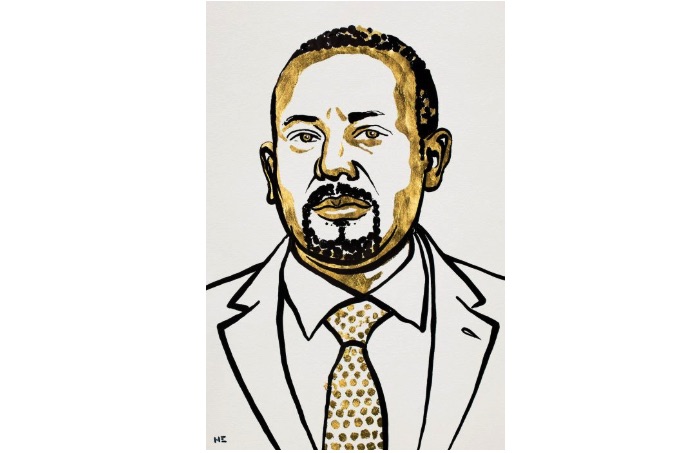
Ethiopian Prime Minister Abiy Ahmed, who named one of the world’s few “gender-balanced” Cabinets last year, told a gathering that “women are the pillars of the nation and the least recognized for their sacrifices.”

NIGERIA

In Nigeria, the U.S. Embassy hosted talks on sexual harassment that included a founder of the recent #ArewaMeToo campaign among women in the country’s conservative, largely Muslim north.

NIGER

And in Niger, first lady Aissata Issoufou Mahamadou oversaw the awards in the Miss Intellect Niger contest.

KENYA

Women protested against gender-based violence in Kenya’s capital.
“We haven’t gotten to a stage where women are comfortable to come out and say, ‘I was sexually abused,’” said protester Esther Passaris. “So what we need to do is slowly, slowly grow.”

AP reporters across the globe contributed to this report. Hatton reported from Lisbon, Portugal.

United Nations: ‘Global clarion call’ for youth to shape efforts to forge peace in the most dangerous combat zones

FREE FLOW OF INFORMATION

An article from UN News

The First International Symposium on Youth Participation  in Peace Processes concluded on Wednesday in Helsinki, Finland, with a global policy paper, according to reports, that aims to integrate their efforts, interventions and contributions towards sustaining the search for peaceful solutions to conflict.


Click on image to enlarge

In her keynote address, General Assembly President Maria Fernanda Espinosa highlighted Youth, Peace and Security as one of her seven priorities.

She called young people “agents of change” and outlined examples in which they have helped foster inter-communal dialogue, such as in Kenya, and consolidate peace, such as in Sierra Leone, Liberia and other countries.

Ms. Espinosa also addressed the importance of gender equality, decent work and the support for young migrants and refugees. 

The General Assembly President concluded by underscoring that the world must improve youth participation in national and international decision-making and encouraged Member States to embrace young people in their delegations and to work closely with the Office of the Secretary-General’s  Youth Envoy,  Jayathma Wickramanayake.

(Article continued in right column)

Question for this article

Youth initiatives for a culture of peace, How can we ensure they get the attention and funding they deserve?

What is the United Nations doing for a culture of peace?

(Article continued from left column)

With over half of the world’s population under-30 and an estimated 600 million youth living in fragile and conflict-affected States, it is apparent that young people must engage in conflict prevention and mediation processes – a domain where they are often marginalized. 

“Young people account for a considerable share of people living in the developing world and in conflict areas but they are often left outside of the scope of all decision-making in society, including peace processes”, said Timo Soini, Foreign Minister for Finland, one of the governments co-hosting the event.

For her part, the Youth Envoy called the Symposium “the global clarion call for a collective response in bringing voice and credibility to young people on the frontlines actively leading efforts to shape peace processes”.

Considering their sheer numbers and vital force, young people are key participants in development, democracy, peace-sustaining initiatives and peacebuilding interventions. As such, they must be empowered as decision makers to actively and meaningfully contribute to peace processes that affect their lives, according to the UN Envoy’s office.

“Young people are bridges”, said youth participant Leonardo Parraga. “They play a key role in connecting local actors like civil society organizations, with decision-making actors that have a seat inside the room”.

At the two-day Symposium ending on Wednesday, inter-generational participants exchanged views and best practices on involving young people in both formal and informal peace processes. Youth attendees, moderated, facilitated and acted as rapporteurs throughout all plenary discussions and working groups.

Noting “progress in advancing the Youth, Peace and Security agenda” Ms. Wickramanayake asserted:  “We cannot stop now”.

The event was co-hosted by the Governments of Finland, Qatar, and Colombia, and co-organized by the office of the UN’s Youth Envoy and Search For Common Ground in partnership with the UN Department of Political and Peacebuilding Affairs, UN Population Fund, UN Development Programme and the United Network of Young Peacebuilders.