Category Archives: Mideast

As Israeli Forces Seize Final Sumud Boat, Another Flotilla Sails Toward Gaza

. TOLERANCE & SOLIDARITY .

An article by Jessica Corbett in Common Dreams (reprinted under Creative Commons CC BY-NC-ND 3.0)

As Israeli forces on Friday captured the last remaining vessel from the Global Sumud Flotilla that aimed to break Israel’s blockade of the Gaza Strip and deliver humanitarian aid, another group of boats was headed for the Palestinian territory.

The 11 vessels, most of which started sailing last week, are “carrying over 150 healthcare workers, journalists, and activists,” according to organizers, the Freedom Flotilla Coalition (FFC) and Thousand Madleens to Gaza.

“As journalists and medical professionals, we carry the responsibility to speak truth and preserve life,” said Dr. Ricardo Corradini, a general surgeon from Italy, in a statement. “This mission is an appeal to our colleagues—and to the institutions that represent us globally—to break their silence, uphold their ethics, and stand on the right side of history.”

FFC highlighted earlier this week that the ship “Conscience, bombed by Israel off the coast of Malta in May 2025, has returned to serve as a vehicle for medics and media determined to reach their colleagues in besieged Gaza.”

Huwaida Arraf, an FFC steering committee member aboard Conscience, said that it “is the latest and largest boat in this historic flotilla—and its name represents not only steadfast resistance to Israel’s illegal blockade, but a call to awaken the conscience of the world.”

Since Israeli forces began intercepting Global Sumud Flotilla vessels late Wednesday, a fresh wave of global protests has occurred. People around the world have repeatedly taken to the streets over the past two years, as Israel has responded to the Hamas-led October 7, 2023 attack by devastating infrastructure across Gaza, including healthcare facilities, wounding at least 169,165 Palestinians, and slaughtering at least 66,288.

Experts warn the true death toll in Gaza is likely much higher. Among the dead are many doctors and nurses—one count, from Healthcare Workers Watch, said at least 1,200 as of February. Israel’s killing of Gaza’s healthcare professionals continued this week with the death of Omar Hayek from Doctors Without Borders, or Médecins Sans Frontières (MSF).

The Israeli attack that killed Hayek and wounded four others “took place on a street where our teams were waiting to take a bus to the MSF field hospital in Deir al-Balah. All staff were wearing MSF vests, clearly identifying them as medical humanitarian workers,” the group said Thursday. “We express deep sorrow and outrage over the killing, which occurs less than two weeks after another MSF colleague, Hussein Alnajjar, was killed by the Israeli forces, in Deir al-Balah.”

Also among the dead are over 200 journalists, with recent tallies ranging from 223 to 270. The Israeli government has prevented international reporters from entering Gaza—and has been widely accused of intentionally killing Palestinian journalists who have reported on the genocide while trying to survive it.

Global press freedom groups have frequently spoken out against Irsael’s treatment of journalists, including this week, when Israeli forces took members of the media into custody while blocking the Global Sumud Flotilla from reaching Gaza.

“Arresting journalists and preventing them from doing their work is a serious violation of the right to inform and be informed,” said Martin Roux, head of the Crisis Desk at Reporters Without Borders, or Reporters Sans Frontières (RSF), in a Thursday statement.

(continued in right column)

Question related to this article:
 
How can we best express solidarity with the people of Gaza?

(continued from left column)

“RSF condemns the illegal arrest of the news professionals who were on board these ships to cover a humanitarian operation of unprecedented scale,” Roux continued. “The Israeli army, which has killed over 210 Palestinian journalists in the Gaza Strip, is continuing its media blockade of the Gaza Strip with these illegal arrests at sea, with the obvious goal of covering up the crimes it is committing against the Palestinian population. RSF urges Israel to respect the status of journalists, protect them, and guarantee their safety in accordance with international law.”

Early Friday, the flotilla announced on Instagram that “Marinette, the last remaining boat of the Global Sumud Flotilla, was intercepted at 10:29 am local time, approximately 42.5 nautical miles from Gaza.”

According to the flotilla, whose more than 450 members included politicians, actors, and activists from dozens of countries:

“Over 38 hours, Israeli occupation naval forces illegally intercepted all 42 of our vessels—each carrying humanitarian aid, volunteers, and the determination to break Israel’s illegal siege on Gaza.

“Marinette sailed forward with the spirit of sumud—steadfastness—even after seeing the fate of 41 boats before her.

“But this is not the end of our mission. Our determination to confront Israel’s atrocities and stand with the Palestinian people remains unshaken.

“As people rise up in cities worldwide to demand an end to these horrors and to take a stand for humanity, we rise together with one voice.

“We will not stop until the genocide ends. We will not stop until Palestine is free.”

Until the interception, the flotilla faced repeated attacks widely believed to be from Israel, whose Ministry of Foreign Affairs on Friday continued to smear the peaceful humanitarian mission as the “Hamas-Sumud provocation” and a “sham.”

“Already four Italian citizens have been deported. The rest are in the process of being deported. Israel is keen to end this procedure as quickly as possible,” the ministry said on social media. “All are safe and in good health.”

In a video circulating online, Israeli National Security Minister Itamar Ben Gvir can be seen repeatedly calling Global Sumud Flotilla activists “terrorists” as they were waiting for their transfer to an Israeli prison

In a Friday statement about the Global Sumud Flotilla, Nihad Awad, national executive director of the Council on American-Islamic Relations (CAIR), the largest Muslim civil rights group in the United States, said that “the detention of these humanitarian volunteers, including American citizens, is deeply troubling and completely unacceptable.”

“These are civilians engaged in delivering essential aid to people in desperate need in Gaza,” he continued. “Denying them legal counsel, holding them incommunicado, and putting them at risk for simply performing humanitarian work is a flagrant violation of human rights and the principles the United States stands for. We urge the US government to act immediately to secure their safe release and make clear that targeting Americans performing humanitarian missions will not be tolerated.”

Under President Donald Trump and his Democratic predecessor, the United States has provided Israel with diplomatic support on the global stage and billions of dollars in military aid. Joined at the White House on Monday by Israeli Prime Minister Benjamin Netanyahu—who is wanted by the International Criminal Court—Trump unveiled a proposed peace plan for Gaza.

In a long post on his Truth Social platform Friday morning, Trump railed against Hamas and gave the group that has governed Gaza for the past two decades until Sunday at 6:00 pm Eastern Time to agree to his proposal. Trump wrote, “If this LAST CHANCE agreement is not reached, all HELL, like no one has ever seen before, will break out against Hamas.”

– – – – – –

If you wish to make a comment on this article, you may write to coordinator@cpnn-world.org with the title “Comment on (name of article)” and we will put your comment on line. Because of the flood of spam, we have discontinued the direct application of comments.
Students Stage Walkouts in Dozens of Spanish Cities to ‘Stop the Genocide’ in Gaza

. TOLERANCE & SOLIDARITY .

An article by Brett Wilkins from Common Dreams (reprinted  under Creative Commons CC BY-NC-ND 3.0)

Tens of thousands of students walked out of classrooms in cities and towns across Spain on Thursday to protest Israel’s ongoing US-backed genocide in Gaza and abduction of Global Sumud Flotilla members, dozens of whom are Spanish.


Students in Málaga, Spain march behind a banner reading “Stop Everything to Stop the Genocide” on October 2, 2025. (Photo by Jesus Merida/SOPA Images/LightRocket via Getty Images)

The National Students’ Union organized Thursday’s protests under the slogan “stop the genocide against the Palestinian people.” Demonstrations, which took part in at least 39 cities and towns, varied in size from small groups to thousands who turned out in Barcelona and the capital Madrid, where students held banners with messages like “Stop Everything to Stop the Genocide,” “All Eyes on the Global Sumud Flotilla,” and “Free Palestine!”

“We’re not going to look the other way,” the union said in a statement. “The Palestinian cause is the cause of the youth and the millions who stand for human rights and social justice. That is why… we called the general student strike to empty the classrooms and fill the streets with dignity.”

Maria, a Spanish student interviewed by Turkey’s Anadolu Ajansı in Madrid, said: “While young people like us are being killed and subjected to genocide in Palestine, we cannot be in class. The whole world must do everything it can to stop this genocide.”

Another Madrid protester, Francesca—an Italian student studying in Spain—told Anadolu that “we must pressure governments to stop Israel.”

(continued in right column)

Question related to this article:
 
How can we best express solidarity with the people of Gaza?

(continued from left column)

“Allowing genocide in full view of the world is unacceptable,” she added. “The killing of women, children, and students in Palestine must end.”

In Barcelona—whose former leftist Mayor Ada Colau was among the dozens of Spaniards who set sail for Gaza from the port city—an estimated 6,500 students and others took to the streets Thursday.

“What I can do is be here, with my presence,” student Donia Armani told El País. “The more people, the better; so the Palestinians will not be alone.”

Armani’s mother added, “The Palestinians are like a brotherly people, we feel a lot from the absurd images we see.”

Ana, a 14-year-old student protesting in Barcelona, said: “I think it’s very bad what’s happening,” adding that Israel does “not let food arrive and also bombs them, which causes many, especially small children, to die, and I am very sorry.”

Thursday’s walkouts took place as Israeli forces continued assaulting Gaza on Thursday, killing scores of Palestinians amid a backdrop of ongoing famine and forced displacement. Since October 2023, Israeli forces have killed at least 66,225 Palestinians in Gaza, although experts say the actual death toll is much higher. At least 168,938 other Palestinians have been wounded, and thousands more are missing and presumed dead.

Spain’s socialist-led government has been a leading critic of Israel’s genocide in Gaza, taking numerous proactive steps including cutting off arms transfers to the erstwhile ally, prohibiting the shipment of fuel to the Israeli military, formally recognizing Palestinian statehood, and backing South Africa’s genocide case currently before the International Court of Justice in The Hague.

The Spanish Foreign Ministry says at least 30 Spaniards are among the many Global Sumud Flotilla activists seized by Israeli forces in international waters overnight Thursday while attempting to deliver desperately needed humanitarian aid to Gaza.

– – – – – –

If you wish to make a comment on this article, you may write to coordinator@cpnn-world.org with the title “Comment on (name of article)” and we will put your comment on line. Because of the flood of spam, we have discontinued the direct application of comments.

Million-strong general strike blocks Italy for Palestine

. TOLERANCE & SOLIDARITY .

An article from the Peoples Dispatch

On September 22, approximately one million people across Italy staged a general strike in support of Palestine and the Global Sumud Flotilla, offering a vision of solidarity sharply at odds with the one displayed by European leaders at the United Nations these days. Ports, train stations, and major junctions were shut down as workers, many of whom members of the grassroots union Unione Sindacale di Base (USB), brought the country to a halt.

(Editor’s note: Italian unions again called a general strike for Friday, October 3, in solidarity with the international aid flotilla for Gaza, while protests sprang up in a number of cities late on Wednesday after reports that the ships had been intercepted by military personnel.)


USB’s fire brigades members lead strike rally. Source: USB

In Rome alone, 300,000 demonstrators occupied the city’s main railway hub before marching through the streets. “The call came from Genoa’s dockworkers, and here we are: we’ve blocked everything,” the protesters proclaimed. Among those leading the crowd were firefighters’ union representatives, who told il manifesto: “First responders will never be complicit in genocide, and we are protesting a government that is entrapping us in rearmament.”

Port cities against arms trade and genocide

Earlier this month, as the Global Sumud Flotilla prepared to launch, members of the dockworkers’ collective CALP in Genoa vowed to halt port operations if Israel attacked or blocked the fleet. Weeks later, following continuous local mobilizations and public assemblies, they made good on their promise. Thousands shut down Genoa’s port from the early morning hours, joined by workers in the strategic harbors of Trieste, Venice, and Livorno. Rallies erupted in Bologna, Milan, Turin, Naples, across Sicily and Sardinia, and in dozens of other localities, where teachers, parents, and students walked out of schools together, chanting for a free Palestine.

Speaking from the Genoa blockade, Marta Collot of the left party Potere al Popolo stressed that the strike demonstrated concrete solidarity with Palestinians, affirmed support for their legitimate resistance, and denounced European complicity in genocide. “Embargo and sanctions: these must be our priorities,” Collot said.

(continued in right column)

Question related to this article:
 
How can we best express solidarity with the people of Gaza?

(continued from left column)

Authorities responded to the massive mobilization with violence. Police forces used water cannons against protesters demanding an end to Italy’s arms trade with Israel and calling for severing all political and economic ties. Despite growing public pressure, Giorgia Meloni’s government has refused to act against Israel, instead continuing communications with Israeli officials and arms deliveries through the state-linked company Leonardo.

Only days before the strike, Infrastructure and Transport Minister Matteo Salvini, leader of the far-right Lega, appeared in an interview with Israeli media, in which he supported Israel’s “right to build itself a serene future” as occupation forces inflicted even more destruction upon Gaza City. In its campaign “to build a serene future,” Israel has killed at least 65,000 Palestinians in Gaza, including over 1,000 health workers and hundreds of journalists. While some government figures signaled mild unease about recent attacks, Salvini set out his allegiance in very clear terms: “Defending Israel’s right to exist is complicated right now, but friends are revealed in the most difficult moments.”

In some strike locations, protesters singled out Salvini’s statements in their speeches. In Venice, they sent what they termed a special message to “a special enemy,” insisting that their loyalty was with Palestinians under attack and their energy committed to building international solidarity.

International solidarity is “alive and kicking”

The mass character of Monday’s strike likely shook much of Italy’s political class. In recent years, the government had passed measures to restrict demonstrations and downplayed the organizing capacity of trade unions and the left. Yet weeks of continuous protests culminating in the general strike undermined these efforts.

“Workers have returned to center stage and are calling on citizens, all citizens, to stand up. They are not doing so for a contract renewal but to demand justice for a distant and tormented people,” USB declared on the day of the strike. “In this age of selfishness and individualism, this seems unthinkable. But no, solidarity between peoples and brotherhood beyond borders are not dead and buried values; on the contrary, they are alive and kicking.”

For Potere al Popolo’s Giuliano Granato, the strike also captured broader anger. “Palestine has given a name to our discontent,” he told Peoples Dispatch. “The outrage, protest, and anger over the massacre of the Palestinian people has intersected with years of oppression, repression, and deteriorating material conditions. For young people in particular, there is the absence of a future, fear, and the awareness of living in societies where only the horrendously rich and powerful have a say.”

The momentum built by the strike is set to continue. Italian dockworkers will host an international sectoral meeting on September 26–27, bringing together trade unions capable of disrupting Europe’s arms flows to Israel. National demonstrations in solidarity with Palestine are also planned for October 4, as eyes remain fixed on the Global Sumud Flotilla. If Israel attempts to stop it, Italian workers have already shown they are ready to block the country – sending a signal that could inspire others to organize along the same lines.

– – – – – –

If you wish to make a comment on this article, you may write to coordinator@cpnn-world.org with the title “Comment on (name of article)” and we will put your comment on line. Because of the flood of spam, we have discontinued the direct application of comments.
Gaza’s Contribution to Civilization

FREE FLOW OF INFORMATION .

An article from blog of Mazin Qumsiyeh

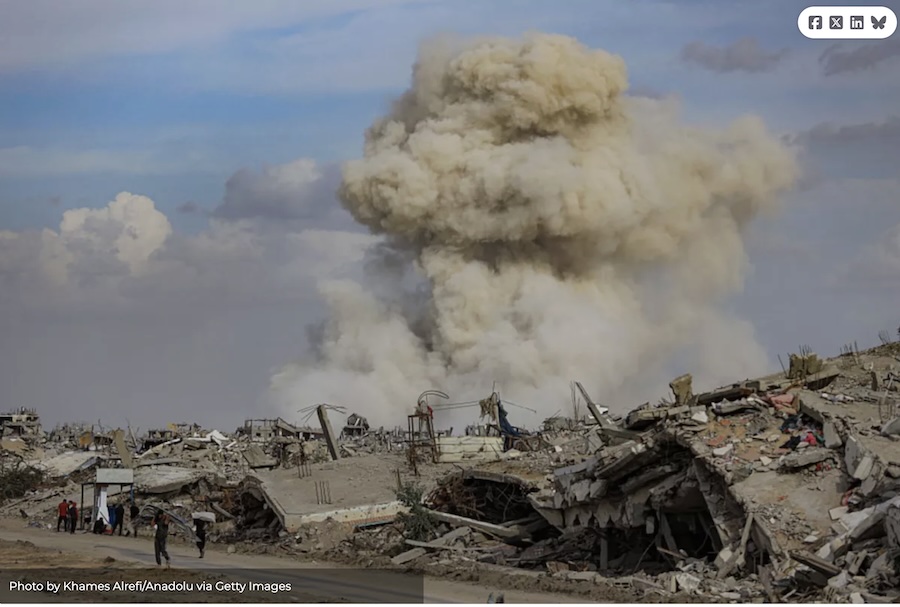
The Gaza littoral – a narrow coastal corridor between Asqalan (Ashkelon) in the north and Rafah at the Egyptian border – occupies a strategic position on the coastal axis linking Africa and Western Asia (the Levant) and is often referred to historically as the Via Maris. Its geography made it a repeated meeting place for goods, peoples, and ideas and explains why archaeological and textual records show continuous human activity from the Chalcolithic/Early Bronze periods onward (de Miroschedji et al.; Tell es-Sakan excavations). This study synthesizes major published finds and contemporary reporting to outline Gaza’s long-term contributions to Mediterranean and Near Eastern civilization. In the 1947 UN Partition plan, the strip was much larger than it is now (and being demolished). Estimates of 200,000 to as many as half a million perished in the past two years of Israeli onslaught on that land (3/4 women and children, and most of the residents are refugees from the Nakba of 1948-1950).


A view of Tell es-Sakan

Recent archaeological work has shown that the Gaza littoral hosted urban settlements as early as 8,000 years ago. Excavations at Tell es-Sakan (discovered during construction work in 1998 and excavated by teams including de Miroschedji) reveal mud-brick urban deposits, storage contexts and evidence for a mixed agricultural-maritime economy during the Early Bronze Age. Such evidence indicates that Gaza’s coastal settlements were part of the emergent urban economies of southern Levant and were in contact with contemporaneous Egyptian administrative and economic activities. The Tell es-Sakan sequence places Gaza within the first waves of coastal urbanization in the eastern Mediterranean.

During the 2nd millennium BCE the Gaza littoral was integrated into the Canaanite network and repeatedly intersected with Egyptian imperial interests. Archaeological assemblages (imported pottery, architecture and small finds) and Egyptian texts show that southern Levantine coastal sites functioned as waystations and focal points for goods moving between the Nile, the Levantine interior and the Mediterranean. Excavation reports and regional syntheses emphasize Gaza’s position as part of coastal exchange networks during this period.

The Iron Age coastal transformation included the arrival (or intensification) of Aegean-influenced material culture in the southern Levant — the so-called Philistine phenomenon — of which Gaza was one of the principal polities in the Philistine pentapolis (Gaza, Ashkelon, Ashdod, Ekron, Gath). Philistine pottery styles, new craft traditions and evidence for specialized workshops and maritime activities attest to cultural fusion between local Canaanite traditions and incoming Aegean elements. Although modern development has limited large-scale excavation directly inside some parts of Gaza City, comparative work from neighboring coastal sites and site surveys indicates Gaza’s role within this dynamic maritime and craft network.

From the Persian through the Hellenistic and Roman periods Gaza sustained major port facilities and urban morphology demonstrating integration into Mediterranean trade networks. Archaeologists have identified the ancient port installations often called Anthedon (sometimes identified with the Balakhiyya/Blakhiya/ Tell Iblakhiyya area north of Gaza) and Maiuma (the port quarter associated with Gaza) among the principal maritime facilities. Excavations and rescue archaeology, including Franco-Palestinian missions at Anthedon, and the 2023 discovery of a substantial Roman-era cemetery (with lead sarcophagi) near Jabaliya, testify to a complex, economically engaged society with elite burial practices and broad Mediterranean connections.

Byzantine churches (recorded on medieval maps such as the Madaba mosaic) and early Islamic administrative records show continuity of urban life and the adaptation of port and land networks and continued fluporsihing economy as well as peaceful coexistence of Christians and Muslims from 6th to 20th century AD. During the Mamluk periods coastal fortifications and administrative structures continued to emphasize the strategic importance of Gaza. Under Ottoman administration and into modernity Gaza functioned as a regional market center and waypoint for caravan and coastal traffic; travelers’ accounts and administrative records document a long continuity of agricultural production, market exchange, and civic life. Throughout its history this heroic strip of territory defeated mighty armies and inspired legendary victories while continuing to prosper [that is until this recent genocide which is not only unprecedented in the region but globally).

Recent decades have seen important archaeological discoveries (e.g., Tell es-Sakan publications, Anthedon excavations, the Roman-era Jabaliya cemetery) alongside increasing concern about threats to sites. Scholarly analyses and investigative reports emphasize the twin pressures of conflict, urban development, coastal erosion and inadequate heritage management on Gaza’s archaeological record. International teams and local scholars have collaborated in rescue excavations, but wartime destruction and damage to heritage structures have been reported (notably during the conflicts of 2023–2024), raising urgent ethical questions about documentation, local stewardship, and international responsibility for preservation and reconstruction.

Our own environmental studies in the area some using detailed satellite images/remote sensing show 1) rich biodiversity, 2) decimation of the tree cover and habitats (see Yin et al. 2025). Thus, there is devastation for both natural and cultural heritage of this rich area.

Gaza also enriched is with thousands of scholars and contributors to human civilization. Here are just a random selection

Silvanus of Gaza (d. ~311 CE) – Early Christian bishop of Gaza who was martyred during the Diocletian persecution. He is remembered as one of the earliest Christian leaders in the region.

(article continued in right column)

Question related to this article:

Presenting the Palestinian side of the Middle East, Is it important for a culture of peace?

(article continued from left column)

Aeneas of Gaza (~5th century) – Neo‑Platonic philosopher and Christian convert, associated with the Rhetorical School of Gaza. He wrote philosophical works that merged classical philosophy with Christian thought.

Dorotheus of Gaza (~500–560/580) – Monk and ascetic teacher near Gaza, author of spiritual discourses that influenced early Christian monasticism and ethical thought.

Sulayman al-Ghazzi (c. 940–1027) – A Christian bishop and poet in Fatimid Palestine, Sulayman al-Ghazzi was the first known Arab Christian poet to write religious verse in Arabic. His diwan (poetic anthology) offers insights into Christian life during the era of caliph al-Hakim. 

Ibn Qudama (1147–1223) – A prominent Hanbali jurist and theologian, Ibn Qudama was born in Gaza and is renowned for his works on Islamic jurisprudence, including al-Mughni, a comprehensive legal encyclopedia. 

Abu Bakr al-Nabulsi – A 17th-century Islamic scholar from Gaza, al-Nabulsi was known for his contributions to Islamic jurisprudence and theology, particularly within the Shafi’i school of thought. 

Shady Alsuleiman – A contemporary Islamic scholar and imam, Alsuleiman is recognized for his work in Islamic education and community leadership, focusing on promoting understanding of Islamic teachings in modern contexts. 

Ayman Hassouna – A Palestinian archaeologist and university lecturer, Hassouna has worked extensively on excavations in Gaza, including the Byzantine Church of Jabalia, contributing significantly to the understanding of Gaza’s ancient history. 

Sufian Tayeh (1971–2023) – A physicist and educator, Tayeh served as the president of the Islamic University of Gaza. He was known for his work in physics and applied mathematics and was tragically killed in an Israeli airstrike in December 2023. 

Mohammad Assaf (b. 1992) – Singer from the Gaza Strip who gained fame by winning Arab Idol, becoming a symbol of hope and cultural pride for Palestinians.

Dr. Refaat Alareer (1979–2023) – A Renaissance scholar from Gaza, Alareer was a professor and writer who contributed to academic and cultural discourse. He was killed during the 2023 conflict, leaving a legacy of intellectual engagement.

Conclusion: Early urbanization and administrative activities in Gaza contributed to the regional network of production, storage, and exchange that underpinned complex societies in the Near East. Acting as a coastal conduit, Gaza facilitated the transmission of commodities and material culture between Egypt and the broader Levantine-Mediterranean economy. Port infrastructure, long-distance maritime commerce, specialized fisheries and the movement of Mediterranean goods and ideas through Gaza contributed directly to the economic vitality and cultural pluralism of the region. Technological and stylistic exchange (ceramics, metallurgy, textile production, and ship-related crafts) that flowed through the Gaza littoral influenced craft traditions across the southern Levant and beyond.The Gaza littoral’s long-term contributions to civilization are best understood as a combination of (1) geographical advantage (coastal route and hinterland productivity), (2) sustained maritime and land exchange networks that carried goods and ideas, (3) local craft and agricultural production that fed regional markets, and (4) repeated cultural contact zones that produced hybrid forms of material culture and religious life. Gaza’s sustained role as a market, agricultural supplier, and transport hub helped to link inland and coastal economies for centuries, transmitting crops, commodities and cultural practices. This was an essential contribution to circum-Mediterranean coastal communities and over 30 countries have direct connections to Gaza. Gaza’s archaeological record informs broader historical narratives of Mediterranean connectivity. Preserving that record is necessary for reconstructing local histories that feed into global understandings of ancient economies, religions, and technologies and is an essential component of knowledge to shape a peaceful future that is not repeatedly marred by genocides and holocausts (due to colonialism, imperialism).

References

Al-Houdalieh, S. H., et al. (2024). Heritage and Conflict in Gaza [report/PDF]. (ResearchGate summary).

Andreou, G. M. (2024). Establishing a baseline for the study of maritime cultural … International Journal of Nautical Archaeology (summary online).

Forensic Architecture. (2022). Living Archaeology in Gaza. Forensic Architecture. Retrieved from Forensic Architecture website. 

International news report: Associated Press. (2023, September 24). Archaeologists unearth the largest cemetery ever discovered in Gaza and find rare lead sarcophagi. AP News. 

The Guardian. (2025, March 17). Gaza’s heritage sites destroyed by war. The Guardian. (reporting on 2023–2024 damage and restoration efforts). 

UNESCO World Heritage Centre. (n.d.). Anthedon Harbour / Blakhiyya (tentative listing and site information). UNESCO Tentative Lists. 

Wikipedia contributors. (n.d.). Tell es-Sakan; Anthedon; Maiuma. Wikipedia. (Used as quick references to excavation histories and site identifications — consult field reports and excavation monographs for primary data).

Yin, H., Eklund, L., Habash, D., Qumsiyeh, M. B., & Van Den Hoek, J. (2025). Evaluating war-induced damage to agricultural land in the Gaza Strip since October 2023 using PlanetScope and SkySat imagery. Science of Remote Sensing. Vol. 11: Article 100199
 
– – – – – –

If you wish to make a comment on this article, you may write to coordinator@cpnn-world.org with the title “Comment on (name of article)” and we will put your comment on line. Because of the flood of spam, we have discontinued the direct application of comments.

The Global Sumud Flotilla: Over 50 ships will set sail for Gaza

. TOLERANCE & SOLIDARITY .

An article from the Peoples Dispatch

In July 2025, a new international maritime initiative was launched: the Global Sumud Flotilla. It was formed by four major coalitions: the Global Campaign to Return to Palestine, the Freedom Flotilla Coalition, the Maghreb Sumud Convoy, and the Southeast Asian Nusantara Sumud Initiative. The Global Sumud Flotilla is set to depart on August 31, 2025. Its goal is clear: to break Israel’s illegal blockade on Gaza, to deliver urgent humanitarian aid, and to expose the genocidal war waged on Palestinians. 


Photo from Al Jazeera

The flotilla is composed of dozens of small civilian vessels carrying activists, parliamentarians, doctors, and trade unionists, alongside humanitarian cargo. More than 39 national delegations have pledged participation, making this the largest people-led maritime effort in solidarity with Gaza since the 2010 “Mavi Marmara”.

Behind every flotilla passenger lies a story of conviction. Greek trade unionists brought banners pledging workers’ solidarity with Palestine. Doctors from Spain and Italy carried vital medicines banned from entering Gaza. Parliamentarians from South Africa and Norway insisted that breaking the siege is a moral and political duty.

This is not the first flotilla of its kind this year. The “Handala” and “Madleen”, two of the Freedom Flotilla’s flagship vessels, also set sail in an attempt to break the blockade of Gaza. However, they were attacked by drones and stormed by Israeli forces. Passengers were beaten, kidnapped, and deported. Phones were confiscated, activists were interrogated, and many went on hunger strike to protest their detention. The attack was not just on the Freedom Flotilla; it was an attack on the principle of global solidarity itself.

The Global Sumud Flotilla insists that its mission is entirely lawful under international maritime law. Civilian vessels carrying humanitarian aid in international waters are protected under the UN Convention on the Law of the Sea. Israel’s interception of the “Handala” and “Madleen” constitutes nothing less than piracy and a war crime.

The flotilla’s organizers remind the world that Israel has maintained a land, air, and sea blockade on Gaza since 2007. As they prepared for upcoming missions, flotilla spokespeople declared:

“Our boats carry more than aid. They carry a message: the siege must end. The greater danger lies not in confronting Israel at sea, but in allowing genocide to continue with impunity.”

Criminalizing solidarity, violating international law

In recent months, Israel has escalated its campaign to silence international solidarity with Palestine by targeting civilian flotillas attempting to break the Gaza blockade. These ships, carrying activists, aid, and a message of defiance against siege, have become symbols of global resistance. Instead of engaging through diplomacy or respecting humanitarian principles, Israel has resorted to force on the high seas, treating peaceful civilian missions as military threats.

The assaults on the “Handala” and “Madleen” are more than acts of piracy, they are grave breaches of international law. The UN Convention on the Law of the Sea (UNCLOS) guarantees freedom of navigation in international waters. By seizing vessels outside its territorial jurisdiction, Israel has acted as a rogue state.

International legal experts have consistently affirmed that the blockade of Gaza since 2007 constitutes collective punishment, violating the Fourth Geneva Convention. The International Criminal Court has received multiple submissions documenting Israel’s starvation siege, now exacerbated by open genocide. Yet governments that loudly invoke “rules-based order” remain silent when Palestinians, and their supporters, are the victims.

(continued in right column)

Question related to this article:
 
How can we best express solidarity with the people of Gaza?

(continued from left column)

Instead of protecting citizens, western governments have facilitated Israel’s repression. Passengers aboard the flotillas were stripped of their phones, interrogated, and some were denied re-entry into the Schengen zone. Western states’ silence amounts to complicity.

Some detainees launched hunger strikes in Israeli prisons to protest their abduction. Others returned home to smear campaigns. Western right-wing media accused activists of “provocation” or of “endangering security”. Once-beloved Swedish activist Greta Thunberg who joined the “Madleen” flotilla, received attacks from mainstream media, on social media, and from influential political figures. Such tactics aim to delegitimize solidarity and sow fear among those who dare to act.

But these campaigns have failed to extinguish the moral clarity of the movement. From dockworkers in Barcelona refusing to load arms to Israel, to students occupying universities in the US and Britain, the flotilla has become a symbol: solidarity cannot be blockaded.

The human face of global resistance

The Global Sumud Flotilla represents a convergence of struggles across continents:

The Global Campaign to Return to Palestine mobilized thousands of activists worldwide.

The Freedom Flotilla Coalition, with roots going back to 2010, brings long experience of organizing maritime resistance. 

The Maghreb Sumud Convoy, launched in June 2025, gathered over 1,000 participants from across North Africa under the banner of “coordinated action for Palestine”.

The Nusantara Sumud Initiative, launched from Malaysia and eight other Southeast Asian countries, embodies South–South solidarity inspired by Palestinian steadfastness.

Together, these four networks transformed the flotilla from a handful of ships into a people-powered humanitarian corridor. The first official mission is scheduled for August 31, 2025, from Spain, followed by a second launch from Tunisia on September 4, with more than 50 ships expected to participate.

At a press conference in Tunis, organizers emphasized that the flotilla is not merely logistical, it is symbolic:

“This will not only be a fleet. It will be a reminder that the world is watching, that Gaza is not alone, and that peoples will not remain silent.”

The Freedom Flotilla is part of a long lineage of resistance at sea. The 2010 assault on the “Mavi Marmara”, in which Israeli forces killed ten activists, shocked the world. But instead of stopping solidarity, it multiplied it.

The Global Sumud Flotilla marks a new stage. By linking Mediterranean ports, North African caravans, and Southeast Asian convoys, it builds a transnational infrastructure of resistance. Its Arabic name Sumud, steadfastness, reflects both Palestinian resilience and the determination of people across the world to act where governments have failed.

Breaking the siege, building the future

The choice is now clear. Israel will continue to attack peaceful ships in international waters, abduct activists, and suppress humanitarian efforts, because the siege is a cornerstone of its genocidal project. Western governments will continue to look away.

But ordinary people, from Greek dockworkers refusing to load weapons for Israel, to Tunisian unions welcoming flotilla missions, to students and parliamentarians raising their voices, are building a counter-power.

The Global Sumud Flotilla is both a lifeline and a warning: Gaza will not be starved into silence, and solidarity will not be blockaded.

As the flotilla prepares to set sail with more than 50 ships, its message resounds across seas and continents: The siege must fall. Gaza must live. Palestine must be free.

– – – – – –

If you wish to make a comment on this article, you may write to coordinator@cpnn-world.org with the title “Comment on (name of article)” and we will put your comment on line. Because of the flood of spam, we have discontinued the direct application of comments.
In Largest Israeli Protest to Date, 1 Million Israelis Demand Gaza Ceasefire to Free Hostages

. . HUMAN RIGHTS . .

An article and video from Democracy Now (licensed under a Creative Commons Attribution-Noncommercial-No Derivative Works 3.0 United States License)

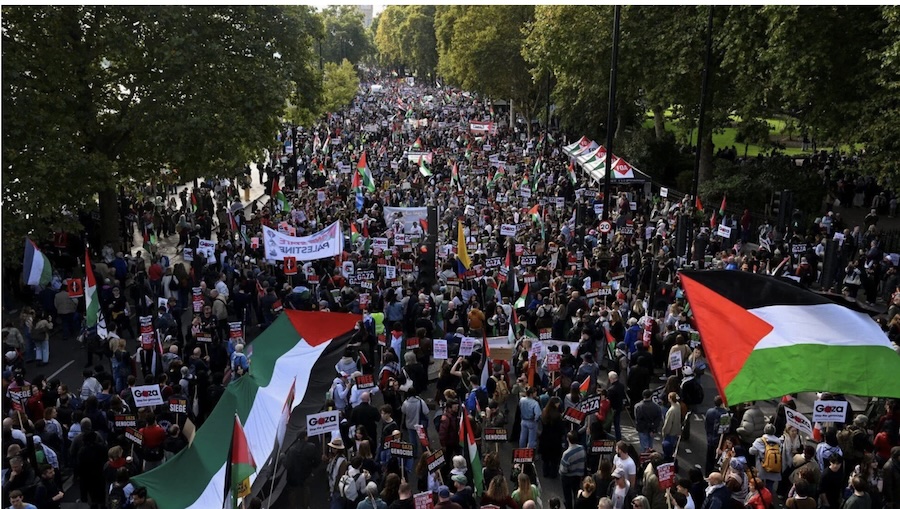
August 18: Massive protests have erupted in Israel, with about 500,000 people marching in Tel Aviv Sunday [August 17] to demand an end to the war in Gaza. Organizers say 1 million took part in demonstrations across the entire country. Most of the Israelis who were out on the streets “blame Netanyahu” for prioritizing his political survival over an end to the war, says Oren Ziv, reporter and photographer for +972 Magazine. Ziv notes that most Israelis are “not speaking directly on the suffering in Gaza, on the killings, on the children, on the starvation,” but instead focus on the survival of the hostages held in Gaza.


Frame from Democracy Now video

Transcript

This is a rush transcript. Copy may not be in its final form.

AMY GOODMAN: This is Democracy Now!, democracynow.org, The War and Peace Report. I’m Amy Goodman.

We turn now to Israel, where over 500,000 people protested in Tel Aviv Sunday to demand an end to the war in Gaza and for the Israeli government to reach a deal to free the hostages in Gaza. Over a million people took part in protests across Israel as the families of Israeli hostages called for a nationwide day of stoppage. This is Lishay Miran-Lavi, the wife of Omri Miran, who’s being held in Gaza.

LISHAY MIRAN-LAVI: Last week, we decided to call to everyone in Israel, to all the citizens, to stop, take a day and stop all the country, in one saying: Please release the hostages, bring them home, and stop the war. We are really caring about our dears that’s over there. My Omri is over there 681 days. I miss him. Our daughters, Roni and Alma, really miss him, and I’m really, really scared and afraid about his life. I want him here, and I want all the hostages here.

AMY GOODMANAMY GOODMAN“Those who call to end the war delay the hostages’ release and guarantee that the horrors of October 7 will return,” unquote.

For more, we go to Oren Ziv, reporter and photographer for +972 Magazine and the independent Israeli news site Local Call.

Oren, welcome back to Democracy Now! You were covering the protests. Can you talk about the significance of the size of these protests, and what exactly the Israelis were calling for?

OREN ZIV: Thank you for having me.

I think it’s a really interesting moment, because over the past almost two years, we’ve seen big protests, but not huge like that. And we’ve seen also moments during the war with Iran, with Lebanon and other occasions that the numbers were really low. People — you know, Netanyahu is doing what he’s doing the best, and he’s dragging time and making people tired. And this is also true to the Israeli public, that went in tens of thousands in the last year and a half or two years. But yesterday, a big and a significant number of people went out.

And it’s even more important with the incitement we’ve seen from Netanyahu and other ministers that were even more harsh than Netanyahu, saying that protesters are helping Hamas, making the price of a deal higher, and so on. So, in the fact of in the end of this day — during the day, there were hundreds, if not thousands, small vigil, direct action roadblocks. The country was shut down, basically, traffic-wise. And in the evening, we saw one of the biggest vigils and demonstration we’ve seen in recent years, of almost half a million people in the streets in Tel Aviv. And this is, first and for all, a message from the Israeli public, and what the polls show, that the vast majority of the Israeli public is willing to end the war in order to release the hostages.

Now, it’s important to say that this is from an internal Israeli perspective. It’s not like the protests we see abroad. These are people who are calling to return the hostages in any price. And after two years, many of them, many in the Israeli public, blame Netanyahu. He’s trying to blame Hamas. But many of the people, or the most of the people who went out yesterday to the streets, are blaming Netanyahu for not doing a deal, to survive politically. This is a very common statement you hear from everyone on the streets. And they’re calling to end the war. They’ve seen in the last two years that only political agreements and ceasefire agreements bring back hostages alive. We’ve seen over 40 hostages that died in captivity, either from the army’s attack or from reaction of Hamas when they were trying to — when the army was coming nearby. And people had enough.

In the same time, it’s important to say that the vast majority of the protesters yesterday, although the fact they called to end the war, they’re not speaking directly on the suffering in Gaza, on the killings, on the children, on the starvation. You can hear it here and there. You can hear it from smaller groups that have been protesting from the beginning of the war against the genocide and the ongoing ethnic cleansing. But it’s not on the stages. It’s not the main message yet.

AMY GOODMAN: I wanted to get your response to how Israelis have responded to Israel’s Channel 12 airing those leaked recordings of Israel’s former military intelligence chief saying 50 Palestinians must die for every victim of October 7th, saying tens of thousands of Palestinians must die. In the recording, Aharon Haliva is heard saying, quote, “It does not matter now if they are children.” He said, quote, “They need a Nakba every now and then to feel the price.” Oren Ziv?

(continued in right column)

Question related to this article:

How can a culture of peace be established in the Middle East?

(continued from left column)

OREN ZIV: So, to be honest, the vast majority of the discussion inside Israel was regarding the fact that this person, that many Israelis see as the responsible for the catastrophe of October 7th, for the failure of the Israel intelligence to finding out that this will happen, so people thought this kind of leaked recordings — some people say that he might have leaked it out — are kind of serving him, to clean him and to blame the problem is the general system. So, in Israel, the vast majority of discussion was about that. Was it really leaked? Is it serving him? Why? You know, many people, hostages — family members of hostages are saying he should be trialed and sit in prison.

But this segment didn’t catch a lot of attention in Israel, because, unfortunately, this is very common. It’s something we heard from day one from politicians, from army people, in the public, in the — in right-wing demos, we hear it. We hear it everywhere. So, unfortunately, this didn’t cause a lot of noise in Israel.
`
But definitely, it shows you that such a high commander saying these things openly, you know, without being ashamed and without getting any attention in Israel, show you that this decision of revenge, of genocidal war, was done from day one. And Israel, also to cover the failure of October 7, decided to go to a revenge, a horrific war, as we’re seeing now. And you can see that this decision is not just by soldiers on the ground or right-wing or extreme so-called settlers. This is all across the army, from the high-ranked commanders and the politicians to the simple soldiers. And now when we see the horrific reality in Gaza after almost two years, we can understand this was planned. The army felt they have to revenge to cover up the failure of October 7.

AMY GOODMAN: I also wanted to ask you about the Israelis who are refusing to enlist in the Israeli military. You just posted a short video of 19-year-old Yona Roseman, who was sentenced to 30 days in military prison.

YONA ROSEMAN: Today, I’m going to show up at a draft office and declare that I refuse to serve in an army that’s committing genocide. And for that, I will probably be sent to military jail.

AMY GOODMAN: That’s Yona Roseman. How common is this, the refuseniks?

OREN ZIV: So, it’s not very common, especially in mandatory service. Eighteen-year-old students, high school students are all the system, all their life — all the education system is pushing them to go to the army. That’s the norm. In order to be like Yona and other brave young Israelis, you have to go against the stream and to educate yourself and to go to demonstration and meet people and not watch the Israeli mainstream media, who doesn’t show you what’s going on in Gaza and the West Bank. And so, it’s not very common.

But we’ve seen some increase in the number. Already from the beginning of the war, more than 12 announced, ones who went public, a youth who refused. And they pay a price. It’s not only 30 days in prison. They have to go again and again to prison a few times. But among reservists, we’ve seen — reservists, we’ve seen a growing movement of people refusing, because of what’s been happening in Gaza, also calling to release the hostages. And we’ve seen hundreds of people refuse. With some of them, the army chooses not to deal with prison, but to release them quietly.

Specifically about Yona and her group from Mesarvot — “refusing” in Hebrew — they are showing — they want to show that not everybody in Israel, that there is a small group who resists the genocide and the horrific things the army does. And as she told us, that’s her duty. That’s the only thing you can do when you see what the army is doing. She told me in the interview before she went to prison that she decided even before October 7 and before the war in Gaza to refuse, but after the genocide started, it was much easier for her to take this decision. And we hear it from other refuseniks, as well.

And, you know, it’s very hard. When she appears on social media, on national media, they get a lot of incitement, hatred, inside the prison and also when they go out. Last month, they burned some of the enlistment orders in the streets in Tel Aviv. And to do something like that in the general atmosphere in Israel, that is very hostile to this action, is very, very brave.

AMY GOODMAN: I finally wanted to ask you, as you cover protests, yes, the protests this weekend of a million Israelis, but also about the protest outside the hotel where GHF staff were staying in Tel Aviv. That’s the so-called Gaza Humanitarian Foundation, this shadowy U.S.-backed Israeli company that is supposedly providing food aid, but when people come, they are often shot dead as they try to seek food, children and adults alike. What about that protest?

OREN ZIV: So last week, a group of activists, radical left-wing activists, located where the so-called GHF staff, including CEO and other senior members, are staying in Tel Aviv, because, you know, they work in Gaza in coordination with the Israeli army and other companies, but they’re staying in a very fancy hotel in the shore of Tel Aviv. And they wanted to come there to send a clear message that this is not accepted, that they’re not welcome here, and to stop this lie that is called the Gaza Humanitarian Fund. So, they came there, around 50 protesters, to surprise. The police was not aware of it. They arrived there to the entrance of the hotel, we know from people inside. They heard them inside the hotel. And they were protesting there for about an hour. The police was trying to push them away.

Some tourists and people who passed by tried to confront them. And this happens, by the way, in every demo like this, against the genocide, against the starvation, in Tel Aviv and other cities, that are often attacked by the Israeli public. The Israeli mainstream media doesn’t show the images or the voices from Gaza like you do and many other media outlets. So, when the Israeli public is met on the streets with people who are trying just to show the facts, to shed light on what’s happening on the other side of the fence, people are many times surprised or even angry and try to attack the protesters. And they are telling me this is only one of first actions they will do against the GHF operation here in the region.

AMY GOODMAN: Oren Ziv, we want to thank you for being with us, reporter and photographer for +972 Magazine and the independent Israeli news site Local Call.
– – – – – –

If you wish to make a comment on this article, you may write to coordinator@cpnn-world.org with the title “Comment on (name of article)” and we will put your comment on line. Because of the flood of spam, we have discontinued the direct application of comments.

London: ‘We will continue protesting for Palestine, and we will win’

. TOLERANCE & SOLIDARITY .

An article by Shabbir Lakha from Counterfire

Amid the state clampdown on Palestine solidarity, hundreds of thousands marched through London in defiant opposition to the genocide, reports Shabbir Lakha

Recently, The Economist remarked that the “Starmerites thought they had defeated the politics of Palestine. It may defeat them.” To prove how correct this assessment is, on Saturday, [August 9] an estimated 300,000 people marched through central London for the 28th national demonstration for Palestine since October 2023.

Video of march

It was an objectively huge demonstration, but even more impressive considering it was called with two-weeks’ notice, in the middle of August, and despite the police’s best efforts to intimidate protesters and to delay the coalition from announcing the route.

The demonstration was emotionally charged, angry and militant. Along with the usual array of placards taking aim at Starmer and calling for action, there were noticeably more signs relating to the clampdown on our democratic rights and civil liberties. The huge number of banners of local groups from across the country showed the truly national character of the march. The one noticeable absence was any significant presence of trade union flags or banners.

Over 800 people also gathered in Parliament Square to defy the proscription of Palestine Action, and the Met Police arrested 466 people – including a blind man in a wheelchair and a 90-year-old woman. The Met Police had set up field arrest-processing sites at the top and bottom of Whitehall, and swarms of them and their reinforcements from forces around the country trotted about in stormtrooper formations throughout the day.

As Lindsey German, Convenor of Stop the War Coalition said in her speech,
“We are bitterly opposed to the proscription of Palestine Action. It is not terrorism to carry out direct action. It is not terrorism to support the Palestinians… There is something deeply, deeply wrong when a society allows Israel to commit genocide but cannot allow protests on the streets of London… We will continue protesting, and we will win.”

The weekend’s mobilisations come after weeks of horrifying images of Palestinian children starving to death, of seeing desperate Palestinians being shot dead while queueing for aid in cattle-pens, and following Netanyahu’s announcement of his plan to launch a full military invasion and total re-occupation of Gaza.

(continued in right column)

Question related to this article:
 
How can we best express solidarity with the people of Gaza?

(continued from left column)

Keir Starmer’s pathetic statement in response offers only the mildest criticism to an open declaration of intent to commit further war crimes and to ethnically cleanse the Palestinian people. His ‘threat’ of recognising a Palestinian state rings hollow while he continues to arm the genocidal Israeli state, train its soldiers on RAF bases and provide intelligence from RAF spy flights.

But his meek words are nonetheless a departure from his October 2023 claim that Israel ‘has the right’ to cut off food, water and electricity for Gaza’s civilian population. Starmer is reacting to the persistent groundswell of opposition his government is facing over its role in facilitating genocide.

The backbone of this has been the consistent mass mobilisations that have repeatedly brought hundreds of thousands of people onto the streets of the capital. Polling shows that a growing majority of the population back a ceasefire, arms embargo and sanctions on Israel. In recent weeks, there has been a noticeable sea change in the coverage and editorial lines of mainstream media outlets, including the Daily Express, the Financial Times and The Economist.

This is coupled by a rapidly expanding list of celebrities and cultural figures speaking out in all forums against the genocide and the British government’s actions. Saturday’s national demonstration was addressed by Bafta-nominated actor Denise Gough, comedian Ivo Graham, and Danni Perry, a dancer who held up a Palestinian flag at the Royal Opera House and successfully campaigned to get the Royal Ballet and Opera to cancel its production in Tel Aviv.

Denise Gough told Counterfire,
“I’m here at the rally because if I don’t spend my time in spaces where people have care for the rest of the world then I feel very, very alone. It’s important for all of us to come here so that we can get re-energised, because genocide is exhausting.”

When the situation in Palestine is as dire as it is, when there is growing support among some of the most influential figures in society for an end to British support for Israel, and when the government is on the backfoot, is precisely the time to escalate the movement to put an end to Starmer’s support for genocide and to defend our right to protest.
Upcoming mobilisations:

Saturday 16 August: Stop Arming Israel – protest at RAF High Wycombe

Saturday 6 September: National demonstration for Palestine – central London

Saturday 27 September: National demonstration at Labour Conference – Liverpool

Sunday 5 October: International Meeting against the War – Paris

Shabbir Lakha is a Stop the War officer, a People’s Assembly activist and a member of Counterfire.

– – – – – –

If you wish to make a comment on this article, you may write to coordinator@cpnn-world.org with the title “Comment on (name of article)” and we will put your comment on line. Because of the flood of spam, we have discontinued the direct application of comments.
Australia: Pro-Palestine demonstration shuts down Sydney Harbour Bridge

. TOLERANCE & SOLIDARITY .

An article by Nick Dobrijevich from the Peoples Dispatch (Creative Commons Attribution-ShareAlike 4.0 (CC BY-SA) license.

Hundreds of thousands rallied on Sunday, August 3, calling for an end to Israel’s genocidal war against the Palestinian people marking one of the largest political mobilizations in Sydney for decades. Organized by the Palestine Action Group (PAG), organizers estimated that 300,000 people marched across the Sydney Harbour Bridge – one of the most recognizable landmarks in Australia.

video of the march

The State Premier of New South Wales (NSW), Chris Minns, publicly opposed the action earlier this week saying it would, “allow Sydney to descend into chaos”. The NSW police also attempted to shut the protest down by challenging organizers in the Supreme Court. NSW has one of the harshest restrictions on the right to protest introduced under recent anti-protest laws.

Starting in Lang Park in Sydney’s CBD, the rally was addressed by Palestinian writer and academic Randa Abdel-Fattah and refugee rights advocate, Craig Foster. Wikileaks founder Julian Assange was also in attendance.

Federal Greens Senator Mehreen Faruqi told the rally, “they [the government] parroted Israel’s propaganda. They demonized anyone who stood up and spoke out…Now because of your pressure, because of you protesting week in, week out, they are moving inch by inch. We cannot stop now.”

Jewish writer and journalist Antony Loewenstein said, “we are the majority, not the people who support what is happening in Palestine today. The only way this will stop is isolation for Israel. There is only one way: sanctions, boycotts and divestment.”

Growing opposition to Israel

Since October 7, 2023, there have been weekly rallies in Sydney and across Australia. Yet Sunday saw broadener sections of the population mobilize in support of Palestine. Historic numbers of community groups, trade unions and political organizations endorsed the action while a number of NSW politicians – including from the Minns government – backed the historic “March for Humanity”.

(continued in right column)

Question related to this article:
 
How can we best express solidarity with the people of Gaza?

(continued from left column)

In the lead-up to Sunday’s action, images of Israel’s deliberate starvation of Palestinians in Gaza featured regularly on Australian mainstream media. The government’s staunch and ongoing backing of the Israeli regime further pushed a groundswell of support for Palestine.

Earlier in the week, Prime Minister Anthony Albanese and Foreign Minister Penny Wong made minor criticisms of Israel and followed other imperialist countries in backing a future Palestinian state. Finance Minister Jim Chalmers was widely quoted saying, “from an Australian point of view, recognition of the state of Palestine is a matter of when, not if.”

This came after minor sanctions on far-right extremist politicians Itamar Ben-Gvir and Bezalel Smotrich in June. However, the Australian state has so far failed to adopt any of the movement’s demands including an end to all military ties with Israel, immediate sanctions, an end to weapons manufacturing – particularly deals with Elbit Systems and production of parts for F-35 fighter jets – and the expulsion of Israel’s ambassador.

Pushing forward

In recent decades, Australia has seen large mobilizations in support of progressive causes at home and against imperialism abroad. Some of these campaigns have forced the government to capitulate to the demands of the movement.

The 1960s and 1970s Moratorium Movement, for example, forced an Australian military withdrawal from Vietnam while the movement for East Timor’s independence forced the Australian state to abandon its decades-long backing of the Indonesian military government in the 1990s. Large rallies against the US invasion of Iraq and Australian involvement in that, however, did not succeed.

It remains unclear whether the Australian state can be pushed to abandon its unequivocal support of Israel’s genocidal war and force Wong and Albanese to adopt concrete action instead of empty slogans. Sunday’s rally is a clear indication of the broadening opposition to Israel’s genocide among broader sections of the Australian population This growing momentum could force further political changes.

Nick Dobrijevich is an Asia Pacific solidarity activist, translator and researcher based in Sydney, Australia.

– – – – – –

If you wish to make a comment on this article, you may write to coordinator@cpnn-world.org with the title “Comment on (name of article)” and we will put your comment on line. Because of the flood of spam, we have discontinued the direct application of comments.
Colombia: At Hague Group Emergency Summit, 30+ Nations Seek to ‘Halt the Genocide in Gaza’

. . HUMAN RIGHTS . .

An article by Brett Wilkins in Common Dreams (reprinted according to Creative Commons CC BY-NC-ND 3.0)

Ministerial delegates from more than 30 nations gathered in the Colombian capital Bogotá Tuesday [July 15] for an emergency summit focused on “concrete measures” to end Israel’s U.S.-backed genocide in Gaza and other crimes against occupied Palestine.

(Editor’s note: According to a followup article, “On the second and final day of an emergency summit in Bogotá, Colombia—which co-chairs the Hague Group with South Africa—the coalition announced a six-point plan for “coordinated diplomatic, legal, and economic measures to restrain Israel’s assault on the occupied Palestinian territories and defend international law at large.”)


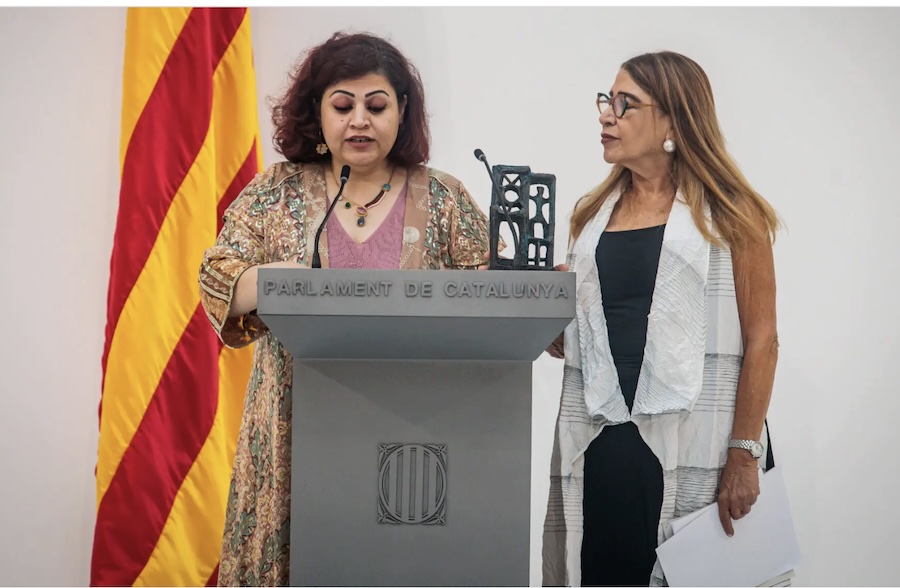
Francesca Albanese, United Nations Special Rapporteur on the situation of human rights in the Palestinian territories, speaks during the emergency conference of The Hague Group at the San Carlos Palace in Bogotá on July 15, 2025. (Photo: Luis Acosta/AFP via Getty Images)

The two-day Hague Group summit ultimately aims to “halt the genocide in Gaza” and sois led by co-chairs Colombia—which last year severed diplomatic relations with Israel—and South Africa, which filed the ongoing genocide case against Israel at the International Court of Justice (ICJ) joined by around two dozen countries. Progressive International first convened the Hague Group in January in the eponymous Dutch city, which is home to both the ICJ and International Criminal Court (ICC), whose rulings the coalition is dedicated to upholding.

“This summit marks a turning point in the global response to the erosion and violation of international law,” South African Minister of International Relations and Cooperation Ronald Lamola said ahead of the gathering. “No country is above the law, and no crime will go unanswered.”

Colombian Deputy Foreign Minister Mauricio Jaramillo Jassir said before the summit: “The Palestinian genocide threatens the entire international system. Colombia cannot remain indifferent in the face of apartheid and ethnic cleansing. The participating states will not only reaffirm their commitment to opposing genocide, but also formulate concrete steps to move from words to collective action.

That action includes enforcement of ICC arrest warrants issued last year for Israeli Prime Minister Benjamin Netanyahu and Yoav Gallant, his former defense minister, for alleged crimes against humanity and war crimes in Gaza including murder and forced starvation in a war that has left more than 211,000 Palestinians dead, maimed, or missing since October 2023, according to the Gaza Health Ministry.

Hague Group members Bolivia, Cuba, Honduras, Malaysia, Namibia, and Senegal will attend the summit. Algeria, Bangladesh, Botswana, Brazil, Chile, China, Djibouti, Indonesia, Iraq, Ireland, Lebanon, Libya, Mexico, Nicaragua, Oman, Pakistan, Palestine, Qatar, Saint Vincent and the Grenadines, Uruguay, and Venezuela will also take part.

Notably, so will NATO members and U.S. allies Norway, Portugal, Slovenia, Spain, and Turkey. Like Israel, the United States denies there is a genocide in Gaza, despite growing international consensus among human rights defenders, jurists, and genocide experts including some of the leading Holocaust scholars in Israel and the United States.

(continued in right column)

Question related to this article:

How can war crimes be documented, stopped, punished and prevented?

How can a culture of peace be established in the Middle East?

(continued from left column)

A spokesperson for the U.S. State Department—which has sanctioned ICC judges and United Nations Special Rapporteur on the Occupied Palestinian Territories Francesca Albanese for seeking accountability for Israeli crimes—told Jewish News Syndicate Monday that the United States “strongly opposes efforts by so-called ‘multilateral blocs’ to weaponize international law as a tool to advance radical anti-Western agendas.”

The spokesperson added that the Trump administration “will aggressively defend our interests, our military, and our allies, including Israel, from such coordinated legal and diplomatic warfare,” even as U.S. allies take part in the summit.

Undaunted by U.S. sanctions, Albanese is among several U.N. experts who spoke at the summit, which she hailed as “the most significant political development in the past 20 months.

In prepared remarks, Albanese—who earlier this month said that “Israel is responsible for one of the cruelest genocides in modern history”—told attendees that “for too long, international law has been treated as optional—applied selectively to those perceived as weak, ignored by those acting as the powerful.”

“This double standard has eroded the very foundations of the legal order,” she argued. “That era must end.”

According to Albanese:

The world will remember what we, states and individuals, did in this moment—whether we recoiled in fear or rose in defense of human dignity. Here in Bogotá, a growing number of states have the opportunity to break the silence and revert to a path of legality by finally saying: Enough. Enough impunity. Enough empty rhetoric. Enough exceptionalism. Enough complicity. The time has come to act in pursuit of justice and peace—grounded in rights and freedoms for all, and not mere privileges for some, at the expense of the annihilation of others.

The Israeli Mission to the United Nations told Jewish News Syndicate that “what the event organizers, and perhaps some of the countries attending, forget is what triggered this conflict—namely, the butchering of 1,200 innocent souls on October 7, and how 50 Israelis remain in brutal captivity to this day by Hamas in Gaza.”

“Attempting to exert pressure on Israel—and not Hamas, who initiated and are prolonging this conflict—is a moral travesty,” the mission added. “The war will not end while hostages remain in Gaza.”

In addition to the ICC warrants for Netanyahu and Gallant, the ICJ—whose ruling in the genocide case is not expected for years—has ordered Israel to prevent genocidal acts in Gaza, to stop blocking lifesaving humanitarian aid from entering the strip, and to halt its assault on Rafah. Israel has ignored all three orders.

“The choice before us is stark and unforgiving,” Colombian President Gustavo Petro wrote in The Guardian last week. “We can either stand firm in defense of the legal principles that seek to prevent war and conflict, or watch helplessly as the international system collapses under the weight of unchecked power politics.”

“While we may face threats of retaliation when we stand up for international law—as South Africa discovered when the United States retaliated for its case at the International Court of Justice—the consequences of abdicating our responsibilities will be dire,” Petro continued. “If we fail to act now, we not only betray the Palestinian people, we become complicit in the atrocities committed by Netanyahu’s government.”

“For the billions of people in the Global South who rely on international law for protection, the stakes could not be higher,” he added. “The Palestinian people deserve justice. The moment demands courage.”

– – – – – –

If you wish to make a comment on this article, you may write to coordinator@cpnn-world.org with the title “Comment on (name of article)” and we will put your comment on line. Because of the flood of spam, we have discontinued the direct application of comments.

Israel: Tens of thousands of protesters at Hostages Square call for an end to the Gaza war

FREE FLOW OF INFORMATION

An article from Arab News

Thousands of demonstrators rallied in Israel on Saturday [June 28] to demand that the government secure the release of 49 hostages still held in Gaza.


A crowd filled the “Hostages Square” in central Tel Aviv. Image: Mostafa Alkharouf/Anadolu Agency/IMAGO

It was the first rally by hostages’ relatives since Israel agreed a ceasefire with Iran on June 24 after a 12-day war, raising hopes that the truce would lend momentum to efforts to end the Gaza conflict and bring the hostages home.

Emergency restrictions in place during the war with Iran had prevented the normally weekly rally from taking place.

A crowd filled “Hostages Square” in central Tel Aviv, waving Israeli flags and placards bearing the pictures of Israelis seized by Palestinian militants during Hamas’s October 7, 2023 attack on Israel.

The deadly attacks prompted Israel’s Prime Minister Benjamin Netanyahu to launch a fierce military offensive in Gaza, vowing to crush Hamas and free the hostages.

Continued in right column)

Questions related to this article:
 
How can we be sure to get news about peace demonstrations?

How can we best express solidarity with the people of Gaza?

(Continued from left column)

Twenty months and several hostage exchanges later, 49 of those seized are still held in Gaza, including 27 the Israeli military says are dead — raising pressure on Netanyahu’s government.

“The war with Iran ended in an agreement. The war in Gaza must end the same way — with a deal that brings everyone home,” said the Hostages and Missing Families Forum, the main body representing the relatives, in a statement to mark the rally.

Some demonstrators called on US President Donald Trump to help secure a ceasefire in Gaza that would see the captives freed, hailing his backing for Israel in the conflict with Iran.

“President Trump, end the crisis in Gaza. Nobel is waiting,” read one placard, in reference to a possible peace prize for the US leader.

“I call on Prime Minister Netanyahu and President Trump,” one released hostage, Liri Albag, said at the rally.

“You made brave decisions on Iran. Now make the brave decision to end the war in Gaza and bring them home.”

– – –

Other sources about the demonstration include the following: Haaretz, Times of Israel and France 24
– – – – – –

If you wish to make a comment on this article, you may write to coordinator@cpnn-world.org with the title “Comment on (name of article)” and we will put your comment on line. Because of the flood of spam, we have discontinued the direct application of comments.