Category Archives: EDUCATION FOR PEACE

Spain: DemosPaz, a new Institute of UAM and the Foundation Culture of Peace

EDUCATION FOR PEACE .

A blog by Montserrat Ponsa (translated by CPNN)

On Friday 19 February 2016, I was honored to attend one of those unforgettable events that make history. At 10.30 h in the morning, the Rector of the UAM [Universidad Autónoma de Madrid] José María Sanz Martínez and the President of Fundación Cultura de Paz Federico Mayor Zaragoza signed an agreement to establish the Joint Institute for Human Rights, Democracy, Culture of Peace and Nonviolence between the UAM and the Culture of Peace Foundation. It will be known as DemosPaz.

mayor inauguration
video of inauguration

The audience was impressive as it was attended by the deans and professors of different faculties, Social Council, friends and colleagues from the world of human rights and peace.

At the podium in addition to the Rector and Federico Mayor were the Dean of the Faculty of Law Yolanda Valdeolivas, the Dean of the Faculty of Science José María Carrascosa, and the dean of Philosophy and Lettersw, José María Cascón.

Their speeches touched us by their emotion. It was not a mere formal act. It was a unanimous decision involving all members of the Rectorate, the Governing Council and the Social Council.

The function of the University, said Yolanda Valdeolivas, is the promotion of knowledge and life styles to be sustainable. Hence the need to work with society, given that peace is more than the absence of war. It is a question of values and attitudes gained through dialogue. Both the UAM and the Culture of Peace Foundation share the rigorous methodology that has always been promoted by Federico Mayor Zaragoza. This agreement with the UAM will enable us to enlarge this and to share it with others.

The Dean of Philosophy Jose Maria Cascón said all the faculties of the university wish to be involved. This brings to an end the neoliberalism and ultra liberalism from the days of Margaret Thatcher and Ronald Reagan, a capitalism that is difficult to reconcile with peace. He criticized the discussions taking place these days in Brussels among those who run the world, calling it shameful. They continue to blame the poor. Our enthusiasm, coincides with the basic principle of this new Institute, to combat the neo-liberal ideology. Hence, the Joint Institute for Human Rights, Democracy, Culture of Peace and Nonviolence, and the ambition and enthusiasm of our Rector, our Deans, and Federico Mayor Zaragoza.

(Article continued in right column)

(click here for the Spanish version)

Question for this article:

What is the relation between peace and education?

(Article continued from left column)

The Dean of Science José María Carrascosa, said it was an honor to participate in this event, and to share the energy of Dr. Federico Mayor Zaragoza, with whom I had the pleasure of working at the Center for Molecular Biology Severo Ochoa. He was pleased that the UAM is supporting this new field of multidisciplinary research. Science has contributed much to life, but the lack of control of some advances has enabled death and atomic destruction, hence the need to achieve our goal which is peace.

Federico Mayor Zaragoza spoke emotionally, saying he was happy and grateful to the UAM, one of the most important centers of the world, for its clear mission: to change from the culture of force and imposition, teaching how to think, to create a philosophy of life, to be free and educated. They undertake intergenerational responsibility on a daily basis with the clear premise that all human lives are equal. He emphasized that we must all share and change from confrontation to discussion. Economics must be subordinated to social justice to ensure a decent life for everyone, a life free from fear. He welcomed the opportunity to work together for the triumph of human rights, especially for those who have not yet known these rights.

Closing the ceremony the Rector José Maria Sanz, thanked Mr Mayor for the confidence he has shown in the UAM: offering us the opportunity for innovation so that, in this 21st Century, research can generates knowledge that transfer to society values that are different from those of the past. His proposal gives us the opportunity to enter this frontier of knowledge, training, and debate. It will allow us to incorporate new areas into UAM, as well as in the society in general. We must focus on interdisciplinary culture in all areas of knowledge, to end inequality, poverty and violence. The UAM will be the engine to offer and go for the opposition values, that build the society of well-being for all without discrimination. The DemosPaz Institute should not only be for UAM but national and international in scope.

The audience was moved by the words we heard. No doubt there will be a beaufiful future for this initiative. No doubt it will achieve great things!

Goma, Nord Kivu, Congo: Third edition of the Amani Music Festival

… EDUCATION FOR PEACE …

An article from Radio Okapi (translation by CPNN)

The third edition of the Festival of Music and Dance “Amani” concluded on Sunday 14th February in Goma (North Kivu). Under the theme “Dancing to change, sing for peace”, the festival promotes a culture of peace and reconciliation among the people of a country beset by armed conflict for over two decades.

Goma
An extract of the performance by Werra Son

The festival featured artists from the Congo and the subregion of the Great Lakes including Noel Ngiama Makanda a.k.a. Werra Son.

The Senegalese artist-musician Ismae Lô highlighted the conclusion of the festival with his favorite songs including “Africas” and “Dibi Dibi Rek”.

He expressed his desire to return again to the Amani Festival and to continue, with other artists, the work of promoting peace not only in eastern Congo but throughout the Great Lakes region.

(Click here for a French version of this article)


Question related to this article:

What place does music have in the peace movement?

As of now, there are 36 CPNN articles on this theme, which shows the great extent to which music is the universal language of peace! These include the first and second editions of the Amani festival at Goma.

Tunisia: Appeal for massive particiption in the first international meeting on education for peace

… EDUCATION FOR PEACE …

An article from Babnet Tunisie (translated by CPNN)

The president of the Association Sawtouna, Hédia Ben Jemaa El Bhiri, has called on the government, political parties, civil society and parents to participate in the first international meeting on peace education to be held in Tunis in the month of July.

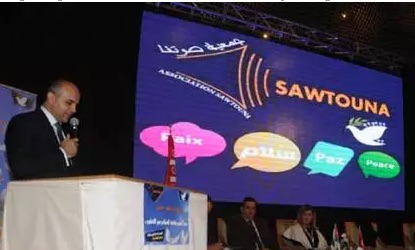
tunisia
Photo TAP

Speaking at a national conference held at the initiative of the association on Saturday at the Congress Palace, under the slogan Together for Peace Education, the President of Sawtouna said the objective of the event is to examine the role of education in anchoring the values ​​of dialogue, tolerance and peace in the younger generations.

The purpose of the first international meeting on peace education is to provide a forward-looking vision of the future of education in 2030, she added.

The dissemination of the culture of peace in schools is a priority of the Ministry of Women, Family and Children according to Nizar Kharbech, Chief of the Ministry of Women .

The official said the holding of the first international meeting on peace education coincides with the launch by the Ministry of a comprehensive program of care for children, particularly in priority areas to help them respond to terrorism.

For his part, the Secretary of State of Egypt for children, Ashraf Ameur said that the Arab world and the Third World need to coexist peacefully within the framework of mutual understanding and respect for the law, citing in this context, the many conflicts afflicting Arab society.

On the sidelines of the conference, a reading was given to a peace pact for children,a text emphasizing the need for values ​​of solidarity, tolerance, freedom and dialogue among younger generations.

At the close of the event, a competition will be held among students of 20 primary schools to choose the best poster on peace.

(click here for the French version of this article.

Question for this article:

Cypriot teachers work for peace and reconciliation through educational programmes

… EDUCATION FOR PEACE …

An article from Famagusta Gazette

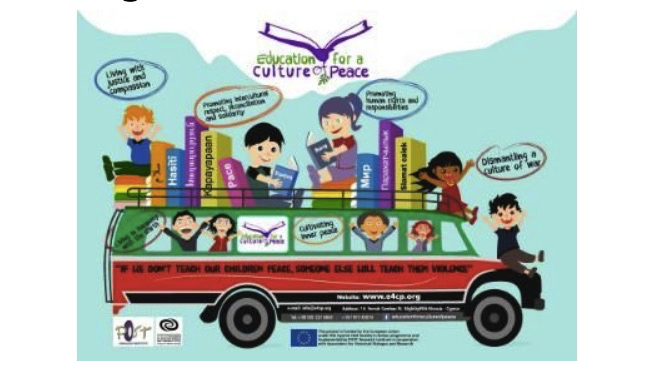
The need to have an educational system which promotes peace and reconciliation rather than perpertuating violence ans war is the focus of a programme entitled “Education for a Culture of Peace”.

In a joint interview with the CNA, Greek Cypriot and Turkish Cypriot participants to the programme Loizos Loukaides and Süleyman Gelener point out that, at a time when efforts to reach a solution of the Cyprus problem are intensified, the need for change in the educational system in order to cultivate a culture of peace and anti-racism is imperative.

cyprus

Loukaides works as assistant in the programme, is a teacher and a consultant on peace education matters. Gelener is also an elementary school teacher and member of the board of the Association for Historical Dialogue and Research (AHDR).

A total of 180 teachers have been trained from both communities as part of the programme and a number of workshops on education for peace and democratic structured dialogue have also taken place.

In the first semester of 2016 joint activities for 160 students from both communities are planned to take place.

The two educators express their conviction that the programme can be described as a success.

Loukaides said that the programme is funded by the EU and was created by a group of people who either take part in AHDR or at the Research Institute POST, either in their personal capacity as scientists, researchers or active citizens.

“The programme was created because of the need to have an educational system which will not perpetuate violence and war but instead it will promote peace and reconciliation, not only as regards relations between the two communities but on a more comprehensive framework which includes other themes of what we call `Peace Culture`”, he says.

The idea for such a programme is not something new, Gelener says on his part. In previous years, he adds, “we had to face some problems as regards its implementation and to the way teachers would come in contact with the programme.”

(This article is continued in the column on the right.)

Question for this article:

Can Cyprus be reunited in peace?

(Article continued from left column)

“Later on, when EU grants for Turkish Cypriots were announced we thought this programme could fall within their remit and after jointly applying for the grant, we got it,” he adds.

According to Loukaides a library has been created at the premises of the Research Institute POST which includes approximately 600 books related to education for peace. It ranges from children`s literature to research books and text books with exercises for education and peace.

With the help of the Ministry of Education and Culture and Turkish Cypriot teachers` trade unions the programme has had access to teachers and has organised workshops across the divide in the capital Nicosia, as well as in Paphos and Larnaca, he points out.

The next workshops took shape out of the views expressed in the first series of workshops, he explains. An introductory workshop took place before the summer and this year, two weeks ago, all teachers from both communities of Cyprus came together in a bicommunal workshop.

For the time being seminars with teachers will continue. Another two meetings will take place with teachers from both communities while during the first six months of the year activities with 160 students from across the island will start.

A theatre summer camp under the title “Crossroads” will also take place in cooperation with the theatrical organisation TheatrEtc experienced in hosting such camps for teenagers.

Next year an international conference on education for a culture of peace is planned, in which teachers and experts from abroad will take part.

The programme will conclude with a topic on the work achieved during its three years of operation which will also include ideas for new actions for both Cyprus and abroad, because, as Loukaides says, “we believe our work is innovative not only for Cyprus but also for other countries which suffer from conflict.”

Referring to the programme`s goals Süleyman Gelener highlights the fact that it does not just focus on Cyprus or on the process between the two communities but also on a wide variety of issues such as human rights, animal rights, environmental protection, organic nutrition and generally issues that matter.

“I feel that if we manage to create a society which is aware on these issues and grows up in such a culture, then the Cyprus problem will be resolved more easily,” he says.

AAPI Convenes 2nd Arts4Peace Forum in Addis Ababa

… EDUCATION FOR PEACE …

An article by Dennis Kabatto in Shout-Africa

There is a growing consensus among young Africans in the continent and the Diaspora that the arts could orchestrate a lasting peace in Africa.  The African Artists Peace Initiative (AAPI), a Pan African movement of artists and peace-makers in association with UNESCO, UNDP, UN Economic Commission for Africa and relevant partners from the African Union Commission is hosting its second Arts4Peace Forum in Addis Ababa, Ethiopia.

AAPI

The two day forum on Tuesday, January 26 – Wednesday, January 27, 2016 will explore five key areas: Human Rights in Conflict Zones and Fragile States, Ending Violence against Women and Girls, Curbing Youth Extremism and Terrorism in Africa, Peace Education through Arts and the Media, Rethinking Refugees and Migrant Situations.

“We are indeed looking forward to fruitful deliberations with all stakeholders, and I would like to express here our readiness and commitment as Artists for a peaceful Africa,” said Meron Dagnew, AAPI Country Coordinator, Ethiopia and Chair of the two day forum.  “This arts 4 peace forum is one of our flagship projects that will be held every year in Addis Abeba right ahead of the African Union Heads of State summit as to make sure the results of the meeting are included in the discussions of the summit.”

Aisha Mohammed, Ethiopia’s Minister of Culture and Tourism will offer the forum’s official Opening Remarks. Some of the dignitaries that will appear to discuss the issues at the forum including Mr. Ibrahim Ceesay, AAPI Executive Coordinator; Dr. Olawale I. Maiyegun- Director, AUC Social Affairs Division; Alieu Jammeh, Minister of Youth and Sports of The Republic of The Gambia; Mr. Luckman Jaji- Poet/AAPI Liaison Officer to AU and ECA; Ms. Helen Afsaw, Director- Selam Ethiopia; Mr. Sydney Salmon: Musician and Ambassador of AAPI; Mr. Taye Balogun, Film-maker and Founder Storytellers; Mr. Faris Basharahil, Visual Artists and Director-Social Creative Singapore; Ms. Angela Martins, Head of Culture AU Social Affairs Department; Mr. Elyes Guermazi Executive Director,The International Institute of Debate; Ambassador Olusegun Akinsanya, Regional Representative & Senior Advisor, Regional Office Institute for Security Studies Addis Ababa; Ms. Michelle Ndiaye Ntab Director, Institute of Peace and Security Studies

AAPI officials say their movement inspired by the AU Constitutive Act, AU Year of Peace and Make Peace Happen Campaign, AU 2063 Agenda and the UNESCO Culture of Peace and Non-Violence Campaign will utilize the arts as their “weapon and tool for nurturing a culture of peace based on values, attitude, and ways of life conducive to the promotion of peace among individuals, groups and society.”

Question for this article:

Nonviolent Peaceforce Strategy: 2015-2020

EDUCATION FOR PEACE .

Excerpts from the strategy document of the Nonviolent Peaceforce

Nonviolent Peaceforce is a global civil society organisation. We protect civilians in violent conflicts through unarmed strategies. We build peace side by side with local communities. We advocate for the wider adoption of these approaches to safeguard human lives and dignity. [See CPNN articles about their work in South Sudan, Philippines, Ukraine, Syria, and Myanmar].

NVP

Unarmed Civilian Protection (UCP) is a proven way to reduce violence before, during, and after armed conflict; the effectiveness stems from providing direct physical protection, while empowering local peace processes and infrastructures. Unlike traditional military peacekeeping or armed private security firms, there is no reliance on weapons; this paradigm uses relationships rather than threat.

To increase our impact, we have two mutually reinforcing strategic aims for the next five years:

• Enhance protection for civilians in armed conflicts and strengthen local peace processes. We will expand our programme implementation by increasing field activities, enhancing civilian participation in peace processes, and building local protection capacities.

• Mainstream UCP policy and practices as an effective response to violent conflicts. We will step up our advocacy to advance unarmed civilian protection by influencing decision makers, advancing the methodology, and promoting greater adoption of unarmed civilian protection by others across the world stage.

Nonviolent Peaceforce is endorsed by many world leaders, from Nobel Peace Laureates to heads of state, such as Justin Trudeau, Rigoberta Menchú, Desmond Tutu, Jose Ramos Horta, Oscar Arias Sánchez, Lech Wałęsa and the Dalai Lama. They believe that our approach offers an innovative and effective solution to civilian protection and conflict transformation. In June 2015, the High-level Independent Panel on United Nations Peace Operations, commissioned by the United Nations Secretary General, concluded that “Unarmed strategies must be at the forefront of UN efforts to protect civilians.”(United Nations, 2015, p. 23)

Vision

We envision a worldwide culture of peace in which conflicts within and between communities and countries are managed through nonviolent means.

Mission

We protect civilians in violent conflicts through unarmed strategies. We build peace side by side with local communities. We advocate for the wider adoption of these approaches to safeguard human lives and dignity.

(Article continued in the right column)

Question for this article:

Can peace be guaranteed through nonviolent means?

(Article continued from the left column)

Guiding Principles

* Nonviolence: We believe nonviolence is the strongest and most effective force for achieving the peaceful settlement of conflicts. We will not engage in nor support actions which may result in harm or loss of life. NP’s adherence to nonviolence is unconditional, because it asserts that conflict transformation cannot be achieved by violent means.

* Non-partisanship: We do not take sides nor advocate for partisan positions in any conflict. Instead, we are guided by international laws and norms, including International Humanitarian Law, Refugee Law, Human Rights Law, and relevant UN Resolutions. We are committed to the dignity, human security, and well-being of all and are independent from any interest group, political party, ideology or religion.

* Primacy of local actors: We facilitate and create safer spaces for local actors to work out their own solutions to their problems.

* Civilian-to-civilian action: We employ civilians to protect civilians in communities affected by violent conflicts.

Approach

Unarmed Civilian Protection (UCP) is a strategic mix of key principles, sources of guidance, and a set of methods with specific skills. Applied together, they constitute the core of UCP (see figure below). UCP is the practice of deploying professionally-trained unarmed civilians before, during, and after violent conflict to prevent or reduce violence, provide direct physical protection to non-combatants, and strengthen local peace infrastructures. Unlike traditional military peacekeeping or armed private security firms, with UCP there is no reliance on weapons; this paradigm uses relationships rather than threat.

Over the past 12 years, Nonviolent Peaceforce has developed and field-tested unarmed civilian protection techniques, which are based on four main methods: proactive engagement, monitoring, relationship building, and capacity development. Each of these methods has a number of applications as detailed in the graphic [see original article]. Frequently, UCP methods and applications are used in a dynamic interaction, reinforcing and complementing each other. Actual implementation activities are based on specific context, conflict analysis, and risk assessment.

By creating networks of relationships, strengthening self-protection strategies, developing local peace infrastructures, and creating safe spaces for civilians to address urgent issues, UCP broadens the options for civilians to choose their own security priorities.

NP’s civilian teams are diverse and comprised of staff from the violence-affected communities as well as from outside. All NP personnel are rigorously trained in the tools and strategies of unarmed civilian protection. They are committed to a code of conduct focused on mutual respect, equity, and non-discrimination. NP works in partnership with local communities, organisations, and complementary international organisations to create locally owned, sustainable solutions that protect and support civilians struggling to survive in conflict zones.

USA: The First Mural Museum in the World is a Culture of Peace Museum

… EDUCATION FOR PEACE …

Joanne Tawfilis

Prior to and during the International Decade for a Culture of Peace and Non Violence Among Children of the World (2001-2010) The Art Miles Mural Project began creating a series of five by twelve foot murals on canvas that encompassed all eight peace keys and more. To date, more than 4,000 murals have been created by over one-half million people from more than one hundred countries.

tawfilis
Invitation to the Opening (click to enlarge)

The murals have been exhibited in major museums and festivals throughout the world and have received a number of prestigious awards. The murals, each one totally unique and individual reflect what is seen as a “visual documentation of modern history” because they are a reflection and expression from individuals and collectively as a group. It’s really not about the number or even the quality of the murals; it has always been about the “process” of bringing people together through mural art.

In 2014, some of the mural images were exhibited at UNESCO National Headquarters in Paris and seen by thousands of people, then in a time when violence had not escalated to the level it has this past year and the work of so many participants beautifully shown to the world thanks to the sponsorship of the US Embassy on the entrance fence line there. The Culture of Peace has ALWAYS been the cornerstone of each and every mile of murals, including the most popular of the twelve themed miles; the Environment Mile. Each mile of mural consists of four hundred forty (440) murals.

On January 22, 2016 the Muramid Mural Museum and Art Center will open it’s doors to the world as the FIRST mural museum in the world and will not only exhibit physical murals, but will include projection of murals and images of the thousands of children, youth and adult creators of them from all over the world. Another wall of the museum will be constructed to present live webcasting on large screens with and from mural creators and facilitators throughout the world. Urban artists, those working and living in refugee camps, hospitals, schools and other locations will be seen! More important and special will be those painting murals in response to natural and human disasters who will create “healing murals” from all continents in the world with the Culture of Peace pillars at the heart of each.

We welcome all muralists to participate whether you are a student, a teacher, an organizer of projects or just an ordinary citizen because this 100% all-volunteer project has always been about you. Thanks to the hard work of so many volunteers and angel philanthropists, the thousands of murals have now found a home in what is now the Muramid Mural Museum and Art Center, located in Oceanside, California, USA.

Please contact: Joanne and Fouad Tawfilis at JTawfilis@aol.com or FTawfilis@aol.com

Question for this article:

Latin America: Pedagogical Movement: new phase, new impetus

… EDUCATION FOR PEACE …

An article from Education International

The third meeting of the Pedagogical Movement renewed the cohesion and agenda for the future of education in Latin America, with a plan to strengthen the influence of the trade union movement on public policies.

pedagogical

The meeting was held in San José, Costa Rica, between 1 and 3 December, and was attended by 500 people from 18 countries and 34 education trade unions in Latin America, as well as international guests from the United States, Norway, France and Sweden.

Hugo Yasky, Chairman of the Regional Committee of Education International for Latin America, indicated that the path that the Pedagogical Movement has to embark on represents a new stage  in which all trade unions have to assess the school experience together with the teaching experience and practice, in step with the social struggle and movements. “We have to advance to include other social sectors in the practice, move forward and seek a common cause with representatives from sectors involved in the grass-roots movement of the peoples of Latin America. This construction of alliances is key,” Yasky argued.

The declaration which resulted from the meeting cited the Pedagogical Movement as a platform for meeting and collective construction, determined to embody a contrasting vision of society in the field of education to that which is imposed by the dominant force, by the economic, media, financial and military power.

(This article is continued in the column on the right.)

(click here for the French version of this article or here for the Spanish version)

Question for this article:

What is the relation between peace and education?

(Article continued from left column)

Against the commercialisation and privatisation of education

One of the key themes of the meeting that the affiliated organisations of EI debated concerned the strategies used by multinationals to privatise education. Thus, Antonio Olmedo, researcher at the University of Roehampton in the UK, illustrated the topic with his lecture “The Education privatisation and commercialisation process.” He analysed the approach of large companies to impose their mercantile proposals on governments, thereby contributing to insecurity about the quality of education and teaching. “We have to think of other solutions, because neoliberalism is like a chameleon and is more regulated than the public sector itself,” he reassured.

Similarly, Professor Luiz Fernandes Dourado, of the Federal University of Goiás, Brazil, underscored that privatisation is a sophisticated process and, as a result, leads to the weakening of the trade union movement and breaks with democratic management in schools. This runs counter to the vision of the Latin American Educational Movement, which sees education as a social right.

Inspiration behind the international campaign

David Edwards, Deputy General Secretary of Education International, pointed out that the new worldwide campaign conducted by his organisation against the business of education promoted by multinational corporations and multilateral organisations drew inspiration from Latin America. The campaign is a new tool to defend public education and to show the real intentions behind privatisation.

“At the Ottawa Congress, we were instructed to launch a campaign against the privatisation of education and to unmask those behind it. We started the campaign to analyse what is happening in other parts of the world. In education, the world market amounts to more than 3 billion and the governments in certain countries are facilitating access to this ‘booty’ for private groups. We are trying to show citizens what these multinationals are really doing,” Mr Edwards said. 

(Thank you to Janet Hudgins, the CPNN reporter for this article.)

Brazil: Public hearing discusses education for culture of peace

EDUCATION FOR PEACE .

An article from Aqui Acontece (translated by CPNN)

The Commissions of Culture and Education of the House of Representatives today (8 October) held a public hearing to discuss educational experiences focused on culture of peace. The debate was suggested by Jandira Feghali (Communist Party of Brazil – Rio de Janeiro) and Aliel Machado (Communist Party of Brazil – Paraná ).

brazil
Click on photo to enlarge

Jandira Feghali says there is a culture of “systemic violence” in schools in Brazil. “Children, adolescents and adults suffer daily from direct violence (assault, bullying, etc.) and indirect violence (lack of school material conditions and surroundings),” she says.

The congresswoman recalls that culture of peace issues are already widely promoted by international bodies like the United Nations and the United Nations Educational, Scientific and Cultural Organization (UNESCO).

“In Brazil, Peace studies has emerged in various universities, generating quality arguments, and dozens of cities have developed everyday projects of education for peace, generating changes in the focus of coping with violence by learning nonviolence or peace, “said Mrs.

The parliamentarian also quotes the National Education Plan (PNE), which provides policies to combat violence in schools, “including the development of actions aimed at training educators to detect the signs of the causes of violence, such as domestic and sexual violence, favoring the adoption of adequate measures to promote the construction of a culture of peace and a school environment with security for the community. ”

Representative Aliel Machado says that even with that provision in the PNE, it is necessary to deepen the discussion and propose “effective actions and long-term in schools as part of their planning and daily school practices”. “Schools should incorporate daily practices of education for peace,” he suggests.

(click here for the original Portuguese version of this article)

Question for this article:

Peace Studies in School Curricula, What would it take to make it happen around the world?

Guests invited to the debate included:

– The special advisor to the Ministry of Education, Helena Singer;

– coordinator for the implementation of prevention actions for public safety of the Department of Policies, Programs and Projects of the Ministry of Justice, Priscilla Oliveira;

– Professor of the Department of Education and the Program of Graduate Studies in Education of the Brazilian Federal University of Ceará (UFC), Kelma Socorro Alves Lopes de Matos;

– Professor at the Federal University of Bahia (UFB) and founder and director of the National Institute of Education for Peace and Human Rights (Inpaz), Feizi Masrour Milani;

– Professor of the State University of Ponta Grossa (UEPG-PR) and coordinator of the Center for Studies and Teacher Training in Education for Peace and Coexistence of UEPG, Nei Alberto Salles Filho; and

– The founder of the Organization for Relational Intelligence and Master in Social Psychology at the Psychology Institute of the University of São Paulo (USP), and visiting professor at the University of California, Santa Barbara (USA), João Roberto de Araújo.

Colombia: #ConversemosEnPaz: In addition to the agreements, we must learn and unlearn for peace

.. EDUCATION  FOR PEACE ..

An article from Canal Institucional de Colombia (translated by CPNN)

Besides supporting the peace agreements being negotiated in Havana, the Colombian society needs to unlearn all the negative forms of the inherited relationship of conflict and to learn to work collectively with new sensibilities, emotions, feelings, narrative, language, attitudes and actions. Without this, it will be impossible to build leadership required for peace.

conversemos
trailer for the television program

This is the theme of the dialogue between the President of the Republic, Juan Manuel Santos Calderon and three teachers, experts in peace education, invited by the Institutional Channel for the fifth chapter of the series’s “Conversations in peace”, Sunday 27 September at 8:00 PM. The program can also be viewed online at www.canalinstitucional.tv

The dialogue participants

The participants are Maria Teresa Ramirez Cardona, Master of Education and Pedagogy; Amada Benavides, president of the School of Peace Foundation and consultant to the Global Campaign for Education for Peace; and Marieta Quintero, PhD and Post Doctoral Fellow of Social Sciences, author of “The School as a Territory for Peace” and national coordinator of the Peace Education Collective, which brings together 45 public and private institutions.

What needs to be unlearned

We are challenged to unlearn the habits of vertical and imposed leadership, seeing things as black and white, unwanted processes of the settlement of territories and the use of resources; relations of exclusion and stigmatization, discrimination against victims of the conflict and demobilized ex-combatants, and stereotypes about the values ​​and lifestyles of indigenous peoples and Afro-Colombian communities.

As the President said, we need to unlearn and to banish from our bodies negative feelings such as anger, to give up all practices that dehumanize the other as well as expressions like “rats” and “terrorists” by which we have called the “enemies” during the civil war.

What needs to be learned

We are challenged to learn outrage against atrocities, to avoid imposing dogmas or visions of society and culture, to reconstructed our historical memory, to decide collectively to take action for the common interest, to direct ourselves towards a political solution of the conflict, to value informed conversations as the social practice of citizen participation and to manage our emotions and feelings, which can be learned just as we can learn math, English or biology.

No less important is to learn to reinvent the environments, programs and educational tools of schools for the children who return from the zones of war, or for communities where victims and perpetrators live side by side, where the processes of coexistence, forgiveness and reconciliation are urgent matters.

(Article continued in right column)

(Click here for the original Spanish version of this article)

Questions related to this article:


What is happening in Colombia: Is peace possible?

(Article continued from left column)

The practice of tolerance seems simple, but it is not. If it is done badly or misunderstood, tolerance can injure personal autonomy, encourage complicit silences, trigger perverse mechanisms of self-protection, dismiss politics as a means to resolve conflicts and homogenize and stultify the ways of thinking and acting.

In short, we need to move from teaching the brain to teaching the heart, emotions, feelings, perceptions or feelings of everyone, children and adults, teachers and pupils, governors and governed, every day, in all spaces, times and circumstances, with new narratives, with no exclusions, recognizing and respecting difference, diversity and pluralism.

Law for the Teaching of Peace

For these and other purposes the new law for the teaching of peace has been conceived and promulgated, whose legal implementation will begin in January 2016. The dialogue participants expressed some dissatisfaction and fears but also highlighted some benefits derived from its promulgation and appropriation.

Dissatisfaction because, in their opinion, the design process for the law did not involve all the stakeholders in the education system and for that reason many of the lessons that have been learned in schools and by teachers in areas marked by conflict have been ignored. Instead, the standards have established from above, without other approaches .

They feel there is no articulation with the learning of citizenship skills, citizenship training and education for human rights and many feel frustrated because there has not been a prior process of training for its implementation.

However, they acknowledge that the law for the teaching of peace has provided a context for reflection about the role of the school, debate about programs and educational tools and has led people to imagine new learning environments and pedagogical processes of peace education. What is remarkable, they say, is the growing interest about peace education in the world of the university and in academic sectors.

National Encounter on Education for Peace

To facilitate the exchange of knowledge on peace education, formal and informal, on October 1 and 2 in Bogotá, there will be a national meeting involving professionals of various disciplines, as well as grassroots and social and community organizations to develop pedagogical processes for building a culture of peace.

The meeting draws on the findings and recommendations from various different groups, collectives and platforms who have worked for more than a decade on issues of human rights education, education for democracy and citizenship, education for coexistence, conflict resolution and other issues related to peace education.

The aim is to coordinate these efforts and create a National Agenda for Peace Education, which can help overcome the various forms of direct, structural and cultural violence and allow the establishment of a culture of peace, that goes beyond ceasefires and peace agreements, ie, peace with social justice, promoting human rights, advancing democracy, solidarity and responsibility.
 
You can watch “Conversations in Peace” on Sunday at 8 pm on the Institutional TV Channel and via streaming on the Internet at www.canalinstitucional.tv

You are invited to join our Twitter account @InstitucionalTV, using the hashtags #ConversemosEnPaz and #ConversemosenlaPublicaRTVC