Category Archives: EDUCATION FOR PEACE

Argentina: Conflicts: Positive Balance of Community Mediations

… EDUCATION FOR PEACE …

An article from Jujuy al dia (translation by CPNN)

The Provincial Director of Mediation and RAC, Gilda Romero of the Ministry of Justice, took stock of the tasks carried out during 2020, stating that in the face of the health situation, due to COVID-19, community activities were developed, through digital tools, in order to achieve the peaceful resolution of conflicts and controversies that arose during the past year.
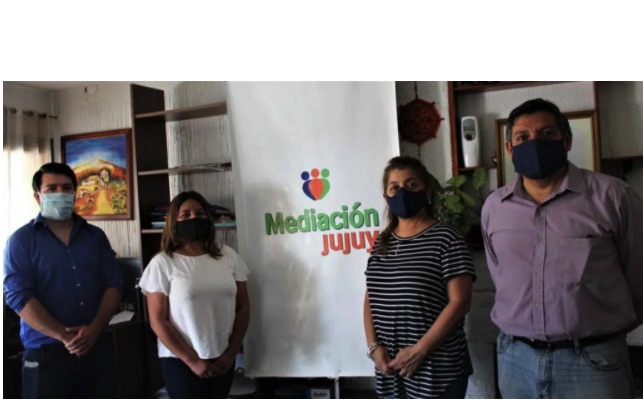
Romero highlighted that the pandemic complicated the coexistence between neighbors and relatives and sometimes led to conflicts or disputes; “Faced with this situation, the Directorate intervened by opening spaces for dialogue between those affected, in order to reach peaceful resolutions,” she said.

She mentioned that the most recurrent conflicts were caused by actions such as annoying noises, parties or celebrations, excessive volume of music, misunderstandings, incorrect waste management, abuse of the use of common spaces, such as the occupation of another’s parking spaces, being among the most common.

(Article continued in right column)

(click here for a version in Spanish).

Question for this article:

Mediation as a tool for nonviolence and culture of peace

(Article continued from left column)

In addition, she recalled that they also carried out the “Virtual Conversation on Community Mediation” for the mediation centers of Libertador Gral. San Martín, La Mendieta, Perico, Monterrico, Humahuaca, El Carmen and Dr. Manuel Belgrano, providing virtual monitoring and advice in various cases that arose during the pandemic.

“Mediation as a body promotes good relations and cooperation between public and private institutions. They worked together with the Directorate for Children and Adolescents of the Municipality of San Salvador de Jujuy, through training “Protocol of Access to Justice for children, girls and adolescent victims of crime.” Also with the Provincial Council for Women and Gender Equality through the training “Law on Gender Violence and Gender Diversity.” Both trainings were aimed at community mediators.

Another task was the “Workshop Community Operators” which included four virtual meetings for students who are about to complete their studies at the Instituto Superior Populorum Progressio “In.Te.La.” of Libertador Gral. San Martin.

“As a member of the Federal Network of Mediation Centers of the country, I participated in the videoconference “20 years working for the culture of peace.” This was sponsored by the Undersecretary of Access to Justice, National Directorate of Mediation and Participatory Methods of Conflict Resolution Also later, the “Meeting of Mediators 2020″ held in the province of Córdoba,” she said.

In addition, the official mentioned that she participated in the virtual campaign with the slogan “Mediation as a lifestyle” and “Mediation in times of Pandemic”. This promoted through social networks, the importance of the essential values ​​of relationships social: dialogue, tolerance, respect, empathy and solidarity, as primary tools for peaceful and harmonious coexistence between neighbors and families.

“Community Mediation is the fundamental tool that works in the construction of a culture of peace, generating spaces for dialogue, peaceful agreements, consensus, reflections and experiences. It is the conflict management process that, through dialogue and consensus, manages to settle controversies from the simplest to the most complex, avoiding that the conflict goes into the judicial system”, concluded the Provincial Director of Mediation, Gilda Romero.
Spain: Movimiento por la Paz produces educational material for secondary schools on the culture of peace

. EDUCATION FOR PEACE .

An article from El Faradio (reprinted according to attributes of Creative Commons) (translation by CPNN)

The association Movimiento por la Paz, a member of the Cantabrian Coordinator of NGOs, has produced teaching material aimed especially at secondary education teaching staff with the aim of promoting a culture of peace.

The materials are part of a broader project that they have been developing through various channels (courses, training, exhibitions, social networks…) of the “five paths to peace”.

The culture of peace is made up of all the values, behaviors, attitudes, practices, feelings and beliefs that make up peace. But peace must be understood in a positive sense, as the overcoming of any type of violence, and not only as the absence of war. This is stated in Law 27/2005, of November 30, on “Promotion of Education and the Culture of Peace”.

To promote the culture of peace, tutors and teachers have two invaluable resources: a space and a group of young people with whom they can develop the commitment to build a more peaceful world. To promote this commitment, we focus on five areas: cultural diversity, gender equality, fight against poverty, care for the environment and Human Rights. The five paths to peace.

The socio-affective approach requires a coherence among the ideas, attitudes and behaviors that we want to transmit and the methodology that is used. It can be said that it is a vehicle for achieving honesty, for reviewing one’s own personal values, both for the people who facilitate the process and for the rest of the participants.

On the other hand, it invites positioning and commitment to reality, the assumption of responsibilities, to participate in the transformation of what we do not like in the world where we live.

(Click here for the original Spanish version).

Question for this article:

Where is peace education taking place?

This is easier to do in company, because it generates interaction, participation, effective communication, trust, mutual knowledge, and empathy. It is a way of working that produces collective thought, knowledge and action.

Another argument that justifies the use of this methodology is the need for an education that connects us with the emotional level. Feelings are part of cognitive processes and condition our attitudes and behaviors. Conflicts must be resolved or transformed positively on an emotional level. Feelings allow us to know more about ourselves and about other people.

The socio-affective approach is nourished by the techniques of group dynamics, but it is a free space for experimentation that allows reflection.

The objective is that through feeling, thinking and acting, we favor the creation of a citizenry that feels part of the same community, that cares about collective issues and that develops a commitment to the local and the global.

The techniques include the creation of conscious groups that develop their own decision-making processes and, therefore, reflection.

Click here for the guide with the materials

MPDL

Movimiento por la Paz -MPDL- is a Development, Humanitarian Action and Social Action organization created in 1983. It is a member of the Cantabrian Coordinator of NGOs. Currently, it has a presence inside and outside our borders with more than 200 projects.

The delegation of the NGO in Cantabria, founded in 2007, works for Human Rights and the Culture of Peace with programs of International Protection, legal advice, labor advice, volunteering and education and awareness.

Training is one of its main lines of work. They also respond to queries on topics such as the management of unemployment benefits, information on labor rights during the State of Emergency, on training resources in Cantabria, knowledge about job search routes and the preparation of the curriculum vitae.

The organization also offers advice on immigration processes, deadlines, requirements to obtain documentation, work permit, nationality or any other legal doubt that may arise, at the contact: jm.carmona@mpdl.org. They also continue to report on the rights of Domestic Workers, requirements that must be met for hiring, salaries, conditions, calculation of settlement.

And the organization is an information point for women, receiving consultations, providing care or informing about resources for women who have suffered or suffer gender violence.

Mexico: The Academic of Education participates in the Conference for Peace of the Maguen David Hebrew School

. EDUCATION FOR PEACE .

An article from Anáhuac (translation by CPNN)

A workshop “Peace transcends and summons us” was held for high school students from the Maguen David Hebrew School as part of their Conference for Peace. The workshop was taught by Prof. Susana Memun Zaga, coordinator of the Area of ​​the Degree in Organizational and Educational Pedagogy of our Faculty of Education .

During the month of November, and for the seventh consecutive year, the Maguen David Hebrew School organizes the Days for Peace to honor the memory of the Prime Minister of Israel and winner of the Nobel Peace Prize in 1994, Yitzhak Rabin. The objective is to promote the concept of Peace in the young people through various speakers, including community leaders, rabbis, leaders of non-governmental organizations, universities, foundations and teachers,

(Click here for the original Spanish version).

Question for this article:

Is there progress towards a culture of peace in Mexico?

What is the relation between peace and education?

The young people reflected during the workshop on the natural relationship between the concept of Peace and Education, on the importance of Education for a culture of Peace and the importance of their own commitment to take actions in order to build peace.

In addition to the above, they collaborated in small groups to analyze thoughts and phrases of Martin Buber, Hanna Arendt, Paulo Freire and María Montessori, where they discussed their relationship with education from their own context as young students. Finally they presented their conclusions and interacted about their ideas and their own experiences, sharing their commitments and becaming aware of the decisions they have in their hands to build a better world.

As a Faculty of Education, it is of great importance to us to collaborate with other educational institutions in strengthening and building a culture of peace.

Nairobi, Kenya : International Peace Research Association Conference 2021

… EDUCATION FOR PEACE …

An announcement from the Global Campaign for Peace Education

Established in 1964, the International Peace Research Association (IPRA) undertakes research on issues pertaining to international peace and security. Every two years, it holds a conference to discuss findings and solutions to problems affecting peace, security and development across the world. It does so in partnership and/or collaboration with academia, policy-makers, research institutions, and various other multi-disciplinary thinktanks globally.


IPRA shall be holding its 28th Biennial General Conference themed, PEACE TECHNOLOGY; Positioning Fourth Industrial Revolution and Emerging Technologies in Fostering Global Peace’ in Nairobi -Kenya from the 11th to 15th January 2021 hosted by Multimedia University of Kenya (MMU). Since 1964, this shall be the first gathering of the Global Network of Peace Researchers in the East Africa region and the third (3rd) of this kind in Africa as a continent (1998 – Durban, South Africa ; 2016 – Freetown, Sierra Leone).

(Continued in right column)

Question for this article:

Where is peace education taking place?

(Continued from left column)

Part of the objectives of the 28th IPRA General Conference are inclined towards discussions and proposals surrounding plenary themes on Peace Technology in the Anthropocene, International Humanitarian & Human Rights Law, Arms Control and Technology Revolution, Information Technology and Peace, Sports Science and Peace, Climate Change and Early Warning Systems, Forensics and Counter-Terrorism, Media, Virtual Network and Education, Mental Health, Spiritual Security and Spiritual Intelligence. Other specific objectives shall be addressed under the various sub-themes represented in IPRA’s ten (10) Commissions which can be accessed at: http://iprapeace.org/index.php/commissions.

Global Trade, Corporate Surveillance and Peace

The Republic of Kenya continues to contribute to peace and security efforts across the continent and globally. The country having hosted many refugees who fled from civil conflicts in their respective countries of Somalia, South Sudan, the Great Lakes Region (Rwanda, Burundi, DR Congo), continues to discharge its mandate to promote peace and security under the various regional and international conflict resolution mechanisms. Kenya also enjoys a vast expanding digital revolution with approximately 38 percent of its predominantly young population being within the age group of 15 – 35 years.

Thus, the 28th IPRA General Conference in Nairobi, Kenya is expected to highlight progress and challenges of 21st century revolutionized Information, Communication and Technology, their effects on global (dis)order and present ultimatums on viable next steps.

Spain: Sierra Blanca achieves second place in the Annual Awards for the Promotion of the Culture of Peace and School Coexistence

. EDUCATION FOR PEACE .

An article from Marbella Directo

The Ministry of Education and Sports has distinguished the Sierra Blanca de Marbella Secondary Education Institute with second place in the Annual Awards for the Promotion of the Culture of Peace and School Coexistence for the 2020/21 academic year, which have recognized a total of eight centers throughout the autonomous community.


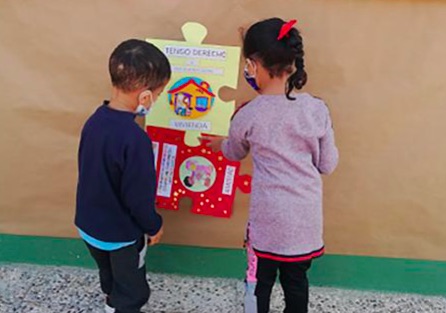
Children from La Escuela Infantil Sol de Portocarrero

(Click here for the original Spanish version).

Question for this article:

Where is peace education taking place?

The center has shared this second prize with the Carlos V school in La Línea de la Concepción. The first prize has also been shared and has gone to the Sol de Portocarrero Infant School in Las Norias de Daza (Almería) and the Malala de Mairena del Aljarafe school (Seville). The two third prizes have been awarded to the Andrés de Cervantes de Cabra school (Córdoba) and the Francisco de los Cobos Institute in Úbeda (Jaén).

In addition, the Purísima Concepción de Granada Private Teaching Center for Special Education and the Adersa I Rural Public Center in Fuenteheridos (Huelva) have been recognized with honorable mentions.


The objective of these awards is to publicly recognize and disseminate the best practices that are being carried out in the school environment to promote a culture of peace and the comprehensive training of students to achieve a more just and tolerant society, as well as peaceful conflict resolution and dialogue.


The Awards for the Promotion of the Culture of Peace constitute one of the initiatives of the Ministry aimed at improving coexistence in educational centers, among which is also the network “School: Space for Peace” made up of more than 2,400 schools and institutes. This means that around 650,000 students and 61,200 teachers participate in this initiative that involves all sectors of the educational community.

UABJO launches Institutional Program for the Culture of Peace in Oaxaca, Mexico

. EDUCATION FOR PEACE .

An article from Quadratin Oaxaca (translation by CPNN)

The Benito Juárez Autonomous University of Oaxaca (UABJO) and the Honorable Congress of the State, have ratified a framework collaboration agreement to strengthen the Culture of Peace.

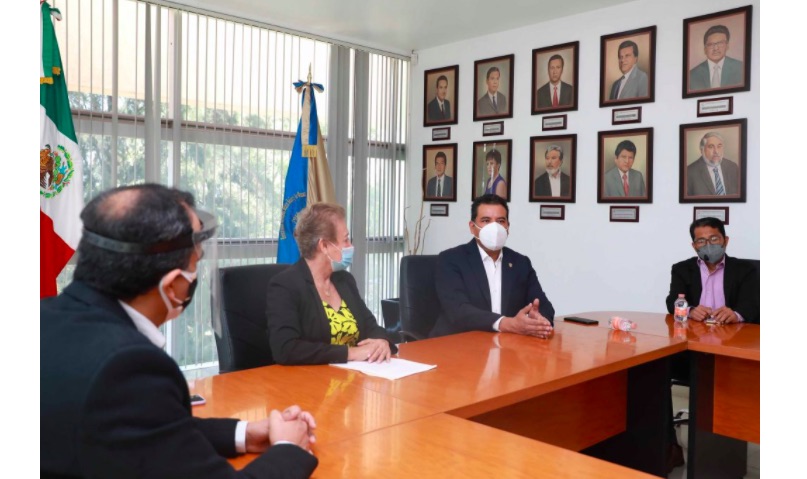
This document signed by Deputy Delfina Guzmán Díaz, President of the Political Coordination Board of the 64th Legislature and the Rector of the University, Eduardo Bautista Martínez, inaugurated the Institutional Program for the Culture of Peace in Oaxaca, it was reported in a statement.

In a meeting held in the rectory offices, the Deputy recognized the importance of strengthening the work with the University, as it is a plural and diverse space that trains a majority of professionals in the state and specialists who contribute to development of a better society.

(Click here for the original Spanish version).

Question for this article:

Is there progress towards a culture of peace in Mexico?

Where is peace education taking place?

“The program that we start today will be the way to reach all sectors, peoples and governments, to achieve the path to a culture of peace,” she said.

On his part, the Rector considered essential to add actions for the integral formation of the student community, with the support of specialists who promote the issues of equality, equity and listening.

He added that this strategy will involve the Institute of Sociological Research of the University, with the purpose of generating collective synergies, incorporating human rights defenders, related government entities and civil organizations.

“This action will also articulate with all the work that the University has carried out in matters of gender, human rights and public policies, through a methodology that generates tools for training in mediation, management and conflict resolution,” he explained.

In addition, in the medium term, it is intended to propose the creation of an observatory on conflict, development of community peace programs, congresses, seminars, training programs and the creation of a professional Masters degree in Culture of Peace

Also taking part In the meeting were the Coordinator of the program in question, Leticia Cruz López; the General Counsel, Héctor López Sánchez and the director of IISUABJO, Manuel Garza Zepeda.

Madrid : Fifth edition of the Film and Human Rights Festival

EDUCATION FOR PEACE .

An article from Soy de Madrid

The V edition of the International Film and Human Rights Festival begins on December 4 and ends on December 13. For the first time, it will be held online.

The V edition focuses on issues that are included in the Universal Declaration of Human Rights, from a pluralist vision and based on reconciliation and the culture of peace, It takes into account the authoritarian drift spreading around the world and the events of the pandemic.


Human rights are threatened in Spain and in the rest of the world, due to the democratic, economic, social, political, environmental and health crisis, to which is added the one derived from the pandemic. The Film Festival will screen films about the situation caused by covid-19, seeking the hope of humanity.

This year’s programming has selected more than 50 films. The Official Section is divided into Full-length Feature Films, Medium-length Films, Fiction Short Films and Documentary Short Films.

(continued in right column)

(Click here for the original Spanish version of this article.)

Question for this article:

Film festivals that promote a culture of peace, Do you know of others?

(continued from left column)

As a result of the diversity of the works, the Festival will add topics on social conflicts, disability, the elderly, culture of peace, women’s rights in the world, intolerance and extremism, development and cooperation projects, children’s rights, immigration, poverty, etc.

The films will be open and free on the festival website online for 10 days.

The Jury for the Official Section includes personalities such as Sécun de la Rosa, known for his television and film work as a comedian actor, Aida Folch, known for her role as Françoise Alcántara in the television series Cuéntame como pasa, and Mario Marzo, actor and pianist known for playing Lucas in Los Protege, among others. Click here for the rest of the jury.

Films:

The state of Texas and Melissa: directed by Sabrina Van Tassel. Her name is Melissa Lucio and for more than 10 years she has been waiting for her fate on death row. Melissa was the first Hispanic woman sentenced to death in Texas.

Under fire: directed by Sjoerd van Grootheest and Irene Vélez Torres. A group of peasant coca growers in southwestern Colombia watch the peace process break down. Over the course of three years it is shown how they survive in the midst of the most difficult circumstances.

The Conscience of Clothing – Directed by Patrick Kohl. Fashion blogger Willy Iffland and journalist Helen Fares travel to Cambodia, where they meet workers, factory owners and union activists campaigning for fair wages.

Behind the blood: directed by Loretta van der Horst. Behind the blood shows the true story of a man fighting rampant gang violence in Honduras.

Click here to consult the rest of the program.

Mexico: Virtual seminar on peace building in schools

. EDUCATION FOR PEACE .

An article from Asi Sucede

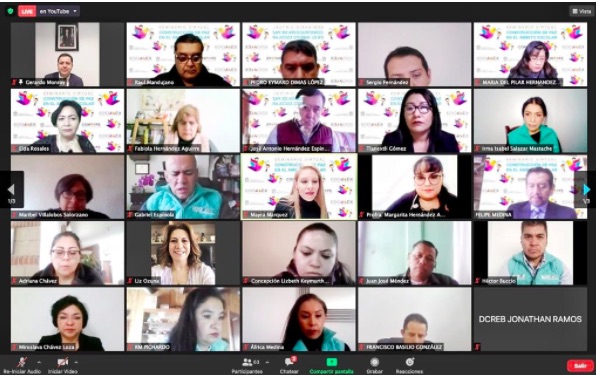
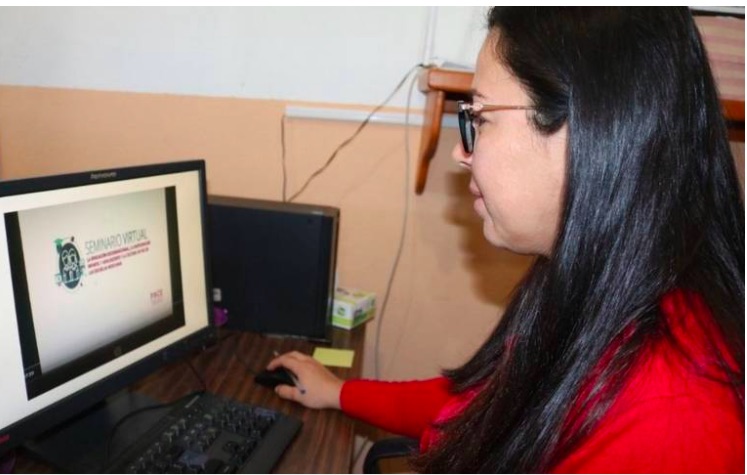
In order to create a virtual space for the exchange of thought, research and successful experiences around peacebuilding, so that teachers can acquire harmonious intervention skills in the classroom and at school, the Secretary of Education, Gerardo Monroy Serrano, inaugurated the Virtual Seminar, Construction of Peace in the School Environment.


The Secretary of Education, Gerardo Monroy Serrano, supports the State Government in initiatives that promote the Culture of Coexistence and Social Peace in schools. (Photo: special).

The Secretary welcomed the participants convened by the Council for School Coexistence (Convive), to discuss topics such as Gender Equality, Human Rights, School Coexistence and Peaceful Conflict Management. He extended the greeting of Governor Alfredo Del Mazo Maza and his willingness to support initiatives that consolidate a Culture of Coexistence and Social Peace in schools from an early age and at all levels.

In this sense, he said that this year the Ministry of Education has trained teachers, students and parents in violence prevention and school mediation. In this way, knowledge was provided to eradicate discriminatory behavior and abuse in the schools and at the same time strengthen the culture of peace.

(Click here for the original Spanish version).

Question for this article:

Is there progress towards a culture of peace in Mexico?

Where is peace education taking place?

Likewise, he assured that the specialists will address topics with content that reinforce the activities in this health contingency, since the isolation of the school community can emotionally affect its environment. What is sought is to provide information that encourages tolerance, solidarity and respect within families and schools.

For this reason, he pointed out that continuous training on pedagogical, socio-affective, communication and culture of peace aspects is also offered to teachers, highlighting the preparation on School Mediation for the prevention and peaceful resolution of conflicts, where teachers provide students the possibility of having a third party sit down with them to discuss their problem.

The first participation in the Seminar was by María Isabel Sánchez Holguín, head of the Secretariat for Women, who gave the conference “Mechanisms for the incorporation of the gender perspective in study programs in basic education.”
She mentioned that, to generate educational programs with a gender perspective, it is necessary to respect the rights of girls, adolescents and women and to ensure public obligations for their security and full development at all educational levels.

Similarly, she expressed that for the fulfillment of the right to quality education, new attitudes and capacities are necessary on the part of all those who make decisions and are in charge of public policies, so that there is a comprehensive attention to gender issues.

For her part, Elizabeth Ozuna Rivero, General Director of Convive, pointed out that this Virtual Seminar, which will last for four days, will allow teachers to broaden their knowledge in order to bring learning that consolidates peaceful environments to their communities.

When making the inaugural statement of the seminar, Gerardo Monroy Serrano urged all participants to endorse the commitment that students should have a full, prosperous and safe life, in healthy environments, while receiving an inclusive, equitable and excellent education.

La Paz, Baja California Sur, Mexico: Training of basic education teachers on the culture of peace

. EDUCATION FOR PEACE .

An article by Karina Lizárraga in El Sudcaliforniano (translation by CPNN)

More than 1,500 preschool, primary and secondary school teachers from the five municipalities of Baja California Sur participated via zoom in the seminar called: “Socio-emotional education, child and adolescent participation and the culture of peace in Mexican schools”, according to the general director of basic education of the Ministry of Public Education, Martina Camacho Higuera.

(Click here for the original Spanish version).

Question for this article:

Is there progress towards a culture of peace in Mexico?

Where is peace education taking place?

The official said that this training had the objective of offering pedagogical resources for the development of socio-emotional skills and the participation of students in the culture of peace, an action aimed at promoting the construction of an inclusive and democratic coexistence, for protection from the pandemic, as well as for the return to classrooms once determined by the health authorities.

Camacho Higuera highlighted that this event was offered by the Undersecretary of Basic Education, Marcos Bucio ,and the Directorate of Educational Management of the Federal SEP directed by Marlene Mendoza, who were kind enough to take into account the South Californian teachers in this educational journey.

In this sense, he added that it is the responsibility of authorities, teachers, students, parents and mothers to take actions to build environments of cordiality and harmony that go beyond the classrooms, to develop a culture of peace that impacts on the development of society.

Burkina Faso: Blanche Bana wins the Sotigui Awards 2020

EDUCATION FOR PEACE .

An article from My Africa Infos (translation by CPNN)

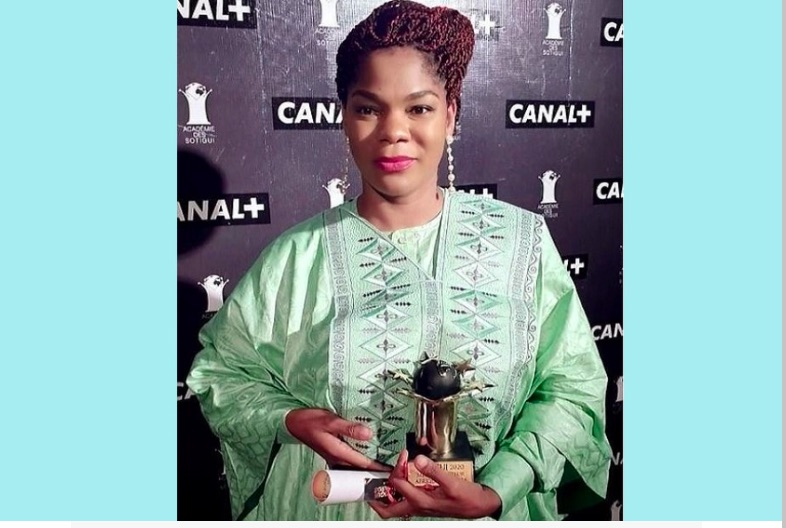
It is with tears of joy that the famous Cameroonian actress Bana Blanche, expressed her gratitude to all of Africa during her presentation of the trophy which recognizes her as the best actress in Central Africa.


SOTIGUI Awards, the event which rewards artists of the 7th art over the past four years has placed particular emphasis on women at its 5th edition. Selected under the theme: culture of peace: what are the contributions from women in the cinema and audiovisual industry. Sotigui Awards once again honored African cinema and rewarded several artists in Burkina Faso on November 14th.

(continued in right column)

(Click here for the original French version of this article.)

Question for this article:

Film festivals that promote a culture of peace, Do you know of others?

(continued from left column)

The thousands of difficulties linked to the COVID 19 pandemic did not prevent the organizers from bringing together the big actors of cinema in Africa and honoring the best. This 5th Edition of the Sotigui Awards rolled out the red carpet to Blanche Bana, a Cameroonian actress who has been the pride of the cinema of her native land for some time now.

In fact, Blanche Bana made a majestic entry into the world of cinematography in 2012. Since that date, the young girl has not ceased to shine in the spotlight and to attract the attention of the Cameroonian public with admiration. Following the crazy success of its beginnings: THE PACKAGE 1 and 2 (a film directed by Parfait Zambo), Blanche Bana was especially popularized by the communication giants, like MyAfricaInfos which did not hesitate to grant her an interview.

Very quickly Bana blanche rose through the ranks by directing short and feature films, series, and was solicited for advertising spots. Shortly after, the courage and determination of this young actress led her to international stages. Recognized as a gold bar of Cameroonian cinema, Blanche Bana won the prize for best actress of Cameroon in 2015 at the prestigious Ecrans Noirs Festival. In 2017, the beautiful actress took her first flight to Morocco and was counted among the guests of honor at several festivals, including the Agadir migration festival.