Category Archives: EDUCATION FOR PEACE

Paris: Peace Concert – Saint-Sulpice Church

… EDUCATION FOR PEACE …

An announcement from Mouvement de la Paix

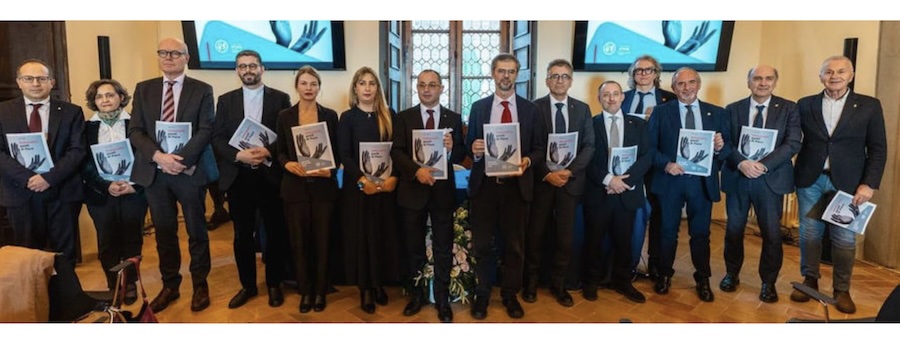
In furtherance of our commitment to peace, the Mouvement de la Paix is organizing a Peace Concert on Tuesday, June 17, 2025, at 8:45 p.m., at Saint-Sulpice Church in Paris. Led by conductor Hugues Reiner, with the participation of the Hugues Reiner Choir and the Choir of 400, the concert will bring together works filled with emotion and meaning: Dvořák’s New World Symphony and the “Donkey” Mass.

(Article continued in right column)

(Click here for the French version of this article)


Question related to this article:

What place does music have in the peace movement?

(Article continued from left column)

Anne-Cécile Laurent, soprano; Yana Boukoff, mezzo; Joachim Bresson, tenor; Richard-Alexandre Ritelmann, baritone

Choir of 400, Paris, International Hugues Reiner Choir & Orchestra

Conductor/ Hugues Reiner

The concert is sponsored by the Nihon Hidankyo organization, Japan, Nobel Peace Prize winner, 2024, and will be addressed by Mr. David Adams (2025 Peace Manifesto).

This concert is an act of cultural resistance, an affirmation of the link between art, humanism, and peace. The funds raised will help support the actions of the Mouvement de la Paix. Reservation: €20 by clicking here
– – – – – –

If you wish to make a comment on this article, you may write to coordinator@cpnn-world.org with the title “Comment on (name of article)” and we will put your comment on line. Because of the flood of spam, we have discontinued the direct application of comments.
Kurdish language at the forefront of Turkey’s peace process: Recognition demands intensify

… EDUCATION FOR PEACE …

An article from Medyanews

Kurdish Language Day, observed annually on 15 May, was commemorated throughout Turkey with an array of political, cultural and grassroots events calling for formal recognition of Kurdish in education and public life. The occasion mobilised political parties, human rights organisations and community groups across a wide range of cities, from metropolitan centres to Kurdish-majority regions.

The central message was clear: Kurdish must be granted official status and incorporated into Turkey’s education system and administrative institutions as part of the broader democratic transformation that is now under discussion  following the dissolution of the Kurdistan Workers’ Party (PKK).


Click here for video

Statements released by the Democratic Regions Party (DBP), the Peoples’ Equality and Democracy (DEM) Party, the Human Rights Association (İHD), and the Kurdistan National Congress (KNK) collectively framed the absence of Kurdish in public policy as a legacy of cultural repression. These groups underscored that constitutional reforms should guarantee linguistic rights and reflect the multicultural reality of Turkey.

The DBP characterised state policy as institutionally exclusionary:

“The refusal of education in the mother tongue is the clearest manifestation of this century-long hostility,” the party stated, asserting that linguistic justice is fundamental to democratic life.

Similarly, the DEM Party’s Commission on Language, Culture and Arts cited the imprisoned Kurdish leader Abdullah Öcalan’s writings, which conceptualise language as central to both personal and collective identity.

“Language is not merely a vehicle for expression—it is foundational to the continuity and evolution of a people’s political and cultural existence,” the Commission declared.

From the parliamentary floor, DEM Party Group Deputy Chair Gülistan Kılıç Koçyiğit reinforced this position, pointing to past and present restrictions on the public use of Kurdish. She remarked: “A people’s language is the embodiment of their dignity. Repression of linguistic diversity obstructs democratic development and perpetuates inequality.”

Public commemorations were held in cities including Adana, Diyarbakır (Amed), Iğdır (Idîr), Urfa (Riha), Mersin, Ankara and Istanbul. These events featured speeches, music, community statements and visual displays, with participants carrying banners that read “No life without language” and “Our language is our identity”.

In Diyarbakır (Amed), a notable cultural initiative was unveiled: classical Kurdish poetry by figures such as Melayê Cizîrî and Feqiyê Teyran was inscribed on paving stones along a major thoroughfare. The project, coordinated by the municipality’s Department for Language Protection, was intended to bring Kurdish literature into public view and assert its place in the collective urban landscape.

(Continued in right column)

Question for this article:

What is the relation between peace and education?

(Continued from left column)

The Human Rights Association (İHD) marked the day by referencing international human rights standards, asserting that linguistic repression constitutes a violation of cultural rights. In their statement, they recalled the case of Vedat Aydın, a leading Kurdish politician who was assassinated after publicly using his native language, highlighting the risks historically faced by defenders of linguistic freedom.

Kurdish Language Day commemorates the publication of Hawar magazine on 15 May 1932, edited by the Kurdish intellectual Celadet Alî Bedirxan. The magazine marked a pivotal moment in the codification and standardisation of the Kurdish language and helped promote Kurdish as a literary and educational medium.

Hawar was the first publication to use a Latin-based alphabet for Kurdish, a decision that played a key role in modernising the language and expanding its use in both cultural and political spheres. The date has since become a symbolic occasion for asserting the linguistic and cultural rights of the Kurdish people. The magazine played a formative role in the standardisation of the Kurdish language, building upon earlier efforts such as the 1898 newspaper Kurdistan. These publications laid the groundwork for a modern Kurdish literary and political consciousness.

The 2025 observances took place within a newly developing political context. The PKK declared on 12 May that it would dissolve its armed structures and transition towards non-violent democratic engagement. This historic decision has effectively dismantled one of the Turkish state’s main justifications for restricting Kurdish cultural rights—namely, the association between Kurdish identity and insurgency.

With this pretext removed, Kurdish political actors argue that the continued ban on Kurdish in public education and administration is no longer tenable and must now be seen for what it is: a form of cultural exclusion. Legal recognition of the Kurdish language has since emerged as a central demand within the redefined peace framework, alongside broader calls for structural reform.

Following the PKK’s declaration that it would dissolve its armed structures and seek a democratic resolution, the peace process has become a renewed focus for Kurdish political and civic initiatives. Legal recognition of the Kurdish language has since emerged as one of the central demands accompanying calls for structural reform.

Cities in Turkey’s Kurdish-majority southeast—commonly referred to by Kurds as North Kurdistan (Bakur)—continue to be hubs of cultural production and mobilisation. Local institutions and activists have played a pivotal role in preserving Kurdish heritage and resisting assimilationist policies.

Despite these efforts, Kurdish remains effectively excluded from the formal education system and is not employed in state institutions. While limited elective courses and symbolic acknowledgements exist, the absence of structural guarantees has sustained what many describe as a regime of cultural erasure.

Linguists, educators, and community leaders have argued that this undermines linguistic vitality, intergenerational transmission, and collective memory.

Kurdish political actors and civil society organisations are now placing increased pressure on the Turkish government to abandon restrictive policies and embrace a model of inclusive governance.

Within the scope of the peace process launched in October 2024, they assert that cultural recognition must be prioritised. For them, recognising Kurdish as a constituent part of the country’s national identity is not only a question of justice but a prerequisite for sustainable peace and coexistence.

– – – – – –

If you wish to make a comment on this article, you may write to coordinator@cpnn-world.org with the title “Comment on (name of article)” and we will put your comment on line. Because of the flood of spam, we have discontinued the direct application of comments.
Teaching Peace: Nurturing Young Peacemakers in Ghana through Education

… EDUCATION FOR PEACE …

An article by Mohammed Ibrahim from Peace News

In a region where ethnic and religious diversity sometimes fuels tension, Ghana stands out as one of West Africa’s most peaceful nations. This reputation, however, cannot be taken for granted. 

In September 2024, Ghana experienced incidents of violence over upcoming elections. Other countries in the region such as Mali and Guinea have dealt with ethnic and religious violence in recent decades, including violence committed by youth. 

But efforts are being made to sustain harmony, particularly through peace education in schools. Peace education and sensitization programs aim to empower students as peace ambassadors. Schools across the Ashanti and Central Regions of Ghana are teaching peace education, where students learn conflict resolution skills, social justice principles, and the value of peaceful coexistence. 


Students of St Paul’s Catholic Basic School being taught a peace education lesson, photo by CRPC.

“Ghana is a diverse country with different tribes and religions. Despite this, we have remained peaceful,” said Dr. Charles Ohene-Amoh, the Regional Executive Secretary of the Central Regional Peace Council (CRPC) of Ghana’s National Peace Council  (NPC).  “To sustain this, we must instill the culture of peace in our young people,” he told Peace News Network (PNN). 

Promoting Peaceful Coexistence in Diversity

In January 2025, the CRPC collaborated with St Paul’s Catholic Basic School to educate students on peacebuilding, which is crucial for the country’s future stability.

The initiative was a peace education sensitization program themed “Peaceful Coexistence in Diversity.” The program focused on: strengthening students’ understanding of peaceful coexistence, reducing classroom conflicts and bullying, promoting peer mediation, and conflict resolution. Dr. Ohene-Amoh emphasized the need for peace education in schools. 

“We believe that one of the most effective ways to prevent conflicts is to educate the youth on how to live in harmony… Schools provide the perfect setting because students are already gathered in large numbers, making it easy to reach them,” he said.

He highlighted that schools reflect the country’s diversity, with students from various ethnic, religious, and cultural backgrounds. The program teaches them to embrace differences rather than allow them to become sources of conflict.

“When we visit schools, we see Muslims, Christians, and traditionalists learning together. We teach them to appreciate their diversity and to coexist peacefully. The results have been encouraging.”

The initiative has already shown positive outcomes. When the CRPC revisits schools where the program has been implemented, they observe noticeable improvements in student interactions. “We see fewer conflicts among students. They have become more tolerant and better at resolving disagreements peacefully,” Dr. Ohene-Amoh added.

Peace Education as a Tool for Conflict Prevention

Beyond promoting peaceful coexistence, the program also prepares students for the future. Many of them may later join law enforcement agencies or other security sectors, where their conduct will be scrutinized.

“We made them understand that their behavior in school could affect their future careers. Many didn’t realize that background checks are conducted before recruitment into security services,” Dr. Oene-Amoh said.

He said that additionally, the program introduced peace classes in schools where students voluntarily learn about conflict resolution and earn certificates for their participation. While attendance is not mandatory, students who participate are encouraged with certificates. This motivates them, Dr. Ohene-Amoh explained, to take peacebuilding seriously and apply these lessons in their communities.

(Continued in right column)

Question for this article:

Where is peace education taking place?

(Continued from left column)

The Ghanaian government has also contributed to maintaining peace in schools by banning demonstrations within educational institutions. This has significantly reduced violence on school premises. “Since the ban, we have not recorded any violent attacks in schools. Combined with peace education, this has created a safer learning environment,” Dr. Ahone-Amoh said.

Youth and Political Manipulation

One major concern in many African nations is the role of youth in political violence. Politicians often exploit young people’s energy and passion, leading them into conflicts. However, with proper peace education, students are less likely to be used as tools for political violence.

“With peace education, the youth will understand the dangers of being manipulated for political purposes. They will think critically before engaging in violent acts,” Dr. Ohene-Amoh stated.

The Challenge of Funding

Despite the program’s success, funding remains a significant challenge. The CRPC struggles to reach all 23 districts in the region due to financial constraints. “We write to organizations for support because our resources are limited. Without adequate funding, it is difficult to reach every student who needs this education,” he said.

“Train a Child, and They Will Not Depart from It”

Barbara Yabom, the CRPC’s Program Manager, described Ghana as one of Africa’s most peaceful countries, largely due to its emphasis on peace education. She cited a biblical proverb, “When you train a child in the right way, they will not depart from it when they grow.”

She emphasized that many young people who engage in violent behavior come from backgrounds where conflict resolution skills were not taught. She said that by training them in peacebuilding early, “we hope to create a generation that values harmony.”

To Yabom, peace education should be a continuous process to instill the values of forgiveness and tolerance. “We have received delegations from countries like Malawi and Ivory Coast who come to learn how Ghana maintains its peace. Peace education is part of our success story.”

She stressed that peace education should not only focus on adults, and noted that it is unfortunate that some people think it should. Yabom added that children are future leaders, and that teaching them these skills now will help them grow up to be responsible citizens who resolve conflicts peacefully.

Calls for Peace Education in the Curriculum

Sam, a senior high school tutor from Aggrey Memorial A.M.E Zion Senior High School Mr Appiah whose school participated in the peace education program, advocated for peace education to be included in the national curriculum, saying that it would help address the “culture of impunity” among students, and reduce their exposure to violent influences from social media.

He noted that many students are unaware of the laws governing juvenile violence. “Some think they can act violently without consequences because they are young. But with education, they will understand that even in school, they must obey the law.”

Appiah believes peace education in schools plays a vital role in shaping students’ moral values. “If we sustain this effort, we will raise a generation of young people who value peace. ”

While challenges such as funding issues persist, the impact of peace education in Ghanaian schools is evident. By instilling values of tolerance, respect, and conflict resolution in students, Ghana is not only securing its present peace, but also building a future where harmony prevails.

As Dr. Ohene-Amoh aptly put it: “Peace is not merely the absence of conflict but the presence of justice and tolerance.”

(Editor’s note: Thank you to Transcend News Service for calling our attention to this article.)

– – – – – –

If you wish to make a comment on this article, you may write to coordinator@cpnn-world.org with the title “Comment on (name of article)” and we will put your comment on line. Because of the flood of spam, we have discontinued the direct application of comments.
New Feasibility Study on Peace Education in Non-formal Learning and Youth Work commissioned by the Council of Europe

. EDUCATION FOR PEACE . .

An,article from the Global Campaign for Peace Education

This new study, authored by Dr. Phill Gittins, and commissioned by the Council of Europe, aims to support the statutory bodies within the youth sector of the Youth Department of the Council of Europe (CoE), particularly the Joint Council on Youth, in assessing the need, relevance, and feasibility of developing a Committee of Ministers (CM) Recommendation to the governments of Member States on Peace Education in non-formal learning and youth work.

This document provides an overview of peace education, exploring what it is, why it matters, and how it can be done. It also identifies and describes relevant standards, texts, and initiatives related to peace education and peacebuilding-related activities involving young people, summarising progress made and identifying current gaps.

The document concludes with a proposal that outlines what should be addressed, included, or suggested in the recommendation to build on ongoing efforts and address some of the current gaps, with the goal of improving the recognition, viability, accessibility, delivery, effectiveness, and impacts of peace education initiatives across the 46 Member States of the CoE and beyond.

Download the Feasibility Study here

Questions related to this article:

What is the relation between peace and education?

The feasibility study was commissioned to provide evidence-based answers and arguments to two main questions:

1. Why would such a recommendation be useful, relevant and necessary in the framework of the Council of Europe today?

2. What should the recommendation address, contain or recommend in order to be meaningful and support peacebuilding and peace education with/by young people?

Key Recommendations

° Ensure the equitable and meaningful participation of young people

° Pursue a holistic and comprehensive approach

° Contextualise efforts to local needs while aligning with broader commitments

° Embed peace education across all learning spaces

° Enhance coordination across sectors and levels of society

° Ensure adequate investment to benefit youth, economies, and society as a whole

– – – – – –

If you wish to make a comment on this article, you may write to coordinator@cpnn-world.org with the title “Comment on (name of article)” and we will put your comment on line. Because of the flood of spam, we have discontinued the direct application of comments.
Wilmington, Delaware: Visionary Peace Youth Art Exhibition

EDUCATION FOR PEACE .

An article from Pacem in Terris

This year’s Visionary Peace Youth Art Exhibition was a smashing success! More than 550 young artists, teachers, and their friends and families filled the Wilmington Public Library Commons with exuberance and positive energy for peace. 

On exhibit were 546 examples of peace art from 32 different schools and community organizations. Now we look forward to continuing the momentum at our Traveling Peace Kick-off event in April.

Pacem in Terris is grateful for all who participated in the exhibition, for our volunteers, and for ongoing financial support from the Delaware Division of the Arts, the Laffey-McHugh Foundation, and Incyte.

(continued in right column)

Question for this article:

Do the arts create a basis for a culture of peace?

(continued from left column)

For those of you who missed it, here’s a little glimpse of the magic!


Pacem in Terris is a grassroots organization committed to building relationships that transform minds to foster healing and peace.

Our programs provide opportunities to develop a collective understanding of both our different experiences and our shared humanity.

– – – – – –

If you wish to make a comment on this article, you may write to coordinator@cpnn-world.org with the title “Comment on (name of article)” and we will put your comment on line. Because of the flood of spam, we have discontinued the direct application of comments.

Colombia: PazRock, an initiative of the Ministry of Cultures for the culture of peace through music

… EDUCATION FOR PEACE …

An article from the Ministry of Cultures of Colombia (translation by CPNN)

This year the Ministry of Cultures, Arts and Knowledge, through the Culture of Peace Strategy, has addressed the violence associated with conflict and inequality by promoting cultural rights.

One of the actions was the development of the PazRock initiative, traveling concerts that brought a message of reflection through music to Bogotá, Pereira and Duitama.


Photo: Lina Rozo.

“PazRock closes with a very positive balance. First was the one in Plaza de Bolívar, in Bogotá, which brought together more than 40 thousand people. The three concerts featured great artists, with great collective work around this space for reflection through the arts,” said Gina Jaimes, advisor to Minculturas.

(Article continued in right column)

(Click here for the Spanish version of this article)


Question related to this article:

What place does music have in the peace movement?

What is happening in Colombia, Is peace possible?

(Article continued from left column)

This year concerts were held in Bogotá, Pereira and Duitama. They featured the participation of artists such as Plu con Pla, La Muchacha, Gillman, Panteón Rococó, La Pestilencia, 1280 Almas, Aterciopelados, among others.

Following the first concert in Bogotá, the International Promotions Festival (FIP) of Buenos Aires, Argentina, awarded the PazRock concept the gold prize in the category ‘Best municipal event or government actions’.

This international competition rewards creativity in Promotions, Events, Marketing Innovation and New Communication Technologies worldwide. In this edition, PazRock competed with other success stories from Spain, Mexico, the United States and Brazil.

“It is very gratifying and satisfying “I am very grateful to know that projects like this one cross borders and achieve very important effects in Latin America and, especially, among young people in Colombia. I think it is very important for the country, very important for public shows,” added Gonzalo Villalón, director of Villalón Entertainment, the production company of PazRock.

More than a recognition of the event, this award highlights the importance of continuing to generate spaces for the exchange of arts to contribute to social transformation and as a contribution to the construction of a culture of peace in our country.

– – – – – –

If you wish to make a comment on this article, you may write to coordinator@cpnn-world.org with the title “Comment on (name of article)” and we will put your comment on line. Because of the flood of spam, we have discontinued the direct application of comments.

Democratic Republic of Congo: At least 450 orphaned children initiated into the culture of peace and peaceful living together in Bogoro

. EDUCATION FOR PEACE .

An article from Radio Okapi

About 450 orphaned children from four tribal communities in Ituri are being initiated into the culture of peace and peaceful living together, as part of a two-day retreat, organized since Monday, December 30 by the NGO Bacone Of Hope in Bogoro.

According to the coordinator of this NGO, Arali Bagamba, the objective of this activity is to combat tribal hatred which is often at the origin of cycles of violence in this province.

These orphaned children from Lendu, Bindi, Hema and Bira communities came from localities such as Kavelega, Kotoni, Bogoro, Lakpa accompanied by notables and religious leaders from their respective entities.

They learn about living together, the culture of peace and non-violence.

During these two days of retreat, they eat, play and sleep together to strengthen the feeling of brotherhood despite their cultural differences.

(Article continued in right column)

(Click here for the original version in French

Questions related to this article:
 
What is the best way to teach peace to children?

Can a culture of peace be achieved in Africa through local indigenous training and participation?

Can you add to this analysis of the Democratic Republic of the Congo?

(Article continued from left column)

For the coordinator of the NGO Bacone Of Hope, this training will break the tribal hatred transmitted from one generation to another, which is at the origin of the cycles of violence in Ituri.

Other meetings on the culture of peace and peaceful cohabitation involving young people and students from these different communities were organized a few months ago by this same organization.

Read also on radiookapi.net:

Djugu : 7 communautés ethniques s’engagent à mettre fin à leurs différends pour promouvoir la paix

L’Eglise du Christ au Congo appelle la population à s’investir pour la paix en Ituri

– – – – – –

If you wish to make a comment on this article, you may write to coordinator@cpnn-world.org with the title “Comment on (name of article)” and we will put your comment on line. Because of the flood of spam, we have discontinued the direct application of comments.

Nonviolence News Special Report: 366+ Success Stories in 2024

EDUCATION FOR PEACE .

An article from Nonviolence News

In the sweep and bustle of the year’s struggles, it’s sometimes hard to see past the disaster headlines. Yet, remarkable progress was made by nonviolent movements worldwide. In this special report, Nonviolence News has gone into our archives and pulled out the gains, victories, and successful solutions that occurred in 2024. We counted 366+ stories – this article highlights many of them and you’ll find the others in the complete list in our Research Archives.

Let’s start with the big ones. Mass protests erupted many times this year from Argentina to France, Indonesia to Georgia. Some of them rose up against tyrants and autocrats and won. South Koreans, for example, held immense mass protests to prevent the president from implementing martial law and stealing power. Even after they succeeded, over 1 million people returned to the streets to force their politicians to impeach the president. In Bangladesh, students launched demonstrations to end unfair job quotas … and wound up ousting the prime minister, forcing the chief justice to resign, and bringing back exiled Nobel Prize Laureate Muhammad Yunis to lead the new government.

It was a remarkable year for people-powered democracy. Bolivians thwarted a coup attempt. Mexico elected its first female president. Indigenous Guatemalans held a 100-day sit-in to ensure the landslide-winning presidential candidate could take office. Indonesian protesters compelled their parliament to halt an election bill they felt would weaken the chances of opposition candidates. Kenyan protesters got President Ruto to withdraw a finance bill with tax hikes. Senegalese students and poor people kept their elections on track amidst the president’s repeated attempts to delay them.

When we organize, we win. 

That major lesson is becoming more obvious with each new study. In 2011, researchers Erica Chenoweth and Maria J. Stephan unequivocally proved that nonviolent action works twice as often as violence. This year, several new studies grabbed headlines touting the effectiveness of nonviolent action. The Climate Emergency Fund demonstrated that disruptive actions are having notable impacts and lowering carbon emissions. Another report found that protest movements are 6 to 12 times more cost effective than charities at making change. And you know where the best movement organizers in the world are located? Africa. That continent has hosted more mass movements than any other region in the world and boasts the highest rates of success.

Looking at labor struggles, a study on 2023 worker strikes showed that the uptick in organizing has led to wage increases that haven’t been seen in 35 years. When workers organize, it pays off – literally. Being in a union means you’ll make $1.3 million more over your lifetime than if you’re non-unionized. In 2024, workers showed that strikes, boycotts, and protests are effective. Argentina’s labor unions mobilized 1.5 million workers in a general strike that halted President Melei’s ‘mega-degree’ of austerity measures. The French Farmer Protests used tractor roadblocks around Paris to secure promises of cash, eased regulations, and protection from unfair competition among other demands.

Across the US, strikes and other actions won wage increases for workers at Waffle House, Kroger warehouses, Cornell University, Apple, American Airlines, Boston University, Northern New Mexico College, Boeing, Daimler Truck, US Foods, Washington State University, and General Motors. Strikes also worked for automotive technicians, dockworkers, nurses, and steelworkers. In addition, labor organizing made important gains around remote work, contract tiers, back pay and reinstatement, collective bargaining, labor laws for domestic workers, unionization, the right to disconnect from work-related calls, union-busting, healthcare plans, retaliatory license revocations, workplace safety, and farmworker protections.

Other campaigns for economic justice made gains, too. Massachusetts passed a “Tax The Rich” law in 2022, which not only supplied $1.5 billion for the free school lunch program, it also provided much-needed improvements to their public transportation system and tuition-free education for community college students. Its success prompted 10 other states to try to do the same. Connecticut’s Baby Bonds Program to bridge the racial wealth gap has inspired other states to explore the strategy. Twenty-two states raised their minimum wages this year. 

In the United States, debt relief measures – once considered an impossible dream – are growing with Los Angeles abolishing medical debt for 150,000 people, St. Paul, Minnesota, erasing $100 million in medical debt, Arizona abolishing $2 billion, New York City pledging another $2 billion, and a grassroots group in Maine fundraising to eliminate medical debt for 1,500 people.

Swiss retirees campaigned for a pension boost and rejected later retirement ages. South Africa and Iceland both report that their 4-day work week programs were a huge success. Cuban protesters forced food rations from their government during widespread shortages. Mexico’s first female president is de-privatizing oil and gas, electricity and internet companies. And a strategic, determined campaign by US diabetes patients used picketing and protests to get some of the insulin production industry to lower prices on the life-saving drug.

Seeing these stories makes you wonder what our world would be like if these policies were the norm, not the exception. Imagine what your city or town would feel like if medical debt was abolished, babies received investments in their futures, the 4-day work week was standard, and the rich were taxed to make society safer and healthier for everyone.

Keep envisioning this world … and add in these successful programs from 2024. Imagine if you lived in a city where doctors prescribed ‘culture vitamins’, nature, and ‘walking therapy’ for mental health and social connection, acclimatization programs forged deep friendships between locals and new arrivals, the library had no late fees, and city-wide rent reductions took place regularly. Imagine if, in all cities nationwide, Housing First policies ended homelessness, low-income residents got free passes on public transit, teen courts used peer-to-peer strategies to keep youth out of jail, and school lunches came from local farms and cooks. Every city in the nation could have free or affordable electric car shares that make vehicles accessible to everyone, free childcare, and bike give-away programs that equalize pedal power for all. If one community can use these tools, they can be implemented in many more. We could have gender equity in transit drivers, speed cameras, and lower speed limits leading to fewer accidents; anti-overdose vending machines saving lives, and agrihoods providing local food and green spaces. Clean air laws could ban high polluting cars and increase kids walking to school. Community investments could replace over-policing on subways. Unarmed mental health crisis responders could be used instead of police with guns. And empathy programs could not only stop school bullying, they could transform bullies into changemakers.

(continued in right column)

Question(s) related to this article:

Can peace be guaranteed through nonviolent means?

(continued from left column)

These kinds of nonviolent solutions reduce harm and save lives through economic and social justice. And when it comes to saving lives, there’s another set of stories worth lifting up, too: the remarkable work of peace teams, violence prevention programs, and unarmed protective accompaniment. These programs are stopping violence in Sudan, Guatemala, Honduras, Mexico, and Colombia. Women’s Protection Teams are offering physical safety and gender-based empowerment in Iraq. They’re working to prevent Missing & Murdered Indigenous Women/People and racist murders from claiming more lives in Winnipeg, Canada. They’re stopping political violence during the lead-up to the United States’ elections. They’re also providing protective presences after hate crimes and training targeted Asian communities in how to increase community safety. Violence prevention programs are at work in dozens of cities across the United States, addressing gun violence. The use of large anti-racist demonstrations in the United Kingdom also prevented right-wing attacks on mosques and Muslim community members in the wake of mass shooting.

When it comes to racial justice, the clear super-stars of organizing in 2024 were Indigenous Peoples. Land Back efforts regained a wilderness lodge in Alaska, 31,000 acres in Penobscot territory in Maine, and 1,000 acres of the Onondaga Nation’s ancestral lands in New York. The Winnebago Tribe in Nebraska regained 1,600 acres that was seized illegally 50 years ago. Shasta Indian Nation in California won back 2,800 acres. Year after year, the Prairie Band Potawatomi have bought back land to re-establish their reservation in Illinois. British Columbia formally affirmed Indigenous ownership of 200 islands by the Haida Gwaii. The 5,700-year-old sacred site of Shellmound was returned to the Ohlone through the Sogorea Te’ Community Land Trust. The University of Minnesota returned 3,400 acres to the Fond du Lac Band of Lake Superior Chippewa.

On top of all those impressive victories, there’s a growing trend to put national parks and wilderness areas into Indigenous stewardship, either directly or in co-management agreements. Ahousaht and Tla-o-qui-aht First Nations will care for Clayquot Sound’s forests. The Chumash Tribe will oversee a 4,500 acre marine sanctuary. The Miccosukee Tribe will costeward the Everglades National Park. The Kitasoo Xai’xais First Nation’s marine protected area recently became Canada’s first certified “blue park”. The Yurok Tribe will co-manage the ‘O Rew Redwoods Gateway.

LGBTQ+ issues have been in the crosshairs of conservative kickback, but some major victories were also achieved this year. Thailand became the first Southeast Asian country with equal marriage laws for same-sex couples. Hong Kong’s top court affirmed same-sex marriage rights, particularly LGBTQ+ housing and inheritance rights. Mexico made trans-femicide a crime. The US reinstated protections for LGBTQ+ persons under Title IX. Washington State now requires LGBTQ+ inclusive curriculums.

While the pro-Palestinian movement has not yet achieved a ceasefire in Gaza, they did achieve an extensive number of strategic objectives in the longer effort to halt the genocide. The International Court of Justice found that BDS – Boycott, Divest, Sanction – is not only legal, it’s obligatory. Boycotts in Kuwait, Lebanon, Qatar, Syria, Iran, Iraq, parts of Turkey, and other regional nations led to a 48.2% drop in profits for US-brands like KFC, Pizza Hut, Baskin Robbins, Costa Coffee, and Krispy Kreme. BDS also forced Pret a Manger to drop plans to open 40 stores in Israel.

Cities, businesses, pension funds, and universities divested from either some or all of Israel companies or weapons makers, including Norway’s sovereign wealth fund and pension fund, APCO Worldwide, Itochu Corporation, MIT, the Union of Painters and Allied Trades, Union Theological Seminary, Sacramento State University, Trinity College, Evergreen College, Portland State University, UC Davis, Hamtramck, MI; Richmond and Hayward, CA; Portland, Maine; and a host of others.

In addition, Germany, Spain, and Belgium Wallonia Region halted weapons shipments to Israel. Canada suspended 30 weapons shipments. Activists in Morocco, Spain, and Gibraltar worked together to halt 300,000 barrels of military-grade fuel from reaching Israel. Bogota, Colombia, blocked coal exports to Israel. The US even withheld a token military shipment (a pittance compared to its massive funds and weapons handouts to Israel). The movement also pushed Australia, Canada, Sweden, and other countries to restore UNRWA funds.

When we look back at 2024, we should remember the gains that were hard-won and significant, even if the final victory has not yet come. The climate movement is confronting this same challenge, winning over and over again, yet losing so much as continued inaction hurtles the planet into collapse. In the face of genocide and ecocide, it is understandable to feel despair and futility. But a closer look at the progress on climate issues should remind us to keep going.

Renewables now power 45% of the European Union’s energy, and it’s contributed to the EU’s record 8.3% decrease in greenhouse gas emissions. In the US, 80% of new electricity generation came from solar. The US put $64 million of housing funds into energy efficiency, solar panels, and heat pumps. Solar power at US K-12 schools has quadrupled this decade. Electric vehicles outnumber gas cars in Norway. Tajikistan required all new buildings to install solar panels. One month after the last dam was removed from the Klamath River, salmon were already spawning in traditional egg-laying grounds. An impressive 77% of universities in the United Kingdom have divested (or committed to divest) from fossil fuels.

Thanks to the relentless disruptions of Just Stop Oil, the United Kingdom committed to ending all new fossil fuel permits for exploration and extraction. The UK also blocked a major coal mine and is forcing all mining projects to be weighed against the climate crisis. Norway halted plans for deep-sea mining, as did Hawai’i. Minneapolis, MN, organizers shut down a polluting foundry. Courts blocked three harmful methane gas projects in South Texas. The KXL Pipeline’s cancellation appeal got thrown out of court. Amazon dropped a plan to tap into a gas pipeline to power its data center. Greenpeace activists’ drilling rig occupation halted a gas project in the North Sea. Earthjustice blocked a toxic copper mine in the Minnesota Boundary Waters Area. Portuguese activists halted an ‘ecocidal’ airport. India’s climate movement blocked an Adani coal mine. Tree-sitters saved a stand of old growth forest from logging in Oregon. New England activists closed the region’s last coal plant. A US federal court invalidated Wyoming oil and gas leases for failing to consider climate impacts. California towns are banning new gas stations. Rural Maine communities stopped a mine near their iconic Mt. Katahdin. The Dutch pension fund divested $3 billion from oil and gas. Hawai’i replaced its last coal plant with a battery for solar and wind. The US funded 60 new solar projects to install 1 million new systems for low-income families. The ozone layer is expected to be fully recovered from human-caused damages by 2064.

Each of these wins came about because of relentless, bold, creative nonviolent action that grabbed headlines, halted destructive industries, built solutions, pressured political leaders and decision makers, and persevered despite the odds being stacked against them.

Upon reflection, 2024 was not just a year of disaster and political upheaval. It was also the year that Julian Assange was finally freed. It was the year Net Neutrality was restored. It was the year that corrupt leaders fell from power in South Korea and Bangladesh. When we remember all of these, we also remember the most important thing of all: nonviolent action achieved all this. 

What will we use nonviolence to accomplish in 2025? 

_______

Note: as impressive as this article is, it’s only a fraction of what was achieved in 2024. You can explore all 366+ stories in our 56-page Research Archive where we’ve sorted them by issue. 

Image: Bangladesh victory march, 2024. Photo by Rayhan9d, CC BY-SA 4.0

– – – – – –

If you wish to make a comment on this article, you may write to coordinator@cpnn-world.org with the title “Comment on (name of article)” and we will put your comment on line. Because of the flood of spam, we have discontinued the direct application of comments.

Mexico: Jalisco SPPC launches training in Culture of Peace for the reconstruction of the social fabric

… EDUCATION FOR PEACE …

An article from the Gobierno del Estado de Jalisco (translation by CPNN)

The Government of Jalisco through the Secretariat of Planning and Citizen Participation (SPPC), has began the training process in Culture of Peace for the reconstruction of the social fabric, in order to promote communities of care in the municipalities of the State.

The strategy “Reconstruction of the Social Fabric” is promoted in coordination with the Secretariat of the Social Assistance System. It involves the improvement of the immediate urban environments of people and their families.

The officials launching the project included the Secretary of Planning and Citizen Participation, Margarita Sierra Díaz de Rivera, and María del Carmen Bayardo Solórzano, Director of Strategic Projects, representing the Secretary of the Social Assistance System. They presented the program’s guidelines and its relevance to the State Government’s peace-building strategy. Alberto Esquer Gutiérrez also participated in this event.

(Article continued in right column)

(click here for the original version in Spanish).

Questions for this article:

Is there progress towards a culture of peace in Mexico?

(Article continued from left column)

The project is included, through various levels of intervention, to the cross-cutting theme indicated in the State Plan for Governance and Development (PEGD) and to the strategic themes of the State Program for a Culture of Peace.

The Secretariat for Planning and Citizen Participation is the governing body in charge of mainstreaming the Culture of Peace in the State of Jalisco and is responsible for coordinating the actions issued by the executive branch in matters of culture of peace, as well as mainstreaming, supervising, evaluating and proposing strategies to progressively integrate the peace approach in the different areas of government.

The head of the SPPC, Margarita Sierra, said that: “Everything we do is in terms of governance and with a focus on peace. We have to give meaning to government programs to respond to the need of citizens to live in peace in all their spaces.”

Among the institutional challenges that were raised are: training in the culture of peace; inter-institutional linkage and coordination, and the construction with citizens of an agenda to address territorial needs. To learn more about the culture of peace and governance, please access: participa.jalisco.gob.mx/participacion-ciudadana.

– – – – – –

If you wish to make a comment on this article, you may write to coordinator@cpnn-world.org with the title “Comment on (name of article)” and we will put your comment on line. Because of the flood of spam, we have discontinued the direct application of comments.

Drawing Contest of SNTE and CNDH promotes the Culture of Peace in Mexican schools

EDUCATION FOR PEACE .

An article from Cronica

In a joint effort to promote the Culture of Peace, the National Union of Education Workers (SNTE) and the National Commission for Human Rights (CNDH) presented awards to the winners of the “Peaceful School Coexistence” Drawing Contest. Alfonso Cepeda Salas, leader of the SNTE, points out that the Culture of Peace is essential to transform schools into spaces of respect, inclusion and peaceful coexistence.


“Un mundo sin violencia”, painted by Ximena Andrea Fuentes Cima.
Click here to enlarge

The first three places were awarded to Ximena Andrea Fuentes Cima from Quintana Roo, with her drawing titled “A world without violence”; Ricardo García García from Tabasco, who created “The World is for Everyone” and Frida Alejandra Loera Campos from Jalisco, for “Zapotlatena”.

Alfonso Cepeda Salas, general secretary of the SNTE, highlighted the importance of the campaign “Arm yourself with courage for a Culture of Peace!”, which promotes respectful and reflective relationships in schools. “

People should be informed that public schools in Mexico are placing white canvases that identify their participation in favor of the Culture of Peace,” he explained.

He added that school communities are mobilized to reflect and analyze, register collective construction projects, develop proposals, take action and establish firm commitments to this agenda.”

(continued in right column)

(Click here for the original Spanish version of this article.)

Question for this article:

Do the arts create a basis for a culture of peace?

Is there progress towards a culture of peace in Mexico?

(continued from left column)

“Zapotlatena”, painted by Frida Alejandra Loera Campos  

In this third edition, participation increased due to the growing interest of students in topics such as inclusion, diversity and respect.

The head teacher said that in 2024, 61.6 percent of the participants were female students. He said that “we are determined to continue contributing to this transformation to forge a better country.”

For her part, Norma Angélica Molina Padilla, from the CNDH, said that the drawings make visible fundamental issues such as bullying, People with Disabilities, sign language, and the rights of indigenous communities.

The virtual exhibition of the drawings will be available on the platforms of the SNTE and the CNDH, to consolidate and disseminate the impact of this initiative that “reinforces comprehensive training in values ​​​​and the construction of a more just and peaceful society,” said Cepeda Salas.

– – – – – –

If you wish to make a comment on this article, you may write to coordinator@cpnn-world.org with the title “Comment on (name of article)” and we will put your comment on line. Because of the flood of spam, we have discontinued the direct application of comments.