Category Archives: EDUCATION FOR PEACE

Brazil: Practices that promote a culture of peace at Funase had good results in 2021

. . DEMOCRATIC PARTICIPATION . .

An article from the blog of Didi Galvão

Restorative justice actions, aimed at promoting a culture of peace in socio-educational units in Pernambuco, had good results in 2021. During this period, 77 circles of restorative justice were carried out with 458 participants, including adolescents and young people in compliance with socio-educational measures and employees of the Socio-Educational Service Foundation (Funase), an institution linked to the Department of Social Development, Children and Youth (SDSCJ) of Pernambuco.


Image: Divulgação/Funase

The face-to-face activities took place in a manner adapted to the health guidelines resulting from the Covid-19 pandemic, with smaller groups of participants, in accordance with the protocol established by Funase. The training processes of multipliers, on the other hand, prioritized the virtual modality. In 2022, the idea is to continue expanding the work of the Center for Restorative Justice (NJR), a group of public servants established in 2019 with the objective of disseminating these practices in the socio-educational system in Pernambuco.

(article continued in right column)

(Click here for the original article in Portuguese)

Discussion question

Restorative justice, What does it look like in practice?

(article continued from left column)

Restorative Justice addresses issues such as conflict mediation and non-violent communication, encouraging accountability processes. Marcela Mariz, coordinator of the NJR, believes that the gains have been significant. “We see important results for those who participate. Compliance with the socio-educational measure is not easy. Welcoming, strengthening and empowering are essential actions. And Restorative Justice presents itself as a great tool for that”, she says.

The Socio-Educational Service Center (Case) Jaboatão dos Guararapes, in the Metropolitan Region of Recife, is one of the Funase units where restorative practices are implemented and in progress. “At first, some teenagers show resistance, but later they realize that that moment is theirs and that’s when they can reflect, tell stories and build an internal space for this practice”, explains psychologist and reference technician Cristiane Campelo.

In 2021, training courses were held for managers and technicians on the topic “Restorative Justice in the Socio-Educational System”, with the promotion of Funase in partnership with the Training Center for Public Servants and Employees of the State of Pernambuco (Cefospe). Trainings on coping with LGBTphobia and its parallels with restorative practices were also guided. Another highlight was NJR’s participation in the 1st Latin American Journey “Justice and Restorative Practices: reflections, tools and good practices”, an event held in September, remotely, based in Argentina.

Mexico: Toys and Games as Instruments of the Culture of Peace

.. EDUCATION FOR PEACE ..

An article from Government of the State of Jalisco

The Secretariat of the Social Assistance System (SSAS) and the Jalisco Solidario Volunteering have joined the campaign “Toys and Games as Instruments of the Culture of Peace”, an initiative of the deputy Rocío Aguilar Tejada. The campaign aims to promote a culture of peace through of positive play, creating awareness and reflection about the damage generated by violence promoted through toys and war games, in addition to inviting parents to refrain from giving them as presents during the Christmas season.

The coordinator of the Jalisco Solidario Volunteering, Joanna Santillán Álvarez, commented that it is necessary to strengthen Jalisco childhood, especially in view of the pandemic that has changed the dynamics of life, taking advantage of the development capacity that the game gives physically, emotionally and cognitively.

(continued in right column)

Questions for this article:

Do war toys promote the culture of war?

(continued from left column)

“It is important that we call on all Jalisco families to avoid giving war toys, and to share games capable of creating an atmosphere of respect, solidarity but above all of love”, Santillán Álvarez stressed, during the start of the campaign, which was hosted by the State Congress and which will conclude at the Trompo Mágico Interactive Museum.

The head of the SSAS, Alberto Esquer Gutiérrez, acknowledged that the current pace of life sometimes does not give parents time to pause to reflect on the toys and games of their daughters and sons. They are often warlike, including those of electronic devices. “If we don’t make an effort to generate sports, recreational, cultural and coexistence activities for our children, no one is going to do it; dads and moms are the main educators of our children ”, he emphasized.

Also participating in the campaign are the State Government, the Jalisco State Human Rights Commission (CEDHJ), the Magic Trompo Museum, the Guadalajara Security Police Station, the Guadalajara City Council, as well as the plastic artist Álvaro Cuevas and the CAI-METLAN Artistic Collective, who exhibited the sculptures “Impacts that leave a mark”, and “La Paloma de Picasso”, paintings linked to this purpose.

It should be noted that this campaign will culminate during the first week of January when girls, boys and adolescents are summoned to carry out the destruction of war toys at the Trompo Mágico Museum.

(Click here for the Spanish original of this article)

Culture of Peace at the Encuentro Mundial Educar para la Vida

… EDUCATION FOR PEACE …

Information from the website y facebook page of the Encuentro Mundial Educar para la Vida (translation by CPNN)

The global meeting of Educar para la Vida (Educating for Life) is a project that aims to reflect and create a dialogue about education, the ways of life that humanity has adopted and the possibilities of transforming them through a different education. This project arose from the challenge that the pandemic and the environmental crisis have posed for humanity, challenges that have been aggravated by social problems such as inequality, poverty and migration.

The objective of this project is to stimulate a transformative cultural mobilization of the ways of thinking, of producing, of consuming, of living in harmony with ourselves, with the community, with society and with nature, taking into account the perspective that education is the key to building a collective future based on respect for the common good.

The dialogue that this Meeting proposes is carried out in virtual format and developed around six themes: Educating for criticism, Culture of peace, Global citizenship, Justice, Communication and Educating in life and with life. There are keynote conferences, dialogues between international specialists and an exhibition of the experiences of NGOs, activists, leaders, academics and pedagogues.

One of the six fields of reflection is the culture of peace.

Culture of Peace

This is understood as a process of recognition of the thousands of forms, experiences of resistance and local, community and ethnic expressions from which it is possible to learn to live peacefully or to defend ourselves peacefully from war. The universe of human rights and democracy is the context for its guarantee. An antimilitarist culture where the language of war has been replaced by one of solidarity, a language of the acceptance of multiple dissensions, from where we work hard to build a just, anti-patriarchal, anti-racist planetary society, in solidarity with ourselves as human beings, with the other species that inhabit the planet and with the world of nature of which we are part.

(Article continued in right column)

(click here for the original version in Spanish).

Question for this article:

What are some good films and videos that promote a culture of peace?

(Article continued from left column)

10 Conferences

Culture of Peace : Video of David Adams, Coordinator of the Culture of Peace News Network and promoter of the UN Declaration and Program of Action for a Culture of Peace (1999).

Culture of peace towards the future : Video of Federico Mayor Zaragoza, Pharmacist, professor, poet, politician and high international civil servant. He was director of UNESCO (1987-1999). Since 2000 he has presided over the Culture of Peace Foundation. He is president of the Scientific Council of the Ramón Areces Foundation since 1993.

What education and for what kind of life?”> : Video of Manuel Dios Diz, Teacher, institute professor, diplomas in geography and history from USC. Founder and ex-president of the Galician Seminary of Education for Peace. Former president of AIPAZ and member of the Culture of Peace Foundation.

Education for a Culture of Peace : Video of Sofía Herrero, Pedagoga con Master Internacional en Estudios de Paz, Conflictos y Desarrollo y Doctora con mención internacional.

Culture of Peace and Neuroscience: Contribution from Mexico : video of Roberto Mercadillo, Psychologist with a Master of Science, specialist in Neurobiology with a PhD in Biomedical Sciences. He is a professor at CONCACyT and his research revolves around Social Neuroscience. He has worked at the Institute for Biomedical Research at UNAM, in addition to being a Professor at the National School of Anthropology and History.

Towards an education in human rights and citizenship from the United Nations models : video of Matías Penhos, Researcher Professor, his Master’s thesis revolves around the United Nations Models to address discriminatory situations in the field of non-formal education and its incidence in schools. He is a member of human rights education networks at the regional and international levels.

Colombian youth are transforming politics : video of Fabián Acosta, Philosopher, Master of Arts, Kliment University of Ojrid Sofia Bulgaria. Master in Political Science, Doctor in Social and Political Philosophy, Kliment University of Ojrid. Associate Professor Dept. of Political Science National University of Colombia, professor of political theory. Social researcher, Director of the UN OBJUN Youth Observatory.

Constructing Cultures of Peace: Today’s Challenge video of Alicia Cabezudo, Graduate in History and Social Sciences, Master in Spanish Studies and in Education for Human Rights, Peace and International Cooperation. She completed a Doctorate in Education and Social Sciences. She is currently a professor at the International Peace Bureau – IPB and the Global Alliance for Ministries and Infrastructures for Peace- GAMIP.

The challenges of education for peace and sustainability of life : video of Jaume Martínez Bonafé, Doctor in Philosophy and Educational Sciences, founder of the Pedagogical Renewal Movements and the University of the Paulo Freire Institute of Spain.

La décima conferencia no está disponible

3 Experiences

Our thinking at Embera : video of Miguel Angel Parada, Jumara Kincha Embera, Colombia.

Psychosocial support strategy with the use of ICTs, through the Meraki school magazine : video of Janeth Triana Triana, Colegio de Cultura Popular, Colombia.

Culture of Peace in the Network of Women Business Leaders and Entrepreneurs video of Leticia Adela Mosqueda Ochoa, Universidad de Guadalajara, Mexico.

Mexico: Municipal Mediation Unit of the City of Merida to promote a Culture of Peace

… EDUCATION FOR PEACE …

An article from Mi Punto de Vista

With the aim of consolidating a culture of peace and dialogue, the Mérida City Council provides a mediation service to offer alternatives for a peaceful solution to family disputes and conflicts. or neighborhood, announced the Mayor, Renán Barrera Concha.

He pointed out that the Municipal Mediation Unit is an effective tool to remedy those conflicts that arise between neighbors or relatives. Otherwise they could lead to crimes such as threats, injuries or damage to someone else’s property.

“In the City of Mérida we continue to implement alternative mechanisms that allow us to prevent the commission of crimes, especially those that appear due to disagreements, thus we are committed to dialogue between the parties to prevent these situations from escalating to another level,” he said.

(Article continued in right column)

(click here for the original version in Spanish).

Question for this article:

Mediation as a tool for nonviolence and culture of peace

(Article continued from left column)

The Municipal President reported that in the 2018-2021 administration, attention was paid to 529 cases, of which 40%, that is, around 200 files, due to neighborhood conflicts, 21% due to voluntary divorce, 15% family conflicts and the rest was divided on issues such as alimony, spouses, custody of minors and family visits.

“Mediation is gradually being accepted and adopted by the people of Merida. Once they know the benefits that this entails, the answer is positive. People not only achieve the solution of the conflict they are going through, but they also promote communication and peaceful coexistence between the parties involved,” he stressed.

For her part, the director of the municipal DIF (Desarrollo Integral de la Familia), Silvia Sarti González, explained that the procedure is carried out free of charge and with the support of a professional mediator. “People who have resorted to this model have found solutions from a different perspective, since we have them listen to the other’s version, discuss those points of view and, through dialogue, propose a way to resolve their disagreements.”

She added that those who resort to conflict mediation find less financial and emotional wear and tear, and, in most cases, avoid legal processes that are often lengthy and expensive.

The Municipal Mediation Unit provides services from 8 a.m. to 3 p.m., Monday through Friday, and it deals with cases of a family, school, community and commercial nature.

To request attention, those interested should contact the Legal Coordination of DIF Mérida, located at 59 # 432 between 50 and 52-A, Centro, or they can call 9999 28 69 77 extension 81516 presenting a copy of their INE and CURP.

Film review: Oliver Stone’s new JFK documentary

FREE FLOW OF INFORMATION

A review by Michael McCaffrey in RT.com

Stone’s new documentary, ‘JFK Revisited: Through the Looking Glass’, isn’t perfect, but it’s vitally important. He goes back into the assassination case with a fervor and has produced an insightful film that’s well worth a watch.


Trailer of film

Stone’s ‘JFK’ hit theaters in 1991 and sent shockwaves through Washington and the corporate media because it was a compelling cinematic counter-myth to the equally fantastical Warren Report.

The Praetorian Guards of the establishment in the halls of power and press met the film with ferocity as they set out to debunk and defang it, because it directly challenged their narrative and thus their authority. They failed. ‘JFK’ was nominated for eight Academy Awards and brought in over $200 million at the box office. More importantly, though, it broke the spell of public indifference and somewhat loosened establishment obstruction with regard to JFK’s assassination.

In the film’s wake, the President John F. Kennedy Assassination Records Collection Act of 1992 was passed, and the Assassination Records Review Board set up and funded.

Now, some 30 years later, Oliver Stone is back, this time with a documentary streaming on Showtime, ‘JFK Revisited: Through the Looking Glass’, which sticks its thumb in the eye of those who mindlessly espouse the ‘official’ story of JFK’s assassination as the truth.

As someone interested in the assassination, and who has read a multitude of books on the subject across the spectrum, from Gerald Posner’s ‘Case Closed’ and Vincent Bugliosi’s ‘Reclaiming History’ to Jim Marrs’ ‘Crossfire’ and James W. Douglass’ ‘JFK and the Unspeakable’, finding a decent documentary worthy of a watch on the topic is a challenge.

Thankfully, Stone has stepped up to the plate with ‘JFK Revisited’ – a serious and worthy work that offers a coherent, if limited, counter-theory to the official assassination line.

The film runs to a brisk two hours, features a bevy of talking heads – including John M. Newman (whose ‘JFK and Vietnam’ and ‘Oswald and the CIA’ are terrific), David Talbot (who wrote ‘The Devil’s Chessboard’ – also fantastic), Robert F. Kennedy Jr., James K. Galbraith, Dr. Cyril Wecht, and Dr. Henry Lee – and is a well-paced primer that would be a useful launchpad for anyone interested in diving even deeper into the case.

(Article continued in the column on the right)

Question related to this article:
 
Free flow of information, How is it important for a culture of peace?

What are some good films and videos that promote a culture of peace?

(Article continued from the column on the left)

There’s a four-hour cut of the film that will purportedly be made available to the public in the new year, and I’m looking forward to seeing that version, as I assume it gets more into the specifics of who did the actual shooting – a subject the at-times-rushed two-hour version foregoes in favor of more foundational topics.

The film does examine a plethora of fascinating JFK assassination topics, though, including the following: Assassin Lee Harvey Oswald’s numerous and obvious connections to the intelligence community. The Warren Commission’s, intel community’s, and media’s knowing distortions and deceptions regarding the assassination. The fantasy of the magic-bullet theory. The contradictory medical evidence from Parkland Hospital in Dallas, and the autopsy at Bethesda Naval Hospital in Maryland. The remarkably similar plots to kill Kennedy in Chicago and Tampa, leading up to Dallas, which included other Oswald-esque patsies Thomas Arthur Vallee and Gilberto Lopez. And the story of Abraham Bolden, the first black secret service agent, who allegedly tried to inform the authorities of the Chicago plot, but instead of being hailed a hero, was railroaded and sent to prison.

‘JFK Revisited’ also spotlights the struggle between Kennedy and the political establishment. His famed American University speech of June 1963, where he laid out his vision for a new, peaceful US foreign policy, opens the film. This vision is foundational to ‘the why’ of Stone’s theory regarding the assassination, as it provides a motive for the intelligence agencies and military to act to remove a president they deemed soft on communism and weak in general.

Kennedy wanted to promote anti-colonialism, normalize relations with Cuba, not make the same mistake as the French in Vietnam, and have détente with the Soviets, even including combining efforts in the space race.

The intelligence community and the Pentagon had a very different and much more nefarious agenda. They were busy eliminating Lumumba in the Congo, fomenting a military coup in France, conjuring both the Bay of Pigs and Operation Northwoods – which would use false-flag terror attacks on US targets to force a war in Cuba – and pushing for American escalation in Vietnam.

This is why Kennedy moved to reduce the CIA budget by 20%, fired CIA warhorse Allen Dulles (who, curiously enough, would become a powerful member of the Warren Commission), and famously declared he would shatter the CIA into a million pieces. According to Stone, the CIA beat Kennedy to the punch, as it shattered his skull into a million pieces in Dealey Plaza, on November 22, 1963.

The gaping, gangrenous wound at the heart of America, which rots our national soul, was born on that fateful day, and it still festers and it still matters.

Unlike both malignant political parties and the shameless corporate media, Oliver Stone – whose status as pariah is the fuel that powers all his documentaries – understands this, and he’s trying to heal that wound by seeking out the truth about JFK’s killing.

While the establishment may ignore ‘JFK Revisited’, the general public shouldn’t. It’s a useful and insightful film for anyone who wants to understand their government and what it’s willing to do to maintain both its grip on power and the lucrative status quo.

Seek out and watch ‘JFK Revisited’. It isn’t perfect, but it’s vitally important.

The Best Weapon for Peace : Maria Montessori, Education, and Children’s Rights

. EDUCATION FOR PEACE .

A book review from The University of Wisconsin Press

This book is by Erica Moretti (see below).


“Innovative and extremely well-documented. This volume reframes the life and work of Maria Montessori within the context of international peace studies. She deserves recognition as a pioneer who faced gender barriers and nevertheless almost won the Nobel Peace Prize. Moretti gracefully weaves portraits of historical topics into this narrative of Montessori’s intellectual life.”
—Mary Gibson, John Jay College and the Graduate Center–CUNY

The Italian educator and physician Maria Montessori (1870–1952) is best known for the teaching method that bears her name. She was also a lifelong pacifist, although historians tend to consider her writings on this topic as secondary to her pedagogy.

(Article continued in right column)

Question related to this article:
 
What is the best way to teach peace to children?

What is the relation between peace and education?

(Article continued from left column)

In The Best Weapon for Peace, Erica Moretti reframes Montessori’s pacifism as the foundation for her educational activism, emphasizing her vision of the classroom as a gateway to reshaping society. Montessori education offers a child-centered learning environment that cultivates students’ development as peaceful, curious, and resilient adults opposed to war and invested in societal reform.


Using newly discovered primary sources, Moretti examines Montessori’s lifelong pacifist work, including her ultimately unsuccessful push for the creation of the White Cross, a humanitarian organization for war-affected children. Moretti shows that Montessori’s educational theories and practices would come to define children’s rights once adopted by influential international organizations, including the United Nations. She uncovers the significance of Montessori’s evolving philosophy of peace and early childhood education within broader conversations about internationalism and humanitarianism.
 
Erica Moretti  is an assistant professor of Italian at the Fashion Institute of Technology–SUNY. She is the recipient of the SUNY Chancellor’s Award in Scholarship and Creative Activities.

The book is published as part of the following series:

George L. Mosse Series in Modern European Cultural and Intellectual History
Steven E. Aschheim, Skye Doney, Mary Louise Roberts, and David J. Sorkin, Series Editors

Global Teacher Prize: Juline Anquetin-Rault

. EDUCATION FOR PEACE .

An article from The Global Teacher Prize (reprinted by permission)

(Editor’s note : Juline Anquetin-Rault came to our attention by way of a article in a local newspaper in France, Tendence Ouest, where she is quoted as being inspired by the pedagogical methods of Maria Montessori. CPNN has long maintained that this pedagogy is a good model for peace education. Montessori’s methods are usually used for young children, but Juline has adapted the methods to use with adolescents. )

She is now a candidate for the Global Teacher Prize as follows:


Video from Global Teacher Prize

Even as a child, Juline Anquetin Rault knew she wanted to become a teacher, but there was a time when she doubted whether her dream would come true. When she took the national exam to become a history and geography teacher, she ranked 607th out of 6,000 candidates, but only the top 604 were hired as public school teachers. Juline was crushed, but resolved to retake the exam the following year. In the meantime, she started working as a teaching assistant in a local school. On her first day, as she helped students with their homework and went over their lessons with them, Juline knew she had found her calling, and would become a teacher no matter what. She decided to start a tutoring agency, and also began teaching in private schools that did not require educators to pass the national exam.

(Article continued in right column)

Question related to this article:
 
What is the best way to teach peace to children?

(Article continued from left column)

Juline now splits her time between tutoring and teaching history and geography at an apprenticeship school. There, many of her students start out disliking school, having struggled in formal education, and a large portion are foreign students still learning to speak French.  

Juline believes learning should be fun, and that pupils should feel empowered to progress on their own. She has developed innovative teaching methods to engage her students, including treasure hunts and ‘pop culture’ classes using films. To help her students regain their confidence, she teaches them that failure and making mistakes are a valuable part of learning. Each class incorporates autonomous workshops, which can include internet research, online quizzes or studying maps. Juline’s methods have proven successful, with clear improvements not just in her students’ grades, but also in their mental health. In an end of year survey, 98% of students at Juline’s school said they would recommend this way of learning, and a project is in the works to apply it at national level. 

Outside of teaching, since 2017 Juline has organised yearly trips for students at her apprenticeship school. In 2020, she launched an organisation to fundraise for these outings. For Juline, travelling with students is a key way to teach them to be more tolerant. Many of her pupils have never even been to Paris, which is just 90 minutes from Rouen. She has also raised funds for children in Asia and Africa to access health and education services, and encourages regular dialogue between these children and the students at her tutoring agency.   

Juline is committed to helping her fellow teachers be the best they can be, and hosts training sessions to share her knowledge with colleagues. She teaches her peers how to use new technologies and memorisation techniques based on the latest cognitive science. She also frequently looks at what other teachers around the world are doing, and is inspired by passionate teachers. Juline runs a popular YouTube channel on which she shares learning and teaching materials with students and educators. If she wins the Global Teacher Prize, she would spend the funds on helping train even more teachers, to transform French education for the better.

(Thank you to Kiki Adams, the CPNN reporter for this articl

CEPEJ Takes Peace, Environmental Advocacy To Schools Across Nigeria

EDUCATION FOR PEACE .

An article from Tribune Online

Niger Delta-based Center for Peace and Environmental Justice (CEPEJ) has inaugurated Peace and Environment Clubs (PECs) in over 15 secondary schools across the country with a mandate to promote peace and environmental best practices among young ones for a better society.

The most recent PECs were established at the Federal Capital Territory to serve as “safe spaces” with the idea of catching them young and bringing the next generation together from different social and cultural backgrounds to discuss critical issues relating to peace, conflict prevention/management and environmental sustainability, as well as share values of tolerance and civic responsibility.

The National Coordinator of CEPEJ, Comrade Sheriff Mulade appreciated the FCT board for the partnership to enable the NGO to establish the Peace and Environment Clubs and to inaugurate PEC coordinators for Government Senior Secondary School, Bwari, and Mabushi Secondary School, both in Abuja.

(continued in right column)

(Click here for the original version of this article in French)

Question for this article:

Where is peace education taking place?

Can a culture of peace be achieved in Africa through local indigenous training and participation?

(continued from left column)

FCT Secondary School Board Chairman, Hon. Yahaya Musa Muhammed, who was represented by Assistant Directors, Mr Itam Nneoyi and Mrs Mary Ajibola, appreciated CEPEJ for the laudable initiative.

They pledged to work with the CSO to educate and guide the youths in the ways of life.

Speaking in the same vein, the Principals of Government Secondary School, Bwari, Dr Mrs Nse Martina Ikwo, and Government Secondary School, Mabushi, Mr Muhammed Shaba thanked CEPEJ for establishing the peace clubs to educate pupils on the need to imbibe the culture of peace and environmental protection, highly needed in Nigeria today.

They promised to ensure the sustainability of the clubs.

The Programme Director of CEPEJ, Mrs Nafisat Amadu Abdulmalik, however, listed improved life skills (leadership, negotiation, decision making, values, self-esteem, conflict management etc.), enhanced advocacy skills-speaking up for self and for others, among others.

She said CEPEJ would facilitate training the trainers’ workshops in the coming weeks before the activities would kick off fully.

Others in attendance included Vice Principals, administrative staff, as well as senior teachers and students.

These advocacies are expected to help the young lads to imbibe values of mutual respect, fairness, teamwork, discipline and tolerance, in order to birth a society with a mindset that values peace and environmental best practices.

Colombia: ‘5th with 5th Crew’, rhymes and colors for peace in Norte de Santander

. EDUCATION FOR PEACE . .

An article by Anderson Salinas for Radio Nacional Colombia

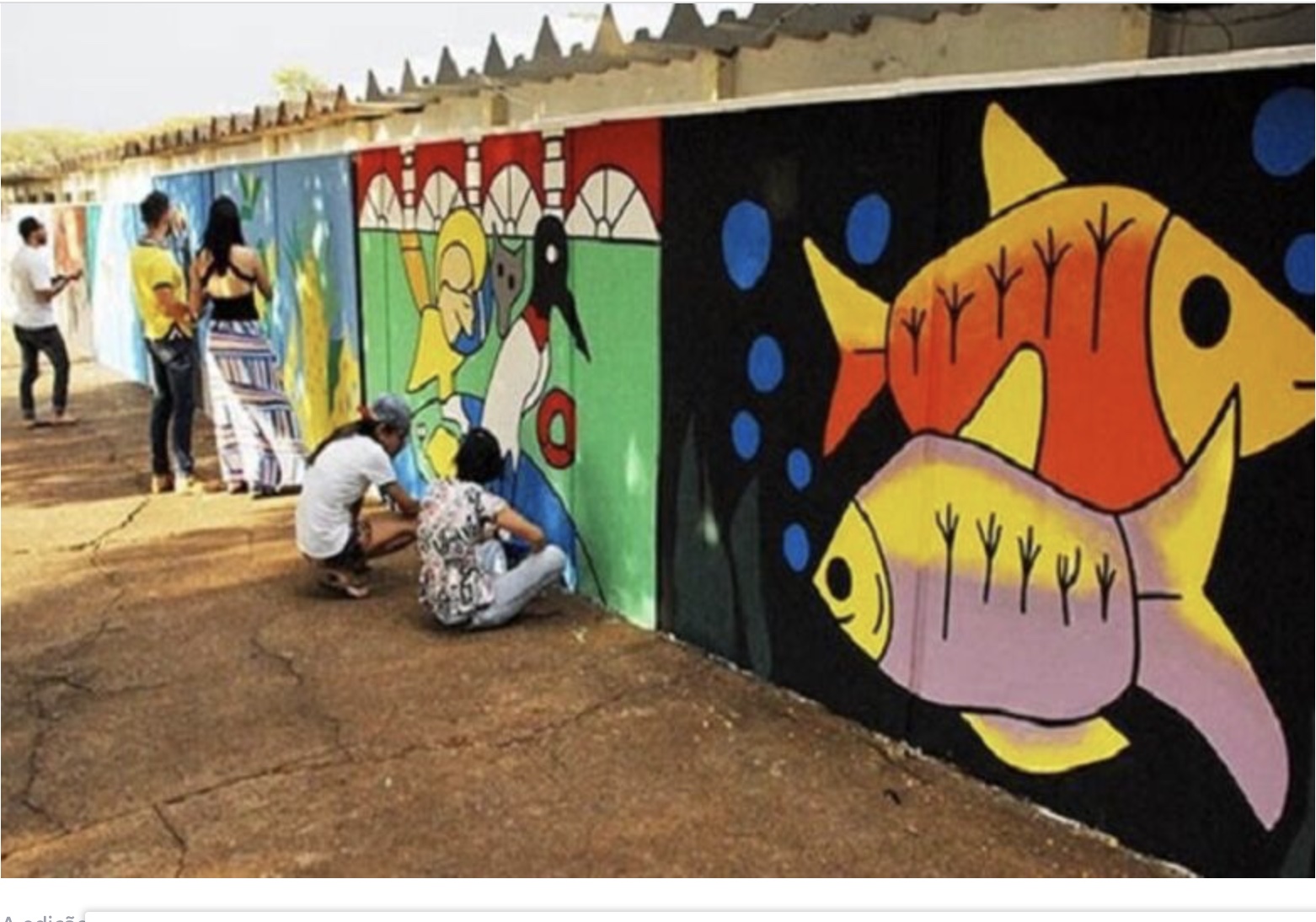
The cultural and social foundation ‘5ta con 5ta Crew’ was born in 2007, with the idea of ​​strengthening the social fabric among the youth in the department of Norte de Santander. It is a group that deals with violence through the arts from the Itinerant School of the North Bravos Hijos in 12 municipalities of the department.

With rap, graffiti, urban dance and audiovisual productions, this foundation has become a pedagogical path for young people in the department.


Rap video from the foundation

They are a team of 20 young professionals who travel through different rural and urban areas, bearing messages that transcend the memory of violence in the territories affected by the armed conflict.

“I started rapping long before, with passionate rap partners we began to share that music that we liked. To the point, that my mother’s house on 5th Street and 5th Avenue in the Motilones de Atalaya neighborhood, became the main headquarters for a time, ”explains Jorge Botello, leader of the foundation.

The initiative focused on working with young people between 16 and 25 years old, promoting artistic expressions in favor of life and the defense of the rights of youth, activities that provide the region with spaces for coexistence and reconciliation.

“In this space we begin to enjoy every moment from rap, graffiti, muralism, urban dance, audiovisuals, weaving, theater, community cinema, which began a new stage in the foundation, and where we try to manage always the historical look at our reality,” adds Jorge.

‘Ahiman,’ the artistic name by which Jorge is known, found that music provided a way to teach in the search of historical memory and truth. “It was something we did without knowing it, the lyrics, the processes, became the opportunity to express what we felt,” he explains.

(click here for the article in Spanish.).)

Question related to this article:

Do the arts create a basis for a culture of peace?

What is happening in Colombia, Is peace possible?

(continued from left column)

The border area and the Catatumbo are those spaces of resistance, where their cultural processes allow children and adolescents to compose the history that is hidden in each of its 11 municipalities.

“Young people have found the possibility of amplifying the voice, that their voice not only represents themselves, but a whole group, a community, and that through these spaces they allow to transform relationships, and thus have a better coexistence” says Botello.

Currently, the foundation is carrying out the ‘Crafts for peace, memory and truth’ project in the departments of Arauca, Santander, Norte de Santander, Bolívar and César. According to Laura Rangel, a member of the team, this initiative is developed with the purpose of training 510 youth in the Comprehensive System of Truth, Justice, Reparation and Non-Repetition.

“We reflect around the truth. We find incredible, heartbreaking, hopeful, resilient stories that are very motivating for our work in the territory and today we are closing this project and opening the door for our next stop: the art of truth,” Botello indicates.

This work will be present in Norte de Santander for a year, where it will work for the legacy of the Truth Commission and the fundamental role of youth in the non-continuity of the armed conflict with children and young people.

For Darwin Delgado, one of the young people who participates in these foundation processes, it is necessary to continue keeping history alive in these territories marked by violence in Colombia.

“It is better that the trumpets sound and we do not have the rifles, it is better that the paint is spilled and not the blood of the Colombians; that is the value of art for our region, it allows us to visualize ourselves and represent ourselves under a different perspective before society,” he affirms with a tone of hope.

‘Ahiman’ points out that it is the new generations who must make use of the lyrics, beats, dances and colored lines to rebuild the social fabric that has been fractured by decades.

“For every violent act there are many more rhymes, more murals, more colors, many more break dance steps, art became what holds the new generations to say that there is an opportunity to have a better country,” he says. .

Today they are a medium that runs from art, a path to coexistence and the promotion of a culture of peace in Catatumbo and all of North Santander, with each expression highlighting its message of peace in different languages.

Chad: AJPNV training for democracy and human rights

… EDUCATION FOR PEACE …

An article from Alwihda Info (translation by CPNN)

As part of its project to promote democracy and human rights in Chad, the youth association for peace and non-violence (AJPNV) is organizing a training workshop from October 1 to 2, 2021 for leaders of civil society organizations and the media.


The workshop opened on Friday, October 1, 2021 at the national headquarters of the association in the Amtoukougne district. The AJPNV, created in 2000, is a secular, apolitical and humanitarian non-profit Chadian civil society organization. It is an accredited member of IRC (International Rehabilitation for Council of Victims of Torture) based in Copenhagen) and a member of IFHRO (International Federation of Health and Human Right Organization) based in Geneva.

AJPNV aims to promote and protect human rights and provide free medical, psychosocial and legal assistance to victims of human rights violence, refugees, and internally displaced persons, prisoners, women victims of sexual violence. It promotes socio-economic reintegration through information, communication and education of refugees; the promotion of the culture of peace and democracy in Chad; promotion of reproductive health; health promotion linked to human rights; strengthen women’s capacities to fight poverty, unhealthy traditional practices and HIV.

(Article continued in right column)

(Click here for the original article in French)

Questions for this article:

How can we promote a human rights, peace based education?

Can a culture of peace be achieved in Africa through local indigenous training and participation?

(Article continued from left column)

Officially launching the workshop, AJPNV President Nodjigoto Charbonnel asserts that civil society organizations and the media are a pillar in the national system for the promotion and protection of human rights. Their main responsibilities are, on the one hand, to promote human rights through the dissemination of a national culture of human rights in which the values ​​of tolerance, equality and mutual respect flourish, in particular. through human rights education and on the other hand to protect human rights, by identifying or investigating cases of human rights violations.

To carry out their mission of promoting and protecting human rights in their country, Nodjigoto Charbonnel maintains that civil society organizations and the media need to be strengthened and supported. And to add that, this strengthening project working in the field of human rights responds to the need for strengthening and broadening the field of action of associations.

Nodjigoto Charbonnel says human rights movements, democracy organizations and development donors have a common goal but have not always seen each other as allies. It is quite possible that the three groups have found common ground around the notion of a rights-based approach to development. He goes on to insist that good democratic governance must inevitably focus on the promotion and protection of human rights and fundamental freedoms. Without this protection, he says, there can be no real democracy.