Category Archives: EDUCATION FOR PEACE

Mr. Rajagopal P. V. to receive the Niwano Peace Prize

EDUCATION FOR PEACE .

A press release from Niwano Peace Foundation

The 40th Niwano Peace Prize will be awarded to Mr. Rajagopal P. V. of India in recognition of his extraordinary work in the service of Justice and Peace. Mr. Rajagopal’s actions in favor of the poorest and most marginalized of his country, carried out through peaceful and nonviolent methods, and his struggle for the recognition of the equal human dignity and equal rights of every man and woman, irrespective of cast or gender, inspires great admiration. His particular accomplishments that garner the highest esteem include negotiating the surrender and facilitating the rehabilitation of gangs, the education of young people in the service of the poor, and, well aware that the primary needs of the poor are water, land, and forests, his commitment to care for the environment.

The presentation ceremony will take place in Tokyo, Japan, on Thursday, May 11, 2023. In addition to an award certificate, Mr. Rajagopal P. V. will receive a medal and twenty million yen.

To avoid undue emphasis on any particular religion or region, every year the Peace Foundation solicits nominations from people of recognized intellectual and religious stature around the world. In the nomination process, some 600 people and organizations, representing 125 countries and many religions, are asked to propose candidates. Nominations are rigorously screened by the Niwano Peace Prize Committee, which was set up in May of 2003 on the occasion of the 20th Anniversary of the Niwano Peace Prize. The Committee presently consists of nine religious leaders from various parts of the world, all of whom are involved in movements for peace and inter-religious cooperation.

Here are some comments by members of the Committee on the selection of Mr. Rajagopal P. V. for this year’s award:

– Rajagopal uses the Gandhian technique of foot-marches for promoting world peace… He has trained many young men and women in nonviolent social practices. His organization is also dedicated to improving the livelihoods of poor people and farmers in India. He is also addressing the problems of climate change and its impact on the lives of the people, especially the marginalized people. A Gandhian like Rajagopal is deserving of the Niwano Peace Prize. (Dr. Ranjana Mukhopadhyaya)

[His] lifelong commitment and work based on Gandhian principles of ‘satyagraha’ and nonviolent activism. [He] addresses structural violence through multiple types of people’s movements which find unique ways to address their most pressing needs and capacities. His approach has global vision, yet began in local Indian communities that spread throughout the country. [He]catalyzed and led many foot marches for land and livelihood rights, tribal rights, some of which have led to land being returned and responsive substantial changes in public policy. (Mr. Somboon Chungprampree)

(Click here for an article in French on this subject.)

Question related to this article:

How can just one or a few persons contribute to peace and justice?

– With this world characterized by different forms of violence, new approaches are needed to deal with teaching people about non-violence. Also, as the future lies with young people, it is important to actively involve them into promoting world peace and discourage all the wars that are destroying life and the environment. The ideologies such as those based on Gandhi on peace and non-violence could be the pillar or resuscitation of humanity and living together in harmony. People like Mr. Rajagopal, who is the Founder of Ekta Parishad organisation dedicated to Gandhian ideologies of promoting peace and non-violence are key figures that are needed in this world. He believes that peace and non-violence can be addressed successfully through dialogue.

His dedication for world peace made him to organize a year – long nonviolent march covering 12,000 kilometres across ten countries. His activism for peace and justice based on spiritual practice and his focus on young people who are the leaders of the future, can change the present violent nature of this world. His extra strength of not only concentration on his country but spreading his teachings to others globally in the promotion of justice and nonviolence can heal the world. His recognition of the problem of climate change which also affects the lives of people, is also very important as people live in this earth but destroying the environment which results in violent climate changes that kill lots of people, something that could be prevented. He believes that through dialogue the world could work towards the eradication of poverty, encourage social inclusion, act on different ways to deal with climate crisis and halt conflict and violence. (Dr. Nokuzola Mndende)

The Niwano Peace Prize

The Niwano Peace Foundation established the Niwano Peace Prize to honor and encourage individuals and organizations that have contributed significantly to inter-religious cooperation, thereby furthering the cause of world peace, and to make their achievements known as widely as possible. The Foundation hopes in this way both to enhance inter-religious understanding and cooperation and to encourage the emergence of still more persons devoted to working for world peace.

The Prize is named in honor of the founder and first president of the lay Buddhist organization Rissho Kosei-kai, Nikkyo Niwano. For Niwano, peace was not merely an absence of conflict among nations, but a dynamic harmony in the inner lives of people as well as in our communities, nations and the world. Seeing peace as the goal of Buddhism, Niwano devoted much of the latter half of his life to promoting world peace, especially through inter-religious discussion and cooperation.

Here are CPNN articles about some of the previous winners of the Niwano prize:

CJP co-founder and first director John Paul Lederach awarded Niwano Foundation Peace Prize

Adyan Foundation in Lebanon to Get 35th Niwano Peace Prize

2016 – Center for Peace Building and Reconciliation in Sri Lanka, to receive the Niwano Peace Prize

2015 – Esther Abimiku Ibanga, Founder of The Women Without Walls

2014 – Dena Merriam, Founder and leader of The Global Peace Initiative of Women

2012 – Rosalina Tuyuc Velasquez: Constructing an Inclusive Guatemala

Education in Burkina: More than 94,000 to learn in the 2023 literacy campaign

… EDUCATION FOR PEACE …

An article by Justine Bonkoungou in Le Faso

The Minister of National Education, Literacy and the Promotion of National Languages Joseph André Ouédraogo launched this Friday, February 17, 2023, the 2023 campaign for non-formal education under the theme “Literacy, factor of resilience of populations in a world plagued by poverty and insecurity”. The launch took place in Dagouma in the commune of Toécé, province of Bazèga, region of the Center-south.


Non-formal education is an important component of national education. Its purpose is to teach literacy to the many adolescents, adults and children who have not had the chance to attend formal school or have received little schooling. And with the closure of many formal schools due to insecurity, non-formal education centers are an alternative to ensure educational continuity for many internally displaced students. Hence the theme “Literacy, a factor of resilience for populations in a world plagued by poverty and insecurity” chosen for the 2023 non-formal education campaign.

Through this theme, according to the Minister of National Education, Literacy and the Promotion of National Languages André Joseph Ouédraogo, it is a question of translating the government’s desire to strengthen resilience in all areas of activity, especially education. “With regard to the non-formal education sub-sector, my department wants to make it a driving force for the development of diverse and multifaceted skills, to contribute dynamically to the structural transformation of the Burkinabè economy and to promote the culture of peace.

In other words, the government wants adolescent, young and adult learners enrolled in non-formal education structures to be equipped with the capacities to learn, to acquire the professional skills necessary for the practice of a profession or a job,” suggested the minister.

(This article is continued in the column on the right.)

(click here for the French original of this article)

Question for this article:

What is the relation between peace and education?

(Article continued from left column)

For the present campaign, the State through the National Fund for Non-Formal Education has financed the opening of 3,150 literacy centers, 787 for adolescents and 2,363 for young people and adults. These centers should accommodate 94,500 learners, 23,610 adolescents and 70,890 young people and adults.

Funding for non-formal education in constant decline

The launch ceremony of the national non-formal education campaign was an opportunity for grassroots actors to return to the importance of literacy, and also to publicize the difficulties they encounter. In this regard, Sidonie Sawadogo, representative of the operators and member of the Association for the support of grassroots initiatives, noted, among other difficulties, the insufficient resources made available to the literacy centres, the low remuneration of the operators and above all the insufficient numbers of literacy centers.

The number of literacy centers is indeed insufficient to accommodate all those who wish to learn. This situation can be explained by the decline in funding for non-formal education. Indeed, the funding allocated to this component of national education has decreased from nine billion FCFA in 2011 to three billion FCFA in 2022, decreasing the number of literacy centers opened respectively from 11,542 to 2,117.

Their concern was well noted by Minister Joseph André Ouédraogo who indicated that efforts will be made to increase the number of centers. “It’s a paradox. While the demand is there, the supply shrinks dramatically. But the government is making efforts. The context is very difficult for everyone. Despite everything, the government is making efforts and intends to do more thanks to the contribution of our technical and financial partners. I heard the cry of the heart of the operators and I think that my technicians and I will do everything to ensure that the offer increases in the days to come, “said the minister.

For the past literacy campaign, 25 languages were used for literacy activities and 59,750 people registered to be literate. And out of a total of 39,739 registered for the end-of-campaign exam, 32,993 learners were declared literate, including 27,025 girls and women. Non-formal education thus contributes significantly to the achievement of the overall literacy rate for people aged 15 and over, which is estimated at 29.7%.

Europe needs peace education – peace education needs Europe

… EDUCATION FOR PEACE …

An article from the European Commission

People can be taught how to deal with conflict in a constructive way, to lessen instances of violence. By involving everyone, a more peaceful future can be ensured. Those who endorse education for peace have undertaken to support any helpful and necessary learning processes that underpin its aims. In this article, Professor Uli Jäger and Dr. Nicole Rieber of the Berghof Foundation tell us more about peace education in Europe.


Photo: Adobe Stock / Halfpoint

Peace education as a European effort


The war in Ukraine highlights the need for the systematic promotion of peace education in European schools. In order to cope with the current and ongoing horrors and consequences of war, young people need help: help to be able to deal with the accompanying, often polarising debate that will inevitably be conducted in their various countries. Young people are also exposed to social media, or they may hear personal accounts and impressions of what happens during wars. This is why guidance and direction are needed from the adults they know, whether these are parents or teachers. It is especially important that schools offer young refugees a safe, respectful environment.

Young people are entitled to a climate in which they can safely express their ideas on how they want to live together in the future. Every day provides an opportunity for schools to teach peace (respect, appreciation and tolerance). These tenets can be imparted; it is also important to ensure that they are put into practice.

(This article is continued in the column on the right.)

Question for this article:

What is the relation between peace and education?

(Article continued from left column)

Peer Mediation is a constructive way of resolving a disagreement in the classroom. During lessons it is possible to address questions relating to the causes of violence and war, which can include discussions addressing the violent past of one’s own country. In Germany, this would encompass the period of National Socialism, for instance. Peace itself can be made a topic: young people enjoy engaging with role models advocating peace. This may be through the biographies of people who have either campaigned in the past and/or those who continue to promote peace today.

It would be desirable for schools to be able to enter a discussion, at European level, on the way peace education is promoted. The Erasmus+ project, ‘Schools joining up for Communities of Peace ’ (SchoolCoPe) has paved the way.


In focus: digital peace education 


Peace education in general makes use of procedures and activities based on scientific findings and draws on years of practical experience. Learning processes that promote peace are often part of our everyday life; however, they are particularly pertinent throughout all areas of formal education. Schools and colleges have always played an excellent role in peace education. Related to the context of the region, peace education is both necessary and possible in all phases of a conflict.

Today peace education through digital means is gaining ground. This has less to do with the traditional competence in using media (whether digital devices can be usefully deployed). It is about a peace-oriented, critical ability to use media – including ways in which digital methods can contribute to the aims of peace education. In digital realms too, people encounter violence and conflict. Often such altercations can escalate more easily there, spilling over into the analogue world. Disinformation spreads like wildfire; deep fakes make it harder and harder to establish what is fact and what is fiction. For this reason, it is more essential than ever to make people aware of such phenomena, so that they can take a stand on hate speech, disinformation and conspiracy theories.

Digital peace education is not limited to the teaching of a critical view when engaging with media. Rather it aims to encourage people  to perceive the digital space as a positive one: in other words, to embrace it (see for example the projects #vrschwrng  and Culture of conflict 3.0). How can a desire for change, and the courage to change develop online? Because a digital civil society requires both: critical media literacy and efforts by individuals to create a more peaceful online network. 

Fifteen films bid for top prize in Africa’s premiere film fest

EDUCATION FOR PEACE .

An article from France 24

Fifteen feature-length movies are vying for the top prize in next month’s FESPACO festival, Africa’s top cinema event, the organisers announced Friday.

Launched in 1969, the Pan-African Film and Television Festival of Ouagadougou (FESPACO) draws thousands of movie fans and professionals from across the continent.


The Golden Stallion of Yennega, the top award in the FESPACO movie festival, is named after a creature in Burkinabe mythology © ISSOUF SANOGO / AFP

It is also closely followed by the US and European movie industries, which scout the event for new films, talent and ideas.

A total of 170 films are competing across 11 categories in the February 25-March 4 event, including short film, documentaries, TV series and animation, FESPACO said.
Under festival rules, films chosen for competition have to be made by Africans and predominantly produced in Africa.

This year’s theme is “African cinema and culture of peace” — an invitation, say the organisers, to reflect on how movies can encourage reconciliation in troubled times.

FESPACO’S host country Burkina Faso is in the grip of a seven-year-old jihadist insurgency that has killed thousands of people and driven around two million from their homes.

(continued in right column)

(Click here for a French version of this article.)

Question for this article:

Film festivals that promote a culture of peace, Do you know of others?

(continued from left column)

Following are the feature films vying for the Golden Stallion of Yennenga — a trophy named after a beast in Burkinabe mythology:

– “The Planters’ Plantation”, directed by Dingha Eystein Young (Cameroon)

– “Our Father, the Devil”, Ellie Foumb (Cameroon)

– “Ashkal”, Youssef Chebbi (Tunisia)

– “Under the Fig Trees”, Erige Sehiri (Tunisia)

– “Sira”, Appoline Traore (Burkina Faso)

– “Abu Saddam”, Nadine Khan (Egypt)

– “Bantu Mama”, Ivan Herrera (Dominican Republic)

– “Mami Wata”, de C.J.”Fiery” Obasi (Nigeria)

– “Maputo Nakuzandza”, Ariadine Zampaulo (Mozambique)

– “Our Lady of the Chinese Shop”, Ery Claver (Angola)

– “Shimoni”, Angela Wamai (Kenya)

– “Simin Zetwal”, David Constantin (Mauritius)

– “The Blue Caftan”, Maryam Touzani (Morocco)

– “The Last Queen”, Damien Ounouri (Algeria)

– “Xale, Les blessures de l’enfance”, Moussa Sene Absa (Senegal)

Africa Well-represented in Catholic Non-Violence Initiative on “just peace” in Rome

TOLERANCE AND SOLIDARITY .

An article from ACI Africa

Africa was well-represented at a recent Rome conference that explored the concept of the gospel of nonviolence and “just peace”, interrogating Catholic “just war” teaching in the present day as an example of Vatican II’s call to “scrutinize the signs of the times” referenced in the Pastoral Constitution on the Church in the Modern World, Gaudium et Spes, 4.


Credit: Martin Pilgram/Pax Christi International

Members of the Clergy, women, and men Religious, and Laity from Cameroon, the Democratic Republic of Congo (DRC), Kenya, Nigeria, Rwanda, South Sudan, Tanzania, and Uganda were among the participants in the three-day conference that concluded on December 7.

Organized by Pax Christi International under the theme, “Pope Francis and the Fullness of Pacem in Terris”, the conference that brought together some 70 activists, peacebuilders, theologians, academics, war victims and survivors, Clergy, Consecrated, and Laity was a follow up to previous meetings in 2016 and 2019.

In a reflection shared with ACI Africa following the conference in Rome, John Ashworth who is part of the Catholic nonviolence Initiative says that for decades, the Catholic Church has sought to find out the possibility of having a “just war”, amid growth in scale and destructive power of modern weaponry.

“Beginning with Pope St John XXIII, through Paul VI, St John Paul II, Benedict XVI, and now Francis, there has been a trajectory of recent Papal teachings questioning whether there can ever truly be a ‘just war’ given the scale and destructive power of modern weaponry, and returning us to the nonviolent teaching of Jesus who taught us to love not only our neighbor but also our enemy, and not to return a violent slap on the cheek with a similar slap but to offer the other cheek,” Mr. Ashworth says.

He adds, “On the one occasion in the gospels when we might have thought that violence could be ‘justified’ to prevent the unjust arrest of Jesus, Our Savior’s command to St Peter was, ‘Put away your sword!’”

“The early Church took this seriously, and Christians refused to fight for the Roman Empire even if it led to them being imprisoned, tortured, and martyred. It has been said that as Christians we should be prepared to die for our beliefs, but not to kill for them!” Mr. Ashworth says in his reflection shared with ACI Africa December 10.

The retired Catholic missionary who has spent forty years working with the Church in Sudan and South Sudan refers to the invitation of Pope Francis who has challenged the people of God to rethink the concept of a “just war”.

The Holy Father says, “A war may be just; there is the right to defend oneself. But we need to rethink the way that the concept is used nowadays… Every war leaves our world worse than it was before.”

According to the Holy Father, war is “a failure of politics and humanity, a shameful capitulation, a stinging defeat before the forces of evil.”

“War is the negation of all rights and a dramatic assault on the environment. If we want true integral human development for all, we must work tirelessly to avoid war between nations and peoples,” Pope Francis says.

In his reflection following the Rome conference, Mr. Ashworth notes that deeper than simply avoiding war (and other forms of institutionalized violence such as capital punishment), nonviolence calls the people of God to a new spirituality, a new way of life that respects the human dignity of every individual, whichever side of a conflict they are on.

(continued in right column)

Question(s) related to this article:

Religion: a barrier or a way to peace?, What makes it one or the other?

(continued from left column)

“As Christians, we do not have enemies – all are our sisters and brothers, created in the image and likeness of God, and in whom we see Christ! And as the Holy Father’s namesake St Francis of Assisi taught us, all of creation is also our sisters and brothers, so that nonviolent respect must also be extended to our environment, which is in crisis at this moment,” the author says.

He describes nonviolence as a broader concept than pacifism, saying, “It is much more than the absence of violence and it is never passive. Violence is utterly opposed to the Gospel; nonviolence is at the heart of the Gospel.”

“Nonviolence is a paradigm of the fullness of life. It is a spirituality, a constructive force, a method for social transformation, and a powerful way of life committed to the well-being of all,” Mr. Ashworth says.

Active nonviolence works, he says, adding, “Many people perhaps feel that it would be a good thing but they don’t believe that violence can successfully be countered by nonviolence.”

The Kenya-based retired Catholic missionary refers to an evidence-based study, “Why Civil Resistance Works” by Erica Chenoweth and Maria Stephan, which he says found that nonviolent resistance is twice as likely to succeed as a violent struggle.

Non-violence, He says, is far more likely to produce a peaceful, stable, democratic, human rights-respecting post-struggle society than a violent liberation struggle.

Mr. Ashworth says that it was nonviolence that overthrew a brutal military dictatorship in Sudan in 2019, adding, “Although the military eventually launched a fresh coup d’etat, the nonviolent struggle continues.”

He recalls that South Sudan, on the other hand, attained its independence after a violent 22-year civil war, but that the violence did not produce a just and stable society because a mere two years later, the new country relapsed into a fresh fratricidal conflict.

He notes that many African countries have experienced violent liberation struggles, whether from the evil of colonialism or the excesses of military regimes, as well as ethnic and religious conflicts. In all this, Mr. Ashworth says, there is an increasing awareness that responding to violence with violence does not bring peace.

“Violence begets more violence in an endless cycle which needs to be broken,” the Catholic author says, adding that in South Sudan, church leaders within both the Catholic Church and the council of churches have included quotes from Pope Francis’ 2017 World Day of Peace message “Nonviolence: A style of politics for peace” in their pastoral messages.

The Church leaders, he says, have been constantly appealing for peace.

Ashworth acknowledges that training for nonviolent resistance is beginning little by little in many African countries.

A nonviolent movement, he emphasizes, must be committed, organized, disciplined, and trained.

“There will be casualties… but the nonviolent activists hold the moral high ground and gradually their numbers are swollen by ordinary people, young and old, female and male, across the divides of religion, ethnicity, and politics, people who simply want a just and peaceful society in which to raise their children and grandchildren,” he says.

In his reflection shared with ACI Africa, Mr. Ashworth urges the people of God to reflect on non-violence, now that most places in the world are experiencing war of one kind or another.

“A brutal war between nations is waged in Ukraine, and no less brutal civil wars continue across Africa and many other parts of the world. Pope Francis has described the current situation as ‘a third world war being waged in installments’. Now is surely an opportune moment to reflect on nonviolence,” he says.

The retired Catholic missionary says that the importance of the Catholic Nonviolence Initiative for the universal Church was brought to the fore at the closing Mass of the conference that ended on December 7 in Rome.

Robert Cardinal McElroy and several Bishops and Archbishops from France, Germany, Italy, the Philippines and the USA participated in the conference, while South African Bishop Kevin Dowling was unable to attend due to ill health but followed closely on WhatsApp.

Two senior Vatican officials also participated in the conference. These were Under-Secretary of the Synod of Bishops, Sr. Nathalie Becquart, and Prof. Emilce Cuda, Secretary of the Pontifical Commission for Latin America, along with staff of the Vatican Dicastery for Promoting Integral Human Development whose Prefect is Michael Cardinal Czerny.

Brazil: Forum brings together advisors to discuss culture of peace in schools

. EDUCATION FOR PEACE .

An article from Acontece no RS

The XII Educational Guidance Forum, held at the Catholic University of Brasília (UCB) was marked by a relaxed and participative and sharing of experiences. This year, the training addressed the theme “Educational Guidance for a Culture of Peace”.

The forum was also a tribute to the Educational Advisor’s Day, celebrated this Sunday (December 4). Held on Friday (December 2), the forum was attended by more than 700 public school tutors, who discussed good pedagogical practices.

“We want to strengthen the educational guidance network. Congratulations to all the mentors! The work they do to prevent violence and for a culture of peace in the daily lives of schools is valuable”, highlighted Iêdes Soares, the head of the Basic Education Articulating Management Unit of the State Department of Education (SEE),.

The XII Forum was promoted in partnership with Sebrae DF, through the Entrepreneurial Education Program. Entries for the Educator Transformer Award were also announced at the meeting, which aims to recognize transformative educational projects. Several practices shared with the teachers at the event can be entered in this competition.

(Article continued in right column)

(Click here for the original article in Portuguese.)

Question related to this article:
 
What is the best way to teach peace to children?

(Article continued from left column)

Valuable materials for education

The event was also marked by the launch of a magazine which enables educational advisors to share their experiences in the school context and which reflects on the constant evolution of work with students. The reports of 50 advisors from the DF public network are pubished in the issue, Educational Guidance Magazine – “Pedagogical Letters and Other Writings: Our Praxis for the Culture of Peace!”

Érika Goulart, the Educational Guidance manager of SEE, highlighted that the forum was an important moment of reunion after two years limited to online event due to covid-19. According to Érika, sharing between supervisors is fundamental for the development of public education. “We need to record what you do at school. Ideas and work need to go down in history to be shared,” she summarized.

The e-book Educational guidance in the context of the covid-19 pandemic was also launched, with reports from education professionals.

The XII Educational Guidance Forum also brought the experiences of public school students from projects proposed with the support of educational guidance.

An inspiring and provocative moment was led by the writer and poet Allan Dias Castro during the lecture with the theme “Breath”. He invited the advisors to reflect on life and took contributions that favor the development of pedagogical actions and help in this process of going through personal dissatisfaction until dreams can be achieved.

The meeting was an opportunity to reflect on how personal self-criticism can become excessive; an invitation to overcome the fears that impact on people’s lives. “The dream comes after the fear. When the fear of making a mistake is greater than the will to fulfil the dream, an opportunity is lost”, declared Allan.

Burkina Faso: FESPACO will take place in February with the theme “African Cinemas and Culture of Peace”

EDUCATION FOR PEACE .

An article from Libé (translation by CPNN)

The Director of Cabinet of the Burkinabe Ministry of Communication, Culture, Arts and Tourism, Atéridar Galip Somé, announced on Thursday the holding of the 28th edition of the Pan-African Film and Television Festival of Ouagadougou “FESPACO” from February 25 to March 04, 2023.


“It seems appropriate to announce to you, officially and solemnly, the organization of the 28th edition of FESPACO to be held from February 25 to March 04, 2023”, declared Mr. Somé, according to the Agency of Information from Burkrina (AIB).

(continued in right column)

(Click here for the original French version of this article.)

Question for this article:

Film festivals that promote a culture of peace, Do you know of others?

(continued from left column)

Adressing the national and international press, he indicated that “the decision has been taken by the president of the Transition, the captain Ibrahim Traoré, who observes significant progress in the preparations”, adds the same source, emphasizing that this 28th edition will take place under the theme: “African Cinemas and Culture of Peace”.

The Minister of Communication, Culture, Arts and Tourism, according to his chief of staff, invited “cinema and audiovisual professionals to take ownership of this theme and above all to make their cinematographic works a a factor of cohesion and integration for the construction of a stronger and more united Africa”.

The general delegate of FESPACO, Moussa Alex Ouédraogo, taking stock of the preparations, indicated that at the current stage, the delegation has recorded 1142 registered films, including 84 Burkinabe films.

According to him, Burkinabé films are classified in the categories feature film, documentary, short fiction, short documentary, school film, TV series and animation.

Unlike FESPACO, several other cultural events have been postponed, in particular the Ouagadougou International Crafts Fair (SIAO) and the National Culture Week (SNC-Bobo 2022) for difficulties related to the national context.

Peace Pals International Art Exhibition and Awards

EDUCATION FOR PEACE .

Excerpts from the website of Peace Pals International

This year, Peace Pals International celebrated our 25th anniversary with artwork coming from 77 countries and 4,540 young people creating beautiful artwork filled with love and hope for a peaceful world.  We would like to thank our International Judges for 2022  for taking the time and voting for our winners and finalists.


Video of exhibition and awards

To view the Winners and Finalists Artwork, Please CELEBRATE our 25th Anniversary with us and watch the video above or click on an image below. .


First prize and second prize for ages 5-7.

(continued in right column)

Question for this article:

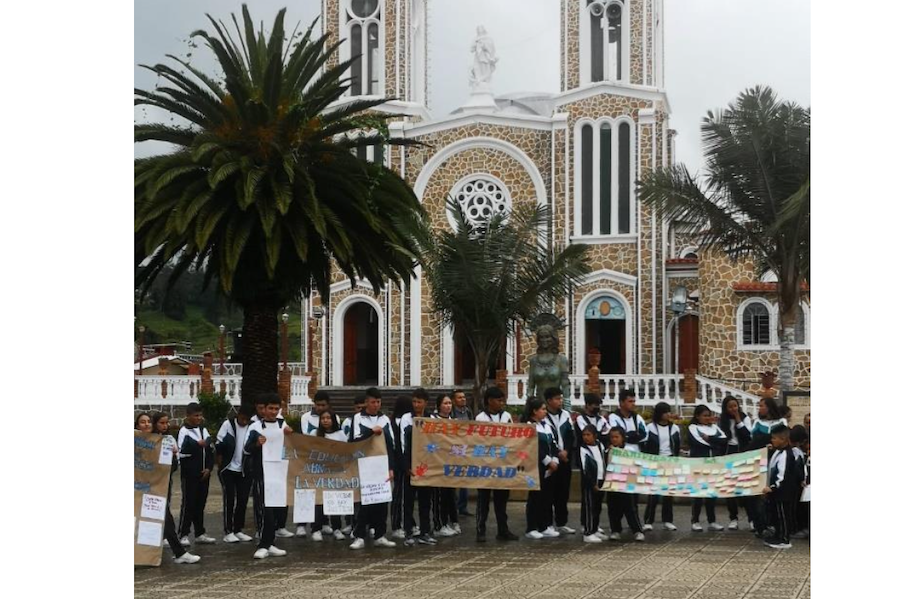
Education for Peace dialogues hosted by National Ministry of Education in Cartagena, Colombia

… EDUCATION FOR PEACE …

An article from the Global Campaign for Peace Education

With more than 150 attendees from different regions of the country, the Education for Peace dialogues took place in Cartagena for two days. Teachers, teaching directors, officials from the secretariats of education, students, representatives of higher education institutions, and social organizations from different parts of the country participated in the dialogues.

The scenario served for the socialization of recommendations for education for peace, school coexistence and non-stigmatization. In different conversations and workshops, the importance of explicitly having socio-emotional, citizen and reconciliation education in undergraduate degrees was discussed, so that teachers leave with tools that allow them to present solutions and initiatives to communities.

(Continued in right column)

(Click here for a version in Spanish)

Question for this article:

Where is peace education taking place?

What is happening in Colombia, Is peace possible?

(Continued from left column)

The importance of forming a culture of peace was expressed, with support networks, for children and adolescents, taking into account the social context to which they belong, to promote the concept of peace in their territory, recognizing the needs of students. and their participation, to transform contexts. Likewise, generate strategies based on art and culture that allow emotions to be managed for the peaceful resolution of conflicts and for reconciliation.

On the other hand, the need was identified to strengthen the training of teaching directors and teachers to lead pedagogy strategies and construction of learning strategies and networks around peace and violence mitigation in order to guarantee the rights of children. and young people; as well as supporting pedagogical projects focused on restorative justice, peace, reconciliation, human rights and coexistence, which must be transversal.

Another point that was addressed referred to the understanding of the processes of self-education, respect for the knowledge of the communities and the promotion of research in the classroom. In this way, peace must be promoted by teachers from all areas and the commitment also of the secretaries of education so that they can generate actions.

The regional meeting on education for peace was organized by the Ministry of National Education and had the support of the Secretary of Education of Cartagena, the Japan Cooperation Agency JICA, EducaPaz and the Norwegian Council for Refugees.

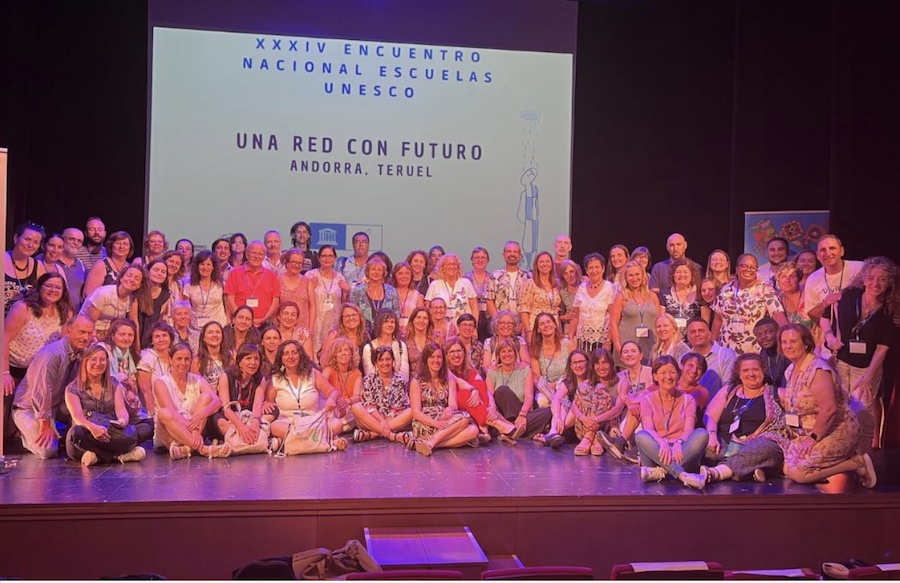
Global Peace Education Day: Virtual Conference

… EDUCATION FOR PEACE …

Excerpts from the website of Global Peace Education with links to youtube videos

Global Peace Education Day Virtual Conference
EMPOWERING EDUCATORS FOR PEACE
20th September 2022 – 11 am New York Time


Part 1: Call for a UN Day for Global Peace Education

Conference Host:

Michael Nouri: International screen actor; Goodwill ambassador for Seeds of Peace and the Multiple Sclerosis Society

Conference Chair:

Gabriela Ramos: UNESCO Assistant Director-General for the Social and Human Sciences (Click here for her remarks)

Welcome from Founders

Alberto Guerrero: President, Federación Española De Asociaciones, Centros Y Clubes Para La UNESCO

Why Campaign for a United Nations Peace Education Day

The United Nations declared 2021 as the International Year for Peace and Trust. The United Nations has established more than 150 international days for different humanitarian themes. However, there is no day dedicated specifically to the theme of peace education.

Because peace education is central to the United Nations central mission, it certainly deserves a special day for public awareness – a day to promote practical efforts in peace education throughout the world, a day to empower educators for peace; a day to connect and celebrate with others in the peace education field.

Keynotes: Call to the UN

Anwarul Chowdhury
Founder; Global Movement for a Culture of Peace; Former Under-Secretary-General, United Nations; Former President, UN Security Council (Click here for his keynote address)

Federico Mayor Zaragoza
Founder, Culture of Peace Foundation; Former Director General, UNESCO (Click here for his remarks)

Doudou Diene
Former Special Rapporteur on Contemporary Forms of Racism, Racial Discrimination, Xenophobia, and Related Intolerance (Click here for his remarks)

Ouided Bouchamaoui
2015 Nobel Peace Laureate, President, Tunisian Confederation of Industry, Trade and Handicrafts (UTICA) (Click here for her remarks)

Prof Karim Errouaki, PhD:
President Emeritus of the American University of Europe . . .

Reiner Braun
Executive Director, International Peace Bureau (Click here for his remarks)

Garry Jacobs
President and CEO, World Academy of Arts and Sciences

Ambassador Amat Al Alim Alsoswar
Former Minister of Human Rights, Yemen . . .

Francisco Rojas
8th Rector, University of Peace (UPEACE), Costa Rica

Part 2: A Culture of Peace

What skills and knowledge do we need to build a culture of peace on a healthy planet? Some leading voices offer examples.

Keynotes

Federico Mayor Zaragoza: Founder, Culture of Peace Foundation; Former Director General, UNESCO

Prem Rawat: Author; Founder of The Prem Rawat Foundation and the Peace Education Program.

Steve Killilea AM: Founder & Executive Chairman, The Charitable Foundation; Institute for Economics and Peace
Roundtable

Ramu Damoradan: Former Chief of Academic Impact, United Nations

Alexander Laszlo, PhD: Human Evolution to Peace

Willow Baker: Program Director, Peace Education Program, TPRF

Special Features

Tony Jenkins, PhD: Mapping Peace Education

(This article is continued in the column on the right.)

Question for this article:

What is the United Nations doing for a culture of peace?

(Article continued from left column)

Part 3: Restoring Humanity

What skills must we learn to support more than a million people forced to flee their homes by conflict, climate change and persecution? Can peace education make us more human?

Keynote – Peace Skill: Right Relationship

Lisa Worth Huber PhD: President and Board Chair, National Peace Academy

Roundtable

Guila Clara Kessous, PhD: Moderator – UNESCO Artist for Peace

Richard F. Mollica, MD, MAR: Director of the Harvard Program in Refugee Trauma (HPRT) at Massachusetts General Hospital

Enayet Khan: Artist; Photographer; Publisher Rohingya Together; Mentor, Rohingya refugee youth in Cox’s Bazar, world’s largest refugee camp in Bangladesh.

Professor Nisha Sajnani: founder of the Arts and Health initiative at New York University.

Héloïse Onumba-Bessonnet: victimologist specialising in sexual violence in armed conflict.

Part 4: Peace & Justice

“No justice, no peace.” How do we create a culture that offers peace, prosperity and dignity to every human being? How will peace education help us to face prejudice and injustice? How do we make equality reality?

Keynote

Bishop Horace Smith, M.D: Pastor, Chicago Apostolic Faith Church

Roundtable

Philip Shelton: Moderator – Director, Fair Housing & Equal Opportunity, Indianapolis . . .

Rita Rubin Long: Educational consultant. Peace education facilitator.

David Weinberg: Executive Director, Global Peace Education Network, Inc.

Conversation

Chic Dambach: President Emeritus, Alliance for Peacebuilding

Part 5: Peace & Leadership

How do peacebuilding skills merge with global economics to promote a culture of peace? How will peace education stop the scourge of prejudice and violence?

Keynote

Stephane Monney-Mouandjo, PhD: Directeur Général, Centre Africain de Formation et de Recherche Administrative pour le Développement (CAFRAD)

Roundtable

Marc Levitte: Moderator – Executive coach; Senior Facilitator, the Art of Hosting.

Bakari Sidiki Diaby: Founder, CADHA-Afrique

Rachidi Adam: President, Paix et Education; Assistant Administratif, FODEFCA

Philippe Rio: President of the Association “Maires pour la Paix France”

Special Feature

Michael Nouri: Mayors for Peace letter

Part 6: Peace & Planet

The UN Secretary General warns that “we’re sleepwalking toward climate catastrophe.” How can education reverse this trend? Young global activists showcase solutions

Keynotes

Kehkashan Basu: M.S.M. Founder, Green Hope Foundation

Francisca Cortes Solari: Founder, Filantropia Solari

Alexia Leclercq: Grassroots environmental justice organizer; Co-founder, Start: Empowerment

Part 7: Arts and Peace

The language of the arts flows through borders and transforms lives. How do arts and culture nurture peace skills? Our artists offer a creative exploration.

Keynote

Aixa Portero Y De La Torre PhD: Fine Arts Professor, University of Granada

RoundTable Panel

Alla Rogers: Moderator – Artist & Curator

Richard Dana: Artist

Melvin Hardy: Chairman, Millennium Arts Salon

Lucian Perkins: Independent photographer, and filmmaker

Sarah Tanguy: Curator

Part 8: Peace & War

Nuclear holocaust is closer than ever before. Armed conflicts are raging in 27 countries, with civilian populations mistreated by the military. How can peace education help end the threat of war?

Keynotes:

Gina Langton MAMBM FRSA: Founder of 80,000 Voices Ltd . . .

Monica Willard: URI and International Academy for Multicultural Cooperation

Fawziah al-Ammar Phd: senior research fellow with the Sana’a Center for Strategic Studies . . .

Conversation:

Tezekiah Gabriel: Executive Director, Pathways to Peace

Tadhi Blackstone: Institute of Noetic Sciences