Category Archives: FREE FLOW OF INFORMATION

Venezuela: An Open Letter to the People of the United States from President Nicolás Maduro

FREE FLOW OF INFORMATION

Published by Transcend News Service

7 Feb 2019 – If I know anything, it is about people, such as you, I am a man of the people. I was born and raised in a poor neighborhood of Caracas. I forged myself in the heat of popular and union struggles in a Venezuela submerged in exclusion and inequality.

I am not a tycoon, I am a worker of reason and heart, today I have the great privilege of presiding over the new Venezuela, rooted in a model of inclusive development and social equality, which was forged by Commander Hugo Chávez since 1998 inspired by the Bolivarian legacy.

We live today a historical trance. There are days that will define the future of our countries between war and peace. Your national representatives of Washington want to bring to their borders the same hatred that they planted in Vietnam. They want to invade and intervene in Venezuela – they say, as they said then – in the name of democracy and freedom. But it’s not like that. The history of the usurpation of power in Venezuela is as false as the weapons of mass destruction in Iraq. It is a false case, but it can have dramatic consequences for our entire region.

Venezuela is a country that, by virtue of its 1999 Constitution, has broadly expanded the participatory and protagonist democracy of the people and that is unprecedented today, as one of the countries with the largest number of electoral processes in its last 20 years. You might not like our ideology, or our appearance, but we exist and we are millions.

I address these words to the people of the United States of America to warn of the gravity and danger that intend some sectors in the White House to invade Venezuela with unpredictable consequences for my country and for the entire American region. President Donald Trump also intends to disturb noble dialogue initiatives promoted by Uruguay and Mexico with the support of CARICOM for a peaceful solution and dialogue in favour of Venezuela. We know that for the good of Venezuela we have to sit down and talk, because to refuse to dialogue is to choose strength as a way. Keep in mind the words of John F. Kennedy: “Let us never negotiate out of fear. But let us never fear to negotiate”.

(Article continued in the right column.)

(Click here for the letter in Spanish or click here for the letter in French.)

Question(s) related to this article:

Free flow of information, How is it important for a culture of peace?

What is really happening in Venezuela?

(Article continued from left column)

Are those who do not want to dialogue afraid of the truth?

The political intolerance towards the Venezuelan Bolivarian model and the desires for our immense oil resources, minerals and other great riches has prompted an international coalition headed by the US government to commit the serious insanity of militarily attacking Venezuela under the false excuse of a non-existent humanitarian crisis.

The people of Venezuela have suffered painfully social wounds caused by a criminal commercial and financial blockade, which has been aggravated by the dispossession and robbery of our financial resources and assets in countries aligned with this demented onslaught.

And yet, thanks to a new system of social protection, of direct attention to the most vulnerable sectors, we proudly continue to be a country with a high human development index and low inequality in the Americas.

The American people must know that this complex multiform aggression is carried out with total impunity and in clear violation of the Charter of the United Nations, which expressly outlaws the threat or use of force, among other principles and purposes for the sake of peace and the friendly relations between Nations.

We want to continue being business partners of the people of the United States, as we have been throughout our history. Their politicians in Washington, on the other hand, are willing to send their sons and daughters to die in an absurd war, instead of respecting the sacred right of the Venezuelan people to self-determination and safeguarding their sovereignty.

Like you, people of the United States, we Venezuelans are patriots. And we shall defend our homeland with all the pieces of our soul.

Today Venezuela is united in a single clamor: we demand the cessation of the aggression that seeks to suffocate our economy and socially suffocate our people, as well as the cessation of the serious and dangerous threats of military intervention against Venezuela.

We appeal to the good soul of American society, victim of its own leaders, to join our call for peace, let us be all one people against warmongering and war.

Long live the peoples of America!
Nicolás Maduro

President of the Bolivarian Republic of Venezuela

2019 Biennial of Luanda [Angola]: The initial budget has about 440 thousand euros

FREE FLOW OF INFORMATION

An article from the Observador (translation by CPNN)

The Angolan Government presented this Friday the Biennale of Luanda 2019 – Pan-African Forum for the Culture of Peace, with a budget of more than 500 thousand dollars for “initial costs” in the framework of an agreement with UNESCO.


The UNESCO representative for the meeting, Enzo Fazzino. Photo: AMPE ROGÉRIO / LUSA

Highlighting the contribution of African cultures to world peace through a wide variety of cultural expressions from the six African regions, including the fine arts, music, dance, theater and literature, is the objective of the Luanda Biennial, which will take place from September 18 to 22.

According to the national coordinator of the Luanda Biennial, Alexandra Apatricío, during five days the meeting will gather reflections, as well as hold cultural and sporting events.

Under an agreement signed between the Angolan Government and the United Nations Educational, Scientific and Cultural Organization (UNESCO), the national coordinator of the biennial said that Angola “already has an initial budget set aside from funds already identified that is 505 thousand dollars “(about 440 thousand euros).

(Continued in right column)

(Click here for the Portuguese version of this article.)

Question related to this article:

The Luanda Biennale: What is its contribution to a culture of peace in Africa

Will UNESCO once again play a role in the culture of peace?

(Continued from left column)

“[The budget is] deposited for certain costs and we are currently collecting all the costs of all these actions and there are already large institutions in the country and other international institutions that have approached us willing to contribute to the actions of the Luanda Biennial” , he pointed out.

At the ceremony held this Friday at the Anibal de Melo Press Center (CIAM), in Luanda, the official said that during the biennial “the intention is to promote a culture of peace by taking into account the diversity of Africa.”

According to the Angolan authorities, 12 countries, namely two from North Africa, two from West Africa, two from East Africa, two from Central Africa, two from Southern Africa and two from the diaspora are expected to be participants.

“The idea of ​​this Biennial is to have a space where we can contribute to a culture of peace and violence prevention to create more actions, share, and exchange these moments that exist in other countries for sustainable development,” he said.

The UNESCO representative at the meeting, Enzo Fazzino, also pointed out the relevance of the Luanda Biennial 2019 – Pan-African Forum for the Culture of Peace, which is an opportunity to find actors in conflict prevention in Africa.

“The idea is to create a Pan-African Movement for the Culture of Peace that values ​​ongoing actions and that creates opportunities for these projects to gain more support,” he said.

He added that it will be “an opportunity to show the cultural diversity of the African continent and create a sense of better integration between African cultures. The achievement of bringing together countries from across the African sub-regions can create greater integration.”

Bolivia: Evo Morales says the United States seeks to “devastate and impoverish” Venezuela as did to Iraq and Libya

FREE FLOW OF INFORMATION

An article from RPP Noticias

The president of Bolivia and friend of his Venezuelan counterpart, Nicolás Maduro, Evo Morales, said Wednesday that the United States wants Venezuela to be “devastated and impoverished” like Iraq and Libya, by provoking violence through its threats to coexistence in Latin America. .

Through his Twitter account, the Bolivian president wrote. “The US threats against Venezuela are threats to peaceful coexistence in Latin America, they want to provoke confrontation between brothers with war and violence.”

He also accused the US government of seeking that Venezuela “be devastated and impoverished as Iraq and Libya”, referring to interventions in which the United States participated in those countries.

Morales said in another message on the well-known social network that “by failing at the UN to justify a military intervention that allows it to take over Venezuela’s oil, the United States arbitrarily confiscates the money of the Venezuelan people to finance the coup [… ] The United States undermines peace and the right of peoples to dispose of their natural resources, “he added.

(Article continued in the right column.)

(Click here for the original article in Spanish.)

Question(s) related to this article:

What is really happening in Venezuela?

(Article continued from left column)

To this he added. “Latin America is a region of peace, we are once again proposing to build a South American identity in terms of defense and we reject any attempt at intervention, we must promote the peaceful resolution of conflicts and a culture of peace in the continent and the world.” (EFE)

Evo Morales Ayma
@evoespueblo

The economic sanctions of #EEUU against the brother country of #Venezuela, when trying to confiscate the assets of @PDVSA, violate the Charter of the United Nations that recognizes the equality and sovereignty of the States, as well as the self-determination of the peoples.

Evo Morales Ayma
@evoespueblo

The threats of #EEUU against #Venezuela are threats to peaceful coexistence in # AméricaLatina. They want to provoke confrontation between brothers with war and violence. The empire wants Venezuela to be devastated and impoverished as were Iraq and Libya.

Evo Morales Ayma
@evoespueblo

# AméricaLatina is a region of peace, we are once again planning to build a South American identity in terms of defense and reject any attempt at intervention. We must promote the peaceful resolution of conflicts and a culture of peace on the continent and the world.

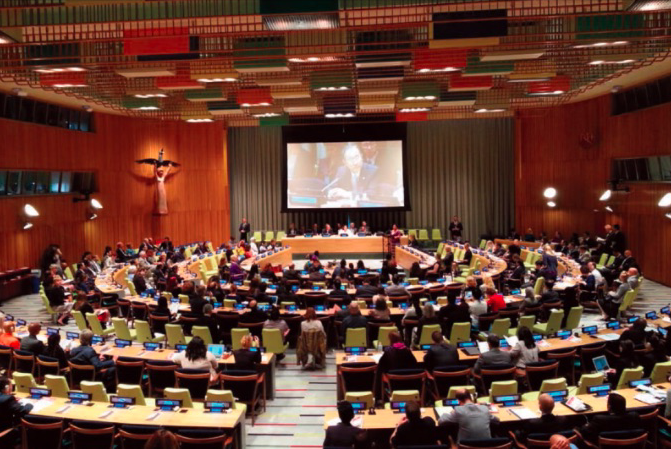
US attack on Venezuela: alternative media coverage

FREE FLOW OF INFORMATION

An analysis by CPNN

For the most part the major mass media supports the attack on Venezuela led by the government of the United States. They give the headlines to the US and EU charges against Venezuela, and imply that the Chinese and Russian refusal to go along with the American initiative at the UN Security Council is simply a revival of the Cold War.

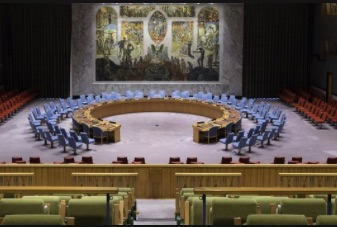
According to the news agency of the United Nations, some other countries also gave reasons to oppose the US initiative during the Security Counil meeting, as described below.

Meanwhile, the website Common Dreams carries a statement from 70 intellectuals opposing the US initiative.

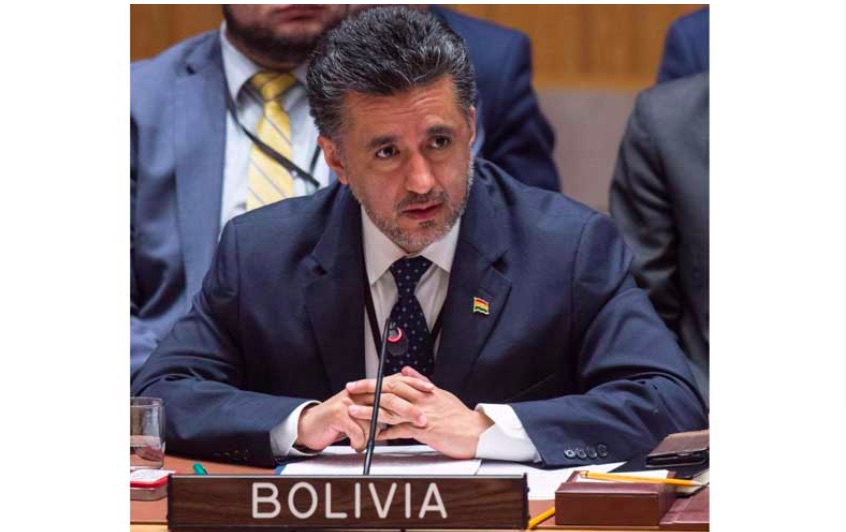
Here are the remarks at the UN Security Council from the representatives of South Africa, Equatorial Guinea, Cuba, Bolivia and St Vincent and the Grenadines:

JERRY MATJILA (South Africa) emphasized that, in any country, political parties choose the provisions on which to conduct elections.  Recalling that Venezuela held presidential elections in May 2018 on the basis of its national laws, he voiced deep concern over the “clear attempt […] to circumvent the country’s constitutional legal mechanisms which govern its elections”.  Any grievances or disputes should be resolved in a peaceful manner through the proper mechanisms, without external influence.  Echoing calls for the swift de-escalation of tensions to prevent violence, and for the relevant actors to commit to inclusive and credible political dialogue, he urged the international community and United Nations entities to work with Venezuela and its neighbours to assist those in need.  South Africa stands against any attempt at undue constitutional change of Government in Venezuela, he stressed, warning that the Council must never be an instrument that validates such attempts.

ANATOLIO NDONG MBA (Equatorial Guinea) appealed to Venezuelans to arm themselves with courage and wisdom to overcome this crisis.  The solution, aside from being peaceful and democratic, must be in accordance with the Venezuelan Constitution.  The situation in Venezuela is an internal matter and does not pose a threat to international peace and security, and the Security Council must be cautious in that regard.  The main focus of the United Nations and the Council should be on encouraging the parties to negotiate the differences that are “pushing them to the edge”.  The international community “should not put fuel” on the situation, but rather, facilitate a dialogue.  External interference will only exacerbate tensions.  Recalling the suffering caused by foreign interventions in the Middle East and Africa — “only to change a regime and without any consideration of what could happen afterwards” — he said Equatorial Guinea acknowledges, respects and adheres to the constitutional order of Venezuela.  He expressed hope that all parties will resolve their differences through dialogue, calling on Secretary-General António Guterres to use his diplomatic experience to mediate this crisis.

PAUL OQUIST KELLEY (Nicaragua) reiterated his Government’s full solidarity for the legitimately elected President, Mr. Maduro.  The situation in Venezuela does not represent a threat to international security, he added, strongly urging that the sovereign decisions of the country’s people be respected.  The interest and insistence of the United States to include the subject of Venezuela in the agenda of the Security Council is another form of interventionist action into another nation’s internal affairs.  Its clear objective is to impose a change of Government and replace the constitutional Government of President Maduro through a coup d’état.

(Article continued in the right column.)

Question(s) related to this article:

Free flow of information, How is it important for a culture of peace?

What is really happening in Venezuela?

(Article continued from left column)

These actions do not contribute to a political solution, which belongs to the Venezuelan people as the ones to exercise their right to self-determination, he said.  What characterizes the situation in Venezuela are the brazen attempts to destroy prior achievements made in health, education, housing and reducing poverty.  Nothing should hinder the peace zone of Latin America and the Caribbean and therefore any threat of military aggression is condemnable.  Venezuela is defending non-interventionism and the multilateral order based on independence, sovereignty and the equality of States.

ANAYANSI RODRÍGUEZ CAMEJO (Cuba) said the Caribbean is the stage for threats that are incompatible with the region’s zone of peace, recalling that the 2014 proclamation signed at the second summit of the Community of Latin American and Caribbean States (CELAC) enshrined a duty to uphold the principles of the Charter of the United Nations, notably to refrain from interference in internal affairs, and respect for sovereignty and equal rights.  The current United States Administration appears to have “dusted off the Monroe Doctrine”, and in a fresh extension of imperialism in the region, gone so far as to say that all options are on table.  The region is like a lawn during a drought — a single spark could set off an uncontrollable fire that damages the interests of all, she said, calling it a “tinder box”.  She rejected statements by the United States delegation made today, seeking to exploit the Council to illegitimately campaign against Mr. Maduro’s constitutional leadership.  The main threat to the region is the bullying by the United States and its allies, she said, calling it a flagrant affront to the popular will of Venezuelans.

She voiced unwavering support to the Bolivarian revolution, the union of the Venezuelan people and their democratic Government.  She condemned in the strongest terms, attempts, through a coup d’état, to install a lackey Government to United States interests.  She supported Venezuela’s right to chart its own future.  She decried unilateral coercive measures, calls for a military coup to topple Venezuela’s Government, warnings that the use of military might is an option, the 4 August attempt to assassinate Mr. Maduro, actions by a group of countries, the shameful role of OAS and attempts to apply a worthless policy of regime change, which has been frustrated, time and again, by the resistance of the Venezuelan people.  She advocated respect for the principles of the Charter of the United Nations, expressing Cuba’s unwavering support for the principles of sovereignty, non-use of force or the threat thereof, and non-interference in domestic affairs.  History will judge those who push for a coup d’état, she cautioned.

GARETH BYNOE (Saint Vincent and the Grenadines) said his county has been monitoring developments in Venezuela at the bilateral and multilateral levels and expressed deep concern over the unfolding events.  Stressing his Government’s adherence to the principles of non-interference, non-intervention and sovereignty, along with respect for human rights and democracy, he emphasized the need for meaningful dialogue among all stakeholders.  “We are undoubtedly living in an unpredictable era and must reject all attempts to aggravate dangerous situations or engender change of democratically elected leaders,” he said.  The history of Latin America and the Caribbean is indelibly scarred by military interventions and imposition of dictator Governments.  The need to triumph over its lingering remnants drives the countries in the hemisphere “to be viscerally abhorrent to any semblance of its re-emergence”.  Constitutionally, Venezuela has an elected President in Mr. Maduro, but an unconscionable crusade against the legally elected President, orchestrated by OAS, aims to erect a parallel unelected Government.  OAS has abdicated its role of arbiter.  Venezuela is not a threat nor represents a danger to international peace and security.  History teaches that rejection of dialogue is often the precursor to unilateralism and war, he said, an option that cannot be allowed in the region’s zone of peace.

Democratic Republic of Congo: Activities Report of JFDHOP during the 2018 elections

. . DEMOCRATIC PARTICIPATION . .

by Medard du Rocher-BOPE, President, JFDHOP (Youth and Women for Human Rights and Peace)

The year 2018 was marked by strong tensions associated with national elections in the Democratic Republic of Congo (DRC). On the side of power (the rulers), there was no desire to organize these elections and they sought by all means how to circumvent them.


One of their strategies was to offer one of the opposition leaders the post of Prime Minister, which would allow them to extend the term of office of those in power. This would have bypassed the election agreements of Saint Sylvestre that had been agreed on 31/12/2016.

The electoral center, an accomplice, proposed the delay the dates of the election, hoping to provoke a popular uprising that would enable them to declare a state of emergency and simply cancel the elections for a later date.

Also to circumvent the elections, a coup d’etat was prepared, the army and / or the National Police would take power by force for a few days as was done in the past with Kasa Vubu and Mobutu after independence, enabling them to declare the impossibility of organizing elections as a result of insecurity.

Several strategies were mounted; the most recent was the scenario of a fire to burn up the voting machines and bulletins on the high command avenue in Kinshasa / Gombe. Under the watchful eye of the international community, with divided opposition. Part of the latter supported the elections with or without voting machines and another was categorical: elections without a machine for several reasons:

One reason given was that the Congolese people do not have experience with voting machines. One of the proponents has even stated that he needed 6 minutes to use it, and he felt that those who do not master computers would need more or less 20 minutes.

Another argument was that by manipulating the computers, the results could be determined in advance by programming it so that each vote would be counted 3 or 5 times for one of the candidates.

All this was said to discourage the people from going to vote, to sabotage the elections and allow those holding power to cling and extend their power. Finally, the voter turnout turned out to be low at only 37%.

In brief, this was the context in which your Association “J.F.D.HO.P” went to work. Sometimes, security guards would charge us for being supporters of KAMWENA SAPU. But they ended up freeing us when they could not find any indication of KAMWENA SAPU supporters.

Several activities were organized to offer the population to go to the polls and vote. A motorized caravan was organized in October during the submission of applications, encouraging women to come forward, and to realize that they are the majority of the population. This caravan organized for 2 days in Kimbaseke, Ndjili, Makala, Nsele, part of Maluku, Masina, Ngaba, Limete and Matete.

During this period, doubts hovered over the heads of the Congolese people. Everyone supported the elections but the voting machines were called “machine to steal” and this did not inspire confidence.

(continued in right column)

Click here for the version in French)

Question(s) related to this article:

Can you add to this analysis of the Democratic Republic of the Congo?

(continued from left column)

Faced with this situation, your Association organized a morning with the Youth at the Church of God’s Elect at Residential Limit 13th Street to discuss the subject of elections. The theme was “Democracy and Elections”. The Association urged the youth not to give way to discouragement. They must seize the opportunity because their future depends on it. In turn, the young people gave us the mission to bring them the information about whether they were really”machines to steal”.

Your Association attended the sensitization on the voting machine in Ndjili  [a municipality in the Tshangu district of Kinshasa] and we had the opportunity for the first time to use the voting machine and to ask the necessary questions.

After this session, your Association has once again convened a meeting, this time also inviting the elders as well as youth. We explained to them how to vote with the machine. Young people as well as old people who have android phones quickly understood. For the others, it was necessary to explain them more. And, we asked the participants to reiterate to others, to convey the information that the machine is not complicated, it is enough to have in advance the numbers of your candidates, in which case everything is easy. It is more complicated and takes longer if you have to look for the number of your candidates.

But the tension was increasing around the voting machine. One of the leaders of the opposition declare openly that they would sabotage the machines.

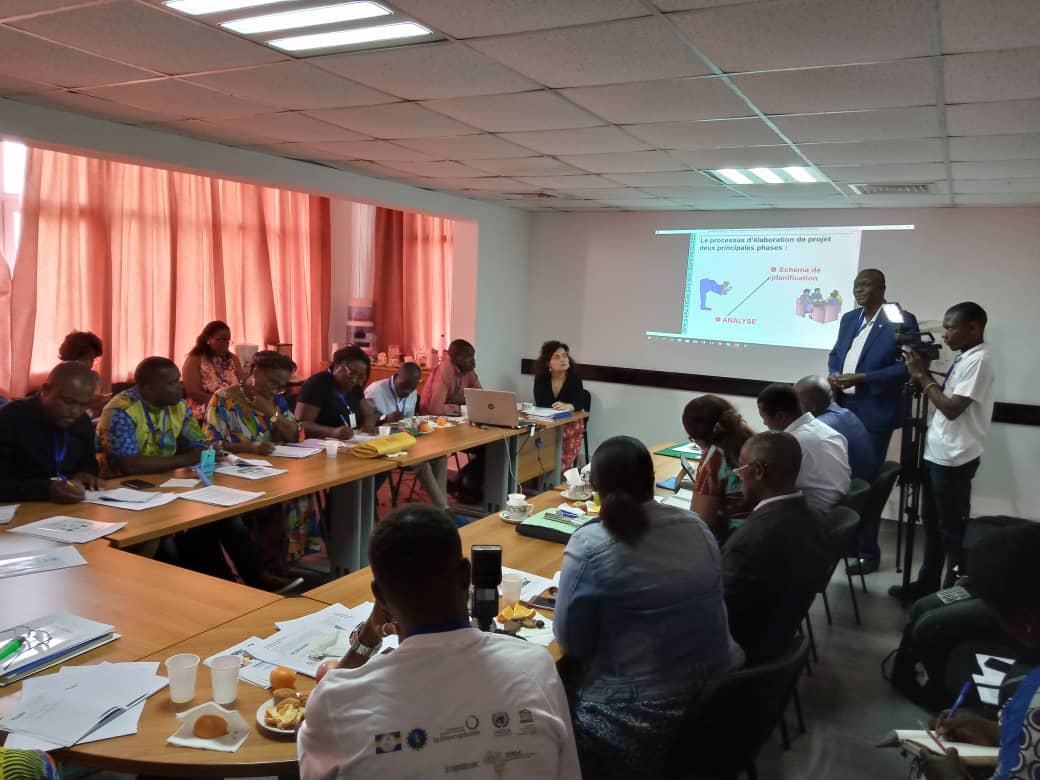
Faced with this situation, your Association with the support of the United Nations Joint Human Rights Office distributed T-shirts with various messages of peace, (among others: voting is a right and a duty; violence is a crime; your choice in the elections; it is the Congo of tomorrow; Election yes! violence no!, etc.).

Your Association went to meet with youth associations in Kasavubu, Limete, Makala, Kalamu, Kingasani, Masina, Ndjili, Mont-ngafula and Nsele to exchange and give these messages in the churches and finally with the activists of the political parties. We first went down to the UDPS / Tshisekedi headquarters at Limete 10th Street. We exchanged with the militants of this party and distributed to them the messages of non-violence and peace. To avoid being confused with the candidates to the elections and to avoid being stoned by the population, the members of the Association wore the T-shirt when going to the peripheral districts of the city of Kinshasa such as Malueka, Kimbaseke, Ferbois , Siwabanza, Makala etc.) At bus stops, markets, etc. we distributed messages and spread this message of non-violence and peace. A strong sensitization was also made to the Church of the elect of God in Limete 13th Street by the president of the Association Mr. Medard du Rocher-BOPE. Your Association has also used social networks (facebook, etc.) for a wide dissemination of message.

The postponement of the elections from December 23 to December 30 further sowed doubt about effective organization. Your Association, always close to young people, reassured them by reminding them of the will of the International Community to bring our country to the organization of elections.

Finally, J.F.D.HO.P are volunteers. After voting, they circulated in different polling centers to see what was happening and to assess the degree of violence. Some of our members were in the center until the results were posted.

[Editor’s note: As of the date of posting of this article, the opposition candidate Felix Tshisekedi has been sworn in as President in the country’s first transfer of power via an election in 59 years of independence. However, there are claims that the election was actually won by another opposition candidate, Martin Fayulu, and tensions remain high in the country.]

UNESCO Awards Jose Marti Prize to Roberto Fernandez Retamar

FREE FLOW OF INFORMATION

An article from Prensa Latina

UNESCO Director General Audrey Azoulay awarded the Jose Marti International Prize to the outstanding Cuban intellectual Roberto Fernandez Retamar, diplomatic sources announced Monday.

The award, proposed by an international jury, was given to Fernandez Retamar, one of the most prestigious voices of Cuban literature, with a deep Marti vocation and conviction, said a diplomatic statement.

‘President for four decades of the cultural institution Casa de las Americas, Fernandez Retamar has contributed permanently, from this prestigious center, to the promotion of peace, solidarity, human rights and equality among Latin American and Caribbean nations, values recognized by this Award’, said the statement.

(Article continued in the column on the right)

(Click here for a Spanish version of the article)

Questions related to this article:

Where in the world can we find good leadership today?

(Article continued from the column on the left)

The outstanding essayist has a trajectory of excellence in the cultural field, and has dedicated a considerable part of his work to the study, teaching and dissemination of the Apostle Jose Marti’s values and ideals.

The decision, according to the jury, recognizes the Cuban intellectual’s work ‘to advocate for justice, the protection of children, the ethical development of peoples, the recognition of the dignity of each man and woman and the importance of combating racism.

The UNESCO Jose Marti Prize was established by the Executive Board, at Cuba’s initiative, in November 1994, which implied recognition of the universality and validity of the Cuban National Hero’s ideals.

The award is designed to encourage and reward a particularly meritorious activity which, in accordance with Marti’s ideas and spirit, has contributed to the unity and integration of Latin American and Caribbean countries, as well as to the fostering of a culture of peace and the cohesion of countries.

The prize-giving ceremony will be held on the occasion of the Fourth International Conference for World Balance, to be held from January 28 to 31 at the Havana Convention Centre.

The event’s scientific agenda includes several issues of special impact on UNESCO’s mandate, including intercultural dialogue, peace, access to education and culture for the exercise of human rights, and solidarity and integration in Latin America and the Caribbean.

Angola: Culture ministry analyzes programme of Luanda Biennal

FREE FLOW OF INFORMATION

An article from Agência Angola Press

The Ministry of Culture analyzed on Friday in Luanda, aspects concerning the preparation of the Biennale of Luanda , a Pan-African Forum for Culture of Peace to kick off in the second fortnight this year.


Angola and UNESCO sign agreement for Luanda Biennal

The meeting, in which the national coordinator of the biennale was introduced, Alexandra Aparício, discussed issues related to the programme of the event to be held in the ambit of the agreement signed by Angola and UNESCO in December 18 of 2018 in Paris.

(Continued in right column)

(Click here for the Portuguese version of this article.)

Question related to this article:

The Luanda Biennale: What is its contribution to a culture of peace in Africa

Will UNESCO once again play a role in the culture of peace?

(Continued from left column)

For the execution of the activities slated for the biennale, the Culture minister, Carolina Cerqueira, stressed the need for the involvement of all sectors of the society, mainly the staff of the sector, representative of the civil society, artists, writers, associations, cultural groups, show makers and journalists.  

The programme can also include discussions on the role of young people to combat corruption and woman’s protection against domestic violence, resolution of conflicts and the challenges to bolster dialogue and friendship amongst peoples.
 
The holding of the Biennale of Luanda shows the political willingness of the Angolan government to establish a closer cooperation with UNESCO, with view to promoting a true culture of peace in Africa and represents the recognition of the country’s example of strengthening peace and national reconciliation.  
 
The event will also count on the support of the African Union.

Mairead Maguire Nominates Julian Assange for the 2019 Nobel Peace Prize

FREE FLOW OF INFORMATION

An article from Transcend Media Service

Nobel Peace laureate Mairead Maguire wrote today [7 Jan 2019] to the Norwegian Nobel Committee nominating Julian Assange, Editor-in-Chief of WikiLeaks, for the 2019 Nobel Peace Prize.


Ms. Maguire wrote:

“Julian Assange and his colleagues in WikiLeaks have shown on numerous occasions that they are one of the last outlets of true democracy with their work for freedom of speech.  Their work for true peace by making public our governments’ actions at home and abroad has enlightened us to their atrocities carried out in the name of so-called democracy around the world.  This included:

* Footage of carnage perpetrated by NATO/US military

* Release of email correspondence revealing conspiracy for regime change in Middle Eastern countries

* Elected officials paid to deceive the public

“This is a huge step in our work for disarmament and nonviolence worldwide. Julian Assange, fearing deportation to the U.S. to stand trial for treason, sought out asylum in the Ecuadorian embassy in 2012.   Selflessly, he continues his work from there increasing the risk of his prosecution by the American government. 

(Article continued in the column on the right)

Question related to this article:
 
Julian Assange, Is he a hero for the culture of peace?

(Article continued from the column on the left)

“In recent months the U.S. has increased pressure on the Ecuadorian government to take away what remains of his freedom.  He is now prevented from having visitors, telephone calls or other electronic communications, thereby removing his basic human rights.  This has put a great strain on Julian’s mental and physical health.  It is our duty as citizens to protect Julian’s human rights and freedom of speech as he has fought for ours on a global stage.

“It is my great fear that Julian, who is an innocent man, will be deported to the U.S. where he will face unjustified imprisonment.  We have seen this happen to Chelsea (Bradley) Manning who allegedly supplied WikiLeaks with sensitive information from NATO/US Middle Eastern wars and subsequently spent multiple years in solitary confinement in an American prison.   If the US succeeds in their plan to extradite Julian Assange to US to face a grand jury, this will silence journalists and whistle-blowers around the world in fear of dire repercussions.

“Julian Assange meets all criteria for the Nobel Peace Prize.   Through his release of hidden information to the public we are no longer naïve to the atrocities of war, neither oblivious to the connections between big business and the acquisition of resources and spoils of war.

“As his human rights and freedom are in jeopardy, the Nobel Peace Prize would afford Julian much greater protection from governments’ forces.

“Over the years there have been controversies over the Nobel Peace Prize and some of those to whom it has been awarded.  Sadly, I believe it has moved from its original intentions and meaning.  It was Alfred Nobel’s will that the prize would support and protect individuals at threat from government forces in their fight for nonviolence and peace, by bringing awareness to their precarious situations.  Through awarding Julian Assange the Nobel Peace Prize, he and others like him will receive the protection they truly deserve.

“It is my hope that by this we can rediscover the true definition of the Nobel Peace Prize.

“I also call on all people to bring awareness to Julian’s situation and support him in his struggle for basic human rights, freedom of speech, and peace.”

[Editor’s note: See also https://www.transcend.org/tms/2019/01/giuliani-says-assange-should-not-be-prosecuted/.

UNESCO and Angola to establish Biennale of Luanda, a Pan-African Forum for the Culture of Peace

FREE FLOW OF INFORMATION

An article from UNESCO

Carolina Cerqueira, Minister of Culture of Angola, and Firmin Edouard Matoko, UNESCO Assistant Director-General for Priority Africa and External Relation, today [December 18] signed an agreement for the creation of the Biennale of Luanda – Pan-African Forum for the Culture of Peace, whose first edition will take place in September 2019.


Carolina Cerqueira, center, and Firmin Edouard Matoko, right

The Luanda Biennale, organized through a partnership between the Government of Angola, UNESCO and the African Union, is designed to promote the prevention of violence and the resolution of conflicts by facilitating cultural exchanges in Africa, inter-generational dialogue and gender equality. The Forum is to nurture reflection and facilitate the dissemination of artistic works, ideas and knowledge pertaining to the culture of peace. It will bring together representatives of governments, civil society, the arts, sciences and international organizations.

(Continued in right column)

(Click here for a French version of this article.)

Question related to this article:

The Luanda Biennale: What is its contribution to a culture of peace in Africa

Will UNESCO once again play a role in the culture of peace?

(Continued from left column)

“It is very gratifying for Angola to host the Biennale because my country knows the value of peace. With the help of the African Union and of civil society organizations, we will be in a position to establish strong links of solidarity and brotherhood between the old and the young so that they may dream of a prosperous and peaceful Africa, which will only come to be if we work together,” the Minister declared at the signing ceremony. On that occasion, he also thanked all who made this agreement possible, notably UNESCO.

“The agreement is very important for UNESCO as it will allow us to carry out a project we initiated a few years ago to organize a culture of peace festival, notably with the support of the African Union,” declared UNESCO’s Assistant Director-General for Priority Africa and External Relation. “We believe in the future of this project and its ability to contribute to the transformation of the African continent,” he added.

The Biennale is part of UNESCO’s operational strategy for Priority Africa (2014-2021) which aims to provide “explicitly African responses to the changes at work in African economies and societies.”

The first Biennale of Luanda, in 2019, will be four-pronged: It will serve as a space for reflexion, or intellectual forum, on the future of Africa, as a Festival of Cultures to showcase the cultural diversity of African countries and the African diaspora enabling them to demonstrate their resilience in the face of conflict and violence. It will also feature international cultural and sport events; and encourage the mobilization of partners to support projects throughout the continent.

Colombia: First appearance of President Duque before the National Peace Council

FREE FLOW OF INFORMATION

An article from La Republica (translation by CPNN)

In his first appearance before the National Peace Council, the government’s advisory body for coexistence, the President of the Republic, Iván Duque Márquez, assured that his administration is committed to peace, but made it clear that in order to achieve it, we must have justice and fairness.

Duque spoke after a series of spokespersons from social sectors, community leaders, businessmen and students, whom he listened to and responded to with criticisms and requests. In particular the students again complained about the lack of resources for public education,

(Continued in right column)

(Click here for the original Spanish version of this article.)

Question related to this article:

What is happening in Colombia, Is peace possible?

(Continued from left column)

The President recalled that he started with an IPC + 3 and then increased to 4 and clarified that “we have had productive conversations with the students and we have reached the maximum possible and achievable offer, because what we can not continue to do is to exacerbate social tensions by making promises that are not then fulfilled..

The President said that “peace cannot be maintained if there is no legality and if there is no security in the territories,” and he explained that although the Constitution states that peace is a right and a duty of obligatory fulfillment, it also orders the State “to exercise the role of protector of life, property and honor of Colombians at all times and places in the territory.”

By insisting on the subject of security, he indicated that “it is not an embodiment of authoritarianism, much less the limitation of citizen rights. Security as a democratic value, principle and public good is precisely so that the absence of violence exists in the territories, that no citizen feels stigmatized or persecuted for what he thinks, what he believes or how he thinks, “he explained.

The National Peace Council is composed of three committees that deliberate on issues of education, culture of peace, implementation of agreements and territorial peace, as well as oversight and guarantees that the civil war will not be repeated.