Category Archives: TOLERANCE & SOLIDARITY

General strike in Palestine

TOLERANCE AND SOLIDARITY .

Facebook entry by Elias D’eis,
 · 
Today [May 18] will go down in history as one of the most powerful days of Palestinian non-violence resistance against the Israeli aggressions. Palestinians across the occupied West Bank, Gaza, and inside Israel took part in “GENERAL STRIKE” to protest against the Israeli occupation, aggressions in Jerusalem, and the bombardment in Gaza!!


(click on image to enlarge)

Thousands and thousands of brothers and sisters from all walks of life gathered together for collective actions and to demand our rights of living a life that is filled with dignity, equality, and respect. We all share the trauma and fear of living under constant threat, never knowing which moment the occupiers will seize more of our lands, kill more of our children and take our homes away from us.

(continued in the right column)

Question for this article

Presenting the Palestinian side of the Middle East, Is it important for a culture of peace?

(continued from the left column)

Holy Land Trust stands committed to this fight and believes that Palestinians today will the forebearers of peace tomorrow! We stand united from the Mediterranean to the Jordan river, from the north to the south in our struggle to finally achieve a reality where everyone lives in peace and harmony in the Holy Land.

But we also want to remind you, our beloved followers, that our struggle cannot be won in isolation. We need the entire world to come together and call upon the Israeli government to end their aggression and occupation of Palestinians. We call upon you again to reach out to your leaders and governments in whatever way you can and urge them to publicly take a stand for Palestinians. We call for an end to all violence because we firmly believe that if we do not break the cycle of violence and adopt the path of peace, lasting harmony cannot be achieved in the Holy Land!

Please dont forget to spread the message as much as you can! We are forever grateful for the support.

#FreePalestine #Gaza_Under_Attack #saveseikhjarrah #endisraeliaggression #Palestine

Outraged at apartheid Israel’s crimes against Palestinians? Here are 5 things you can do.

. TOLERANCE & SOLIDARITY .

An article from the BDS Movement

In many countries, governments and corporations are deeply complicit with Israel’s decades-old regime of military occupation, settler-colonialism and apartheid, just as they were complicit in the apartheid regime in South Africa. Israel can only sustain this regime of oppression with international complicity.


(Click on image to enlarge.)

Here are the 5 most effective things YOU can do to challenge this complicity and support the Palestinian struggle for freedom, justice and equality:

1. Work with progressive networks to pressure parliament and government to (a) end all military-security cooperation and trade (military funding in the US case) with apartheid Israel and similarly criminal regimes of oppression worldwide, (b) ban all goods/services of companies operating in Israel’s illegal colonial settlements; and (c) demand a UN investigation of Israeli apartheid.

(continued in right column)

Question related to this article:

Israel/Palestine, is the situation like South Africa?

(continued from left column)

2. Mobilize pressure in your community, trade union, association, church, social network, student government/union, city council, cultural center, or other organization to declare it an Apartheid Free Zone (AFZ), ending all relations with apartheid Israel and companies that are complicit in its system of oppression.

3. Boycott products/services of, and/or mobilize institutional pressure to divest from, Israeli and international companies and banks that are complicit in Israeli war crimes and crimes against humanity. This includes all Israeli banks (Leumi, Hapoalim, etc.) and major multinationals such as: Elbit Systems, HP, G4S/Allied Universal, AXA, CAF, PUMA, Caterpillar, General Mills/Pillsbury, Hyundai Heavy Industries, JCB, Volvo, Barclays Bank, Alstom, Motorola Solutions, and CEMEX.

4. Cancel all academic, cultural, sports, and tourism engagements in Israel or supported/sponsored by Israel (or its lobby groups and complicit institutions).

5. Join a BDS campaign or a strategic Palestine solidarity group near you to act collectively and effectively.

Channel your anger and mobilize to dismantle apartheid and all forms of racism and oppression.

People Around the World Stand Up in Solidarity With Palestine

TOLERANCE AND SOLIDARITY .

A photo report from Left Voice

All over the world, people are standing up in solidarity with Palestine and against Zionist displacement and murder of Palestinians.


Image by Reuters, Protest in London

New York City
@left voice New York City’s solidarity rally with Palestine. Free Palsestine. Not one cent to Israel.

@KeiPritsker Several thousands marching for Palestine in New York City
click for video

Photo by Luigi Morris

Washington DC

@aletweetsnews Protest supporting Palestine near the White House this evening, featuring a gigantic Palestinian flag and a wooden peace tank adorned with flowers paraded from the State Department, where hundreds started marching a couple of hours ago.
click for video

London

@stopthewall Solidarity protest with #Palestine in #London. Whereever you are, endorse the #BDS call, share stories about what’s happening in #Palestine, and take to the streets changing: #FreePalestine, to end #Israeli brutality and hold it to account. #SaveSheikhJarrah #GazaUnderAttack

@PSCupdates Wow. No Words. #SaveSheikhJarrah
click for video

@ftwsope 8,000 people attended this protest in London for Palestine!! #FreePalestine
click for video

(Photos continued in the right column)

Question for this article

Presenting the Palestinian side of the Middle East, Is it important for a culture of peace?

How can a culture of peace be established in the Middle East?

(Article continued from the left column)

South Africa

Turkey

Image by Reuters

Image by Reuters

Morocco

Beirut

(MEE/Kareem Chehayeb)

Pakistan

(Rizwan Tabassum/AFP)

Israel and Palestine : An update on the BDS movement

. . HUMAN RIGHTS . .

Believing that a solution to the conflict between Israel and Palestine is the key to peace in the Middle East, CPNN has carried many articles on this subject. Increasingly it is recognized that the situation resembles the apartheid of South Africa.

A major contribution to the overcoming of apartheid was the international boycott of South Africa. With that as a model, the BDS movement attempts to overcome the Israeli system of apartheid with “Boycott, Divestment and Sanctions.”
 

The website bdsmovement.net carries news about this movement. Last August, CPNN carried their review Palestine: 15 lessons from 15 years of BDS

(continued in right column)

Question related to this article:

Israel/Palestine, is the situation like South Africa?

(continued from left column)

In December, a review of BDS initiatives in 2020 reported a growing call for sanctions, including by the World Council of Churches  and, in the UK, MPs, the Trades Union Congress, and prominent artists. Another development was the decisions by  the University of Manchester to divest from companies doing business with Israel, and calls for similar action by student groups in the United States at Columbia University, the University of Illinois Urbana-Champaign, and San Francisco State University.
 
In 2021, positive developments include:

130 Mexican Civil Rights Organizations demand that the company CEMEX end its complicity with Israeli Apartheid.

Over 60 Global Civil Society Groups Signed an Open Letter to Allied Universal to divest from Policity Corporation that trains Israeli police

Richard Falk: A Palestinian Balance Sheet: Normative Victories, Geopolitical Disappointments

TOLERANCE AND SOLIDARITY .

An article from the Transcend Media Service

(Note: Richard Falk was appointed  in 2008 by the United Nations Human Rights Council (UNHRC) to two three-year terms as a United Nations Special Rapporteur on “the situation of human rights in the Palestinian territories occupied since 1967.” )

Winning the Long Game

In recent weeks the Palestinian people have scored major victories that would have has immediate dire consequences for Israel if law and morality were allowed to govern political destiny. Instead, the Palestinian people are confronted by adverse geopolitical developments as a result of the Biden presidency, which have accepted some of the most regressive features of Trump’s hyper-partisanship with respect to Israel/Palestine. Law and morality alter reputations, bear on the legitimacy of contested policies, while geopolitics bear on behavior, the difference is one between legitimacy and hegemony. My unprovable hypothesis and firm belief is that hegemony wins out today, but legitimacy triumphs tomorrow.

There is a tendency to dismiss legitimacy gains should as what seems to matter in people’s lives seems remains frozen. In the long game of social change, especially in the course of the last 75 years, the winner of a Legitimacy War waged for the high legal and moral ground has more often than not eventually controlled the political outcome of a struggle, outlasting geopolitical dominance and military superiority along the way. The anti-colonial wars, it should not be forgotten, were won by the far weaker side militarily, which endured ordeals of desecration along their path to victory. This is the lesson such inspirational figures as Gandhi and Martin Luther King, Jr. gave their life to teach the world, so far with mixed results.

The Palestinian struggle continues, and offers the world of a paradigm of a colonial war carried on in a post-colonial era, in which cruel geopolitical tactics are required to swim against the strong liberation tides of history. Israel has proved to be a resourceful settler colonial state that has carried almost to completion the Zionist Project, moving forward toward its goals by stages, and always with the help of the geopolitical muscle of the West. Only recently has Israel lost control of the normative discourse that earlier it had dominated by highlighting the ghastly persecution of Jews who after the Holocaust deserved a secure sanctuary, a dismissal of nativist Palestinian claims to assert control over their own homeland, and cleverly arranging deceptive publicity portrays of the replacement of dirty backward Arab stagnancy by a dynamic modern, innovative, and flourishing Jewish society that sang and danced while the world slept. Israel later on made itself a valued Western foothold in a region coveted for its energy reserves and increasingly feared because of its anti-Western extremism and Islamic resurgence.

As with other anti-colonial struggles, the fate of the Palestinians will turn on whether the people can finally overcome a ruthlessly repressive state, given more leeway when linked, as is Israel, by regional and global strategic affinities with geopolitical actors. Can the Palestinian people secure their basic rights through their own distinctive blend of internal/external forces, resistance from within, global solidarity campaigns from without? This is the nature of the Palestinian Long Game. At present, this trajectory is hidden among the mysteries of unfolding national, regional, and global history.

Palestinian Normative Victories

Five years ago, no sensible person would have anticipated either that Israel’s most respected NGO, B’Tselem, would issue a report declaring that Israel had established an apartheid state that governed a single territory that stretched from the Jordan River to the Mediterranean Sea, that is, encompassing not only Occupied Palestine but Israel itself. With careful analysis the report showed that Israeli policies and practices with respect to immigration, land rights, residency, and mobility are administered in accordance within an overriding framework of Jewish supremacy, and by this logic, Palestinian (more accurately non-Jewish, including Druze and non-Arabic Christians) subjugation. Such a discriminatory and exploitative political arrangement is descriptive of apartheid, as initially established in South Africa and then generalized as an international crime in the 1973 International Convention on the Suppression and Punishment of the Crime of Apartheid. This idea of apartheid criminality was carried forward in the Rome Statute that provides the framework within which the International Criminal Court (ICC) in The Hague carries on its activities. Article 7 of the Statute enumerates the various Crimes Against Humanity over which the ICC asserts its jurisdictional authority. Apartheid is classified as such a crime in  Article 7(j), although without a definition.

(Article continued in the right column)

Question for this article

Presenting the Palestinian side of the Middle East, Is it important for a culture of peace?

How can a culture of peace be established in the Middle East?

(Article continued from the left column)

Then came the much anticipated decision of the Pre-Trial Chamber of the ICC on February 5, 2021. By a 2-1 vote the Chamber’s decision affirmed the authority of Fatou Bensouda, the ICC Prosecutor, to proceed with an investigation of Israeli war crimes committed in Palestine since 2014, as geographically defined by its provisional 1967 borders. To reach this outcome the decision had to make two important pronouncements: first, that Palestine, although lacking many of the attributes of sovereignty, did qualify as a State for purposes of this ICC proceeding, having become a Party to the Rome Statute in 2014 after being recognized by the General Assembly on November 29, 2012 as a ‘non-member Observer State.’(Res. 67/19); and secondly, that the jurisdiction of ICC to investigate crimes committed on the territory of Palestine was authoritatively identified as the West Bank, East Jerusalem, and Gaza, that is, the territories occupied by Israel during the 1967 War.

It should be observed that this Pre-Trial proceeding had attracted unusually widespread interest in the world both because of the identity of the parties and the intriguing character of the issues. Jurists have long been intrigued by defining statehood in relation to different legal settings and by settling jurisdictional disputes addressing issues arising in territories that lack permanently established international borders. Signaling the high stakes of this legal proceeding, unprecedented 43 amicus curiae briefs were submitted, including by prominent figures on both sides of the controversy. Israel was not a Party to the Rome Statute, and declined to participate in the proceedings directly or be bound by the outcome, and yet was infuriated by the outcome, apparently sensing that it was losing control over the international minds and hearts.

This decision was promising beyond its strictly legal issues from a Palestinian point of view as a Preliminary Investigation conducted by the Prosecutor over the prior six years had already concluded that there was ample reason to support the conclusion that crimes had been committed by Israel and by Hamas in Palestine, specifically referencing three settings:

1. The massive IDF attack on Gaza in 2014, known as Operation Protective Edge;

2. the disproportionate uses of force by the IDF in responding to the Right of Return Gaza protests during 2018-19;

3. settlement activity in the West Bank and East Jerusalem.

It is now established that the Prosecutor can go forward, but all that glitters is not gold! Ms. Bensouda is schedule to leave the ICC in June when her term expires, and so far her replacement has not been selected. It is possible that a new prosecutor could use her or his discretion to discontinue the investigation, which reportedly is shaping the politics surrounding the appointment. It will become evident at that point as to whether the ICC gains a needed boost in its own efforts to disengage from the geopolitical architects of world order, or sinks back into its earlier ‘Africa Only’ image of international criminality.

Geopolitical Disappointments

It was reasonable, but maybe not realistic, for Palestine to hope that a more moderate Biden presidency would reverse the most damaging moves taken by Trump that had so overtly rejected international law and UN authority. The Biden Secretary of State, Antony Blinken, sent signals on the most significant issues that appeared to ratify rather than reverse or modify the Trump diplomacy. Blinken affirmed, what Biden had implied, to support the shift of the U.S. Embassy from Tel Aviv to Jerusalem, joining Trump in defying UNGA Resolution that enjoyed overwhelming support in 2017, declaring the Embassy move as ‘void’ and without legal effect. Blinken has also indicated U.S. support for Israel’s territorial incorporation of the Golan Heights, again defying international law and the UN, which had stood by a firm principle, earlier endorsed with respect to Israel’s occupation of Palestinian territories after the 1967 War in iconic Security Resolution 242, that territory could not be lawfully acquired by forcible conquest.

Assessing Gains and Losses

So far Israeli the significance of Israel’s setback in the Legitimacy War far outweighs Palestinian predictable geopolitical disappointments. Palestinian reactions to these disappointments have been muted as compared to Israeli apoplectic reaction to the ICC decision.

The fuming response of Netanyahu was replicated across by every leading Israeli politicians. In Netanyahu’s outrageous calumny against the ICC:

“When the ICC investigates Israel for fake war crimes, this is pure anti-Semitism,” adding, “We will fight this perversion of justice with all our might.”

Intemperate as are these remarks, they do show that Israel cares deeply about legitimacy issues, and rightly so. International law and morality can be defied but it is deeply wrong to suppose that they do not matter. South Africa learned that losing the Legitimacy War forced the dismantling of apartheid. Maybe Israeli leaders are beginning see the writing on the wall. In decades to come the ICC decision may turn out to be a turning point not unlike the 1960 Sharpeville Massacre. Before dawn, the night is darkest. The African majority waited more than 30 years for their emancipation from apartheid. The Palestinian people have already endured the hardships and humiliations of racist subjugation and Jewish supremacy for more than 70 years. When will it end, and how?

UNESCO supports 5 Youth-led Early Warning and Response Mechanisms for peacebuilding within 5 councils in Cameroon

. TOLERANCE & SOLIDARITY .

An article from UNESCO

Young persons are usually the primary victims of violent extremism and conflict. When violence sets in, young girls and boys begin to live in fear, their dreams fall apart – they cannot have a decent education, turnover in their businesses fall, job opportunities diminish, food prices increase, the cost of transport skyrocket, etc. Rather than living positive lives and fulfilling their dreams, they are unfortunately compelled to join fighting factions and terrorist groups.

As part of efforts contributing to the prevention of violent extremism, five exemplary young leaders of youth-led organizations have stepped up to the challenge by implementing Early Warning, and Early Response (EWER) mechanisms to conflict within five councils in Cameroon – Buea City Council, Douala IV Council, Babadjou Council, Kye-Ossi Council, and Maroua I Council.

These young leaders include- Christian Achaleke of Local Youth Corner (LOYOC), Loic Atangana Nkulu of the Pan-African Network for a Culture of Peace (PAYNCOP), Brice Nisebang of the Cameroon National Youth Council (NYC), Paul Bernard Noah of “G-54 Afrique Avenir” and Gladys Tchegoue of Dynamique Mondiale des Jeunes (DMJ). Other youth leaders equally participated in this initiative such as Desmond Ngala of Rog Agency for Open Culture, Stephane Mebonde of Accord Parfait and Ramatu Abdou of the Association for the Welfare of Women and Indigenous Persons (ASOWWIP).

(continued in right column)

Question related to this article:
 
Youth initiatives for a culture of peace, How can we ensure they get the attention and funding they deserve?

(continued from left column)

Youth-led early warning and response mechanisms consist of building dialogue and trust between youth and local administrative, traditional, and religious authorities as well as forces of law and order and women community leaders as a means of preventing conflicts from triggering or escalating.

UNESCO, through the Peacebuilding Fund, is providing technical guidance and financial support to these young leaders as well as facilitating their interaction and credibility vis-à-vis the competent authorities.

Feedback from authorities has been high. For instance, Mrs. Akawoh Minerva epse Molinge, 1st deputy Mayor of Buea council welcomed this initiative and commended the youth leaders for proactively tackling the issue of violence in the community.

Mr. HAPPI DE NGUIAMBA Joseph Victorien, Divisional Officer of Kye-Ossi underscored the pertinence of the initiative for Kye-Ossi, which as a border town hosts diverse populations from Cameroon, Gabon, and Equatorial Guinea. Ensuring peaceful co-existence of peoples is a daily effort for its authorities he stressed.

Adama Illyassa, an Imam in Maroua, and Samadel Kaskam, an evangelical pastor in the same city gracefully integrated the Task Force of the early warning and response mechanism and are committed to building trust and peaceful co-existence between natives and internally displaced persons in Maroua. Maroua is home to several persons fleeing the devastating effect of terrorism perpetrated by Boko Haram in the Far North Region and in such conditions, the social integration of IDPs in the community is not always a smooth process.

Youth-led early warning mechanisms transform perceptions on young persons. They portray youths as responsible, solution providers, concerned, and proactive about preventing violence in their communities, stakeholders to engage for durable peace to be achieved.

Early warning mechanisms are an organized framework for community dialogue and peaceful living together led by young persons. UNESCO in collaboration with authorities and other partners will continue to support these mechanisms and scale them countrywide, beyond the 5 pilot councils for the preservation of peaceful coexistence in Cameroon.

Hans Küng: Towards a Global Ethic

TOLERANCE & SOLIDARITY .

An article by René Wadlow in the Transcend Media Service

Hans Küng was a Swiss Roman Catholic theologian who died on 6 Apr 2021 at the age of 93. He always stressed the Swiss aspect of his life, its democratic traditions, and the need to discuss widely before making a decision. He wrote his doctoral thesis at the Sorbonne University in Paris on the Swiss Protestant theologian Karl Barth (1886 – 1968) who spent most of his teaching life at Bale Universit


Le théologien catholique Hans Küng, en 2006, à Paris. JOEL SAGET / AFP

Küng always hoped that some of the democratic spirit would enter the Roman Catholic Church, and he had high hopes at the time of the Vatican II Conference which brought some reforms to Church administration.  Küng also saw Vatican II as a time when Catholic thinkers such as Pierre Teilhard de Chardin (1881-1955) and Henri de Lubac (1896-1991), who had been marginalized, were again being read.  However, the conservative forces within the Church and especially within the Vatican itself regained influence.  The more liberal voices were less heard, and in some cases were driven out of the Church itself.

Thus from the early 1980s Küng turned his attention to other religions.  He wrote a book on Judaism and another on Islam. Then he turned his attention to the religions of Asia, looking for common themes that could provide a bridge.

(continued in right column)

Question related to this article:
 
How can different faiths work together for understanding and harmony?

(continued from left column).

Like Karl Barth, the political tensions in the 1980s between the U.S.A. and the USSR became a preoccupation.  In addition, the tensions in the Middle East were growing. Küng wanted to find a moral code that would provide a global way of life conducive to peace.  He became active in the Parliament of the World’s Religions which had been an effort in the 1880s to develop dialogue among representatives of religions.  A century later the Parliament was revived and has held a session every five years or so meeting in different parts of the world.

For the Parliament, Hans Küng wrote a text Toward a Global Ethic around which the Parliament could discuss.  The Text began,

 “Peace eludes us, the planet is being destroyed, neighbors live in fear, women and men are estranged from each other, children die. This is abhorrent.” 

The text goes on,

“We affirm that a common set of core values is found in the teachings of religions and that these form a basis of a global ethic.”

He then calls for a radical change in consciousness.

“We are interdependent. Each of us depends on the well-being of the whole, and so we have respect for the community of living beings, for people, animals, and plants, and for the preservation of Earth, the air, water and soil.”

I had participated in an inter-religious discussion in Geneva in which Hans Küng was active.  True to his democratic spirit, he listened respectfully to what each was saying, although he was the best-known participant in the meeting.  The concept of a global ethic as a base for peace has not yet taken hold, although the Universal Declaration of Human Rights is an important step in that direction.

Hans Küng’s intellectual effort set a direction in which citizens of the world will continue to walk. There is still a good distance to go until the ideology becomes a practice, but the need remains and new voices will come to the fore.

Pan-African Youth Network for the Culture of Peace: General Assembly

. TOLERANCE & SOLIDARITY .

An article by Jerry Bibang, special to CPNN

The Pan-African Youth Network for the Culture of Peace (PAYNCOP) organized an ordinary general assembly from April 10 to 11, 2021. The conference took place by video.

This meeting, which brought together nearly forty participants from different African countries, enabled PAYNCOP to renew its Board of Directors, the executive body of the network.

(Click here for the original French version of this article)

(continued in right column)

Question related to this article:
 
Youth initiatives for a culture of peace, How can we ensure they get the attention and funding they deserve?

(continued from left column)

Composed of ten people, the new team is made up of a president, Romilson de BE Silveira, from Sao-tomé, a vice-president, Yannick AGBOKA Koffi, from Togo, a Permanent Secretary, Jerry Bibang, Gabonese, and 9 regional coordinators plus a representative of the diaspora.

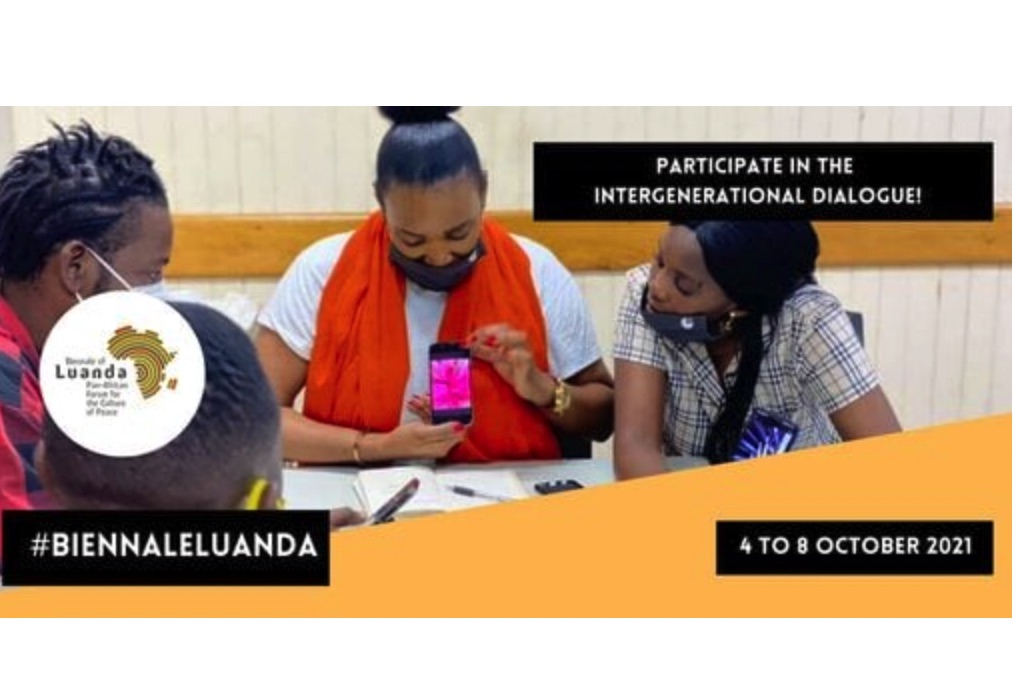
Opening the work of this meeting, Eric Volibi, Unesco Representative in Gabon, encouraged young people to engage in the promotion of the culture of peace, and he invited them to plan future activities in partnership with Unesco. These include the Luanda Biennale, scheduled for September 2021, and the Young Weavers for Peace project which concerns Gabon, Cameroon and Chad.

In addition to the renewal of the management team, the participants also looked at various points, including the assessment of activities, challenges and difficulties before identifying prospects for the smooth running of the organization.

Regarding the review of activities, the Central Africa, North Africa and West Africa regions presented their work which was appreciated by the participants.

Among the challenges and difficulties, we note the need for legal recognition of the various national coordinations in order to give PAYNCOP an official status of international organization and the economic empowerment of the organization, which essentially involves two main means: contributions from member coordinations and mobilization of funding from partners.

International Statement of Solidarity with Decolonial Academics and Activists in France

. TOLERANCE & SOLIDARITY .

A statement reprinted by Juan Cole, along with many other journals, including Al Jazeera

We write to express our solidarity with the scholars, activists, and other knowledge producers who are targeted by the February 2021 statements by Frédérique Vidal, France’s Minister of Higher Education, Research, and Innovation. In them she denounced “Islamo-gauchisme” (Islamo-leftism) and its “gangrene” effect on France, and called for an inquiry into France’s national research organization, the CNRS, and the university. The specific kinds of knowledge in question analyze and critique colonialism and racism, and support decolonial, anti-racist, and anti-Islamophobia projects within the academy and on the streets. Vidal’s statements show the discomfort these challenges are causing the State, and hence the desire to repress them rather than engage them.


Video of the debate

The State’s intentions are found in the language it uses. The relatively new term “Islamo-gauchisme” reflects a much older convergence of right-wing, colonial and racist ideologies working in opposition to anti-colonial, anti-Islamophobia and anti-racism struggles.

Vidal claims that anti-colonial, decolonial and postcolonial critique, anti-racist, anti-Islamophobia, intersectionality, and decolonial feminist and queer analyses are foreign imports from the US academy.

She ignores that decolonial theory actually developed in Abya Yala (Latin America), postcolonial theory in India, and that women and queers in anti-colonial and anti-racism struggles have always thought about many relations of power together. Vidal also forgets that both postcolonial and decolonial theory are indebted to the prior work of French-speaking scholars of color such as Frantz Fanon, Aimé Césaire, and others.

This false narrative and these acts of repression effectively remove France from a vibrant and urgent global discussion. They put faculty of color and allies producing critical scholarship on colonialism, Islamophobia, anti-Black racism, etc. – already few and marginalized – at even greater risk.

The attack on progressive and radical scholars and activists seeks at all costs to preserve “French exceptionalism” and a whitewashed image of the Republic scrubbed clean of inconvenient truths. These include the fact that France remains a colonial power (in, for example, Réunion, Guadeloupe, Martinique, French Guiana, Iles des Saintes, la Désirade, Mayotte, New Caledonia, etc), and a neocolonial one in terms of its economic, political, and military relations to former colonies.

(Click here for the original French version of this article)

(continued in right column)

Question related to this article:
 
Are we making progress against racism?

(continued from left column)

This colonial mentality is manifest in France’s structures of governance, especially with regard to both citizens and immigrants of color, as reflected in a barrage of laws such as: the law against wearing the veil; immigration laws; the Islamophobic law against “separatism” which has already shut down the CCIF (Collective against Islamophobia in France) and threatens all forms of autonomy; the proposed “global security” bill institutionalizing mass surveillance, including by drone, and restricting publicization of police brutality; the (now-repealed) law that mandated that colonialism be taught in only one State-sanctioned manner; rights-abusive and discriminatory counterterrorism laws; and others. These measures seek to forcibly “integrate” suspect populations into subordinate roles in French society.

It is precisely the critique of this colonial history and present, and its manifestations in State racisms including Islamophobia, that the State wishes to censor and make invisible.

Elements of the White Left, including feminists without an anticolonial, anti-Islamophobia or antiracism analysis, have also been complicit in rendering colonial and racial oppression invisible, and providing ideological rationalizations for State racisms. This, too, speaks to the incoherence of the term, “Islamo-leftism.”

The repression in France is not isolated. In Brazil, Turkey, Hungary, Poland, the US, India and other places we see the rise of neoliberal, right-wing, and authoritarian governmental suppression of critical scholarship and social movements.

But wherever we find repression we also find forms of resistance networked into global chains of solidarity.

Vidal’s statement and the planned inquiry have appeared in the context of an explosion of energy in both the academy and on the streets to address colonial, racial, and economic injustice. For example, the demonstrations in defense of Adama Traoré in France and other anti-racist protests globally after the murder of George Floyd represent the kind of commitment and courage that Vidal and others are worried about. Repressive laws and inquiries will not stop this scholarship nor the movements.

As international scholars and activists, we pledge solidarity with our counterparts in France. We commit ourselves to monitoring the situation carefully, to publicizing cases globally, to inviting those facing repression and censorship to speak in our countries, to co-authoring essays with them and helping them get their work translated, to co-mentoring students and junior colleagues, and to engaging in other forms of collaboration that they desire.

Authors:

Paola Bacchetta (Professor, University of California, Berkeley)
Azeezah Kanji (Legal Academic and Journalist, Toronto)
David Palumbo-Liu (Professor, Stanford University)

Earliest Signatories

1. Gayatri Chakravorty Spivak, University Professor, Columbia University, USA

2. Gina Dent, Associate Professor, Feminist Studies, History of Consciousness, and Legal Studies. University of California, Santa Cruz

3. Angela Y Davis, Distinguished Professor Emerita, University of California, Santa Cruz

4. Robin DG Kelley, Distinguished Professor and Gary B. Nash Endowed Chair in U.S. History, UCLA, USA

As of April 14, there were 556 signatures along with their institutional affiliations. The full list of signatures is available here.

Pope, in Easter message, slams weapons spending in time of pandemic

TOLERANCE AND SOLIDARITY .

An article by By Philip Pullella in Reuters (reprinted by permission)

Pope Francis urged countries in his Easter message on Sunday to quicken distribution of COVID-19 vaccines, particularly to the world’s poor, and called armed conflict and military spending during a pandemic “scandalous”.

Coronavirus has meant this has been the second year in a row that Easter papal services have been attended by small gatherings at a secondary altar of St. Peter’s Basilica, instead of by crowds in the church or in the square outside.

After saying Mass, Francis read his “Urbi et Orbi” (to the city and the world) message, in which he traditionally reviews world problems and appeals for peace.

“The pandemic is still spreading, while the social and economic crisis remains severe, especially for the poor. Nonetheless – and this is scandalous – armed conflicts have not ended and military arsenals are being strengthened,” he said.

Francis, who would normally have given the address to up to 100,000 people in St. Peter’s Square, spoke to fewer than 200 in the church while the message was broadcast to tens of millions around the world.

The square was empty except for a few police officers enforcing a strict three-day national lockdown.

(Article continued in right column.)

Question for this article

Religion: a barrier or a way to peace?, What makes it one or the other?

(Article continued from left column.)

The pope asked God to comfort the sick, those who have lost a loved one, and the unemployed, urging authorities to give families in greatest need a “decent sustenance”.

He praised medical workers, sympathised with young people unable to attend school, and said everyone was called to combat the pandemic.

“I urge the entire international community, in a spirit of global responsibility, to commit to overcoming delays in the distribution of vaccines and to facilitate their distribution, especially in the poorest countries,” he said.

Francis, who has often called for disarmament and a total ban on the possession of nuclear weapons, said: “There are still too many wars and too much violence in the world! May the Lord, who is our peace, help us to overcome the mindset of war.”

‘INSTRUMENTS OF DEATH’

Noting that it was International Awareness Day against anti-personnel landmines, he called such weapons “insidious and horrible devices … how much better our world would be without these instruments of death!”

In mentioning conflict areas, he singled out for praise “the young people of Myanmar committed to supporting democracy and making their voices heard peacefully”. More than 550 protesters have been killed since a Feb. 1 military coup in Myanmar, which the pope visited in 2017.

Francis called for peace in several conflict areas in Africa, including the Tigray region of northern Ethiopia and the Cabo Delgado province of Mozambique. He said the crisis in Yemen has been “met with a deafening and scandalous silence”.

He appealed to Israelis and Palestinians to “rediscover the power of dialogue” to reach a two-state solution where both can live side by side in peace and prosperity.

Francis said he realised many Christians were still persecuted and called for all restrictions on freedom of worship and religion worldwide to be lifted.