All posts by CPNN Coordinator

About CPNN Coordinator

Dr David Adams is the coordinator of the Culture of Peace News Network. He retired in 2001 from UNESCO where he was the Director of the Unit for the International Year for the Culture of Peace, proclaimed for the Year 2000 by the United Nations General Assembly.

Cypriot teachers work for peace and reconciliation through educational programmes

… EDUCATION FOR PEACE …

An article from Famagusta Gazette

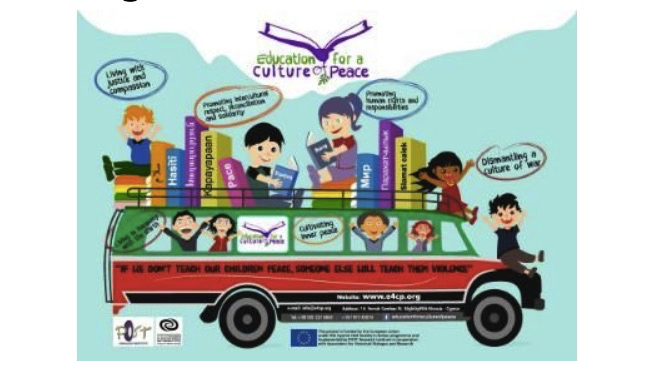
The need to have an educational system which promotes peace and reconciliation rather than perpertuating violence ans war is the focus of a programme entitled “Education for a Culture of Peace”.

In a joint interview with the CNA, Greek Cypriot and Turkish Cypriot participants to the programme Loizos Loukaides and Süleyman Gelener point out that, at a time when efforts to reach a solution of the Cyprus problem are intensified, the need for change in the educational system in order to cultivate a culture of peace and anti-racism is imperative.
cyprus

Loukaides works as assistant in the programme, is a teacher and a consultant on peace education matters. Gelener is also an elementary school teacher and member of the board of the Association for Historical Dialogue and Research (AHDR).

A total of 180 teachers have been trained from both communities as part of the programme and a number of workshops on education for peace and democratic structured dialogue have also taken place.

In the first semester of 2016 joint activities for 160 students from both communities are planned to take place.

The two educators express their conviction that the programme can be described as a success.

Loukaides said that the programme is funded by the EU and was created by a group of people who either take part in AHDR or at the Research Institute POST, either in their personal capacity as scientists, researchers or active citizens.

“The programme was created because of the need to have an educational system which will not perpetuate violence and war but instead it will promote peace and reconciliation, not only as regards relations between the two communities but on a more comprehensive framework which includes other themes of what we call `Peace Culture`”, he says.

The idea for such a programme is not something new, Gelener says on his part. In previous years, he adds, “we had to face some problems as regards its implementation and to the way teachers would come in contact with the programme.”

(This article is continued in the column on the right.)

Question for this article:

Can Cyprus be reunited in peace?

(Article continued from left column)

“Later on, when EU grants for Turkish Cypriots were announced we thought this programme could fall within their remit and after jointly applying for the grant, we got it,” he adds.

According to Loukaides a library has been created at the premises of the Research Institute POST which includes approximately 600 books related to education for peace. It ranges from children`s literature to research books and text books with exercises for education and peace.

With the help of the Ministry of Education and Culture and Turkish Cypriot teachers` trade unions the programme has had access to teachers and has organised workshops across the divide in the capital Nicosia, as well as in Paphos and Larnaca, he points out.

The next workshops took shape out of the views expressed in the first series of workshops, he explains. An introductory workshop took place before the summer and this year, two weeks ago, all teachers from both communities of Cyprus came together in a bicommunal workshop.

For the time being seminars with teachers will continue. Another two meetings will take place with teachers from both communities while during the first six months of the year activities with 160 students from across the island will start.

A theatre summer camp under the title “Crossroads” will also take place in cooperation with the theatrical organisation TheatrEtc experienced in hosting such camps for teenagers.

Next year an international conference on education for a culture of peace is planned, in which teachers and experts from abroad will take part.

The programme will conclude with a topic on the work achieved during its three years of operation which will also include ideas for new actions for both Cyprus and abroad, because, as Loukaides says, “we believe our work is innovative not only for Cyprus but also for other countries which suffer from conflict.”

Referring to the programme`s goals Süleyman Gelener highlights the fact that it does not just focus on Cyprus or on the process between the two communities but also on a wide variety of issues such as human rights, animal rights, environmental protection, organic nutrition and generally issues that matter.

“I feel that if we manage to create a society which is aware on these issues and grows up in such a culture, then the Cyprus problem will be resolved more easily,” he says.
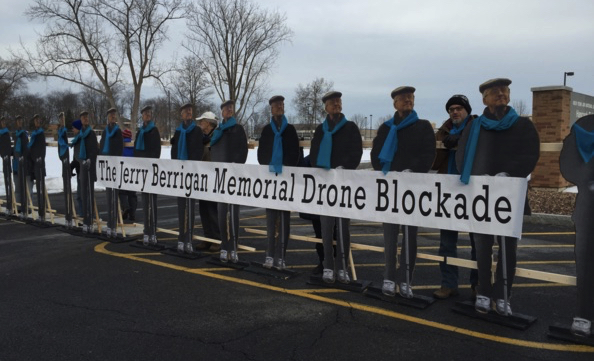

USA: We come to the gates of Hancock Drone Base today to install a memorial of Jerry Berrigan.

….. HUMAN RIGHTS …..

An article from warisacrime.org

Jerry Berrigan, who died on July 26, 2015 at the age of 95, was a husband, a father, a brother, a teacher and someone who – like his brothers Dan and Phil – dedicated his entire life to Jesus’ command to love one another. Jerry came to the base on a bi-weekly basis whenever he was able, in Jerry’s words, “to remind the base commander of our government’s pledge under the Fourth Geneva Convention of 1949, a treaty to safeguard non-combatant’s well-being in any warzone in which U.S. forces are engaged in combat.” And further, “to register horror and indignation at reports of bombing missions by drones in Afghanistan and Pakistan which resulted in the deaths of many innocent civilians; men, women and children.”

drone protest

As more and more evidence mounts regarding the illegality of U.S. drone policies, from the “Drone Papers” published by The Intercept, to the four drone pilots who have come forward to speak out about what this policy is doing, we bring Jerry’s image here to the gates to remember that this is where he would be, speaking out and putting his body on the line to say a clear “NO” to killing. Because Jerry Berrigan knew that it matters where we put our bodies.

In 2008 Jerry was asked by The Syracuse Post Standard if there was anything he would change in his life. Jerry replied, “I would have resisted more often and been arrested more often.” In our memorial today we use an image of Jerry from The Syracuse Post Standard where he is being arrested for opposing the U.S. invasion of Iraq.

As we are installing this Jerry Berrigan Memorial Drone Blockade, we also remember Mary Anne Grady Flores who is serving a six month sentence here in the Onondaga County jail because the courts in this county believe that the colonel at this highly armed base needs protection from citizens calling attention to the drone killings. We challenge the courts to apply the law as it was meant to be applied; to protect victims not victimizers.

Syracuse has a great history of men named Jerry and resistance to injustice. We call to mind “The Jerry Rescue” memorial that stands across the street from The Federal Court house where Syracusans in 1851 literally got in the way of the illegal and immoral Fugitive Slave law and the officials who tried take a man named Jerry back to enslavement in the South. They opened the prison gates for him to go to freedom. Our intent for this memorial today in honor of Jerry Berrigan, is to get in the way of the illegal and immoral use of killer drones. And to stand in solidarity with all those resisting other injustice – from Black Lives Matter to those putting their bodies to halt climate change.

Thank you Jerry Berrigan for your life and example. Your Spirit lives on!

In peace,

Beth Adams (Leverett, MA), Bev Rice (Manhattan), Bill Ofenloch (NYC), Brian Hynes (Bronx), Charley Bowman (Buffalo), Ed Kinane (Syracuse, NY), James Ricks (Ithaca), Joan Pleune (Brooklyn), Joan Wages (Roanoke, VA), Pete Perry (Syracuse, NY), Ray McGovern (Arlington, VA), Steve Baggarly (VA)

(Thank you to David Swanson for sending this to CPNN)

Question for this article

USA: Albuquerque March and Rally Against Hate! Sunday, Feb. 21 at 2pm at Albuquerque Civic Plaza

….. HUMAN RIGHTS …..

by Susan Schuurman

JOIN US TO DEMAND:
– Stop the hate! Stop the violence! We are all together!
– Let’s stand together with our Muslim and Arab American neighbors!
– Let’s stand together with immigrant workers and families!
– Let’s stand together with the Black community fighting for justice!
– Let’s stand together with refugee communities!
– Let’s stand together with women who only want access to reproductive healthcare!
– NO to racist, sexist and anti-LGBTQ violence! 
-Let’s stand together with Native Americans against bordertown violence and attacks on Native sovereignty! 
Defend those that are under attack!

albuquerque
To enlarge, click on photo

There are growing efforts to whip up hatred against people in our community. We can’t stand by while people like Donald Trump use their power and money to spread hatred against Muslims, Arabs, Mexicans, immigrants, refugees, LGBTQ people, women or anyone. Enflaming hatred, scapegoating and racist rhetoric have no place in our society. Sickening acts of violence against Mosques, women’s healthcare clinics, and ordinary people everywhere are on the rise. We are united against acts of violence, including inflammatory statements against any group.

This march of hatred cannot be unopposed. This is a dangerous moment and that’s why we all have to unite! Preying on people’s fears requires us to say that immigrants, Muslims, refugees and other assailed communities are not the problem. Espousing hatred and violence is the problem! We are the majority. An injury to one is an injury to all!

Join the February 21 mobilization to Unite Against Hate! Join together with your neighbors, families, workers and everyone to stand up to Trump and all forms of bigotry!

CALLED BY: ABQ UNITED FRONT AGAINST HATE
Organized and endorsed by Albuquerque Center for Peace and Justice, Islamic Center of New Mexico, Blessed Oscar Romero Catholic Community, ANSWER NM, Party for Socialism and Liberation, The Red Nation, SouthWest Organizing Project, New Mexico Faith Coalition for Immigrant Justice, El Centro de Igualdad y Derechos, United Voices for Refugee Rights, Friends of Sabeel ABQ, Coalition to Stop $30 Billion to Israel, Veterans for Peace ABQ, Stop the War Machine, Jewish Voice for Peace ABQ, Bernie Sanders at UNM, Encuentro, La Plazita Institute, Mujeres Colectiva, ABQJustice, Burque Media Productions, People’s Lapel Camera of Albuquerque, UNM SOAP (Students Organizing Actions for Peace), Rock Against Racism, St. Mary Magdalene ECC, SURG-NM (Showing Up for Racial Justice), The Rev. Angela Herrera, minister of First Unitarian Church, Pastor Janet Norden, of University Heights United Methodist Church and First United Methodist Church, Bernalillo County La Raza Unida, Los Jardines Institute, Santa Feans for Justice in Palestine, Progressive Democrats of America Central New Mexico (PDA-CNM), and Theater Grottesco.

Call 505-268-9557 if your organization or group would like to endorse and to find out more info about how to participate. Everyone who endorses call to action is welcome to help plan this event. We meet weekly on Thursdays at 4pm at the Peace Center.

abqpeaceandjusticecenter@gmail.com
abqpeaceandjustice.org
http://www.facebook.com/pages/Albuquerque-Center-for-Peace-and-Justice/163970810300920

Question for this article

AAPI Convenes 2nd Arts4Peace Forum in Addis Ababa

… EDUCATION FOR PEACE …

An article by Dennis Kabatto in Shout-Africa

There is a growing consensus among young Africans in the continent and the Diaspora that the arts could orchestrate a lasting peace in Africa.  The African Artists Peace Initiative (AAPI), a Pan African movement of artists and peace-makers in association with UNESCO, UNDP, UN Economic Commission for Africa and relevant partners from the African Union Commission is hosting its second Arts4Peace Forum in Addis Ababa, Ethiopia.

AAPI

The two day forum on Tuesday, January 26 – Wednesday, January 27, 2016 will explore five key areas: Human Rights in Conflict Zones and Fragile States, Ending Violence against Women and Girls, Curbing Youth Extremism and Terrorism in Africa, Peace Education through Arts and the Media, Rethinking Refugees and Migrant Situations.

“We are indeed looking forward to fruitful deliberations with all stakeholders, and I would like to express here our readiness and commitment as Artists for a peaceful Africa,” said Meron Dagnew, AAPI Country Coordinator, Ethiopia and Chair of the two day forum.  “This arts 4 peace forum is one of our flagship projects that will be held every year in Addis Abeba right ahead of the African Union Heads of State summit as to make sure the results of the meeting are included in the discussions of the summit.”

Aisha Mohammed, Ethiopia’s Minister of Culture and Tourism will offer the forum’s official Opening Remarks. Some of the dignitaries that will appear to discuss the issues at the forum including Mr. Ibrahim Ceesay, AAPI Executive Coordinator; Dr. Olawale I. Maiyegun- Director, AUC Social Affairs Division; Alieu Jammeh, Minister of Youth and Sports of The Republic of The Gambia; Mr. Luckman Jaji- Poet/AAPI Liaison Officer to AU and ECA; Ms. Helen Afsaw, Director- Selam Ethiopia; Mr. Sydney Salmon: Musician and Ambassador of AAPI; Mr. Taye Balogun, Film-maker and Founder Storytellers; Mr. Faris Basharahil, Visual Artists and Director-Social Creative Singapore; Ms. Angela Martins, Head of Culture AU Social Affairs Department; Mr. Elyes Guermazi Executive Director,The International Institute of Debate; Ambassador Olusegun Akinsanya, Regional Representative & Senior Advisor, Regional Office Institute for Security Studies Addis Ababa; Ms. Michelle Ndiaye Ntab Director, Institute of Peace and Security Studies

AAPI officials say their movement inspired by the AU Constitutive Act, AU Year of Peace and Make Peace Happen Campaign, AU 2063 Agenda and the UNESCO Culture of Peace and Non-Violence Campaign will utilize the arts as their “weapon and tool for nurturing a culture of peace based on values, attitude, and ways of life conducive to the promotion of peace among individuals, groups and society.”

Question for this article:

Bulletin français 1 fevrier 2016

. FAISONS-NOUS DES PROGRÈS? .

Avec la nouvelle année 2016, nous pouvons nous demander si les avancées vers une culture de la paix, que nous avons abordées dans les différents bulletins mensuels en 2015, continuent à progresser en 2016.

Reprenons:

ACCUEILLIR LES RÉFUGIÉS (mois de décembre): En dépit de la résistance contre l’arrivée des réfugiés en Europe, se sont créés des mouvements sociaux qui prennent leur défense. Cela a été exprimé récemment par des manifs marquant la Journée d’Action Globale contre le Racisme. La manif de Madrid avait pour slogan, “Nous sommes tous des migrants et réfugiés. Nous avons tous nos droits.” Un autre slogan a été “No à OTAN!” reflétant le fait que l’arrivée des réfugies est causée par la destruction de leur pays lors des interventions militaires de l’OTAN en Afrique et au Moyen Orient.

CULTURE DE LA PAIX EN AMERIQUE LATINE (novembre): Il y a des initiatives pour la culture de la paix partout en Amérique Latine. Dans le bulletin de novembre on trouve des activités à Cuba, en Bolivie, en Argentine, au Brésil, au Nicaragua, au Guatemala, au Chili, en Colombie et au Honduras. Et en décembre, la troisième réunion du Mouvement Pédagogique a pris place au Costa Rica avec 500 délégués de 18 pays et 34 syndicats d’éducation. L’ordre du jour: renouvellement de “la cohésion et le programme pour l’avenir de l’éducation en Amérique latine.”

LA COLOMBIE SE PRÉPARE A LA PAIX (septembre): Le plus grand progrès vers la paix en Amérique Latine est celui de la Colombie. Comme indiqué dans la chronologie publiée ce mois, on peut anticiper les signatures de leur accord de paix dans le mois de mars.

Y-AURA-T-IL UNE VOLONTÉ POLITIQUE À LA COP21 (août): En même temps que des experts regrettent le manque de volonté politique lors du sommet du climat à Paris (voir le bulletin du mois dernier), l’année 2015 a vu “un progrès extraordinaire dans la génération de l’énergie renouvelable.” Ce progrès donne l’espoir que nous pouvons renverser les processus du réchauffement de la planète même si les nations me veulent pas cesser leur dépendance aux énergies fossiles.

AFFRONTER LE TERRORISME SANS VIOLENCE (juillet): Les maires de Paris et Madrid, villes qui ont souffert le plus des actes terroristes, ont annoncé qu’ils vont sponsoriser un forum international pour la paix. Au lieu de réponses militaires, ils proposent l’éducation pour la non-violence. Dans une approche similaire, le secrétaire-général des Nations Unies, Mr Ban Ki-moon vient de publier un plan d’action contre l’extrémisme violent par des actions culturelles au lieu de militaires. Étant donné que “l’extrémisme s’accroît quand les droits de l’Homme sont violés, quand l’espace politique est réduit, quand les espérances d’insertion sont ignorées et quand les jeunes n’ont ni possibilités ni orientation pour leur vie . . . [nous devons soutenir] la bonne gouvernance, le respect de la loi, la participation démocratique, une éducation de qualité, un bon emploi, le plein respect des droits de l’Homme, et un effort spécial pour l’insertion des jeunes, reconnaissant leur contribution à la paix.” Ce dernier élément a été reconnu en particulier dans la récente résolution 2250 du Conseil de sécurité concernant “Jeunesse, Paix et Sécurité.”

VERS LA SOUVERAINETÉ ALIMENTAIRE (juin): Six cents représentants des communautés indigènes de différentes parties du monde se sont réunis récemment à Shillong en Inde pour Terra Madré Indigène (ITM), un événement qui contribue à forger un réseau mondial des peuples indigènes, des militants et de leurs sympathisants. “La vérité est que 500 millions de petites communautés alimentent 70 pour cent du monde, mais elles sont traitées sans respect du tout.”

LE PRINTEMPS ANTI-AUSTÉRITÉ (mai): Le Premier Ministre du Portugal a déclaré que les premières mesures de son gouvernement cette année vont commencer à mettre fin à l’appauvrissement du pays et au déclin social en raison de la politique d’austérité. Il est arrivé au pouvoir lors des dernières élections en tant que candidat de l’opposition socialiste contre l’austérité, et il gouverne en coalition avec les partis marxistes et les communistes. En Espagne, Podemos qui a gagné un grand vote en opposant l’austérité, essaie maintenant de faire une coalition similaire avec les partis politiques de gauche.

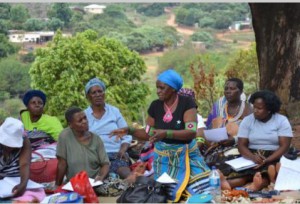
FEMMES, ÉGALITÉ ET PAIX (avril): Les femmes africaines, organisées en “Dzomo la Mupo”, la Voix de la Terre, associée avec le Réseau africain pour la biodiversité, se réapproprient la pratique agricole traditionnelle, s’opposant à la commercialisation de l’agriculture: “Les femmes doivent également enseigner aux jeunes filles et aux jeunes femmes le savoir sur les semences et sur la souveraineté alimentaire et sur l’importance du sol parce qu’elles sont de celles et ceux qui resteront pour transmettre ce message”.

LA PAIX A TRAVERS LE TOURISME (mars): Un Sommet mondial sur le tourisme durable a eu lieux en Espagne en Novembre et a adopté une Charte mondiale pour un tourisme incorporant les 17 objectifs de développement durable adoptés par les Nations Unies. La Charte affirme également la préservation de la qualité réelle des destinations et de l’industrie du tourisme, ainsi que la nécessité de promouvoir des formes alternatives de tourisme.

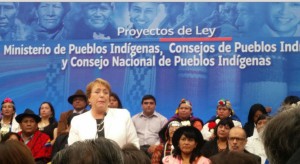
ÉCOUTEZ LES PEUPLES INDIGÈNES (février): CPNN a récemment publié “15 Victoires des droits indigènes dont vous n’avez pas entendu parler en 2015.” “Bonnes nouvelles. Parfois, il s’agit d’un barrage hydrolique annulé qui épargne à 20.000 personnes un déplacement forcé. D’autres fois, il prend la forme d’un aveu judiciaire simple, que les peuples indigènes sont effectivement les meilleurs défenseurs de l’environnement… les victoires des droits des indigènes nous donnent un répit pour célébrer, pour réfléchir et pour rafraîchir nos propres quêtes de la justice “. Et le Chili a créé un Ministère des populations indigènes, un conseil national et des conseils de peuples indigènes. Les représentants des ethnies Aymara, Quechua, Atacameños, Diaguitas, Kollas, Rapa Nui, Kawesqar, Yaganes and Mapuche ont été consultés.

COMMISSIONS DE VÉRITÉ (janvier): En Décembre, le rapport final de la Commission canadienne de Vérité a été publié. L’écrivain reflète que “Nous, en tant que pays, nous commençons tout juste à nous réconcilier avec la réalité des faits. Cela donne à réfléchir que la destruction systématique des cultures indigènes, des langues, des structures familiales, des terres et des cérémonies équivaut à un génocide culturel … Mais le changement est possible. nous pouvons changer, nous changeons, et j’ai très bon espoir que cet élan que nous avons collectivement généré continuera. Je suis enthousiasmé par l’avenir qui nous attend et je suis fier de faire partie de ce pays qui embrasse ce cri pour le changement et la réconciliation “.


PARTICIPATION DÉMOCRATIQUE

madrid forum
International Peace Forum Proposed by the Mayors of Madrid and Paris

ÉQUALITÉ HOMMES/FEMMES

iraqi

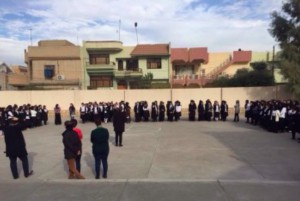
Des enseignant(e)s irakien(ne)s lancent une campagne pour mettre fin à la violence à l’égard des femmes

DISARMAMENT ET SECURITÉ

sipri
Industrie d’armement mondiale : l’Occident toujours dominant malgré une diminution ; les ventes flambent dans le reste du monde, selon le SIPRI

DROITS DE L’HOMME

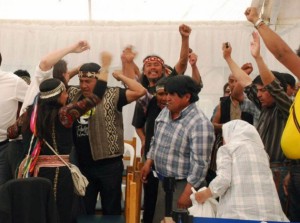
indigenous

15 Indigenous Rights Victories That You Didn’t Hear About in 2015

LIBERTÉ DE L’INFORMATION

Colombia

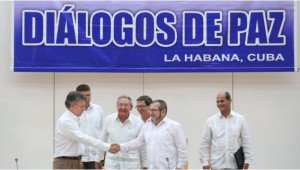
The peace process in Colombia: A Chronology

DÉVELOPPEMENT DURABLE

indigenous terra madre

Native Cultures Push For Sustainable Food Solutions

TOLERANCE ET SOLIDARITÉ

Chile

President Creates Ministry of Indigenous People in Chile

ÉDUCATION POUR LA PAIX

tawfilis

US: The First Mural Museum in the World is a Culture of Peace Museum

Boletín español: el 01 de febrero 2016

LA PAZ: ¿ ESTAMOS AVANZANDO ?

Al entrar en el año nuevo de 2016, podemos preguntarnos si la cultura de paz continúa avanzando en todos los frentes que hemos cubierto en los boletines CPNN de 2015:

ACEPTAR A LOS REFUGIADOS (diciembre): Aunque exista la resistencia política en Europa, hay también movimientos sociales en defensa de los refugiados. Esto fue visto recientemente por los mítines en toda Europa para conmemorar el Día de Acción Global Contra el Racismo. Se celebró el Rally de Madrid bajo el lema: “¡Todos somos migrantes y refugiados, todos tenemos derechos!” Otro lema era “¡Decimos” no “a la OTAN!”, dejando claro que la afluencia de refugiados se debe principalmente a las intervenciones militares de la OTAN en África y Oriente Medio.

CULTURA DE PAZ: AMÉRICA LATINA (noviembre): Hay iniciativas de paz en curso en toda América Latina. El boletín de noviembre describe acciones en Cuba, Bolivia, Argentina, Brasil, Nicaragua, Guatemala, Chile, Colombia y Honduras. El mes pasado, más de 500 personas procedentes de 18 países y 34 sindicatos de la educación de Latinoamérica participaron en el tercer encuentro del Movimiento Pedagógico para renovar la cohesión y la agenda para el futuro de la educación en América Latina.

COLOMBIA SE PREPARA PARA PAZ (setiembre): El evento más importante para la paz en América Latina el año pasado fue el progreso del proceso de paz en Colombia. Como se indica en la cronología publicada este mes, podemos esperar que firmen los acuerdos de paz en el mes de marzo 2016.

COP21: ¿HABRÁ UNA VOLUNTAD POLÍTICA? (agosto): Aunque los expertos lamentan la falta de voluntad política en la Cumbre del Clima (ver boletín del mes pasado), el año 2015 ha sido testigo de “avances impresionantes en la energía renovable“, que aumentan la esperanza de que podemos revertir el proceso de calentamiento global y el cambio climático a pesar del fracaso de las naciones para frenar su dependencia de los combustibles fósiles.

RECHAZAR EL TERRORISMO SIN VIOLENCIA (julio): Los alcaldes de París y Madrid, las ciudades de Europa que han sufrido la mayor parte de los ataques terroristas han anunciado que llevará a cabo un foro internacional de paz en respuesta. En lugar de promover respuestas militares, proponen la educación para la no violencia. Del mismo modo, el secretario general de la ONU Ban Ki-Moon, ha lanzado un plan de acción de las Naciones Unidas para enfrentar el terrorismo que exige medidas culturales en lugar de medidas militares. Porque el “extremismo florece cuando se violan los derechos humanos, el espacio político se contrae, las aspiraciones de inclusión se ignoran, y demasiada gente – especialmente a los jóvenes -…. faltan perspectivas y significado en sus vidas [tenemos que hacer hincapié en] los elementos críticos para el éxito: Buena gobernanza; el Estado de Derecho; la participación política; la educación de calidad; el trabajo decente; y el pleno respeto de los derechos humanos. Necesitamos un esfuerzo especial para trabajar con los jóvenes y reconocer su potencial como constructores de la paz”. Este último elemento se aborda en detalle en la reciente resolución 2250 del Consejo de Seguridad de las Naciones Unidas sobre la Juventud, Paz y Seguridad.

HACIA SOBERANÍA ALIMENTARIA (junio): Seiscientos representantes de las comunidades nativas de todo el mundo se reunieron recientemente en Shillong, el noreste de la India, por indígenas Terra Madre (ITM), un evento que ayuda a forjar una red global de los pueblos indígenas, activistas y sus partidarios. “La verdad es que 500 millones de las comunidades del alimento del pequeño hogar alimentan 70 por ciento del mundo, sin embargo, se les trata el peor de todos”

PRIMAVERA ANTI-AUSTERIDAD (mayo): El primer ministro de Portugal aseveró que las primeras medidas de su Gobierno servirán para que este año su país interrumpa el empobrecimiento y el retroceso social de la política de austeridad. Accedió al poder en las recientes elecciones como candidato socialista que se opuso a la austeridad y está gobernando en coalición con los partidos marxistas y comunistas. En España, el partido Podemos que ganaron un voto grande por su oposición a la austeridad está ahora tratando de hacer una coalición similar con los partidos políticos de izquierda.

MUJERES, IGUALDAD Y PAZ (abril): Las mujeres africanas, organizadas en Dzomo la MUPO, la Voz de la Tierra, asociado a la Red de Biodiversidad de África, están reclamando la práctica agrícola tradicional, oponiéndose a la comercialización de la agricultura: “Las mujeres también tienen que enseñar a las niñas y mujeres jóvenes sobre las semillas y la soberanía alimentaria y la importancia del suelo porque ellos son los que permanecerán para pasarlo a la siguiente generación”.

LA PAZ POR MEDIO DEL TURISMO (marzo): Una Cumbre Mundial sobre Turismo Sostenible en noviembre adoptó una Carta Mundial del Turismo Sostenible +20, incorporando los 17 Objetivos de Desarrollo Sostenible adoptadas por las Naciones Unidas. La Carta también reclama la preservación de la calidad real de los destinos y la industria del turismo y la capacidad de satisfacer al turista como prioritarias, así como la necesidad de promover formas alternativas de turismo.

ESCUCHEN LOS INDÍGENAS (febrero): Recientemente hemos publicado “15 Victorias de Derechos indígenas que usted no oír hablar en el año 2015.” “Buenas noticias. A veces, viene en forma de una represa hidroeléctrica cancelada, lo cual estimaba el desplazamiento de 20.000 personas. Otras veces, toma la forma de una sencilla admisión judicial de que los pueblos indígenas en realidad son los mejores conservacionistas… victorias de los derechos indígenas nos dan toda la pausa para celebrar, reflexionar y rejuvenecer nuestras propias misiones por la justicia”. Y, también, en Chile fue creado el Ministerio de Pueblos Indígenas, el Consejo Nacional y los Consejos de Pueblos Indígenas. Para la creación de estos organismos se realizaron consultas con representantes de las etnias aymara, quechua, atacameños, diaguitas, kollas, rapa nui, kawésqar, yaganes y mapuches

COMISIONES DE LA VERDAD (enero): En diciembre, se publicó el informe final de la Comisión de la Verdad canadiense. El escritor refleja que “Nosotros, como país, estamos ahora empezando a ponerse de acuerdo con la realización aleccionadora de que la destrucción sistemática de indígenas culturas, idiomas, estructuras familiares, tierras y ceremonias fue de genocidio cultural… Pero el cambio es posible. Podemos cambiar, estamos cambiando, y estoy muy esperanzado de que este impulso que hemos generado colectivamente continuará. Estoy muy emocionado acerca de nuestro futuro, y me siento orgulloso de ser parte de este país que adopta este clamor por el cambio y la reconciliación.


PARTICIPACIÓN DEMOCRATICA

madrid forum<
International Peace Forum Proposed by the Mayors of Madrid and Paris

IGUALDAD HOMBRES/MUJERES

iraqi

La campaña de los docentes iraquíes tiene por objeto acabar con la violencia contra las mujeres

DESARME Y SEGURIDAD

sipri
Industria mundial de armas: occidente continúa dominando a pesar de la reducción; las ventas aumentan en el resto del mundo, según SIPRI

DERECHOS HUMANOS

indigenous

15 Indigenous Rights Victories That You Didn’t Hear About in 2015

LIBERTAD DE INFORMACIÓN

ColombiaProceso de paz en Colombia: una cronología

DESAROLLO SUSTENTABLE

costa

António Costa: “En 2016 Portugal empieza a romper con la austeridad”

TOLERANCIA Y SOLIDARIDAD

Chile
Bachelet crea Ministerio de Pueblos Indígenas en Chile

EDUCACIÓN PARA PAZ

tawfilis

US: The First Mural Museum in the World is a Culture of Peace Museum

English bulletin February 1, 2016

PEACE: ARE WE MAKING PROGRESS ?

As we enter the new year of 2016, we may ask if the culture of peace continues to advance on all the fronts that we covered in the various CPNN bulletins of 2015:

WELCOME THE REFUGEES (December): Despite the political resistance to refugees in Europe, there are also social movements in defense of the refugees. This was expressed recently by rallies throughout Europe marking the Global Day of Action against Racism. The Madrid Rally was held under the slogan: “We are all migrants and refugees, we all have rights.” Another slogan was “No to NATO!, making it clear that the influx of refugees is largely due to the military interventions by NATO in Africa and the Middle East.

CULTURE OF PEACE IN LATIN AMERICA (November): There are peace initiatives underway throughout Latin America. The November bulletin describes actions in Cuba, Bolivia, Argentina, Brazil, Nicaragua, Guatemala, Chile, Colombia and Honduras. Last month 500 delegates from 18 countries and 34 education trade unions in Latin America met in Costa Rica in the third meeting of the Pedagogical Movement to renew the cohesion and agenda for the future of education in Latin America.

COLOMBIA PREPARES FOR PEACE (September): The biggest news for peace in Latin America last year was the progress of the peace process in Colombia. As indicated in the chronology published this month, we can expect the signing of peace accords in the month of March.

NEEDED: POLITICAL WILL AT COP21 (August): Although experts regret the lack of political will at the Climate Summit (see last month’s bulletin), the year 2015 has seen “amazing advances in renewable energy,” which raise hopes that we can reverse the process of global warming and climate change despite the failure of the nations to curb their reliance on fossil fuels.

CONFRONTING TERRORISM WITHOUT VIOLENCE (July): The mayors of Paris and Madrid, the cities of Europe that have suffered the most from terrorist attacks have announed that they will hold an international peace forum in response. Rather than promoting military responses, they propose education for non-violence. Similarly, UN Secretary-General Ban Ki-Moon has released a UN plan of action to confront violent extremism that calls for cultural rather than military measures. Since “extremism flourishes when human rights are violated, political space is shrunk, aspirations for inclusion are ignored, and too many people – especially young people – lack prospects and meaning in their lives. . . . [we need to emphasize] the critical elements for success: Good governance. The rule of law. Political participation. Quality education and decent jobs. Full respect for human rights. . . a special effort to reach out to young people and recognize their potential as peacebuilders.” The latter element is addressed in detail in the recent resolution 2250 of the United Nations Security Council on Youth, Peace & Security.

MOVEMENTS FOR FOOD SOVEREIGNTY (June): Six hundred representatives of native communities around the world recently gathered in Shillong, northeastern India, for Indigenous Terra Madre (ITM), an event that helps forge a global network of indigenous peoples, activists and their supporters. “The truth is that 500 million small household food communities feed 70 percent of the world, yet they are treated the worst of all”

THE ANTI-AUSTERITY SPRING (May): The Prime Minister of Portugal has said that the first measures of his government this year will begin to end the country impoverishment and social decline due to the policy of austerity. He came to power in the recent elections as a socialist candidate opposing austerity and is governing in coalition with the marxists parties and the communists. In Spain, Podemos which gained a large vote by opposing austerity is now trying to make a similar coalition with left political parties.

WOMEN, EQUALITY AND PEACE (April): African women, organized in Dzomo la Mupo, the Voice of the Earth, associated with the African Biodiversity Network, are reclaiming traditional agricultural practice, opposing the commercialization of farming: “Women also have to teach young girls and young women about seed and food sovereignty and the importance of soil because they’re the ones who will remain to pass that on.”

PEACE THROUGH TOURISM (March): A World Summit on Sustainable Tourism in November adopted a World Charter for Sustainable Tourism +20 incorporating the 17 Sustainable Development Goals adopted by the United Nations. The Charter also claims the preservation of the actual quality of the destinations and the tourism industry and the ability to meet the tourist as priorities, as well as the need to promote alternative forms of tourism.

LISTEN TO THE INDIGENOUS (February): We recently republished “15 Indigenous Rights Victories That You Didn’t Hear About in 2015.” “Good news. Sometimes, it comes in the form of a cancelled hydro dam that spares 20,000 people from the burden of displacement. Other times, it takes the shape of a simple court admission that Indigenous Peoples do actually make the best conservationists. . . Indigenous rights victories give us all pause to celebrate, to reflect and to rejuvenate our own quests for justice.” And Chile has created a Ministry of Indigenous People, a National Council and Indigenous People”s Councils. Representatives of the ethic groups Aymara, Quechua, Atacameños, Diaguitas, Kollas, Rapa Nui, Kawesqar, Yaganes and Mapuche were consulted.

TRUTH COMMISSIONS (January 2015): In December, the final report of the Canadian Truth Commission was published. The writer reflects that “We, as a country, are just now starting to come to terms with the sobering realization that the systematic destruction of indigenous cultures, languages, family structures, lands and ceremonies amounted to cultural genocide. . . But change is possible. We can change, we are changing, and I am very hopeful that this momentum we have collectively generated will continue. I am excited about the future that lies ahead of us and I am proud to be part of this country that is embracing this cry for change and reconciliation.”


DEMOCRATIC PARTICIPATION

madrid forum<
International Peace Forum Proposed by the Mayors of Madrid and Paris

WOMEN’S EQUALITY

africanwomen

African women organize to reclaim agriculture against corporate takeover

DISARMAMENT AND SECURITY

sipri
Global arms industry: West still dominant despite decline; sales surge in rest of the world, says SIPRI

HUMAN RIGHTS

indigenous

15 Indigenous Rights Victories That You Didn’t Hear About in 2015

TOLERANCE AND SOLIDARITY

Chile

President Creates Ministry of Indigenous People in Chile

SUSTAINABLE DEVELOPMENT

indigenous terra madre

Native Cultures Push For Sustainable Food Solutions

FREE FLOW OF INFORMATION

Colombia

The peace process in Colombia: A Chronology

EDUCATION FOR PEACE

tawfilis

US: The First Mural Museum in the World is a Culture of Peace Museum

António Costa: “In 2016 Portugal will begin to end austerity”

.. SUSTAINABLE DEVELOPMENT . .

An article from Entorno Intelligente (translation by CPNN)

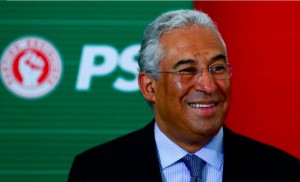
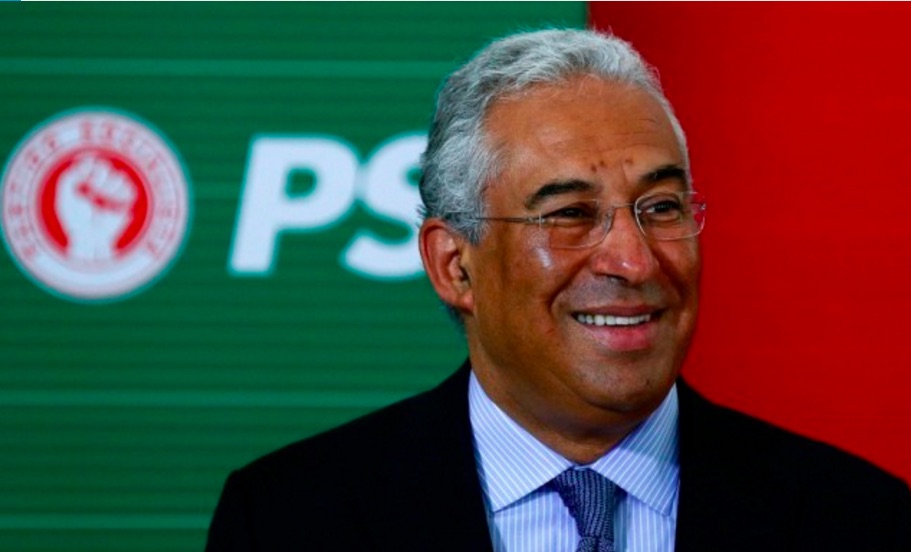
The Prime Minister of Portugal said that the first measures of his government this year will begin to end the country impoverishment and social decline due to the policy of austerity. In a letter published in the Portuguese newspaper Diário de Notícias (DN), Costa cited the almost total elimination of the special tax for workers, the gradual return of the cuts applied to government officials and an increase of 5% in the minimum wage. “With these measures, approved in the first 20 days of government, we seek to disrupt the impoverishment and social regression that have been imposed by the austerity policies.”

costa
António Costa

Between 2011 and 2015, Portugal was ruled by the center-right party under Pedro Passos Coelho which implemented tough cuts demanded by banks for the ” financial rescue” of Portugal (2011-2014).

We want to “claim a new vision for the country, a vision based on a strong and sustainable economy,” Costa continued. He is the head of government and leader of the moderate Socialist Party (PS).

The PS came to power against all odds after negotiating a post-election alliance in parliament with the Marxist left and the Communists. Their alliance ousted the center-right, which had won the elections on October 4, but without an absolute majority.

Costa mentioned other laws of a social nature adopted during the first month of his mandate: as the possibility of homosexual couples to adopt children or revocation of fees charged to women who seek an abortion.

In his letter, however, he did not allude to the most difficult aspect of his first month in power: the rescue of the bank Banif worth 2.225 million, which was opposed by their leftist partners, but was eventually approved with the abstention by the center-right.

According to the Government. this controversial injection of public funds does not affect the deficit target of 3% of GDP, and it will not be included in the accounts made by the European Commission due to the extraordinary nature of the operation.

(click here for the original version in Spanish.)

Question for this article:

Movements against governmental fiscal austerity, are they part of the global movement for a culture of peace?

Readers’ comments are invited on this question.

António Costa: “En 2016 Portugal empieza a romper con la austeridad”

.. DESSAROLLO SUSTENTABLE . .

Un artículo de Entorno Intelligente

El primer ministro de Portugal aseveró que las primeras medidas de su Gobierno servirán para que este año su país interrumpa el empobrecimiento y el retroceso social de la política de austeridad.

costa
António Costa

En una carta publicada en el periódico luso Diário de Notícias (DN), Costa citó la supresión casi total del impuesto extraordinario para los trabajadores, la devolución gradual de los cortes aplicados a los funcionarios y un aumento del 5% del salario mínimo.

“Con estas medidas, aprobadas en los primeros 20 días de gobernación, procuramos interrumpir el camino de empobrecimiento y retroceso social que las políticas de austeridad impusieron”, realzó el primer ministro.

Entre el 2011 y el 2015, Portugal estuvo gobernada por el centroderecha de Pedro Passos Coelho que tuvo que aplicar duros cortes por las exigencias del rescate financiero a Portugal (2011-2014).

Queremos “reivindicar una nueva visión para el país, una visión basada en una economía más fuerte y sustentable”, prosiguió el jefe de Gobierno y líder del moderado Partido Socialista (PS).

El PS llegó al poder contra todo pronóstico después de trabar una alianza postelectoral en el Parlamento con la izquierda marxista y los comunistas que desbancó al centroderecha, que había vencido las elecciones del 4 de octubre, pero sin mayoría absoluta.

Costa recordó otras leyes de cariz social aprobadas en su mes de mandato como la posibilidad de que parejas homosexuales adopten niños o la revocación de tasas para las mujeres que quieran abortar.

En su misiva, sin embargo, no aludió al caso más peliagudo de su mandato de un mes: el rescate del banco Banif por valor de 2.225 millones, que mereció la oposición de sus socios más a la izquierda, aunque finalmente fue aprobado con la abstención del centroderecha.

Esta polémica inyección pública no afectará la meta de déficit del 3% del PIB, según el Gobierno, pues no serán incluidos en la contabilidad que hace la Comisión Europea debido a la naturaleza extraordinaria de la operación.

(clickear aqui para una version ingles.)

Question for this article:

Movements against governmental fiscal austerity, are they part of the global movement for a culture of peace?

Readers’ comments are invited on this question.

International Peace Forum Proposed by the Mayors of Madrid and Paris

.. DEMOCRATIC PARTICIPATION ..

by CPNN, based on dispatch from the Spanish wire service EFE

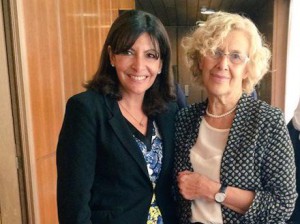
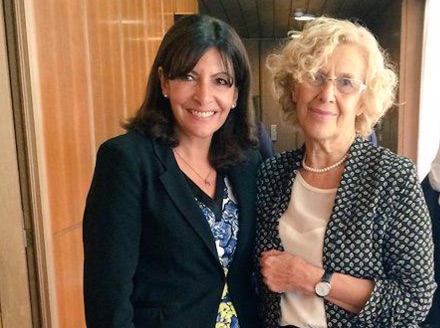
Once again it is the mayors of the world who are taking the lead for a culture of peace. Manuela Carmena, the mayor of Madrid, elected last year at the head of a socialist coalition, and Anne Hidalgo, the socialist mayor of Paris, are planning to hold an international forum against violence and for peace education in Madrid in the near future. Their announcement was made at a forum of mayors in Paris prior to the COP21 climate conference. The forum will invite leaders from local governments and civil society as well as peace specialists.

madrid forum
Mayors Hidalgo and Carmena. Photo from the twitter page of Mayor Hidalgo

Mayor Carmena recalled that the terrorist attacks in Paris on November 13, in which 130 people were killed, were similar to those in Madrid on March 11, 2004. Hence, their cities have a special reason and responsibility to work for peace. “How is it possible that young people who grew up in our cities have resorted to violence?” We must help them find another way forward.

We must draw lessons from the tragedies in our cities and find ways to resolve conflicts without violence.

Questions for this article: