All posts by CPNN Coordinator

About CPNN Coordinator

Dr David Adams is the coordinator of the Culture of Peace News Network. He retired in 2001 from UNESCO where he was the Director of the Unit for the International Year for the Culture of Peace, proclaimed for the Year 2000 by the United Nations General Assembly.

16 Days of Activism: Meet Felicity Ruby, Australia

. . WOMEN’S EQUALITY . .

An article from the Nobel Women’s Initiative

Nuclear disarmament activist. Australian activist Felicity Ruby was the first staff member and coordinator of the International Campaign to Abolish Nuclear weapons (ICAN). ICAN was awarded the 2017 Nobel Peace Prize for “for its work to draw attention to the catastrophic humanitarian consequences of any use of nuclear weapons and for its ground-breaking efforts to achieve a treaty-based prohibition of such weapons.” Felicity is now pursuing her Ph.D. at Sydney University.
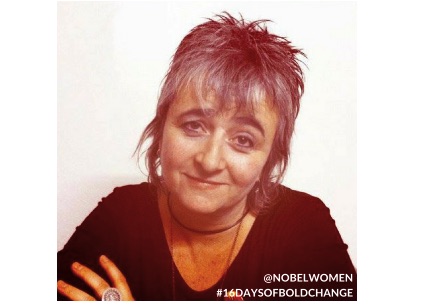

Photo courtesy of Felicity Ruby

What did you feel when you heard ICAN had won the Nobel?

Joy and surprise. Coincidentally, I was dining with Dave Sweeney, an ICAN board member, and we were quickly joined by Dimity Hawkins, the driving force behind getting ICAN off the ground. We made so much noise! And called rooms of people in other countries to make even more noise!

How did ICAN begin?

The Medical Association for the Prevention of War, the Australian chapter of the International Physicians for the Prevention of Nuclear Warfare (IPPNW) drove ICAN’s beginnings. The idea was to reinvigorate the anti-nuclear movement, which had decades of incredible work behind it, but needed a new umbrella to unite efforts and a new approach to bring younger generations into the debate.

We secured IPPNW’s support and funding from the Poola Foundation, and began a global effort to agitate for nuclear disarmament, with new slogans, visuals, demands, alliances, audiences and strategies.

How was this new approach to disarmament different? Was it influenced by the International Campaign to Ban Landmines, which won the Nobel Peace Prize in 1997?

We were in many respects saying ‘lets do a landmines effort on nuclear weapons.’ How? By building a new, enduring, intelligent and strategic NGO coalition united around a simple demand: a Nuclear Weapons Convention – that is, a proposed multilateral treaty to outlaw nuclear weapons. Spearheaded by the medical professionals, who emphasized the very real impact of radiation and nuclear militarism on human health, we brought in networks, constituencies and professionals from around the globe.

How did you help build ICAN into a mass movement?

Understandably, the anti-nuclear movement had a fairly chronic humour deficiency. For me the real magic sauce was our determination to stigmatise nuclear weapons using humour, hope and horror in fairly equal quantities. We also organized global days of action, held awareness-raising events, shared the testimonies of survivors from Hiroshima and Nagasaki and engaged in advocacy at the United Nations and in national parliaments.

(Article continued in right column)

Question for this article

Do women have a special role to play in the peace movement?

(Article continued from left column)

It was important that ICAN was an invitation to an exciting new project, not an instruction. There was freedom for groups to use the disarmament education materials we created in their own ways. The message that change is possible was carried in the very name of the campaign, which projects the distinct and very likely possibility that human beings can eliminate nuclear war and evolve past the social behaviour, economic habit and political practice of nuclear violence.​

​You’ve spent a great deal of your professional life in a variety of disarmament efforts. What specifically drew you to this issue?

It’s a no brainer. The arms industry absorbs the very resources we need to address all of the world’s environmental, social and economic problems. The choice is between weapons that kill and mutilate and a decent, just society.

You’ve long advocated a specifically feminist view of disarmament.

Gender analysis provides some important tools that explain why weapons are valued, why states seek and keep them, and why leaders resort to the use of force to obtain policy objectives. Possessing and brandishing an extraordinarily destructive capacity is a form of dominance associated with masculine warriors (nuclear states are sometimes referred to as the “big boys”) and is more highly valued than feminine-associated disarmament, cooperation, and diplomacy.

The association of weapons with masculinity, power, prestige, and technical prowess has a direct effect on policy decisions. It remains a hurdle on the road to disarmament and nonproliferation – even though the idea that security can be achieved through weaponized strength clearly has not worked.

Last July, declaring that “nuclear weapons pose a constant threat to humanity and to life on Earth,” 122 nations – though not nuclear states — adopted the UN Treaty on the Prohibition of Nuclear Weapons. Does this mean that the debate is shifting?

The UN Treaty was a real moment of triumph. A large group of countries stood up and defied the nuclear weapons states. This is especially important at a time when escalating tensions around North Korea’s nuclear weapons make the danger even more apparent. We need to turn nuclear weapons to rust before they turn the earth to dust.

When you look to the future, what gives you hope?

The enduring courage of whistleblowers and activists, the enduring courage of activists standing up and organizing keeps my hope alive. So does spending time in nature. I now work in the field of technology and I’m inspired by those creating tools to put technology in the hands of people, not vice versa. I’m also working on my PhD dissertation, which focuses on social movements and am constantly inspired by these efforts to resist injustice.

I would tell activists keep going – but look after yourself, too. Activism should be joyful, and if you’re burnt out, you’re not helping any movement grow.

I truly believe that humanity can drag itself from the pit of war, racism and discrimination. Violence is not inevitable; it is a learned behaviour, from which we can and will – and must – evolve.

(Thank you to Janet Hudgins, the CPNN reporter for this article.)

16 Days of Activism: Meet Rasha Jarhum, Yemen

. . WOMEN’S EQUALITY . .

An article from Nobel Women’s Initiative

Human rights activist. Rasha Jarhum is a Yemeni activist currently based in Geneva. She is a founder of the Peace Track Initiative, established to create a space for the contributions of women, youth and civil society organizations to peace processes.

Your mother, Hooria Mashhour, is a longtime activist; after the 2011 uprising in Yemen, she became the country’s first Human Rights Minister. Is it fair to say that you were raised in the struggle?

My mother was a fierce advocate for women’s rights. She served in the Women National Committee for almost a decade, and after the uprising began was the first government official to quit her position in protest of the vicious force used against peaceful protesters. Later, she was selected as spokesperson of the revolution forces council – the first time in Yemeni history that a woman spoke for a political movement. I was privileged to have her as my mentor. Since I was a child, I joined her in workshops and campaigns – she is the reason I became an activist. We have our political disagreements, and I love that she has never tried to pressure me to change my position.

You also learned from your mother that activism can be costly.

That’s something my whole family understands. My husband’s father, who was the first to sue Yemen’s former president Ali Abdullah Saleh for embezzling state money, was assassinated. In the current war, which began in 2014, we lost family members and property and were threatened and followed. My mother’s name was put on a list of wanted infidels, and armed men appeared at her office. She left to seek political asylum in Germany.

Why did you also leave Yemen?

After the 2011 uprising, when President Saleh stepped down, I believed that we would be able to build a modern civil state in Yemen. As part of the UN, I worked on a programme to mobilize people, including women, to vote. I wanted to make Yemenis taste the future of democracy.

But I’d lived through two devastating earlier wars, in 1986 in South Yemen and the 1994 war between North and South, and I had two young sons. During the uprising, we witnessed armed conflict in Sana’a, and out of fear for our children that the conflict would escalate, my husband and I began seeking opportunities outside the country. In 2012, he got a job offer in Lebanon, and we went to Beirut for five years. From there, I continued to support civil society organizations remotely, and worked with Oxfam on the Syrian Refugee Crisis and Gender Justice Programme. When the 2014 war in Yemen began, I knew it would be long and ugly.

(Article continued in right column)

Question for this article

Do women have a special role to play in the peace movement?

(Article continued from left column)

What’s the purpose of the Peace Track Initiative?

The Initiative works towards localizing peace processes and insuring inclusiveness, with an underlying premise that those directly affected by war are those with the greatest stake in peacebuilding. It has two components: one that focuses on Yemen, and the other on the whole Middle East and North Africa region. In Yemen, I support women-led organizations at the community level and women’s groups in peacebuilding activities. So much of what these women do is invisible to the world.

What are local women doing in promote peace in Yemen? Why doesn’t the international community hear more about it?

Historically, the situation for women in Yemen was bad. Women had no freedom to go to work, travel, even get married. Legislative, institutional and societal norms all hindered women. But women led the revolution in 2011, and today, Yemeni women are again on the frontlines. In besieged areas, women walk for miles to bring lifesaving items to their families, mobilize relief convoys, smuggle medicine to hospitals. It is estimated that one-third of fighters in Yemen are children, and women are addressing the issue of child recruitment. Women are working on complicated issues such as releasing detainees, combating terrorism through social cohesion work and the de-radicalization of youth. Women are working to revive the economy through collective saving groups, farming and social entrepreneurship.

When women are involved in peace processes, we focus on responsibility-sharing rather than power-sharing. The participation of women in national dialogue in 2011 led to the creation of one of the strongest rights and freedom’s packages in Yemeni history.

But the humanitarian agencies working in Yemen portray women only as passive victims. The stories of their resilience and their leadership do not get reported. Part of the problem is that local women may be working as individuals or in coalitions that are not formally registered, and thus deprived of funding opportunities. In addition, many Yemeni women do not speak English.

On December 4, former president Saleh was killed, and the situation in Yemen seems to have grown even worse.

For years, Yemen was the worst country for women to live in. With this war, our humanitarian crisis increased. We now have a million pregnant women at risk of malnutrition and around two million women and girls at risk of gender-based violence, including rape.

But when you hit rock bottom, there is only one way to move: up. I believe that a real, sustainable and inclusive peace can be achieved in Yemen. And I think the solution is really in the hands of women.

(Thank you to Janet Hudgins, the CPNN reporter for this article)

What is the best way to teach peace to children?

Here is the response of Ann Mason in 2007:

Maria Montessori believed that peace was innate within children. Her timeless educational philosophy was developed around this basic understanding. Perhaps all we need to do as teachers is to provide stimulating learning environments that validate this knowing and understanding and nurture it. We may not have to actually teach it,  Sharing peace-building stories gently attends to this. Strong, creative and imaginative peace-building characters who focus upon win-win and have faith in peace being possible are at the centre of the story plots. In Hassaun Ali-Jones Bey’s unique and mesmerising story, Black Ink is such a character who bravely crosses the universe seeking validation of what he knows in his heart. The magical character also models all the important peace-building values, understandings and actions needed for peace-building. I believe also that peace-building must be modelled and the whole teaching-learning environment should reflect similar values, understandings and actions…as is the primary focus of the Save the Children Australia UN Global Peace School Program upon which I am presently fortunate to be working. As Gandhi stated: ‘If we want peace in the world then we need to begin with the children.’ We need to listen to them. I also believe there are many ways to attend to peace-building..there’s not just one way…and fun and creativity should be elements of any peace-learning programme with children working together. Parents are also teachers and they can choose to share peace-building stories with children as well.

Here are the CPNN articles on this subject:

Democratic Republic of Congo: At least 450 orphaned children initiated into the culture of peace and peaceful living together in Bogoro

UK: Peace Education Network offers free lessons on Oppenheimer’s legacy as new film released

Australia Teachers for Peace

Brazil: Forum brings together advisors to discuss culture of peace in schools

Panama promotes the practice of values ​​for a culture of peace by students

Puerto Rico : Educate for a Culture of Peace

The Best Weapon for Peace : Maria Montessori, Education, and Children’s Rights

Global Teacher Prize: Juline Anquetin-Rault

Brazil: Compaz invites schools to the 19th edition of the book Londrina Pazeando

Spain: The Nonviolence Collective disseminates ‘Amanda’s comic’, an educational project for peace aimed at children and young people

More than 29 thousand people registered in the Second International Montessori Congress, a free virtual event

Philippines: Teach Peace Build Peace Movement

Mexico: CODHEM fulfills its mission of promoting the culture of peace and respect for Human Rights

USA: Culture of Peace: The wisdom of the 8th-grade Peace Flame Keepers

“Peace and Love rooms in schools”

USA: Conference to explore effect of early childhood development on world peace

Algeria: Civil society should inculcate the culture of peace in children

Brazil: Public schools of São Vicente transform education through the culture of peace

Almería, Spain: Over 100,000 students participate in the network of centers “The school as a space of peace”

Más de 100.000 escolares participan en la red de centros ‘Escuela: Espacio de Paz’ en Almería, Espana

– – – – Links for the following articles do not work because they were made by a version of PERL programming that is no longer supported. With three easy steps, you can find the article by its number. First, click on it before returning to this page. Your browser will say that the article is not available but in the address listed you can see that it was located at ViewArticle=xxxx where xxxx is the number of the article. Returning to this page, then click here for the listing of all years. Then click on the year that contains the number for the article you seek. It will send you to the page where you can easily search for the article by its title. – – – –

Trinidad and Tobago: Students told to create a culture of peace in classrooms

Another kind of school : An education of happiness explained by Antonella Verdiani

L’école autrement : les pédagogies du bonheur expliquées par Antonella Verdiani

UNESCO/ASPnet training on social cohesion begins

Activities of Living Values in Education Program in Brazil

Atividades do Programa Vivendo Valores na Educação no Brasil

Tenango del Valle Promotes a Culture of Peace (Mexico)

En Tenango del Valle se Fomenta una Cultura de Paz (México)

Promoting a Culture of Peace (Nicaragua)

Fomentarán cultura de paz (Nicaragua)

Agreements with organizations to work with and for the children [Cuba]

Convenios que invitan a trabajar con y para los niños

Peace Ambassadors – the Gambia: Summer School on Peace

Culture of Peace Presentation at Kitchener Collegiate Institute (Canada)

Promotion of a Culture of Peace Debated at Forum of El Moudjahid (Algeria)

La Promotion de la Culture de la Paix en débat au Forum d’El Moudjahid  (Algérie)

The Road to ‘Reclaiming Childhood’

Life-Link Friendship-Schools: Working with Schools in Arab Countries and UNESCO’s Global Network

From War Toys to Peace Art

A History Schoolbook to Learn Peace in the Balkans

Two  Free Videos for Relationship-Building Worldwide

Teaching and Learning for Peace Foundation

Can festivals help create peace at the community level?

Below are articles in CPNN about this question:

Brazil: Pelourinho celebrates culture of peace and diversity, in a Sunday of free programming during Bahia Summer

Niger: First edition of the Peace Festival in the agro-pastoral zone in Gadabedji

Brazil: Culture of Peace Fair seeks to combat various types of violence in Juiz de Fora

Colombia: Nights of Peace planned for December in the neighborhoods of Cúcuta

Honduras: This Sunday there will be a festival that seeks to contribute to a culture of peace

Mexico: Culture of Peace Day in Atlixco for first time

Fresno, California: Community commemorates Sudarshan Kapoor during 33rd annual Gandhi celebration

Mexico: UAEM and PJEM will coordinate activities in the “Week of Access to the Culture of Peace”

Niger: Mega concert for peace and social cohesion organized by the public and private press of Dosso

Ecuador: Festival for peace and human rights to be held in Guayaquil

“Week for Peace 2021” Initiative for the consolidation of peace in Colombia

Mali: Festi Petit – a 3rd Edition Full of Surprise

Mexico: Celebration of the IMA 5th Festival Culture of Peace

Mali: consolidating peace between communities through cultural heritage

Nagaland, India: Festival on ‘cultures of peace’ underway in Kohima

Brazil: Rio Branco City Hall starts Culture of Peace Festival this Friday

Bolivia: Authorities present Carnival 2019 focused on promoting the culture of peace in Sucre

7th Fair of Nonviolent Initiatives in Quito, Ecuador

Brazil: Cotia organizes the 1st Walk for the Culture of Peace

7th edition of the Thionck-Essyl International Dance and Music Festival: Culture for Peace in Casamance

India: Peace fiesta underway at Wokha

Senegal: 4th Global Peace Festival: “Live Peace – Meeting of World Cultures”

– – – – Links for the following articles published prior to 2015 do not work because they were made by a version of PERL programming that is no longer supported. With three easy steps, you can find the article by its number. First, click on it before returning to this page. Your browser will say that the article is not available but in the address listed you can see that it was located at ViewArticle=xxxx where xxxx is the number of the article. Returning to this page, then click here for the listing of all years. Then click on the year that contains the number for the article you seek. It will send you to the page where you can easily search for the article by its title. – – – –

7 billion reasons for peace at Delhi Festival

Third annual youth festival celebrating life in a culture of peace (Guatemala)

Tercera edición del festival Jóvenes celebrando la vida en una cultura de paz (Guatemala)

Folklore Festivals Promote Culture of Peace (Brazil)

Festivais de Folclore Promovem a Cultura de Paz

2nd Guwahati International Music Fest to establish city in global music circuit

Kalinga [Philippines”> lines up Week for Peace activities

World Peace Festival hosts 600 attractions at Ibirapuera in Sao Paulo

Festival Mundial da Paz leva 600 atrações ao Ibirapuera em São Paulo

Sustainability-related ‘Peace Corner’ added to Earthfest event

Festival: “Homecoming of the Diaspora to Ouidah and other regions of Benin”

Festival: “Retrouvailles des Communautés de Ouidah et des autres région du Bénin avec la diaspora”

Sesi and GRPCom sponsor Peace Fairs in 10 cities of Paraná, Brazil

Sesi e GRPCom realizam Feira da Paz em 10 cidades do Paraná

Gabon: Libreville dances to the rhythm of the Festival of Cultures

Gabon : Libreville a vibré au rythme de la Fête des Cultures

Festirois 2011

The Festival of the Route of  Queens and Kings

House of Erasmus of Rotterdam at the Nelson Mandela Festival

“Let’s build the Bridge of Peace.”

Will UNESCO once again play a role in the culture of peace?

While UNESCO promoted the culture of peace as its highest priorities during the Decade of the 90’s when Federico Mayor was its Director-General and when UNESCO co-ordinated the United Nations International Year for the Culture of Peace, since that time it has been less active in this regard than the United Nations in New York which has held annual high-level meetings on the culture of peace.

However, as one sees from the articles below, there is one region where UNESCO has continued to actively promote the culture of peace, and that is Africa. Its field office in Gabon has been especially active where the director, Enzo Fazzino, was part of the team at the end of the 90’s that coordinated the International Year for the Culture of Peace. Also in recent years, UNESCO has worked with Angola and Côte d’Ivoire to host several international conferences on the culture of peace, including the Biennale of Luanda which was held in its second edition in 2021.

Below are articles in CPNN about this question:

The Gloria Fuertes School of Andorra demonstrates the “transformative power of education” at the UNESCO National Meeting of Schools

National Coordinators of the UNESCO Associated Schools Network gather to reflect and share experiences

Celebrating Radio Day in Haiti

Mexico : Renowned researchers share their experience of the UNESCO Chairs of the Latin American and Caribbean Region

Ambassadors praise Angola’s efforts for peace in Africa

UNESCO-sponsored Nanjing Peace Forum

UNESCO supports young people for reflections on emerging forms of expression in order to consolidate peace, democracy and development in Africa

Biennale of Luanda: Pan-African Forum for the Culture of Peace 18-22 September

PAYNCoP Gabon Identifies Youth Organizations on Culture of Peace

PAYNCoP Gabon learns about the culture of peace

Luanda Biennale: Pan-African Forum for the Culture of Peace

Panafrican Youth Network for the Culture of Peace Gabon : The work begins

2019 Biennial of Luanda (Angola): The initial budget has about 440 thousand euros

Angola: Culture ministry analyzes programme of Luanda Biennal

UNESCO and Angola to establish Biennal of Luanda, a Pan-African Forum for the Culture of Peace

Angola to pass on peace experience to UNESCO members in Paris

UNESCO supports the government of Mali to build a culture of sustainable peace

UNESCO brochure: Africa, Culture of Peace, 2017

NICO partners UNESCO on peace, security in Nigeria

Gabon: Pan-African youth commit to fight against radicalization and to promote a culture of peace

Making Waves: Local radio transforming perceptions of gender-based violence in Africa

Gabon: Pan-African Youth Forum for the Culture of Peace and the Fight Against Radicalization for the Creation of an Early Warning System in Central Africa

Gambian Youth Engage in the Promotion of Peace, Sustainable Development and Global Citizenship

Second international conference on the culture of peace in Africa

Segunda conferência internacional sobre a cultura da paz em África

Sub-regional consultation on “Youth and culture of peace in Central Africa”

Launch of the Network Youth and Culture of Peace in Africa

Lancement du réseau jeunesse et culture de la paix en Afrique

– – – – Links for the following articles published prior to 2015 do not work because they were made by a version of PERL programming that is no longer supported. With three easy steps, you can find the article by its number. First, click on it before returning to this page. Your browser will say that the article is not available but in the address listed you can see that it was located at ViewArticle=xxxx where xxxx is the number of the article. Returning to this page, then click here for the listing of all years. Then click on the year that contains the number for the article you seek. It will send you to the page where you can easily search for the article by its title. – – – –

Libreville Pan-African Forum: African Youth and the Challenge of the promotion of Culture of Peace in Africa

Libreville Forum Panafricain: Jeunesse africaine et le défi de la promotion de la culture de la paix en Afrique

25ème anniversaire du Congrès International sur la paix dans l’esprit des hommes à Yamoussoukro

25th anniversary of the International Congress on Peace in the Mind of Men,Yamoussoukro

Towards the creation of a network of women for a culture of peace in Africa

Sources and Resources for a Culture of Peace in Africa

África: Fundamentos e recursos para uma cultura de paz

Afrique: Sources et Ressources pour une Culture de la Paix

Young Malian aged 15 wins “Pathways to a Culture of Peace” contest

Mali : une collégienne rêve la paix en poésie et remporte un prix

At World Culture Forum, a Call for Openness and Understanding (Indonesia)

Establishment of a Network of Foundations and Research Institutions for the Promotion of a Culture of Peace in Africa

Création d’un Réseau de fondations et d’institutions de recherche pour la promotion d’une culture de la paix en Afrique

Participants in the Pan-African Forum Recommend the Valorization of African Culture

Building a culture of peace in Africa

Construire une culture de la paix en Afrique

Angola, UNESCO sign peace culture forum deal

Angola y UNESCO rubrican acuerdo sobre fórum de cultura de paz

Forum Panafricain sur la culture de la paix en Afrique

Pathways to a Culture of Peace: Global Contest for Mutual Understanding

Les chemins de la culture de la paix: concours international pour la compréhension mutuelle

The International Forum of Reflection on the Culture of Peace in Africa opened in Abidjan

Le forum international de réflexion sur la culture de la paix en Afrique de l’ouest ouvert lundi à Abidjan

Le développement durable et culture de la paix au cœur de la 36e session de la Conférence générale de l’UNESCO

Sustainable development and culture of peace at the heart of the 36th session of UNESCO’s General Conference

El desarrollo sostenible y la cultura de la paz, en el centro de la 36ª reunión de la Conferencia General de la UNESCO

Executive Board of UNESCO reaffirms Culture of Peace as a Priority

The culture of peace at a regional level, Does it have advantages compared to a city level?

CPNN has often carried articles about establishing a culture of peace at the level of the city, but there are also some advantages to promoting a culture of peace at a somewhat broader regional level.

In particular, the culture of peace needs to be based on a sustainable economy, which, in the long run, should depend on local agricultural production more than imported food. This requires that the unit for the culture of peace include not only the city, but also the agricultural region surrounding it.

Below are articles in CPNN about this question:

The Catalan Forum for Peace is born, a participatory process to create Catalan public peace policy

Oaxaca, Mexico: State Government Promotes Culture of Peace as a Public Policy

Lula’s address to CELAC “Nothing should separate us, since everything brings us together”

Jalisco, Mexico: V Global Forum on the Culture of Peace

Yucatan: State Government and 10 Municipalities join efforts to prevent violence and crime

Mediation Forum of the Vice-Government of Ceará promotes discussion for a culture of peace

SADC delegates to discuss women, youths’ role in strengthening peace and security in the region

UN agriculture agency chief calls on world’s mayors to make ‘global commitments local realities’

Castilla-La Mancha, Spain: The Strategic Agreement for Peace and Coexistence seeks a consensus of civil society

Brazil: State Government of Acre establishes union with institutions for the culture of peace

Nigeria: Kaduna Conflicts: El-Rufai Inaugurates Peace Commission

Michoacán, Mexico: Law Approved for Culture of Peace and Prevention of Violence

Michoacán, México: Aprueban Ley para la Cultura de Paz y Prevención de la Violencia

– – – – Links for the following articles published prior to 2015 do not work because they were made by a version of PERL programming that is no longer supported. With three easy steps, you can find the article by its number. First, click on it before returning to this page. Your browser will say that the article is not available but in the address listed you can see that it was located at ViewArticle=xxxx where xxxx is the number of the article. Returning to this page, then click here for the listing of all years. Then click on the year that contains the number for the article you seek. It will send you to the page where you can easily search for the article by its title. – – – –

Peace Commissioner in Peru: “Many do not know what is a culture of peace”

Comisionada por la paz en Peru: “Muchos aún no saben que es cultura de paz”

Cleanz approves Law on Culture and Peace (Venezuela)

Cleanz aprobó Ley de Cultura y Paz (Venezuela)

The Province of Buenos Aires, Argentina, joins with UNESCO to defend the culture of peace

Provincia y Unesco unidos para difundir “la cultura de la paz” [Buenos Aires, Argentina]

Launch of the 30th edition of the Intercity (Côte d’Ivoire)

Lancement de la 30e édition des intervilles (Côte d’Ivoire)

Peace Commissioner Announces a Dialogue to Stop Conflicts  [Peru]

Comisionado para la Paz anuncia diálogo para frenar conflictos [Peru]

Cajamarca declara de interés regional promoción de cultura de paz

Governors in Peru Get Training in Conflict Alert System

Capacitan a gobernadores de Puno en aplicación de sistema de alerta de conflictos [Peru]

The Government of Chiapas Stresses Values in Shaping Its Agenda

Destaca gobierno chiapaneco valores en conformación de agenda

Eighth Anniversary of the Law for Culture of Peace in Bahia [Brazil]

Sessão na AL-BA marca os oito anos da Lei da Cultura da Paz [Bahia, Brazil]

Cajamarca declares the need to promote a regional culture of peace

How can we promote a human rights, peace based education?

Here is a comment about this question from CPNN reporter Janet Hudgins:

We teach the science of war on an even and equal basis with the 3Rs and we maintain it with more resources than any other school. Further, we have done this consistently for a couple of thousand years, long before education was institutionalized for all children. And we have never questioned the wisdom of teaching millions of civilians how to kill while never giving the same credence, or any for that matter, to the science of peace, the study of anti-war, of reconciliation. With this inured mindset leaders choose to fund boot camps and officer training colleges and by omission deprive youth of the better choice.

If we can teach war and violence with such commitment to suit the purposes of generals and the arms trade, where are the rest of us who have a greater need for peace and conciliation than anyone anywhere has for the killing fields? Why have civilians not demanded peace education long ago and why don’t we have it now?

Below are articles in CPNN about this question:

Mexico: First issue of the electronic magazine “Culture of Peace” published by the State Human Rights Commission

Querétero, México; What is the culture of peace?

Mexico : Renowned researchers share their experience of the UNESCO Chairs of the Latin American and Caribbean Region

Youth Survey Report : Youth Knowledge & Interest in Peace Education

Chad: AJPNV training for democracy and human rights

Mexico: UdeC holds international discussion on the culture of peace and human rights

Australia: Conference Calls for Mainstreaming Human Rights Education

Presentation in Abidjan of a training manual on the culture of peace and social cohesion

FINOM participates in Meeting of the National Pact for the Promotion of Respect for Diversity, Culture of Peace and Human Rights

Where to Study Peace Education: A Global Directory

Africa: Through Peace Education, Youth Can Become Vanguards of Peace in the Great Lakes

Tunisia: Appeal for massive particiption in the first international meeting on education for peace

– – – – Links for the following articles do not work because they were made by a version of PERL programming that is no longer supported. With three easy steps, you can find the article by its number. First, click on it before returning to this page. Your browser will say that the article is not available but in the address listed you can see that it was located at ViewArticle=xxxx where xxxx is the number of the article. Returning to this page, then click here for the listing of all years. Then click on the year that contains the number for the article you seek. It will send you to the page where you can easily search for the article by its title. – – – –

UNESCO Initiates Peace Education Project in Northern Rakhine State of Myanmar with Support from the Belgium Government

PAG 7th International Youth Summer School underway (The Gambia)

Institutionalizing an Academic Path for Future Peacebuilders (USA)

International Institute on Peace Education 2013 – Puerto Rico

Instituto Internacional de Educación para la Paz 2013 – Puerto Rico

International Institute on Peace Education 2012

Fundació Catalunya Voluntària team receives UNV Online Volunteering Award 2011

National Peace Academy – 2012 Update

Education on the rights of the children: a strategy for peace

Union teachers will promote a culture of peace in the classroom

Maestros del SNTE promoverán en las aulas la cultura de la paz

Children voting for Human Rights

Recent Actitivities of APCEIU: The Asia-Pacific Centre of Education for International Understanding

International Symposium on Peace Education – Porto Alegre, Rio Grande do Sul, Brazil

Training Workshop on Educational Policy and Education for International Understanding

Educating where schools don’t

The Gift of an Education

Brazil: FINOM participates in Meeting of the National Pact for the Promotion of Respect for Diversity, Culture of Peace and Human Rights

… EDUCATION FOR PEACE …

An article from the website of the Faculdade do Noroeste de Minas (translated by CPNN)

The “University Pact for the Promotion of Respect for Diversity, Culture of Peace and Human Rights” celebrated one year in November 2017. The occasion was marked by a meeting in Brasilia so that institutions could present their initiatives and exchange experiences. The event took place between December 5 and 6, in the Coordination for the Improvement of Higher Education Personnel (CAPES), with the participation of 64 institutions of higher education.


The pact is an initiative of the Ministry of Education, with the support of the Ministry of Human Rights, and aims to promote human rights education in higher education and overcome violence, prejudice and discrimination.

(Article continued in right column)

(Click here for the article in Portuguese)

Questions for this article:

How do we promote a human rights, peace based education?

(Article continued from left column)

As one of the more than 300 Brazilian institutions enrolled in the University Pact, FINOM was represented at the anniversary meeting of the Pact by the Academic Director, Professor José Ivan.

The dynamics of the meeting were very well organized, because through the adopted methodology, the participants were divided into groups and all had the opportunity to present the work programs that have been carried out in the institutions under the program.

The main objective of this event was to promote the exchange of experiences between institutions, and the goal was fully achieved, since the highlight of the meeting was the sharing of institutional experiences.

According to the professor and Academic Director, José Ivan, “the meeting was a great opportunity to gather information that further enriches the institutional program to promote human rights education and a culture of peace and respect for diversity.”

Mexico: Hip-hop: coexistence for peace

EDUCATION FOR PEACE .

An article by Maribel Sánchez for Diario de Xalapa

With the aim of contributing to the creation of spaces that foster social and community coexistence of youth in favor of culture and peace, on Friday 8 and Saturday 9 December, feature films will be screened in Xalapa, along with a dialogue table, an open forum of hip-hop and a photographic exhibition of street art.

Titled Hip-hop: coexistence for peace. Art, culture and celebration, the meeting is coordinated by representatives of the Collective Cinema Collection, the Center for Culture and Communication Studies, the Music, Society and Globalization Seminar and the Anthropological Looks workshop (Ciesas-Golfo), which coincide in that “Hip-hop as a youth culture has been stigmatized by relating it to conduct of clandestinity, illegality, delinquency and poverty, spreading a negative image of the people involved in it.”

(article continued on the right side of the page)

(click here for the Spanish version of this article.)

Question for this article:

What place does music have in the peace movement?

(article continued from the left side of the page)

However, they clarify that hip-hop is an artistic and cultural movement that integrates a universe of expressions that go from the local to the global. They also see it “as a way of life adopted by young people to express themselves, to be visible to society and to coexist with other sectors of the population”, reasons why through it they will seek to transmit a message of non-violence.

Some of the questions on which it will reflect are: How to weave networks of youth in with diverse and heterogeneous citizenship? How do people’s experiences start from cultural communities? Can hip-hop guide us towards possible paths of peace?

Salvador Ponce, Ana I. León, Mariano Báez and Homero Ávila inform interested parties that the first activity will be Friday at 6:00 pm in the Aula Clavijero (Juárez 55), where the documentary Somos Lengua will be exhibited, with which the Director Kyzza Terrazas explores the relationship that some Mexican rappers have with words, expressing their immediate day by day reality.

On Saturday 9, from 12 a.m. to 9 p.m. in Espacio Obra Negra (91 De la Rosa Street, Colonia Salud), the day will begin with the dialogue table Hip-Hop: youth and culture of peace, to continue with the screening of short films by filmmakers Locals, an open hip hop forum and the exhibition 20 years of street art in Xalapa, by photographer Ulises Martínez Ciprés, in collaboration with Roberto Ruiz and Amehd Villegas. At the closing will be the presence of Dj Aka and Stilo (Línea Enferma).

The entrance to each of the activities will be free.

Brazil: State Government of Acre establishes union with institutions for the culture of peace

.. DEMOCRATIC PARTICIPATION ..

Un artigo das Notícias do Acre

Governor Tião Viana received in the Civil House, on Thursday, 7, the institutions that form the group Walk for Peace in Acre that is led by the Rotary Club of Penápolis. The meeting was an initiative to express the government’s support for the group’s actions and to propose new actions for the culture of peace.


Tião Viana proposed the creation of a permanent committee to discuss public security (Photo: Sérgio Vale / Secom)

The governor thanked the determination of all who, together, have worked the involvement of society in the debate for public safety. “We have to unite and fight to win with peace and truth. We only have one way to combat violence, it is to have a culture of peace in our society. The biggest problem is the drug trade that is invading our country,” said Tião Viana.

The governor’s proposal is that a permanent committee be set up with these institutions to discuss various public security issues. The idea was accepted by the representatives and an agenda for joint debate will soon be established.

(continued in right column)

(Click here for the article in Portuguese)

Questions for this article:

The culture of peace at a regional level, Does it have advantages compared to a city level?

(continued from left column)

The group has been running for three years a trip through the city of Rio Branco in order to bring the message of peace and harmony. The last edition was held on November 30. “We need to cultivate a harmonious coexistence in society. For this, we have to make people aware that there is no other path than peace, “said Manoel de Jesus Lima, popularly known as “Garrincha”, a member of Rotary and coordinator of the Walk.

Institutions

Several institutions of the civil society of Acre are involved, as well as government agencies such as the Military Police. They are: Scouts of Brazil, State Public Ministry, House of Friendship, Brazilian Bar Association, Apae, Diocese of Rio Branco, Brazilian Army, Federation of Acre Industries, Masonry, among others.

“Here we have countless institutions seeking to build a culture of peace, which necessarily begins at home and then radiates to the streets, through schools and various environments. Here we are building an environment that can definitely contribute, now with a permanent meeting, “said Emylson Farias, Secretary of Security.

“Governor, you put something at the Meeting of Governors [held in Rio Branco in October this year] that needs to be considered: the issue of public security is affecting our sovereignty. In this sense, we begin to question whether our mission is being well fulfilled. Providing a sense of security is also our mission, so we are always willing to work in partnership with the Secretariat of Public Security in coping with crime, “said Colonel Wellington Valone, commander of the Acre Border Command / 4th Battalion of Jungle Infantry. He pointed out that because Acre is a border area, the Army has legal responsibility to address cross-border crime which interferes directly with security.