Tag Archives: Africa

Pan-African Parliament calls on African Union to support the creation of a UN Parliamentary Assembly

DISARMAMENT & SECURITY .

An article from the website of the Campaign for a United Nations Parliamentary Assembly

Yesterday [May 12], the Pan-African Parliament called on the African Union and Africa’s governments to support the creation of a United Nations Parliamentary Assembly, in short UNPA. In a resolution adopted by the plenary by consensus, the parliamentary body of the African Union states that “a UNPA is necessary to strengthen democratic participation and representation of the world’s citizens in the UN” and that the new assembly would “contribute to strengthening democratic oversight over UN operations, particularly in Africa.”

panafrican
Click on photo to enlarge

Noting its “concern that the creation of a UNPA is currently not part of the official UN reform agenda,” the document calls on “the African Union and its Member States to support the creation of a UNPA and to take necessary steps to advance this goal at the UN by triggering and initializing a preparatory intergovernmental process for the purpose of establishing a UNPA.”

The president of the Pan-African Parliament, Nkodo Dang from Cameroon, stated last week that “more than 70 years after the establishment of the United Nations, global interdependence has made us all world citizens. It is long overdue that ‘We, the Peoples,’ as the UN Charter begins, have more say in global affairs. For this purpose, a UNPA needs to be established.”

Yesterday’s resolution was introduced by Ivone Soares from Mozambique. “The resolution shows the aspiration of the Pan-African Parliament and the African citizens which it represents that the global order needs to become more democratic. It is time for governments to pay attention to this issue. They need to enter into serious deliberations on the establishment of a parliamentary body at the UN and African governments could take the lead,” she commented.

The global coordinator of the international campaign for a UNPA, Andreas Bummel, said that the resolution was an important step forward. “We hope that African governments will play a leading role and the Pan-African Parliament’s support is crucial to achieve this. The next step that we envisage in the international efforts is the creation of an informal group of open-minded governments at the UN in New York that looks into the proposal of a UNPA and how to proceed best,” he said.

In an opinion piece published by the South African newspaper Mail & Guardian last week, the South African parliamentarians Stevens Mokgalapa and Heinrich Volmink argued that “Africans, perhaps more than anyone, know how urgently we need more capable and more democratic tools of global governance” and that the creation of a UNPA “would represent a watershed moment in the democratic reform of the UN.”

According to a recent BBC World Service poll in 18 countries, “more than half of those asked (56%) in emerging economies saw themselves first and foremost as global citizens rather than national citizens.”

In 2007, the Pan-African Parliament adopted a first resolution in support of a UNPA.

Question for this article:

Côte d’Ivoire: clubs of peace and non-violence installed in Universities

… EDUCATION FOR PEACE …

An article from abidjan.net (translated by CPNN)

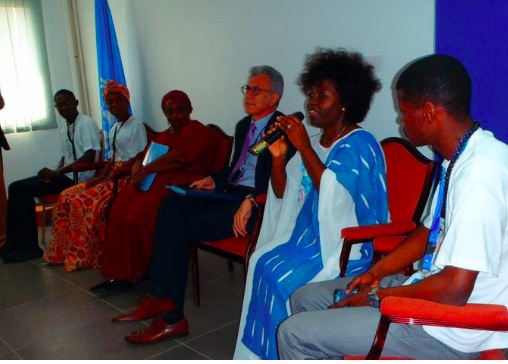
The Minister of Higher Education and Scientific Research, Prof. Ramata Bakayoko Ly, conducted on Thursday [19 May] in Yamoussoukro, the inauguration of clubs for peace and non-violence in the universities and grandes ecoles of Côte d’Ivoire with the aim of pacifying the academic space.

abidjan

The investiture ceremony, held at the National Polytechnic Institute in Yamoussoukro, launched the capacity building activities of the peace and non-violence clubs of the Universities of Ivory Coast in the presence of the Minister of Solidarity, Social Cohesion and the Compensation for Victims, Prof Mariatou Koné and the Representative of the UN Secretary General in Côte d’Ivoire, Aichatou Mindaoudou.

Click here for the original French version of this article

Question for this article:

University campus peace centers, What is happening on your campus?

There are now seven university clubs: Félix Houphouët-Boigny of Cocody, Nangui Abrogoua of Abidjan, Alassane Ouattara of Bouake, Péléforo Gon Coulibaly of Korhogo, Lorougnon Guede of Daloa and the public grandes ecoles ENS Abidjan and INP-HB, Yamoussoukro.

The Minister of Higher Education and Scientific Research praised the students for their massive support to the cause of peace before sending them on a mission as ambassadors of peace to address the barriers of violence, intolerance and fanaticism.

“I urge you to practice acts of non-violence on the campus. In this way you can ensure that the academic activity can take place in a peaceful climate and the Ivorian universities will reach the level of the best universities of the world and contribute to the emergence of the Ivory Coast”, advised Ms. Ramata Bakayoko Ly.

The awareness campaign on the culture of peace with students was launched jointly in 2015 by the Ministry of Higher Education and Scientific Research and the United Nations Office in Côte d’Ivoire. It provides a framework for exchange of experience and acquisition techniques that will enable members to better play their role in supporting the peace efforts of the academic space in the spirit of the Charter of nonviolence named after Alassane Salif N’Diaye professor emeritus.

Sub-regional consultation on “Youth and culture of peace in Central Africa”

FREE FLOW OF INFORMATION

An article by M. Franck Carel Nkaya, UNESCO

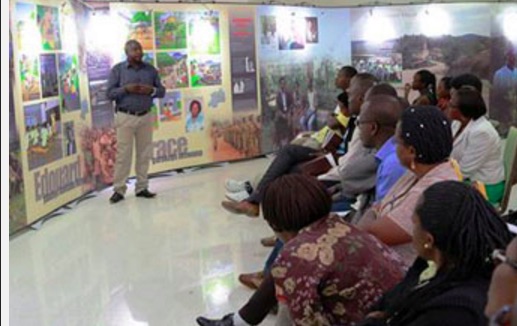
Addressing the new challenges of the Central African region, the UNESCO Regional Office for Central Africa [Yaoundé, Cameroon] organized for its partners from 20 to 22 April 2016, a meeting of exchange and participatory reflection on “Contributions of UNESCO and its partners to the efforts of ECCAS States for youth involvement in the consolidation of peace and the achievement of sustainable Development Goals for sustainable emergence in Central Africa “.

enzo
click on the photo to enlarge

The various debates of the meeting were focused on the following topics: peace and climate change and ecosystem protection in relation to the strategies of Priority Africa of UNESCO and Agenda 2063 of the African Union. The youth of Africa were considered to be the primary agent of change.

Of the ten (10) countries that make up the Central Africa subregion, only Equatorial Guinea iwas not represented. The delegations were composed of the National Commissions for UNESCO, ministerial delegates (Forest Economy, Environment, Culture and Arts, etc.), UNESCO Chairs and Category 2 Centres of UNESCO Clubs and Associated Schools of UNESCO and youth movements.

Besides the Member States, the meeting also saw the participation of representatives of the Economic Community of Central African States (ECCAS), the International Organisation of La Francophonie (IOF), the United Nations Regional Office for Africa Central (UNOCA), the United Nations population Fund (UNFPA), the Pan African Youth Network for the Culture of Peace (PAYNCOP) and the UNESCO Offices in Brazzaville, Kinshasa, Libreville and Yaounde.

The work of the third day of the meeting focused on the sub-regional program “Youth and culture of peace in Central Africa” ​​which aims to strengthen the capacities of youth as the main player for prevention of violence and for conflict resolution by peaceful means in order to build more inclusive, just, democratic and harmonious society.

After the plenary presentation of the situation of African youth by Mr. Stephane NZE Nguema, President of the Pan African Youth Network for Peace and the presentation of the concept note of the ‘Youth and Culture of Peace in Central Africa “by M . Franck Carel Nkaya, UNESCO Brazzaville, participants were divided into thematic working groups.

Facilitated by the team “Foresight Initiative” of UNESCO Paris who presented a paper on the prospective and participatory approach, the work took place in workshops in four areas: (i) Education for global citizenship, sustainable development and culture of peace, both formal and non-formal; (Ii) Youth empowerment and development of leadership skills for youth movements of the region; (Iii) youth skills development for the creation of income-generating activities, particularly in the cultural and creative industries and sustainable development; (Iv) media campaign to promote the culture of peace and mobilization of partners.

The participants identified priorities and major actions to meet the challenges of the subregion that concern young people, including: the manipulation of youth in conflicts, intolerance and the resurgence of negative values ​​(moral, civic, citizen), unemployment, lack of schooling, expansion of terrorism resulting in the increased risk of religious and ideological radicalization of youth, etc.

Following the sharing of workshop results, all of the countries and the technical and financial partners at the meeting pledged to support the implementation of the program ‘Youth and Culture of Peace in Central Africa “.

The work of the Yaoundé meeting wwas sanctioned by the final communiqué in the presence of Madam Minister of Basic Education, President of the Cameroonian National Commission for UNESCO who encouraged UNESCO to sustain this initiative .

( Click here for the French version.)


Question related to this article.

Will UNESCO once again play a role in the culture of peace?

Most recent comment:

It is very appropriate that this new impulse for the culture of peace at UNESCO should come from Côte d’Ivoire, since the global movement for a culture of peace was initiated at a UNESCO conference in that country in 1989. See Yamoussoukro and Seville in the early history of the culture of peace.

Note added on September 2:

The official reports from the UNESCO Conference in Abidjian are now available:

English

French

Mali: The struggle against terrorism: Towards the creation of a global network of Ulemas

TOLERANCE AND SOLIDARITY .

An article from Malijet (translated by CPNN)

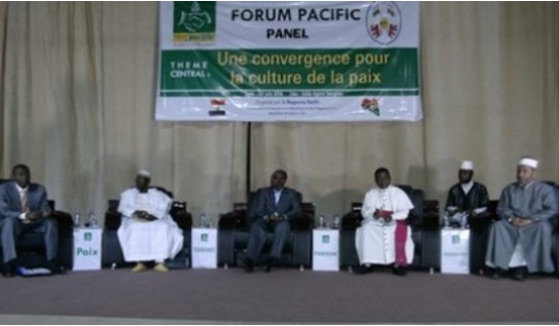
The Malian Association for Peace and Well-being (AMPS) returns to its quest for a peaceful and tolerant Islam in Mali. The first attempt was postponed after the terrorist attack of November 20, 2015 against the Radisson Blue hotel. This time, the organizers have set a new date for the conference to be held from 14 to 16 May 2016 in the Bamako International conference Centre.

Mali

According to the president of AMPS, Mamadou Moussa Diallo, the objective of this meeting is to understand and claim Islam as a factor of peace, tolerance, solidarity and sharing. To achieve this goal, he explains, speakers will come from several countries to discuss topics such as “violence as seen by Islam”, “Islam: the relationship between religious extremism and poverty”, “Islam, peace and development “,” the media and the culture of peace.”

“On the sidelines of the conference, we also intend to set up a global network of religious leaders to prevent the rise of extremism in Africa and the world,” said the president of the association. “We need such a global network of Ulemas to struggle against the terrorist forces that have have gained strength by their international cooperation.”

(Click here for the original French version of this article.)

Question for this article

No Means No Kenya

. . WOMEN’S EQUALITY . .

An article from Ujamaa

NO MEANS NO KENYA works to provide simple, high impact Self- Defense training to as many women and children as possible worldwide. We believe prevention is key in the global rape epidemic. For far too long the overwhelming focus has been on aftercare strategies – this needs to change. It is believed that Self Defense training can raise a woman or child’s chance of prevailing in a sexual assault by up to 85%.

umamaa

It is our vision to mainstream self defense and end the fallacies and myths surrounding a woman or child’s ability to stop an assault. Our rape prevention efforts have appeared in over 40 media outlets including CNN, Huffington Post, MSNBC, Current TV, Daily Kos and Fox Sports.

No Means No Worldwide is a comprehensive rape prevention organization for girls and boys. We are a school based program that uses the IMpower system of violence prevention training. We teach classes in 6 week cycles, three times per school year, with the number of students ranging from 7000-9000 per cycle.

We believe the best response to the epidemic of sexual assault is to provide our male and female students with an awareness of the causes and effects of sexual gender based violence and the skills to intervene or prevent it.

Our research shows that in high schools where girls have taken our classes the incidence of rape drops from 20% annually to under 10%. Over half the girls in the intervention groups report having used the IMpower skills to avert sexual assault in the year after the training. Rates of disclosure increased in the intervention groups, but not in controls.

Preliminary research on our new IMpower boys curriculum shows that male students gender-negative attitudes towards women and girls were transformed to a more positive and supportive set of beliefs and behaviors. At 6-month follow-up, 334 of 676 respondents (49.4%) had witnessed a girl or woman being verbally harassed and 259 of 334 (77.5% had successfully intervened to stop the harassment. Similarly, 313 of 676 (46.3%) had witnessed a male physically threatening a girl or woman and 228 of 676 (33.7%) had witnessed a sexual assault. In these situations, 228 of 313 boys (72.8%) and 167 of 228 (73.2%) who witnessed these events, had successfully intervened to protect the victim.

(Thank you to Janet Hudgins, the CPNN reporter for this article)

Question related to this article:

Central Africa: ICGLR Summit On Formal Peace Education in the Great Lakes Region Concludes in Nairobi

. TOLERANCE & SOLIDARITY .

An article from conference website

The International Conference on the Great Lakes Region (ICGLR) has concluded a two-day Regional Peace Education Summit, which it co-organised with Interpeace and UNESCO in Nairobi, Kenya. Delegates at the summit, held from 3-4 March 2016, included officials of Government Ministries responsible for Education, Gender and Youth members of the national parliaments and provincial governments, and practitioners from Burundi, the DRC, Rwanda and Uganda, as well as technical experts in peacebuilding and peace education from Interpeace and UNESCO.

summit

Ambassador Josephine Gaita, ICGLR National Coordinator of the Republic of Kenya, officially opened the summit on March 3rd. The summit focused on the implementation of formal peace education in three ICGLR member states, namely Burundi, the Democratic Republic of Congo (DRC), and Rwanda. The Republic of Uganda was also present as an active observer, while the Republic of South Sudan was represented by the country’s ICGLR National Coordinator.

Proceedings included presentations on the state of peace education in Burundi, the DRC, Rwanda and Uganda, expert presentations on the policy and practice of peace education, plenary discussions and sessions where each delegations could reflect on their country specific ideas on the way forward for effective implementation of formal peace education. Participants expressed the need for regional level peace education strategies to respond to conflicts in the Great Lakes which have often had a cross border dimension.

The summit was premised by two prior occasions. The first was an Extraordinary Summit of ICGLR Heads of States on Youth Unemployment, held on 24 July 2014 in Nairobi, which emphasized the important role of the youth in the pursuit of peace, security and stability within the region. The second was a 2014 participatory action research process carried out by Interpeace and its six partner organisations in Rwanda, Burundi and the eastern DRC. The research was based on consultations with diverse actors across the Great Lakes region and revealed that most people considered identity-based stereotypes and manipulations as a fundamental obstacle to sustainable peace in the region. The research participants suggested that peace education could serve as a priority intervention to address challenges related to identity-based stereotypes and manipulation, arguing that peace education could both strengthen existing peacebuilding efforts and help in the prevention of conflict among future generations.

(Article continued in right column)

Question related to this article:

Solidarity across national borders, What are some good examples?>

(Article continued from left column)

Interpeace’s Regional Director for Eastern and Central Africa (ECA), Johan Svensson, lauded the national delegations and the ICGLR for taking into account the sentiments of the local populations in their efforts to achieve sustainable peace and security both in their countries and in the region.

“Your commitment as stakeholders is inspiring because you are responding directly to your people’s call for peace education,” Mr Svensson remarked at the summit.

The summit revealed that peace education efforts already existed in all the three countries, albeit at varying levels of implementation. Among some of the challenges discussed was the need to develop comprehensive peace education frameworks and to foster a pedagogy that would create harmony in the understanding of integration of peace education in the three countries. These findings were emphasized by ICGLR Executive Secretary, Professor Ntumba Luaba, who called for the creation of a regional ICGLR peace education programme and acknowledged the delegates for making the first steps in the regional cause for peace education. Ministry representatives of the country delegations committed to sharing the findings of the summit with the concerned actors in their respective countries, in order to make sure that the summit results will inform future peace education efforts.

“Peace education has the potential to create a new generation of women, men and youth who will be the guardians of peace in the region,” Professor Ntumba told participants at the summit.

Professor Luaba also lauded ICGLR’s partnership with Interpeace, which made it possible for the summit to take place, and suggested the organisation of a similar Peace Education summit with participation from all the twelve ICGLR Member States. The ICGLR Member States include the Republic of Angola, the Republic of Burundi, the Central African Republic, the Republic of Congo, the Democratic Republic of Congo, the Republic of Kenya, the Republic of Rwanda, the Republic of Sudan, the Republic of South Sudan, the United Republic of Tanzania, the Republic of Uganda and the Republic of Zambia.

(Thank you to the newsletter of the Global Campaign for Peace Education for sending us this news.)

Zanzibar Peace, Truth & Transparency Association

EDUCATION FOR PEACE .

from Ali Mussa Mwadini

Dear Sir / Madame,
 
Please help our organization to unite & work together. to promote & sustain a true culture of peace & peace operations and local conflict resolution in Zanzibar community. The Zanzibar Peace, Truth & Transparency Association is a non-profit Organization, non-political, non-religious, and non-military registered in Zanzibar Tanzania, with its headquarters in Zanzibar Town.

zanzibar
Photo of Association on International Day of Peace

Against a background of wars, conflicts, tension and insecurity within Zanzibar community, our Organization was founded to focus on True Culture of Peace, and Peace related issues, such as Human rights, Gender Inequality, Interfaith, Democracy, Good Governance and Rule of law within Zanzibar and the Tanzania at large.
 
Our Organization is triggered by the resurgence of political misunderstandings between ruling and opposition political parties in every multiparty election in Zanzibar since 1995, which ends up with conflicts and distorts social fabrics. Zanzibar Peace, Truth & Transparency Association, is committed to address those political misunderstandings accordingly in order to safeguard lives and properties of the Zanzibar community.  In this respect, we therefore need to bring together and live Peaceful and prosperous society, and to ensures equal rights and privileges to all Zanzibar citizen.

We aim to:

– build a peaceful Zanzibar Community, free from Violence, Conflict, Hatred and Fear

– To promote compassion and understanding, respecting the Differences, Gender Equality and tolerance and for others live together in Harmony

– To promote peace Community in the Villages, Districts, Regional and National, encourage and strengthened for a National Movement for a True Culture of Peace in Zanzibar

(Article continued in the right column)

Question for this article:

Can peace be guaranteed through nonviolent means?

(Article continued from the left column)

– To undertake Peace Training program within rural Community Leaders, Religious groups, Women Groups, Youth Groups & Youth Centers, Schools, Colleges & universities,  in order to reduce conflicts and create  sustainable future generations

– To empower community members with skills and knowledge to produce income generating activities in order to reduce poverty and increase peace

– To Change and Revive the norms and rules governing Zanzibar community, Religious Groups & Political Parties, at all levels in order to ensure that conflicts are dealt with constructively through institutional channels

– To seek cooperation with Peace Loving countries and institutions which indulge in promoting Peace Awareness, Conflicts Resolution, Peace Building, Negotiation and Reconciliation, Strong Dialogue and Forgiveness and promote the Culture of Peace as an urgent task that requires the committed engagement of all the people in Zanzibar & the World.

Our Organization is working in Unguja & Pemba Islands through community training,  group meetings, mobile cinema, Political meetings, Religious Groups and Women Groups. The large population in our two Islands have adopted a peaceful way of life to avoid Conflicts

It Is Never Too Late To Live Together As Humans Despite  our Political Parties & Religious Differences
 
To consolidate peace after war is a long-term process. To consolidate democracy is an even longer one.

LET US UNITE FOR THE WORLD PEACE.
LET PEACE PREVAIL ON EARTH

Ali Mussa Mwadini
Executive Secretary & Peace Activist
ZPTTA NGO Zanzibar
( Tel: +255 777 451257 )
(amwadini1950@yahoo.com)

The Senegalese winners of the “Next Einstein Forum” present the results of their scientific work

. . SUSTAINABLE DEVELOPMENT . .

An article from l’Agence de Press Sénégalaise

The three Senegalese winners of the “Next Einstein Forum”, the international three-day conference that opened Tuesday in Diamniadio (27 km east of Dakar) dedicated to science, technology and innovation, presented on Wednesday [ March 9] the “social importance” of their research.

einstein

Organized at the initiative of the African Institute for Mathematical Sciences (AIMS, its acronym in English), the Senegalese Ministry of Higher Education and Research, and the German Robert Bosch Foundation, the “Next Einstein Forum” is a global forum on “issues and challenges of science in Africa.”

Its organizers decided to honor “the 15 brightest young scientists” of Africa, who will have the opportunity to be in contact with the leaders of the continent and the rest of the world, as part of future meetings of the forum.

The program of this international forum includes a presentation of the work of the winners.

The three young Senegalese winners are Mouhamed Moustapha Fall, Joseph Ben Geloun and Assane Gueye.

Mr. Fall was interviewed the press on the occasion of the international conference, which aimed to make mathematics accessible to both educated and illiterate in Africa. To get there, he led a research project aimed at “showing the practical application of mathematics and the benefits of optimization of forms.” “Everyone can do math,” he says.

(Article continued in the right side of the page)

( Click here for the French version of this article.)

Question for this article:

How can we ensure that science contributes to peace and sustainable development?

(Article continued from the left side of the page)

Assane Gueye worked on “the search for a scientific approach to security and performance of information and large scale communication systems.” Gueye, who is Director of Research of the Professional Institute for IT security, an institution based in Dakar, develops computer models that should enable the prediction of “global behavior”. “The risks of catastrophic events can be managed and mitigated. And the effectiveness of control measures can be assessed,” he says in a document received from the organizers of the “Next Einstein Forum.”

Joseph Ben Geloun is interested in “physical mathematics, particularly the quantum properties of matter.” “Today,” he says,” we understand the structure of the atomic model, that is to say what is in the atom: the nucleus, neutrons, protons and elementary particles … ” His work presented in the “Next Einstein Forum” is dedicated to “the geometry of space-time”, a research project that leads Ben Joseph Geloun to question “the predictions of Albert Einstein’s laws, which are slightly wrong “. He received the Young Scientist Award in physics and mathematics from the 2015-2017 International Union of Pure and Applied Physics (Switzerland).

Other winners of the “Next Einstein Forum” are citizens of Uganda, Egypt, Kenya, South Africa, Cameroon, Nigeria and Ethiopia.

Their interests lie in theoretical physics, computer science, hypertension, urban epidemiology, semantic web technology, etc.

The “Next Einstein Forum” opened Tuesday in the presence of Senegalese President Macky Sall and his Rwandan counterpart, Paul Kagame.

The organizers of the international conference say they want to make Africa “a platform for science, mathematics and engineering.”

Kigali, the Rwandan capital, will host the next “Next Einstein Forum” in 2018.

Senegal: 4th Global Peace Festival: “Live Peace – Meeting of World Cultures”

DISARMAMENT & SECURITY .

Excerpts from the email received at CPNN from Live Peace Festival International

From May Friday 06th to Sunday 08th, 2016, Saint-Louis (Senegal-West Africa) a secular land of peace and legendary Teranga (hospitality), ancient capital of French’ West Africa and Senegal, a tercentenary symbolic City listed World Heritage Site by UNESCO and successful example of harmonious and peaceful coexistence of cultures and religious, is welcoming the 4th Global Peace Festival : « Live Peace – Meeting of World Cultures ».

CODEVA
Click on image to enlarge

Organized by the non-profit organization for the « Co-operation, Development and Action » (CODEVA) to build a « bridge » between the world cultures and development and link Humans, this great celebration of Arts, Culture of Peace, Forum for Peace and Peace Camp will assemble all those who work for peace, peacemakers, artists, youth, women, volunteers, personality and world citizens coming together in one big celebration dedicated to peace and cultural diversity. The theme this year is : “Youth and Women in Sustainable Development Goal” and to our cultural heritage as a contribution to the local development of Senegal and Africa.

The “Live Peace Festival of World Cultures” is an original and very special sustainable event of solidarity and education in Saint-Louis of Senegal. It is full of symbolism, respectful of life from local to global, and the need for the emergence of a culture of non-violence, dialogue between cultures, responding to the aspiration of humanity for peace.

The three (3) days of festival includes concerts, shows, performing arts/music, dance, theater, campfire and narrated evening, forums, interactive workshop, projection of film, hiking, Global Village of Festival: fair-exhibitions, visual arts, convivial and solidarity space, zone of media center and public relations.

We warmly invite all the positive energies (youth, women, volunteers and artists) media, donors, sponsors and partners to support and participate in solidarity with this worthy cause and contribute to the success of the festival.

P.O.Box : 241- Saint-Louis, SENEGAL
Phone : + 221.77 553.85.63 / 70 658.81.43
Mail : livepeacefestival@gmail.com
Facebook: www.facebook.com/livepeacefestivalinternational

Question for this article:

Africa: Through Peace Education, Youth Can Become Vanguards of Peace in the Great Lakes

EDUCATION FOR PEACE .

An article by Ntumba Luaba, KBC TV

Over the past five decades, the youth have played a central role in the numerous violent conflicts that have afflicted the African Great Lakes Region. Young people have most conspicuously been active participants in the hundreds of armed groups that have traversed the region since independence in the 1960s, operating across sovereign borders with an unsettling ease and leaving great devastation in their wake. The UN estimates that over six million civilians have lost their lives since the 1990s alone, and that the civil wars, genocides and cross-border conflicts in the region have produced the world’s highest number of fatalities since the Second World War.

great-lakes
Photo of Ntumba Luaba from Radio Okapi

The existence of deeply entrenched stereotypes based on ethnicity or nationality has been a key impediment for the prospects of peace in the region. These stereotypes, marinated over the decades, have long been internalised by local communities and have regrettably been handed down to successive generations, breeding hatred and placing the region’s youth in a vulnerable position for manipulation into violent conflict. As a result, many of armed groups recruit youth into their ranks through manipulation and the promise of economic reward. Cases of outright coercion of the youth have also been documented.

Numerous efforts have been undertaken over time and at different levels in an attempt to ameliorate this state of affairs, but significant change has not yet been achieved. It is understandable that much of these efforts place priority on post-conflict reconstruction. The result has been that most interventions have overlooked the fact that the process of effectively countering hatred requires us to begin by planting the seed of peace. Building sustainable peace is a long-term process which, considering the cross-border nature of the region’s conflicts, demands that we perceptualize our peacebuilding efforts from both the local and regional levels. For any peacebuilding effort to stand a chance of success in the Great Lakes region, it must also target the emancipation of the youth from the ethnic or nationalistic encumbrances that make them easy targets for recruitment or mobilization into conflict action.

(Article continued in the right column)

Question for this article:

How do we promote a human rights, peace based education?

(Article continued from left column)

A research study carried out in 2014 by the NGO Interpeace and six partner organizations in Rwanda, Burundi and the eastern part of the Democratic Republic of Congo (DRC) found that the people in the region generally agreed that ethnic hatred is a fundamental problem in the Great Lakes region. The research also found that people across the three bordering countries endorsed peace education as a priority intervention that would both strengthen existing peacebuilding efforts and more importantly help in the prevention of conflict among future generations. The findings of this research resonate closely with the mandate of the International Conference on the Great Lakes Region (ICGLR) to promote a comprehensive approach to peace and stability in the region, a mandate that includes empowering the region’s youth to become agents of peace.

The ICGLR and Interpeace are partners in the promotion of peace in the Great Lakes region. In December 2015, the two organizations signed a Memorandum of Understanding, creating a powerful synergy in which the ICGLR brings its clout as an intergovernmental body tasked to facilitate the promotion of peace and stability in the Great Lakes region, and Interpeace contributes its unique experience and capacity to bridge between high level actors at the national and international levels, Civil Society Organizations (CSOs) and local populations at the grassroots level.

We have a strong conviction that peace education offers the promise of nurturing a new generation of youth into vanguards of peace in the Great Lakes Region. It is on this premise that the ICGLR and Interpeace will bring together key stakeholders from the region to a Peace Education Summit in Nairobi on 3 – 4 March 2016. The summit will focus on the promotion of a harmonized understanding of formal peace education in the region. The Nairobi Summit is by no means a singular engagement. It is rather a pilot initiative that could hopefully be expanded across all ICGLR member states because peace education is an invaluable investment for the future peace, security and prosperity of all member states, as well as the entire African continent.

Building peace is a collective effort in which every citizen and every stakeholder in the Great Lakes region has a role to play. We therefore call upon all key actors, particularly our member states, CSOs, other regional organizations and donor partners to embrace the idea of peace education as a preventive measure, to help us plant this seed for lasting peace in the region.

Professor Ntumba Luaba is the Executive Secretary of the International Conference on the Great Lakes Region (ICGLR), an Intergovernmental Organization established on the initiative of the African Union and the UN as a regional mechanism for peace, security, stability and development. ICGLR’s 12 core member states are Angola, Burundi, the Central African Republic (CAR), the Republic of the Congo, the Democratic Republic of Congo (DRC), Kenya, Rwanda, South Sudan, Sudan, Tanzania, Uganda and Zambia. It additionally has seven co-opted member states, namely Botswana, Ethiopia, Egypt, Malawi, Mozambique, Namibia and Zimbabwe.

(Thank you to the Global Campaign for Peace Education for distributing this article.)