FREE FLOW OF INFORMATION
A survey by CPNN
The following 104 events in 12 countries formerly part of the Soviet Union were listed in “Google News” during the week of September 21-28 under the key words “Международный день мира”, “День миру in UA 2017” and “Міжнародний день миру”as well as “International day of peace”.
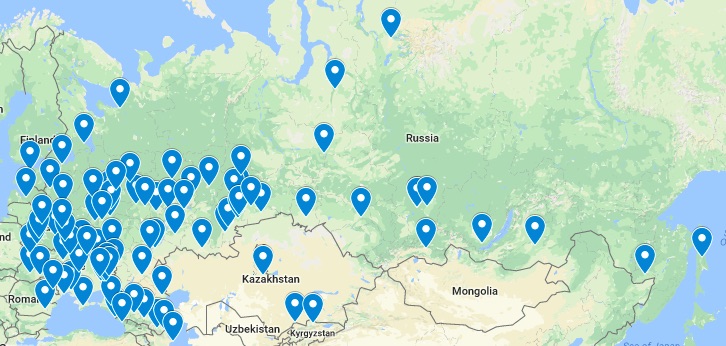
There are so many articles that we can only provide excerpts from some, while others are simply listed with their links below. Unless otherwise indicated, they were translated from the Russian by CPNN.
We begin with articles from RUSSIA (in alphabetical order):
ASBEST : In order to educate the rising generation of tolerance and patriotism on September 21, 2017, the School No. 8 held an action dedicated to the International Day of Peace. Junior students took an active part in it. . . . .Primary school teacher Marina Viktorovna Resnianskaya held classes in the 1st to 4th grades, where she spoke about the little ambassadors of the world – children who, despite their young age, were concerned about the problems of preserving peace on our planet, preserving and developing friendship and understanding between people of different nationalities, between states. . . . Pupils of 3 – 4 classes prepared literary compositions about peace, friendship, mutual understanding and spoke before junior schoolchildren of 1 – 2 classes.
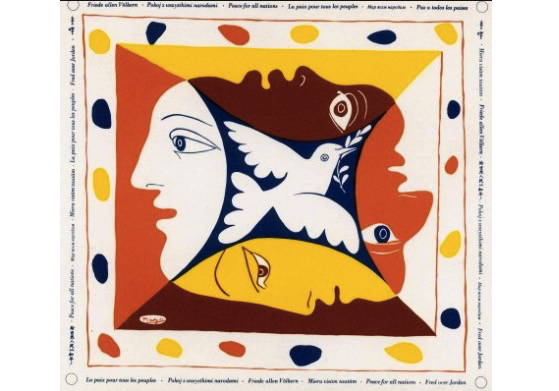
BELGOROD : A festive concert was held in the public garden on the alley of sister cities. The pupils of the nearby schools were told about the history, significance of the holiday and how Belgorod is connected with it. . . . The music program was prepared by the artists of the city “House of Officers”. The poem about the friendship of the peoples was read by Nikita Tyufanov, a student of the Moscow State School of School No. 21. At the end of the event, doves were released into the sky as a symbol of peace throughout the world.
BIROBIDZHAN : The action “Dove of Peace” was held on September 21 in Birobidzhan. A special event, including a youth flash mob and the launch of paper birds dedicated to the International Day of Peace, which was celebrated this year for the 15th time. Representatives of public associations, schoolchildren, students of the regional center took part in the action,
CHELYABINSK : On the International Day of Peace, September 21, 2017, in the framework of the project “Dove of Peace”, classrooms were held in classrooms, at which the teachers told about the history of the proclamation of the International Day of Peace, with high-school students a conversation was held on spirituality. Kids of the 9th grade prepared stories about the South Ural people, the heroes of the Great Patriotic War. At the end of the lesson, the students of the school made white doves – a symbol of peace and launched them on balloons into the sky.
CHUVASHIA : September 21, 2017 in the National Library solemnly celebrated the International Day of Peace. The start of the holiday was the meeting of the traveler Nikita Vasilyev, who returned from a two-year tour by bicycle in East Asia. Nikita and his friend Anastasia Safonova were warmly greeted by members of the bicycle movement “Sun on Needles”, friends and journalists.. . . Nikita and his associates were met by officials and students. In the big assembly hall people of the most different generations, nationalities, types of activity, who are eagerly awaiting a meeting with the hero of this day – about 200 people gathered. . . . The lesson of peace ended with a large photo and autograph session. A press conference was organized for journalists.
DAGESTAN : The International Day of Peace was celebrated in all schools of Nogai district on September 21, RIA “Dagestan” . . . in the framework of the International Day of Peace and the international action “The One Hour of Spirituality” Dove of Peace. . . . Within the framework of the celebration of the International Day of Peace in schools and library system of Nogai district there are exhibitions of drawings, books, open lessons and class hours dedicated to this topic. . . . At the end, students launched white paper doves into the sky – birds of peace, symbols of the peace, tying them to balloons. The balls took off under the song of I. Dunaevsky “Fly,doves, fly.”
ЗАБАЙКАЛ : On September 21, the international community celebrates the International Day of Peace. On this day a number of events will take place at the Theater Square of the regional capital. Among them, the action “We vote for peace!”. In addition, from 14:00 to 17:00 the library will hold a thematic quiz and a book-illustrative exhibition. From 16:00 to 17:00 there will be a master class of pupils of art schools in the city “We Draw the World”, and from 17:00 to 18:30 there will be a concert of the group “Shock Wave”.
KYZYL : 21 activists of the Youth Movement of the Republic of Tuva made and presented to guests and residents of their native republic paper doves, as well as baked cookies in the form of a dove in preparation for the XIX World Festival of Youth and Students 2017, which will be held from October 14 to 22 in Sochi.
KAZAN : A youth flash mob, dedicated to the International Day of Peace, was celebrated today. Several hundred students of the Kazan Federal University released 200 balloons and 11 white pigeons into the air . . . .Why 211 balls and pigeons? This is the idea of the Kazan Federal University, because it will soon be 211 years old, “head of the Conflictology Department of the KFU, Doctor of Political Sciences Andrei Bolshakov told the IA” Tatar-inform “correspondent. “The International Day of Peace is a holiday that helps to unite all people, to bring to them that the world is better than any war. It helps us understand that life is much more important than all the nonsense of extremist organizations, “said Flashmob participant Galina Tokareva, a first-year student of the Conflictology Department of the KFU.
KURGAN REGION : To mark the Day of Peace, large-scale events and actions took place in the Kurgan region. So, the volunteers of Shadrinsky State Pedagogical University visited kindergartens, giving the children the symbol of the World – a white dove, held a drawing competition “The World through the Eyes of a Child”. In Vargashinsky district the schoolchildren were shown a presentation dedicated to the Japanese girl – Sosaki Sodako, who survived after the disaster in Hiroshima. Activists of the Russian movement of schoolchildren of the Dalmatovo region organized a review of social videos with discussion. On the Victory Square in Shchuchye, a patriotic campaign “Youth for Peace” was held with the participation of young men. They gave passers-by leaflets and expressed their position on the issue of peace on Earth. White pigeons were distributed on the streets in Kurtamysh and Tselinny districts.
MAGNITOGORSK : For the International Day of Peace, lessons were held in all classes – the children learned about the history of the International Day of Peace, prepared dove figures from white paper, which became a symbol of personal commitment to peace. They spoke about the role of Russia in World War II and the feat our peoples in the liberation of the world from fascism and militarism. In the classroom, each student was able to feel himself part of an international community striving for world peace.
OMSK : Secondary school № 95 hosted events dedicated to the International Day of Peace. On a classroom, students discussed the need to preserve peace on earth. Among the students of grades 3-6 there was a competition of posters “We are for Peace!”, Students of the 7th grades held a discussion “No good can be expected from war”, and students of grades 7-9 took part in the essay competition “War is a crime that is not redeemed by victory.”
VERKHNEURALSKY, IN CHELYABINSK OBLAST : The International Day of Peace was held in all schools of Verkhneuralsky district. The students cut out and folded paper doves, as the symbol of the International Day of Peace. On this day, school lessons were held, on which verses about peac, the history of the holiday, the purpose of the event were heard. The students remembered veterans of the Great Patriotic War, those who defended the world on our planet, worked in the rear in the war years. On the paper doves they wrote the names of the dead heroes, defenders of the Fatherland, wishes for peace and good, gave paper pigeons to classmates, teachers, parents. The brightest event of the day for all the children of the district schools is the action “Dove of Peace”, flashmob “We are for peace! with simultaneous launching into the sky of air helium white, blue, red balloons with paper doves, on which the wishes of peace and good were written. The dove best expressed the desire for flight, for freedom, for peace. Children, teachers, parents, representatives of the Council of Veterans, public organizations took part in the action “Dove of the World”.
YEKATERINBURG : By releasing paper doves into the sky: Yekaterinburg celebrated the International Day of Peace. The action gathered about a hundred Yekaterinburg students and schoolchildren. They were not stopped by the rain, or the autumn coolness.. . . Ekaterinburg joined this action for the first time.
Other similar Internet reports for the Day of Peace in Russia came from:
ANIVA, SAKHALIN OBLAST
ARKHANGELSK
ASTRAKHAN
BEREZNIKI, PERM KRAI
DERBENT
DZERZHINSK
GALICH
INGUSHETIA
IZHEVSK, UDMURT REPUBLIC
KAMENSK-URALSKY IN SVERDLOVSK OBLAST
KALUGA
KIROV
KOLOMNA
KORKINO
KOSTROMSKAYA, KRASNODAR KRAI
KRASNOYARSK
MARX GOROD
MOSCOW SCHOOL 215
MOSCOW SCHOOL 1195
MOSCOW NEKRASOVKA DISTRICT
MOSCOW NOVOKOSINO DISTRICT
MOSCOW TYOPLY STAN DISTRICT
MOSCOW GORKY PARK
MOSCOW SILINO DISTRICT
MOSCOW ZYUZINSKY DISTRICT
NORILSK
MURMANSK
NAZRAN, REPUBLIC OF INGUSHETIA
NIZHNEVARTOVSK
NOVOSIBIRSK SCHOOLS
NOVOSIBIRSK SIBERIAN UNIVERSITY OF CONSUMER COOPERATIVES
NOVOSIBIRSK ROERICH MUSEUM
NOVY URENGOY,YAMALO-NENETS AUTONOMOUS OKRUG
ORENBURG
OZYORSK, CHELYABINSK OBLAST
PERESLAVL-ZALESSKY
PETROVSKA, SARATOVSKAYA OBLAST
PETROZAVODSK
PROKUDINO, BELGOROD OBLAST
PSKOV
ST. PETERSBURG
SAMARA
SARATOV
SHADRINSK
SIMA
SIMFEROPOL
SOCHI
TIMASHYOVSK, KRASNODAR KRAI
TVER
UST-ILIMSK, IRKUTSK OBLAST
VELIKIYE LUKI
VORKUTA, KOMI
VORONEZH
VOLGOGRAD
YAROSLAVL
YELABURG
YELABUZHSKY, TATARSTAN
YENISEYSK, KRASNOYARSK KRAI
ZAOKSKY DISTRICT
ZELENOGORSK
ZHELEZNOVODSK
And here are articles from other countries that were once part of the Soviet Union:
YEREVAN, ARMENIA : Today, 20 September, the summarizing exhibition of the painting contest “I am a Sower of Peace” dedicated to the International Day of Peace was opened at the UN House in Armenia. . . .This year 613 schoolchildren from 101 schools of 11 regions of Armenia have presented their paintings to the contest: this is four times more than was last year. Almost all of the authors of the 86 artworks selected for the exhibition attended the opening accompanied by their parents or teachers.
BAKU, AZERBAIJAN : The action “One hour of spirituality” Dove of Peace “” and a video conference “Partnership of sister schools within the framework of the international youth movement” took place in Baku in the Classical Gymnasium No. 160 and the Elite Gymnasium. In gymnasiums in support of peace on balloons, white paper doves were launched into the sky. They were written names of Soviet soldiers who died in the Great Patriotic War. The events were attended by students and teachers of gymnasiums, veterans of the Great Patriotic War, and members of organizations of Russian compatriots.
SUKHUMI, ABKHAZIA : Students of the Sukhumi boarding school took part in flash mob “Dove of Peace” and launched 100 white balls with paper doves symbolizing peace and gratitude to veterans of the Great Patriotic War
(Survey continued in right column)
What has happened this year (2017) for the International Day of Peace?
(Survey continued from left column
BREST, BELARUS : On September 21 . . . . In Brest this year the action took place on the territory of the regional center of the Olympic reserve for rowing. . . . .Every visitor had the opportunity to install a lamp on an improvised “alley of the world” in memory of all the children who died innocently in various hostilities. . . . .As part of the celebration of the International Day of Peace, a bike ride and a race of skaters with the slogans “For Peace!” were held. Also, a large-scale dance flash mob took place.
PINSK, BELARUS : Schoolchildren joined the celebration of the Day of Peace, which is celebrated annually on September 21. On this day, in secondary school No. 3, as in many educational institutions, they conducted thematic lessons, after which schoolchildren took to the streets of the city to give passers-by a postcard depicting a dove as an international symbol of peace.
BOBRUISK, BELARUS : From September 18 to September 25, 2017, a week of peace is held in Pervomaisky district of Bobruisk. A joint inclusive exhibition at the library “Give a smile to the world” was organized by the day care unit for the disabled and accompanied by the social protection institution “Territorial Center for Social Services of the Population of Pervomaisky District of Bobruisk” in cooperation with the Children’s Library No. 5. On September 19, the lesson “Peace lesson: peace for children all over the world” was held for the visitors of the day care center for the disabled and the accompanying residence
GOMEL, BELARUS : In Gomel on the International Day of Peace, 35 children were born. Already entered into a good tradition to assign the status of “Child of Peace” to babies born on the International Day of Peace. This action was held yesterday in three Gomel maternity wards. Representatives of the Gomel regional branch of the Belarusian Peace Foundation congratulated young mothers and their babies. . . ..For 11 years, when the action is being held, more than 600 “children of peace” were born in the Gomel region. In 2017, 56 children received this status, of which 35 are new residents of Gomel. . . . “The Belarusian Peace Foundation” is doing everything possible to support children throughout their life. They are invited to various events, congratulate on holidays and give gifts.
GANTSEVICHI, BELARUS : On Thursday, September 21, in the Gantsevichi Regional Museum of Local History, a museum lesson was held under the title “Symbol of Peace” as part of the International Day of Peace. The event was attended by pupils of the RCSD of the city of Gantsevichi. During the museum lessons, the children got acquainted with the history of the holiday, watched a video about the day of peace, and also took part in the action “The Sound of the Peace Bell” and drew a dove, which is a symbol of this holiday.
MOGILEV, BELARUS : To conduct a solemn gathering “The One Hour of Spirituality” Dove of Peace “students of the HONOVSKY UPK DS-SCH began to prepare in advance. Together with the class leaders they bought balloons filled with helium, prepared paper doves, on which it was decided to write the names of the participants of the Great Patriotic War. The school day of September 21 began unusually, with a unique class dedicated to the International Day of Peace. Representatives of all classes and groups lined up unanimously, they were given a responsible mission – to launch dove balloons into the sky.
MOLODECHNO, BELARUS : On September 21, in Molodechno Oblast, activities dedicated to the International Day of Peace were held by the Molodechno District Organization of the NGO “Belaya Rus” in conjunction with the Molodechno branch of the Belarusian Peace Foundation. The Day of Peace was dynamic, colorful and very touching. . . .. During the action, poetry and songs about the world were heard. The children and adults joined hands and said “We are for Peace!” At the end of the event, all present were invited to write on paper doves their thoughts about Peace and attach them to the great School Dove that became the symbol of Peace!
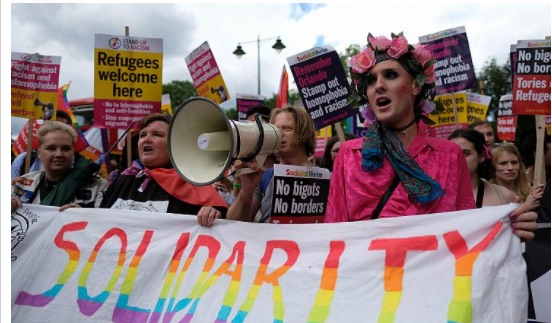
TALLINN, ESTONIA : Today, September 23, is not just another day off. Today, residents of Estonia, not indifferent to the fate of their beloved country, gathered together in the Schnelli Park. A few dozen people who spoke to each other in Estonian, Russian, Finnish and English, formed a friendly column and under the slogans “WORLD PEACE!”, “NO WARS!”, “STOP NATO!” walked along the streets of the Old City. Leaving the Town Hall Square in Toompea, the demonstrators held a rally in front of the Estonian Parliament.
TARAZ, KAZAKHSTAN On 21 September, the International Day of Peace, the Zhambыlskom medical college held a meeting with the international antinuclear movement “Nevada-Semipalatinsk”. The event was attended by city officials, educational institutions and public organizations of the region. A documentary film about the closure of the Semipalatinsk Nuclear Testing Ground was shown. During its four decades of existence, about five hundred nuclear tests were conducted at the test site. And at the dawn of independence, our Republic was one of the first in the world to renounce its nuclear arsenal.
BISHKEK, KYRGYZSTAN : With a number of state institutions and NGOs, the Friendship Festival was organized by the network “Women Peacekeepers of Kyrgyzstan” with the support of UN Women in the framework of the 30th anniversary of the International Day of Peace. Peaceful actions devoted to strengthening peace and stability in Kyrgyzstan were held in all seven regions of the country. The headline event of the Friendship Festival on the central square of Bishkek was attended by employees of the Office of the President of the Kyrgyz Republic, deputies of the Jogorku Kenesh, the diplomatic corps, residents and guests of the capital.
TURMUSH, KYRGYZSTAN :
International Day of Peace celebrated in Kochkor region (photo only of children’s show)
AK-SUU DISTRICT, KYRGYZSTAN : The International Day of Peace was celebrated in the village of Teploklyuchenka in the Ak-Suu district (video of public event with children dancing to traditional and contemporary music and balloon release at end)
RIGA, LATVIA : Riga veterans and youth launched white paper doves tied to colorful balloons in the sky as part of the “Dove of Peace” action. Each participant wrote on the pigeon’s name – most often a relative who did not return from the war, or a comrade of arms. Some came with posters with children’s drawings: happy people holding hands, neat little houses, green grass, blue sky.
SLOBOZIA, MOLDOVA : Slobozia hosts the action “One Hour of Spirituality” Dove of Peace “, in which more than 60 people take part, a solemn gathering in which the leadership of the state administration, students and youth of the city will be involved . . . This action involves a one-time launch into the sky by schoolchildren of paper doves attached to balloons. On the wings of the birds the children write warm words of wishes.
KISHINEV, MOLDOVA : The Moldovan public movement “The Children of Victory” with the support and assistance of the Russian Center for Science and Culture in the Republic of Moldova held a number of actions in Kishinev, Beltsax, Cantemir and other cities of the country aimed at strengthening the ideals of peace both within the republic and its peoples, and between states and peoples of the whole planet. . . . The holiday began in the country’s educational institutions with the flash mob “Dove of the World”, when, under the famous song “Fly the Doves, Fly” by I. Dunaevsky, students simultaneously launched into the sky white paper doves tied to balloons filled with helium. On each pigeon, the guys wrote the name of the deceased hero – a participant in the Great Patriotic War or a worker in the rear – those who gave their lives to protect peace on earth. On the same day, a videoconference “Partnership of sister schools within the framework of the international children’s and youth movement” was held with veterans, heads of public organizations, students of Kishinev schools.
TASHKENT, UZBEKISTAN : At the Tashkent institute of irrigation and agriculture mechanization, a spiritual enlightenment event entitled “Peace – a guarantee of people’s wellbeing” has taken place. This event was devoted to International Day of Peace.
(Note: Most of the following articles are translated from Ukrainian.)
UKRAINE IN GENERAL In total, 50 organizations have joined the all-Ukrainian action “Peace Day Ukraine 2017”, which will hold a holiday in 32 localities. The main goal of the project is to promote understanding and reconciliation in Ukrainian society, the organizers of the “Day of Peace UA 2017” said. It is implemented by the NGO “Stan” Youth Organization.
KIEV, UKRAINE : On September 21, 2017, on the initiative of the Union of Women of Ukraine in Kyiv, events took place on the occasion of the International Day of Peace with the participation of representatives of the authorities, central organs of the city executive, UN representatives, wives of foreign ambassadors in Ukraine, veterans’ organizations, activists and youth of the city of Kyiv. . . . ..During the event, doves were released into the sky – a symbol of Peace, happiness and love. . . . The President of the League of Women of Ukraine, Leokadiy Gerasimenko , addressed the audience, emphasizing the importance of celebrating World Peace Day throughout the world, and emphasized the role of women in peacekeeping activities: “This day is especially important, as our territory is currently undergoing military action. And it’s very symbolic that women are united and uniting huge forces around themselves to build and preserve peace.” So, Leokadiy Volodymyrivna noted that Ukrainian women not only collect help for men who are fighting the state in the east of Ukraine, but also go to the front and risk their own lives for the sake of saving the wounded.
KIEV, UKRAINE : Kiev youth held a flash mob on the Independence Square with posters and balloons and Kievans marked the Day of Peace with a gala concert.
KURAKHOVE, UKRAINE : On September 21, when the whole world celebrates the International Day of Peace, the Kurakhiv city center of culture and leisure held a city action with a video show “Peace to Everyone!”. All the educational and pre-school institutions, creative groups and residents of the city took part in this thematic video presentation, as reported by the Kurakhovsk City Council.
MYKOLAIV, UKRAINE :
Video of school celebration of International Day of Peace by Secondary school №52
ODESSA, UKRAINE : International Day of Peace: Odessa schoolchildren launched balloons and doves into the sky (photo) . . . September 21 this year. pupils of Odessa schools took part in a large-scale flash mob dedicated to the celebration of the International Day of Peace in Odessa’s Starobazar Square. . . .
The following are links to Peace Day celebrations in other Ukrainian cities:
GLUKHIV
IVANO-FRANKIVSK
KAMYANETS-PODILSKY
KOVEL
KREMENCHUK
MAKAREVO
MARKOVKA
NIZHYN
RUBIZHNE
SUMY
(Note: the following cities are claimed by the Ukraine, but have declared their independence as the Donetsk People’s Republic or the Lugansk People’s Republic.)
DONETSK : The International Day of Peace will be remembered for a long time by the children of the Republic. Representatives of the Ministry of Information and Administration of the Kuybyshev district of Donetsk came to the orphans of the children’s home “Teremok”.
ENAKIEVO : On September 21, educational events dedicated to the International Day of Peace were held in the educational organizations of Enakievo. . . . The students of Enakiev’s schools took part in solemn events under the general title “The One Hour of Spirituality” and the flash mob “Peace Dove” in support of peace in the Donetsk People’s Republic. . . . On this day, thousands of paper doves , made by the hands of schoolchildren of the city, were launched into the sky. In addition, the contests of drawings and posters “Peace in Our Hands” were held in the city’s general educational organizations, the lessons of the world “Peace, that is Our Earth!”, The action “We are for Peace!”, was held in classes.
GORLOVKA : The celebration of the International Day of Peace was held in the City Palace of Youth on September 21.
KRAMATORSK : September 21 . . . a day of renunciation of violence and ceasefire worldwide . . . In Kramatorsk flashmob participants, holding hands, created a circle of peace around the symbolic heart, painted in the central square of the city in the colors of state symbols. The participants of the flash mob performed the song “Peace over Ukraine”. In the final flashmob was launched balloons, in state colors. More than 150 people took part in the action.
KHARTSYZK :
In Khartsyzk, on this day, in front of the City Palace of Culture . . . the school organizations of Khartsyzk called upon the international community to pay attention to the situation in the Donbas, where the last three summer events are war, terrorism by the ruling Ukrainian elite, and deep contradictions between the previously fraternal people imposed by the same Ukrainian government. . . . At the end of the holiday, all school organizations were photographed against the background of the banner of the Donetsk People’s Republic, where the word “PEACE” was printed in large letters and colored balloons were released into the sky.
STAKHANOV : A festive flash mob took place on the square at the Gorky Palace of Culture today. Students from schools and gymnasiums of the city, activists from the Stakhanov movement of the social movement” Mir Lugansk region “, representatives of the youth NGO” Youth for Peace “and children’s Youth Organization (DUO) “Young Guard” . . . “Several hundred children were holding paper doves in their hands as a symbol of peace and prosperity, and they released multicolored balloons into the sky,” the city administration added.
SVYATOGOROVKA, DOBROPOLSKY DISTRICT : On the International Day of Peace in Svyatogorovo the school OSh held a series of activities. In the classrooms there were educational hours, exhibitions of drawings were held, an exposition in the library was prepared. The outcome of the International Peace Day was the holding of a flash mob “Under the Peaceful Sky”. The same events were held in other schools of the Education Department of Dobropolsky district.