Dominican Republic: Education ministry continues training on ethics, culture of peace and protection of rights

… EDUCATION FOR PEACE …

An article from CDN (translation by CPNN)

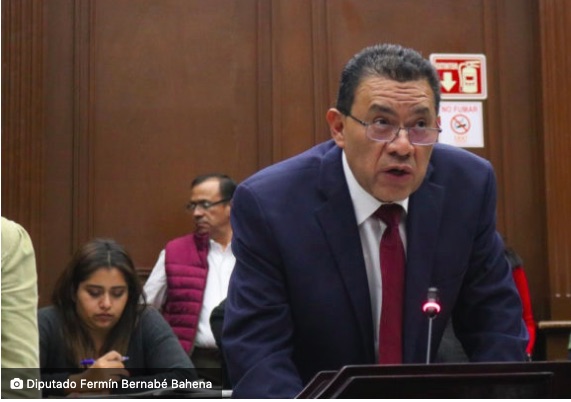
More than 250 regional, district and educational center directors of the province of Valverde participated in the third day of training on the guidelines of ethics and public integrity, strategies of culture of peace in schools and the protection of rights of children and adolescents. It was organized by the Ministry of Education to empower the actors of the education system on these issues.

The idea of ​​these meetings arose at the initiative of the Minister of Education, Antonio Peña Mirabal, after carrying out an activity to prepare for the beginning of the school year that involved the General Directorate of Ethics and Government Integrity (DIGEIG) and the National Directorate of Children , Girls and Adolescents, and the idea is to develop them in all the regional education of the country.

The conferences, organized through the Vice Ministry of Technical and Pedagogical Affairs of MINERD, are held jointly with the aforementioned public institutions, as well as the General Directorate of Special Programs of the Presidency (DIGEPEP) and the National Council for Children and Adolescence (CONANI).

Minerva Pérez, general director of Orientation and Psychology of the MINERD, presented the culture of peace in the educational centers. She explained that for a long time the Ministry of Education has been working on different actions to guarantee standards of coexistence in the campuses, and that they should be known by all the actors involved in pre-university education.

“This is the third day of a schedule that we have designed to reach all the provinces of the country. The response we have received from the teachers who have participated in these meetings has been very satisfactory, because they have heard, but also, they have expressed the day-to-day concerns of their educational centers, ”said Pérez.

When presenting the National Strategy for the Culture of Peace in the Educational Centers, Pérez explained that it was designed by the MINERD, with the aim of fostering a harmonious coexistence in schools throughout the educational community and she urged the directors to implement it.

(Article continued in right column)

(Click here for the original article in Spanish.)

Questions for this article:

What is the relation between peace and education?

(Article continued from left column)

She added that the purpose of this activity is to empower principals with these strategies in order to guarantee the rights of students. They need to know Law 136 on the Protection of Children and Adolescents, and the measures that must be taken to guarantee those rights.

Shee argued that every manager, principal or teacher has to know what the risks are that a student runs when the appropriate measures are not taken to guarantee his rights.

Shee stressed that knowledge of the peace culture protocol is important for principals and teachers, since this document also emanates the rules of coexistence and the three rules of action: one for cases of school violence, another for cases of bullyng and the latter for cases of sexual abuse. These actions may occur in any school, so they must be prepared to know how to address each situation when it occurs.

“From the MINERD and the Direction of Orientation and Psychology I want you to know that you are not alone, that you have our support so that you in the educational centers can have a harmonious coexistence. The fact that the Procuraduría, CONANI, DIGEIG and the Ethics Department have accompanied us continues to give us a message that we are not alone in the different educational centers, ”said Pérez.

The general director of Ethics and Government Integrity, Lidio Cadet, said that ethics implies consideration for society, respecting and loving the person, and that the teacher must have love for the country itself and for the family.

Cadet explained that rectitude is a key value for the educator and the student, and that it was a challenge made by Minister Peña Mirabal, to carry out these workshops throughout the country with a view to the formation of public ethics commissions in the educational centers.

“He is determined (the minister) that management must be characterized by ethics, by the values ​​of transparency, and that this implies working to have a quality education. Students should be taught to be able to integrate into society as a transporter of new avenues of justice and peace,” said Cadet.

On the day of the Regional 09 of Valverde, MAO, Estefany Pérez, representative of the DIGEPEP, spoke on the issue of the restoration of fundamental rights, social inclusion and educational system; while the person in charge of the regional technical office of CONANI, Johanna Estévez, spoke about the implementation of the National Campaign for the Promotion of Positive Parenting.

The regional director, Henry Rodríguez, spoke the words of welcome and motivation of the workshop, while Ana Paredes, prosecutor for MAO also participated in the activity.

The third meeting was held at the Sacred Heart of Jesus School, belonging to the 09-01 Educational District, MAO, where 266 directors of the districts of Esperanza, Laguna Salada, Sabaneta, Monción and Villa los Almácigos took part. This Wednesday 30 the day takes place in Monte Plata and in the next few days there will be training in Barahona and Santo Domingo.

Gambia: Banjul Regional Forum 2019: Engaging Young African Leaders to Achieve the 2030 and 2063 Agendas

FREE FLOW OF INFORMATION

An article by Debbo Mballo in Vivafrik (translation by CPNN)

The third Regional Forum of the 2017 Banjul Forum action plan took place from 28 to 30 October 2019. It was supported by UNESCO and its partners in order to better appreciate the level of the involvement of young women and men in national processes of democratization, governance, national reconciliation and the construction of a social environment conducive to the culture of peace. It facilitated exchanges to find ways and means, modalities of action, and forms of expression the most appropriate for a better commitment.

The 2019 forum focused on the roles and place of young people in governance, democracy and human rights, as well as new forms of innovative expressions and demands by young people in these processes. It was a platform to catalyze and accelerate the implementation of the African Union’s roadmap for investing in youth, with a focus on youth civic participation and youth engagement. as co-creators of sustainable solutions for Africa.

These periodic meetings consolidate a tradition of reflection, discussion and action on the place of young Gambians and West Africans in the societal space, and to better understand their roles in the processes of transformation and democratization of society. .

(continued in right column)

(Click here for the original French version of this article.)

Question(s) related to this article:

Youth initiatives for a culture of peace, How can we ensure they get the attention and funding they deserve?

(continued from left column)

The overall goal of this initiative is to strengthen the capacity of young people to exercise transformational leadership at the community, national and continental levels in the democratization process of society.

This conference planned to achieve the following specific objectives:

1. Provide a platform for sharing experiences of lessons learned and reflections on the role of youth in democratic and peaceful transitions in Africa: (Allow young Gambians to learn from other countries’ experiences and enable African youth to benefit from the experience of young Gambians);

2. To secure a space for dialogue and action among the various sections of the youth (young academics, young activists, young humanists, young social entrepreneurs, etc.) on their own concerns and perspectives as well as those of their country, their region, the continent and the global world;

3. Secure a space of intergenerational dialogue where young people can exchange with “old young leaders” around important and / or topical issues such as the issues of governance, democracy, peace, violence and so on. as well as issues related to equality and equity (including gender), the enhancement of natural and cultural heritage, social inclusion, human rights etc. ;

4. Secure a space for dialogue and action between youth and authorities on the concerns and perspectives of countries, the region, the continent and the global world with a focus for each forum on particular themes.

5. Present, enrich and validate the results of the “MOST Policy Oriented Research” entitled: “Youth and spaces of freedom in Africa: emerging forms of expression for democratization and achievement of the SDGs”, conducted at the request of young people during the 2017 Banjul Forum.

Gorbachev: Nuclear Weapons Putting World In ‘Colossal Danger’

DISARMAMENT & SECURITY .

An article from Radio Free Europe 

Former Soviet leader Mikhail Gorbachev has warned that the current standoff between Russia and the West is putting the world in “colossal danger” due to the threat from nuclear weapons.


Mikhail Gorbachev speaks during the presentation of his book at a bookstore in Moscow in October 2017.

(Continued in right column)

Question related to this article:

Can we abolish all nuclear weapons?

(Continued from left column)

In an interview with the BBC  published on November 4, Gorbachev called for all countries to declare that nuclear weapons “must be destroyed” in order to “save ourselves and our planet.”

“As far as weapons of mass destruction exist, primarily nuclear weapons, the danger is colossal,” he said.

The 88 year-old Gorbachev sat down slowly at the start of the interview and spoke deliberately at times in the handful of brief clips that were interspersed with other material in the BBC’s video report.

The interview comes three decades after the fall of the Berlin Wall, amid hints of a return of the Cold War.

Asked to describe the current tensions between Moscow and the West, Gorbachev said, “Chilly, but still a war.”Fears of a renewed nuclear arms race have heightened since both the United States and Russian this year withdrew from the Intermediate-Range Nuclear Forces (INF) Treaty that was signed by Gorbachev and U.S. President Ronald Reagan in 1987.

Based on reporting by the BBC

Copyright (c) 2019. RFE/RL, Inc. Reprinted with the permission of Radio Free Europe/Radio Liberty, 1201 Connecticut Ave NW, Ste 400, Washington DC 20036.

A Worldwide Revolution Is Underway

…. SUSTAINABLE DEVELOPMENT ….

An article from Democracy Now (The original content is licensed under a Creative Commons Attribution-Noncommercial-No Derivative Works 3.0 United States License.)

Puerto Rico. Hong Kong. Ecuador. Haiti. Lebanon. Iraq. And now, Chile. People are rising up around the world against austerity and corruption, defying police forces unleashed to suppress them. Many of these mass movements share a fierce critique of capitalism. In Santiago, Chile, more than 1 million people flooded the streets last weekend, and mass protests continue. There, the brutal Pinochet dictatorship from 1973-1990, during which thousands of progressive activists and leaders were tortured, disappeared and murdered, was followed by decades of neoliberal policies, with rampant privatization, union busting, stagnant wages and increased costs for education, health care, transportation and other services. Chile, among the richest countries in South America, is also one of the most unequal. At least 20 people have been killed during recent protests there, further angering and emboldening the crowds. 

These global protests also occur at a critical inflection point in history, with as few as 10 years remaining for humanity to transition from a fossil fuel economy to one powered by renewable energy. On Wednesday, Chile’s embattled, billionaire president, Sebastian Pinera, abruptly announced that his country was cancelling plans to host two major international summits, the Asia-Pacific Economic Cooperation meeting in mid-November, and the United Nations climate summit, the 25th “Conference of the Parties,” or COP25, in the first two weeks of December.

Carolina Schmidt, Chile’s COP25 president-designate, said, “The citizens have expressed in a strong way their legitimate social demands that require the full attention and all efforts from the government.”

Chile’s cancellation of the COP could be a setback for global action on climate. But climate activists should take heart: This renewed spirit of rebellion around the world signifies a rejection of the status quo, and could portend accelerated, grassroots mobilization to avert irreversible, catastrophic climate change.

(Article continued in the right column)

Questions related to this article:

Despite the vested interests of companies and governments, Can we make progress toward sustainable development?

How effective are mass protest marches?

(Article continued from the left column)

“Social injustice and the climate crisis have a common root cause,” the Climate Action Network said in a release not long after Chile’s COP cancellation. “Climate justice and solidarity is fundamentally about the protection of human rights and a better quality of life for all.”

The climate crisis touches everyone, first and most forcefully the world’s poor. The mass uprising in Puerto Rico that forced the resignation of Gov. Ricardo Rossello was the culmination of decades of frustration with Puerto Rico’s colonial status and the more current exploitation by Wall Street vulture funds. But the discontent was fueled by the utter devastation of the back-to-back hurricanes Irma and Maria two years ago. “The austerity policies that have been implemented have put the people of Puerto Rico in a position of vulnerability. Social inequality has increased to levels that we have never seen here,” Manuel Natal, a member of Puerto Rico’s House of Representatives, said on the “Democracy Now!” news hour days before Rossello’s resignation. “We need more democracy, not less democracy. We are on the brink of a political revolution here.” Rossello’s ouster was the first time in U.S. history that a governor was forced from office by popular protest.

Indigenous people are also leading the way, often at the front lines, confronting resource extraction with disciplined, nonviolent resistance. Hundreds of indigenous and campesino social leaders in Colombia have been murdered in recent years, simply for standing up for justice and environmental protections.

The Paris climate agreement specifically notes the importance of climate justice, and pledges to work “in the context of sustainable development and efforts to eradicate poverty.” One of the enduring conflicts that has hampered international climate negotiations has been the refusal by wealthy nations, principally the United States, to accept the simple premise that “polluters pay.” The United States is the wealthiest nation in human history because, in part, it has polluted its way to the top, using cheap, dirty power: coal-fired power plants, diesel locomotives and now, so-called clean-burning fracked gas.

The Green Climate Fund was supposed to raise billions of dollars to finance renewable projects in poorer countries. The fund’s pledging conference last week fell short of its goal, primarily because the Trump administration reneged on the U.S.’s $2 billion commitment. Australia and Russia followed suit, refusing to make contributions.

A new study by Climate Central, a news and science organization, shows that climate-induced coastal flooding will likely be far worse than previously predicted, forcing between 200-600 million people, rich and poor, to flee their homes later in the century. Climate change-fueled wildfires are now raging across California, with hundreds of thousands of people evacuated from their homes and at least 1 million people without power.

Popular uprisings are also spreading like wildfire, though, against corrupt autocratic leaders, austerity and inequality. People are also flooding the streets, globally, linking the movements against inequality with the fight for a just, sustainable world powered by renewable energy.

Ukraine: window opens for peace in the Donbas after Volodymyr Zelenskiy agrees to election plan

DISARMAMENT & SECURITY .

An article from The Conversation (reprinted according to Creative Commons License)

As the war in eastern Ukraine drags into its sixth year, all the attempts to end it have so far failed. But in a significant development on October 1, Ukraine’s president, Volodymyr Zelenskiy, announced his provisional agreement to hold local elections in the currently occupied territories of Donetsk and Luhansk, collectively known as Donbas.

The war in the Donbas began when mass protests in support of greater territorial autonomy escalated into a separatist crisis in the spring of 2014. Russia has been supporting the rebels in the Donbas since the inception of the war, which by now has claimed more than 13,000 lives. In an attempt to end the conflict, Ukraine and Russia signed two agreements in Minsk  in 2014 and 2015 aimed at establishing a ceasefire and lasting peace in eastern Ukraine. To date, the Minsk agreements have not been able to stop the fighting.

In 2016, the deadlock prompted former German foreign minister Frank-Walter Steinmeier to propose a new approach, which became known as the “Steinmeier formula”. The essence of the formula  is simple. The local elections would be held in the occupied territories under Ukrainian legislation and the supervision of the Organisation for Security and Co-operation (OSCE) – but not before all armed groups leave the area and Ukraine regains control of the territory.

If the OSCE deems these elections free and fair, then the separatist controlled territories would be given a special status. The exact nature of what the special status would look like, should it come to that, has not yet been revealed by Zelenksiy’s administration.

The formula lays the groundwork for renewed talks of the so-called “Normandy Four”: Russia, Ukraine, Germany and France. But before then, Zelenskiy said the wording  of the Steinmeier formula is still being agreed on with the OSCE.

The Russian dimension

Zelenskiy’s announcement that he was considering moving forward with the Steinmeier formula immediately attracted strong opposition from some groups in Ukraine. The most vocal of these have been the far-right and nationalist groups that gathered  outside the presidential administration building in Kyiv. Their main grievance is a belief that the formula means capitulation  to Russia, because Russia has been backing the Donbas separatists since the war started.

(continued in right column)

Question for this article:

Can peace be achieved in the Ukraine?

(continued from left column)

The Kremlin’s and international community’s reaction to the Steinmeier formula has largely been positive. Although critics lament the fact that the deal benefits Russia, the former US ambassador to Ukraine Steven Pifer disagreed. Pifer emphasised that more details about the agreement are needed, but that the unconditional demand that Russian and Russian proxy forces have to leave occupied Donbas is in Ukraine’s favour.

In Ukraine, Yulia Tymyshenko, a former prime minister and leader of the Batkivshchyna Party, also vehemently opposed the proposed plan. Writing on her Facebook page, Tymoshenko called  the formula, “unacceptable” and “a direct threat to our country’s national security, territorial integrity and sovereignty”.

This puts Zelenskiy in an awkward position to say the least. One of the most notable pillars of his presidential campaign was a commitment to bring the war in the Donbas to a swift end. Yet, the president is also expected to end the conflict on Ukraine’s terms without any perception that he is giving in to Russia. The immediate protests by some of the far-right and anti-Kremlin groups, such as Azov, who have been known to engage in acts of violence, are therefore a cause for concern. The most immediate of these concerns is the potential for protest violence should Zelenskiy move forward with the plan and allow for the elections to take place.

At the same time, all other approaches to end the growing number of casualties in the Donbas have failed. For the immediate sake of those living there, the conflict simply cannot keep dragging on and requires a new approach. Although the Steinmeier formula is controversial, it could potentially be a viable solution towards resolving the conflict.

Zelensky’s new challenge

Within months of taking office, Zelenskiy’s administration has taken on a number of ambitious reforms aimed at cleaning up corruption in Ukraine’s institutions. Recently, the president has also been caught up in the ongoing impeachment inquiry of US president Donald Trump – though he has tried to distance himself from the case.

It now seems that Zelenskiy’s efforts are being channelled into addressing the ongoing crisis in the Donbas. Some encouraging steps towards that end have already been taken. For example, Russia and Ukraine exchanged prisoners of war in September, in a move praised  by the international community.

If the Steinmeier formula is successful, there will be a potential window of opportunity for a withdrawal of Russian troops from the Donbas. More information and discussion with the public about the proposed plan would be wise, however, as initial polls suggest around 60%  of the population haven’t yet formed an opinion about the plan.

It’s quite possible that the proposed plan might not achieve the sought-after peace. The elections run the risk of consolidating the position of the current leaders of the occupied territories.

There is a lack of an alternative to the status quo and no guarantees that the occupied territories have any real chance of being reintegrated back into Ukraine. The proposed plan is no doubt a gamble, but offers some hope that an end to violence in the east could be on the horizon if all sides hold up their end of the agreement.

English bulletin November 1, 2019

. . PRIZES FOR PEACE . .

This year, the Nobel Prize for Peace was awarded to Ethiopian Prime Minister Abiy Ahmed Ali. Readers of CPNN may be already familiar with his contribution to ending the conflict between Ethiopia and Eritrea, a conflict that had been going on for decades despite a peace deal that was signed some 18 years ago. In announcing the award the Norwegian Nobel Committee stated that they hope that the Prize “will strengthen Prime Minister Abiy in his important work for peace and reconciliation.”

October was not only the month for the Nobel Prize for Peace, but also for many other peace and culture of peace prizes.

Desmond Tutu Announced the Winners of the International Children’s Peace Prize for 2019: Greta Thunberg from Sweden and Divina Maloum from Cameroun: “I am in awe of you. Your powerful message is amplified by your youthful energy and unshakable belief that children can, no must, improve their own futures. You are true change-makers who have demonstrated most powerfully that children can move the world.”

This year’s Seán MacBride Peace Prize, given by the International Peace Bureau, was awarded to Bruce Kent, who was one of the founders and main organizers of the European Nuclear Disarmament Campaign in the 1980s and who has continued to provide leadersip for disarmament even now in his 90th year.

The Peace Prize of the US Peace Memorial Foundation was awarded this year to Ajamu Baraka. In addition to being the national organizer and spokesperson for Black Alliance for Peace, Baraka is also an administrative committee member for the United National Antiwar Coalition and an executive board member of the U.S. Peace Council. He was the Green Party’s nominee for Vice President of the United States in 2016.

The Alfred Fried Photography Awards for world-best pictures on the theme of peace went this year, among others, to photographers of climate protests in Europe, reconciliation in South Africa and animal sanctuaries in Asia.

The 2019 Goi Peace Award was presented this year to Nipun Mehta and ServiceSpace, an incubator of projects that works at the intersection of volunteerism, technology and gift-economy. What started as an experiment with four friends in the Silicon Valley has now grown to a global ecosystem of over 600,000 members from 171 countries that has delivered millions of dollars in service for free.

The 2019 Tomorrow’s Peacebuilders Awards went to Youth for Homeland in Yemen, Open Art Space in Syria (women-led peacebuilding) and the Amani Institute in DR Congo (music and the performing arts for community reintegration).

In Australia, the Sydney Peace Prize honored leaders of the Me Too Movement, and the Jerusalem (Al Quds) Peace Prize honored Antony Loewenstein, journalist, author, and film-maker, co-founder of the Independent Australian Jewish Voices and supporter of the Boycott, Divestment and Sanctions movement.

Moroccan researcher Karima El Azhary was awarded the International Sustainable Development Award for her work developing new sustainable construction and insulation materials, based on alimentary and agricultural waste. The aim of her work is improving thermal insulation and energy efficiency of buildings, mainly in underprivileged areas. Sustainable development is one of the key action areas of the culture of peace.

In the Philippines, the Teach Peace Build Peace Movement was recognized by the 2019 TOWNS awards. Its mission is to Make Every Filipino Child and Youth a Peace Hero.

Speaking of peace heroes, peace prizes can have an important positive effect, especially on young people. For example, Greta Thunberg, winner of this year’s International Children’s Peace Prize, was inspired by the 2018 winners of that prize the March for Our Lives in the United States.


FREE FLOW OF INFORMATION


Desmond Tutu Announces the Winners of the International Children’s Peace Prize 2019

DISARMAMENT & SECURITY


Sign the petition: Down with war, let’s build peace!

HUMAN RIGHTS


PAYNCoP Gabon Partners with the National Youth Council to Stop Violence against Youth

DEMOCRATIC PARTICIPATION


Mexico: Inauguration of the II Global Forum of Culture of Peace, in CUCEA

EDUCATION FOR PEACE


Extinction Rebellion, not political? “We occupied the center of Paris for five days! “

SUSTAINABLE DEVELOPMENT


Moroccan Researcher Karima El Azhary Wins International Sustainable Development Award

TOLERANCE & SOLIDAIRTY


Kashmiri students run out of essentials, money; Khalsa Aid, J&K Students Assn extend help

WOMEN’S EQUALITY


Honouring the Me Too Movement with the 2019 Sydney Peace Prize

PAYNCoP Gabon Partners with the National Youth Council to Stop Violence against Youth

. HUMAN RIGHTS .

To CPNN from Jerry Bibang, PAYNCoP National Coordinator (translation by CPNN)

In the face of renewed violence against young people in Gabon, the National Coordination of the Panafrican Youth Network for the Culture of Peace (PAYNCoP Gabon) and the National Youth Council of Gabon (CNJG) joined forces on Saturday, October 26, to firmly condemn this phenomenon which harms Gabonese youth. Their press conference had the support of several youth organizations in Gabon.

(Article continued in right column)

(Click here for the original in French.)

Questions related to this article:

Rights of the child, How can they be promoted and protected?

(Article continued from left column)

In the statement, read by Fernandez Ona, President of the CNJG, the young leaders recalled the international legal provisions relating to the protection of the child in particular Article 16 of the African Charter of the Rights and Welfare of the Child that states: “The States Parties to this Charter shall take specific legislative, administrative, social and educational measures to protect the child against all forms of torture, inhuman and degrading treatment, and in particular any form of or physical or mental abuse, neglect or abuse, including sexual abuse, when entrusted to the care of a parent, legal guardian, school authority or any other person having custody of the child.”

Also, the 2040 Agenda of the African Union on the Rights and Welfare of the African Child, in its aspiration 7, urges the States Parties to provide protection against all forms of violence against children. In the same vein, the Constitution of the Republic, in its Preamble, reaffirms the need to ensure and protect the physical and moral integrity of youth.

“In spite of these normative devices, it is sad to note the recurrence of cases of violence against young people on the national territory,” said Jerry Bibang, PAYNCoP National Coordinator. “The violence is multiple and varied, including physical, sexual, economic, verbal and psychological violence,” he added, respectfully urging the Government to take concrete measures to eradicate this phenomenon.

Eighth Fair of Nonviolent Initiatives was held in Quito, Ecuador

.. DEMOCRATIC PARTICIPATION ..

An article from Pressenza (translation by CPNN)

The 8th annual Fair of Nonviolent Initiatives In the framework of Nonviolent October, was held this morning and afternoon in Cumandá Parque Urbano, in the city of Quito,.

Hundreds of people visited stands and participated in recreational and visual activities, with pets and brain teasers, among others. This fair has become a reference of activities and initiatives for nonviolence, non-discrimination and inclusion.

Questions for this article:

Can festivals help create peace at the community level?

Nonviolent Octubre and the Fair of Nonviolent Initiatives seek to make visible the existing initiatives that promote nonviolence in the city and in the country, around. At the same time, they sensitize increasing numbers of the population about the importance of working in a nonviolent perspective.

It should be noted that in 2019, October for Peace and Nonviolence has the strong support of the Metropolitan District of Quito. The City Council approved Resolution No. C 067 – 2019 which declares October as the “Month of Nonviolence in the Metropolitan District of Quito” and resolves that the Metropolitan District of Quito “fosters a culture of peace in diversity, free from violence and discrimination”.

As an international antecedent the General Assembly of the United Nations, in Resolution 61/271, has declared October 2 as the International Day of Nonviolence.  With these two brief antecedents, the humanist organizations that converge in the Nonviolent Space have carried out every year, for a decade now, the October for Peace and Nonviolence..

(Click here for the Spanish original.)

Leaders of 72 municipalities attend Mayors for Peace assembly in Tokyo

.. DEMOCRATIC PARTICIPATION ..

An article from The Mainichi

A general assembly of Mayors for Peace’s domestic member cities was held here [in Tokyo] on Oct. 24, with leaders and senior officials of 72 municipalities across Japan in attendance.


Kunitachi Mayor Kazuo Nagami explains his city’s ideas on the definition of peace during a general assembly of Mayors for Peace’s domestic member cities, in Kunitachi, Tokyo, on Oct. 24, 2019. (Mainichi/Masamitsu Kurokawa)

(Continued in right column)

Questions for this article:

How can culture of peace be developed at the municipal level?

(Continued from left column)

Mayors for Peace is an international nongovernmental organization seeking a world without nuclear weapons through close collaboration among its member cities. The meeting, held in the Tokyo suburban city of Kunitachi, was the ninth of its kind and the first to be held in the capital.

In an opening speech, Hiroshima Mayor Kazumi Matsui, who serves as president of Mayors for Peace, pointed out that “home country-first” principles are casting a shadow over the world. “We would like to consider through this meeting how we can foster a ‘culture of peace’ and act on this cause as basic municipalities tasked with protecting the safety of citizens,” he said.

Kunitachi Mayor Kazuo Nagami stated, “We adopted a peace city declaration in 2000. We’d like to have in-depth discussions on the missions of mayors for peacebuilding.”

During the conference, the city of Kunitachi introduced its efforts to pass down the memories of the atomic bombings of Hiroshima and Nagasaki and the Tokyo Air Raids in the final days of World War II by training some 30 people from the postwar generation as storytellers.

According to the website of the Mayors for Peace’s secretariat and other sources, the NGO currently has 1,732 member municipalities in Japan, which account for more than 99% of all municipalities across the nation.

The meeting is set to adopt a statement on Oct. 25 calling for the Japanese government to boost efforts toward nuclear weapons abolition.

Sign the petition: Down with war, let’s build peace!

DISARMAMENT & SECURITY .

A petition on Change.org

Mouvement de la Paix has launched this petition addressed to politicians, elected officials and decision-makers. . .

We, women and men from all continents of the world want to develop a culture of peace on a global level, and know that for the future of humanity the only route is peace.

(continued in right column)

Question for this article:

What can be accomplished with petitions for peace?

(continued from left column)

We also know that it constantly requires the action of citizens, people, and states, to maintain a state of peace.

That is why, faced with the dangers for peace that consist of: a globalization that puts the burden on the people of excessive military expenditure, nuclear weapons that threaten the survival of humanity, and climate disruption,

we call on all women and men, around the world, to mobilize for peace by getting all political leaders, elected officials, heads of state and heads of international institutions to create some form of multilateral disarmament measures (especially nuclear), to protect the planet and develop human rights and education for the culture of peace in accordance with the Charter of the United Nations.

100 years after the armistice of November 11, 1918, down with war, let’s build peace!

This article is available in French and in Spanish.

The text is available in different languages: French, German, Spanish, Welsh, Italian, Esperanto, Arabic, Russian, Japanese, through the following link: www.mvtpaix.org

Click here for a list of personalities from around the world who appeal for signatures.