Colombia: Creating a model of Territorial Peace in the Valle del Cauca, supported by the United Nations

FREE FLOW OF INFORMATION

An article from the website of the Government of the Cauca Valley (translated by CPNN)

The United Nations and the Government of the Valley, have made final adjustments to what will be the territorial peace model in the Department, which is a joint commitment of the Governor, Dilian Francisca Toro and this international body.

cauca

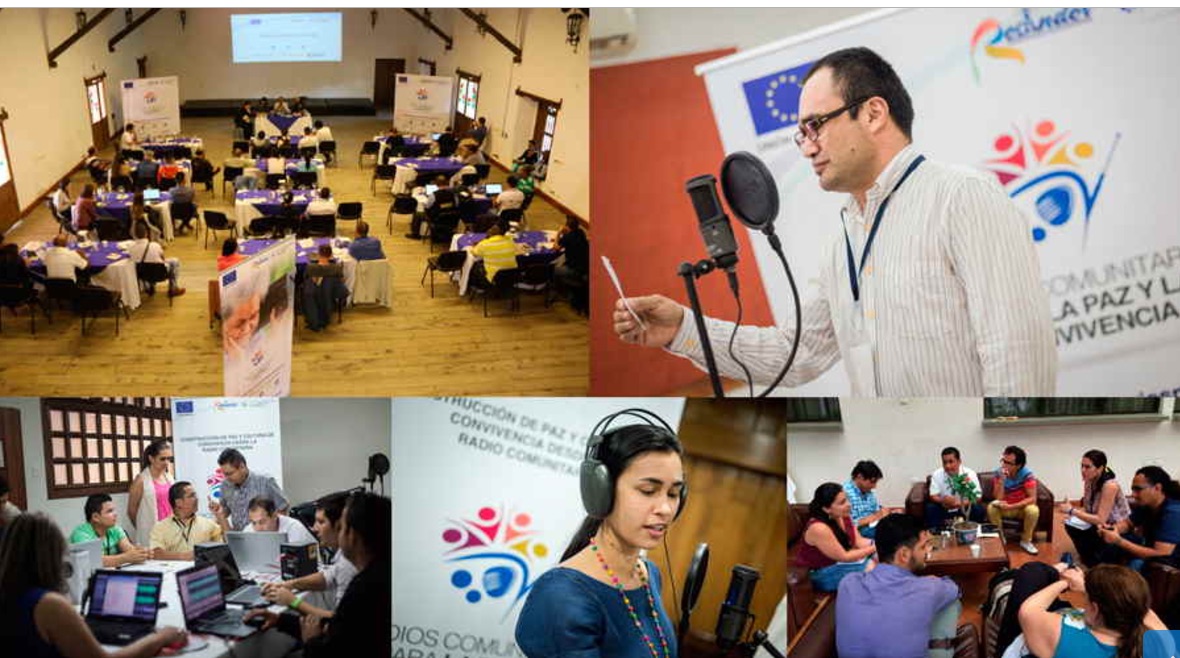
During a meeting between representatives of the United Nations Development Program and the work team of the Secretariat of Peace of the Valley, headed by Fabio Cardozo, defined the criteria to develop programs and actions to be implemented within the component of Territorial peace, to be executed through a $ 6 million agreement, provided by the Department and UNDP.

Irina Marún Meyer, coordinator of territorial projects of the United Nations, highlighted the institutional work that will be done in municipalities and productive projects with victims of the armed conflict. She explained that “we are going to consolidate the Municipal Peace Councils, the Municipal Councils of Transitional Justice and the bodies that must be strengthened to form the network of peacebuilding strategy at the municipal level. Also we are identifying and characterizing organizations of victims that have a potential to develop productive projects “.

On the other hand, Mauricio Cas, UNDP territorial peace adviser, emphasized the institutional commitment of the Governor, Dilian Francisca Toro, to elevate the former Ministry of Peace of the Valley to the Secretariat, within the new organic composition of the Department.

“It seems to me a very important gesture of the Governor and the Departmental Government that will allow the Department to assume the commitment of the state in the face of the problem of victims and other types of problems arising from the situation of armed conflict,” said Cas.

On this issue, Secretary of Peace Fabio Cardozo said that “this strengthens our dialogue with communities, with institutions and with mayors.”

Considering the Territorial Peace initiative, he said that “it is one of the pillars of the Development Plan and has a strategy for investment, social, cultural processes, infrastructure and work articulated with the mayors.”

The Development Plan is the mandate that the Vallecaucans gave to the Governor, Dilian Francisca Toro, where attention to the victims is a priority. ” The United Nations Development Program and works for peace in 177 countries and territories and one of them will be the Valle del Cauca.

(Click here for a Spanish version of this article

Question related to this article:

Antioquia, Colombia: Young people united by a Territorial Peace!

FREE FLOW OF INFORMATION

An article from the Fundación Mi Sangre (translated by CPNN)

We welcome our new project “Young Builders of a Territorial Peace” supported by the Ford Foundation and executed by the Prodepaz Corporation, which will last for 3 years. Twenty municipalities of Antioquia will be part of this initiative which will empower young people as agents of change to actively contribute to the construction of a Territorial Peace.

antioquia

The municipalities that are part of the project are: In Zona Bosques; Cocorná, San Francisco, San Luis and Puerto Triunfo; In Zona Paramo; Sonsón, Algeria and Nariño; in Zona Porce Nus; Maceo, Caracolí, San Roque and Santo Domingo; and in the Zona Altiplano; Rionegro, La Unión, La Ceja, El Retiro, Carmen de Viboral, El Peñol, Concepción and San Vicente.

The purpose is to train 848 young people, 90 significant adults and 240 boys and girls. Participants will strengthen their leadership skills, through our PAZalobien Change Leadership methodology, and likewise receive knowledge for working in organizations. Young people will not only be trained to be leaders, but also trainers, since the idea is for them to replicate what they have learned in the methodology with the children of their municipalities. They will also learn about issues of digital communication and citizen journalism that will allow them to recognize problems in their territories and influence through alternative communication tools and the Network of Young Peace Builders.

At present, there have been closer ties with social organizations, youth secretaries, educational institutions, and public and private entities. 15 youth groups are already working on the methodology and are carrying out diagnoses of their territories.

(Click here for a Spanish version of this article

Question related to this article:

Mexico: Sixteenth National Congress of Mediation inaugurated in Tlalnepantla

EDUCATION FOR PEACE .

An article from Cadena Política (translated by CPNN)

Tlalnepantla, Mexico.- At the inauguration of the XVI National Congress of Mediation, Mayor Denisse Ugalde Alegría reiterated the commitment that her 2016-2018 administration has to consolidate Tlalnepantla as a municipality with a culture of peace and in this way prevent violence and crime .

mediation

Addressing the national and international speakers who gathered at the Centennial Theater, the mayor affirmed that it is essential that local governments make mediation and conciliation a public policy in order to confront the speeches of hatred, conflict, intolerance and aggressiveness that day by day gain ground on a global level.

“It is in the municipalities where the real transformations that the country requires are achieved, which is why from the beginning of this administration we have worked to promote mediation as an alternative way of solving conflicts, aiming at achieving our objective,” she said. She thanked Jorge Pesqueira Leal, president of the Institute of Mediation of Mexico, for allowing Tlalnepantla to host this congress in which for four days specialists in the subject exchange experiences that contribute to a culture of peace.

Denisse Ugalde recalled that this municipality arose originally from the conciliation of two cultures, and that continue to work daily work on this matter. Proof of this is that so far this year more than 1,300 people have been trained in courses to have the basic tools to be conciliators and to resolve conflicts peacefully in their communities.

(Article continued in right column)

(click here for the Spanish version)

Question for this article:

Mediation as a tool for nonviolence and culture of peace

(Article continued from left column)

For his part, Jorge Pesqueira acknowledged the efforts that the local government has made to establish the Municipal Public Mediation and Conciliation Center and thus to promote restorative justice among citizens.

He pointed out that this congress will be a space for the transmission of knowledge, reflection and, mainly, generation of ideas, which will contribute to boost the work that the municipal government carries out in this matter.

Carlos Preza Millán, State Undersecretary of Government, said that for the State of Mexico it is an honor that Tlalnepantla is the seat of this XVI National Congress, since this locality was a pioneer in creating the Municipal Mediation Center, in which alternative dispute resolution methods are applied. He stressed that Governor Eruviel Avila Villegas has a great interest in this matter, always thinking about the welfare of Mexicans and strengthening the rule of law.

Partipants in the inauguration included Sergio Javier Medina Peñaloza, president of the Judicial Power of the State of Mexico; Jorge Alberto Zorrilla, head of the Federal Board of Conciliation and Arbitration; as well as Jorge Armando Chávez Enríquez, head of Municipal Justice and executive coordinator of the Congress. The authorities awarded the Medal of Peace and Concord to Martha Camargo, a judge of the Judiciary.

During the first day of work, Mayor Denisse Ugalde, Jorge Pesqueira and Lina Paola Rondón, adviser to the Presidential Adviser for Human Rights of Colombia, participated as speakers at the conference “Community mediation: Citizen Empowerment in Social Pacification and Prevention”.

Bernard LaFayette Jr. Wins Gandhi Award

EDUCATION FOR PEACE .

An article from The Skanner written by University Press of Kentucky

University Press of Kentucky author Bernard LaFayette Jr., whose memoir In Peace and Freedom: My Journey in Selma was released in paperback earlier this year, has been awarded the 2016 Mahatma Gandhi International Award for Reconciliation and Peace. He is also co-editor of The Chicago Freedom Movement: Martin Luther King Jr. and Civil Rights Activism in the North.

lafayette
Bernard LaFayette Jr. stands with Martin Luther King Jr.

The award is presented by the Gandhi Development Trust: Promoting a culture of peace and non-violence . The GDT was founded in 2002 by Ela Gandhi, the social activist granddaughter of Mahatma Gandhi. The Gandhi Development Trust’s mission is to promote a culture of peace, justice, non-violence, and ubuntu (human kindness); promoting Gandhian values of ahisma (non-violence), self-sufficiency, love, sarvodaya (good of all), compassion, and universality in order to reach their core vision of a peaceful, just, and non-violent world.

The Mahatma Gandhi International Award for Reconciliation and Peace was established in 2003 to honor people who have surmounted religious and ethnic obstacles to promote democracy, peace, and justice through non-violent measures. GDT believes that the award should not merely be seen as an annual event, but rather a catalyst for initiating non-violence, ubuntu, and nation building under the influence of non-violent leaders.

LaFayette was chosen as this year’s winner in recognition of his outstanding work towards the promotion of peace, reconciliation, and justice both locally and internationally in his capacity as a civil rights activist.

(Article continued in right column)

Questions for this article:

Can peace be guaranteed through nonviolent means?

(Article continued from left column)

LaFayette’s memoir, In Peace and Freedom, recounts that career as an activist. He was a cofounder of the Student Nonviolent Coordinating Committee (SNCC), a leader in the Nashville lunch counter sit-ins, a Freedom Rider, an associate of Dr. Martin Luther King Jr. in the Southern Christian Leadership Conference (SCLC), and the national coordinator of the Poor People’s Campaign.

At the age of twenty-two, he assumed the directorship of the Alabama Voter Registration Project in Selma—a city that had previously been removed from the organization’s list due to the dangers of operating there.

LaFayette was one of the primary organizers of the 1965 Selma voting rights movement and the Selma-to-Montgomery marches, and his memoir, written with Kathryn Lee Johnson, shares the inspiring story of his struggles there.

When he arrived in 1963, Selma was a small, quiet, rural town. By 1965, it had made its mark in history and was nationally recognized as a battleground in the fight for racial equality and the site of one of the most important victories for social change in our nation.

The award was presented on November 7, 2016, in Durban, South Africa.

(Editor’s note: See also the recent CPNN article, Tucson students learn ‘non-violence’ way of life amidst anti-Trump protests and its reference to the National Kingian Nonviolence Network, which was founded by Bernard Lafayette.

Niger: Niamey opens a forum on the culture of peace through religious dialogue in the subregion

TOLERANCE & SOLIDARITY .

An article in Mali Actu (Source: Xinhua News Agency) (translation by CPNN)

Education for the culture of peace through intra and inter-religious dialogue is at the center of a forum of the Economic Community of West African States (ECOWAS) since Tuesday in the Nigerien capital, Niamey, under the presidency of the Head of State of Niger Mahamadou Issoufou. This important meeting, which is in its first edition will last two days, welcomes the delegations of the 15 member countries of ECOWAS as well as important religious figures.

niger
Niger President Mahamadou Issoufou, Archive photo / REUTERS / Brian Snyder

According to President Mahamadou Issoufou, in his opening remarks, this forum comes at a time when the Sahelo-Saharan zone, notably the Lake Chad basin, faces terrorist threats. “In this region, people kill, rape and plunder in the name of Islam. Elsewhere, we are witnessing the exploitation of other religions for political, economic and social purposes, “he said.

In his opinion, it is therefore normal to promote education for the culture of peace through intra-and inter-religious dialogue in the ECOWAS region.

According to Nigeria’s Minister of Culture, Assoumana Malam Issa, the forum aims to guarantee the economic development and social integration of the fifteen member countries of ECOWAS, an area that today faces “political and social crises and tensions, both thnic and religious, that slow down the momentum in which this organization was launched.”

Several socio-cultural factors are at the root of the instability observed in the member states. They include “misunderstanding, interpreting and distorting precepts within religions, ignorance, injustice (real injustice or suspected), and mutual suspicion, as well as intolerance and extremism, the root causes of conflict.”

Thanks to the remarkable presence of the different religious confessions of the countries, it should be possible “to establish an interreligious dialogue, to bring about harmonious relations between the religions, to discuss the peaceful coexistence through the education of the faithful on the need to build a culture of peace, to inculcate in religious leaders a culture of interreligious dialogue of action in order to transform religious pluralism into a factor of social development “.

ECOWAS was established in 1975 to promote the socio-economic integration of States through the free movement of goods and persons. It comprises 15 member states namely Benin, Côte d’Ivoire, Niger, Nigeria, Guinea Bissau, Senegal, Mali, Liberia, Sierra Leone, Burkina Faso, Togo, Cape Verde , The Gambia, Guinea-Conakry, and Ghana.

(Click here for the original French version of this article)

Question related to this article:

Tucson students learn ‘non-violence’ way of life amidst anti-Trump protests

EDUCATION FOR PEACE .

An article by Monica Grimaldo for Tucson News

A rash of nationwide protests against president-elect Donald Trump have brought out thousands of demonstrators and now, Tucson students between the ages of 11 and 16 are learning how to better understand the ‘nonviolence way of life’ to apply when planning action to defend human rights. Students from several Tucson school districts are participating in a two-day introduction to the Kingian Nonviolence training program, which aims to “institutionalize and internationalize nonviolence.”

tucson
Clip from video on article website
Click on photo to enlarge

It’s being led by the Nonviolence Legacy Project, a youth leadership program affiliated with the Culture of Peace Alliance. “The workshop is particularly timely given that many people are taking to the streets and looking for ways to peacefully and powerfully indicate their concerns and fears about the upcoming administrative change,” said Ann Yellott with the Culture of Peace Alliance.

Participants are learning how to gain additional knowledge about how nonviolence was applied in several civil rights campaigns, including those seen in Montgomery, Nashville, Birmingham, and Selma.

“Helping our children be balanced and helping them to understand compassion for another, it’s not only a bullying issue, it’s a health issue,” said program manager Hassan Clement. “These kids are leaving a legacy for other kids.”

Sixteen-year-old Naomi Reyes, a student at Sunnyside High School, is one of the program’s participants and said she suffers from anger issues from time to time and hopes this program will help.

“There’s personal experience that involves violence and that’s another reason why I’m here,” said Reyes.

Caleb Bailey, 15, is a student at Cholla High School and says he wants to influence other students through this program. Though he wasn’t old enough to vote in this year’s election, it’s the lessons he’s learning that he hopes to keep forever.

“It can teach people how to get your word out without seeming like a thug or anti-Trump supporters or something,” he said. “It’s a way to articulate without seeming violent. Even though I’m young, I still think I can do something in the community. That’s what I really want to learn so when I get older, I know how to use nonviolence, and even now, so I can be a better person.”

For more information on the Culture of Peace Alliance’s Nonviolence Legacy Project, CLICK HERE.

Questions for this article:

The struggle for human rights, is it gathering force in the USA?


CPNN finds ample evidence that the fightback in the USA to defend peace and human rights is underway. It begins at the local level, as it must be if it is to be sustainable. And it is being led by young people and women, as it must be if it is to have the energy to succeed.

This question pertains to the following articles:

USA: Judge orders 5-year-old Liam Conejo Ramos and his dad released from ICE detention

United States: The Resistance Moves Left

Bernie Sanders: We Must Fight Like Hell Against Trump’s Authoritarianism

As Trump Escalates Attacks on Dissent, Oct. 18 ‘No Kings’ Protests Set to Be Even Bigger Than June

What would a general strike in the US actually look like?

‘We Are All DC’: Tens of Thousands March to White House

Nearly 1,000 ‘Workers Over Billionaires’ Protests Planned Across US for Labor Day

United States: Hundreds of Organizations to Join Forces this Fall to Confront Trump & Billionaire Allies Nationwide, Marking Historic Collaboration of Movements

United States: Indivisible, the team that organized the No Kings demonstrations

United States: No Kings, No War, on Pride Day

US National Coalition: The Detention Watch Network

‘This Is Not Trump’s Country’: 255,000 Have Rallied With Sanders and AOC on Nationwide Tour

US: Millions March Against Trump-Musk in Nationwide ‘Hands Off’ Protests

Rev. Al Sharpton: Jesse Jackson Helped Reshape Democratic Party & Paved Way for Kamala Harris

USA: Women Rally for Abortion Justice Amid ‘Unprecedented Attack’ on Reproductive Rights

58 Years After Historic Rally, Thousands March on Washington for Voting Rights, DC Statehood

USA: Exoneration of Scott Warren is a triumph for humanity

Ocasio-Cortez Delivers Powerful Call for Justice as Third Women’s March Kicks Off in New York

October 31, 2018: USA: Planned Parenthood Strikes Back: Preparing for the Worst in the Wake of Kavanaugh’s Confirmation

August 4, 2018: Teachers, activists denounce U.S. immigration policies, attempt to deliver books, toys to detained children

July 25, 2018: USA: A call to resist immigrant concentration camps

February 6, 2018: State Of The City: We’re The Resistance (New Haven, CT, USA)

January 20, 2018: Women’s March protests across America against President Trump

July 20, 2017: USA: Labor Unions Are Stepping Up To Fight Deportations

July 20, 2017: USA: People’s Congress of Resistance

June 26, 2017: U.S. Conference of Mayors Opposes Military-Heavy Trump Budget

June 15, 2017: USA: A Call to Mobilize the Nation through 2018

April 3, 2017: Sanctuary city leaders vow to remain firm, despite threats from U.S. attorney general

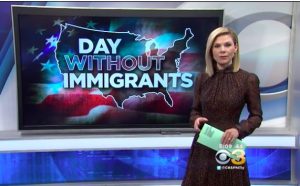
February 16, 2017: Restaurants Will Test If The U.S. Can Stomach ‘A Day Without Immigrants’

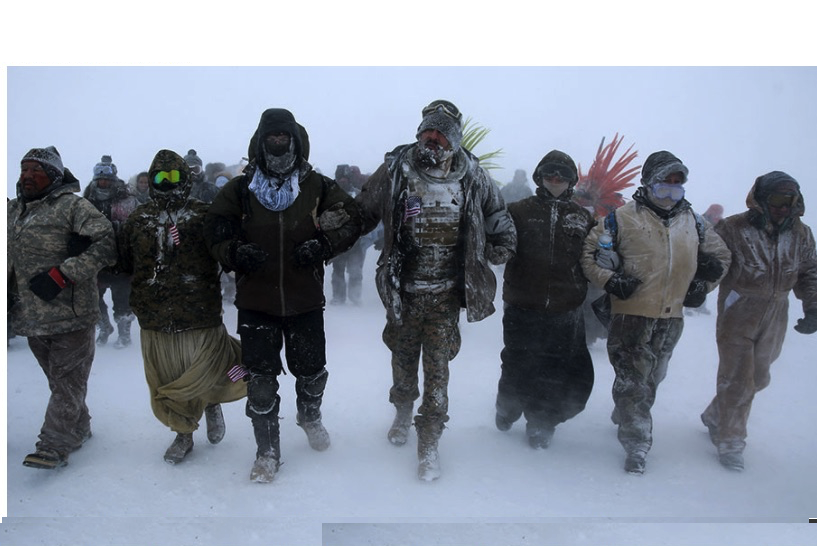
February 16, 2017: USA: Army veterans forming human shield to protect NoDAPL protesters at Standing Rock

February 3, 2017: A Call to Address Identity-based Violence through Teach-ins at American Universities [and around the World]

January 30, 2017: Donald Trump Declared War On ‘Sanctuary Cities.’ They’re Already Fighting Back

January 22, 2017: USA: Women’s marches fight back against inauguration of Trump

January 20, 2017: USA: Immigrants Prepped For Raids

December 9, 2016: USA: 13 Minnesota churches eye ‘underground railroad’ for those facing deportation

December 9, 2016: USA: Inside the Churches That Are Leading New York’s Sanctuary Movement

November 24, 2016: Tabling for peace in the USA: A new sense of urgency

November 24, 2016: Tucson students learn ‘non-violence’ way of life amidst anti-Trump protests

November 21, 2016: US Election: The fightback for human rights is already underway

November 21, 2016: USA: ’Sanctuary city’ mayors pledge to fight Trump’s threats to immigrants

November 20, 2016: USA: ‘Sanctuary campus’ protests demand universities protect immigrants

November 20, 2016: USA: To Counter Trump, Women Are Mobilizing for Massive March on Washington

US Election: The fightback for human rights is already underway

…. HUMAN RIGHTS ….

A CPNN review

Americans (and the rest of the world as well) are deeply concerned for human rights in the wake of the election of Trump and his initial selection of cabinet officers and advisors. As expressed by the American Civil Liberties Union: Trump’s proposals “to amass a deportation force to remove 11 million undocumented immigrants; ban the entry of Muslims into our country and aggressively surveil them; punish women for accessing abortion; reauthorize waterboarding and other forms of torture; and change our nation’s libel laws and restrict freedom of expression . . . are not simply un-American and wrong-headed, they are unlawful and unconstitutional. They violate the First, Fourth, Fifth, Eighth, and Fourteenth Amendments.”

fightback
An unofficial map shows locations of schools that students want designated as sanctuary campuses – from CNN

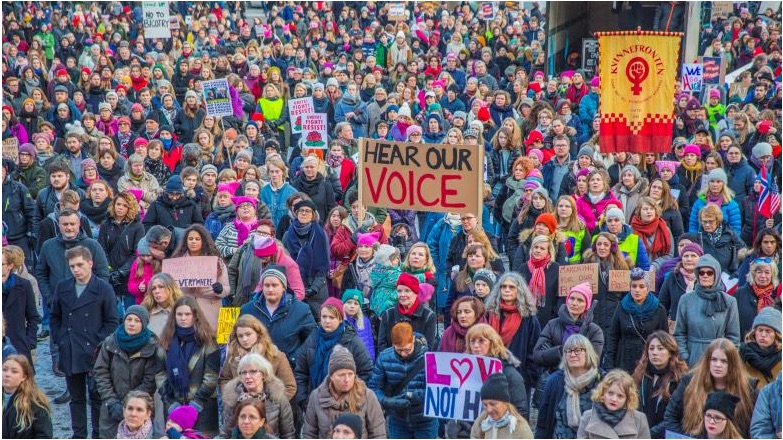
Already, there are plans for a massive march of women to take place in Washington on the day after the inauguration: “This march is the first step towards unifying our communities, grounded in new relationships, to create change from the grassroots level up. We will not rest until women have parity and equity at all levels of leadership in society. We work peacefully while recognizing there is no true peace without justice and equity for all.”

The human rights of undocumented immigrants are being defended by universities, cities and states. On Wednesday November 16, thousands of students staged walk-outs on over 80 campuses nationwide, signalling their commitment to maintain “sanctuary campuses” to protect immigrant students. At the same time, the mayors of the largest American cities pledged to maintain their policy of refusing to work with federal deportations These include Boston, Chicago, Los Angeles and New York.

Entire states are part of the sanctuary movement: these include California and New York.

The movement is led by students and youth, something we have not seen in the United States since the 60’s.

In fact, it seems like Americans are reaching far back into their history in the struggle for human rights. For some, the leadership by youth reminds us of the revolutionary 60’s. For an older generation, it reminds them of the 30’s with its struggles between fascism, on the one hand, and the greatest movement for trade union and progressive organization, on the other hand. And there is even talk of “underground railways” to protect the persecuted, which hearkens back to the abolitiionists of the 19th century.

In these days, there are many wise counsels. Here is one of them, from Shamil Idriss, President of Search for Common Ground:

    “Breakthroughs usually only come out of crises, and we are in crisis. So there is no better time for We, the People, to build a new order: one based on mutual respect and care for our fellow citizens, a commitment to social justice, and a defense of the liberties that give us the power to build that order in the first place.

    So here are three steps that anyone can take and three insights from more than thirty years of peacebuilding that may help you build up the courage to take them.

    1. Whatever it is you are pursuing, think about who loses if you win.

    This may be pretty clear right now if you are a Trump voter – it is Clinton voters. But for an environmental advocate pursuing legal action against a polluting company, it may be the employees who will be out of work if the company goes out of business; for an opponent of the Affordable Care Act, it may be the 20+ million Americans who may end up without health insurance; for a supporter (or opponent) of affirmative action, it may be the people who won’t land the job or get the educational scholarship they might otherwise have gotten.

(Article continued in the right column)

Questions related to this article:

The post-election fightback for human rights, is it gathering force in the USA?

(Article continued from the left column)

    2. Decide you care what happens to them.

    This does not mean you need be any less principled or passionate in your beliefs, only that you are willing to consider whether there might be a place on the other side of those debates where your adversaries – your fellow citizens – can also have their basic needs met and dignity respected.

    3. Reach out across that divide to start a real conversation.

    A real conversation begins when you start by listening and asking questions so as to understand, and not only to convince. And it is when you discover what lies behind others’ positions – their aspirations, interests, and fears – that you not only find common ground, but establish a relationship that can create more of it.

    Insights from years of practical peacebuilding that can help you take these steps.

    Hate and bigotry almost always grow out of fear. Understanding this can reduce your own apprehension when you consider reaching out to people whose aggressive views offend or disturb you.

    Caring for those you disagree with is not the same as compromising your principles. In truly divided societies, there is a critical threshold through which people must pass in order to open up to dialogue: it is the experience of being heard and respected by those who disagree with them. You can still disagree with someone’s position, but if you reflect true care for the hopes and aspirations that have led them to it, transformative change becomes possible – not only in their outlook, but also in yours.

    Emotional connections change everything; rational arguments don’t. The experience of being respected – or its opposite: being ignored or humiliated – has a much more powerful influence on people’s opinions and behavior than do rational arguments. Indeed, if you present the same fact to two individuals with opposite worldviews, they will interpret it in ways that reinforce what they each already believe. Showering your adversaries with debate points may feel gratifying, but it almost certainly won’t change minds–and will in fact make them more obstinate if it comes at the expense of making them feel heard.

    So, please consider taking the first step with that police officer or community activist; with the Muslim, Jew, Evangelical or atheist who you don’t know, or think you know but don’t understand; with that political adversary whose views you can’t stand. Take it knowing you are not compromising your principles, but merely elevating the well-being and dignity of your fellow citizen to be as important as the causes that motivate you.

    If we Americans do this, we will come up with solutions to our problems that are more creative, sustainable, and healthier for us all. And we will set the example for our political leaders to follow, rather than waiting for them to do it for us.”

Shamil’s remarks remind us of Gandhi’s statement that we must have no enemies, but rather, opponents whom we have yet to convince. And as Gandhi said (as quoted by Martin Luther King): Nonviolent resistance is not a method for cowards: it does resist . . . Gandhi often said that if cowardice is the only alternative to violence, it is better to fight . . . while the nonviolent resister is passive in the sense that he is not physically aggressive toward his opponent, his mind and emotions are always active , constantly seeking to persuade the opponent that he is wrong.”

We are receiving many other similar wise counsels, for example those of John Dear of Pace e Bene, or Tiffany Easthom of Nonviolent Peaceforce.

As John Dear says, “Please take some new action.”

USA: ‘Sanctuary city’ mayors pledge to fight Trump’s threats to immigrants

…. HUMAN RIGHTS ….

An article from RT.com

In the wake of Donald Trump’s election to president and his threat to crackdown on illegal immigrants, Mayors in Boston, Chicago, Los Angeles and New York have re-affirmed their pledge to continue their policies to fight deportation efforts by the federal government under the description ‘sanctuary cities.’

sanctuary-cities
The mayor of Chicago says”Chicago always will be a sanctuary city.”

In a “60 Minutes” interview, his first as president-elect, Trump confirmed his campaign pledges to immediately deport 2-3 million illegal immigrants with a criminal record. “What we’re going to do is get the people that are criminal and have criminal records, gang members, drug dealers, where a lot of these people, probably 2 million, it could be even 3 million, we are getting them out of our country,” Trump told CBS.

Those remarks and threats made during his campaign to end “sanctuary cities” prompted city officials up and down the country to reiterate their roles to provide sanctuary for immigrants.

Los Angeles Mayor Eric Garcetti told the Los Angeles Times he avoids the phrase “sanctuary city” and argues it is “ill defined.” “We cooperate all the time with federal immigration officials when there are criminals that are in our midst and need to be deported,” Garcetti told the LA Times. “With that said, we’re a very welcoming city, where are law enforcement officers and LAPD don’t go around asking people for their papers, not should they.”

Los Angeles Police Chief Charlie Beck said on Monday his department had no plans to get involved in any deportation efforts and would continue its police against allowing officers to stop people solely to learn their immigration status.

Mayors in Chicago, Boston and New York have also reaffirmed their stance on federal immigration deportation.

“You are safe in Chicago. You are secure in Chicago. You are supported in Chicago,” Chicago’s Mayor Rahm Emanuel said on Monday, according to WGN News. “Now administrations may change but values and principles as it relates to inclusion do not.”

“Chicago always will be a sanctuary city,” he added.

(Article continued in the right column)

Questions related to this article:

The post-election fightback for human rights, is it gathering force in the USA?

(Article continued from the left column)

A city typically gains ‘sanctuary’ status upon passing an ordinance prohibiting city officials and police from inquiring about a person’s immigration status. Los Angeles became the first such sanctuary city in 1979.

Boston’s Mayor Marty Walsh said the day after the election he would work to protect the city’s illegal immigrants, and is “not letting anybody change the policies in the city of Boston” with regard to pathways to citizenship.

San Francisco went further and refused to cooperate with federal immigration officials. It declared itself a sanctuary city in 1989, and strengthened their stance in 2003 with its “Due Process for All” ordinance. The law declared local authorities could not hold immigrants for immigration officials if they had no violence felonies on their records and did not currently face charges.

According to the Center for Immigration Studies, a non-profit group that advocates for the strict enforcement of immigration laws, there are roughly 300 “sanctuary” jurisdictions around the country.

There are an estimated 11 million immigrants in the country without legal status.

Many took advantage of the Deferred Action for Childhood Arrivals (DACA) program which the Obama administration passed through executive action which provided a work permit and deportation reprieve to people who were brought to the US as children and stayed illegally.

Not everyone agrees with the stance taken by leading urban city mayors. “It’s no secret that these criminal illegal aliens and terrorists are looking for places to go where they are least likely to be caught,” Bristol County Sheriff Thomas Hodgson told CBS Boston. He says sanctuary cities are breaking federal law. “What’s really troubling about this is that any elected official in this country would suggest that there should be a certain class of people who do not have to abide by our laws,” Hodgson said.

On a federal level there were moves last year to penalize law enforcement and municipal governments for their stance on immigration. Democrats in the Senate blocked a bill by Senator David Vitter (R, Louisiana) which would have stopped law enforcement funding and community development grants to states and cities that didn’t hold immigrants for federal immigration officials.

USA: ‘Sanctuary campus’ protests demand universities protect immigrants

…. HUMAN RIGHTS ….

An article by Sarah Aziza for Waging Nonviolence

In wake of the Trump’s election and the president-elect’s renewed vows to deport 2 to 3 million immigrants, organizers across the country are mobilizing to create “sanctuary spaces” for those threatened by the proposed crackdowns. On Wednesday [November 16], thousands of students staged walk-outs on over 80 campuses nationwide, signalling their commitment to maintain “sanctuary campuses” to protect immigrant students. Demonstrators also presented their school administrations with specific demands, including commitments to refuse campus access to Immigration and Customs Enforcement officials, continued support of the Deferred Action for Childhood Arrivals, or DACA, program, and the protection of students regardless of documentation status.

sanctuary-campuses
(Facebook/Mazazikh)
(Click on photo to enlarge)

Cosecha organizer Carlos Saavedra was encouraged by the turnout on Wednesday, and says the coming weeks will be crucial for the movement. “The election of Trump has a lot of people angry and fearful, and many — both immigrant and non-immigrant — want to get involved,” he said. “The question for us now is how to channel that energy into an organization that doesn’t back down.”

Saavedra says that while many communities may be affected by the election of Donald Trump, many immigrants, particularly those in the undocumented community, feel “they may be first on the chopping block.” Saavedra worries about his own brother, a DACA “Dreamer,” who may be “one of the first to go” if Trump makes good on his promise to repeal the DACA program.

Cosecha’s long-term goal, says Saavedra, is to change the national narrative surrounding the immigrant community by combating xenophobia and promoting “permanent protection, dignity and respect” for all. The movement is structured horizontally as a network of “activist circles” that each consist of anywhere between 3 and 150 people across the country. Cosecha offers training and action plans for groups, schools and congregations wishing to join their movement, and encourages diversity and daring. “Our movement needs musicians, artists, dancers, creatives, mothers, daughters, workers, street-intellectuals, poets, academics, students,” reads their website. “We encourage risk-taking.”

(Article continued in the right column)

Questions related to this article:

The post-election fightback for human rights, is it gathering force in the USA?

(Article continued from the left column)

Cosecha has already overseen numerous direct actions to both combat anti-immigrant policies and to elevate the visibility of immigrants as a part of the American social fabric. Under the slogan #HechoPorInmigrantes, or “#BuiltByUs,” Cosecha launched a campaign to highlight the role of immigrant labor in the United States.

“We are the pillars of the economy,” Thaís Marques said in a statement released by the movement. “As immigrants, we feel a burning indignation when we listen to politicians, the media and Trump supporters give reasons why we should be deported; why our families should be separated; why our contributions to this country hold no value.”

Cosecha has taken particular aim against Donald Trump’s use of undocumented workers, including his employment of 200 unauthorized workers in the construction of Trump Tower for a wage of $5 a day.

In August, Cosecha members staged a direct action at Trump Tower in Manhattan in August by barricading themselves to the front door in nonviolent protest of Trump’s anti-immigrant rhetoric. The action resulted in several arrests, but the group was back a week later with another act of creative resistance, projecting images of undocumented workers on the gleaming walls of a building directly across the street. In the short film they produced of the action, the workers held signs reading “Sin manos, no hay obra,” or “Without hands, there is no work.”

More recently, Cosecha has worked to raise awareness about the “Buffalo 25,” a group of undocumented workers who — earlier this month — were abruptly rounded up and detained during a restaurant raid in Buffalo, New York. In early November, Members of Cosecha occupied Hillary Clinton’s campaign office in Pittsburgh to draw attention to the 25 detainees, calling on the then-presidential nominee to commit to protecting the rights of the detainees and their families.

Today, Cosecha is working to gather 100,000 signatures for its petition for a targeted boycott. Organizers hope that leveraging consumer power on a mass scale will “break the anti-immigrant consensus that has solidified after Trump’s victory.” Organizer Vera Parra told Hyperallergic “we trust that when the immigrant community uses its economic and labor power to show the broader public what this country would really look like without immigrants, legislation will follow.” Saavedra agreed, saying that while his community is shaken, “there’s also a real sense of resiliency. We’ve been through pain before, and if we can stay serious and organized, we will figure this out.” If done right, Saavedra said, “this could be an opportunity to redefine the country.