El Salvador: Workshop for municipalities to strengthen their role in prevention of violence

.. DEMOCRATIC PARTICIPATION ..

An article from La Prensa Grafica

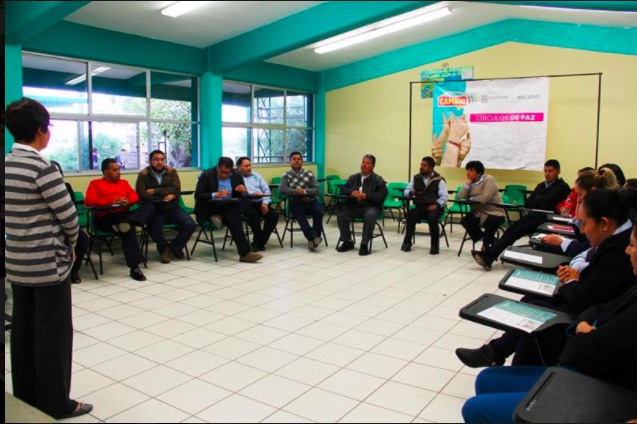
About 25 municipalities, belonging to the departments of San Vicente, Cuscatlán and Cabañas, participated in a training workshop organized by the Corporations of the Republic of El Salvador (COMURES) in Cojutepeque (Cuscatlán), with the objective of strengthening the role of municipal governments in the prevention of violence and their capacities to respond to the problems that are currently affecting the country.

The activity, which is part of the national day that COMURES develops from July 18 to August 29, 2017, at the scale of the 14 Departmental Councils of Municipalities (CDA), is carried out in coordination with the Secretariat of Governance of the Presidency, with the participation of the Legislative Assembly and the accompaniment of the United Nations Development Program (UNDP).

(continued in right column)

Questions for this article:

How can culture of peace be developed at the municipal level?

(continued from left column)

The purpose is to facilitate coordination between municipalities with various instances, such as public security, mainly to carry out actions and initiatives to prevent violence and crime in the territory.

Carlos Roberto Pinto Guardado, executive director of COMURES, explained that because of their impact on economic and social development, citizen security and violence prevention are issues that have been prioritized by municipal governments in the National Congresses of Municipalities, and incorporated In the permanent agenda promoted by the corporation.

“The approach of the theme seeks to strengthen a strategy that allows strengthening the leadership and role of municipal governments, for the construction of a sustained culture of peace with the participation of communities,” COMURES said in a statement.

“This is important,” said Pinto Guardado, “since municipal councils, as the first state authority in the municipalities, know the most sensitive needs and problems of the population, invest resources and implement policies and actions that are coordinated, organized and planned to reduce the factors that generate social violence in the territory.

Along these lines, COMURES with the support of cooperation agencies has created different instruments and tools.

(Click here for the Spanish original of this article)

Puebla, Mexico: Cultural tourism needs more spaces and collectivity

. . SUSTAINABLE DEVELOPMENT . .

An article from Angula 7 (translated by CPNN)

In Puebla, the culture for tourism is concentrated in specific points such as the Historic Center. It is “worrisome” that this serves economic interests, rather than promoting general development. This was pointed out by Arturo Villaseñor García, spokesman of Colectivos Estación Cero, in an interview at the first “National Colloquium on Living and Community Culture”. He added that these cultural policies do not take into account the problems of living in communities and neighborhoods.

“We are concerned that this exercise of centralizing or concentrating culture and having a bias to culture towards a particular type of art, or artistic expression, fails to take advantage of the knowledge of our peoples,” he said.

He referred to the “privatization” of the public space. Certain spaces are dedicated to former rulers, for example, the International Baroque Museum (MIB), instead of dedicating places to the culture of the communities .

In Angelópolis, he said, cultural tourism focuses on the first picture of the city and a few spaces in the surrounding urban region, but these are very limited, while in other areas of the interior of the state as the Mixteca Poblana there are no workshops or activities. As for San Martín Texmelucan, there are no museums, no resources, no support for groups that focus on cultural issues.

(article continued in right column)

(Click here for the Spanish version)

Question related to this article:

How can tourism promote a culture of peace?

(article continued from left column)

“Decentralizing the cultural offer”

In that vein, he argued that past state administrations, instead of building the MIB or the Puebla Star that had “a high cost,” could have used the money to open spaces in which young people could develop their creativities.

“In the Historic Center there is a focus on tourism. This is OK, but only a part of what is needed. There is not much for the citizens. We need to decentralize the cultural offer and involve the communities, in order to generate collectivity, recreation and art as a motor of development and a culture of peace, “he said.

Villaseñor García added that, in addition to this, there is the problem that resources for culture have been reduced. This a problem because because there is little money, and groups are forced to compete for limited resources.

He pointed out that what is needed in Puebla is to open spaces and begin to develop public policy in general, since it is not only culture that is needed, but also theater, painting, dance, and other artistic expressions.

Finally, he indicated that these problems will be addressed in the national colloquium to be held in October in Mexico City, attended by groups from other states where their concerns will be raised, in order to elaborate a policy to promote a diversity of cultural and artistic expressions, to develop strategies and to promote a national agenda on the subject.

Nigeria: Tourism, way out of recession

. . SUSTAINABLE DEVELOPMENT . .

An article from the Nigerian Tribune

Tourism, arts and culture have been identified as major catalyst for any growing economy which of properly harnessed by Nigerians can take the country out of its present economic recession.

The founder of a Non Governmental Organisation, ZITADEL, Samuel Oluwadamilare Omorege, who stated this in Akure, Ondo State capital during a press conference to launch Sustainable Tourism Art & Culture, Industrialisation Education Poverty (STACIEP).

Omorege however advocated for more investment in tourism, arts and culture to unlock the potential of this sector to enhance economic prosperity for the country.

He also called on government at all levels to reawaken the traditional and cultural heritage of Nigeria as a means of eradicating poverty and to generate employment for the unemployed youths across the country.

Omorege noted “certain aspects of Nigerian cultural and traditional heritage had been consigned to archaic decay” and called for a reversal of the trend and a genuine measures to place the nation’s heritage on the world map.

He disclosed that ZITADEL is committed to showcasing the traditional and cultural heritage of Africa, especially Nigeria and called Omorege for collaborative efforts from all stakeholders to make the dream a reality.

(article continued in right column)

Question related to this article:

How can tourism promote a culture of peace?

(article continued from left column)

He said with population of Nigerian’s citizens in dire need of peace for sustainable development, his NGO is out to advocate and work for the peace of the land with the new concept of developing the tourism, art and culture sector.

“The total eradication of poverty is an essential condition for peaceful co-existence in a country of close to 200 million people like Nigeria. And without peace, sustainable development and sustainable comfortable lifestyle cannot be achieved.

“Nigeria as it is today is in dire need of a culture of peace and non -violence. Whereas one simplistic approach to the problem is to actively encourage the culture of appreciating of each others’ cultural, ethnic and linguistic diversity”.

Omorege who said the goal of his NGO is in tandem with the UNDP’s vision 2030 said the idea of STACIEP is to use Tourism, Art and Culture industry as a fast means of poverty eradication endengered by creative ideas, expanded talent hunt and international cultural exchange programmes, networking and partnership for rapid economic growth.

He applauded ZITADEL National patron, Chief Ifedayo Adedipe, the matron, Princess Ronke Ademuluyi and the patron Chief Akinyemi Akinremi for their support thus far saying that STACIEP is a new concept in the development, presentation and preservation of the rich African Arts and Culture and targeted at meeting UNDP’s vision 2030.

He, however, said the initiative would go a long way to create employment for young Nigerians, disclosing that STACIEP will this month, August take a cultural troupe from Nigeria to Notting Hill Carnival 2017 in the United Kingdom while a group of Nigerians will also participate in African fashion show in London.

Colombia: Tourism in post-conflict zones, another contribution to peace

. . SUSTAINABLE DEVELOPMENT . .

An article from Aleteia (translated by CPNN)

The Colombian government is launching a call for tour operators to set up travel packages in postconflict areas.

Visiting them can be an unforgettable adventure. For example, located in the Colombian department of Magdalena, in the north of the country, in the Sierra Nevada area of ​​Santa Marta, Ciudad Perdida, also known as Teyuna, is an extremely attractive place by nature with crystalline waters and indigenous peoples.

Considered one of the main archaeological sites of Colombia, rediscovered by a team of local researchers in the 70’s and a reference area at the political level in its time, this place is positioned as a tourist destination that seeks to be enhanced.

But Ciudad Perdida has also been affected by the Colombian conflict, hence a place that has known much suffering.

Along with this Colombian locality other places like Sierra de La Macarena in the department of Meta, or Golfo Urabá – Darién (Chocó, Antioquia) have become part of a pilot plan of the Colombian government denominated “Tourism, Peace and Coexistence”.

(article continued in right column)

(Click here for the Spanish version)

Question related to this article:

How can tourism promote a culture of peace?

(article continued from left column)

This is precisely one of the goals of the Colombian government – through the Ministry of Commerce, Industry and Tourism – to make a clear commitment to tourism in post-conflict zones. In that sense, a strong call for travel agents was recently launched to include these areas in their packages and proposals. In March of this year, a set of actions in favor of work among the various communities involved had also been submitted to the government for consideration, among other things.

Is it possible to build peace from tourism?

“If entrepreneurs do not sell, do not package, do not work hand in hand with post-conflict regions to generate development, peace will not be lasting. So it is important to take tourism companies to those regions that previously did not allow any type of development because of violence, “said Minister of Commerce, Industry and Tourism, María Claudia Lacouture, reproduces El País.

As early as 2014, when the work on the post-conflict zones strategy was announced, tourism was considered “an important development factor that generates territories of peace”. “Tourism is a tool for the territories in the process of transformation towards a culture of peace. It is a sector that contributes to sustainable development, to the empowerment of communities in their territories, and it can generate other industries”, according to the strategy developed at that time.

One of the objectives visualized at that time was “the construction of the social fabric and a culture around tourism and peace”.

The scenario has now changed and indeed Colombia has now entered the post-conflict period. The challenge is before us and now it is the operators who have in their hands the possibility of giving more space to these proposals.

That is what it is about now, the development of these areas that have suffered in the past – for the best possible future for its inhabitants and sustainability guidelines for a better care of nature.

Mexico: With alternative justice, hope advances in Chiapas

. . DEMOCRATIC PARTICIPATION . .

An article from Cuarto Poder (translated by CPNN)

Judge Rutilio Escandón Cadenas, president of the Superior Court of Justice and the Judiciary Council, considers that justice in Chiapas is now perceived in terms of transparency, promptness, sensitivity and impartiality thanks to the new judicial system throughout the country.

In the city of San Cristóbal de las Casas, the presiding magistrate spoke about the commitment of the Judicial Power to alternative means of conflict resolution which allows greater flexibility through the use of mediation, arbitration and conciliation, a new culture for security and justice.

Rutilio Escandón considers that there is no time for confrontations and discord, which should not be part of the human condition and environment in which we live; instead, it is time to adopt more fertile paths, with consistent and rational contributions that give a better vision of what we want for Chiapas.

With this new way of imparting justice, said the magistrate, the state is consolidating a culture of peace that can unite all peoples and communities. Through dialogue we can construct a system of justice that that is transformative and uplifts human rights .

“I invite everyone to take advantage of the State Center of Alternative Justice, instead of using the old judicial system. In this way, we can live in harmony, which is possible as long as we have the enthusiasm to work for unity among all of us and the conviction that we can achieve it”, concluded Rutilio Escandón.

(Click here for the original article in Spanish)

Discussion question

Cape Verde: Youth take human rights to the streets

…. HUMAN RIGHTS ….

An article from Expresso das Ilhas (translated by CPNN)

The Youth for Peace group, in partnership with the National Commission for Human Rights and Citizenship (CNDHC), is carrying out a public reading of the universal charter of Human Rights. The initiative is part of the campaign “Human rights do not go on vacation”.

Through the public reading of Human Rights, the mentors of this initiative hope to make known and promote the practice among citizens and thus contribute to a “culture of peace and healthy coexistence between people.”

Taking advantage of the holidays – but asserting its motto “Human rights do not go on vacation” – a group of young people visited the beaches of Prainha and Quebra Canela on Saturday (12), International Youth Day and making use of this year’s slogan of (Peace Building Youth) tried to get their message across to the bathers.

(Article continued in the right column)

(Click here for the original version of this article in Portuguese)

Question related to this article:

What is the state of human rights in the world today?

(Article continued from the left column)

Coming soon, the market in Sucupira will receive the reading of some of the articles that appear in the letter of Human Rights and other neighborhoods and public spaces of the City of Praia will also receive this intervention of the group of Young People for Peace. In this way they want to make the Communities “more and better acquainted with Human Rights and young people with better mastery of reading and knowledge for the practical application of Rights”.

In 2016, on the occasion of International Human Rights Day, the United Nations adopted the slogan “Defend the Rights of Someone Today”, considering that “Disrespect for basic human rights continues to be widespread in all parts of the world. Our human values are under attack, and we must reaffirm our common humanity.”

At the end of July, the Youth for Peace group launched the “Life is Beautiful” program dedicated to children and aimed at promoting healthy lifestyles for children, contributing to the awareness of saying no to alcohol and other drugs.

Youth for Peace – JxP is a worldwide youth movement that was born in the Catholic community of Sant’Egidio, created in Rome and today present in several countries. It is an international movement that strives to promote peace and mediation of conflicts and promotes a culture of meetings and fraternity. The JxP group in Praia will complete this year its fourth year of existence.

Canada: After three decades, Inuit achieve meaningful protections for Lancaster Sound

. . SUSTAINABLE DEVELOPMENT . .

An article from World Wildlife Fund – Canada

After more than 30 years of negotiations, one of Canada’s most wildlife-rich Arctic areas will be protected, with an extended boundary that will make it the largest marine protected area in Canada, Parks Canada announced today [August 14]. The proposed area’s boundaries have between extended twice on the way to becoming a National Marine Conservation Area (NMCA), and the expansion of the protected area would not have been possible if Shell Canada had not voluntarily relinquished 30 permits after a lawsuit launched by WWF-Canada in 2016. The final boundary is informed by traditional knowledge, as recorded and put forward by the Qikiqtani Inuit Association (QIA), who worked for years to convey the importance of protected the integrity of the entire ecosystem.

(Article continued in the right side of the page)

Question for this article:

If we can connect up the planet through Internet, can’t we agree to preserve the planet?

(Article continued from the left side of the page)

President and CEO of WWF-Canada, David Miller, said: “WWF-Canada has worked for decades to promote the protection and conservation of Lancaster Sound, which is home to polar bears, seals, sea birds, walrus, whales, and over 75 per cent of the world’s narwhal. The wildlife of this area, and the people who depend on them, will be better served by the larger boundary of the protected area, as it will better protect the integrity of the fragile Arctic ecosystem. We launched the lawsuit against Shell in 2016 to allow for an initial boundary extension. And today we’re celebrating the fact that the boundary has been further enlarged, informed by the recommendation of the QIA, to make it the largest marine protected area in Canada.”

About Lancaster Sound

● Known to Inuit as Tallurutiup Imanga, Lancaster Sound is the eastern entrance to the Northwest Passage.

● It is one of the most biologically diverse areas in the whole of the Arctic, and is home to polar bears, seals, sea birds, walrus, beluga and bowhead whales, and over 75 per cent of the world’s narwhal.

● The boundary for the NMCA was expanded after WWF-Canada launched a lawsuit in 2016, disputing the validity of 30 offshore exploration leases owned by Shell Canada. Shell relinquished the leases, allowing the boundary to almost double in size from Parks Canada’s original recommendation.

What is a national marine conservation area?

Under federal law, NMCAs provide protection from:
○ Energy exploration
○ Undersea mining
○ Ocean dumping
○ Overfishing

(Thank you to Janet Hudgins, the CPNN reporter for this article)
The Spanish Federation of Municipalities and Provinces offers its support to the network “Mayors for Peace” and proposes future initiatives in an assembly in Japan

.. DEMOCRATIC PARTICIPATION ..

An article from El Diario (reprinted according to the rules of Creative Commons)(translation by CPNN)

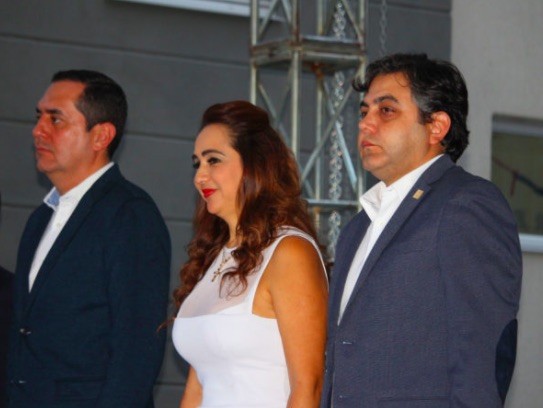
The Mayor of Móstoles (Madrid) and President of the International Relations Commission of the FEMP, Socialist David Lucas, expressed the support of the institution to the IX General Assembly of the Mayors for Peace Network, 8 and 9 August in the Japanese city of Nagasaki. This forum is designed to build peace and the FEMP has expressed the commitment and collaboration of the Spanish mayors towards this objective.

On behalf of the FEMP, Lucas addressed the plenary session with regard to future action plans, including the abolition of nuclear weapons by 2020. During his speech he called for a greater collaboration of Mayors for Peace with other global actors, such as the United Cities and Local Governments (UCLG) and UN-Habitat, for the implementation of the Sustainable Development Goals.

(continued in right column)

Questions for this article:

How can culture of peace be developed at the municipal level?

(continued from left column)

Following the proposal of the FEMP, the 2017-2019 action plan of “Mayors for Peace” includes compliance with the 2030 agenda for sustainable development objectives and the reinforcement of coordinated work with UCLG. Lucas also expressed the need to involve other regional actors such as the Council of European Municipalities and Regions (CEMR) and the Council of Europe.

The mayor of Móstoles emphasized in his speech that the commitment of the FEMP to the organization “Mayors for Peace” has made it possible in the last year to involve 130 Spanish cities in this initiative.

Lucas is accompanied in Japan by several first selectmen: Josep Mayoral of Granollers (Barcelona), Alberto Casero of Trujillo (Cáceres), and Martí Pujol of Llinar del Vallès, along with the Spanish ambassador in Tokyo, Gonzalo de Benito.

The FEMP participates in the strategy of city diplomacy and peacebuilding through the UCLG world organization. ‘Mayors for Peace’ network is an indispensable partner in such relevant issues as development, culture of peace, migration, coexistence and intercultural dialogue. After several years of collaboration with the Global Network of ‘Mayors for Peace’, the last plenary session of the FEMP promoted the adhesion of Spanish local governments to the Network with the objective of forming a Spanish section within the Federation.

(Click here for the Spanish original of this article)

10th Annual Japan-Korea “Peace & Green Boat” Joint Statement

. TOLERANCE & SOLIDARITY .

An article by Peaceboat

The first Peace & Green Boat Japan-Korea joint voyage set sail in 2005.

That voyage marked 60 years since the end of World War II, 60 years since the end of the Japanese colonial occupation of Korea, as well as 40 years since the normalization of relations between Japan and South Korea. This was also the year that the United Nations Framework Convention on Climate Change, the Kyoto Protocol, came into effect.

Over this time, we have seen the world appeal about the crisis of climate change caused by global warming, In Japan-Korea relations, we saw the rise in popularity of Korean culture as part of Hallyu/the Korean Wave. However this period of time has also been marked by severe political turbulence surrounding issues including Yasukuni Shrine, the Takeshima/Dokdo Islands, and the “Comfort Women”.

However we strongly share the belief that now more than ever, we must build the foundations of a peace and environment-oriented community in East Asia, one based on the combined strength of Japanese and Korean NGOs, and dedicated to protecting the lives of the people. With this goal in mind, we set out across the seas of East Asia.

Over the course of the past 12 years, through dialogue, mutual understanding, and trust, we have overcome numerous challenges to now be celebrating the 10th Japan-Korea joint voyage. With unique direct exchange made possible by using a large passenger vessel, we are proud to say that more than ten thousand participants to date have joined from both countries, creating friendship between citizens of Japan and Korea on an unprecedented scale.

(Continued in right column)

Question related to this article:

Peace Boat: Building a Culture of Peace around the World

(Continued from left column)

During this time, tragic incidents such as the Great East Japan Earthquake and Tsunami and subsequent nuclear disaster, as well as the Sewol Ferry Disaster, have served as grim reminders to reaffirm the importance of human life and safety, and to question the nature of politics and society which do not prioritise these things. The new administration in South Korea was born out of the series of one-million-candle demonstrations. We would like to express our agreement with and respect for the new administration’s recognition of the dangers of nuclear energy, and its stated intention to work towards a nuclear-free future. At the same time, we strongly call upon the Japanese government, which has ignored the lessons of the Fukushima Daiichi nuclear power plant disaster and has continued on a pro-nuclear energy path, to move towards renewable energy and away from nuclear power.

Since the first Peace & Green Boat voyage we have visited the city of Nagasaki four times. Nagasaki experienced the atomic bombing, and through these visits citizens of Japan and Korea have been able to hear directly the testimonies of the Hibakusha, the survivors of the attack. Our long-held wish was realized when on July 7 this year, the treaty to prohibit nuclear weapons was adopted at the United Nations. Unfortunately however, the governments of both Japan and South Korea are not participating in this treaty, citing the necessity of nuclear weapons as a deterrent. We strongly call upon both governments to join this treaty which seeks to avoid the catastrophic harm to humanity posed by nuclear weapons.

In response to climate change brought about by global warming, which also poses a grave threat to humanity, we will not only continue to devote our full energy and attention to this goal, but also comprehensively and creatively work towards the realization of the UN Sustainable Development Goals (SDGs). These goals include the promotion of renewable energy, peace, and climate action.

Lastly, through joint Peace & Green Boat activities we will work towards ensuring that the PyeonChang Winter Olympics next year and the 2020 Tokyo Olympics are sustainable Olympics where the environment is given the greatest level of consideration, so that they can be true festivals of peace. It is our intention that through this process, we can work towards building the foundations of an East Asia Peace and Environment Community.

Download this statement in three languages here:

English

Japanese

Korean

Peace Clubs: Rwanda’s post-genocide search for renewal

… . HUMAN RIGHTS … .

An article by Valerie Hopkins, reprinted by the Global Campaign for Peace Education

Felix Kanamugire was a killer during the Rwandan genocide, when between 800,000 and one million people, primarily Tutsis, were killed over the course of three months in 1994.

For his crimes, he was among the 120,000 men and women imprisoned in the aftermath of the slaughter. Once released in 2011, he returned to his village in southern Rwanda, near the border with Burundi, and tried to keep a low profile.


Irene Mukaruziga, second from right, a genocide survivor whose husband was killed by her Hutu neighbour says forgiveness was a hard path for her (Photo: Valerie Hopkins / Al Jazeera)

For his crimes, he was among the 120,000 men and women imprisoned in the aftermath of the slaughter. Once released in 2011, he returned to his village in southern Rwanda, near the border with Burundi, and tried to keep a low profile.

“When I came out of jail and I reached home, I knew there were relatives of a lot of people I killed and property I looted. It was too much fear. How could I approach these people?”

Kanamugire, who is now 57, was worried about running into one neighbour, in particular, Irene Mukaruziga, because he had killed her husband and destroyed her house.

“I would hide or take a longer route so as not to see her,” says Kanamugire.

From truth to reconciliation

One day, his friend told him that he could discuss these things in a group, known as a Peace Club, that met once a week near the village of Muganza, close to his home, where perpetrators could discuss their guilt and move forward.

“There was good teachings in how to ask for forgiveness,” he says.
“Initially, we sat in separate groups, but we have to take a step. They told us, ‘Don’t fear them [the survivors], you know what you did’.”

Eventually, he says, he went to seek forgiveness from Mukaruziga, who had sought monetary compensation for her destroyed property during a community trial known as “gacaca”.

“I decided one morning to go to her. I went to her neighbour and asked him to escort me. I looked for 10,000 Rwandan Francs [about $12]. She gave us a place to sit. It was like coming from heaven. I said, ‘I’m here to ask for forgiveness.’ My heart was pounding. They said, give me 10,000 Francs. I felt someone was removing my burden when she said ‘OK.’”

Mukaruziga says forgiveness was a hard path for her.

“I lost almost everyone in the genocide,” she says. “My neighbour did a lot of bad things – destroyed my house, took everything. He went to jail, but his wife stayed at their house. All the time, I couldn’t bear to see his wife and kids.”

Slowly, she says, after sitting together in the same discussion group, she started to feel ready to forgive Kanamugire.

“Before, I would never step into his house. Even if it were raining, I would never dare,” says Mukaruziga. “We only started to speak because of the club. Because of those teachings, things came into my heart. Now, we have a lot in common. The teaching and the counselling has been helpful. They teach us how to identify hate and indicators of when things are going wrong.”

Kanamugire says that through these meetings, “I have uprooted that hatred that was inside of me”.

But, despite his transformation, he says the Monday unity exercises remain one of the most important parts of his week.

“We don’t pretend to think it is done. This has to be a continuous process.”

Fractured classrooms

The Peace Club attended by Kanamugire and Mukaruziga is supported by the London-based NGO International Alert. Hundreds of such clubs have sprung up across the country to bring together survivors and perpetrators of the genocide – with a special focus on those who were born in its aftermath.

In Rwanda, which today has a population of 11.6 million, more than 60 percent of the population is under 24 years old, too young to personally remember the genocide.

Since the end of the genocide, the government, led for 17 years by Paul Kagame, has pursued an official policy of unity and reconciliation, which emphasises Rwandan-ness rather than an affiliation as Hutu or Tutsi – categories imposed by Belgian colonial rulers that were arbitrarily based on a combination of factors including an individual’s wealth, skin tone, and nose size.

The Belgian colonisers had favoured Tutsis, and when they left in 1962, the Hutu-led government began persecuting the Tutsi minority. In seeking to close the circle, the government has made nationwide de-ethnicisation a priority and imposed strong restrictions on how the genocide can be discussed.

(Article continued in right column)


Question related to this article:

Truth Commissions, Do they improve human rights?

(Article continued from left column)

However, bullying based on a pupil’s family background is present in schools, where learning is especially difficult for orphans, the children of survivors, and those who have a parent in prison.

While survivors and the children of survivors often receive material support, sometimes the children of parents who are or were incarcerated do not receive assistance, which causes rifts between pupils, explains Evariste Shumbushuya, 24, whose father was in prison while he was in high school.

“Often, when you feel bad, you blame the kids [of survivors] for putting your parents in jail,” he says. But this changed when he joined a Peace Club in his second year of high school.

“Before I joined the club, there are a lot of things I had no idea about,” he recalls. “I realised they were getting this assistance because they had no parents. Most conflict you could see at school, it was because of these kinds of differences. It was tension that was not very open, but it was there. Some kids fought in the classrooms; there were bitter exchanges, like ‘Your parents killed my parents’.”

Lack of critical thinking

Shumbushuya now runs the club, called Urumuri Amahoro, which means “Light of Peace”. Its 71 members, who are between the ages of 15 and 25, assemble every Friday afternoon and share poems or act out plays that explore the themes of conflict and reconciliation.

“There are all kinds of narratives we get from our parents, some true and some not true. And this is the source of conflict between us. As we continued, we became aware how parents are poisoning their children,” Shumbushuya says.

He hopes to further bind his club’s members to one another through small cooperative projects, like pooling money to buy a goat that produces milk and cheese and will eventually bear offspring that they can share.

They also do farming and community service for the parents of impoverished members of their group.

“When we can change a child, their parents will also change.”
Silas Sebatware, who teaches history and geography at the village school, runs another Peace Club. In his club, like in so many others, they use scenarios, cartoons, and plays to discuss discrimination, prejudice, stereotypes and domestic violence.

“As a group, we interpret images which are not always straightforward to understand,” he says.

“This is important because it builds critical thinking.”

Sebatware says they also pay special attention to those who broke the mould of violence in genocide and rescued people, to teach students not to be bystanders.

“The clubs are also designed to provide information to younger generations who do not know the history of colonialism and the genocide,” says Jean Nepo Ndahimana, a former teacher who runs a training programme for educators with Aegis Trust, the organisation that runs the Kigali Genocide Memorial.

However, building societal change is tremendously difficult after generations of colonial rule and governments who privileged the majority Hutus over the Tutsis.

“Our parents were educated about violence by the government since the colonial period,” he says. “From 1962 until the genocide, the government emphasised discrimination and our curricula were designed to divide us. The government was doing what Trump is doing now in America – I mean, who is not an immigrant in America today?”

He says discrimination and hatred were incorporated into every subject. “An instructor in mathematics once put a question on a test: ‘If you have five Tutsis and you kill two, how many are left?’”

Now, he says, “efforts are being made in Rwanda to make people believe we do not have a different culture. We are trying to dig deep and find our roots.”

Before his organisation started training teachers in peace education in 2009, some teachers were apprehensive about discussing the genocide in the classroom, which left students reliant on their parents for information, which can be transmitted with bias.

“In an assessment developed in 2012, some teachers are scared to discuss the genocide, so sometimes they just skip it,” he says. As a result, when he would organise workshops for young people, he says, “students were not aware of what had happened”.

Since then, he and his colleagues have trained more than 940 teachers, each of whom has started a Peace Club in their schools. Moreover, in 2015, the Rwandan government overhauled its curriculum to include peace education in every subject, including mathematics and language classes.

“One of the factors that made the genocide possible was a lack of critical thinking skills,” explains Ndahimana. 

“Perpetrators say they committed crimes because ‘the government told us to kill’. But someone with critical thinking skills can ask themselves, ‘Why?’

The reporting of this story was made possible by a fellowship from the International Women’s Media Foundation (IWMF).

(Thank you to Janet Hudgins, the CPNN reporter for this article)