Category Archives: Europe

The Second Level Geopolitical War in Ukraine Takes Over

DISARMAMENT & SECURITY .

A blog by Richard Falk reprinted by Transcend Media Service

. . . It has become increasingly clear to the world that there is not one, but two, actually three, distinct levels of conflict embedded in what the world’s media and political leadership deceptively insist on calling the ‘Ukraine War.’ The first level was initiated on February 24, 2022 when Russia launched an aggressive war against Ukraine imperiling the country’s most basic sovereign rights as well as its territorial integrity. The second level was difficult to discern in the first weeks of the war, but became soon evident as the NATO countries led by the United States placed an increasing emphasis on lending escalating support to Ukraine’s adopted goals of achieving an unexpected military victory. This support took various forms including the steady supply of heavy weaponry, robust financial assistance, punitive sanctions, and a drumbeat of ‘official’ demonization of Russia and its leadership. In the beginning it seemed appropriate to lend support to Ukraine as the target of aggression, and hail the resistance efforts led by President Volodymyr Zelensky, in defense of a relatively small country being overrun by a large neighbor.


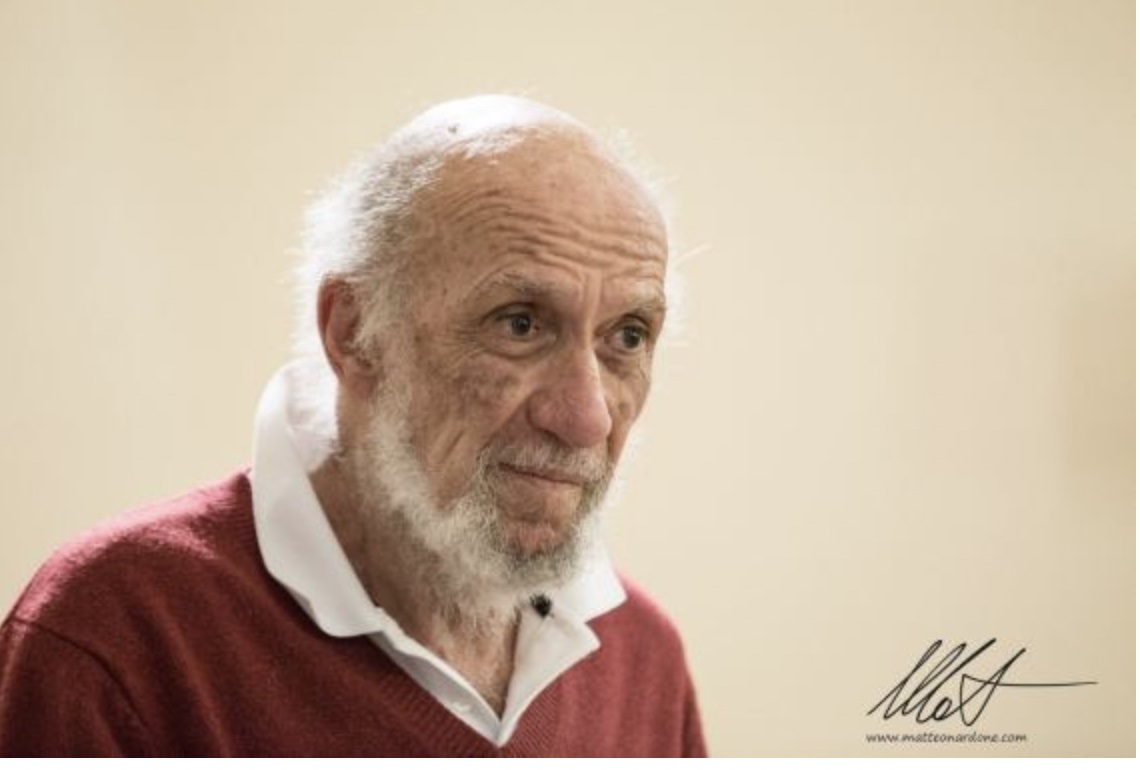
Richard Falk

Even this widely endorsed narrative was deceptive and one-sided as it overlooked the provocative nature of NATO expansion, abetted in Ukraine’s case by American interference in the internal politics of the country to help turn the political tide against Russia. It is in this internal setting that on which the third level of the war persists as there is no doubt that anti-Russian elements in Western Ukraine were deeply abusive toward the majority Russian speaking population in Eastern Ukraine known as the Donbas region. The non-implementation of the Minsk Agreements negotiated in 2014-15 to protect the Ukrainians in the East and accept a high degree of autonomy led to oppressive policies by the Kyiv government giving added strength to separatist aspirations. It remains uncertain as whether the Russia/Ukraine level of combat can be resolved without serious addressing Russian and Donbas concerns at the core of this third level of conflict.

What has been apparent to critics for some time is that Western diplomacy has increasingly become primarily committed to the second level Geopolitical War even at the cost of greatly prolonging and aggravating the Ukrainian war on the ground and producing growing risks of a wider war. Only in the past few days has this priority been more or less acknowledged by high officials in the U.S. Government, most dramatically in the visit of Antony Blinken, Secretary of State, and Austin, Secretary of Defense to Ukraine and later in their meeting with NATO counterparts in Europe. What was revealed was that the number one policy goal of the U.S. was ‘the weakening of Russia’ made to military planners a credible undertaking by the unexpected resistance capabilities of Ukrainian armed forces bolstered by a show unified nationalist resolve. In keeping with this line of thinking, arms shipments to Ukraine were steadily increased in quantity and quality. More tellingly, so-called heavy armaments with offensive capabilities began to be supplied to Ukraine, with militarists in NATO countries even proposing attacking targets in Russia. As this dynamic unfolded, Germany joined in by dramatically reversed its proclaimed policy of not providing heavy weaponry. The whole tenor of assistance from NATO countries shifted from helping Ukraine resist to addressing the geopolitical agenda with its two goals: inflicting a humiliating defeat on Russia and signaling China not to indulge any doubts about Western resolve to defend Taiwan.

Despite this shift in emphasis, earlier concerns with escalating the Geopolitical War with Russia have not been entirely abandoned. Efforts continue to be made to ensure that U.S. and Russia to not engage in direct combat with opposing weapons system and to not produce situations that push Russian toward a reliance on nuclear weapons to avoid battlefield defeat. White House perceptions of what will cause such recourse to nuclear weaponry at this point seems dangerous divergent. It is widely reported that the Biden presidency continues to resist pressures to establish No Fly Zone in Ukraine because it would greatly heighten prospects for direct combat encounters between the NATO and Russia, and with it risks of this new species of cold war turning uncontrollably hot. But what of Biden’s demonization of Russia as guilty of genocide and Putin as a war criminal who should be driven from power? And what of the continuous increases of political, financial, and military assistance to Ukraine coupled with the absence of any hint that a diplomatic alternative exists that would stop the killing. This has been missing all along. There have been no indications by Washington of receptivity to a diplomacy emphasizing the primary humanitarian imperative of an immediate ceasefire and a political process of compromise and mutual security between Russia and Ukraine the overt international antagonists. It is missing because the U.S. on prosecuting the Geopolitical War as long as necessary, and this  takes precedence over the wellbeing of the Ukrainian people, or even the rationally conceived self-interest of the NATO powers.

Zelensky early in the war indicated receptivity to a ceasefire and political compromise, including an acceptance of permanent neutrality for Ukraine, signaled his willingness to meet with Putin to agree upon a process. As time passes, however, Zelensky has pulled back from this dual stance of armed resistance and peace diplomacy, and come to adopt a position that appears seamless with that of the U.S. as if his priority had also shifted to the level 2 Geopolitical War.

My conjecture is that Zelensky, although displaying great talents as a wartime resistance leader has very little sophistication about international relations in general, and seems susceptible to this more militarist line bolstered by promises of decisive support from Washington and possible pressures from his own supposedly hawkish general staff. After all, Zelensky’s background is in theater, until recently he was a performing comedian without any signs of awareness of the wider risks to Ukraine if it subordinates its national interests to the logic of going on with the Geopolitical War wherever it might lead.

As expected, Moscow has already reacted to this escalation of this second level war by warning that it will not back down, but will take all necessary steps to protect its national security interests, intimating if it comes to that, a readiness to have recourse to nuclear weapons. Such inflamed atmospherics can easily produce accidental or preemptive acts that accelerate escalation, which is especially serious in the current context that lacks crisis management links of the sort established between Moscow and Washington in the aftermath of the Cuban Missile Crisis. It took that close encounter back in 1962 with its apocalyptic war scenario that led these superpower antagonists to understand that they had averted a monumental mutual catastrophe by sheer luck, and must take steps to avoid future drifts toward nuclear war however great the crisis in their relationship.

(Continued in right column)

Questions related to this article:
 
Can the peace movement help stop the war in the Ukraine?

(Continued from left column)

While most attention is focused on the inter-governmental play of forces it is helpful to take account of other perspectives: civil society peace initiatives, the views of the Global South, and the initiatives of the UN Secretary General. These perspectives call attention to the startling fact that alternatives to aggressive war and geopolitical ambition exist. The Western media blithely hides the awkward fact that Russia is more globally supported in the Geopolitical War than is the United States, preferring the balances of multipolarity to the hegemonies of unipolarity. The Global North controls the discourse prevailing on the most influential media platforms, creating the misleading impression that the whole world, except the outliers, are content with U.S. leadership.

Civil Society Initiatives

Almost from the day the Russian attack began, peace activists and NGOs concerned in some way with peace, security, and humanitarianism urged an end to the killing by way of a ceasefire and some political process that dealt with the level 1 and 3 grievances. This is not to say there were not sharp tensions within civil society, especially surrounding how to interpret the pre-war NATO maneuvers  or the Russian manipulation of the strife in Donbas. By and large the liberal and left liberal mainstream supported outright condemnation of Russian aggression, but favored an immediate ceasefire and diplomacy to ending the war and mitigating the humanitarian emergency of death, devastation, and displacement. Those who can be crudely identified as the anti-imperial left tended to excuse or at least place major responsibility for the outbreak of war on the context largely fashioned by Western provocations (especially NATO expansion) and interference in Ukraine’s internal politics since 2014 as did some on the extreme right who identified with Putin’s authoritarianism as future wave of world politics.

What contrasted the civil society perspectives in spite of their diversity, with NATO/mainstream media postures, was their shared stress on stopping the killing, the relevance of diplomacy, and their implicit or explicit refusal to condone recourse to the Level 2 Geopolitical War. Typical examples of civil society proposals can be found in the Pugwash Peace Proposal and the Just World Education booklet distributed under the title “Ukraine: Stop the Carnage, Build the Peace”(available from Amazon or from www.justworldeducational.org, containing eight policy recommendations).

The Voice of the Global South

Given little notice in the Global North was the refusal of the greater part of the Global South to support the mobilization of coercive and punitive sanctions diplomacy directed at Russia and its leader. This split from the West first became evident in the two votes on Ukraine in the UN General Assembly. The entire world including the most of the main countries in the Global South supported the condemnation of the Level 1 Russian aggression, but either abstained or opposed support for the Level 2 Geopolitical War Initiated by the U.S. against Russia in the early stages of the attack on Ukraine. As Trita Parti of the Washington-based think tank, Quincy Institute, pointed out much of the Global South actually supported Russia in the Geopolitical War context, which was interpreted as the U.S. commitment to extending the mandate contained in a unipolar world order of the sort it had acted upon since the Soviet collapse and the end of the Cold War. The Global South greatly preferred the dynamics of a multipolar world, and regarded Russia as seeking in Ukraine to reassert its traditional geopolitical suzerainty over its ‘near abroad,’ a stand against the U.S. as the unopposed guardian of security throughout the planet. It should be appreciated that the U.S. has 97% of overseas military bases and accounts for 40% of the world’s military expenditures, greater than that of the next 11 countries.

The U.S. position is no way renounces traditional geopolitics but seeks to monopolize its implementation. In that spirit it views the attempted reassertion by China and Russia of traditional spheres of influence as an intrusion on international law, while the U.S. at the same time defends its practice of managing the first global sphere of influence in world history. Blinken has said as much, declaring spheres of influence as contrary to international law ever since World War II while simultaneously upholding the sole prerogative of the U.S. when it comes to managing security throughout such a rule-governed world (not to be confused with international law, and its efforts at rule- governance). The UN or international law are marginalized with respect to peace and security in the face of this assumption of geopolitical dominance resting on a mixture of political ambition and military capabilities.

The UN Secretary General

Throughout the Ukraine crisis Antonio Guterres, the UN Secretary General, has articulated a point of view toward the Ukraine Crisis that contrasts in fundamental ways from the positions taken by the political actors on the three levels of conflict. His words and proposals are much closer in spirit to the calls emanating from civil society and the Global South. He expressed the spirit of his endeavors concisely shortly after Russia attacked: “End the hostilities now. Silence the guns now. Open the door to dialogue and diplomacy.” “The ticking clock is a time bomb.”

Traveling in Moscow to meet with Putin and the Foreign Minister, Sergei Lavrov, the SG’s message was more in keeping with diplomatic style, yet similar in content: Focus on ways to end war, and desist from carrying the fight against Russia a day longer. He told Lavrov that “We are extremely interested in finding ways to create the conditions for effective dialogue, create conditions for a ceasefire as soon as possible, create conditions for a peaceful solution.” Putin in the one-on-one meeting with Guterres given the aggressiveness of his counterpart in Washington seemed guardedly receptive to allowing the UN and Red Cross to play a humanitarian role in Ukraine and seemed cautiously receptive to seeking a negotiated end to the conflict on the ground. Of course, it would be premature to have much confidence in any assessment until deeds follow words. At the same time we seem entitled to lament the failure to hear a comparable level of peace-mindedness in Biden’s public statements, which so far seem calculated to stir anti-Russian fury and war-mindedness rather than to set the stage for ending this frightening multi-level conflict.

The stark difference between the UN SG’s approach and that of the geopolitical leadership of the world, should make many persons dedicated to a better future initiate a campaign to set the UN free from its Charter framework that accords primacy explicit primacy to its geopolitical actors.

Concluding Observation

Unraveling the intertwined nature of these three levels of conflict bound up in the ambiguities of the Ukraine War is crucial for an understanding of its complexity and to analyze whether responses and proposals are of service to the general betterment of humanity. It also facilitates the identification of unresponsive policies and proposals that hearken back to the days when matters of war and peace could be left to the discretion of politicians guided by neither ethics nor prudence, but rather have risen to power because they serve the material interests of elites in the private sector. On this basis, I believe that two overriding assessments emerge from an examination of the current interplay of forces in these Ukraine wars: stop the killing by all means available and unconditionally repudiate the Geopolitical War.

A Nordic Initiative for Peace in Ukraine and Lasting World Peace

DISARMAMENT & SECURITY .

A proposal by Fredrik S. Heffermehl in Transcend Media Service

To: The Honorable Prime Ministers of the five Nordic countries: Magdalena Anderson, Mette Frederiksen, Katrín Jakobsdóttir, Sanna Marin, and Jonas Gahr Støre

Oslo, 27 April, 2022 – The war in Ukraine once again shows that the world is like a city with brutal gangs constantly roaming the streets, looting and fighting with loads of heavy weapons. No one will ever feel safe in such a city. The same applies at the international level. No amount of weaponry can make us safe. No country will be safe until also neighboring countries can feel safe. The present international system is broken; to avoid future wars we need deep reforms.


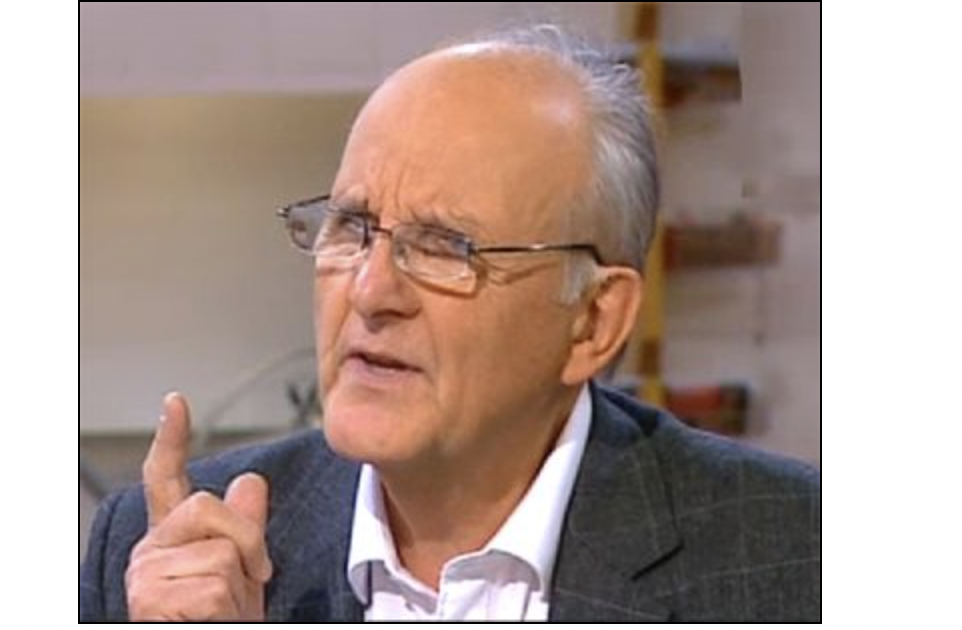
Fredrik S. Heffermehl

Once again, now in Ukraine, we have seen that arms cannot prevent war. We should not, in the present state of shock, expand or prolong the militarist traditions that guarantee eternal war and, in the nuclear age, a constant risk of annihilation. Our recommendation is that the five Nordic countries together take an initiative to activate the UN goals of global democracy and collective security. In a renewed UN, the member nations should act in loyal co-operation and take their charter obligations seriously. A most promising step here was yesterday´s resolution in the General Assembly curbing the Security Council veto.

A way out of stalled negotiations can be a major shift of perspective or arena. Mindful that Mikhail Gorbachev called for a disarmament race, and Vladimir Putin has repeatedly proposed a law-based international order, it seems to us that an end to the Ukraine war might be reached by making it part of ending the wider, geopolitical war between the US and Russia.

Fear of US expansion does, of course, not justify Russia´s attack on Ukraine. And yet, it is troubling that the US, with a 40% share of the world’s military budgets and 97% of the military bases abroad, seems to be seeking more influence. The Nordic countries should carefully consider whether four US bases (Norway), NATO membership (Finland, Sweden), further arms purchases (all), will improve their security. Only a year ago the outgoing US president released an attack on Congress. The US power of coercive diplomacy is waning. It is imperative to take the time necessary to thoroughly evaluate the developing world situation and the legitimacy and dangers of taking irreversible steps to increase US power.

(Continued in right column)

Questions related to this article:
 
Can the peace movement help stop the war in the Ukraine?

(Continued from left column)

Facing a stream of global crises, humanity can no longer afford wars. We need to cooperate, build solidarity and trust with effective, common enforcement of international law. Instead of complicity in future war crimes, how much more tempting must it not be to instead engineer a Nordic initiative to realize the collective security provisions of the UN Charter?

The Nordic countries enjoy trust and credibility in the world. They are particularly well positioned for an initiative to empower the Security Council and enable it to fulfill its responsibility for maintaining peace. This will require nations to transfer a part of their sovereignty, which Norway and Denmark already have prepared for.* Instead of more NATO, the world urgently needs to unite across all borders, ethnic and religious divisions, political and economic systems, to rebuild, empower and recommit to the United Nations, build peace, and reallocate the expenditures for war to serve the needs of people and nature.

With reverent greetings,

NOBEL PEACE PRIZE WATCH
Fredrik S. Heffermehl, Oslo

***

We agree in the essence and would welcome a Nordic peace initiative:

Richard Falk, Santa Barbara

Bruce Kent, London

Tomas Magnusson, Gothenburg

Mairead Maguire, Belfast

David Swanson, Virginia

Alfred de Zayas, Geneva

Jan Öberg, Lund

Hans Christof von Sponeck,

Klaus Schlichtmann, Tokyo

* Two of the Nordic countries already have provisions enabling such transfers of power in their constitutions, Denmark (§ 20), and Norway (§ 115). Similar provisions have also been adopted by Austria (§ 9), Belgium (§ 25), Germany (§ 24), Greece (§ 28), Italy (§ 11), Portugal (§ 7), Spain (§ 93). In Asia: India (§ 51), and Japan (§ 9).

Russian Nobel Laureate Muratov Doused With Red Paint By Unknown Attacker

FREE FLOW OF INFORMATION

An article from Radio Free Europe (Copyright (c)2020 RFE/RL, Inc. Reprinted with the permission of Radio Free Europe/Radio Liberty, 1201 Connecticut Ave NW, Ste 400, Washington DC 20036.)

Dmitry Muratov, the editor in chief of one of Russia’s leading independent newspapers, Novaya gazeta, said he was attacked by an assailant who threw a mixture of red paint and acetone on him.

(Editor’s note: So far Muratov has avoided assassination, but when he received the Nobel Peace Prize last year, he said the prize was for his colleagues at Novaya Gazeta who had been assassinated: “for Yuri Shchekochikhin, it’s for Anna Stepanovna Politkovskaya, it’s for Nastya Baburova, it’s for Natalia Estemirova, for Stas Markelov,” he told Russian media. “It is that of those who died defending the right of people to freedom of speech.”)


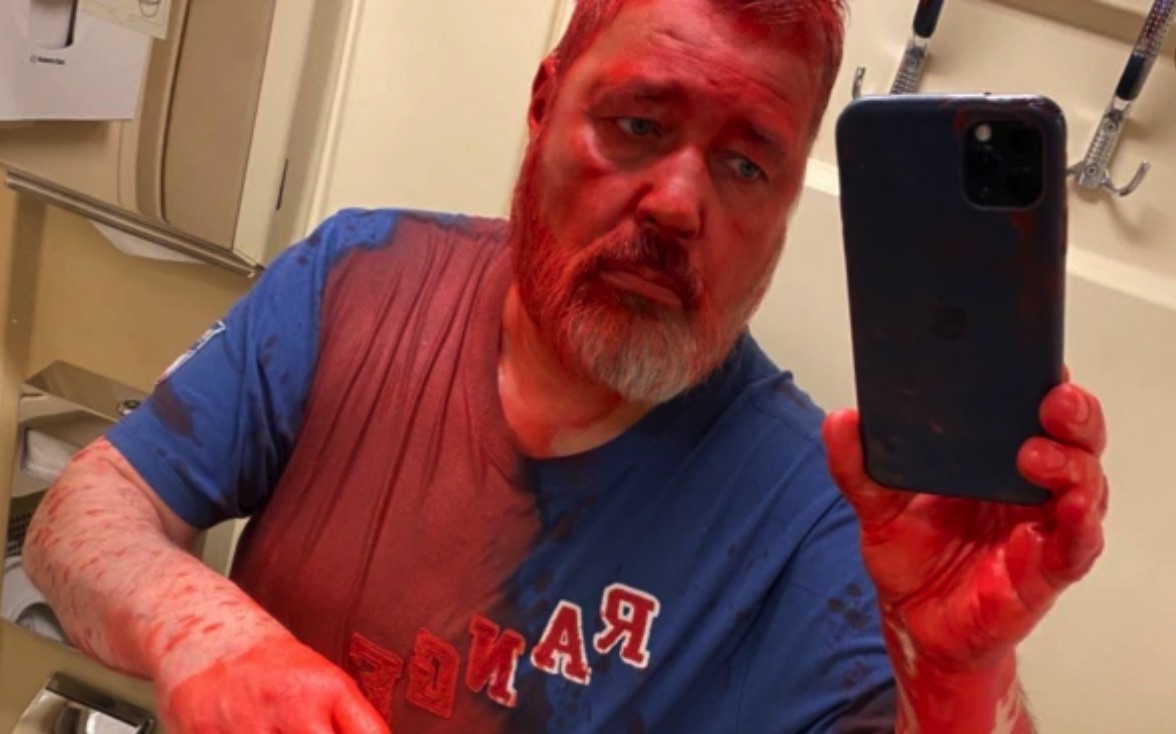
A photo of Muratov posted by the newspaper on Telegram showed his head, shirt, hands, and arms covered in red paint.

Muratov, co-winner of the 2021 Nobel Peace Prize with Filipino journalist Maria Ressa, was on a train bound from Moscow to Samara on April 7  when the attack occurred.

A photo of Muratov posted by the newspaper on Telegram showed his head, shirt, hands, and arms covered in red paint.

Muratov said the attacker shouted, “Muratov, here’s to you for our boys.”

He told the new European edition of Novaya gazeta about the attack, saying that his eyes were burning badly

(continued in right column)

Question(s) related to this article:

Free flow of information, How is it important for a culture of peace?

The courage of Mordecai Vanunu and other whistle-blowers, How can we emulate it in our lives?

(continued from left column)

Novaya gazeta, a leading independent Russian newspaper, suspended operations  last month after it said it received warnings from Russian authorities.

The newspaper said it had been warned twice by Roskomnadzor, meaning the state communications regulator was open to pursue closing the independent outlet down through legal action.

Earlier on April 7, journalists from Novaya gazeta who fled Russia amid the ongoing crackdown on independent reporting said they have launched  a new media outlet that aims to cover news and developments in Russia and around the world in Russian and several other languages.

Kirill Martynov, the former editor of Novaya gazeta’s unit on political issues, will be the editor in chief of Novaya gazeta Europe, the publication said in a statement on its website.

“We know that we have readers around the world who are waiting for verified information,” the statement said.

“That is why we, Novaya gazeta journalists who were forced to leave their country because of a de facto occupational ban being in put into effect, are pleased to announce that we have launched Novaya gazeta Europe — an outlet that shares our values and standards.”

The statement did not say where the newspaper would be based.

Russia has placed strict limits on how media can describe the war Moscow launched in Ukraine. According to the regulator, media must follow official government communications only for what Moscow calls a “special military operation.” Usage of the words “war” or “invasion” with regard to the fighting in Ukraine is banned.

In early March, President Vladimir Putin signed into a law legislation that punishes those who distribute what is deemed “false information about the Russian Army” in their reports about Ukraine, with a prison sentence of as much as 15 years.

Several other Russian media outlets have already opted for suspending operations rather than face heavy restrictions on what they can report, and the Kremlin has also blocked multiple foreign news outlets, including RFE/RL.

Global Progressive Leaders Urge Biden to Drop US Charges Against Assange

FREE FLOW OF INFORMATION

An article by Jake Johnson in Common Dreams (licensed under Creative Commons CC BY-NC-ND 3.0)

A coalition of progressive leaders from across the globe demanded Monday (April 11) that the Biden administration immediately drop all charges against WikiLeaks founder Julian Assange, who is currently jailed in a high-security London prison as he fights U.S. extradition attempts.


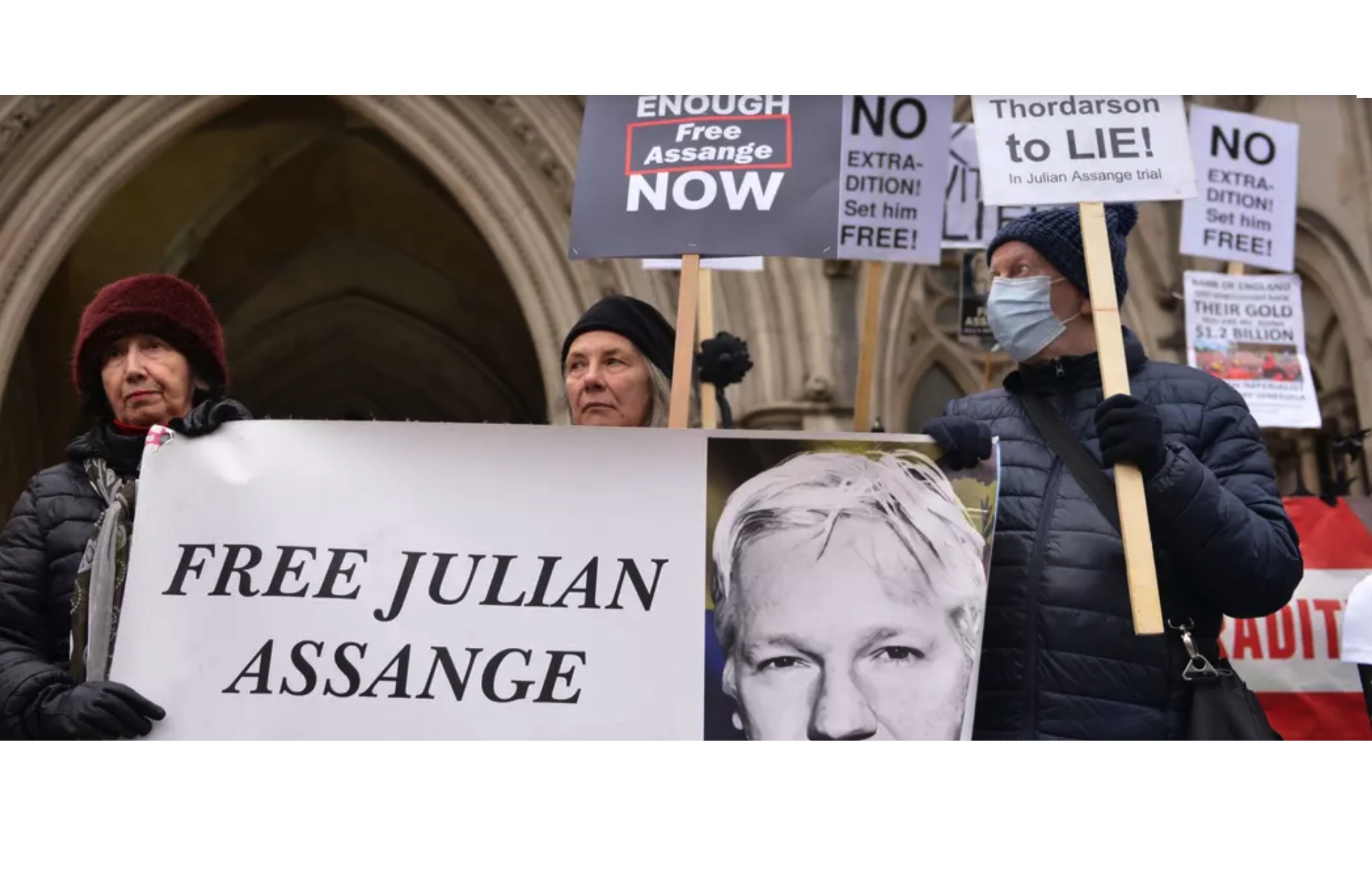
Demonstrators rally in support of freeing WikiLeaks founder Julian Assange outside of the Royal Courts of Justice in London on January 24, 2022. (Photo: Thomas Krych/SOPA Images/LightRocket via Getty Images)

“Freedom of expression, freedom of thought, and freedom of the press constitute an instrument that can controvert the interests of any government.”

In a letter to Biden and House Speaker Nancy Pelosi (D-Calif.), more than 30 progressive advocates, intellectuals, and former heads of state argued that dropping the Espionage Act charges against Assange would “send a strong message to the world: that freedom of expression, freedom of thought, and freedom of the press constitute an instrument that can controvert the interests of any government, including that of the United States of America.”

(Article continued in the column on the right)

Click here for the Spanish original of this article.

Question related to this article:
 
Julian Assange, Is he a hero for the culture of peace?

Free flow of information, How is it important for a culture of peace?

(Article continued from the column on the left)

“The cases where there are reports of serious violations of freedom of expression would also be impacted by the dropping of the 18 charges against Assange,” the letter reads. “It would affirm the defense of this fundamental human right and would undoubtedly represent a clear and robust sign that everyone can express their opinion without fear of retaliation; that all the press outlets can give news to all the citizens of the world, with the certainty that the pluralism of thought is guaranteed.”

Signed by former Greek Finance Minister Yanis Varoufakis, former Brazilian President Dilma Rousseff, Chilean intellectual Carlos Ominami, and 30 others, the letter was sent on the third anniversary of Assange’s forced removal from the Ecuadorian embassy in London in 2019.

Assange has since been languishing in Belmarsh prison under conditions that human rights experts have characterized as “torture.” Last month, the U.K. Supreme Court denied Assange’s request to appeal an earlier decision allowing him to be extradited to the U.S., where he could face up to 175 years in prison.

The charges against Assange stem from his publication of classified material that exposed U.S. war crimes, including video footage of American forces gunning down civilians in Iraq.

Given that journalists frequently report on and publish classified documents, U.S. efforts to prosecute Assange have been denounced as a grave threat to press freedoms.

But despite pressure from rights groups, the Biden Justice Department has continued to pursue charges against Assange that were originally brought by the Trump administration, which reportedly considered kidnapping or assassinating the WikiLeaks founder.

In their letter on Monday, the progressive leaders wrote that the U.S. “has a long tradition of defending freedom of expression, freedom of thought, and freedom of the press.”

“It is precisely in the name of this tradition,” they wrote, “that we, progressive leaders of the world, address you to ask that, within the scope of its constitutional and legal competence, in respect of due process of law and the democratic rule of law, that your presidency exercise its prerogative of dropping all 18 charges leveled against journalist Julian Paul Assange.”

Statement of The Ukrainian Pacifist Movement Against Perpetuation of War

DISARMAMENT & SECURITY .

A statement published in Pressenza

Ukrainian Pacifist Movement is gravely concerned about the active burning of bridges for a peaceful resolution of the conflict between Russia and Ukraine on both sides and signals of intentions to continue the bloodshed indefinitely to achieve some sovereign ambitions. We condemn the Russian decision to invade Ukraine on 24 February 2022, which led to a fatal escalation and thousands of deaths, reiterating our condemnation of the reciprocal violations of the ceasefire envisaged in the Minsk agreements by Russian and Ukrainian combatants in Donbas prior to the escalation of Russian aggression.

We condemn the mutual labeling of parties to the conflict as Nazi-alike enemies and war criminals, stuffed into legislation, reinforced by the official propaganda of extreme and irreconcilable hostility. We believe that the law should build peace, not incite war; and history should give us examples of how people can return to peaceful life, not excuses for continuing the war. We insist that accountability for crimes must be established by an independent and competent judicial body in due process of law, in the result of unbiased and impartial investigation, especially in the most serious crimes, such as genocide. We emphasize that the tragic consequences of military brutality must not be used to incite hatred and justify new atrocities, on the contrary, such tragedies should cool the fighting spirit and encourage a persistent search for the most bloodless ways to end the war.

We condemn military actions on both sides, the hostilities which harm civilians. We insist that all shootings should be stopped, all sides should honor the memory of killed people and, after due grief, calmly and honestly commit to peace talks.

We condemn statements on the Russian side about the intention to achieve certain goals by military means if they cannot be achieved through negotiations.

(Continued in right column)

Questions related to this article:
 
Can the peace movement help stop the war in the Ukraine?

How can we be sure to get news about peace demonstrations?

Free flow of information, How is it important for a culture of peace?

(Continued from left column)

We condemn statements on the Ukrainian side that the continuation of peace talks depends on winning the best-negotiating positions on the battlefield.

We condemn the unwillingness of both sides to a ceasefire during the peace talks.

We condemn the practice of forcing civilians to conduct military service, to perform military tasks, and to support the army against the will of peaceful people in Russia and Ukraine. We insist that such practices, especially during hostilities, grossly violate the principle of distinction between militaries and civilians in international humanitarian law. Any forms of contempt for the human right to conscientious objection to military service are unacceptable.

We condemn all military support provided by Russia and NATO countries for militant radicals in Ukraine provoking further escalation of the military conflict.We call on all peace-loving people in Ukraine and around the world to remain peace-loving people in all circumstances and to help others to be peace-loving people, to collect and disseminate knowledge about a peaceful and nonviolent way of life, to tell the truth, that unites peace-loving people, to resist evil and injustice without violence and debunk myths about necessary, beneficial, inevitable, and just war. We don’t call for any particular action now to ensure that peace plans will not be targeted by hatred and attacks of militarists, but we are confident that pacifists of the world have a good imagination and experience of practical realization of their best dreams. Our actions should be guided by hope for a peaceful and happy future, and not by fears. Let our peace work bring closer the future from dreams.

War is a crime against humanity. Therefore, we are determined not to support any kind of war and to strive for the removal of all causes of war.

UPM
Fb.com/PeaceUkraine
yuriy.sheliazhenko@gmail.com
Tverskyi tupyk street, 9, app. 82
01042
Kyiv
Ukraine

Censorship in Russia: Do not use this word

FREE FLOW OF INFORMATION

(Editor’s note: On March 17 we wrote with regard to the war against Ukraine that “Russians are taking risks to express their opposition in the face of police action that is sometimes even ridiculous.” Here are some new examples taken from the April 11 blog of Sergey Aleksashenko .)

On March 15, the police detained Anastasia Parshkova, who had attended an anti-war picket gathering with a placard reading: “The Sixth Commandment. Thou shalt not kill.” (In the Orthodox Church, this is the Sixth, not the Fifth.)

On April 10, the police detained Konstantin Goldman, who stood at the pedestal of the Hero-city of Kyiv in the Manezh Garden near the Kremlin, holding in his hands the book War and Peace by Leo Tolstoy. 

(Continued in right column)

Questions related to this article:
 
Can the peace movement help stop the war in the Ukraine?

How can we be sure to get news about peace demonstrations?

Free flow of information, How is it important for a culture of peace?

(Continued from left column)

On April 9, a St. Petersburg court fined Artur Dmitriev 30,000 rubles (50% of the average Russian salary) based on the article “public actions aimed at discrediting the Russian military.” On April 7, Dmitriev had gone to an anti-war picket event holding an A4 sheet of paper with the following words: “The war brought so much grief that it is impossible to forget it. There is no forgiveness for those who once again plot aggressive plans.” The phrase for which Dmitriev was detained was said by the President of Russia on May 9, 2021, during the Victory Day parade on the Red Square.

France : “We, Mayors, want to be architects of Peace!”

. . DEMOCRATIC PARTICIPATION . .

A statement from l’AFCDRP-Maires pour la Paix (translation by CPNN)

In our cities, this military attack on Ukraine brings to the surface the family stories of the past century. It also has a particular resonance with the conflicts of today’s world, for the inhabitants of the first, second and third generation of immigrants who have fled wars and misery to offer their loved ones a better life on our continent. .


In kyiv, the departure of people fleeing Russian bombardments in Ukraine. | THE PICTORIUM/MAXPPP

On a daily basis, in the face of the war in Ukraine, cities are taking action!

On a daily basis, in the face of the war in Ukraine, cities are taking action! They organize and support the journey and reception of refugees, collection of donations, accommodation and schooling, literacy courses and professional integration.

Cities also work every day to anchor the values of peace, solidarity and mutual understanding in local public policies.

In 2010, during a Mayors for Peace conference, Ban Ki Moon, Secretary-General of the United Nations, stressed that “peace is built in towns and villages all over the world and not only in conference halls in New York or Geneva”.

Against all warmongers, war makers and military industry, the cities carry within them the powerful peaceful force of the peoples and their primary desire to stop all wars.

(article continued in right column)

(Click here for the French version of this article)

Question related to this article:
 
How can culture of peace be developed at the municipal level?

(article continued from left column)

In our modern era, no city has ever declared war on another. The cities and their representatives of the people know too well the human cost of blood, weapons and tears!

A vibrant city diplomacy

From the day after the Second World War, the cities were, on the contrary, architects of peace with twinnings on each side of the Rhine.

This city diplomacy is very much alive thanks to the Mayors for Peace network, which has been alerting the world for decades to the nuclear risk, thanks to the association Cités Unies France, which unites municipalities in common objectives of union of Peace and Democracy, and thanks also to United Cities and Local Governments.

Alongside the imperative need to silence the arms, cities promote every day the values of dialogue. Diplomacy is, basically, long-term patience against the use of arms!

Bringing cities on the international stage

To build a better world, more than ever, we need to bring cities onto the international stage and give voice to peaceful municipalism and city diplomacy.

We, mayors, want to keep alive our twinning and cooperation for dialogue between peoples.

We, mayors, have a duty to build local strategies for a culture of peace with our fellow citizens.

We thus strongly reaffirm that everything must be done to find a diplomatic solution to this war and to all wars!

Signed by : Philippe Rio, Mayor of Grigny (PCF, 91), President of Mayors for Peace France; Gilles Leproust, mayor of Allonnes (PCF, 72); Stéphanie Daumin, mayor of Chevilly-Larue (PCF, 94); Jérôme Pasco, mayor of Conches-en-Ouch (Without label, 27); François Rebsamen, mayor of Dijon (PS, 21); Christophe Sonrel, Mayor of Damelevières (PCF, 54); Quentin Gesell, mayor of Dugny (DVD, 93); Olivier Corzani, mayor of Fleury-Mérogis (PCF, 91); Patrice Leclerc, Mayor of Gennevilliers (PCF, 92); Patricia Tordjman, mayor of Gentilly (PCF, 92); Michel Soriano, mayor of Lasséran (Without label, 32); Jean-François Fountaine, mayor of La Rochelle (DVG, 17); Jacqueline Belhomme, mayor of Malakoff (PCF, 92); Michaël Delafosse, mayor of Montpellier (PS, 34); Philippe Lacroix, mayor of Oradour-sur-Glane (LREM-Horizons, 87); Patrick Jarry, mayor of Nanterre (DVG, 92); Ali Rabeh, Mayor of Trappes (Generation. s, 93); Pierre Garzon, mayor of Villejuif (PCF, 94); Pierre Bell-Lloch, mayor of Vitry-sur-Seine (PCF, 94).

Facing severe repression, Russians are turning to antiwar graffiti

FREE FLOW OF INFORMATION

An article by Colleen Wood and Alexis Lerner in Waging Nonviolence published on March 21

As the Kremlin cracks down on antiwar protests, subversive street art critiquing the war in Ukraine is proliferating across Russia.

It is exceedingly difficult to organize peaceful protests in Russia. Since the Kremlin’s “Special Operation” began on Feb. 24, police have detained nearly 15,000 people across the country in connection with peaceful demonstrations. On March 4, the Kremlin expanded the scope of illegal activity with two laws that criminalize war reporting and antiwar protest. As of March 15, 180 charges have been lodged against protesters. Given — or despite — these restrictions, activists and artists are turning toward more subtle and subversive tools for political expression: namely, graffiti.


Spray-painted on a snowbank in the Russian city of Perm, this graffiti reads “Stop bombing Kharkov.” (Twitter/@RusMilkshake)

In the last 20 years, the Kremlin has limited free speech and citizens’ right to public assembly. While Russia has not been a democracy for many years, the Putin regime has generally avoided the Soviet approach to censorship, instead permitting some degree of political expression. In recent years, there have been calls for nuclear disarmament, environmental protection, maintaining pensions, and better treatment of LGBT communities. The precedent has been to criticize policy, not Putin.

But authorities are quick to crack down when citizens cross “red lines” of criticism on taboo topics like corruption and Chechnya, a republic in the North Caucasus where Moscow led two wars in the last 30 years. However, just because people cannot safely or legally speak out against unfavorable policies does not mean that they remain silent.

In order to circumvent this control over free speech and assembly, Russian activists and artists use spray paint to share anonymous and subversive views on a city’s walls. While this art form has existed in the region since the 1970s, it took a distinctly political turn in the early 21st century. Today, graffiti is an effective form of anonymous and accessible political critique, functioning as a “canary in the coal mine” when it comes to sharing otherwise privately-held political discontent.

Since Russia’s invasion of Ukraine on Feb. 24, there has been a resurgence of politically subversive graffiti that the state has spent the last 10 years trying to crowd out of public spaces.

Spray-painted tags with a simple message — “No to War!” — appeared as early as Feb. 25, even before the first major antiwar demonstration in Moscow. This same message has been painted in metro stations, schoolyards and pedestrian thoroughfares in Moscow and St. Petersburg, which are Russia’s biggest cities and have traditionally been the hub of political dissent, as well as in smaller towns including Lipetsk, Irkutsk, Samara and Tomsk.

In addition to the ubiquitous, scrappy “No to War” tags, artists are painting more sophisticated pieces with targeted critiques of Putin and the regime. In Moscow, for example, an anonymous artist used a stencil to write “You’re carrying us to hell” in Russian, implying that the Kremlin is dragging the country into an undesirable conflict and, subsequently, unwanted hardship for attacked Ukrainians and sanctioned Russians. Other anonymous works stress in all-caps that “Putin is an aggressor” and “Kremlin thieves need the war, but not me or you.” The latter, in particular, implies that the Putin regime benefits from its war in Ukraine, either through the capture of warm water ports on the Black Sea, the installation of a pro-Kremlin puppet government in Kyiv or by pocketing profits from military contracts.

Authorities are struggling to paint over the proliferation of antiwar tags across the country. But street art is not always painted with a spray can. Other media include stickers, stencils, moss, snow, yarn-bombing and wheat-pasted posters.

(Continued in right column)

Questions related to this article:
 
Can the peace movement help stop the war in the Ukraine?

Can popular art help us in the quest for truth and justice?

(Continued from left column)

In Krasnoyarsk, Vera Kotova etched “No to War” in snow that had gathered on a statue of Vladimir Lenin. She was promptly charged under the new law criminalizing antiwar protest. She faces a fine of 30,000 rubles, about $290.

Activists also leverage visual irony to critique censorship and the political environment in Russia. One placard on the back of a bus stop in St. Petersburg graphs “fear” against “hope” in Russia since 1983, with hope surging in 1991 as the Soviet Union collapsed and again in 2012 following massive protests. While the piece — installed by the Yav crew, whose name comes from the Russian word for “reality” — does not specifically mention the war, it is heavily implied.

In Nizhny Novgorod, police dragged a woman holding a blank placard in the city’s central square. One video, viewed 1.1 million times on Twitter, shows people in the crowd asking the police to justify the detention.

In addition to capturing moments of state violence or mass mobilization, activists are also taking advantage of digital communications to criticize the war and mobilize nonviolent demonstrations.

Post Tribe Inspiration created a virtual gallery on Red Square, home of the famous St. Basil’s Cathedral, as part of their ART NOT WAR campaign. Users can visit the Metaverse through the Spatial app to view a virtual antiwar art exhibit, filled with doves and peace signs drawn in blue and yellow, the colors of Ukraine’s flag. Users are invited to add their own pieces to the online gallery.

Other works integrate virtual and real-life spaces through weblinks and QR codes that can direct a viewer to a particular website with their cell phone camera. In St. Petersburg, an anonymous “lost dog” sign appeared in the metro, describing a search for a pet named Peace. The sign reads, “On February 24, an unpleasant man with hints of Botox stole our Peace!” The sign has a QR code that links passengers to resources to “help return peace,” which actually directs to a petition on Change.org demanding an end to the war in Ukraine.

Before it was banned on March 14 in Russia, activists leveraged Instagram’s emphasis on images to spread information about protest logistics. One Instagram post informed Muscovites of a protest on Feb. 24 without specifying any details in text. The caption insists, “This is just a pretty picture,” and the image features a sketch of famous poet Aleksandr Pushkin and the number seven surrounded by an emoji of a walking man. Politically motivated followers had to solve the rebus to figure out where and when the demonstration was happening. The walking emoji nods to the coded language of “taking a walk” to protest, the portrait of Pushkin leads people to Pushkin Square, an open pedestrian space in central Moscow, and the number seven is a sign to show up at 7 p.m.

Social media also enables activists to mobilize sympathetic minds and atomize dissent. The hashtag #тихийпикет — “quiet picket” in Russian — has more than 1,600 posts on Instagram, including posts that instruct social media users how to participate in single-person antiwar demonstrations. Photos with the hashtag show subtle symbols of dissent, including masks and tote bags with the “No to War” slogan painted on and green ribbons.

These kinds of subversive and coded emblems of dissent mirror past tactics. In 2012, passersby might have been informed of a St. Petersburg protest through stickers on lampposts, such as the one showing then-St. Petersburg Mayor Valentina Matvienko being trampled by Peter the Great on horseback next to the time and location of the meeting.

These more subtle tactics were more commonplace in the years when Russia’s activist circles and political opposition lacked centralized leadership. Alexei Navalny emerged as a central figure in late 2011, and over the last decade, his team has played a crucial role in organizing large gatherings against corruption, pension reform and environmental degradation. But Navalny was poisoned and imprisoned last year, and on March 15 a court extended his sentence by 13 years. This dismantling of organized opposition makes it even more difficult to organize mass demonstrations in the streets.

The arrest of 15,000 protesters, independent journalists, opposition politicians and graffiti artists has significantly raised the stakes for dissent. Some graffiti artists have responded to this by going into the shadows, painting critical works in abandoned buildings and on the outskirts of town to avoid detection. Others have chosen to leave Russia altogether.

Despite the repression and hollowing out of Russia’s graffiti and activist communities, artists continue to innovate to publicize their critical views on the Kremlin, its violation of individual rights and its war in Ukraine. This is key in demonstrating to others around the country — and around the world — that dissent of Putin’s leadership is still alive.

Appeal of the Clergy of the Russian Orthodox Church Calling for Reconciliation and an End to the War

FREE FLOW OF INFORMATION

A report from Virtue Online – the Voice for Global Orthodox Anglicanism

Russian Priests for Peace News March 1, 2022

(Click here for the original Russian version published in Google docs.)

We, the priests and deacons of the Russian Orthodox Church, each on our own behalf, appeal to everyone on whom the cessation of the fratricidal war in Ukraine depends, with a call for reconciliation and an immediate ceasefire.


We are sending this appeal after the Sunday of the Last Judgment and on the eve of Forgiveness Sunday.

The Last Judgment awaits every person. No earthly authority, no doctors, no guards will protect you from this trial. Caring for the salvation of every person who considers himself a child of the Russian Orthodox Church, we do not want him to appear at this court bearing the heavy burden of maternal curses. We remind you that the Blood of Christ shed by the Savior for the life of the world will be accepted in the sacrament of Communion by those people who give murderous orders, not into life, but into eternal torment.

We mourn the ordeal to which our brothers and sisters in Ukraine were unfairly subjected.

We remind you that the life of every person is a priceless and unique gift of God, and therefore we wish all the soldiers – both Russian and Ukrainian – to return to their homes and families unharmed.
We are bitterly thinking about the abyss that our children and grandchildren in Russia and Ukraine will have to overcome in order to start being friends with each other again, respect and love each other.
We respect God-given human freedom, and we believe that the people of Ukraine should make their choice independently, not at gunpoint, without pressure from the West or the East.

In anticipation of the Forgiven Sunday, we remind you that the gates of paradise are opened to anyone, even a person who has sinned heavily, if he asks for forgiveness from those whom he humiliated, insulted, despised, or from those who were killed by his hands or by his order. There is no other way but forgiveness and mutual reconciliation.

“The voice of your brother’s blood cries out to me from the earth; and now you are cursed from the earth, which has opened its mouth to receive your brother’s blood from your hand,” God said to Cain, who envied his younger brother. Woe to every person who realizes that these words are addressed to him personally.

No nonviolent call for peace and an end to war should be forcibly suppressed and regarded as a violation of the law, for this is the divine commandment: “Blessed are the peacemakers.”

We call on all the warring parties to engage in dialogue, because there is no other alternative to violence. Only the ability to hear another person can give hope for a way out of the abyss into which our countries were thrown in just a few days.

Let yourself and all of us enter Lent in the spirit of faith, hope and love.

Stop the war.

(Continued in right column)

Questions related to this article:
 
Can the peace movement help stop the war in the Ukraine?

(Continued from left column)

Abbot Arseniy (Sokolov), representative of the Patriarch of Moscow and All Russia to the Patriarch of Antioch and the Whole East

Abbot Nektary (Morozov)

Priest Alexy Antonovsky

Abbot Nikodim (Balyasnikov)

Priest Hildo Bos

Priest Vasily Bush

Archpriest Stefan Vaneyan

Hieromonk Jacob (Vorontsov)

Priest Alexander Vostrodymov.

Priest Dionysius Gabbasov

Priest Andrey German

Archpriest Evgeny Goryachev (veteran of the Afghan War)

Hieromonk John (Guaita)

Priest Alexy Dikarev

Priest Alexander Zanemonets

Archpriest Vladimir Zelinsky

Archpriest Peter Ivanov

Archpriest George Ioffe

Deacon Ilya Kolin

Archpriest Andrew Kordochkin

priest Lazarus of Lenzi

Archpriest Andrei Lorgus

Abbot Peter (meshaninov)

Archpriest Constantine Momotov

priest Eugene frost

hieromonk Dimitry (Pershin)

father Alexander Piskunov

Archpriest Stephen Platt

Archpriest Dionisy Pozdnyaev

Archpriest George Roy

priest Nikolay Savchenko

hieromonk IBAS, instead (of Senchukov)

Archpriest Joseph Skinner

Archpriest Dimitry Sobolewski

deacon Pimen Trofimov

Archpriest Alexander Shabanov

hieromonk Cyprian (Countrymen)

priest John Leontiev

Archpriest Vitaly Shkarupin

Archpriest Sergiy Dmitriev

Archpriest Vladimir Korolev

Archpriest Sergey Titkov

Priest Artemiy Morozov

Priest Alexy Zorin

Archpriest Andrey Lvov

Archpriest Sergiy Storozhev

Priest Ilia Gavryshkiv

Archpriest Vitaly Fonkin

Priest Artemiy Kolyagin

Hierodeacon Elisha (Romantsov).

Priest Gleb Krivoshein

Deacon John Myzdrikov

Deacon Valerian Dunin-Barkovsky

Priest Vladislav Bogomolnikov

Archpriest Vladimir Drobyshevsky

Priest Vadim Karpenko

Archpriest Gleb Vechelkovsky

prot. Theodore van der Voort

Priest Fyodor Kosolapov

Priest Anthony Lynov

Priest Anthony Kovalenko

Archpriest Dionysius Kuznetsov

Priest Dmitry Lukyanov

Priest Pavel Kasperovich

Archpriest Valentin Bonilla

Hieromonk Onesimus

the priest Alexei Pichugin

Archpriest Oleg Shulgin

Archpriest Dionisy the wards

Archpriest Victor Teplitsky

Archpriest Anatoly Bark

priest Alexey Cosoleto

deacon Alexander Pushkarev

hieromonk Hilarion

Archpriest Alexander Dubovoy

Archpriest Pavel Serdyuk

priest John Burdin

father Alexander Kuchta

deacon Dmitry Korostelev

Archpriest Georgy Zavershinsky

Archpriest Andrey Kuzma

priest Paul Countrymen

father Dimitry Vinitsky

the priest George Khristich

priest Anthony Serafimovich

monk Laurel (Solomon)

Deacon Alexey Perunovsky

Archpriest Vasily Petrov

Deacon Stefan Kuzmin

Priest Dmitry Ushakov

Priest Yakov Korobkov

Priest Alexander Nasibulin

Archpriest Mikhail Ilyin

Priest Konstantin Lebedev

Hieromonk Peter (Belov)

Hieromonk Seraphim (Standhardt)

Deacon Andrey Georgievich Morozov

Deacon Alexy Khilko

Archpriest Mikhail Fast

Protodeacon Igor Panachev

Archpriest Mikhail Evgenievich Klochkov

Priest Alexander Lebedich

Deacon Vladimir Olshevsky-Davydov

Priest Vasily Maksimishinets

Archpriest Peter Korotaev

Archpriest Igor Precup

Archpriest John Gate

Archpriest Sergiy Markevich

Priest Oleg Usenkov

Priest Alexander Novikov

Priest Sergiy Voinkov

Priest Anthony Kopaev

Deacon Oleg Karlashchuk

priest Dimitri Savin

Archpriest Pavel Kivovich

Priest Mikhail Bakker

Archpriest Igor Tarasov

Priest Sergiy Dudin

Archpriest Andrey Lobashinsky

Archpriest Mikhail Nemnonov

Priest Roman Savchuk

Priest John Terauds

Abbot Varlaam (Borin) Abbot Anthony (Loginov)

Deacon Oleg Ageenko

Archpriest Alexy Shishkov

Hierodeacon Kliment (Volyansky)

Priest Vyacheslav Shafarenko

Priest Sergiy Dyrman

Priests and deacons of the Russian Orthodox Church who wish to subscribe to the letter can write to russianpriestsforpeace@gmail.com”

More examples available of Russian opposition to the war against Ukraine

FREE FLOW OF INFORMATION

A compilation by CPNN

Recent additions to the google list “Russians are against the war in Ukraine”
Sources marked with an asterisk are no longer available


Frame from Video by Hero of Russia Alexander Garnayev with his grand-daughters

Political movements and civil activists

International appeal of famous writers to Russian speakers regarding the war in Ukraine — 17 Russian-speaking writers, including Belarussian writer, Nobel Prize winner in Literature Svetlana Alexievich

Meduza, Mar 5

Appeals of professional communities

Open appeal by alumni, students, graduate students, and staff of St. Petersburg State University against Russia’s military actions in Ukraine — more than 2,500 people 

Military aggression contradicts the culture and the values of Russian citizens, who have learned from the bitter experience of the Great Patriotic War [World War II], and the legacy of Russian artistic culture, which is anti-war in its very nature

Google docs

Declaration of Orthodox hierarchs and scholars of Orthodoxy condemning the concept of ‘Russian peace’ and its use to justify the war in Ukraine — more than 500 people, including several Russians, including Archimandrite Kirill and former editor-in-chief of the Journal of the Moscow Patriarchate Sergey Chapnin

…we reject the heresy of the ‘Russian world’ and the shameful actions of the Russian government, which has unleashed a war against Ukraine. This war relies on a vile and indefensible doctrine condoned by the Russian Orthodox Church. We reject it as profoundly un-Orthodox, un-Christian, and hostile to humanity <...>. Just as Russia has invaded Ukraine, so the Moscow Patriarchate of Patriarch Kirill has invaded the Orthodox Church (as, for example, has happened in Africa), causing division and strife that not only results in uncountable deaths, but also endangers the souls of people, the salvation of the faithful

publicorthodoxy.org

Open letter from children’s writers, poets and other book industry workers of Russia — more than 40 people

writer Alexey Oleynikov’s Facebook, Feb 26*

(available from Echo of Moscow in the wayback machine)

Statements of celebrities and organizations

Businesspeople:

the board of directors of Lukoil, Russia’s largest private oil company 

Kommersant, Mar 3

Scientists:

biologist Evgeny Levitin, who has published an anonymous appeal on behalf of Russian biologists, condemning false reports about the development of biological weapons in Ukraine, published by the pro-government Russian media

The Insider, Mar 11

Musicians and music industry workers:

Miron Fedorov (Oxxxymiron), who has organized a charity concert in Istanbul and raised over $30,000 for the Ukrainian refugees

The Flow, Mar 16

Manizha Sangin, the bands Little Big and Bi-2, Danil Prytkov (Niletto), Darya Shikhanova (Dora)

Dozhd, Feb 25*

Ivan Dryomin (Face), who has left Russia and declared that he would no longer tour in his homeland

The Flow, Mar 12

Maksim Pokrovsky, frontman of the band Nogu Svelo

Telegram channel February Morning, Mar 16

Alexei Kortnev (band Neschastniy Sluchay)

Dialog UA, Mar 8

Television celebrities, hosts, and showpeople:

Alexander Gudkov, Anastasiya Ivleyeva, Ksenia Sobchak

I’m ashamed I was born on this day — Alexander Gudkov, showman

Dozhd, Feb 24*

(available on Ukranews)

editor of Channel One Marina Ovsyannikova, who spoke out against the war in a live broadcast on Vremya on March 14, appearing behind the host with an anti-war banner, and was soon detained

No war [in English]. Stop the war. Don’t believe the propaganda. They are lying to you [in Russian]. Russians against war [in English again] (Ovsyannikova’s banner)

Meduza, Mar 14

former chief artist of Channel One Dmitriy Likin, who had resigned from his post after the beginning of the war

Meduza, Mar 19

Continued in right column)

Questions related to this article:
 
Can the peace movement help stop the war in the Ukraine?

How can we be sure to get news about peace demonstrations?

(Continued from left column)


Other culture workers and celebrities:

former Bolshoi theater prima ballerina Olga Smirnova, who had to leave the theater because of her anti-war statements

Meduza, Mar 17

Journalists:

former editor-in-chief of a pro-Kremlin media Russia Today Maria Baronova, who has resigned in protest of the war

New York Post, Mar 9

director of the Dozhd channel Natalia Sindeyeva, who has published an appeal to pro-government journalists Margarita Simonyan and Tina Kandelaki and Russian Foreign Ministry spokeswoman Maria Zakharova and asked them to speak out against the war

Novaya Gazeta, Mar 20

Military:

Colonel General Leonid Ivashov, Chairman of the ‘Assembly of the Russian Officers,’ who on January 28th had published an appeal to the President and the citizens of Russia entitled ‘The Eve of War,’ in which he condemned the possible recognition of the Donetsk and Luhansk republics and the escalation of the conflict in Ukraine

Echo of Moscow, Feb 6*

(available in the wayback machine

honored military pilot of the Russian Federation, Hero of Russia Gennady Shtern

Air Force Command of UA Armed Forces in Facebook, Mar 13

pilot, Hero of Russia Alexander Garnayev 

Novy Prospekt, Mar 12

cosmonaut, world record holder for the longest stay in space Gennadiy Padalka

Novaya Gazeta, Mar 16

Media

Former Russian Deputy Prime Minister (2012-2018), head of FIDE Arkady Dvorkovich has publicly condemned the war with Ukraine 

MotherJones, Mar 14

Several employees of the state-controlled TV channels, which daily provide the official Kremlin view on the events in Ukraine, have resigned after the beginning of the war without making any statements. This includes NTV anchors Liliya Gildeyeva and Vadim Glusker, Channel One special correspondent Zhanna Agalakova, and many other unnamed employees of Channel One, NTV, and VGTRK

Meduza, Mar 15

Statements of some government officials

Another Duma deputy from the party New People, Sangadzhi Tarbayev, has also spoken out against the war

Kommersant, Mar 13

The Commission on Political Rights of the Presidential Council for Civil Society and Human Rights has issued a statement condemning military actions in Ukraine and military censorship in Russia. It was signed by more than 12 members of the Council 

Yekaterina Schulmann’s Telegram channel 

Wayback Machine, Mar 6

____________________

Listing on Russian website Meduza February 26 under the title “In Russia itself and around the world, tens of thousands of people opposed the war.”

The following sources are in addition to the google list “Russians are against the war in Ukraine” mentioned above.

Staff and students of the Moscow Gorky Literary Institute

Google docs

Graduates, students, graduate students and employees of the Faculty of Philosophy of Moscow State University – 187 signatures listed as of March 22

Google docs

Belarusian Film Community Against War – over 500 signatures listed

Google docs

Guides-interpreters, tour guides, representatives of the tourism industry

More than 600 guide-interpreters and travel agency employees from different regions of Russia (Kaliningrad, Yaroslavl, St. Petersburg, Yekaterinburg, Moscow, Vladivostok, Kamchatka, Yekaterinburg, Saratov, Nizhny Novgorod and other regions), as well as Russian-speaking guides from different countries (Great Britain, the Netherlands , Belarus, Egypt, Spain, Italy and others) sign an appeal against military methods of resolving political conflicts.

Telegram March 1

Community of Moscow State University named after M.V. Lomonosov against the war

We, students, graduate students, teachers, staff and graduates of the oldest university in Russia, Moscow State University named after M.V. Lomonosov, we categorically condemn the war that our country unleashed in Ukraine.. . . The appeal was signed (at 00:10, March 5, 2022) by more than 7,500 graduates, staff and students of Moscow State University.

MSU Alumni Against War.notion.site