Category Archives: EDUCATION FOR PEACE

Nonviolent Peaceforce: Women’s Peacekeeping Teams incorporated into South Sudan communities

EDUCATION FOR PEACE .

an article by Nonviolent Peaceforce

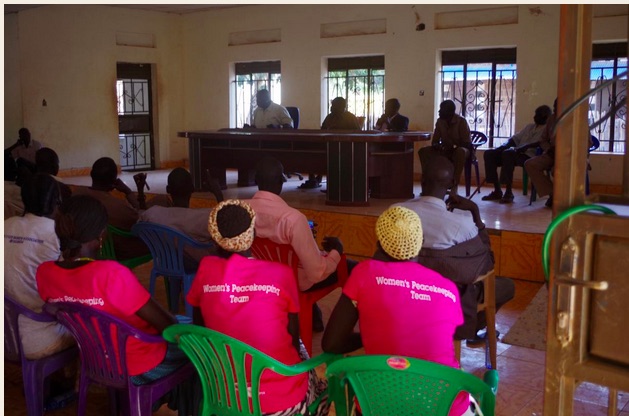
The formation of Women’s Peacekeeping Teams (WPTs) is an important part of the programming of the Nonviolent Peaceforce (NP) in South Sudan. In various communities where NP is based, NP supports the development of teams of roughly 10 women who work to support each other and their community on protection issues that target women. Specifically, issues that women are in a unique position to improve. NP helps to create the space for the women to begin their work, builds capacity and confidence – but the inspiring and life-changing work is done by the women on the teams. This was demonstrated once again during the recent visit of Country Director Tiffany Easthom to the WPTs that NP supports in Northern Bahr el Ghazal. Read about her visit:

nvpf
Click on photo to enlarge

Arriving into the small village of Malual Baa in Northern Bahr el Ghazal State, the primary thought we were all having was simply getting out of the land cruiser. After nearly two hours of bouncing along dirt tracks, through clouds of dust we were more than eager to get our feet onto solid ground. As the vehicle came to a stop, all thoughts of discomfort disappeared immediately when the 37 women who were waiting for us under the shade of a giant acacia tree leapt to their feet singing a song they had composed just for our arrival. They sang about their identity as a Women’s Peacekeeping Team (WPT), about how NP had brought them together and how they were now working for peace and security everyday in their communities. As we jumped down, we were wrapped up in the big hugs and the vigorous handshakes so famous in this country.

This warmth and excitement would be the tone for the next two days we spent with this Women’s Peacekeeping Team (WPT), learning about how they were progressing with their work and facilitating a training on Risk Analysis and Security Planning. We began our visit by hearing the members of the WPT share the cases they have been working on. The cases ranged from domestic violence, to sexual assault, reconciliation to inter-family disputes. The women stood up one by one, reporting back on the cases they had worked on and how they were now being approached by members of the their own community to provide advice, as well as, support. Mary, an exuberant member of the WPT with deep dimples shared that “since being part of the WPT, the men here treat me with respect. They now see me as a serious person”.

Angelina, more serious and suffering from a tooth ache, spoke slowly and intentionally. “The Chiefs’ court now refers cases to us, the WPT. They tell people that the WPT are good at solving problems and making reconciliation.” I was completely moved by this statement, the fact that the local judiciary process is now recognizing the WPT as a legitimate and effective option for conflict resolution is ground breaking. Angelina went on to say “As the WPT, we women are working together for peace. Usually we do not do this, sometimes we don’t even live peacefully with each other but now we are a team and it is our right and our responsibility to make peace”.

Question for this article:

Can peace be guaranteed through nonviolent means?

We have the advantage of an independent evaluation of the Nonviolent Peaceforce initiative in the Philippines conducted by Swisspeace. The evaluation is very favorable, although in the end, as one reads through it, gets the impression that such initiatives can help but cannot bring peace by themselves.

Here is the executive summary:

Nonviolent Peaceforce in the Philippines can look back at more than two years of unique, relevant contributions and constructive engagement in one of the most difficult, political and volatile, contexts to work in: Being the only international non-governmental organization working with and living in close proximity to the most conflict-affected population in Mindanao, NP in the Philippines was able to support and enhance local structures of cease-fire monitoring, early warning, cross-community dialogues, human rights protection, to offer civilian protection and help to reduce the high levels of community violence.

The accepted offer to NP in the Philippines in late 2009 by the conflict parties GRP and the MILF to join the International Monitoring Team1 (IMT) and its Civilian Protection Component is a direct expression and result of its successful contributions to non-violence and violence reduction of the last two years.

To keep up the important work of NP’s project in the Philippines in the years to come, it is essential to ensure that the activities and objectives of NPP are based on a strategically and conceptually sound footing. This seems even more important given that NPP is going through a remarkable consolidation and expansion phase at the time of report-writing.

The re-focus on its key mandate, strengths and strategic advantages in Mindanao gives NP the opportunity to further enhance its unique work in the area of nonviolence, peacekeeping and peace building.

US and Iran: Track II diplomacy through jazz

… EDUCATION FOR PEACE ..

an article by John Marks, Founder and Senior Advisor, Search for Common Ground

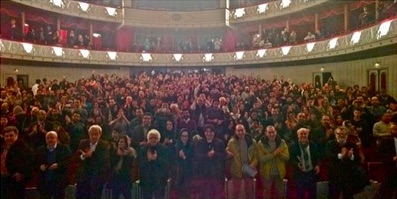
As critical negotiations over the Iranian nuclear program begin this month, an American jazz ensemble, Animation, just finished a jubilant 10-day tour in Iran, arranged by Search. The band made history as the first American musicians to play in Iran’s premier concert hall in over 35 years.

2045 jazz

Cellphone photo taken from stage by Bob Beldon, leader of Animation, while playing in Iran.

The Americans were hesitant at first, apprehensive that the trip might be dangerous. They couldn’t have been more wrong. As Bob Belden, the group’s leader, told The New York Times in its article covering the tour:

“Everybody is nice to us here…. This guy comes up to me, an Iranian, asks me where I’m from. I say, ‘America!’ He says, ‘I love you!’ I tell him I’m a jazz musician. He says, ‘I love jazz!’”

The Iranian people showed overwhelming support and enthusiasm for the musicians. After decades of hostility between the two governments, how can Iranians and Americans share such warmth?

Animation’s tour is the most recent in a series of cultural, religious, and scientific exchanges our Track II diplomacy team has organized between Iran and the U.S. When most people think of diplomacy, they think of Track I – official talks between governments. Track II –  unofficial contact – can provide an important foundation for official diplomatic success.

“Track II empowers us, citizens, to take control and do what our governments are reluctant to do, to overcome impediments, to break some of the taboos…. With a little bit of courage, particularly in my part of the world, we can achieve positive results.” – Iranian participant

Back in 1996, we gathered a team of Iranians and Americans – influential, non-governmental actors, including former high-level officials – to build trust and increase communication between the two countries. Even during the most difficult years, these unofficial efforts have continued. We’ve supported the nuclear negotiations for over a decade.

But people often make the mistake of thinking that conflicts are resolved mainly through the calculated steps of rational thinkers. We know from neuroscience and from 30+ years of practical peacebuilding that emotional experiences are pivotal in decision-making. They make a lasting impact on people’s worldviews.

“The impact of this series of meetings hosted by Search on my life has been tremendous. Not only have they changed my views, but I’ve chosen a different path in my life because of it…. I now have a totally different understanding of Americans.” – Iranian participant.

Lack of human interactions between Americans and Iranians greatly contributed to the decades of mistrust and misperception between them. At this critical moment in U.S.-Iran relations, a jazz performance offers hope for the future.

Learn more and take action:

• Check out The New York Times article about our jazz tour in Iran.

Learn more about our Track II work across the Middle East, North Africa, and the U.S.

Thank you,

Latest Discussion


Does Persian culture contribute to a culture of peace?

Latest reader comment:

In response to the question, “Does Persian culture contribute to a culture of peace,” today, I have a simple question of you. Try to imagine a woven piece of “Gold” with its warps and woofs made of cotton and fuzz while its various forming colors resemble a heavenward garden full of wonderful trees, flowers and plants!

In my view, the question is too ordinary to be answered! Any wise man will instantly find it out that “carpet” is the keyword; a loom-woven, felted textile that is being used to cover the floor of halls, rooms and mostly to decorate walls, roofs and palms in favor of those who love elegance, dainty and grace.

But what do you know about the origin of this apparently worthless rug that never attracts anyone and slightly thrown off under your feet being trampled thousands of times each day by you and your family members?

Carpet’s origin of foundation is Iran and its history of production dates back to about 5th century BC when the Achaemenidan Empire was ruling.

The oldest documented carpet of the world is called Pazyryk that has been woven by the order of Cyrus the great in 500 BC in the southern Iranian city of Shiraz and still survives, archaeologists say.

Persian culture since the beginning of its perfection during the 600s BC until today is totally associated with some distinguished arts such as miniature, calligraphy and carpet weaving, so we can claim that these precious arts are considered as the symbols of Persian civilization, in fact.

To the other words, Most of the people who don’t have much information about Iran and its luminous history are closely familiar with the outputs of Persian culture such as its performing and decorative arts.

Carpets are some applicable proofs for the claim that Persian productions are widely being used throughout the world regardless to their nationality.

Saffron and tea are also in the same conditions while originated from Iran but the majority of their international users do not know about the birthplace of these treasure floras.

However we have to keep in mind that Iran is a cradle of carpets and rugs production.

The world’s most professional masters of carpet-weaving are currently working inside traditional looms and workshops of Persian ancient cities such as Kashan, Tabriz, Yazd, Isfahan and Qom and their powerful hands manipulating wools, silk, cotton, chords and yarns to finally ensue the dazzling results that we spread under our feet unconcernedly.

The carpets of highest quality are often woven by hand whereas machine-made carpets gain less quality, credibility and artistic value, so the most people try to pay more so as to buy the hand-woven carpets.

It is necessary to add that the average of time needed for a beautiful illustrated carpet to come out (by hand) is approximately 400 hours and it undoubtedly shows the pure struggles of painstaking weavers who form the carpet knots with their sense of responsibility, love and talent.

Carpets are the most popular souvenirs in Persia and families who want to dispatch gifts to their relatives outside Iran will always choose small-sized tufted or needlefelt carpets with fantastic warp and weft threads which shape spectacular sights of natural and ancient scenes.

The most-used designs for carpets are consisted of abstract natural landscapes ornamented by warm and almost red-spectrum colors.

The dominant equipment used for carpet weaving process are still the traditional instruments of past centuries such as spun and spindles.

The Peace Letters Project

EDUCATION FOR PEACE . .

an article by The Peace Letters Project

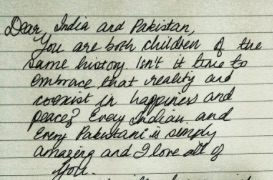
The PeaceLetters Campaign is a very simple way of showing your commitment to peace, and to build the value through bonds forged with unseen, unknown and unheard communities. It involves a very simple task that’s broken down into the following steps:

1. Choose a community / person / country that you want to send a message to.

2. Take a piece of paper and address the community / person / country and write your message of peace.

3. Take a photograph of the letter and submit it using the form below [click here]!

We will then put it up on this website! A few points to keep in mind, though, are:

1. We do not allow room for letters with content that is hurtful, offensive, discriminatory or defamatory.

2. We reserve the right to refuse to publish content that our team deems hurtful, offensive, discriminatory or defamatory.

3. We take your privacy very seriously, and undertake not to disclose any details you don’t want us to share.

Send us your Peace Letter Here!

Remember, just three simple steps:

1. Choose someone to send a message to.

2. Take a piece of paper and address the community / person / country and write your message of peace.

3. Take a photograph of the letter and upload it below [click here]!

[Thank you to Janet Hudgins, the CPNN reporter for this article.]

Question(s) related to this article:

Can children be involved in the peace process through literacy?,

Latest reader comment:

Students, especially children are easily moved when they hear about other children. Parents and teachers should take time to explain to students about world situations. Show them pictures or documentaries so that they will have a better understanding of how they can promote peace. Simple facts of life like living simply, recycling, protecting the environment can be shared with them so that they develop a different kind of maturity – be prepared to serve others than to be served. They will realise that peace is important if you want to improve the condition of the unfortunate. As they grow, they choose careers whereby they will be able to meet the needs of the unfortunate.

Edward Snowden Congratulates Laura Poitras for Winning Best Documentary Oscar for Citizenfour

.. EDUCATION  FOR PEACE ..

an article by American Civil Liberties Union

[Editor’s Note: The film “Citizen Four” by Laura Poitras, based on interviews with Edward Snowden, won this year’s Hollywood Oscar award for best documentary.]

Photo credit: The Guardian/Laura Poitras (click on photo to enlarge)

The following is a statement from Edward Snowden provided to the American Civil Liberties Union, which represents him:

“When Laura Poitras asked me if she could film our encounters, I was extremely reluctant. I’m grateful that I allowed her to persuade me. The result is a brave and brilliant film that deserves the honor and recognition it has received. My hope is that this award will encourage more people to see the film and be inspired by its message that ordinary citizens, working together, can change the world.”

Anthony D. Romero, executive director of the ACLU, had this reaction:

“Laura’s remarkable film has helped fuel a global debate on the dangers of mass surveillance and excessive government secrecy. The ACLU could not be more delighted that she has been recognized with an Academy Award.”

The ACLU’s petition asking President Obama to grant clemency to Snowden is at: https://www.aclu.org/secure/grant_snowden_immunity.

Question(s) related to this article:

The second edition of the Amani Festival fixed for mid-February in Goma

.. EDUCATION FOR PEACE ..

An article by Radio Okapi

Video: Goma music festival

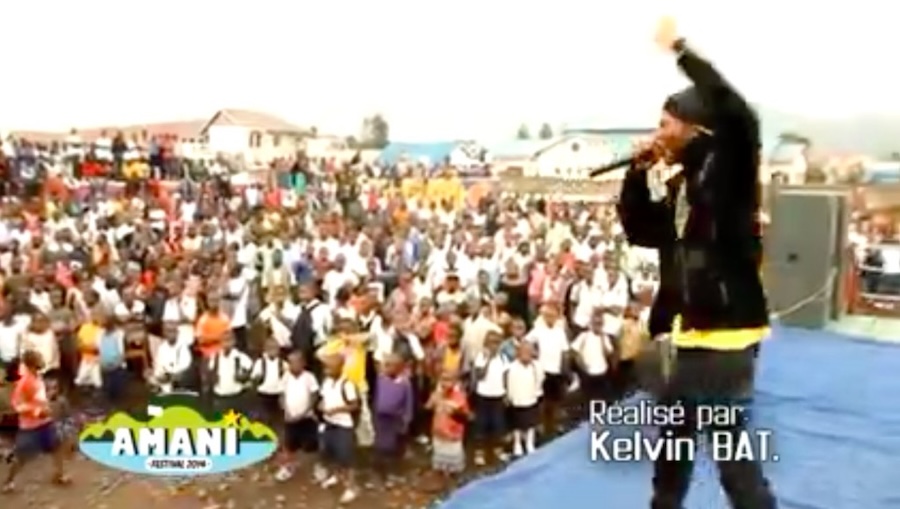
The second edition of the Amani Music Festival has been announced for the 13-15 February in Goma, the center of Nord- Kivu in the Democratic Republic of Congo. Under the theme “Dance for change and sing for peace”, the Festival will benefit from the support of a number of partners, including the UN peace force Monusco and the NGO Francopholies.

Scene from the video of the 2014 festival

The previous edition of the Amani Festival, organized in February 2014, drew thousands of residents from the Great Lakes Region.

In the following radio broadcast, the musician-artists Tiken Jah Fakoly and Habib Koite speak with the journalist Marcel Mayoyo.

(Click here for a French version of this article)


Question related to this article:

In Nepal, Woman Radio Host Makes Big Splash over Airwaves

.. EDUCATION  FOR PEACE ..

an article by Jiyoung Han for Search for Common Ground (abridged)

Sanju Kumari Das is a petite, soft-spoken woman, but don’t let that fool you. Hailing from Siraha, a volatile district in Nepal’s eastern Terai, this formidable 26 year-old commands the attention of political giants, helps end nationwide strikes, and is one only a handful of female radio show hosts in Nepal.


Sanju Kumari Das

Sanju is a producer for the Farakilo Dharti franchise, one of Search’s peacebuilding radio talk shows in Nepal. . . . Sanju has undergone Search’s peacebuilding training and applies the common ground approach to disputes on the program.

“It’s challenging to get people of opposing sides to come to an agreement, but it’s truly rewarding when it happens,” explains Sanju. “Agreement is difficult to achieve and should be celebrated.” . .

Once when political parties enforced nationwide strikes over a disagreement on the future federal states, Sanju invited party reps on the show to talk it out. This set a constructive precedent for subsequent talks, culminating in a multi-party agreement to end the strikes.

Many of Sanju’s guests have praised her accomplishments and mediation skills. This is all the more striking in a region where women are expected to be silent before men, contrary to Sanju’s highly public profile as a peacemaker. However, Sanju believes her gender and youth are irrelevant to the quality of the show, however. She coolly explains that, as long as the proper conflict resolution models are maintained, hosts young and old, male and female, would see similar results.

“I used to think I was always right, that my opinions were the most accurate. But producing Khulla Dharti has shown me that I make mistakes, that alternative views have just as much merit as my own. I’ve learned to listen to others, which is a crucial part of resolving any conflict.”

Khulla Dharti has built a strong following, with listenership as high as 41% of all radio listeners in the eastern region of Nepal. Sanju credits the program’s emphasis on neutrality and constructive dialogue as the key to its appeal. Whether it’s critically or appreciatively, listeners are engaging with Khulla Dharti conversations. For now, they’re focused on getting Sanju back on air; the mother of two has been on maternity leave to look after her 8 month-old son. She plans on returning to Khulla Dharti soon.

Fourteen radio stations currently produce and broadcast Farakilo Dharti in three languages—Nepali (Farakilo Dharti), Maithili (Khulla Dharti), and Tharu (Chakkar Dharti)—tailoring their respective shows to the local context. Between April and June of 2013, 84% of FD episodes have led to an agreed solution between conflicting parties, while a 2013 listenership survey revealed that 80% of respondents continue the discussion with friends after listening to the show. Indeed, FD continues to have impact on its target communities, with marginalized groups across the country reporting that it gives their voices an otherwise unavailable platform.

Question related to this article:

Almería, Spain: Over 100,000 students participate in “The school as a space of peace”

.. EDUCATION  FOR PEACE ..

an article by Teleprensa (abbreviated)

The 268 schools in the province integrated into the network ‘The school as a space for peace’ celebrated today [January 30] the School Day of Non-violence and Peace with a program of fun and cultural activities promoting democratic values, equality, respect for diversity, dialogue and tolerance. More than 100,000 students and 5,000 teachers participate in these initiatives to improve coexistence in the educational community.


Children from the public school of Chanca have taken to the streets for their own peace demonstration

The main event was held at the Multipurpose Center of Berja, organized by the seven schools in the municipality involved in the network ‘The school as a space for peace’ with the project collective ‘Berja: Puerta de la Paz de La Alpujarra’ . It consists of the infant school Barajas, the primary schools Andrés Manjón, San Tesifón and Celia Viñas, the CDP school Our Lady of Gádor, Villavieja and the IES school Sierra de Gador. More than five hundred students attended this event which read the ‘Manifesto 2000’, a formulated by a group of Nobel Peace Prize winners on the occasion of the 50th anniversary of the Universal Declaration of the Human Rights to spread the culture of peace and nonviolence. The text incorporates the idea of individual responsibility in the family, the village, the region and the country to practice and promote non-violence, tolerance, dialogue, reconciliation, justice and solidarity on a daily basis.

The students read messages about respect for life, rejection of violence, generosity, understanding, preservation of the environment and natural resources, solidarity and equality. In addition, with the patronage of Municipal Sports, their schools organized a charity race to benefit the NGO Save the Children. The primary school Palomares, Cuevas del Almanzora, has also supported this NGO to raise funds for the people of the Sahel. Previously, students have studied in their classrooms about the food crisis and the living conditions in the African region. . .

In Vicar, the primary school Federico García Lorca has organized several circuits of cooperative games on the values of peace with the participation of families and secondary students as monitors.

The School Day of Non-violence and Peace has been celebrated on January 30 since 1964, when it emerged as an initiative of the Spanish professor Llorenç Vidal to spread education and tolerance, solidarity, harmony and respect for human rights. In 1993 he received the support of UNESCO that made this a World Day celebration. The event coincides with the date when Mahatma Gandhi was assassinated in 1948.

The Junta delegate of Education, Culture and Sports, Elizabeth Arevalo, stressed that ‘the culture of peace is not only a main issue but is one of the ultimate goals of the public education system in Andalusia as embodied in the Plan Andaluz of Education for a Culture of Peace’, which involved the creation of the Network “The school as a space of peace” ‘in the 2002-2003 academic year.

(Click here for a Spanish version of this article)

Question related to this article:


What is the best way to teach peace to children?

Comment by Jeanne posted: Mar. 04 2015

The best ways to teach peace to children pre-K to 12:
1. Create schools and classrooms where children live and learn in environments that foster kindness and caring with empathy, respect for everyone and personal responsibility for all that you say and do.
2. Teach the concept of human rights and dignity and the skills of critical thinking and peaceful conflict resolution.
3. Integrate and infuse the concepts and skills in all curriculum subject areas so children develop into knowledgeable and thoughtful world citizens who feel empowered to make the world better for everyone and who are not afraid to take on the political establishment.

Our world leaders of tomorrow are in our classrooms today. What a wonderful opportunity educators have to impact our quest for that elusive culture of peace!

If you want to receive by pdf, our Newsletter with resources and ideas for educators, please contact me:

Jeanne Morascini, Founder
Curriculum of Hope for a Peaceful World
Jemora@aol.com