Category Archives: EDUCATION FOR PEACE

Music Builds Peace One Day at a Time

EDUCATION FOR PEACE .

An article by Jeremy Gilley in Huffington Post (reprinted according to principles of “fair use”)

Music has always played a vital role championing social causes; whether through bringing musicians together to challenge injustice, raise funds for the disadvantaged or, in fact, to demonstrate to the world a rich and vibrant culture that is under threat. Music speaks to everyone; irrespective of background, age, religion, political opinions or wealth, everyone can find something that connects them with another through music.

Gilley
Video of Peace Day Anthem

Peace One Day has been campaigning for over 17 years, making the case for Peace Day, an annual day of global ceasefire and non-violence, 21 September. On this journey we have worked with every sector of society and music has been a powerful vehicle to bring people together on the day. We have held concerts around the world including Derry-Londonderry, the Peace Palace in The Hague (the home of the ICJ), and last year in Goma, eastern Democratic Republic of Congo. Artists such as Annie Lennox, Akon, Elton John, Youssou N’Dour, Lexxus Legal and many more have performed in celebration of the only day of peace the world as one has.

This year, music for Peace Day takes on a new and inspiring dimension with ‘ONE’, the Peace Day anthem by Coke Studio in Nairobi. Bringing musicians together from five African countries this song celebrates the power of peace to unite people and champion our common humanity. Musicians include Zwai Bala (South Africa), Ice Prince (Nigeria) Maurice Kirya (Uganda), Alikiba (Tanzania), Wangechi (Kenya) and Dama Do Bling (Mozambique) have come together in this unique track, offering the world’s peacemakers and champions an anthem to unite behind and celebrate.

The anthem will be premiered at the Peace One Day Youth Celebration held on Peace Day in the Petit Stade Amahoro in Kigali, Rwanda which features performances from artists from across the Great Lakes region of Africa including Congolese musician, Innoss’B, Rwandan performers including Knowless, Urban Boyz, dance crews, Jabba Junior & Krest Crew and the pan-African choir, the African Children’s Choir. Using music, dance, film and more, Peace Day will empower the peacemakers of the future to become to driving force behind a more peaceful and sustainable world. What better way to amplify this message than an anthem bringing together music fans from around the world?

On Peace Day, ‘ONE’ will be available for download on a number of download sites including iTunes, Google Play and Amazon, so everyone will have the chance to own this part of Peace Day history and share it with their friends and family, spreading the message of Peace Day further around the world. This anthem is supporting our work to raise awareness of Peace Day, 21 September in the Great Lakes region of Africa and across the world. We are grateful to the Howard G. Buffett Foundation for making this possible.

Peace Day, 21 September is about building peace one day at a time and through music we can unite people behind this message, celebrating hope, our common humanity and lasting peace.

Question for this article:

Third Regional Conference “Latin America on the quest for sustainable peace: tools and contributions”

.. EDUCATION  FOR PEACE ..

Convocation from Congress blogspot (translated by CPNN)

The Latin American Council for Peace Research (CLAIP), the Latin American Faculty of Social Sciences (FLACSO), and the Association against trafficking of children and women (ECPAT / Guatemala) announce the Third Regional Conference “Latin America on the quest for sustainable peace: tools and contributions” to be held in the Academic headquarters of FLACSO in Guatemala City from 26 to 28 October 2015.

CLAIP

Objective: To reflect on building a sustainable peace in Latin America, even in contexts of conflict and generalized violence, exchange new approaches to peacebuilding and the challenges we must overcome to achieve it.

Target audience: teachers, researchers, students, professionals and scholars from multiple disciplines who are interested in research and / or work on these issues in the region.

THEMES:
1. Peace and Education
2. Peace and Environment
3. Peace instead of urban violence
4. Human and gender security, development and peace
5. Democracy, Public Policy and Citizenship Building

The themes of Dialogue, Peaceful Conflict Resolution, Gender, Equity and Intercultural issues are transverse to the preceding 5 themes.

METHODOLOGY OF THE CONFERENCE:

Keynote speakers: members of CLAIP FLACSO and ECPAT.

Thematic tables: The participants will present papers approved in the relevant thematic working groups, which will be coordinated by specialists of CLAIP-ECPAT-FLACSO.

Mail Contact: claip.congreso2015@gmail.com

NOTES:

Congress languages: Castilian and Portuguese, no translation

Lodging: each must manage and make their own reservations. FLACSO is in Zone 10 of the city and it is advisable to stay in that same area. More information.

As in previous years, we plan to publish a new book by CLAIP with selected papers at the Conference. More details will be published later.

For further information consult the Congress blog or our Facebook page.

(Click here for a Spanish version of this article)

Question related to this article:

Letter of appreciation to the Palestinian Youth Orchestra

EDUCATION FOR PEACE .

by Phyllis Kotite

“Music is the language of the spirit” –Khalil Gibran
 
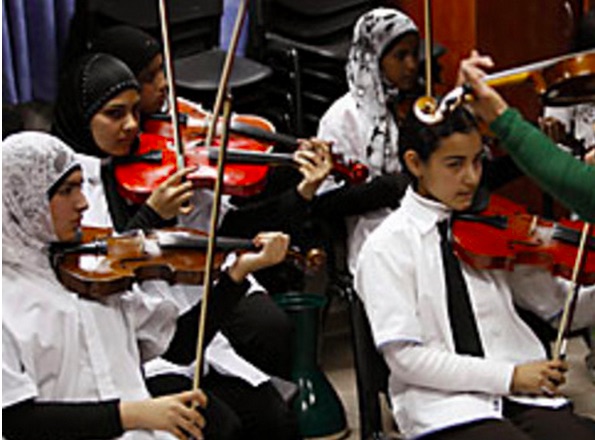
May I express profound appreciation for the magnificent and outstanding performance of the PYO in Paris.  Having followed the evolution of these talented young musicians, ‘grace’ a Lena Saleh, have been astonished at the performances in the major European and Arab countries.  As a Lebanese Arab, and former United Nations staff inspired by classical music, am deeply proud of these creative young Palestinians whose talent enhances our great Arab heritage.  They were one of the best symphony orchestra’s I have ever heard !!  And the guest conductor was excellent also with his lively and harmonious style.

kotite

You and your colleagues are to be congratulated on this brilliant initiative which has brought joy and pride to our beleagured region.  It is indeed remarkable that such beauty emerges from the oppression of occupation and sorrow.  Recalling the great poet Mahmoud Darwish:
 
   “I have found an opening to inscribe the national into the universal,so that Palestine does not limit itself to       Palestine, but finds her legitimate esthetics in a more vast human space.  The Middle East is the birthplace of mazcivilizations.Sumerian, Egyptian, Canaanian,…Mediterranean identity is universal”.
 
Indeed, this universal spirit was skillfully demonstrated by the PYO’s superb performance of composers from different cultures.  Having cooperated with numerous international development projects for Palestine, am certain that your future, your civic values and manner of governance will be a model for our region.
 
Mabruk mitte murra, bravo and sincerest gratitude for this moment of beauty, during this dreadful times for our region.   I hope we will meet one day.


Question related to this article:

USA: Campaign Nonviolence Week of Action II, September 20-27, 2015

EDUCATION FOR PEACE .

An article by Pace e Bene

Build a culture of peace, mainstream nonviolence, take action September 20-27, 2015!

Campaign Nonviolence is a new, long-term movement to mainstream nonviolence and to foster a culture of peace free from war, poverty, climate crisis, and the epidemic of violence.

campaign

Campaign Nonviolence invites us to:

– Practice nonviolence toward ourselves, toward all others, and toward a world longing for peace, economic justice, environmental healing, and effective nonviolent solutions

– Explore, study, and unleash the principles and methods of nonviolence in our lives, our communities, and our societies

– Connect the dots and join forces in the long-term struggle to abolish war, end poverty, reverse the climate crisis, and take a stand against all violence, including the structural violence of racism, sexism, homophobia, economic inequality, and all forms of oppression, and

– Discover and deepen the power of nonviolence, including the vision and tools for nonviolent change that Mohandas Gandhi, Dr. Martin Luther King, Jr., and many other people and movements have activated for social and personal transformation.

Campaign Nonviolence launched this long-term movement September 21-27, 2014 with 239 actions and events in every part of the nation.

CNV marches, rallies, vigils, prayer services, fasts and festivals took place over seven days in September from American Samoa to Maine, from Washington State to Florida, and from California to New Hampshire. Events also took place in Afghanistan, Colombia, and Canada. See this update for stories and pictures from this week of nonviolence.

To develop this week of actions, Campaign Nonviolence organized in every state in the country, led skill-building trainings across the nation, completed a national speaking tour, established nonviolence study groups nationwide, and was endorsed by over 185 national and local organizations.

Now, we are taking the next step. We encourage people everywhere to study nonviolence, practice nonviolence, build out the infrastructure of nonviolence, and take nonviolence public — including taking action again this year during Campaign Nonviolence Week of Action II, September 20-27, 2015.

See more about what’s next below!

Questions for this article:

Colombia: Rock in the Park 2015 – Music for the 21st Century

EDUCATION FOR PEACE .

An article from Rock al Parque (translation by CPNN)

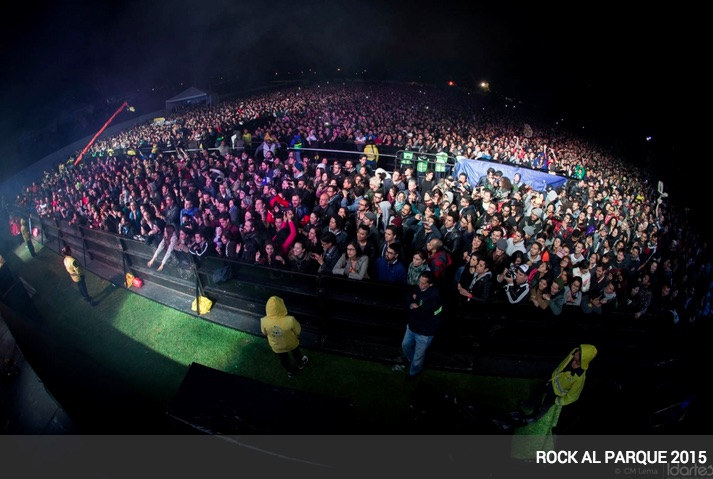
More than 350,000 people attended this year’s version of the Rock in the Park Festival which has become an institution in Bogotá. It has evolved and changed with the city, moving from generation to generation because it is alive and in this 21st edition it looks straight into the twenty-first century. This new edition of Rock in the Park, which closes after three great successful days of music, holiday, coexistence and diversity, was dedicated to the culture of peace.

rock

This version of the most iconic rock festival of the continent left with sound, and music in the air from 74 national, local and international bands that came to the stage of the Metropolitan Simon Bolivar Park and the Media Torta, providing all the power of their talent to the thousands of spectators who showed once again that the Colombia is a rocker capital.

The Rock in the Park that we know today is the result of a conscious policy of the transformative power of art and culture in contemporary societies, as Mayor Gustavo Petro said in 2014, during the celebration of the twentieth anniversary of festival

Rock in the Park has made and continues to make it possible for thousands of young people to love music and reflect on a city that has tried collectively to build a public good as now recognized nationally and internationally. As explained by Santiago Trujillo Escobar,director general of the District Institute of Arts, Idartes, “Rock in the Park is the space to exercise creative freedom to be and to let be and to celebrate life. It makes us realize that if we commit the will and energy of our bodies and conscience, we can transform this country into a more humane and just society. ”

According to Santiago, “Rock in the Park has become the place where conflicting and sometimes extreme expressions of diversity can coexist and be respected and enhanced. From the point of view of Idartes, we value and foster debate. For us criticism is always welcome. Thanks to this we have a more pluralistic and representative festival, a festival that looks straight into the XXI century”

The closing of the third day of Rock al Parque was in the hands of three international bands, Café Tacvba, Ill Nino y Adrenaline Mob. They gave memorable moments to thousands of spectators full of emotions and euphoria and voice to the demand for social change and actions for peace.

(article continued on the right side of the page)

(click here for the Spanish version of this article.)

Question for this article:

What place does music have in the peace movement?

(article continued from the left side of the page)

An example of this was when members of the Che Sudaka band decided to share the stage with David Jaramillo of Doctor Krápula to chant a rock “bambuco” dedicated to the peasants and indigenous people who resist the occupation of their land, reject transgenic seeds and claim peace ” once and for all!”. Another example was when the vocalist Jota decided to run into the arms of the public, in an unforgettable moment that adds to the many who remain in the collective memory of a rock concert that Bogota renews year after year.

Because, as noted by Bertha Quintero, Deputy Director of Arts at Idartes and protagonist of this story from the beginning: “Today the festival is at the height of the great festivals of the world.” According to her, one of its main features has been the behavior of respect and coexistence of the public who has appropriated this space.

This is supported by the Subcomandante Metropolitan Police of Bogota, Col. Aurelio Ordonez who highlighted the exemplary behavior of the citizens who ensured complete tranquility during the three day event.

But besides being exemplary, Rock in the Park has served as a platform for groups that today have a national and international scope; since 2011 the festival has presented on its stage 134 district, 75 national and 169 international bands.

It should be noted that this year, the musical palette was based on gender diversity that resulted from the programming led by Chucky Garcia, according to Santiago Trujillo.

This year, in addition to presenting bands from around the country, the festival brought talent from countries including Chile, Jamaica, South Africa, Portugal, United States, Puerto Rico, Mexico, Germany, Venezuela, Spain, Ecuador, Italy, Japan, Argentina, France, Costa Rica, England, Poland, Brazil and Bosnia, among others.

In addition Rock in the Park serves as a showcase for companies and entrepreneurs in the sector. They find here a stage for their products and a space in which participants can access a variety of cuisines and collectible articles.

The festival includes more than what is on the stage. There is an academic component that includes lectures, workshops and panels that enhance dialogue and strengthen musical practice that grows every year. This year, for example during the three days of the festival more than 140 thousand people visited the corporate site of Rock in the Park. Not to ignore those who who follow the festival through the live broadcasts by Channel Capital which also reached over 450,000 Internet users, according to the data offered by the operating director of Channel Capital, Favio Fandiño.

In sum, the 21st festival has been worthy of its century, able to project into the future with the certainty of its institutional maturity and allow thousands of young people and adults to enjoy a complete selection of the best of the rocker scene, a memorable journey through the sounds and colors the rock music from around the world

Honduras: OAS to receive report about judicial facilitators

EDUCATION FOR PEACE .

An article from La Tribuna de Honduras (translation by CPNN)

The Judiciary of Honduras, along with the team implementing the National Service of Judicial Facilitators (SNFJ) will present a report on the progress of this service during the National Judicial Facilitators meeting today [August 8] with Secretary of the Organization of American States (OAS), Luis Almagro Lemes.

honduras
Luis Almagro Lemes, Secretary of the Organization of American States (OAS)

The authorities of this branch of government will inform the Secretary General of the OAS, Luis Almagro Lemes, about the progress, achievements and implementation of the work of this important service that already concerns 12 departments.

The SNFJ national meeting will be attended by President of the Judiciary, Jorge Alberto Rivera Avilés; President of the Republic, Juan Orlando Hernández, Secretary General of the OAS, Luis Almagro Lemes, and Pedro Buscovitz, regional coordinator of the Inter-American Judicial Facilitators Program of the OAS.

The judiciary through its National Facilitators Service meets objective number 4 of its law, by involving the population in this program.

Since 2012 this program has sworn in a total of 1,644 judicial facilitators in the 12 departments where their work contributes to the country’s system of administration of justice.

The judicial facilitators are community leaders appointed and elected by the community. They serve as a support to the magistrates in each municipality, which saves time and money for the society and contributes to building a culture of peace.

The tasks performed by Judicial Facilitators are: reconciliation, accompaniments, lectures and advice, under supervision by the judiciary and national laws.

Already this year there has been a total of 492 reconciliations. This yields a saving for the State by avoiding that these cases come to trial. It lowers the judicial backlog while providing access to justice

(click here for the Spanish version of this article.)

Question for this article:

Argentina: Program announced for the Film Festival “Nueva Mirada”

EDUCATION FOR PEACE .

An article from Escribiendo Cine

Organised by the Nueva Mirada Association, under the slogan “Buentrato: For a culture of peace”, the Festival, unique in its subject in the country, has been declared to be of interest fr Cultural and National Education by the Chamber of Deputies, the Senate of the Nation, the Legislature of the Autonomous City of Buenos Aires, the Ministry of Culture and the Ministry of National Education.

cine

The festival will officially open on Thursday August 27 in Room INCAA Km.0 at 14 pm with the screening of the animated feature Shaun, the lamb. The film is based on the television series of the same name and was written and directed by Richard Starzak and Mark Burton.

As in past festivals, Nueva Mirada present high quality films that have been made by recognized professionals, but that have not been distributed in the commercial film and television circuits. Films will be shown from several countries, including Germany, Italy, Brazil, Sweden, Denmark, Spain, Cuba, UK, Netherlands, Switzerland, Iran and Mexico. In addition, the Festival will feature prominent guests, such as Jan-Willem Bult from the Netherlands, who will participate as an Official in the Jury and who will conduct the Television Production Workshop with children. The short films in this workshop will be exhibited at the close of the Festival and will be disseminated through the Internet and other circuits.

The “Panoramic” section (fiction) of the Official Competition for Feature Films will include: Life According to Nino, by Simone van Dusseldorp; Shana, the Swiss Nino by Jacusso; Lola, the German by Thomas Heinemann; The bike of my father and I, by Fayaz Mousavi; Teaching how to live, by Giuseppe Piccioni; and beautiful horizon by Stefan Jäger.

Among the films confirmed to compete in the animation section are: Pim and Pom, the great adventure, by Gioia Smid; The legend of the mummies of Guanajuato, by Alberto Rodriguez; Pinky finger, by Ernesto Pradón; Worms, by Paolo Conti;, and Beyond the beyond, by Esben Toft Jacobsen. Various other animated short films and fiction, selected for the viewer’s age ,will also be shown.

In addition, a Retrospective Tribute will take place for Juan Pablo Zaramella, one of Argentina’s most creative independent filmmakers of animation. His films have won the Silver Condor Best Short Film three times, while all his short films have won awards worldwide. In 2010, the International Animation Festival of Annecy presented a retrospective of his work. His latest short film, Luminaris, was shortlisted for an Oscar category of Best Animated Short Films, and he has already received over 300 international awards, including the Audience Award and the FIPRESCI International Critics Prize at Annecy in 2011.

The venues of the Festival New Look, confirmed so far are Space INCAA Km 0 -Gaumont- Rivadavia Av 1635, Leonardo Favio (Library of Congress), Alsina 1835..; Bicentennial National House, Riobamba 985; Bernasconi Institute, Catullus Castillo 2750; Julian Centeya Cultural Center, San Juan 3255; Casa de la Cultura Villa 21, 3500 Iriarte Av.; Cultural Space Carlos Gardel, Olleros 3640.

(The article is continued on the right side of the page)

(Click here for the original Spanish version.)

Question for this article:

Film festivals that Promote a culture of peace, Do you know of others?

(Article continued from the left side of the page)

Among the parallel activities, on 28 and 29 August: the International Seminar “critical eye. Audiovisual, Transmediality and Education in the XXI century “in the headquarters of the OEI (Organization of Ibero-American States), Jorge Cavodeassi Falgari Auditorium, located in Paraguay 1583, 2nd floor, with leading domestic and foreign experts. Also in this space, the transmedia game “Kitchen Project” on Monday September 1, with the participation of entertainers, musicians, filmmakers, video game producers, and renowned specialists and representatives of TV channels of Latin America. Admission is free, as in all activities of Nueva Mirada, with registration at: Info@nuevamirada.com

World Congress of Education International: Call for values and end to violence

EDUCATION FOR PEACE .

An article from Education International

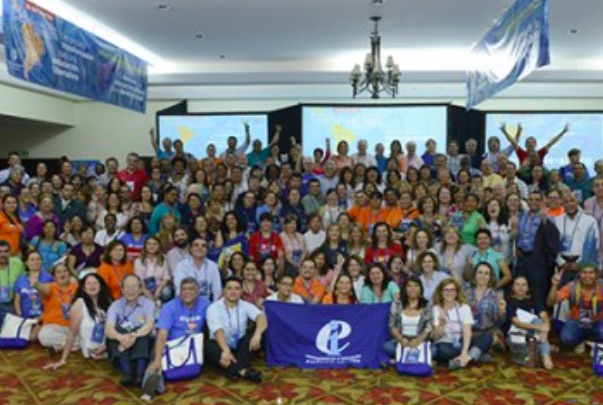
Several resolutions were passed at Education International’s 7th World Congress on the promotion of democracy, sustainable development, fair trade, basic social service and health and safety through solidarity and cooperation among member organisations, the international trade union movement and civil society.

edinternational
Photo Credit: Gabriel Castro – IEAL

Resolution 4.1: The Promotion and Protection of Standards and Values in the World “recognises four major interlinked challenges: the liberalisation of the economy, the lack of respect for agreed standards by governments, geopolitical shifts, particularly in Eastern Europe, and the rise of religious extremism,” said EI’s General Secretary, Fred van Leeuwen, who proposed the resolution on 25 July. The resolution calls on EI to work with its members and stay vigilant in response to these four global challenges, he said, adding that EI must continue to engage with the UN and other international organisations.

Speakers to the debate raised concerns about privatisation, standardised tests, violence against teachers and students, the environment, climate change, and urged unions to protect agreed standards and shared values.

Millions of children across the globe are involved in child labour, denied their right to education and health. So said James Tweheyo, Uganda National Teachers’ Union in proposing Resolution 4.2: Accelerated Action Against Child Labour in Connection with the Post-2015 Sustainable Development Goals on 25 July. “The damage to these children is too much to ignore.”

Speakers called for further actions of education trade unions in collaboration with other unions, civil society organisations, governments and international institutions to eliminate child labour. The Resolution echoed the keynote speech earlier on 25 July by Nobel Peace Prize winner Kailish Satyarthi, the founder of the Global March Against Child Labour, who said that EI, trade unions, and teachers played a key role in facilitating the building of the Global March Against Child Labour. “I refuse to think the world is so poor that it cannot bring all children to school,” he said.

Society should not have to witness the abduction and killing of students and teachers across the world, said Philipa Harvey of the National Union of Teachers (UK). She was proposing Resolution 4.3 Resolution on Education, Peace and Justice in Conflict Areas to Congress on 26 July.

The resolution instructs the Executive Board to encourage affiliates to promote peace, justice and conflict resolution. And it urges affiliates to press governments to adopt and endorse international guidelines for protecting schools and universities from military use during armed conflict.

Delegates raised concerns around extremism and school shootings and the education deficit caused by warfare and violence.

The need to promote values to combat extremism was a common theme in contributions to Resolution 4.4 Resolution on Education and Extremism. “Education is key to tackling extremism in all its forms,” said Arthur Frederick Brown, of the National Association of Schoolmasters Union of Women Teachers (NASUWT). “The role of teachers and trade unions is to promote the values of equity, solidarity, democracy, and respect for others.”

Amongst other elements, Congress resolved to ensure EI continues to demonstrate its commitment to equality and diversity and its opposition to exclusion and extremism in all its forms.

Question for this article:

Education International to focus on refugees

EDUCATION FOR PEACE .

Education International (reprinted according to terms of Creative Commons)

Education International (EI) must – and will – work to ensure that education is made available to displaced children, according to Education International’s 7th World Congress in Ottawa, Canada.

refugees
Michael Thomson of the National Tertiary Education Union (NTEU/Australia), Photo Credit: Gabriel Castro – IEAL

At the end of 2014, 60 million people were displaced. These UN statistics were brought to Congress by Graham Dawson, of the National Association of Schoolmasters Union of Women Teachers (NASUWT/UK) who proposed a resolution on the Right to Education for Displaced People, Refugees and Stateless Children. He highlighted the plight of refugees from Iraq, Syria, the Middle East, North Africa, and elsewhere saying they “should not be allowed to struggle alone.”

The Resolution outlines Congress’ resolve to support member organisations in countries hosting large numbers of refugees and displaced children. It also outlined Congress’ resolve to pressure national and international agents to prioritise financial assistance for the education of refugees and internally displaced people.

The treatment of refugees all over the world is unacceptable, said Michael Thomson of the National Tertiary Education Union (NTEU/Australia), adding that the “inhuman treatment of children” must be tackled head on by trade unions.

EI should call for an extra protocol to make those responsible for war also responsible for education, said Jean Kamdem, Fédération des syndicats de l’enseignement et de la recherche (FESER/Cameroon). This would promote quality education for all, he said, and would also promote education in areas of conflict.

Contributions to the debate were made by Michelle Olivier, SNUIPP-FSU (France), Rose Therese Magalie Georges, CNEH (Haiti), Stephanie Ly, AFT (US), Aurelia Sarasin, SNES-FSU (France), and Abdelaziz Iouy, SNE-FDT (Morocco).

(Thank you to Janet Hudgins, the CPNN reporter for this article.)

(click here for the French version) of this article or here for the Spanish version

Question for this article:

Wanep Gambia Holds Peace Education Training for Students

… EDUCATION  FOR PEACE …

An article by Abdoulie Nyockeh, All Africa (abridged)

West Africa Network for Peace-Building (WANEP) -Gambia on Thursday held a two-day peace education training of trainers for peer mediators for school children within region one and region two. The theme of the training was “Catch them young. Peace education a long term preventive mechanism against violence”. The training, which targeted thirty students from thirteen schools within regions one and two, was held at the NANA conference hall.

new wanep

In her official opening of the workshop, Mrs Amicoleh Mbaye, Director of Basic and Secondary Education, registered the appreciation of her ministry for the unique role WANEP has continued to play in supporting peace education in schools through peace clubs in schools.

“This initiative is very timely as peace is the only tool that can address the numerous challenges that our world is confronted with,” she said.

In Africa, she added, genocide, tribal and ethnic conflicts have been threatening peace and stability of nations, thus the need to incorporate attitudinal change towards the promotion of issues such as human rights, democracy and good governance.

According to her, the intervention of WANEP through such training would contribute immensely to ensuring that the Gambian population continues to maintain peace and stability by supporting students to acquire values and knowledge as well as develop positive attitudes, skills and behaviours to live in peace and harmony with one another.

“The youth are the future leaders and the education system is indeed a platform that can target the youth to inculcate a culture of peace in them.

“It can also equip youth and citizens with skills that holistically nurture citizens to peaceful coexistence of community citizens,” she stated.

Peace, which is a process of establishing trust and cooperation among people, entails learning to appreciate other people and their culture, learning to resolve disputes through communications and dialogue rather than violence.

She stated the UN defines the culture of peace as a combination of values and attitudes and behaviours and life styles that reject violence and prevent conflicts.

Director Mbaye further stated that the current education policy commits government to upholding the right of every person to basic education, regardless of gender, age, religious or disability.

This however cannot be attained without inculcating the culture of peace in the student, she said.

“When students harness a culture of peace, they will be better able to tolerate others regardless of their circumstance, thus the need for education on peace building,” she said. . . .

“I believe this august gathering will agree with me that this workshop really came at an opportune time, for it will raise awareness of the peer mediators on the importance of peace and equip them with skills to further support other peers.” . . .

Question related to this article: