Category Archives: EDUCATION FOR PEACE

Chile: declaration of “World without Wars and Violence”

EDUCATION FOR PEACE .

An article from Pressenza

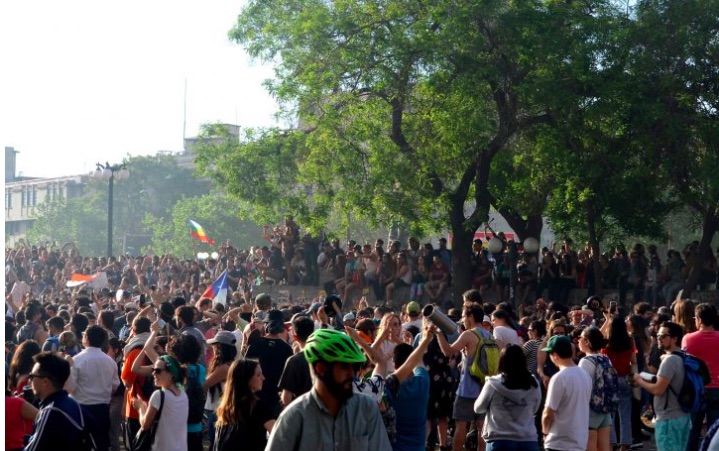
No sociologist or politician could predict what was coming after long years of a neoliberal system that has imposed economic violence on the people, but that as steam inside a pressure cooker, an unstoppable alienation was accumulating, and it exploded with the student protest against the increase in price for the Metro..


(Image by Laura Feldguer)

It is undoubtedly due to the failed economic, political and social model that doesn’t work any more. It is violent and intrinsically perverse. It generates tremendous income inequalities, it cannot provide decent wages for the majority of the population. It generates ambition and greed that pervert and corrupt everyone, even the most honest. Its educational system tends to create highly competitive ambitious technocrats that lack the most fundamental civic values ​​of respect, solidarity and fraternity that are needed in every society.

Like any social explostion, the violence occurred inexorably with the sequel of looting and arson that we have all witnessed, mainly against the detonating agent, the Metro, but also against numerous supermarkets and retail stores.

Probably this same social phenomenon would have occurred with the New Majority or any other government that did not commit to ending the unacceptable inequality. It is the entire political system, the way of doing politics that is violent and discriminative, that is totally discredited before the citizens. It is a cumulative phenomenon that was waiting to explode.

However, this social assault is being co-opted by anarcho-violentists who threaten to burn everything until they leave no stone on stone. Behind them comes the lumpen proletariant that takes advantage of the chaos to loot and to steal while posing as legitimate protesters. And surprisingly, after them come the exploited, who, shamelessly and without being declared criminals, join the looting mob to steal like seasoned thieves. It shows that there are more thieves than we believe and it confirms the saying that it is the opportunity that makes the thief. We need to find ways to defend against these elements that discredit and generate legitimate rejection in public opinion.

(Article continued in the right column)

(Click here for the original article in Spanish.)

Question for this article:

Can peace be guaranteed through nonviolent means?

(Article continued from the left column)

The people do not want violence. They are fed up with it. They are beginning to feel fear and insecurity. They rage against the vandals and looters that invade their neighborhoods and shops that supply the essential goods for their livelihood. This fear and insecurity is shared by large and small merchants who no longer dare to open their businesses for fear of looting in broad daylight with the open premises.

The declaration of a State of Emergency and with it the military control of public security, with the curfew as a corollary, was the response of a government that was despaerate. Perhaps it was necessary to contain the violence, but it is repudiated by the population, especially those who lived the darkest periods of the civil-military dictatorship.

Our organization, “World without Wars and without Violence,” understands the dynamics of this social expression as a result of so many years of abuse and corruption of practically all social sectors. But even if the situation of violence is coming to stay, it is necessary to decrease it in frequency and intensity.

Faced with this violent scenario, “World without Wars and without Violence” declares absolutely necessary a comprehensive National Agreement that includes all political and social sectors in an environment of respect, humility and generosity, setting aside all personal and institutional egos, and commiting to carry out the necessary reforms. These include a New Constitution to ensure satisfactory levels of equality, a new pension system that provides decent pensions, an educational reform to be truly free and to form true citizens and a health system that prevents diseases and treats them as soon as they occur. All these social policies should be aimed at the welfare of the people and should not be allowed to become a business that only pursues profit.

“World without Wars and without Violence” advocates Active Nonviolence as a legitimate form of struggle for which it is necessary to avoid all acts of vandalism that pollute and discredit legitimate social mobilization. The non-violent mobilizations that have been seen in our capital are an example of that struggle that is approved and shared by the entire population. These activities should be strongly encouraged to achieve an environment of social cohesion, recognition and tolerance for the other, no matter what differences they may have.

If, after this legitimate protest and a broad national agreement, the social policies are not radically modified, the next step would be a general strike, not with marches or other expressions that can be contaminated by violence, but with civil disobedience against laws and regulations that are clearly unfair. We need expressions that do not require noise or fanfare or insults or disqualifications for anyone, in a framework of full respect for everyone and everything.

All for the good of Chile and its people, “World without Wars and without Violence.”

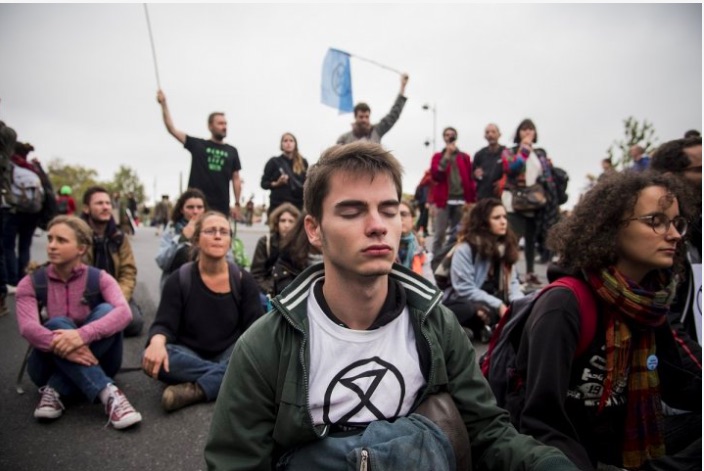
Extinction Rebellion, not political? “We occupied the center of Paris for five days! “

EDUCATION FOR PEACE .

An article from Reporterre (translation by CPNN)

In response to those who criticize the political weakness of Extinction Rebellion, the authors of this platform claim that their “political message is in the action itself: another organization of society is possible.” And they repeat that strict nonviolence is a “calculated and determined” choice.

The week of action of Extinction Rebellion has elicited many comments: some purely anecdotal and others that are more political. Both sides miss what makes the reason for Extinction Rebellion. Here’s our explanations …

We will not go back to the many anecdotal comments that only serve to hide the important issues. We will try to focus on critics of the nature and methods of Extinction Rebellion.

“We are not a political movement in the classical sense.”

Some would like to find in Extinction Rebellion the slogans and the partisan positions against this or that political or economic power. These commentators reproduce the classic schemas of the political game and would like to bring back Extinction Rebellion into their usual framework of analysis. They make hasty – and often contradictory – conclusions about a movement that refuses rhetoric and incantation to choose action in a very specific context: civil disobedience.

(Click here for the original article in French.)

(Article continued in the right column)

Question for this article:

Can peace be guaranteed through nonviolent means?

(Article continued from the left column)

A concrete example of our approach is the occupation of the center of Paris from 7 to 11 October. Some have criticized this occupation for being light in political content. Really ? For five days, in the heart of the capital, we have removed a strategic public space from the public authorities. We made live a direct democracy (three general meetings held daily), places of exchange and training, collective kitchens open to all … We have maintained and cleaned the public space instead of the services of the City Hall . We helped the traders in their supplies and the cleaning services to ensure the collection of waste. All this only 100 meters from the police headquarters. Our political message is in the action itself: another organization of society is possible. It was discussed at “Nuit Debout.” We did it at Chatelet.

Our approach goes beyond the usual political framework. We do not dispute a particular regime, we question a system of values ​​that leads to the destruction of the living. And our proposition is that the citizens should seize the debate and make the choices themselves. We defend a direct democracy, because it alone will allow us to be resilient in the face of future crises.

“It would be naive, would not disturb the powers in place and especially would not take into account institutional violence,”

Here is a criticism that often comes up about the non-violent civil disobedience. It’s a complete counter-sense! Martin Luther King, apostle of non-violence, would not have seen or taken into account institutional violence? What is called non-violence is precisely a strategy that aims to reveal institutional violence. As in the martial arts, it is a question of returning the violence of the attacker (here the State) against himself.

When the police forced our non-violent activists at close range on the bridge of Sully in Paris, the images circumnavigated the world, and the condemnation was unanimous. Faced with force, the non-violent action is to divert the violence of the State to place it in front of its contradictions. It’s not being naïve, it’s a calculated choice. Purposeful. And we assume it in each of our actions. The state can dodge this confrontation just as it has done, but it is an unsustainable tactic in the medium term for power.

Some groups are calling for more radical actions, which they say will have a greater impact. They say that they will mount these actions themselves! Their galleries and open letters are only rhetoric. The incantation is without limits, the action will frame them. For Extinction Rebellion, nonviolent civil disobedience is both an ethic and a long-term strategy. Strict non-violence is the only inclusive strategy!

Inconsapevole Records releases “Punk Rock Against War Vol. 2” compilation

EDUCATION FOR PEACE .

An announcement from Dying Scene

Italian label Inconsapevole Records  have released the second installment of their “Punk Rock Against War” compilation series. 


(Click on image to enlarge)

Question for this article:

What place does music have in the peace movement?

All the proceeds go to Emergency, an independent and neutral international organisation founded in 1994 to provide free, high-quality medical and surgical care to victims of wars, anti-personnel mines and poverty. It promotes a culture of peace, solidarity and respect for human rights.

The compilation has an incredible 111 bands on it, including many you’ll know and love. Check it out below.

Philippines: Teach Peace Build Peace Movement 

EDUCATION FOR PEACE .. .

Exerpts from an article in Minda News

Bai Rohaniza Sumndad –Usman delivered this speech during the press conference on the 2019 TOWNS awardees at Dusit, Makati on October 10, 2019.

We have to invest in nurturing a culture of peace in the heart of every child . . . In today’s society, a culture of peace should be seen as the core of humanity. In our organization, Teach Peace Build Peace Movement (TPBPM), our mission is to Make Every Filipino Child and Youth a Peace Hero.


Learning to Speak the Language of Peace

In TPBPM, we believe in the power of Peace Education and we have been doing a lot of innovation to teach peace as a lifestyle… we believe in how peace education can contribute to achieving sustainable peace.

(Article continued in right column)


Question related to this article:

What is the best way to teach peace to children?

Where is peace education taking place?

(Article continued from left column)

We have been helping schools and communities institutionalize Peace Education in creative and innovative ways like Music, Arts, Games, Sports and Community Service.

Our flagship program is called Peace Heroes Formation Program with a goal of creating a Culture of Peace in every school and community.

Receiving this blessing and being welcomed to a new family, which for me is the Almighty’s way of telling us to pursue our mission no matter what it takes, is for every child who fears the sound of war… for every child who fears the feeling of being bullied, judged and unaccepted.

This is for every struggle of a Filipino Child — Muslim, Christian and Indigenous Person whose stories range from experiencing armed conflict, discrimination, unacceptance, neglect and victimized by violent ideologies.

This is for every peace education believer, advocate and champion as we dramatically transform the concept of a Culture of Peace as an inherent way of life and as the core of humanity to address the underlying factors of conflict and violence.

I would like to end by giving much emphasis into these words: We have to teach peace to build a culture of peace because it is in building a culture of peace that we can create difference generations of peace heroes.

If we want a peaceful nation, we have to invest in nurturing a culture of peace in the heart of every child.

Alfred Fried Photography Award’: world-best picture on the theme of peace

EDUCATION FOR PEACE .

An article and photos from The Alfred Fried Photography Award

The Alfred Fried Photography Award recognizes and promotes photographers from all over the world whose pictures capture human efforts towards a peaceful world and the quest for beauty and goodness in our lives. The award goes to those photographs that best express the idea that our future lies in peaceful coexistence.

Winner of the Alfred Fried Photography Award’s world-best picture on the theme of peace, worth € 10000, is Stefan Boness, Germany, with an image from his work „FridaysForFuture Climate Protest“


„FridaysForFuture Climate Protest“, Stefan Boness, Germany

Stefan Boness lives in Berlin and Manchester, working as a photographer on a wide range of topics. He has not only documented the political Berlin with its protagonists and the right-wing populist movements in towns like Dresden or Cottbus, or traced the steps of Walter Benjamin. He also worked in Japan, and photographed landscapes of ruins, animal graveyards as well as Eritrean welders. With his book Flandern Fields he created a “photographic meditation on the battle fields of WWI”. He photographed architecture in places like Tel Aviv, Asmara, or Hoyerswerda. In 2015, Boness was awarded the first prize at the German photo competition ‘Rückblende’ for a photograph of the German Chancellor Angela Merkel, and has won a World Press Photo Award and a Fuji Euro Press Award.


„BORN FREE – Mandela’s Generation of Hope“, Ilvy Njiokiktjien, Netherlands

Ilvy Njiokiktjien bought her first camera in 2002, graduated from the school of journalism in her home town, and is working as a photographer and multimedia journalist. She finances long-term projects like the one in South Africa through day jobs for new media. The has been published inter alia in the New York Times, in Spiegel, in the Telegraph Magazine, and in l’Espresso. In 2012, she received the World Press Photo Award in the category Multimedia. In 2018, her photos of new-born babies in Africa were shown at a UNICEF exhibition at the United Nations in Geneva. The jury of the Alfred Fried Photography Awards should like to extend their heartfelt congratulations to her for her peaceful and obviously enjoyable work.


„The Forest Orphanage“, Nur Adilla Djalil Daniel, Indonesia

Dilla Dlalil Daniel was born in 1966 in Jakarta where she lives today. She was given a camera at the age of nine with which she photographed her dogs. As she had to give up her dream of becoming a vet she studied English literature, working for an advertizing agency for a while. Workshops with the well-known photographers Alex Webb and Peter Turnley turned her into a ‘workshop junkie’. She attended such workshops in Istanbul, Buenos Aires, Chiang Mai, South Africa, and on Antigua. She started to admire NGOs – and above all she has been expelled from her comfort zone. Wherever she went she was looking for animal sanctuaries. Be it the elephant hospital in Thailand, be it a rescue centre for maltreated donkeys in Nepal. She has two dogs, two cats and one horse. We can assume that she treats them very well.

(continued in right column)

Question for this article:

Do the arts create a basis for a culture of peace?, What is, or should be, their role in our movement?

(continued from left column)


„Le temps retrouvé“, Alain Laboile, France

Alain Laboile, born in May 1968 in Bordeaux, was first interested in insects which he also photographed as macro images which served as inspirations for his metal sculptures. He taught himself about photography making an incredible career. Because his heart-warming, engaging positive family photographs have enchanted people all over the world – and now also the jury of the Alfred Fried Awards. Laboile regards the books with the photos of his children – called ‘At the end of the world’ or ‘The summer of a fawn’ or ‘Under the monochrome rainbow’ − also as a private treasure as he himself has only one photo from his own childhood. He now celebrates what a childhood could be like – and he has been celebrated at exhibitions in France, Cambodia, the USA, in Japan, India, Austria, Mexico, Russia, Brazil, Argentina, Italy, Greece, the Netherlands, in Poland and Hungary. The recipients of his images apparently recognize a universal longing for an unwavering innocent life in what he depicts.


„The Rugbywomen: Tackling Stereotypes“, Camilo Leon-Quijano, France

Camilo Leon-Quijano was born in Bogotá, Columbia, and lives in Paris, where he studied sociology and focussed on Latin American studies at the Sorbonne. His photos have been published inter alia in the Washington Post, in Líberation, Paris Match, and Vice, he has had exhibitions in France, in the USA, in Germany, and Italy. Leon-Quijano was finalist and award-winner of several competitions such as Lens Culture, Prix la France Mutualiste, and the UNICEF Photo of the Year 2018. In addition to the rugby girls, the people in the suburbs of Paris in general are his favourite subject at present.


Winner of the The Children’s Peace Image of the Year, worth € 1000, is Dune Laboile, France, with her image „Slow Stream“

Dune Laboile – the surname will ring a bell. Yes, Alain Laboile, her father, is one of our five award-winners in the adult category this year. We have never had such a constellation. One could also say: like father, like daughter. Alan Laboile described his daughter beforehand. He calls her cute and quiet. And he says that she has a lot of time for discovering her little world; for painting and sketching and shaping; for playing with five cats; building caves and swimming; reading and watching films; making short videos and, of course, photography – because she does not go to school, but has private lessons at home. Moreover, he says, Dune doesn’t like racists and the destroyers of our plant. All this makes us curious about what will become of young Dune.

Click on the title to see the complete story. [Editor’s note: only one photo is shown here, but there are many more photos on the original article.]

Click here for the shortlist of the Alfred Fried Photography Award 2019.

Click here for the shortlist of the Children Peace Image of the Year 2019.

Thank you to everyone who submitted to the Alfred Fried Photography Award 2019.

Award Ceremony
The Alfred Fried Photography Award 2019 was presented on 12 September 2019 at a gala in the rooms of the Austrian Parliament. On behalf of Wolfgang Sobotka, speaker of the Austrian National Council Harald Dossi introduced the ceremony attended by 200 guests. More…

Exhibitions
All entrants will have the chance to take part in worldwide exhibitions.

Brazil: Lajeado Begins Classes to Train Peace Facilitators

… EDUCATION FOR PEACE …

An article from the Independente

The development of a culture of peace for the municipality of Lajeado is beginning to take shape. On August 7 and 8, the first group of leaders of the municipality was trained as peace facilitators.


Photo: Divulgação

(Articles continued in right column)

(Click here for the original article in Portuguese)

Questions for this article:

Where is peace education taking place?

(continued from left column)

The group participated in the Basic Training Course for Restorative Justice Facilitators to learn about the methodology of Non-Conflicting Peacebuilding Circles. The training of peace facilitators, promoted by Lajeado City Hall in partnership with the Public Prosecution Service (MP), is part of the Lajeado Pact’s Restorative Justice action package.

Beginning in September, the training will also focus on the health, education, social care and culture care network. It will involve community and religious leaders, young people from the CRAS Reference Center and Specialized Reference for Social Assistance (CREAS) and Non-Governmental Organizations (NGOs).

The course lasts 25 hours and takes place over two days. Thos interested in taking the course can contact the coordination of the Lajeado for Peace Pact by phone 3982-1104 or by email pacto@lajeado.rs.gov.br.

Dominican Republic: MINERD hosts National Student Forum for a Culture of Peace

… EDUCATION FOR PEACE …

An article from El Caribe (translation by CPNN)

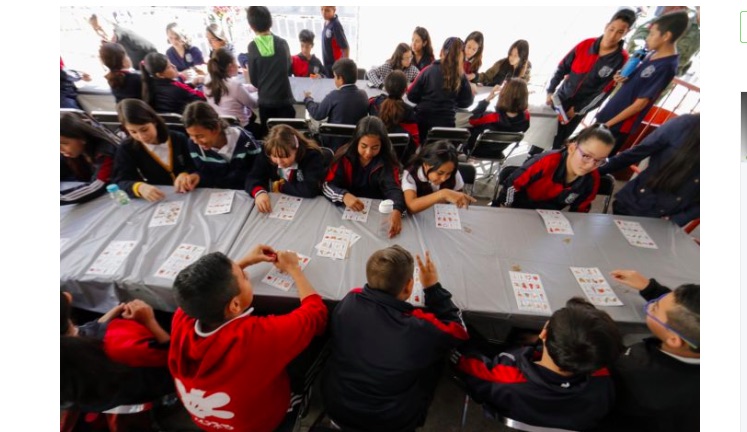
The Ministry of Education (MINERD) is hosting this Tuesday [August 13], the National Student Forum for a Culture of Peace, within the framework of the Student Merit Recognition Program, in which 360 High School students come to reflect and analyze the different issues related to school life.

The educational activity, which this year has the motto: “Developing socio-emotional skills for citizenship and coexistence”, takes place from today until August 15 in the auditorium of the School of Evangelization John Paul II, under the responsibility of the Direction of Orientation and Psychology directed by Professor Minerva Pérez.

(Article continued in right column)

(Click here for the original article in Spanish.)

Questions for this article:

What is the relation between peace and education?

(Article continued from left column)

Secondary level students, 20 from each educational region, will develop debates about democracy and the construction of a new citizenship, with presentations on the problems that, in their opinion, could interfere with their training and integral development.

“In this interesting debate of ideas and considerations for a peaceful coexistence in the schools, the young people are assuming a leading role. They are committed to improving their lives, generating and discussing concrete proposals that contribute to the strengthening of a culture of peace in their respective educational campuses and communities,” explains the MINERD.

Methodology for student choice

The activities for the participation of the students in the forum, start from the first week of classes with the election of student councils, and close at the end of the year with the recognition of student effort and merit.

As part of the process, the educational and regional districts hold student congresses, where topics of interest to students are debated, proposals are made and those that best represent them are chosen. Subsequently, those students who will represent their regional team in the presentation of the proposals are selected.

The proposals developed during the forum will be included in a national proposal by a process of consensus. At the close of this forum, students are expected to present to the authorities the national proposal for a culture of peace that they will promote during the 2019-2020 school year, with a call to their peers to join their implementation and strategy “Schools for a culture of peace.”

Mexico: First International Congress on Social Prevention of Violence and Culture of Peace

… EDUCATION FOR PEACE …

An article from Zacatecas Hoy (translation by CPNN)

In order to strengthen the actions that the State Government carries out in the area of ​​social prevention of crime, the First International Congress of Social Prevention of Violence and Culture of Peace will be held [in Zacatecas] next October.

The Undersecretary of Social Crime Prevention, Armando García Neri informed that the Congress will receive results of research and theoretical contributions on various topics, includeing urban planning, gender, substance use, rights and factors involved in childhood, communication strategies for the construction of a culture of peace, analysis of cognitive behavioral therapies and culture of peace.

(Article continued in right column)

(Click here for the original article in Spanish.)

Questions for this article:

Where are police being trained in culture of peace?

(Article continued from left column)

Likewise, during the congress that will be held on October 2, 3 and 4, issues related to the actions of the police as a security force will have to be addressed.

All of the above will be addressed hrough work tables, master conferences and cultural and social workshops in which the Benemérita Autonomous University of Zacatecas will have a fundamental participation.

In addition to specialists from our country, experts in the field from countries such as Canada, Chile, Colombia, the United States and Italy will participate in the congress.

Finally, García Neri stressed the importance of these types of events, as they come to enrich the strategies and actions that the state administration undertakes on fundamental and priority issue ssuch as crime prevention.

Colombia: Barranquilla will host the first Ibero-American Education Congress

… EDUCATION FOR PEACE …

An article in El Heraldo (translation by CPNN)

Within the framework of the celebration of the 70 years of the Organization of Ibero-American States (OIE), the first Ibero-American Congress on Education, Citizenship and Democracy will be held on August 29 and 30. In the event, whose details were released Thursday in a press conference, topics will include education for global citizenship, ethics and democracy for sustainable development.


Press conference to give details of the meeting. Mery Granados

During the press conference, organized by the Simón Bolívar University, the Organization of Ibero-American States (OEI) and the Foundation for Quality Education, it was reported that the congress is framed in the Educational Agenda to 2030.

Carlos Zuluaga Pardo, Deputy Director of the OEI, said that this congress is an opportunity for the Caribbean region to open the doors to the world and contribute to the discussion on issues of coexistence, peace, inclusion, global citizenship and diversity. He said the event will be held at the José Consuegra Higgins Theater.

Lilia Campo Ternera, director of the José Consuegra Higgins Social Research and Innovation Center (CIISO) of the Simón Bolívar University, said that Unisimón seeks to open spaces to disseminate knowledge generated by researchers from CIISO, who have made different studies and analysis about inclusion, democracy, citizenship, development and cognitive processes.

(Article continued in right column)

(Click here for the original article in Spanish.)

Questions for this article:

What is the relation between peace and education?

(Article continued from left column)


About the congress

This meeting will be key considering that the world’s educational systems, especially in Latin America, face the challenge of training children and young people as citizens who recognize and value the importance of democracy, solidarity, mutual respect, coexistence , the peaceful resolution of conflicts, respect for differences, especially their most vulnerable partners, social learning, cooperation and rejection of all forms of exclusion, segregation and violence.

The International Study on Civic and Citizen Education (ICCS 2016) showed worrying results, in the sense that half of the students from Chile, Colombia, Mexico, Peru and the Dominican Republic fail to demonstrate any specific knowledge and understanding about institutions, systems and civic and citizenship concepts. These five countries are the lowest performing within 24 educational systems analyzed.

The Congress works with the framework of action of the Sustainable Development Goal No. 4, which specifies the need to guarantee inclusive, equitable and quality education and promote lifelong learning opportunities for all. In addition, in the framework of the Educational Agenda 2030, which incorporates an important component related to education for democratic citizenship, especially in goal 4.7 (Knowledge and skills for sustainable development)

The main purpose is that in 2030 all students acquire theoretical and practical knowledge necessary to promote sustainable development, among other things, through education and sustainable lifestyles, human rights, gender equality, the promotion of a culture of peace and nonviolence, world citizenship and the valuation of cultural diversity and the contribution of culture to sustainable development.

The congress will feature the participation of renowned international and national speakers, experts in the field such as Alicia Cabezudo (Argentina), Marita Copes (Uruguay), Enrique Rentería (Mexico), Julián De Zubiria (Colombia), Francisco Cajiao (Colombia), Alejo Vargas (Colombia), and Abel Rodríguez (Colombia), among others. It will be addressed to educators, teachers and administrative managers of all levels, from preschool to postgraduate; as well as researchers, academics, civil society organizations, governments, businessmen and students.

Done with violence?

EDUCATION FOR PEACE .

A blog by KEN BUTIGAN for Pace e Bene

In 1989, a handful of friends found themselves mulling on how they could promote a culture of nonviolence – a culture where people everywhere could let go of a deep-seated belief in violence and, instead, could live the power of nonviolent options. Pace e Bene Nonviolence Service was the result. Taking its name from a greeting St. Francis of Assisi used in his own time meaning “peace and all good,” Pace e Bene set out to contribute to a growing movement for nonviolent alternatives. I joined a year later.

In the wake of the horrific mass shootings this past weekend in Texas and Ohio, I’ve been reflecting on what Pace e Bene has learned over these three decades, and how these lessons are needed now more than ever. Thirty years of experience, action, reflection, writing, publishing, and programming – including leading a thousand trainings – have increasingly convinced us of the liberating power of creative nonviolence.

This was a slow process, in which we gradually came to see how nonviolence is a powerful force, an active method for change, and a thoroughgoing way of life. We slowly saw that nonviolence is not a “non-word” but a path with heart confronting violence without using violence and, at the same time, fostering transformation, justice, and the well-being of all. Step by step we realized that, what started out for most of us as a tactic of protest, was in fact a universal ethic. The paradigm of violence is harsh and pervasive, but there is a qualitatively different operating system available to us, one on which our survival depends.

The killings this past weekend (compounding the tsunami of violence – direct, cultural and structural – that washes over the world daily) are the consequence of the uncritical allegiance to the violence paradigm, a system of domination and threat that projects itself as reality. “This is how the world is,” it teaches us in countless ways from the moment we are born. But it is not reality. It is a highly sophisticated script that weaves together our worst tendencies —our fear, our anger, our greed, our small self—and creates a culture of violence and oppression in which we are conscripted and for which we are expected to live and die.

Fortunately, there is an alternative. We know this from a long lineage of sages who have tipped us off to the nonviolent option, but also from commonsense. If violence were the default, the human species would have destroyed itself long ago, with the retaliatory and escalatory logic of violence spinning out of control and into extinction. It is the secret history of nonviolence that has – hour by hour, day by day, year by year, century by century – kept this from happening. As Gandhi said, “Nonviolence is as old as the hills,” but he also stressed that this history has largely been ignored and undocumented. Over the last century – largely sparked by Gandhi’s modern adaptation and application of the ancient Hindu term ahimsa [“nonviolence”] in leading movements for freedom in South Africa and India – people throughout the world have explicitly excavated and applied this “third way” beyond violence and passivity.

(Article continued in the right column)

Question for this article:

Can peace be guaranteed through nonviolent means?

(Article continued from the left column)

Nonviolence is an intrinsic tendency that all human beings have – and this latent power of love in action can be tapped to deal with conflict and violence more effectively than the other options at our disposal: retreat, accommodation, or counter-violence. But if this power is trivialized or suppressed, we won’t access it. We will go on tapping the power of violence – and reinforcing the self-fulfilling prophecy of violence. We will continue to be caught in the violence trap.

Sometimes, though, there are moments where the search for the alternative beyond violence and passivity becomes so urgent that nonviolence—as a paradigm of the fullness of life, as a universal ethic—can suddenly be glimpsed as an option. The stereotypes that have long dogged nonviolence (that it is ineffective, passive, weak, utopian, naïve, unpatriotic, marginal, simplistic, and impractical) can peel away long enough to see that a nonviolent culture in its most robust and comprehensive sense is the only practical solution.

This may be a moment for just such a new direction.

The mass shootings in El Paso and Dayton (number 27 and 28 in the US this year, according to one count) demonstrate the bankruptcy of the violence paradigm. But, ironically, they also illuminate that the nonviolent operating system is also present, as seen in the reaction to these horrendous events. The public has recoiled against the “normalization” of such slaughter. Between the lines of this outcry is the bedrock assumption that violence is anti-human and that a culture free of violence should be the default.

What’s largely missing, though, is the way to get there. That’s where active, creative and relentless nonviolence comes in.

Nonviolence is not an end goal – it is a process. It is a process of envisioning an alternative, re-framing our thinking to foster this alternative, and living our way into this alternative. It is a way of being – but also a way of building a culture where, in effect, it is easier to be nonviolent. It is both what we can call “soul work” and “society work.”

What would our “soul work” entail in light of massive gun violence, for example?

First, we must once and for all tell ourselves that we are done with violence. Enough is enough. If we have been trained in violence, then we must get “un-trained.” This begins with making a solemn pledge in the secrecy of our heart that we are letting go of all the ways we support violence. This fundamental re-orientation can lead us to learning, healing, taking stock and taking action. A long process of secret confession and transformation may await, but it can start today.

And what of our “society work”? We must join grassroots movements laboring to create laws, policies, structures, and cultures where the lives of human beings have priority over the absolutization of guns. The sanctity of existence takes precedent over unrestricted access to guns. As we saw this weekend, guns were used to enforce and perpetuate the violence system (and, in these cases, its preeminent value of white supremacy). Our long-term “society work” will not only lessen the threat that guns represent, it will transform the cultural assumptions on which they rest.

To do both our soul work and our society work, we encourage you to go public with a call for a society free from violence and everything that feeds it. One option is to join Campaign Nonviolence in taking action in cities and towns across the US September 14-22, where we will mobilize for a culture of active and liberating nonviolence. Currently over 2800 nonviolent actions are planned.

But you don’t have to wait. You can do something today.

We’re done with violence. Together we can plunge into the difficult but powerful work of mainstreaming nonviolence for a more just and peaceful world.