Category Archives: EDUCATION FOR PEACE

Iranian film “Castle of Dreams” wins at Religion Today filmfest in Italy

EDUCATION FOR PEACE .

An article from the Tehran Times

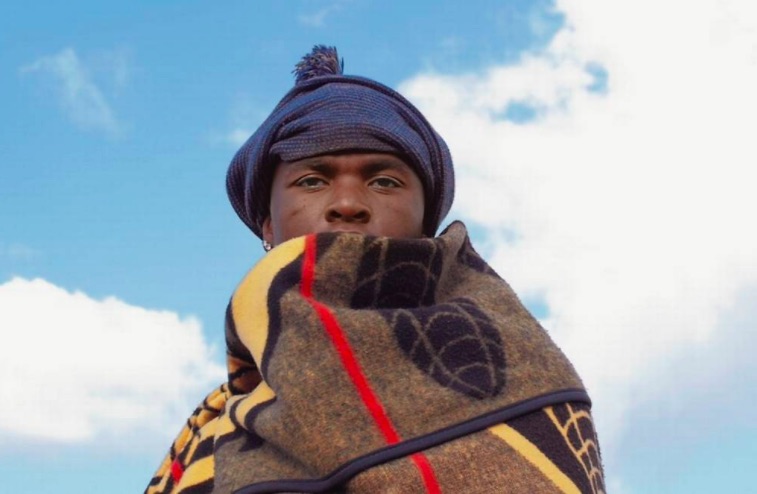
The Iranian award-winning drama “Castle of Dreams” has won the award for best feature film at the 23rd Religion Today Film Festival in Italy.

<
Photo: “Castle of Dreams” by Reza Mirkarimi

Last Wednesday [September 30], Trento as the greenest Italian city hosted the closing ceremony of the festival, which selected the motto “Earth I Care”.

Directed by Reza Mirkarimi, the film is about two young children whose mother has just died, and their father, Jalal, after long years of absence, returns to sort things out, but he does not want to take the children with him.

(continued in right column)

Question for this article:

Film festivals that promote a culture of peace, Do you know of others?

(continued from left column)

In addition, “Ojagh” by Iranian filmmaker Ali Bolandnazar also won the award for best short documentary. It is a study of the rituals of the Qashqai Turkic tribe regarding fire.

In the documentary competition, Iranian filmmaker Hamid Jafari’s “The Wind” received a special mention, while “Mother Fortress” by Italian director Maria Luisa Forenza was named best.

“The Wind” is about the Zar traditional ceremony in southern Iran. Spirits ride the wind of the seas and spread illness into the bodies of human beings. Zar is synonymous with the wind which carries illness. The Zar ceremony can free the body from evil spirits with the assistance of music and song.

The Grand Prize in the Spirit of Faith went to “Order and Soul” by Hungarian director Suzsanna Bak.

Founded in 1997, the Religion Today Film Festival is organized every year by Associazione BiancoNero. The event has been the foremost international and itinerant film festival dedicated to cinema and religions for a culture of peace and dialogue between faiths, cultures, peoples and individuals.

Les Héritiers du Zouglou release a maxi single to raise awareness among Ivorians

… EDUCATION FOR PEACE …

An article from Linfodrome (translation by CPNN)

“Les Héritiers du Zouglou” released this Thursday, October 01, 2020 a maxi single of two titles, “Never again” and “My Zouglou”. Faced with the tense socio-political situation in Côte d’Ivoire, Bloco, one of the members of the group, confided that the objective is to sensitize the political class and the Ivorians, in particular the youth, to peace and social cohesion.


The Héritiers du Zouglou call on Ivorians to raise collective awareness.

A few weeks away from the presidential election scheduled for October 31, 2020, Les Héritiers du Zouglou are making their return to the Ivorian music scene with two titles, “Never again” and “My Zouglou”. In their songs, they particularly invite young people, political leaders and all the sons and daughters of the Ivory Coast to the culture of peace.

(Article continued in right column)

(Click here for a French version of this article)


Question related to this article:

What place does music have in the peace movement?

(Article continued from left column)

The strong lyrics of their maxi single call out. “We want peace. We don’t want any more war. Never again in my country. It is hand in hand that we will have development,.”

Bloco Héritier spoke of their source of inspiration. “It was the current events that inspired us. The events that took place in the different cities also inspired us,” he said.

In their maxi single, Les Héritiers du Zouglou make it clear that Ivorian politics and the future of Côte d’Ivoire are not necessarily linked to the three great political leaders who are Henri Konan Bédié, Gbagbo Laurent and the current president, Alassane Ouattara. “Their time will pass, but the Ivory Coast will always remain,” Bloco Héritier remarked.

October 2nd a Nonviolence Day in the White West

EDUCATION FOR PEACE .

An article from Pressenza (reprinted under a Creative Commons Attribution 4.0 International license)

This year it’s really complicated in this part of the world to hold a joyful celebration about nonviolence. The International Day of Nonviolence is a celebration of Gandhi’s birthday and an opportunity to commemorate the work of many others who have opened a path a to nonviolent conflict resolution, built a culture of peace, opposed systemic discrimination, and fought against the destruction of humanity’s habitat.


NYC Walk for Nonviolence (Image by David Andersson)

It is very suspicious that mainstream media will be not be covering this day, since corporate media makes large profits from reporting all forms of violence and bias. There will be no trending on Twitter, no special debate in Congress. Joe Biden will not be announcing his plans for developing nonviolence curricula for Kindergarten to college students. CEOs won’t unroll their strategy for reinvesting the money, concentred today in very few hands, to serve the community at large. And we probably won’t see the police addressing their entrenched discrimination against communities of color, and talking about how to stop being hypermilitarized agents beating and killing people on the street. This list can go on and on.

Now, of course, we have seen some opportunist politicians asking protestors — after seeing the killing of their brothers by police — to organize nonviolently, but without themselves condemning the immoral and disproportionate use of violence by the police and city officals. For them, it seems nonviolence is to be used by minorities fighting against a violent system that created the problem at the first place.

(Article continued in the right column)

Question for this article:

Can peace be guaranteed through nonviolent means?

(Article continued from the left column)

Today, we recognize nonviolence’s power of transformation. Nonviolence has transformed countries, changed the face of continents, and given cultural identity to discriminated communities. We are perhaps in front of the total collapse of this violent system we live in and we need to actively build a culture of nonviolence. It is the only real option for the future of the human race and our environment.

In closing, here are few words from Silo, an Argentinian leader in nonviolence, extracted from one of his most important speeches, “The Healing of Suffering,” given in Punta de Vacas, Argentina on May 4, 1969:

“There are other forms of violence that are imposed by the Philistine morality. You wish to impose your way of life upon another; you wish to impose your vocation upon another. But who has told you that you are an example that must be followed? Who has told you that you can impose a way of life because it pleases you? What makes your way of life a model, a pattern that you have the right to impose on others? This, then, is another form of violence.

Only inner faith and inner meditation can end the violence in you, in others, and in the world around you. All the other doors are false and do not lead away from this violence. This world is on the verge of exploding with no way to end the violence! Do not choose false doors. There are no politics that can solve this mad urge for violence. There is no political party or movement on the planet that can end the violence. Do not choose false doors that promise to lead away from the violence in the world… I have heard that all over the world young people are turning to false doors to try to escape the violence and inner suffering. They turn to drugs as a solution. Do not choose false doors to try to end the violence.

My brother, my sister, keep these simple commandments, as simple as these rocks, this snow, and this sun that bless us. Carry peace within you, and carry it to others. My brother, my sister—if you look back in history, you will see the human being bearing the face of suffering. Remember, even as you gaze at that suffering face, that it is necessary to move forward, and it is necessary to learn to laugh, and it is necessary to learn to love.

To you, my brother and sister, I cast this hope—this hope of joy, this hope of love—so that you elevate your heart and elevate your spirit, and so that you do not forget to elevate your body.”

Burkina Faso : The 5th edition of Sotigui Awards looks at the contribution of women filmmakers to the culture of peace

EDUCATION FOR PEACE .

An article by Judith Sanou in Le Faso

From November 12 to 14, 2020 the 5th edition of the Sotigui Awards will be held in Ouagadougou. The organizers of this event, namely the Académie des Sotigui, in partnership with FESPACO, held a press conference on Saturday, September 5, 2020, to announce the festival. [FESPACO is the Panafrican Festival of Cinéma and Télévision of Ouagadougou.] 


The participants in the press conference

Launched in 2015, Sotigui Awards is an initiative of the Academy of Sotigui, African Cinematographic Arts and the Diaspora, in partnership with FESPACO. This event aims to contribute to the recognition and enhancement of the profession of African actors and comedians. The 5th edition is held under the theme “Culture of Peace: The Contribution of Women in Cinema and Audiovisual? “.

(continued in right column)

(Click here for the original French version of this article.)

Question for this article:

Film festivals that promote a culture of peace, Do you know of others?

(continued from left column)

According to the president of the Académie des Sotigui, Kévin Evrard Moné, this theme is justified by the observation that women of the 7th art continue to make their contribution in the face of adversities including terrorist attacks, the crisis of Covid-19 and all forms of violence experienced by women.

The 2020 edition, which will be held from November 12 to 14, features sixteen categories in competition and some innovations. It includes the opening of the “Sotigui of the African public” for almost all categories; the award ceremony which amounts to 20,000 CFA francs; and the organization of an “After Sotigui” with the movie stars in partnership with the Bravia Hotel.

Forty actors and comedians from Africa were nominated for this edition. According to Akoubou François Adianaga, commissioner in charge of the selection, the method of appointing actors and actors is based on several criteria: the credibility of the actor in the role he or she plays, the ability and the quality of conversation of the actor and the quality of the acting.

While waiting for the award ceremony, participants can watch film screenings, a round table on the theme of publishing, practical training sessions in acting, and a panel on piracy organized by Canal +. All these activities will take place in compliance with barrier measures in this period of Covid-19, reassured Gustave Sorgho, commissioner in charge of external relations.

For this edition, special tribute will be paid to the actor Chadwick Boseman [whose Hollywood roles included Jackie Robinson and James Brown], who died on August 28 in Los Angeles. Also the concept “Hashtag – we dress as Africans” will be highlighted during this edition, a way of highlighting African culture in all its forms.

International Folklore Festival of Brazil – Virtual – 22 and 23 August

EDUCATION FOR PEACE .

A slideshow from ABRASOFFA


Folklore unites us and the world – dance for peace


22 and 23 August @abrasoffa


Many popular dances


Virtual presentations

(continued in right column)

(Click here for the original Portuguese version of this article.)

Question for this article:

Do the arts create a basis for a culture of peace?, What is, or should be, their role in our movement?

(continued from left column)


Without leaving home


www.tvpolo.org.br


Net channel 11


International Folklore Festival of Brazil – Virtual –
Folklore unites us and the world – dance for peace
August 22 and 23

Colombia: ‘HipHop Week’ begins in Cali

. EDUCATION FOR PEACE .

An article from Colombia Informa (translation by CPNN)

In the city of Cali, “HipHop Week” will be held to contribute to social transformation through art and pedagogy. The event will start on July 20 and will end on July 26. Presentations will take place virtually and free of charge.

(Article continued in right column)

(Click here for the original Spanish version of this article)

Question related to this article:
 
Can popular art help us in the quest for truth and justice?

(Article continued from left column)

HipHop Week’ has been taking place all over the world since 2000. In the city of Cali, Mesa HipHoppaz is in charge of organizing the event since 2014, and in 2020 due to the health emergency it will be held virtually.

“The main theme of the realization of this event in Cali is to make Hip Hop visible as a culture of peace, a culture with a political stance and in turn that can unite us as hiphoppers and as elements of culture, because we converge djs, graffiti artists, rappers and others, ”said Mesa HipHoppaz.

In the seven days national and international guests will participate, forums, workshops and various artistic presentations. This week has as a slogan # NaciónHipHop, which refers to the union in this urban culture and the intention of reaching a large audience.

“It is a week of appreciation of Hip Hop, where the artists of culture, the community in general will appropriate the values that we have as culture and world heritage from artistic forms, from forms of knowledge, from everything that is Hip Hop, to also strengthen our culture.”

The event will be broadcast on the official Facebook page “Semana del HipHop Cali”, [HipHop Cali Week], where you can also find the days and hours of activities.

‘Culture of peace’, a possible future according to David Adams (Editorial preview)

EDUCATION FOR PEACE .

A editorial preview from Aristeguin Noticias

For centuries, it has been believed that violence is part of the underlyig nature of the human being. But many thinkers and activists are not convinced of that assumption.


video

(Review continued in right column)

( Click here for the original version in Spanish.)

Question for this article:

What are the most important books about the culture of peace?

(Review continued from left column)

In Culture of Peace: A Possible Utopia (Herder), David Adams presents a detailed study based on biology, history and civilizations to locate the origin and cultural causes of violence for more than 2000 years. Likewise, he proposes strategies and traces paths to achieve peace, not as an idea, but as a culture. With his scientific idealism, this neurobiologist of aggression and manager of peace pursues a premise: if war and violence are a human invention, then the human being can also invent and build peace.

Together we can create ourselves as free and responsible beings to act with our own reflections and never again to the dictates of anyone, according to the developer of the UNESCO Culture of Peace Program.

Below and with the permission of Herder editorial we offer part of his book to our readers. (Click here).

Mexico: Oaxaca’s Judicial Power promotes a culture of peace

… EDUCATION FOR PEACE …

An article reprinted from the Quadratin Oaxaca (translation by CPNN)

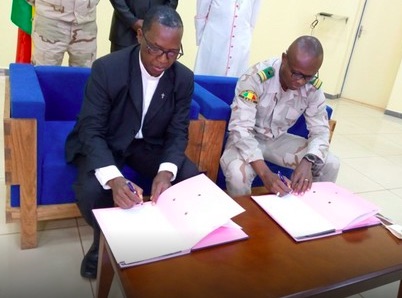
The Superior Court of Justice of Oaxaca has signed a collaboration agreement with the College of Scientific and Technological Studies of the State of Oaxaca (CECyTEO) to promote the culture of peace.

The President of the Court, Eduardo Pinacho Sánchez reported that “together, combining our efforts, resources, wills and the corresponding technical capacities, we can work with better results to achieve a culture of peace among the educational community.”

(Article continued in right column)

(click here for a version in Spanish).

Question for this article:

Mediation as a tool for nonviolence and culture of peace

(Article continued from left column)

He pointed out that an approach to peace will be offered through the Alternative Justice Center; the approach includes school mediation and restorative justice as conflict resolution mechanisms that empower students to collaborate and contribute to harmonious educational and social spaces.

Pinacho Sánchez stressed that this agreement signifies the recognition and awareness that justice does not depend solely on the Judiciary. “The solution of the conflicts that arise within society does not only correspond to the judges who at a given moment have to pass a sentence. The responsibility rests with all people without exception, to all sectors of society and institutions; it is a general responsibility that we must assume. ”

Gathered in the facilities of the Council of the Judiciary, under the sanitary measures decreed by the federal and state authorities, the President of the Court stressed that the culture of peace must be fostered from the family and the areas in which the first contacts and relationships of a social nature take place, such in the schools where children and young people can acquire the ability and capacity to resolve our own conflicts.

More than 29 thousand people registered in the Second International Montessori Congress, a free virtual event

. EDUCATION FOR PEACE .

An article from Murcia.com

From July 6 to 10, the second International Montessori Congress will be held, organized by Miriam Escacena, head of Your Montessori Guide, and by the renowned researchers, trainers and founders of Montessori Canela International, who this year will join the organization of this international event, Marco Zagal and Betzabé Lillo Orellana, who contribute their more than 10 years of experience in teacher training and transformation of schools in Spain and various countries.

The virtual event will bring together thirty experts from Spain, Chile, Mexico, Argentina, Brazil, Puerto Rico, Sweden, France, Slovakia and Italy. Most of the speakers are friends and collaborators of Montessori Canela and will speak on different topics related to education as an element of social change. The presentations can be seen for free during the week of July 6-10.


In Montessori schools, the children are not required to sit passively in regimented rows of desks.

In Spain there are around 150 Montessori schools.

This year marks the 150th anniversary of the birth of María Montessori, the founder of Montessori schools.

The program is based on eight axes: Montessori Education, Human Development, Inclusive Education, Educational Neuroscience, Public Schools, Educating with the family and Educational documentary films, united by the theme “Educating in the now: Montessori, culture of peace” ..

The opening ceremony will take place on Sunday, July 5 at 6:00 p.m. in mainland Spain and will be broadcast through the organizers’ social networks.

(Article continued in right column)

(Click here for the original Spanish version of this article)

Question related to this article:
 
What is the best way to teach peace to children?

(Article continued from left column)

Betzabé Lillo Orellana points out that “the purpose of this congress is to be able to convey a message of hope, optimism and tranquility in a context as uncertain as we are in, which is why we emphasize Educating in the Now, since it is important to take this crisis as an opportunity to rethink how we want to live life, discovering the essentials in everyday life, getting closer to the real meaning of happiness.”
The Congress promises a space that allows participants to :

– Become aware of the human potential that is present in the adverse situations of life, because, well oriented and accompanied, they become a source of growth to consider adversity as an opportunity.

– Search for alternatives to find within yourself that energy that is needed to overcome and advance in any difficult or problematic situation that we are experiencing.

– Connect with the creativity that is in each child, youth and adult as part of their being, as a transforming force that takes greater prominence in family, socio-cultural and specific adversity situations such as what happens in these times of pandemic.

– Know experiences, life stories and the creative duality of theory and practice in different areas that favor a more humane education.

– Mutually share inspiration to be able to help all of us nurture an awareness that helps us see that everything we are experiencing is an opportunity to change and grow.

This Congress is aimed at all people who seek to contribute to a better education, to a better society. Marco Zagal explains to us that “there are parents, professionals, and self-taught people from different areas who are always looking to learn something new or reinforce ideas that allow them to create respectful spaces in the different areas of childhood and adolescence. The contribution that we believe this Congress will give to families and professionals is directly related to a broader understanding of what children and adolescents are, and how caring for their psychological, emotional, social and physical life is the best gift. and the best inheritance that we can leave them. ”

Miriam Escacena highlights that “after the success of the congress last year, this year we are once again uniting with a spirit of trust with great expectation”. In these times in which we are facing a true paradigm shift, in which that change in the educational system that so many long for is finally coming true, accessible and quality initiatives are necessary more than ever.

USA: Historian Robin D.G. Kelley: Years of Racial Justice Organizing Laid Groundwork for Today’s Uprising

EDUCATION FOR PEACE .

Excerpts from a report on Jun 11 in Democracy Now (The original content of this program is licensed under a Creative Commons Attribution-Noncommercial-No Derivative Works 3.0 United States License. Please attribute legal copies of this work to democracynow.org.)

AMY GOODMAN: For more on the mass uprising engulfing the U.S. and what protesters are demanding now, we go to Los Angeles, where we’re joined by Robin Kelley, professor of African American studies at UCLA. He studies social movements, author of many books, including Freedom Dreams: The Black Radical Imagination. . . .


video of full report

NERMEEN SHAIKH: Professor Kelley, I want to go back to something that you  wrote  immediately following Trump’s election in November 2016. You wrote that the U.S. needs a multiracial movement committed to, quote, “dismantling the oppressive regimes of racism, heteropatriarchy, empire, and class exploitation that is at the root of inequality, precarity, materialism, and violence in many forms.” You’ve just talked about how the demands of this movement are very different. Do you see what’s happening now as what you wanted to happen in November 2016?

ROBIN D.G. KELLEY: Exactly. And not only that, but what I wrote in 2016 was actually a reflection of what was already happening on the ground. So, in some respects, remember, the Movement for Black Lives put out their policy platform in August of 2016.

(Article continued in right column)

Question(s) related to this article:

Are we making progress against racism?

(Article continued from left column)

And one of the things we all have to acknowledge is that we’re not here by accident. You know, this is not a spontaneous response to the pandemic, and suddenly white people are waking up and saying, “Oh, wait a second, Black lives matter.” No, this is a product of enormous work, going back well before Trayvon Martin. But you think about all the organizing work, the Movement for Black Lives, Black Lives Matter, the women who organized Black Lives Matter, initiated — Opal Tometi, Alicia Garza, Patrisse Cullors — people like Melina Abdullah, Charlene Carruthers of Black Youth Project 100, all the scholar activists who have been working on this question — Barbara Ransby, Kimberlé Crenshaw, Angela Davis, Ruth Wilson Gilmore — and then, before that, the Malcolm X Grassroots Movement, Copwatch, Dignity and Power, Critical Resistance, the African American Policy Forum. These were initiatives on the ground who did all this political education, all this organizing work — We Charge Genocide, Dream Defenders, the Rising Majority, Black Organizing for Leadership and Dignity, and also groups like SURJ, you know, [Showing] Up for Racial Justice, which deals with white racism.

So you have an infrastructure in place that has been doing this work for a decade or more — more than a decade. And that’s why people are out here. That’s why people can come out into the streets and simply roll off their tongues words like “defund the police,” connect transphobia, homophobia, gender oppression, patriarchy to racial capitalism and to racial violence, connect these things in ways that I think are kind of unprecedented. But again, without the organizing work, we would not be here, you know? And I think it’s very important to even go back and acknowledge how the foundations were laid by the Combahee River Collective, by people like Barbara Smith, raised by the Third World Women’s Alliance, I mean, fighting around questions of connecting sterilization, abortion rights with racism. You know? So, these kinds of links, these connections — and also with war — are important. So, there’s a long history that got us here.

And the real question now is whether or not this can be sustained, because we know, throughout history, we’ve had revolutionary moments, after Reconstruction in the 1870s, followed by backlash and by what we can describe as American fascism. We have the sort of Second Reconstruction of the 1960s, followed by backlash, the rise of the Klan, the tamping down on the strike wave in the 1970s, neoliberalism. And now we’re facing another one. We have these forces trying to transform the world in a way that could actually bring safety and prosperity to all versus a president and a regime that asks, “What happened to Gone with the Wind? …