Category Archives: DEMOCRATIC PARTICIPATION

Brazil: Culture of Peace Fair seeks to combat various types of violence in Juiz de Fora

.. DEMOCRATIC PARTICIPATION ..

An article from the Tribuna de Minas

The project “Weaving Networks for a Culture of Peace and Violence Prevention” was part of the Culture of Peace Fair, held this Monday (the 19th), in Juiz de Fora in front of the Cine-Theatro Central.  The objective of the event is to show the project’s contributions to the establishment of an effective network for preventing and coping with the various forms of violence in the city.


The event is organized by the Intersectoral Nucleus for the Prevention of Violence and the Promotion of Peace (Photo: Divulgação)

(continued in right column)

Questions for this article:

Can festivals help create peace at the community level?

(continued from left column)

The event is organized by the Intersectoral Nucleus for the Prevention of Violence and the Promotion of Peace, implemented through municipal decree 15.034, of February 18 of this year.  Institutions and professionals that make up the nucleus presented the actions that they have developed.

For the professor of Psychology and coordinator of Culture of Peace, Cacilda Andrade de Sá, this was an opportunity to address a sensitive issue in a more welcoming way. “We aim to bring knowledge from the university to the community in general. In today’s case, the focus was on violence prevention by knowing the types of violence and proposing actions to reduce them, bringing a culture of peace to the population of Juiz de Fora.”

The project is a partnership between the Municipality of Juiz de Fora (PJF) and the Federal University of Juiz de Fora (UFJF) and seeks to contribute to the development of the Municipal Plan for Strengthening the Prevention of “External Causes”.

(Editor’s note. “External causes” in this case refers to injuries and deaths that are not caused by cancer or other malady present in the individual concerned, but that are caused by accidents, inflicted violence, etc.)

(Click here for a Portuguese version of this article)

Jalisco, Mexico: V Global Forum on the Culture of Peace

.. DEMOCRATIC PARTICIPATION ..

An article from Estado de Jalisco (translation by CPNN)

With the purpose of analyzing the conflicts and problems that trigger violence, as well as proposing solutions to promote social reconciliation, the “V Global Forum on the Culture of Peace” was held at the facilities of the Jalisco Legislative Branch, promoted by the deputy Rocio Aguilar Tejada.

(continued in right column)

(Click here for the Spanish original of this article)

Questions for this article:

The culture of peace at a regional level, Does it have advantages compared to a city level?

Is there progress towards a culture of peace in Mexico?

(continued from left column)

The Forum highlighted the need to guarantee the participation of civil society through art, traditional games and gastronomy to promote values such as empathy, love and compassion. People were asked to join efforts to reduce the gaps of inequality and resolve through understanding the problems of the society.

For her part, legislator Aguilar Tejada, in her capacity as President of the Peace Committee, pointed out the need to create tools that consolidate respect for human rights. Finally, she said that “by 2023, forceful actions should be taken to improve security and establish a partnership between government and society.”

Among those in attendance were Iram Valdés Chávez, President of the organization “Comnapaz México”; David Hernández Pérez, representative of the Tlaquepaque city council; Dante Jaime Haro Reyes, Defender of Human Rights at the University of Guadalajara; Esperanza Loera Ochoa, Executive Secretary of the State Human Rights Commission in Jalisco and Rafael Medina Martínez, President of the Dr. Alfonso García Robles diplomatic foundation.

About the Soccer World Championship and Education for Cultures of Peace

.. DEMOCRATIC PARTICIPATION ..

Special for CPNN from Professor Alicia Cabezudo, Rosario, Argentina, December 2022 (translation by CPNN)

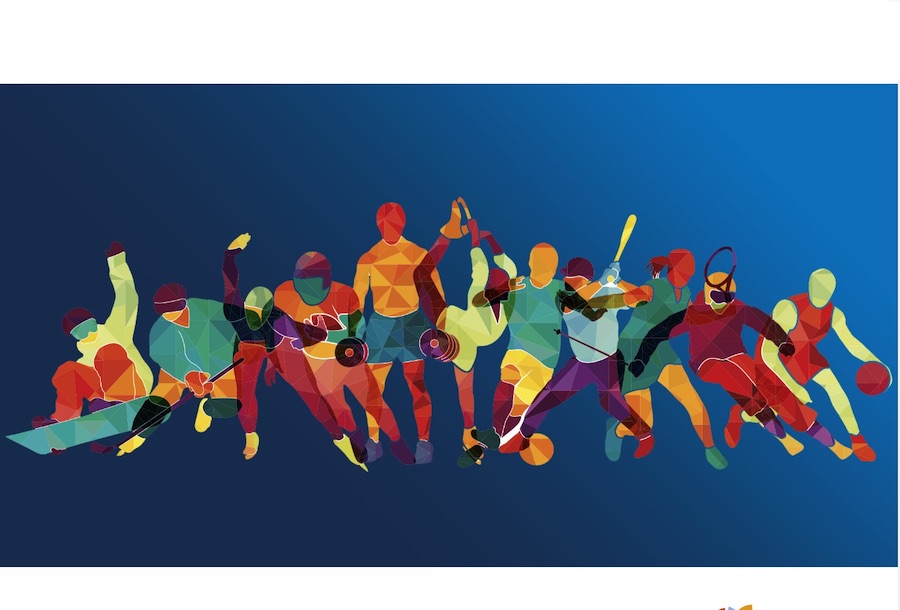
A Soccer World Championship has always been a “party” for the entire population of the world, whatever the age considered, gender, socio-economic and cultural condition that is analysed, geographical and climatic situation. For many days people live pending transmission schedules in all possible media, comments and sports press, results, bets, penalties, player names, generating endless meetings and talks about the infinite winning combinations.


Photo by Pablo Morano/BSR Agency/Getty Images

It is an obsessive topic among friends, neighbors, relatives, and fellow students and workers – turning the world’s greatest sporting event into a field for dialogue, criticism, defending positions, sharing hours of expectation, happiness and grief, physical and spiritual accompaniment, of solid and liquid food and where hopes, despair, misfortune, joy and expectations will be present.

It is a party that facilitates meeting, communication, the exchange of ideas and socializing tinged with affection. Invaluable practices in the entire teaching process.

It is an extraordinary opportunity in the educational task of parents, families, teachers, professors and communities to make this global sports festival a learning experience in itself. In such a way that the values of coexistence, respect for others, interculturality as social wealth, cultural differences and similarities and, above all, the enormous collective effort that being a good team implies, is also perceived as an ethical and political value, an urgent and necessary pedagogical dimension in today’s world.

(continued in right column)

(Click here for the Spanish original of this article)

Questions for this article:

How can sports promote peace?

(continued from left column)

We should be able to turn the Soccer World Cup into a space for democratic education where “soccer knowledge and experiences” are also an active, popular and irreplaceable pedagogical resource as a source of new learning and tools for understanding reality.

Tools with a resignified educational value according to possible didactic transfers and particular disciplinary applications according to the various areas of knowledge and even the specific school curriculum at all levels of formal education and in the field of non-formal learning.

Knowledge about other countries, their position and geographic characteristics; its form of government and laws; art, folklore and customs; the various religions and cults; past and present history with the problems of the world in which we live; economic links; trade; the arts ; common science and technology; The global problems that afflict everyone and the collective search for solutions, as well as many other topics of interest, open up new possibilities for analysis, reflection and creative dialogue inside and outside of schools and in all areas where we meet and meet.

Understanding diversity and differences; the multiplicity of ways of life and visions of the world; the different civilizations and their manifestations; the richness of the diverse cultures that these multicolored, multilingual, multireligious soccer teams represent, with men so different and so absolutely interdependent that they esteem and respect each other, creates the possibility of an enriching pedagogical dialogue and demonstrates a lesson in political pluralism, religious and cultural that enriches every educational process and is part of the civic-democratic training of children, youth and adults in current education.

The construction of these values, the defense and international recognition of the free self-determination of peoples, the right to peace, respect for human rights as international law and learning about the collective and united effort of men as creators of socio-political, economic and cultural transformations are part of this pedagogical proposal that should be added to the merely sporting one.

It is time for today’s world to become a huge solidarity football team, where each “player” contributes from his “position” to the necessary and urgent collective construction of a harmonious, balanced and cooperative result through the practice of a game. clean, mutual help, respect for others and sensitivity to their needs and problems.

In this way the game would probably make more sense, giving the world exemplary vital lessons in human warmth, teamwork, collective spirit and efficiency – which is exactly what is sorely lacking and . . . what we need so much.

Let us consider this pedagogical challenge without hesitation. . .

Chad: the provinces of Lac and Hadjer-Lamis come together for a sports cultural festival

. . DEMOCRATIC PARTICIPATION . .

An article from Al Wihda Info (translation by CPNN)

Focused on the culture of peace and living together, this festival brings together the provinces of Lake and Hadjar-Lamis. It will take place from December 15 to 17, 2022.

(article continued in right column)

Question related to this article:


Can festivals help create peace at the community level?

(article continued from left column)

For the president of the organizing committee, Dénénodji Marylène, the festival aims to strengthen the bonds of fraternity through sport and culture in order to consolidate social peace and living together. It is organized by the province in partnership with the Project for the recovery and development of the Lac region (PROLAC) and financed by the World Bank,

The president stresses that it is an opportunity for citizens to celebrate unity towards the peaceful rebuilding of the Chadian nation.

Activities on the program include: folk dances, theatrical performances, exhibition of objects for sale and football.

(Click here for the French version of this article)

World Cup 2022: The beautiful image of Mbappe and Hakimi at the end of the match

.. DEMOCRATIC PARTICIPATION ..

An article from Africa Foot United (translation by CPNN)

Teammates on the French squad Paris Saint Germain, Achraf Hakimi and Kylian Mbappe exchanged a few words after Morocco’s defeat yesterday in the semi-finals of the 2022 World Cup. The video in this image, which is a reminder that sport is just a game, has traveled around the world.


 (Photo by Manuel Reino Berengui/DeFodi Images) 

(Article continued in right column)

Question for this article:

How can sports promote peace?

(Article continued from left column)

There will be no first final for Africa in the World Cup. Morocco failed this Wednesday in the semi-finals against France. The Atlas Lions, weakened by numerous withdrawals, especially in defense with the absences of Romain Saïss (captain and touchdown in the first half), and Nayef Aguerd, were beaten by a French team that was realistic, but not very flamboyant.

The score at the end was 2-0 in favor of the Blues. At the end of this meeting, the two Parisians who played the match, Achraf Hakimi and Kylian Mbappe, met to exchange a few words. The two club partners put aside their rivalry of the day, the defeat of Morocco for Hakimi, in order to spread the spirit of sport which is the culture of peace.

After a few words exchanged and a small hug, they changed their jerseys. A classy gesture full of fair play from the two players who once again displayed all their good friendship in front of the world.

(Click here for the article in French.

Honduras: This Sunday there will be a festival that seeks to contribute to a culture of peace

.. DEMOCRATIC PARTICIPATION ..

An article from the Programa de las Naciones Unidas para el Desarrollo  (translation by CPNN)

This Sunday, December 11, at Cerro Juana Laínez, the first Inclusion Festival will take place from 9:00 in the morning to 7:00 at night. The festival is a free activity contributing to the construction of a culture of peace, which is a duty and right of all.

It will be a Sunday for family, friends and the public who will be entertained with folkloric dances, plays, forums, gastronomic walks; In addition, they may learn about the social products generated by the synergy of government institutions, academia and civil society for the construction of a democratic society.

(Click here for the Spanish original. . )

Questions for this article:

Can festivals help create peace at the community level?

The festival shows the commitment of Honduras to strengthen transparency and inclusion, with the participation of women, youth, indigenous peoples, Afro-descendants, people with disabilities, the LGBTIQ+ community and Honduran citizens in the processes of social oversight and participation politics.

As a contribution to building a culture of peace, this is an initiative led by the United Nations Development Program (UNDP) that reaffirms its commitment to building a more transparent and inclusive Honduras.

About UNDP

It is the lead United Nations body dedicated to ending the injustice of poverty, inequality and climate change. With an extensive network of experts and partners in 170 countries, it helps nations build integrated and lasting solutions for people and the planet.

UNDP has been present more than 45 years in Honduras, developing interventions together with partners from civil society, academia, the private sector and the State in the areas of: strengthening the rule of law; promote citizen security and violence prevention; promotion of productivity; environment and risk management.

Main Recommendations of the 6th Edition of the African Forum of Territorial Managers and Training Institutes targeting Local Governments

. . SUSTAINABLE DEVELOPMENT . .

An article from United Cities and Local Governments of Africa

The 6th edition of the African Forum of Territorial Managers and Training Institutes targeting Local Governments was held over 6 days, from November 28th to December 03rd, 2022 at the Training Center of the Faculty of Medicine and Pharmacy of the Ibn Zohr University in the city of Agadir, Morocco.
The theme chosen for this edition was: “The challenge of training and capacity building of Local Elected Officials and Local Government Staff in Africa in Climate Action”.

This important annual meeting of Territorial Managers, held just one week after COP27, was organized by United Cities and Local Governments of Africa (UCLG Africa) through its African Local Government Academy (ALGA), in partnership and with the support of the European Commission, the Directorate General of Local Authorities of the Ministry of the Interior of Morocco, the Region of Souss-Massa, the Prefectural Council of Agadir Ida- Outanane, the Provincial Council of Tiznit, the Provincial Council of Taroudant, the Ibn Zohr University and the Training Center of the Faculty of Medicine and Pharmacy of Agadir, the National Agency for the Development of Oasis and Argan Zones (ANDZOA), the National Associations of Local and Regional Governments of Morocco (namely ARM, AMPCPP and AMPCC), the Ecological Transition Agency ADEME of France, the 4C-Maroc Center, the Office of the United Nations Project on Governance, Directorate of Public Institutions and Digital Governance (DIPGD) of the United Nations Department of Economic and Social Affairs (UNPOG/ DPIDG/ UN DESA), as well as the Ministry of Energy Transition, and Sustainable Development, and the Municipal Council of Agadir.

During the six days of proceedings, more than 300 participants attended the Forum from 40 countries, including 33 African countries. These delegations took part in and contributed to the work of:

– An official opening ceremony, under the chairmanship of the Honorable Mr. Karim ACHENGLI, President of the Souss-Massa Region Council and the Honorable Mrs. Jeannette NYIRAMASENGESHO, President of the Rwandan Association of Local Authorities (RALGA) of Rwanda , President of the Ngororero District Council of the Western Province, President of the Association of Local Governments of East Africa, having represented the Honorable Mrs. Fatimetou ABDEL MALICK, President of UCLG Africa, President of the Permanent Gender Committee of UCLG, President of the Region of Nouakchott, Mauritania;

– Four (4) Plenary Sessions on issues related to Climate Action;
– Eight (8) parallel workshops on climate challenges and capacity building challenges;
– Three (3) Master classes having focused on the concepts and approaches of Climate Action, Decentralized Cooperation and e-Learning;
– One (1) Training of Trainers Seminar on Climate Action for the benefit of 26 beneficiaries from different African countries, within the framework of the Partnership Agreement with ADEME;
– Three (3) field visits.
– South-South partnership and Decentralized Cooperation agreements, discussed and signed;
– A closing, recognition, and certification ceremony;
– A tree planting by the African Delegations.

The discussions held during the proceedings focused on the challenges related to climate change for local governments, in particular:

– How can we create an enabling environment for the Localization and Territorialization of Climate Action?
– What has COP27 generated for Local Governments?
– How to enable Local Governments to benefit from Climate Finance?
– What are the challenges in terms of education, training, and capacity building?
– How to promote decentralized multi-actor cooperation that can be at the service of climate action?…

The takeaway from these debates is that we find ourselves in a turbulent context as well as a deep world division generating crises; that only 10% of climate finance benefits to the local and territorial levels; that the challenges in terms of training and capacity building are enormous and that it is time to act to enable Local Elected Officials and their civil servants s to take ownership of Climate Action, and integrate it into their Governance and planning.

The proceedings and contributions led to the following 20 main recommendations:

1) Need to increase public funding in terms of volume and as a share of adaptation and resilience funding (Need to mobilize the 140 to 300 billion US dollars needed annually by 2030).

2) Need to strengthen and make more coherent the architecture of concessional climate finance, which includes the Green Climate Fund, the Global Environment Facility, the Climate Investment Funds, the Adaptation Fund as well as the concessional windows of the multilateral development banks, as well as the Global Infrastructure Fund.

3) Need to become aware of and know how to take advantage of the many opportunities for financing climate action.

4) Need to increase local climate finance for localized climate action, to better understand the role of the local and territorial dimension of climate action in Africa, if we are to thrive as a community of nations, with local governments as a driver of sustainable development.

5) Need to localize and territorialize NDCs, because everything is done in cities; concrete actions must be taken at this level.

6) Need to raise awareness and territorialize political actions related to climate change and involve women and young people in Climate Action.

7) Need to give more space and importance to cities in the context of the localization of the Climate Agenda and put in place mechanisms to facilitate access to international climate finance, because only 10 % of climate finance is found locally.

8) The diversification of energy sources (highlighted by COP27, starting from the importance of the mix of clean energies).

9) Need to take Africa to the next level and provide incentives that leverage innovations already underway in the region that will have greater impact (e.g. acting for the informal sector and encouraging youth participation).

10) Need to prioritize financial innovation (80% of climate finance in Africa comes from public resources) and therefore there is an urgent need to increase private sector finance in climate action.

11) A paradigm shift is needed in Africa’s climate narrative; the continent’s current narrative must shift from projecting responsibility and risk to projecting investment and opportunity.

(article continued in right column)

Question for this article:

Despite the vested interests of companies and governments, Can we make progress toward sustainable development?

(Article continued from the left column)

12) Need to transform Nationally Determined Contributions (NDCs) and Commitments into clear investment plans with a clear return on investment in the different areas prioritized in the NDCs.

13) The urgency of harnessing empirical evidence on key gaps and opportunities to be filled to scale up these successes and create targeted incentives that will need to be applied to enable them to progress.

14) Need to increase support for holistic capacity development assessments at the national, subnational, and local levels.

15) Need to apply a multi-stakeholder approach by involving a wide range of actors and stakeholders, at all levels of governance (national, subnational, and local).

16) Develop long-term capacity building interventions.

17) Need to strengthen international, regional and national knowledge networks, platforms, communities of practice as well as peer-to-peer learning and support.

18) Developed countries should ensure that more climate finance is available for stand-alone capacity building programs at the national, subnational, and local levels and to increase coordination among entity capacity building service providers of developed and developing countries.

19) Need to invest in conflict prevention through a supportive and facilitating environment.

20) Capacity building for the promotion of the Culture of Peace and the art of negotiation.

“We attach importance within UCLG Africa to the efforts of our Academy: ALGA. We will try to follow up on the implementation of all the recommendations that will come out of this important meeting”, declared, through a video intervention, the President of UCLG Africa, the Honorable Mrs. Fatimetou Abdel Malick.
The Forum also served as a framework for the holding of the meetings of three Professional Networks of UCLG Africa, namely:

– The meeting of the Network of Human Resources Directors (Africa Local RHNet);
– The African Network Meeting Permanent Secretaries/Executive Directors of National and Regional Associations of Local Governments;
– The meeting of the African Network of Territorial Directors in charge of Decentralized Cooperation and International Action of Territorial Governments (RAMCD).

Field visits were made to 3 cities in the Souss-Massa Region to inquire about transformational projects and cultural heritage as a vector of peace and development. The Delegations were divided into three groups:

– Group 1 visited the Province of Taroudant and was received by the Honorable President of the Provincial Council of Taroudant. The participants had the opportunity to discover the ancestral Walls of the City of Taroudant, as well as Cooperatives which promote and market local products, such as Argan Oil, Saffron, Honey, Olive Oil, etc.

– Group 2 visited the Province of Tiznit where the Delegations were welcomed by the Governor of the Province and the Honorable the President of the Provincial Council of Tiznit. Participants discovered part of the city’s cultural heritage, transformational projects linked to climate action, cooperatives promoting and marketing local products, as well as shops that market silver jewelry in addition to other reputable products from that Province;

– Group 3 visited the City of Agadir where the delegations were received by the Honorable Vice-President of the Municipal Council. They had the opportunity to visit two transformational projects in connection with Climate Action, namely the Chtouka -Aït Baha water desalination station intended for the drinking water supply of the Greater Agadir area, as well as the wastewater treatment plant.

To materialize their ecological commitment, the African Delegations present at FAMI6_2022 planted thirty (30) Argan trees, provided and offered by the National Agency for the Development of Oasis Zones and the Argan Tree (ANDZOA) in the premises of the Ali Ben Chekroun High School and College in Agadir. The delegations also discovered the creative genius of the students of these two institutions, as well as their mastery of Moroccan, patriotic, and modern music and songs.

The closing ceremony was moderated by Dr. Najat ZARROUK , Director of Development and of the African Local Government Academy (ALGA) of UCLG Africa, member of the Committee of Experts on Public Administration of the United Nations, and President of the International Association of Schools and Institutes of Administration (IASIA), representing Mr. Jean Pierre ELONG MBASSI, Secretary General of UCLG Africa who was during the same week attending another mission in Brazil to promote relations between Africa and this Latin American country.


This ceremony was marked by the presence of:

– The Honorable Madam Jeannette NYIRAMASENGESHO, President of the Rwandese Local Government Association (RALGA), President of the Ngororero District Council of the Western Province, President of the Association of Local Governments of East Africa, who said in her speech: “I would like to thank the Kingdom of Morocco for hosting us throughout this week. The theme of this Forum reflected the firm commitment of Local Authorities to the implementation of the Climate Agenda, but above all our commitment to support the roadmap for COP 28 scheduled to take place in Dubai in 2023”;


– Mr. Morris MBOLELA, Deputy Secretary General of UCLG Africa; The Vice-President of the Council of the Region of Souss-Massa, representing the Honorable Mr. Karim ACHENGLI , President of the Council of the Region of Souss-Massa,
The Honorable Mr. Lahcen AMROUCH, President of the Communal Council of Argana, Vice-President of the Provincial Council of Taroudant, and Vice-Treasurer of the Moroccan Association of Presidents of Communal Councils (AMPCC),
The Vice-President representing the Honorable President of the Prefectural Council of Agadir Ida-Outanane.

The participants in FAMI 6_2022, finally sent a Message of Gratitude and Thanks to the High Attention of His Majesty King MOHAMMED VI of the Kingdom of Morocco -May God Assist him- .

PJ: Photos of days :
1 : https://www.flickr.com/photos/196672214@N05/sets/72177720304050556/
2 : https://www.flickr.com/photos/196672214@N05/sets/72177720304095249/
3 : https://www.flickr.com/photos/196672214@N05/sets/72177720304161662/
4 : https://www.flickr.com/photos/196672214@N05/sets/72177720304251154/
5 : https://www.flickr.com/photos/196672214@N05/sets/72177720304258583/

Video of the Best of days:

1 : https://www.youtube.com/watch?v=QwM1xm2fuHs

2 : https://www.youtube.com/watch?v=DFicOVMrglA

3 : https://www.youtube.com/watch?v=i21ctlwOhR8

4 : https://www.youtube.com/watch?v=pFX0Hzwnaxs

5 : https://www.youtube.com/watch?v=TnmlMw-HQ_Y

Report of the Forum:

For more information, please contact:
Gaelle Yomi: Phone: + 212 610 56 71 45
e-mail: gyomi@uclga.org; UCLG Africa website: www.uclga.org
ALGA website of UCLG Africa : www.uclgafrica-alga.org

Mexico: In San Juan del Río, Rotary promotes a positive culture of peace

.. DEMOCRATIC PARTICIPATION ..

An article from El Sol de San Juan del Rio

In the municipality of San Juan del Río, various commitments were established by Rotary International to provide support to the San Juan community, among them; disease treatment, water, sanitation and hygiene, literacy and basic education, support for the environment, among others.


(Article continued in right column)

(Click here for the article in Spanish)

Questions for this article:

How important is community development for a culture of peace?

(Article continued from left column)

The commitments contribute to “Building a Culture of Positive Peace”, an event held at the Tithing Portal, headed by the representative of the organization in the municipality, Rafael de Jesús Molina Lara. in coordination with other members of Rotary International District 4140 , a support plan for the population was designed.

The group is dedicated to providing support to the population with actions in different areas, making an alliance with some companies, civil associations and others to pay attention to issues such as maternal and child health, the economic development of the community as well as promoting peace and conflict prevention.

In this same event of strategy to support the San Juan community, the Sculpture of Peace was unveiled, which was designed at the request of Rotary International District 4140, by the Jalisco sculptor Camilo Ramírez, born on July 18, 1957, in Tlaquepaque, Jalisco.

“Rotary is a global network of neighbors, friends, leaders, and problem solvers who see a planet where people come together and take action to create lasting, positive change in communities around the world.”

He said that for more than 117 years, Rotary’s people of action have used their passion, energy and intelligence to improve lives through service, “so in Rotary we are fully convinced that understanding, goodwill and peace among people is possible and achievable”.

Mexico: Culture of Peace Day in Atlixco for first time

.. DEMOCRATIC PARTICIPATION ..

An article from Intolerancia (translation by CPNN)

With the aim of working on the reconstruction of the social fabric, the Atlixco city council in coordination with the Ministry of the Interior will hold the First Day of Culture of Peace on December 3, 2022 at 10:00 a.m. in the Plaza de Armas of the city.


Atlixco is a city in central Mexico, at the foot of the Popocatépetl volcano

Questions for this article:

Can festivals help create peace at the community level?

According to the municipal president of Atlixco, Ayala Camarillo, in addition to this First Day of Culture of Peace and Reconstruction of the social fabric, there will be a discussion with local actors, an event aimed at the general population.

The mayor thanked the authorities of the Ministry of the Interior for their support for undertaking actions focused on rebuilding the social fabric, thereby creating a better society.

The Dialogue or Conversation will generate a space for the exchange of knowledge, dialogue and learning for reconstruction of the social fabric and the construction of a Culture of Peace. The event will be divided into a magisterial presentation and dialogue tables led by various sectors of the population.

(Click here for the Spanish original. . )

Mayors for Peace: The Hiroshima Appeal

. . DEMOCRATIC PARTICIPATION . .

An appeal from Mayors for Peace

On the occasion of its 10th General Conference on October 19-20, 2022, we, representatives of Mayors for Peace member cities, engaged in dynamic discussions on the theme “Creating a Peaceful, Nuclear-Weapon-Free World: Cultivating a Culture of Peace in Civil Society.” The event also commemorated the 40th anniversary of the establishment of Mayors for Peace. In August 1945, atomic bombs were dropped on Hiroshima and Nagasaki, and the lives of over 210,000 people were ruthlessly stolen by the end of that year. Those who barely managed to survive were left with deep psychological and physical wounds that have yet to heal even today, 77 years later.


Hiroshima Mayor Kazumi Matsui reads the Hiroshima Appeal at the 10th General Conference of Mayors for Peace in Hiroshima on Oct. 20. (Jun Ueda)

In June 1982, during the 2nd UN Special Session on Disarmament, then-Mayor Araki of Hiroshima established Mayors for Peace, calling on the cities of the world to transcend national borders and join in solidarity to forge a path toward the abolition of nuclear weapons. Since then we have made steady progress on our path, and in our 40th year, membership in our non-partisan international NGO has now grown to 8,213 member cities in 166 countries and regions around the world.

In addition to our long-standing objectives to forge a path toward our goal of realizing lasting world peace, namely, Realize a world without nuclear weapons and Realize safe and resilient cities, in July 2021, we added a third objective, Promote a culture of peace, when we adopted the Vision for Peaceful Transformation to a Sustainable World (PX Vision for short).

The first objective, Realize a world without nuclear weapons, has been set forth with the intention of striving for the total global abolition and elimination of nuclear weapons as cities and their citizens remain their targets and taking into consideration the catastrophic environmental and economic consequences on a global scale of the use of those weapons.

The second objective, Realize safe and resilient cities, means that we recognize that certain global trends in international security, the environment, development, poverty, and the economy have profound effects upon cities everywhere and, if unaddressed, threaten the peaceful coexistence— if not the very existence—of the human race. To meet these challenges, we resolve to advance basic human needs and sustainable development.

To accomplish these objectives, it is imperative to cultivate peace consciousness and cause a culture of peace to take root in civil society. To that end, we have newly included Promote a culture of peace as our third objective.

Since the Russian attack against Ukraine, this armed conflict has led to a deterioration of international peace and security, jeopardizing the shared values of international society. The world has witnessed new threats to use nuclear weapons in this armed conflict, raising the risk of nuclear war to the highest level. In addition, the dangerous theory of nuclear deterrence, which attempts to justify the existence of such weapons, has gained further momentum. Moreover, possessor states continue to modernize their nuclear forces, diverting vast economic and technical resources away from meeting the pressing needs of sustainable development everywhere.

Amid such circumstances, at the First Meeting of States Parties to the Treaty on the Prohibition of Nuclear Weapons (TPNW) held in June, the Vienna Declaration and Vienna Action Plan were adopted. These documents reaffirm the inhumanity of nuclear weapons, unequivocally condemn any threat of use of such weapons, and call for an increase in the number of ratifying states, as well as improvement and enrichment of victim assistance provision. Above all else, we heartily welcome that these documents reaffirm the compatibility and complementarity of the TPNW with the Treaty on the Non-Proliferation of Nuclear Weapons (NPT).

(article continued in right column)

Question related to this article:
 
How can culture of peace be developed at the municipal level?

Can we abolish all nuclear weapons?

(article continued from left column)

In contrast, at the 10th NPT Review Conference held in August, negotiations broke down, with many non-nuclear-weapon states taking note of the failure of the nuclear-weapon states to meet their disarmament obligations. The Conference came to an end, failing to reach an agreement to adopt the draft of the Final Document, which stated that a recognition of the inhumane consequences of the use of nuclear weapons must be the foundation for nuclear disarmament. This negative outcome only serves to further hinder progress toward nuclear disarmament and rejects the hibakusha’s wish for the abolition of nuclear weapons.

Despite 40 years of persistent appeal by Mayors for Peace to pave the way toward the total elimination of nuclear weapons, we have still yet to see the formation of a solid international public opinion that will lead to realizing a peaceful world free of nuclear weapons. It is our unshakable conviction that the only absolute viable measure for humanity to take against repeated threats of nuclear weapons is their total elimination. Given this, Mayors for Peace will prompt the UN and national governments, especially nuclear-armed states and their allies, to take immediate action and urge policymakers to effect policy changes for the abolition of nuclear weapons.

In doing so, however, while making efforts to lead the will of the public is one possible approach, we believe it is of the utmost importance rather to engage members of civil society, especially the younger generation—the driving force of the future. We will strive to create an environment in which they, in deep recognition of the catastrophic humanitarian consequences of the use of nuclear weapons, raise peace awareness and prompt leaders to correct their policies in order to abolish nuclear weapons. To that end, we will work even harder to promote a deep-rooted culture of peace in civil society by means such as fostering youth leadership for future peace activities.

In response to the unfolding international situation, we hereby strongly appeal to the UN and all national governments to take the following actions at present to lower rising international tension and reduce the risk of the use of nuclear weapons:

* Share in the hibakusha’s earnest wish for peace and work for nuclear disarmament that will encompass the swift global abolition and elimination of all nuclear weapons. We especially appeal to nuclear-weapon states to take immediate action to fulfill and complete their NPT obligations, as well as agreements in the past Review Conferences.

* Break away from the theory of nuclear deterrence, ratify the TPNW, and increase efforts to pursue the total elimination of nuclear weapons, and progress on general and complete disarmament.

* Bring “Disarmament and Cities” forward as a topic for discussion at the UN General Assembly, since cities and their citizens must never again be targets of nuclear weapons.

* Visit the atomic-bombed cities of Hiroshima and Nagasaki and promote initiatives to convey to the world the realities of atomic bombings to make the experience of the atomic bombings a shared global experience as we approach the time when there will no longer be any hibakusha.

* Work to solve the diverse range of issues that threaten the peaceful coexistence between the whole of humanity to ensure the safety and security of our fellow citizens.

* Support all measures through education, advocacy, and international cooperation that contribute to the promotion of a culture of peace, including youth education on disarmament and non-proliferation.

With this Appeal, we reaffirm and strengthen our common commitment to achieve our agreed goals in the service of world peace and the security and prosperity of future generations. In commemoration of the 40th anniversary of the establishment of Mayors for Peace, we hereby pledge to further strengthen our solidarity and continue our utmost efforts to promote peacebuilding by cities under three objectives in the PX Vision, following our Action Plan for up until the year 2025.