Category Archives: DEMOCRATIC PARTICIPATION

El Salvador: March rejects ongoing violence and calls for a culture of peace

. . DEMOCRATIC PARTICIPATION . .

An article from La Prensa Grafica (translated by CPNN and reprinted as a non-commercial service)

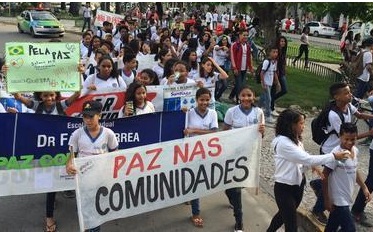
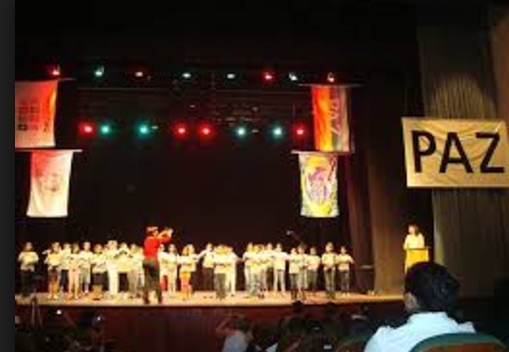
Various educational institutions in the municipality of Sonsonate held a march for peace and for the rejection of violence, intended to raise awareness among people to improve the situation of social harmony. Dozens of students from the Thomas Jefferson National Institute and the Polytechnic Institute of Sonsonate gathered outside city hall, carrying banners calling for the cessation of violence. The students were accompanied by cheerleaders, who to the tune of the music offered a show to the public along the route of the peace march.

salvador

The youth group marched down North 1st Avenue, crossed the street and then took Salarrué Morazan avenue, until they reached the December 14 column.

According to organizers, the march was organized to mark the International Day of Non-Violence.

Sonsonate was in previous years one of the 16 most violent municipalities of the department; however, they have implemented some plans that have significantly reduced the rate of violence. According to statistics from the National Civil Police (PNC), the municipality of Sonsonate ceased to occupy the first place in homicides and has dropped to fifth place, with 26 murders so far this year, compared to 35 last year.

PNC statistics situate Izalco as the more violent than the department of Sonsonate, with 114 homicides so far this year; followed by Nahuizalco, 41; San Julian, 32; Armenia, with 30, and Sonsonate, 26.

Local authorities say the reduction of violence in the departmental capital is due to a number of programs in Sonsonate made by various institutions, with the support of United Nations Development Programme (UNDP).

The intention of those involved in these programs is to improve relationships between children and young people of school age and therefore several of its projects are focused on schools.

(Click here for a Spanish version of this article)

Question related to this article:

Colombia: Youth for Peace: Mass marches in 16 cities across the country

. . DEMOCRATIC PARTICIPATION . .

An article Caracol TV (translation by CPNN)

Tens of thousands of people marched Wednesday [October 5] in at least 16 cities in Colombia demanding the government and the opposition to reach a peace agreement with the FARC, after the rejection of the agreement with the guerrillas in a plebiscite. In 12 cities, including Bogota, Barranquilla and Cali, citizens demanded that President Juan Manuel Santos, promoter of the peace pact with the FARC, and the former president Alvaro Uribe, a fierce opponent of the agreement, should work together to overcome the armed conflict that has hurt Colombia for over half a century.

march
video of march available on website of Caracol TV

“My heart is aching. Peace is not Uribe or Santos, peace is us. That makes me angry,” said Alejandro Quevedo, a math teacher of 31 years who attended the university rally in Bogota .

With white shirts and white flowers, at least 30,000 people participated in a silent march for peace in Bogota that ended in the central Plaza de Bolivar. They protested the results of the plebiscite on Sunday, where 50.21% of voters said “No” to the agreement with the Revolutionary Armed Forces of Colombia (FARC) after nearly four years of negotiations in Cuba.

Santos called for a national dialogue to seek alternatives. He met Wednesday with Uribe in the presidential palace, where he said he is determined to “seek ways of unity and reconciliation” to achieve peace.

“No more victims”

“For all that unites us and what separates us,” read the poster that led the march, carried out in absolute silence with the flames of white candles, the colored flags of Colombia and the gay community. Only a few marchers raised their fists.

“I march with uncertainty in the face of the silence and lack of will to solve things of those who voted ‘No’, I feel that is all I can do now to try to find solutions,” said Lina Vanegas, a university teacher of 29 years present at the demonstration.

Silently holding candles, some government officials also participated, for example, Interior Minister, Juan Fernando Cristo, and senior advisor for post-conflict Rafael Pardo.

(Article continued in the right column)

(Click here for the original version of this article in Spanish.

Questions related to this article:

What is happening in Colombia, Is peace possible?

How effective are mass protest marches?

(Article continued from the left column)

But the silence of the march was broken when the audience sang the national anthem. That gave way to shouting slogans like “We want peace”, “No more war”, “No more victims” and “Not one step back” as marchers formed the symbol of peace with their candles.

Protesters then read the “Prayer for Peace”, a speech of the assassinated liberal leader Jorge Eliecer Gaitan, who in February 1948 led protests by 100,000 people in the capital against political persecution by the conservative government of Mariano Ospina Perez.

“Stop the violence, Mr. President. We simply ask for the defense of human life, which is the least a people can ask”, cried Gaitan, a few months before he was killed.

It is “necessary” to stop the hate

In Barranquilla and Cali, dozens of citizens dressed in white also demanded an end to the internal conflagration and an extension of the bilateral cease fire respected by FARC since August and extended by Santos until 31 October.

“People who have actually lived through the war itself are those who want change, they want a transformation (…) and that was not shown in the plebiscite,” said Stefany Vergara a literature student 28 years of the Universidad del Valle in Cali, where about 4,000 people marched.

The FARC, meanwhile, supported with tweets on what they called “#PazALaCalle”. “They will maintain peace and willingness to use only words as weapons for future construction. Peace will triumph,” they said.

The call for demonstrations went beyond the borders of Colombia. In New York, some 50 Colombians gathered in Times Square, the heart of Manhattan, to sing “Colombia wants peace!” and advocate for the end of the continent’s oldest armed conflict.

“Civil society has begun to mobilize to tell the government that we do not want a renegotiation but the accords that are already done,” said the painter Ricardo Prado, 25, in the Times Square gathering

Mobilizations of Colombians calling for an end to the war also took place in cities of Holland, England, Dominican Republic, Ecuador and France.

The armed conflict in Colombia for more than 50 years involving guerrillas, paramilitaries and government forces, killing some 260,000 dead, 45,000 missing and 6.9 million displaced.

UK: Rochdale and Littleborough Peace Group sign Pledge to Peace

.. DEMOCRATIC PARTICIPATION ..

An article from Rochdale online

Representatives of Rochdale and Littleborough Peace Group joined other groups from throughout Greater Manchester at the Civic Centre in Oldham on Monday (26 September) to sign the ‘Pledge to Peace’ (also known as the ‘Bruxelles Declaration’), a European project to promote the development of a culture of peace.

Rochdale
Rae Street from Rochdale and Littleborough Peace Group (standing), Elaine Dutton Mayoress of Rochdale (sitting), Councillor Derek Heffernan Mayor of Oldham (sitting), Di Heffernan Mayoress of Oldham (sitting), Councillor Ray Dutton Mayor of Rochdale (sitting), Philip Gilligan Chair of Greater Manchester and District Campaign for Nuclear Disarmament (standing), Steve Roman from Manchester Campaign for Nuclear Disarmament (sitting) and Linda Walker from Glossop Peace Group

Rae Street and Philip Gilligan were guests of the Mayor of Oldham, Councillor Derek Heffernan who became the first mayor in Greater Manchester to sign the Pledge on behalf of his council. He, like Rochdale’s mayor, Ray Dutton, who also attended the event, is a member of Mayors for Peace which campaigns for the total abolition of nuclear weapons.

On behalf of the Peace Group, Philip Gilligan said: “We are delighted that both Rochdale and Oldham now have a Mayor for Peace.

“Mayors for Peace is a crucial organisation with more than 7000 city leaders worldwide. Their programme launched by the Mayor of Hiroshima in 1982 promotes much needed solidarity among cities to campaign for a world freed from the threat of nuclear annihilation.”

For more information about Pledge to Peace, please see http://www.pledgetopeace.eu

For more information about Mayors for Peace, please see http://www.mayorsforpeace.org

Questions for this article:

Ashland, Oregon (USA): November’s elections for peace?

. .DEMOCRATIC PARTICIPATION. .

An article by Jeff Golden in Ashland Daily Tidings

As you might have heard, there’s an election campaign underway right now. Tens of thousands of them, actually, many for offices that might impact our daily lives over the next few years as much or more than President Clinton or President Trump will. This is the first full election since the launch of the Ashland Culture of Peace Commission about a year ago, and it has some of us working with ACPC curious: What would an election that embodies a culture of peace look like?

Ashland

It’s a tough puzzle, because elections are anything but win-win activities. Their defining purpose is to yield a winning and, generally, one or more losing candidates — not exactly an ideal set-up for creative solutions that meet some of everyone’s needs, which is part of what a culture of peace is all about.

It’s not hard to imagine a campaign more thoughtful, respectful and tolerant than what we’re used to seeing; this year it’s really not hard. But reworking a process that’s driven by an imperative to beat the other guy into a ritual of peace — that’s a tough stretch.

Let’s take a small step. We won’t try to transform the mood and tone of this year’s presidential election, careening along as it is with a kind of darkly manic energy. What makes more sense is to start at home.

This November’s ballot will include an Ashland mayor’s race with four candidates and a total of seven candidates for three city council seats. The ACPC has invited all of them to a candidates forum from 7 to 8:30 p.m. Wednesday, Oct. 5, in Wesley Hall at First United Methodist Church, 175 N. Main Street.

(Article continued in right column)

Questions for this article:

How can culture of peace be developed at the municipal level?

(Article continued from left column)

Like other forums, this forum is intended to help you get to know the candidates before you mark your ballot. Unlike other forums, this one will consciously explore how the competitive dynamic of political campaigns can fit within a culture of peace, the culture into which we eventually want to fit all civic aspects of our community.

We’re aiming to make this forum one of the most encouraging and upbeat civic events Ashland’s ever had, and when you’re creating an energetically different model, it’s hard to know exactly how to pull that off. It calls for the creativity of more than just a few organizers. It calls to all of us with an affectionate concern for our city, an interest in elections, and a deep, if not wholly clear, knowing that politics can line up with our highest values much more closely than what we’re witnessing.

So we want your help. We plan to ask the candidates the very best questions you’re willing to send us. “Best,” for our purposes, are questions that (1) generate respect among opponents and a genuine curiosity about what those with different views are thinking, and (2) shed light on what candidates would work on as mayor or councilors to advance a culture of peace in Ashland.

Will you give all this a few minutes’ thought and see what comes up? What would you ask the people who want to govern Ashland in order to discover how committed they are to a culture of peace in our community and to learn what they see themselves doing with their authority if they win?

We’d like you to send one or more questions to ashlandcpc@gmail.com by Wednesday, Sept. 28. Please include your name and indicate whether we can mention your name if we use your question(s).

Whether or not you contribute questions, we’d like you to join us from 7 to 8:30 p.m. Wednesday, Oct. 5, in Wesley Hall at First United Methodist Church, to engage with the mayoral and council candidates on their visions for our community and how a culture of peace might fit into them. When it comes to changing the tone and quality of our political life, we are the ones we’ve been waiting for.

Mexico: Mancera opens the International Forum of ‘Mayors for Peace’

. DEMOCRATIC PARTICIPATION .

An article Excelsior (Reprinted as a non-commercial use)

Prime minister, Miguel Angel Mancera, opened the International Forum of “Mayors for Peace” aimed at combating violence worldwide. The capital is a vice-president of the non-governmental organization “Mayors for Peace”, which involves 132 cities in 161 countries.

mayors
(Click on photo to enlarge.)

The event, organized by the Secretary of Social Development of the capital, called for the promotion of peace and eradication of violence in the world, through actions such as voluntary disarmament and social inclusion.

In that respect, the Minister said that his administration carries out various actions to promote peace through social programs such as “Por tu Familia Desarme Voluntario”, “El Médico en Tu Casa”, “10 X la Infancia” and the recent creation of “Hospital de las Emociones.”

He said a permanent task is to build more egalitarian cities, where conflicts over lack of inclusion are avoided: “how to prevent violence is by avoiding the causal conflicts and by developing a long-range program that involves the environment, access to water, food and education. Regarding the environment his government is working with the Climate Leadership Group (C40), and has joined the Food Policy Agreement of Milan to favor the creation of fair and sustainable food systems.

(Article continued in the right column)

(Click here for the original Spanish version of this article.)

Question for this article

What has happened this year (2016) for the International Day of Peace?

(Article continued from the left column)

During this forum, which is held during the International Day of Peace, five working groups and the keynote address will be developed.

In addition there will be demonstration of the destruction of weapons collected by the program “For Your Family, Voluntary Disarmament” and the exchange of war toys for educational toys.

Roundtables during the first day of work will incude: “Practices of Local Governments for a Culture of Peace”; “Challenges of Local Governments faced with new threats at the Global Level” and “The Role of Local Governments for Peace Building in Latin America and the Caribbean”.

Speakers at the forum include the coordinator of the Global Network of Safer Cities UN Habitat; the mayor of Frogn, Norway, Thore Vestby; and the director and representative of the United Nations Educational, Scientific and Cultural Organization (UNESCO) in Mexico, Nuria Sanz. In addition, the director of Peace Boat, Kawasaki Akira; the Mayors for Peace coordinator in North America, Jackie Cabasso; the representative of the United Nations High Commissioner for Refugees (UNHCR) in Mexico, Mark Manly; and the representative of Granollers, Spain, Carme Barbany. Also participating are the mayors of Cartago, Costa Rica, Rolando Rodriguez; Managua, Nicaragua, Daisy Torres; the Alderman of San Jose Costa Rica, Fernando Jimenez and Professor at the National Pedagogical University Paolo Pagliai.

The culture of peace commission of the city of Santos – SP (Brazil)

. . DEMOCRATIC PARTICIPATION . .

An article by Herbert Lima and Helena Lourenço

We have great news! After six years and many delays, the city of Santos has created a Commission of Peace. Of course, our organization, ABrasOFFA, is participating.

santos
Photo: Santos is especially famous for its beach

The Commission, with its weekly meetings, is organized to be able to generate impact on public, private and civil society activities of the municipality, with a focus on reducing violence through practices that encourage democratic participation of all citizens of the city. The commission supports actions such as the support of the Mayors for Peace Network, of which the city of Santos is a representative, as well as support activities of civil society, such as the “Paz na ponta do Giz” project of ABrasOFFA that promotes the concepts of peace within schools. The commission also supports meetings and events such as the ceremony in memory for the people killed in combat during the war, and peace day activities. A key role of the commission is to make the subject of PEACE a priority on the agendas of all leaders of the city (whether formal, such as the mayor and city representatives, or informal such as leaders that influence citizens’ decisions).

The idea for the Commission emerged six years ago from an initiative of ABrasOFFA- the Brazilian Association of Folklore Festivals Organizers – a nonprofit organization (NGO) that has always been an activist in the promotion of peace and that has undertaken several works against violence in the city of Santos, Brazil. In 2010 the ABrasOFFa held the 1st Congress of Peace in the Americas, which was attended by several scholars, including Dr. David Adams, who suggested the creation of the Commission for Peace in the city.

ABrasOFFA and the Santos City Hall saw the opportunity to improve the promotion of peace and reduce violence in the city with the formalization of a group of people who could have representation and discuss the ways for a more peaceful society. For some time the formation of the commission was discussed, until finally formalized in a democratic manner, hosting representatives of all civil society.

The Culture of Peace Commission is made up of people who are aware of the challenge that exists for the promotion of a culture of peace in the city. It is a long walk on a road that builds itself as we walk over it; we cannot see the end of it, but it is known that the end is a much better place than the one we are living today

(Click here for a Portuguese version of this article)

Questions related to this article:

USA: Culture of Peace Commission: Compiling Ashland’s ‘Community Peacebuilders’ network

. .DEMOCRATIC PARTICIPATION. .

An article by Will Sears in Ashland Daily Tidings (abridged)

. . . Every city and village on earth has individuals and organizations that work at the local level to promote the social order, health and sustainability of their communities. The Rogue Valley is especially blessed with a huge number of such individuals, businesses and organizations that, each in their own way and throughout all sectors of our local society, are already contributing to some aspect of transforming our current culture into one of justice, interconnectedness and peace. That richness, relative to our small population, makes Ashland the perfect place to begin to consciously create a model for a local Culture of Peace that just might spread throughout the world.

Ashland

Global organizations related to the United Nations and the International Cities of Peace are watching us with interest and encouragement as we endeavor to become the first city on earth to consciously and systematically create an overarching local culture of peace. We are being seen as a valuable case study as we deliberately create templates for use in other cities.

Toward this end and among several other programs, the Ashland Culture of Peace Commission (ACPC) has created the Community Peacebuilders Network. This is an as-yet small but constantly growing listing of all of those local groups and individuals, from all sectors of our community, that have already decided to join us, and each other, in this adventure. Each has described in their own words how the work they do contributes to an overall culture of peace in our local area. They are each listed under one of the broad cultural categories of “Business,” “Education,” “Food /Habitat,” “Arts/Culture,” Religion /Spirituality,” “Health /Science,” Legal /Social,” “Environment” or “Multi-sector.” We also have a category for “Individuals” who are working toward peace in some way.

(Article continued in right column)

Questions for this article:

How can culture of peace be developed at the municipal level?

(Article continued from left column)

This listing serves to acknowledge the important and often unnoticed work that is being done in our community that moves us toward a better world. It invites and encourages collaboration. It further serves to inspire us all as we realize that we are not alone, that our work is part of a much larger movement sharing an overall common purpose that could potentially change the world.

Another purpose of this listing is to help us to see how we are all contributing to a culture of peace in some way. Farmers and restaurants that foster environmental stewardship, businesses that treat their employees and customers fairly and respectfully, churches that work to promote unity and eliminate bias are all contributing to the peaceful, cooperative health of our society.

As we move forward the ACPC will begin to host periodic conferences aimed at inspiring communication about elements in our community that can be improved and encouraging collaborative solutions as we work toward our goal of creating an interconnected web of peace, justice, sustainability and inclusion in our local area.

The Community Peacebuilders Network is currently viewable on our ACPC website (ashlandcpc.org). You, your business, or your organization are invited and encouraged to be included in this list by filling out a form which you will also find on our website under “join the movement.”

Please do join us as we work together to stitch a seamless new culture of peace that works for us all. Help us to build a model of a single city and its surroundings working together to make a better world from the grassroots up. Help us to create a replicable example for the rest of the world to follow.

At long last, we and the people of the world seem ready!

Rio Olympics: Why the opening ceremony’s spotlight on climate change matters

.. DEMOCRATIC PARTICIPATION ..

Blogpost by Diego Gonzaga for Greenpeace

There is such a complex mix of political, social and economic issues happening in Brazil right now, it is hard to know where to start. Should I mention the president’s impeachment? What about the corruption scandal involving so many Brazilian politicians right now? And don’t get me started on the Zika virus.

Greenpeace
Performance around climate change during Rio Olympic Games opening ceremony. Credit: Fernando Frazão/Agência Brasil/Wikimedia Commons

I’ve lost count of how many articles I’ve seen talking about the water pollution in Rio and concerns for the health of the athletes and tourists. Even though I knew deep down that Brazil was not going to be able to meet the world’s expectations — or my own — before the Olympics started, I really hoped that they would somehow figure it out. Unfortunately, that did not happen.

Don’t get me wrong, amongst so much bad media, there is still good news. Brazil just celebrated the tenth anniversary of the Soy Moratorium, an agreement that helps protect the Amazon from deforestation for soy farming. And I cannot forget to mention the huge news that the license for building a mega-dam in the heart of the Amazon was cancelled just last week. But there is always more to be done.

(Article continued in right column)

Question for this article:

How can sports promote peace?

(Article continued from left column)

Brazil may have missed the opportunity to have the sustainable event it planned, but the silver lining is that in this international spotlight, Brazil’s leaders can make the right choices for the environment. There are still other hydroelectric dam projects in the Amazon that should be cancelled. Brazil’s focus needs to be on clean energy options like solar and wind instead — energy sources that protect Brazil’s biodiverse ecosystems and the climate.

Watching the opening ceremony, I was glad to see that at least one opportunity was not missed: bringing climate change front and center. Two powerful messages were delivered during the event. The first was a video about global warming. Seeing Amsterdam, Rio, Florida and so many other places around the world being flooded due to the rise of sea level gave me chills. These are the real consequences if the whole world does not commit to fight against climate change. The second message announced that more than 11,000 trees will be planted in Rio, representing each Olympic athlete.

This part of the opening ceremony was just a symbolic act, but I hope that both messages serve as a wake up call for everyone who watched it — and that the sense of togetherness it provided can make people feel that it is possible to make a difference, even through small acts like planting a tree. The fight against climate change is everyone’s fight. Even some Olympic athletes are recognizing the role they can play.

The whole ceremony was amazingly beautiful, inclusive and exceeded my expectations. It made me feel proud of being Brazilian, because it showed the whole world our culture, history and diversity. And it reminded us all that, if we are capable of joining forces to celebrate Olympic Games together, we can make the world a better place as well.

Iranian Women Won More than a Medal at the Olympics

.. DEMOCRATIC PARTICIPATION ..

An article from United for Iran

As the world watches the 2016 Rio Summer Olympics, it is clear that this year’s games boasts not only incredibly talented athletes who dominate their sport, but also sportsmen and women who are literally making history. From Simone Manuel’s gold-winning and world record-breaking performance in the women’s 100 meter freestyle, making her the first African American woman to win an individual swimming event, to the debut of the first-ever Olympic refugee team (a recognition of the 60 million refugees in the world today), the Rio Olympics have been a vehicle for social change.

Iran
Kimia Alizadeh Zenoorin of Iran celebrates after winning the bronze medal.
(Click on photo to enlarge)

In fact, breaking barriers and protesting social issues have long been a part of the Olympic tradition. In the 1908 London Olympics, the American shot putter and flag bearer Ralph Rose refused to dip the American flag before King Edward the VII, a policy continued by the US team to this day. At the 1968 Mexico City Olympics, American track and field Olympians Tommie Smith and John Carlos raised their fists on the medal stand protesting racially discriminatory policies in their home country. At the 2014 Sochi Olympics, LGBT athletes and allies spoke out against Russia’s anti-gay policies and staged protests that ranged from large demonstrations to kisses with their same-sex lovers after winning Olympic gold.

This year, Darya Safai, a Belgium-Iranian woman, joined that fabled Olympic tradition of protest and barrier breaking. At the Iran versus Egypt men’s volleyball match in Rio, Safai held a sign reading: “Let Iranian women enter their stadiums,” protesting the Iranian government’s refusal to grant women access to soccer and volleyball matches in Iran.

Since 1979, Iranian women have been prohibited from attending football matches. That ban was extended to volleyball matches in 2012. What is worse, women who have protested this gender apartheid have been harassed, arrested and imprisoned. In 2014, the Islamic Republic made its opposition to the presence of women in these public spaces clear when it arrested Ghonche Ghavami, a British-Iranian activist who had protested for equal access to a men-only volleyball match at Iran’s Azadi Stadium. She was arrested attempting to enter the stadium, charged with “propaganda against the state” and sentenced to one year in prison. She was held in prison for five months.

In Rio, Safai picked up Ghavami’s torch and helped shine a light on the Islamic Republic’s denial of fundamental human rights to women. By criminalizing women’s bodies and forbidding their attendance in men’s sporting events, the Iranian government is denying women access to public spaces.

And make no mistake — the ability to be in and be seen in public spaces is a fundamental civil liberty. To have access to public spaces is a critical human right; it means that society recognizes your worth as a person with a voice and the ability to contribute.

The policing of Iranian women’s participation is not just limited to sports matches either: In the Northwest Iranian city of Marivan, bicyclists gather and ride through town every Tuesday night as part of a “vehicle-free” campaign. Last month, an Iranian religious leader declared that women biking was a sin, and for two weeks guards stopped female bikers from participating in the cycling event. Since the state-enforced religious edict came down, women and their allies have held multiple protests in Marivan demanding equal access‌ to the right to bike.

(Article continued in right column)

Question for this article:

How can sports promote peace?

(Article continued from left column)

Of course, any form of public participation by Iranian women have to‌ meet the government-required dress code. All Iranian women, regardless of faith must adhere to hijab (modest islamic dress that includes the headscarf). For Iranian women who are not observant Muslims this means their access to public space has been forcefully limited.

However, despite all of the Islamic Republic’s efforts to keep women out of public spaces and sporting events, Iranian women refuse to end their fight, as they took center stage at the Olympic games in Rio this year.

Just last night, Kimia Alizadeh won the bronze medal in Taekwondo, becoming the first ever Iranian woman to win a medal. “I am so happy for Iranian girls because it is the first medal and I hope at the next Olympics we will get a gold,” she said.

Zahra Nemati is another inspiring story. Athletic from a young age, Zahra was a taekwondo prodigy. She took up taekwondo and while still a teenager qualified for Iran’s National Taekwondo Team. But life for this Olympic hopeful changed in an instant. When she was 18, a car accident left her with a spinal cord injury, and paralyzed her in both legs. But that tragedy did not put an end to Zahra’s Olympic dreams. She continued to press on with incredible determination and courage, winning the gold medal in archery at the 2012 London Paralympic Games, and qualified for both the Olympics and Paralympics in Rio. Zahra is, as one fan described, the epitome of the Olympics.

The International Olympic Committee (IOC) has made a public stance stating in its charter that it is “committed to the goal of equal participation by women in sport.” The IOC has set up the Women in Sports Commission to ensure its gender-equality policies are overseen and implemented.

Though a small and tacit gesture of solidarity, the IOC’s permission for Daraya Safai to hold her sign at the Olympics will be remembered by Iranian women fighting for their rights for years to come, and it sends a clear message to the Islamic Republic. It is now time for the Olympic Committee to put their words in practice and explicitly support those who object sports gender apartheid. Gender-equality practices must be encouraged and enforced both on and off the field. The ability for women to participate and watch sports is nothing short of a pressing human rights issue, and the IOC has a responsibility to ensure that female athletes and fans can participate in the sports they love.

As Kimia and her fellow women Olympians finish their competitions in Rio, they have become beacons of hope to many Iranian women, demonstrating that even in the face of extreme discrimination they can aspire to achieve more. But equally as important, Iranians are looking at how those who dare to ask for equality for women are treated in the International domain — as we look back on these Olympics and remember what we’ve protested and celebrated, we should remember Darya Safai alongside brave Iranian women Olympians.

In the same way that the 1968 Olympics has been remembered as a sign of the times — then the civil rights movement in the US, the Vietnam War, and South Africa’s Apartheid regime — the 2016 Olympics will be known for #BlackGirlMagic, Team Refugee, and for the brave Iranian women fighting for gender-equality and public access to sports.

(Thank you to Janet Hudgins, the CPNN reporter for this article.)

UCLG City of Bogotá Peace Prize: Finalists selected!

.. DEMOCRATIC PARTICIPATION ..

An article from the UCLG Peace Prize

Out of many applications from across the globe, the high-level jury has now selected the five finalists for the UCLG City of Bogotá Peace Prize. This was not an easy decision, as many local governments have submitted high-quality and innovative projects. The finalists are invited to present their case to the jury and public at the world congress of the international organization of United Cities and Local Governments (UCLG).

UCLG

The finalists comprise a diverse range of innovative peace projects by local governments. Out of many initiatives across the globe that had been submitted, these following innovative projects have been selected as top contenders for the award:

* Canoas, Brazil: in Canoas, local authorities have designated Peace Territories in which they combine initiatives in technology, social inclusion and community policing to address causes of violence.

* Cali, Colombia: the Think About Peace programme comprises workshops for children and parents while training community mediators and social workers to promote peace in the community.

* Palmira, Colombia: through the Palmira, tu Voz es Paz urban music competition local authorities raise young people’s awareness of the importance of living together peacefully.

* Shabunda, Democratic Republic of Congo: in this remote area, Permanent Peace Committees have been created to establish peace, restore government authority, reintegrate members of a local militia into the community and end the area’s isolation.

* Kauswagan, the Philippines: the From Arms to Farms programme is a comprehensive approach to demobilization and reintegration of former rebel fighters, engaging them in organic farming.

These shortlisted candidates are invited to present their case to the jury and public at the World Congress of the global organization of UCLG, which will take place in Bogotá, Colombia, from 12 to 15 October 2016. There, the winner will be awarded a modest prize package, aimed at strengthening its peace projects and facilitating learning and exchange with other local governments that are facing similar challenges. We would like to thank all participants for their participation and invite all to apply again in future editions of this prize.

In the upcoming weeks we will publish articles about these projects individually, providing more in-depth information in the run-up to the final presentations in Bogotá.

Questions for this article: