Category Archives: Uncategorized

Past Virtual Events: October 30-November 10

FREE FLOW OF INFORMATION

Here are events between October 30 and November 10 that were previously listed on the CPNN page for upcoming virtual events. Unless otherwise noted the events are in English.
October 30

17:00 – 19:00 CET. Do Black Lives Matter in British History? A Conversation with Professor David Olusoga OBE. David Olusoga is a British-Nigerian historian, broadcaster and BAFTA award-winning presenter and filmmaker. His television series include Black and British: A Forgotten History, A House Through Time, Civilisations, and The Unwanted: The Secret Windrush Files. His books on colonialism and empire have won numerous accolades, including the PEN Hessell-Tiltman Prize. His latest book is Black and British: A Short Essential History. Join Aston University students and staff for a virtual conversation with Professor Olusoga. Admission is free and open to the public.
This live online event is organised and hosted by the Department of History, Languages and Translation at Aston University.

October 30

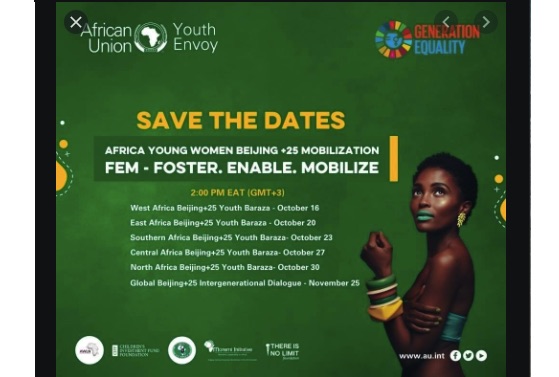
The Office of the Envoy of the African Union for Youth in collaboration with the Women, Gender and Development Directorate will organize the Baraza Beijing + 25 of the Youth of North Africa, as part of the “Beijing + 25 Mobilization of Young African Women” co-organized with the African Women Leaders Network (AWLN) Young Women Leaders Caucus and the International Youth Task Force for Beijing + 25.

October 30

Invitation: UN75 Dialogue in observance of World Cities Day
Better City, Better Life:: Valuing our Communities & Cities
Friday, October 30, 2020 3:00 PM – 5:45 PM (New York time)
Hosted by the Permanent Mission of Slovakia and the Permanent Mission of Germany to the UN, NGO Committee on Sustainable Development-NY and UN-Habitat
Our UN75 Dialogue in observance of World Cities Day: “Better City, Better Life: Valuing our Communities and Cities” will address the impacts of the COVID-19 pandemic on our communities and cities while strengthening our resilience to build back better. Thnt World Urban Forum – WUF10 and the UN Economist Network for the UN 75th Anniversary: Shaping the Trends of Our Time Report showed us the megatrends which shape our world. The present report focuses on five of these megatrends: climate change; demographic shifts, particularly population ageing; urbanization; the emergence of digital technologies and inequalities. While many are utilizing innovative communication platforms that allow for better engagement to strengthen the resilience of their communities and cities, through the pandemic, others without access are falling further behind. It is vitally important that we continue our focus on the SDGs and the UN2030 SD Agenda to build partnerships with Member States, UN-Habitat, national and local authorities as well as stakeholders from civil society and the private sector in order to be better prepared to achieve the inclusive, safe, resilient and healthier future we want with the UN we need – to “Leave No One Behind.”

November 2

You are invited to a follow-up webinar on Target 2045: A new rallying call for nuclear weapons elimination , which was one of the calls made in the appeal Protect People and the Planet: Appeal for a Nuclear-Weapon-Free World.. The event will take place on Monday November 2 from 10am-11:30am Eastern Time (USA). It will include presentations from:
·       H.E. Mr Magzhan Ilyassov, Permanent Representative of the Republic of Kazakhstan to the United Nations;
·       Mr Ramesh Jaura, Editor-in-Chief & Director-General, IDN-InDepth News, flagship agency of the non-profit International Press Syndicate group;
·       Mr Saber Chowdhury MP, Honorary President, Inter-Parliamentary Union. Co-President, Parliamentarians for Nuclear Non-proliferation and Disarmament;
·       Ms Vanda Proskova, Vice-Chair, PragueVision Institute for Sustainable Security. Co-chair, Abolition 2000 Youth Network.
 The presentations will be followed by comments, questions and answers from the audience. Click here for the event flyer.

November 2-6

2 – 6 November 2020, the Geneva Center for Peacebuilding is hosting a free online event called Geneva Peace Week. All week there will be talks and lectures freely available to anyone. This year, the theme of the week is “Rebuilding trust after disruption: Pathways to reset international cooperation”. It is meant to have speakers and participants from around the world, sharing learning on peacebuilding and facilitating interactive discussions. Seems to be well organized for facilitating online participation. It’s free to sign up and attendees can participate in live workshop sessions. Details on how to participate are at the following link: https://eu.eventscloud.com/website/3030/

November 5 and 12 (in Spanish)

The UNESCO CHAIR: Citizenship, Coexistence and Pluralism invites you to the conferences of:
” SCHOOL OF DEMOCRACY ”
Thursday, November 5 from 7:00 p.m. to 8:00 p.m. (Spanish time)
CONFERENCE: “THE DECADENCE OF PARLIAMENTARIANISM”
AGUSTÍN RUIZ ROBLEDO, Professor of Constitutional Law at the University of Granada.
Thursday, November 12 from 7:00 p.m. to 8:00 p.m. (Spanish time)
CONFERENCE: “THE RISE OF THE EXTREME RIGHT”
MIGUEL ÁNGEL SIMÓN, Doctor in Political Science and Public Administration
Free registration through the following link: https://bit.ly/37djSKi

November 7

The Peace Studies Program and the Centre for Peace Studies at McMaster Universitycpresents The 20th Annual Mahatma Gandhi Lecture on Nonviolence: From the Civil Rights Movement to Black Lives Matter
Reflections by Rev. James Lawson and The Hon. Jean Augustine
Saturday, November 7, 2020, 4-6pm EST
Rev. James M. Lawson Jr.
An activist, minister, and the pioneer of nonviolence in the American Civil Liberties Movement. Reverend James M. Lawson Jr. was inspired by  Gandhi’s use of nonviolence  in securing justice and peace. Dr. Martin Luther King described Rev. Lawson as “the leading theorist and strategist of nonviolence in the world.” 
The Hon. Jean Augustine
The Hon. Dr. Jean Augustine made history as the first Black woman elected to Canada’s Parliament and served from 1993-2006.  Her legislative successes include the historic Black History Month Motion. She has dedicated her life to  the pursuit of social justice.
To join the event, click on: https://youtu.be/t1uZ6gURHb0
 If you have any questions about this event, please contact Director,Centre for Peace Studies, Dr. ChandrimaChakraborty (chandri@mcmaster.ca)

Tuesday, November 10th, 2020

Join us this Tuesday 6 pm PDT, 9 pm EDT and visit with Dot Maver – who is our founding Executive Director, and co-founder of the Global Alliance for Ministries and Infrastructures of Peace, the Global Silent Minute, the National Peace Academy, and the River Phoenix Center for Peacebuilding. In 2004, Dot served as National Campaign Manager for Kucinich for President.
Dot’s “keynote” is “inspiring cooperation on behalf of the common good,” and she consistently delivers on that theme.
We will also hear an update from the Department of Peacebuilding Committee, and we hope to hear from YOU! Join the Conversation!!
Once again, we will be hosting our Monthly Field Call using Zoom technology. Those who download the Zoom software can join the call using video tools – seeing the speakers and being seen if you wish. Others may phone in as usual, using the number provided via email after you register.
Here is the link to Register for this Call!
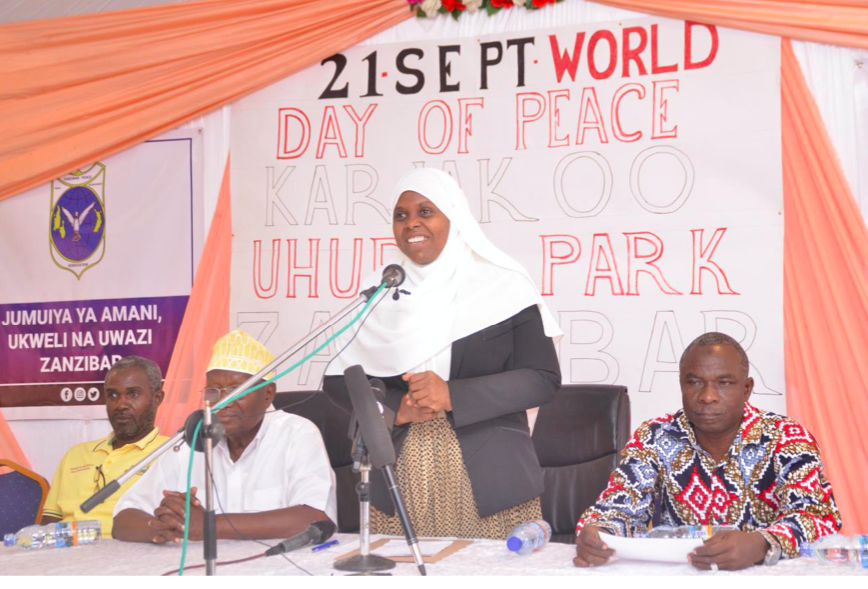
The growing use of weaponised drones risks destabilising global peace and security

DISARMAMENT & SECURITY .

An article from UN News

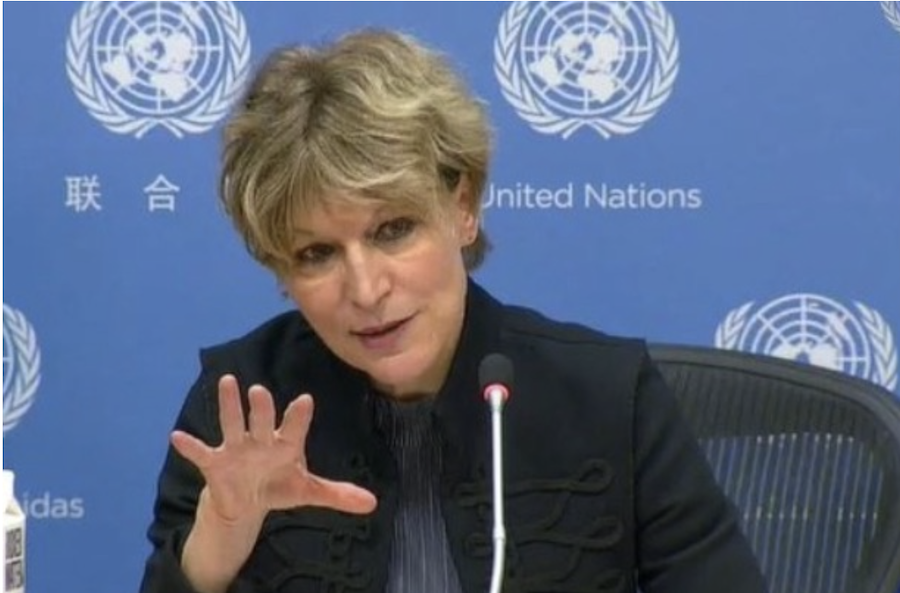
The growing use of weaponised drones risks destabilising global peace and security and creating a “drone power club” among nations, that face no effective accountability for deploying them as part of their “war on terror”, a senior UN-appointed independent rights expert said on Thursday.


At the UN Human Rights Council in Geneva, Agnes Callamard, Special Rapporteur on extrajudicial, summary or arbitrary executions, said that more than 100 countries have military drones and more than a third are thought to possess the largest and deadliest autonomous weapons.

‘No red lines’ in drone warfare?

States who used them on the grounds of self-defence, “defined in a very elastic fashion” against purported terrorists, risked creating a situation where “there will be no red lines really”, she told journalists later.

“As more Government and non-State actors acquire armed drones and use them for targeted killing, there is a clear danger that war will come to be seen as normal rather than the opposite of peace,” Ms. Callamard said. “War is at risk of being normalized as a necessary companion to peace, and not its opposite.”

Appealing for greater regulation of the weapons, and lending her support to calls for a UN-led forum to discuss the deployment of drones specifically, the Special Rapporteur insisted that their growing use increased the danger of a “global conflagration”.

(Article continued in right column)

Question for this article:

Drones (unmanned bombers), Should they be outlawed?

(Article continued from left column)

‘Influential States’ rewriting the rules

Such a move was necessary because “a small number of rather influential States” had sought to reinterpret the law of self-defence under Article  51 of the UN Charter, she explained.

She urged UN Security Council to meet in formal session to review and debate all such self-defence claim, before recommending that the High Commissioner for Human Rights should produce an annual report on drone strikes casualties for the Human Rights Council.

There was now the “very real prospect that States may opt to ‘strategically’ eliminate high-ranking military officials outside the context of a ‘known’ war”, she explained, and that they might seek to justify the killing “on the grounds of necessity – not imminence” as the target was classified as a “terrorist who posed a potential, undefined, future threat”.

Iranian general’s chilling death

In particular, she cited the killing by drone strike in Iraq of Iranian General Qassem Soleimani on 3 January for which the United States claimed responsibility and which she insisted was a violation of the UN Charter.

“Targeted killings until very recently to drones had been limited to non-state actors,” she told journalists. Until, for the first time in January 2020, a State armed drone targeted a high-level official of a foreign State and did so on the territory of a third State.”

Drone strikes were the preferred option for “decision makers and military alike for their relative efficiency, effectiveness, adaptability, acceptability, deniability, and political gain”, the rights expert maintained.

But she noted that their benefits were as “illusory” as the “myth of a surgical strike”. 

Because of the current absence of effective oversight, it was “practically impossible to know whether a person(s) killed in a drone strike was, in fact, a lawful target”, Ms. Callamard said, adding that harm to civilian populations, including deaths, injuries and trauma, was likely largely under-reported.   

(Thank you to Phyllis Kotite, the CPNN reporter for this article.)

English bulletin July 1, 2020

. THE STRUGGLE AGAINST RACISM .

This was a month of the reactivated struggle against racism.

It started in the United States with an uprising described as a “collective gasp for life” by the Poor People’s Campaign which continues the struggle for justice led by Martin Luther KIng, Jr. Their phrase refers to the last words of George Floyd,” choked and killed by a white police officer “viscerally reminiscent of the lynching photographs that were used to terrorize African-Americans for decades in this nation.”

Excessive force by the police, condemned by fundamental international human rights law and standards, is commonplace in the United States according to a recent study.

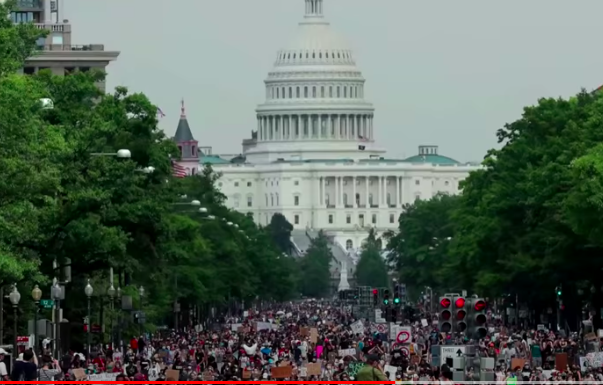
As described by Reuters, “tens of thousands of demonstrators amassed in Washington and other U.S. cities on Saturday [June 6] demanding an end to racism and brutality by law enforcement.” ““It feels like I get to be a part of history and a part of the group of people who are trying to change the world for everyone,” said one of the demonstrators.

Thousands took to the streets in Europeen and Asian cities demonstrating in support of the U.S. protests against police brutality, including London, Hamburg, Paris, Berlin, Brisbane, Sydney, Tokyo, Seoul and Bangkok,

The demonstrations in Australia linked the protest to the racist treatment of the aboriginal people in their country, where 432 aboriginals have died in police custody since 1991 without a single conviction. The racism is especially evident in the destruction of Aboriginal heritage sites for development projects. “The NSW Office of the Environment and Heritage shows that between June 2012 and June 2013 there were over 99 applications for the destruction of Aboriginal heritage sites for development purposes – all of which were approved.”

Central to the demonstrations has been the movement of Black Lives Matter, started in 2013 by three radical Black organizers — Alicia Garza, Patrisse Cullors, and Opal Tometi — in response to the acquittal of the murderer of 17 year old Trayvon Martin. Their project is now a member-led global network of more than 40 chapters that organize and build local power to intervene in violence inflicted on Black communities by the state and vigilantes.

As described by historian Robiin D. G. Kelley, in addition to Black Lives Matter, there have been many organizing efforts that have built a base for today’s protests. “These include people like Melina Abdullah, Charlene Carruthers of Black Youth Project 100, all the scholar activists who have been working on this question — Barbara Ransby, Kimberlé Crenshaw, Angela Davis, Ruth Wilson Gilmore — and then, before that, the Malcolm X Grassroots Movement, Copwatch, Dignity and Power, Critical Resistance, the African American Policy Forum. These were initiatives on the ground who did all this political education, all this organizing work — We Charge Genocide, Dream Defenders, the Rising Majority, Black Organizing for Leadership and Dignity, and also groups like SURJ, you know, [Showing] Up for Racial Justice, which deals with white racism.

Kelly concludes his interview with “And the real question now is whether or not this can be sustained.”

One of the means to sustain the movement is the mobilization in many U.S. communities and organizations to celebrate Juneteenth, the anniversary of the Emancipation Proclamation of Abraham Lincoln to put an end to slavery. It is now recognized in 47 states and the District of Columbia.

In the view of noted activist Cornel West , it is important to make the connection between U.S. violence abroad and at home. “When you sow the seeds of greed — domestically, inequality; globally, imperial tentacles, 800 military units abroad, violence and AFRICOM in Africa, supporting various regimes, dictatorial ones in Asia and so forth — there is a connection between the seeds that you sow of violence externally and internally.”

For more on the connection of racism to the culture of war, externally and internally, along with its historical roots, see this month’s blog for the culture of peace.

HUMAN RIGHTS


‘A part of history’: Calm prevails over D.C.’s biggest George Floyd protest

FREE FLOW OF INFORMATION


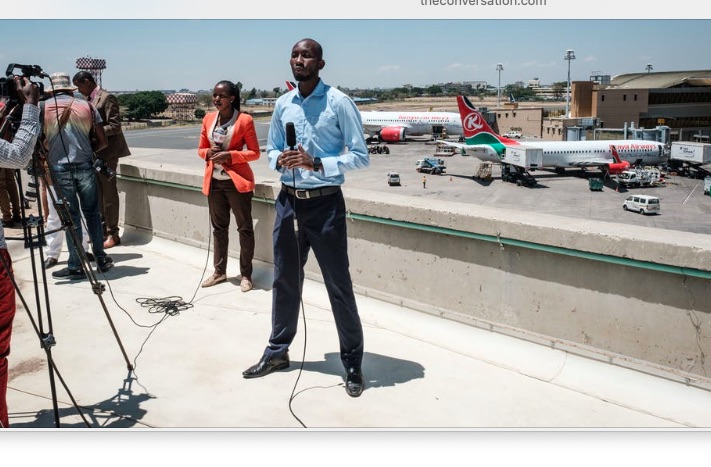
Decolonising peace journalism – and putting it to work in East Africa

SUSTAINABLE DEVELOPMENT


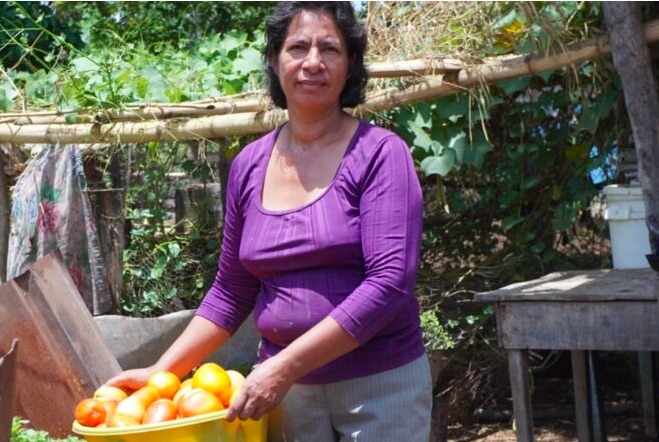
Feeding the people in times of Pandemic: The Food Sovereignty Approach in Nicaragua

DEMOCRATIC PARTICIPATION


“Listening as governance”, by Amartya Sen


EDUCATION FOR PEACE


USA: Historian Robin D.G. Kelley: Years of Racial Justice Organizing Laid Groundwork for Today’s Uprising

WOMEN’S EQUALITY


Philippines: Women’s leadership in the time of pandemic

TOLERANCE & SOLIDARITY


USA: An uprising is a collective gasp for life

DISARMAMENT & SECURITY


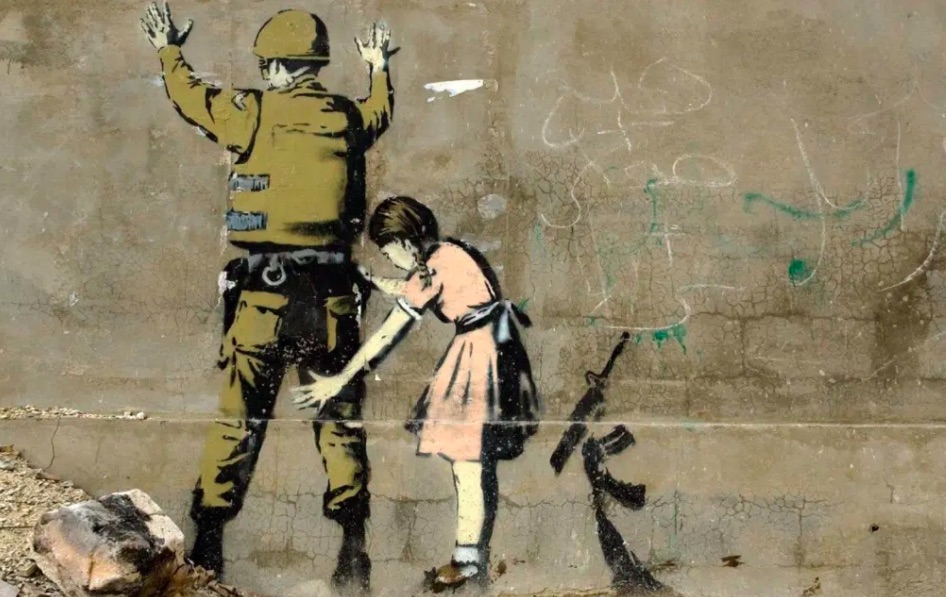
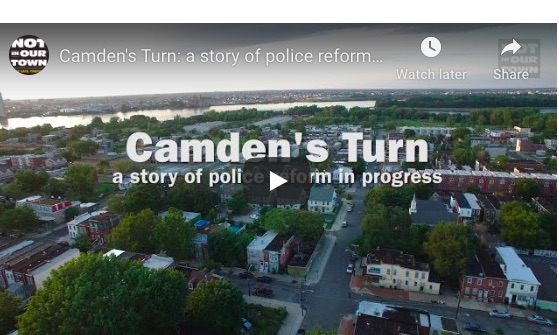
Film From USA: Camden’s Turn: A Story of Police Reform in Progress

English bulletin May 1, 2020

. CHARTING THE WAY FORWARD .

In the month since we wrote in our bulletin that “the medical and economic crisis associated with the coronavirus can be seen as an opportunity as well as a calamity,” many analysts have taken this position and proposed how we can move forward. This includes proposals regarding all aspects of the culture of peace:

Disarmament and Security: Three former Royal Navy Commaders of the United Kingdom sent a letter to parliament saying that the 2 billion pounds a year spent on nuclear submarines cannot be justified and the money should be used for health care. The activist David Swanson in the United States proposes that the American Department of Defense should be converted from military operations and should work for universal financial and medical security. Reacting to the latest American threat of war, that against Venezuela, it is said that “the US should fight COVID, not Venezuela” and that “President Trump has no business deploying US military assets threatening Venezuela.

Readers will recall that last month we published similar calls from the International Peace Bureau and the Peace Pledge Union to convert military budgets to money for health care, and the call by UN Secretary-General for a global ceasefire.

Solidarity: Around the world, people have responded to the crisis with actions of local solidarity to care for those who are vulnerable to the pandemic. A good example comes to us from the youth of Gabon who are providing water stations for the people living in poor areas. As expressed by the organization Tamara, in Portugal “the crisis represents a great opportunity, in addition to all its challenges: now, we have the opportunity to join forces worldwide to achieve a shared goal, develop social cohesion, set up decentralized structures, a solidarity economy – a genuine reboot”

Democratic participation: The Moroccan professor Abdelmoughit Benmassoud Tredano states that the economic crisis has only just begun. He repeats the call for solidarity: “at the individual, group and national level, individualism is outdated and solidarity is needed instead.” “This certainly implies rethinking the organization of the world on all levels . . . the organization of the world by regional groups must be adopted because no single state can stand alone, unless it is an entire continent.” According to the Council of Europe, Iin many countries, the lead is being taken by cities rather than the state. They provide the example of Raseborg in Finland.

Women’s equality: Nazra Feminist Studies of Egypt proposes that we adopt the feminist values “such as joining forces in times of fear, loss and build, collective responsibility and action towards our survival, international cooperation and collectiveness in order to understand and identify ways to overcome this crisis.”

In the short term sustainable development has been set back by the pandemic, but according to the World Economic Forum, “now is the time to start redirecting the $5.2 trillion  spent on fossil-fuel subsidies every year toward green infrastructure, reforestation, and investments in a more circular, shared, regenerative, low-carbon economy.”

Education for peace: In a recent webinar by he International Institute on Peace Education  and Global Campaign for Peace Education, educators from the USA, Austria, Puerto Rico, South Africa, China, Nigeria, Philippines, Mexico, Colombia, Argentina and South Korea shared how they are responding to the pandemic and associated systemic violence and injustices.

“How human rights can help protect us from COVID-19″ is the title of an article from Amnesty International, stressing the need to protect the human rights to health, access to information, employment, housing, water, sanitation and freedom from discrimination.

Free flow of information. According to the United Nations Conference on Trade and Development, the global crisis has pushed us further into a digital world. There has been a leap in teleworking and online conferencing, but only 20% of the population in the least developed countries use the internet, so the world needs a coordinated multilateral response to deal with the challenge of digitalization.

Of course, the eight aspects of the culture of peace are all inter-related and need to be addressed in coordination. This is seen in the following analyses.

Mazin Qumsiyeh sends us a global call from Palestine Action for the Planet which calls for democratization of the United Nations, reorganization of development priorities, drastic reduction in military spending, defense of democratic participation, global solidarity and restoration of ecological balance (“We humans must recognize ourselves as part of nature and live in harmony with it”).

William Astore, a retired lieutenant colonel (USAF) and professor of history, gives us seven suggestions “to change America” [and, we may add, “to change the world”]. The first is to reduce military spending and the next two are to reduce the 800 US military bases around the world and to abandon the plan for waging two major foreign wars at the same time. He calls for a Works Progress Administration to rebuild America’s infrastructure and reinvigorate our culture (like that of President Roosevelt during the depression). He calls for “an end to fear-mongering and warmongering, and to recognize as true heros not warriors and sports stars, but rather those who are on the frontlines against the coronavirus. And “finally, we must extend our love to encompass nature, our planet.”

Nobel Peace Laureat Mairead Maguire reminds us that “If this virus has done anything, it has reminded us that we are only human and very vulnerable; we need each other to survive and thrive.  If anything, this virus hopefully will cement the opinion that we are All One, brothers and sisters; what affects one affects all. . . . Government policies of sanctions, militarism, nuclear weapons and war must be radically replaced by government policies that put their citizen’s health – both physical and mental – on top of the political agenda. . . . Capitalism does not work, the system is broken, and we are all challenged to build a system of real democracy that works for everyone.

Another Nobel Peace Laureate, Mikhail Gorbachev, calls for a “radical rethinking of international politics . . . Is it not clear by now that wars and the arms race cannot solve today’s global problems? War is a defeat, a failure of politics! . . . We need to demilitarize world affairs, international politics and political thinking and reallocate funds from military purposes to the purposes serving human security. We need to rethink the very concept of security. Above all else, security should mean providing food, water, which is already in short supply, a clean environment and, as top priority, caring for people’s health.”

Finally, here at CPNN, we are providing additional tools and proposals in our blog to chart the way forward, to take advantage of the crisis to reform the world’s governance structure and make the transition from the culture of war to a culture of peace.

WOMEN’S EQUALITY


From Nazra for Feminist Studies (Egypt): A Letter of Solidarity; Together, We Stand in Solidarity..To Build

FREE FLOW OF INFORMATION


Coronavirus reveals need to bridge the digital divide

HUMAN RIGHTS


Amnesty International: How human rights can help protect us from COVID-19

DEMOCRATIC PARTICIPATION


Covid-19: A new organization of the world is essential (Moroccan university professor)


EDUCATION FOR PEACE


Peace Education and the Pandemic: Global Perspectives (video now available)

SUSTAINABLE DEVELOPMENT


Could COVID-19 give rise to a greener global future?

TOLERANCE & SOLIDARITY


PAYNCoP Gabon and Engineers Without Borders join forces to fight COVID 19

DISARMAMENT & SECURITY


Threatening Military Intervention in Venezuela During a Pandemic?