Tag Archives: Latin America

40,000 Create Human Chains to Protest Violence in Honduras

. HUMAN RIGHTS .

An article from Telesur TV

Over 40,000 people participated Sunday [October 23] in human chains throughout Honduras, including in the capital, Tegucigalpa and about 300 other cities, protesting against violence and homicide rates. The event was meant to “raise awareness against violence, in favor of a culture of peace and healthy cohabitation,” said one of the participants.

honduras
Video: Human Chain to Protest Violence in Honduras

The human chains were organized by 30 human rights groups, including the Honduras Towns Association and the “Say Yes to Life” movement.

“The human chain is a peaceful demonstration, focused on citizenship, on all the Hondurans who have experienced the pain of violence in various ways,” said Nery Cerrato, head of Amhon, to EFE. ”Honduran society does not deserve to be stigmatized as the most violent country in the world,” she added.

The event was meant to “raise awareness of the population against violence, in favor of a culture of peace and healthy cohabitation,” said one of the participants Nicolle Betancourt.

According to the protestors, there are 14 homicides per day in the country, while the U.N. Refugee Agency reported 200,000 people forcefully displaced. In 2015, over 16,000 Hondurans requested asylum in other countries like the United States and Costa Rica.

(Click here for an article in Spanish about this event)

Questions related to this article:

Mexico: Peace banners in the schools of Cobaem

FREE FLOW OF INFORMATION

An article from IMARX

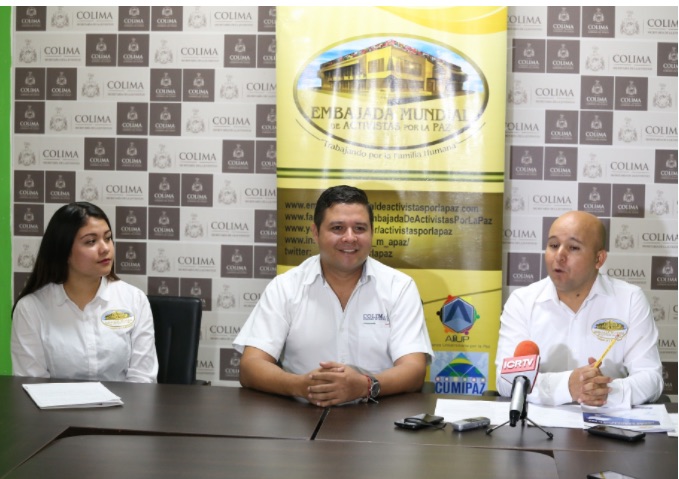
Responding to the challenge by Governor Silvano Aureoles Conejo to inculcate a culture of peace, the College of Bachelors of the State of Michoacán (Cobaem) is distributing buttons to young people who have committed to become conflict mediators and peace promoters.

michoacan
Click on image to enlarge

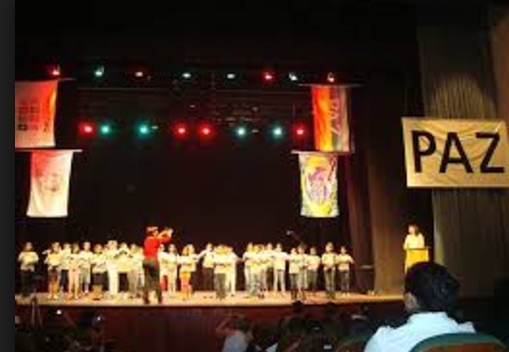
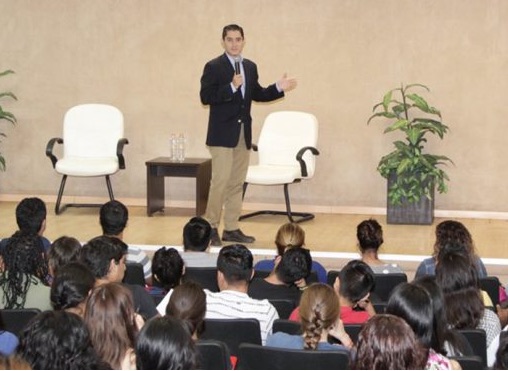
This was launched in the context of the conference “Together We Build Peace”, featuring Claudia Torres Orihuela Bricia, national youth coordinator of the International Committee of the Banner of Peace which begins the “peace banners” initiative for 125 schools of Cobaem to take place in November.

She explained that next month the 50 thousand students will be pioneers in the “Together We Build Peace”, a project of the International Committee of the Banner of Peace.

In his speech, the director general of Cobaem, Alejandro Bustos Aguilar, said t students, parents, teachers, managers and administrative staff of the subsystem should advance towards recognition of diversity on a daily basis.

“In Cobaem we seek to build a way in which humans can live without violence, and I am sure that soon we will have to have a culture of peace, which will institutionalize and give another dimension to the educational system,” said Bustos Aguilar .

Finally, he announced that on 10 and 11 November there will be a “Youth Meeting for Peace” in Morelia to be attended by thousand students who will participate in conferences, debates and essay and story contests.

(Click here for a Spanish version of this article

Question(s) related to this article:

Brazil: Restorative justice to be expanded in Rio Grande do Sul

. . DEMOCRATIC PARTICIPATION . .

An article by Suzy Scarton in the Jornal de Comércio (translated by CPNN)

Although innovative, the practice is simple. Restorative justice aims to deal with violations by put ting the victim and aggressor face to face, so that the latter can reflect on the damage caused to the first. The initiative, already deployed in the capital and in some cities, such as Caxias do Sul and Santa Maria, became statewide on the afternoon of Thursday [October 13]. At the Piratini Palace, the heads of the Executive, the Judiciary, the Legislature, the Public Ministry and the State Public Defender signed a protocol that allows the Rio Grande do Sul to seek social peace by this means.

brazil
The protocol development is an initiative of the State Court
JONATHAN HECKLER / JC

The protocol sets out four lines of action: promoting actions of social mobilization and dissemination of culture, promoting the restorative approach and the culture of peace, training human resources to apply the concepts of restorative mode, as well as the implementation of programs related to it. The first task of the Executive Committee responsible for the implementation of the methodology will relate to activities that are already being developed.

Precursor of this method in the state, the judge Leoberto Brancher, of the Children and Youth Regional Juvenile Court in Caxias do Sul, explains that the restoration plans to solve crimes and conflicts based on dialogue and accountability. “It places an emphasis not on the discussion of laws, but of people and relationships in order to repair the consequences of these problems,” he explains. Since the Court, the Legislative Assembly, the Ministry of Justice and the Public Defender’s Office are involved in the project, Brancher believes that all services will be united in the resolution of conflicts which would otherwise go to the judiciary.

(article continued in right column)

(Click here for the original article in Portuguese)

Discussion question

Restorative justice, What does it look like in practice?

(article continued from left column)

In practice, restorative justice can work with or without the involvement of the victim. “The victim has been damaged. Instead of using punishment, we propose a constructive action: the offender needs to implement a compensation plan for the damage that was caused,” says the magistrate. The victim may prefer not to participate, in which case the alternative is to involve family members and people involved in the community to which the offender belongs. “There are cases where we end up with a family strengthening circle, to strengthen ties.” The judge hearing the case can even suspend it until a compensation plan is drawn up. If it is considered adequate, the judge can decide that the compensation plan is implemented instead of the sentence.

Brancher adds, however, that the success of the method depends on the training of a facilitator, since the work must be done face to face. “The measure has preventative efficacy. We have a thousand facilitators trained in Caxias do Sul to work on prevention. Then we form a group to resolve conflict situations,” said the magistrate. In addition to avoiding conflicts, the measure also seeks to inhibit recidivism, as it aims to strengthen the adhesion of the subject to compliance with a socially acceptable conduct. “The intention is to follow offenders without their being sentenced. They are pressured to recognize its value, as people close to them are witnessing and charging them,” he explains.

El Salvador: March rejects ongoing violence and calls for a culture of peace

. . DEMOCRATIC PARTICIPATION . .

An article from La Prensa Grafica (translated by CPNN and reprinted as a non-commercial service)

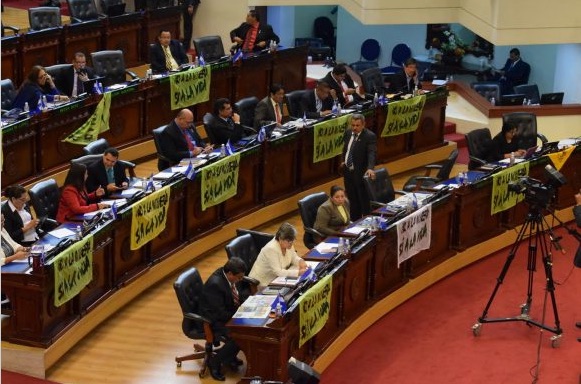
Various educational institutions in the municipality of Sonsonate held a march for peace and for the rejection of violence, intended to raise awareness among people to improve the situation of social harmony. Dozens of students from the Thomas Jefferson National Institute and the Polytechnic Institute of Sonsonate gathered outside city hall, carrying banners calling for the cessation of violence. The students were accompanied by cheerleaders, who to the tune of the music offered a show to the public along the route of the peace march.

salvador

The youth group marched down North 1st Avenue, crossed the street and then took Salarrué Morazan avenue, until they reached the December 14 column.

According to organizers, the march was organized to mark the International Day of Non-Violence.

Sonsonate was in previous years one of the 16 most violent municipalities of the department; however, they have implemented some plans that have significantly reduced the rate of violence. According to statistics from the National Civil Police (PNC), the municipality of Sonsonate ceased to occupy the first place in homicides and has dropped to fifth place, with 26 murders so far this year, compared to 35 last year.

PNC statistics situate Izalco as the more violent than the department of Sonsonate, with 114 homicides so far this year; followed by Nahuizalco, 41; San Julian, 32; Armenia, with 30, and Sonsonate, 26.

Local authorities say the reduction of violence in the departmental capital is due to a number of programs in Sonsonate made by various institutions, with the support of United Nations Development Programme (UNDP).

The intention of those involved in these programs is to improve relationships between children and young people of school age and therefore several of its projects are focused on schools.

(Click here for a Spanish version of this article)

Question related to this article:

UN: Ban welcomes announcement of talks between Government of Colombia and National Liberation Army

FREE FLOW OF INFORMATION

An article from the UN News Centre

Welcoming the announcement that formal negotiations between the Government of Colombia and the National Liberation Army (ELN) will begin later this month, United Nations Secretary-General Ban Ki-moon today [October 12] expressed hope that the two sides will reach a sustainable peace agreement as soon as possible.

eln-un

    Secretary-General Ban Ki-moon speaks during the signing ceremony of the peace agreement between the Government of Colombia and the Revolutionary Armed Forces of Colombia – People’s Army (FARC-EP), in Cartagena. UN Photo/Rick Bajornas

“The Secretary-General welcomes the announcement that the Government of Colombia and the National Liberation Army (ELN) will begin formal negotiations […], following more than two years of exploratory conversations,” Mr. Ban’s spokesperson said in a statement.

“This is a source of encouragement to the Colombian people and all those involved in supporting a peaceful and comprehensive end to conflict,” the statement added.

“The Secretary-General hopes the Government and the ELN will work with determination to reach a sustainable peace agreement as soon as possible,” the statement said.

The announcement of the talks to begin on 27 October, in Quito, Ecuador, comes after Colombian voters last week narrowly rejected the historic peace agreement signed by the Government and the Revolutionary Armed Forces of Colombia-People’s Army (FARC-EP), the largest rebel group in the South American country.

Despite the outcome of the referendum, Mr. Ban has encouraged the Government and FARC-EP to stay the course for peace with a view to end Colombia’s 50-year conflict.

(Click here for a Spanish version of this article

Question related to this article:

The Nobel Peace Prize for 2016: Colombian President Juan Manuel Santos

FREE FLOW OF INFORMATION

Press release by the Nobel Prize

The Norwegian Nobel Committee has decided to award the Nobel Peace Prize for 2016 to Colombian President Juan Manuel Santos for his resolute efforts to bring the country’s more than 50-year-long civil war to an end, a war that has cost the lives of at least 220 000 Colombians and displaced close to six million people. The award should also be seen as a tribute to the Colombian people who, despite great hardships and abuses, have not given up hope of a just peace, and to all the parties who have contributed to the peace process. This tribute is paid, not least, to the representatives of the countless victims of the civil war.

nobel

President Santos initiated the negotiations that culminated in the peace accord between the Colombian government and the FARC guerrillas, and he has consistently sought to move the peace process forward. Well knowing that the accord was controversial, he was instrumental in ensuring that Colombian voters were able to voice their opinion concerning the peace accord in a referendum. The outcome of the vote was not what President Santos wanted: a narrow majority of the over 13 million Colombians who cast their ballots said no to the accord. This result has created great uncertainty as to the future of Colombia. There is a real danger that the peace process will come to a halt and that civil war will flare up again. This makes it even more important that the parties, headed by President Santos and FARC guerrilla leader Rodrigo Londoño, continue to respect the ceasefire.

(Continued in right column)

Question(s) related to this article:

What is happening in Colombia, Is peace possible?

(Continued from left column)

The fact that a majority of the voters said no to the peace accord does not necessarily mean that the peace process is dead. The referendum was not a vote for or against peace. What the “No” side rejected was not the desire for peace, but a specific peace agreement. The Norwegian Nobel Committee emphasizes the importance of the fact that President Santos is now inviting all parties to participate in a broad-based national dialogue aimed at advancing the peace process. Even those who opposed the peace accord have welcomed such a dialogue. The Nobel Committee hopes that all parties will take their share of responsibility and participate constructively in the upcoming peace talks.

Striking a balance between the need for national reconciliation and ensuring justice for the victims will be a particularly difficult challenge. There are no simple answers to how this should be accomplished. An important feature of the Colombian peace process so far has been the participation of representatives of civil war victims. Witnessing the courage and will of the victims’ representatives to testify about atrocities, and to confront the perpetrators from every side of the conflict, has made a profound impression.

By awarding this year’s Peace Prize to President Juan Manuel Santos, the Norwegian Nobel Committee wishes to encourage all those who are striving to achieve peace, reconciliation and justice in Colombia. The president himself has made it clear that he will continue to work for peace right up until his very last day in office. The Committee hopes that the Peace Prize will give him strength to succeed in this demanding task. Furthermore, it is the Committee’s hope that in the years to come the Colombian people will reap the fruits of the ongoing peace and reconciliation process. Only then will the country be able to address effectively major challenges such as poverty, social injustice and drug-related crime.

The civil war in Colombia is one of the longest civil wars in modern times and the sole remaining armed conflict in the Americas. It is the Norwegian Nobel Committee’s firm belief that President Santos, despite the “No” majority vote in the referendum, has brought the bloody conflict significantly closer to a peaceful solution, and that much of the groundwork has been laid for both the verifiable disarmament of the FARC guerrillas and a historic process of national fraternity and reconciliation. His endeavors to promote peace thus fulfil the criteria and spirit of Alfred Nobel’s will.

Colombia: Youth for Peace: Mass marches in 16 cities across the country

. . DEMOCRATIC PARTICIPATION . .

An article Caracol TV (translation by CPNN)

Tens of thousands of people marched Wednesday [October 5] in at least 16 cities in Colombia demanding the government and the opposition to reach a peace agreement with the FARC, after the rejection of the agreement with the guerrillas in a plebiscite. In 12 cities, including Bogota, Barranquilla and Cali, citizens demanded that President Juan Manuel Santos, promoter of the peace pact with the FARC, and the former president Alvaro Uribe, a fierce opponent of the agreement, should work together to overcome the armed conflict that has hurt Colombia for over half a century.

march
video of march available on website of Caracol TV

“My heart is aching. Peace is not Uribe or Santos, peace is us. That makes me angry,” said Alejandro Quevedo, a math teacher of 31 years who attended the university rally in Bogota .

With white shirts and white flowers, at least 30,000 people participated in a silent march for peace in Bogota that ended in the central Plaza de Bolivar. They protested the results of the plebiscite on Sunday, where 50.21% of voters said “No” to the agreement with the Revolutionary Armed Forces of Colombia (FARC) after nearly four years of negotiations in Cuba.

Santos called for a national dialogue to seek alternatives. He met Wednesday with Uribe in the presidential palace, where he said he is determined to “seek ways of unity and reconciliation” to achieve peace.

“No more victims”

“For all that unites us and what separates us,” read the poster that led the march, carried out in absolute silence with the flames of white candles, the colored flags of Colombia and the gay community. Only a few marchers raised their fists.

“I march with uncertainty in the face of the silence and lack of will to solve things of those who voted ‘No’, I feel that is all I can do now to try to find solutions,” said Lina Vanegas, a university teacher of 29 years present at the demonstration.

Silently holding candles, some government officials also participated, for example, Interior Minister, Juan Fernando Cristo, and senior advisor for post-conflict Rafael Pardo.

(Article continued in the right column)

(Click here for the original version of this article in Spanish.

Questions related to this article:

What is happening in Colombia, Is peace possible?

How effective are mass protest marches?

(Article continued from the left column)

But the silence of the march was broken when the audience sang the national anthem. That gave way to shouting slogans like “We want peace”, “No more war”, “No more victims” and “Not one step back” as marchers formed the symbol of peace with their candles.

Protesters then read the “Prayer for Peace”, a speech of the assassinated liberal leader Jorge Eliecer Gaitan, who in February 1948 led protests by 100,000 people in the capital against political persecution by the conservative government of Mariano Ospina Perez.

“Stop the violence, Mr. President. We simply ask for the defense of human life, which is the least a people can ask”, cried Gaitan, a few months before he was killed.

It is “necessary” to stop the hate

In Barranquilla and Cali, dozens of citizens dressed in white also demanded an end to the internal conflagration and an extension of the bilateral cease fire respected by FARC since August and extended by Santos until 31 October.

“People who have actually lived through the war itself are those who want change, they want a transformation (…) and that was not shown in the plebiscite,” said Stefany Vergara a literature student 28 years of the Universidad del Valle in Cali, where about 4,000 people marched.

The FARC, meanwhile, supported with tweets on what they called “#PazALaCalle”. “They will maintain peace and willingness to use only words as weapons for future construction. Peace will triumph,” they said.

The call for demonstrations went beyond the borders of Colombia. In New York, some 50 Colombians gathered in Times Square, the heart of Manhattan, to sing “Colombia wants peace!” and advocate for the end of the continent’s oldest armed conflict.

“Civil society has begun to mobilize to tell the government that we do not want a renegotiation but the accords that are already done,” said the painter Ricardo Prado, 25, in the Times Square gathering

Mobilizations of Colombians calling for an end to the war also took place in cities of Holland, England, Dominican Republic, Ecuador and France.

The armed conflict in Colombia for more than 50 years involving guerrillas, paramilitaries and government forces, killing some 260,000 dead, 45,000 missing and 6.9 million displaced.

First Meeting for Violence Prevention in Uruapan. Mexico

FREE FLOW OF INFORMATION

An article from Agenia Quadratin (translated by CPNN)

The Municipal Government through the Ministry of Municipal Public Security and the Social Prevention of Violence and Crime, invited all social, educational, cultural, business and private sectors to the First Meeting for Violence Prevention held on Monday October 3 at the premises of the Casa del Niño.

uruapan
Click on image to enlarge

According to a press release, the event took place from nine o’clock in the morning, in the framework of the commemoration of the “International Day of Non-Violence” in the auditorium “Father Ochoa” of this institution. Also, the mayor, Victor Manuel Gonzalez Manriquez, has underlined the importance of creating social participation forums for involvement with the government for decision-making on public safety.

For his part, the representative for Municipal Public Security, Juan Martin Vega Villalobos, gave details of the activities held during this day, including a lecture entitled “Antidote Against Violence”, by Gerardo Herrera Perez, lawyer from Michoacan and a doctoral candidate in public policy, currently coordinator of research, dissemination and training of the ECHR in Michoacan and member of the Conapred.

Finally, the director of the section on Social Prevention of Violence and Crime, Manuel Escobedo Navarrete, said that the conference was to discuss enactment of a law for a culture of peace and prevention of violence and crime in Michoacan.

Escobedo Navarrete said two main axes are established: Culture of Peace, as a mechanism for human development through dialogue, tolerance and respect; and preventing violence as a vaccine against crime. He said they have worked for several months on this project with a multidisciplinary team to conduct workshops with issues of child violence, addiction prevention, violence, violent crime, new masculinities and neighborhood mediation.

(Click here for a Spanish version of this article

Question(s) related to this article:

Colombia: Follow live the 12th World Congress of Mediation and Culture of Peace

… EDUCATION FOR PEACE …

An article from the Chamber of Commerce of Bogota (translated by CPNN)

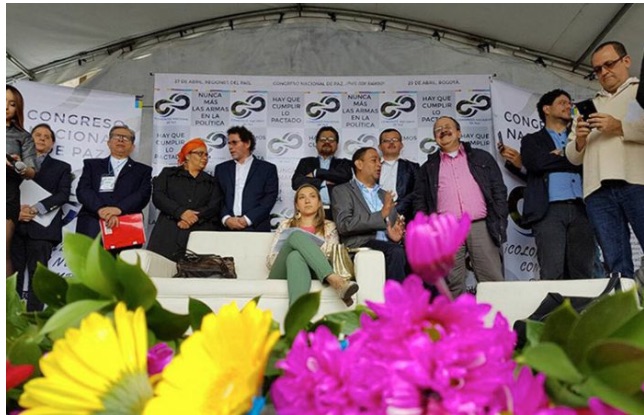
Follow live the most important conferences on issues of mediation and reconciliation at the XII World Congress of Mediation and Culture of Peace. The event, organized by the Chamber of Commerce of Bogota, through its Center for Arbitration and Conciliation, in partnership with the University of Sonora in Mexico, the Mediation Institute of Mexico and the International Centre for the Study of Democracy and Social Peace, will bring together more than 1,000 people in five cities, to discuss dialogue as the best tool to resolve conflicts in society.

Congreso
Video of the Congress

While Bogota will be the epicenter of Congress, cities such as Medellin, Cali, Barranquilla and Buenaventura will also host different events witrh the presence of renowned personalities such as John Paul Lederach, an expert on peace building, and Christopher Moore, an expert in collaborative conflict resolution who will give their views on how to achieve reconciliation.

During the six days of the Congress, dialogue, deliberation and consensus will become the common denominator of an academic agenda with the active participation of entrepreneurs, NGOs, the Government and citizens, in addition to the academic community. This event is the ideal place to raise awareness of the importance of solving everyday conflicts through peaceful alternatives and mediation.

The president of the Chamber of Commerce of Bogota, Monica de Greiff said that “although the country is going through a very important moment of reconciliation, conflicts are part of daily life in the family, at work, in the community, at school and in business; therefore, this will be a space for national and international experts to deliver tools for healthy living and the peacefu solution of conflicts at any stage. ”

Mauricio Gonzalez, director of the Center for Arbitration and Conciliation said “at the Center, we have contributed to building peace for more than 30 years. We promote a culture of dialogue in all our services. Both employers and communities benefit from the school and community programs that we make available. ”

The Congress will also address the advantages of associative dialogue in the sectors of mining and energy in projects in vulnerable areas of the country, and will analyze the relevance of mediation and conciliation to public, private and social institutions.

For mor information, see: www.congresodemediacion.com.

(Click here for the original article in Spanish)

Question for this article:

Guatemala: 28 years of struggle for the life, dignity and rights of women survivors of genocide

…. HUMAN RIGHTS ….

An article from CLOC – the Latin American Coordination of Peasant Organizations (translated by CPNN)

We express our deep appreciation for another year of life to our Creator and Maker, to our grandmothers and grandfathers who taught us the ways of resistance, defense and the practice of our languages, our arts, customs, ancestral knowledge. They support and encourage us, and work for the fullness of life, gratitude, reciprocity and harmony with Mother Earth and her natural resources.

conavigua
(Click on photo to enlarge)

From our emergence as the National Coordination of Widows of Guatemala -CONAVIGUA-, beginning September 12, 1988, we have achieved the organization of widows and orphans, starting our way to defend the dignity of women victims of violence and to defend our children from discriminatory forced military recruitment. We have searched tirelessly for those missing from our families and for detainees, knocking on the doors of justice in the courts and searching in clandestine cemeteries, hoping to find the truth and whereabouts of our loved ones.

As women we have told our stories in the RHEMI report, the Historical Clarification Commission, the Public Ministry, the National Compensation Program and many more with the aim that our truth is recognized. We bring content to the Peace Accords, and we have actively participated in promoting compliance with the Accords. In addition, we have promoted, together with other women’s organizations, the institutionalization of DEMI, SEPREM and others.

(Article continued in the right column)

(Click here for the original Spanish version of this article)

Questions related to this article:
Protecting women and girls against violence, Is progress being made?

(Article continued from the left column)

It’s been 20 years since the signing of the Peace Accords and 28 years since the beginning of our organization. We continue to demand respect for life, human rights, an end to the persecution, violence and rape against women survivors of genocide. We fight to defend our land, territory, water, holy sites and the individual and collective property of our peoples. We demand compliance with international conventions and treaties on the rights of women, indigenous peoples, youth , justice, environment, peace and security

As women who possess experience in community and social work, we have submitted proposals for legislative initiatives and organized campaigns for women’s access to education, health, housing, agroecology and civic and political participation. We have supported the struggles against impunity, demanded justice against genocide and made claims for the defense of Mother Earth.

In CONAVIGUA have accompanied participation and community organization, strengthening of ancestral authorities and empowerment of women. This has led to trials to bring charges against the perpetrators and masterminds of violence and rape against women, as in the cases of the women from Tululché, and Sepur Zarco Ixil. We also demand an end to the criminal prosecution of the leaders of our struggles and our social organizations.

Our vision is to promote changes and transformations and to continue the work with the excluded sectors for a multiethnic, multicultural and multilingual country that includes women and indigenous peoples. We are committed to further deepening and strengthening networks and local, national and international alliances in different spaces and levels.

For compliance with the rights of women and the eradication of violence against women .

For the culture of peace.

For the Unity and Dignity of Women