Tag Archives: North America

USA: 18 mayors join forces to commend Obama administration, and call on them to accept more refugees amid Syrian crisis

TOLERANCE AND SOLIDARITY .

An statement from Cities United for Immigration Action

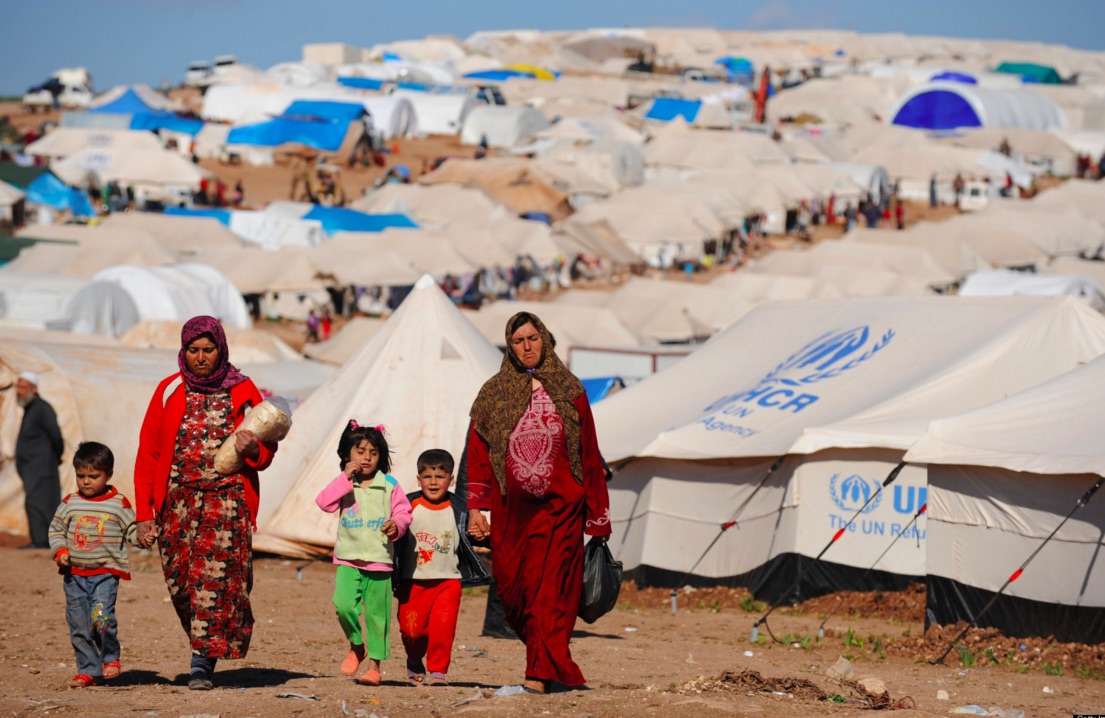
On the same day Pope Francis called for the acceptance of immigrants, a group of 18 mayors from across the country, including New York City Mayor Bill de Blasio, Los Angeles Mayor Eric Garcetti, Chicago Mayor Rahm Emanuel, Baltimore Mayor Stephanie Rawlings-Blake, and others have joined forces to call on President Obama to welcome additional refugees beyond the number his administration has agreed to accept.

citiesforaction

The mayors who have signed today’s letter to President Obama are part of Cities United For Immigration Action, a coalition of nearly 100 cities and counties that is leading the effort to promote and execute immigration reforms nationwide.

“New York has always been a place where the American Dream has come to life for generations of immigrants from around the globe. For the thousands of Syrian refugees fleeing the nightmare of oppression, in search of safety, stability, and salvation, we say welcome. As the Pope visits New York this week, we are reminded that the answer to the age-old question, ‘am I my brothers keeper’ must be a resounding yes if we are to live up to the values on which our nation was founded and our future depends,” said New York City Mayor Bill de Blasio.

“We are certainly supportive of refugees from Syria coming to Baltimore; this speaks to our deepest values as Americans. Baltimore City has been and will continue to be a beacon of freedom and opportunity for refugees seeking a home to grow and prosper,” said Baltimore Mayor Stephanie Rawlings-Blake.

“The global refugee crisis brings with it a responsibility and opportunity to welcome those seeking exile from tyranny and oppression. People who are so committed to finding freedom and building a brighter life for their family that they leave behind all they realized–material positions, university degrees, family photos–and are willing to risk it all. This is where our responsibility to our fellow man is tested. This is also an opportunity for a city like Pittsburgh, with a great network of service providers and a community urging us to act, to say to refugees seeking a new, safe homeland where they can set roots: Pittsburgh welcomes you. Together, we will build an even stronger Pittsburgh, and we welcome the minds and hearts of those fleeing the crisis to join us,” said Pittsburgh Mayor William Peduto.

“Hartford stands by the president’s decision to shelter families and children escaping war in Syria. Showing compassion and providing hope to the afflicted is part of our national identity, as well as our humanitarian responsibility,” said Hartford Mayor Pedro E. Segarra, co-chair of the U.S. Conference of Mayors’ Immigration Reform Task Force.

“In accepting refugees from Syria, the United States is recognizing the basic humanity of these men, women, and children. It is important we make policies that honor the dignity of all people. Bringing Syrian refugees to our shores is line with our history of accepting the famous ‘huddled masses yearning to breathe free’ and it is in line with the best of what we hope to be as a nation,” said Syracuse Mayor Stephanie A. Miner.

“St. Louis is a welcoming community, as demonstrated by the thousands of Bosnian refugees who sought a better life here in the 1990s. They have built businesses, created jobs, rehabbed homes, and revitalized neighborhoods. They have become part of the fabric of our community, welcomed and supported by their fellow St. Louisans. While the number of Syrians we can welcome in the next two years depends largely on the federal government, St. Louis is again ready and willing to help. Our diverse religious organizations are already contacting the International Institute to help in resettlement. To date, St. Louis proudly has welcomed 29 Syrian refugees to our City, and we expect 20 more to arrive in the coming months. With the cap now increased, I am certain we will be welcoming several more,” said St. Louis Mayor Francis G. Slay.

(article continued on the right side of the page)

Question for this article

The refugee crisis, Who is responsible?

Readers’ comments are invited on this question and article. See below for comments box.

(article continued from the left side of the page)

The full text of the mayors’ letter is below:

Dear President Obama:

We commend your decision to open America’s doors to at least 10,000 Syrian refugees displaced by civil war, and applaud your commitment to increase the overall number of refugees the U.S. will resettle over the course of the next two years. This announcement is a vital initial step to honoring America’s commitment to support those fleeing oppression.

As the mayors of cities across the country, we see first-hand the myriad ways in which immigrants and refugees make our communities stronger economically, socially and culturally. We will welcome the Syrian families to make homes and new lives in our cities. Indeed, we are writing to say that we stand ready to work with your Administration to do much more and to urge you to increase still further the number of Syrian refugees the United States will accept for resettlement. The surge of humanity fleeing war and famine is the largest refugee crisis since World War II. The United States is in a position to lead a global narrative of inclusion and support. This is a challenge we can meet, and the undersigned mayors stand ready to help you meet it.

Our cities have been transformed by the skills and the spirit of those who come to us from around the world. The drive and enterprise of immigrants and refugees have helped build our economies, enliven our arts and culture, and enrich our neighborhoods.

We have taken in refugees, and will help make room for thousands more. This is because the United States has developed a robust screening and background check that assures us that we know who we are welcoming into this country. With national security systems in place, we stand ready to support the Administration in increasing the numbers of refugees we can accept.

With Pope Francis’ visit, we are mindful of his call for greater compassion in the face of this ongoing crisis and stand with you in supporting those “journeying towards the hope of life.”

Sincerely,

Ed Pawlowski, Mayor of Allentown, PA
Stephanie Rawlings-Blake, Mayor of Baltimore, MD
Martin J. Walsh, Mayor of Boston, MA
James Diossa, Mayor of Central Falls, RI
Mark Kleinschmidt, Mayor of Chapel Hill, NC
Rahm Emanuel, Mayor of Chicago, IL
Edward Terry, Mayor of Clarkston, GA
Nan Whaley, Mayor of Dayton, OH
Domenick Stampone, Mayor of Haledon, NJ
Pedro E. Segarra, Mayor of Hartford, CT
Eric Garcetti, Mayor of Los Angeles, CA
Betsy Hodges, Mayor of Minneapolis, MN
Bill de Blasio, Mayor of New York City, NY
Jose Torres, Mayor of Paterson, NJ
William Peduto, Mayor of Pittsburgh, PA
Javier Gonzales, Mayor of Santa Fe, NM
Francis G. Slay, Mayor of St. Louis, MO
Stephanie A. Miner, Mayor of Syracuse, NY

USA: Our Economy Is Not Working: Joseph Stiglitz on Widening Income Inequality & the Fight for $15

…. HUMAN RIGHTS ….

An article and video by Amy Goodman, Democracy Now (reprinted according to provisions of Creative Commons)

The fight over income inequality gained national attention when fast-food workers walked off the job in hundreds of cities across the country on Tuesday demanding a $15-an-hour minimum wage and union rights. Some “Fight for $15” protesters rallied outside the Republican presidential debate in Milwaukee. During the debate, billionaire Donald Trump and other Republican contenders rejected calls to increase the minimum wage. We speak to Nobel Prize-winning economist Joseph Stiglitz, author of the new book, “Rewriting the Rules of the American Economy: An Agenda for Growth and Shared Prosperity.” “We’re saying something is wrong with the way our economy is working,” says Stiglitz. “The fact that at the bottom, minimum wage is as low as it was 45 years ago, a half-century ago, says something. … It’s not a living wage.”

stiglitz
Video of Stieglitz interview

TRANSCRIPT
This is a rush transcript. Copy may not be in its final form.
AMY GOODMAN: We turn right now to Joe Stiglitz, to the Nobel Prize-winning economist.

NERMEEN SHAIKH: The fight over income inequality gained national attention when fast-food workers walked off the job in hundreds of cities across the country on Tuesday demanding a $15-an-hour minimum wage and union rights. Some “Fight for 15” protesters rallied outside the Republican presidential debate in Milwaukee. During the debate, billionaire Donald Trump and other Republican contenders rejected calls to increase the minimum wage.

DONALD TRUMP: Taxes too high, wages too high, we’re not going to be able to compete against the world. I hate to say it, but we have to leave it the way it is. People have to go out, they have to work really hard, and they have to get into that upper stratum. But we cannot do this if we are going to compete with the rest of the world. We just can’t do it.

AMY GOODMAN: We end today with Part 2 of my interview with the Nobel Prize-winning economist Joe Stiglitz and his plan to address income inequality. He has written a new book called Rewriting the Rules of the American Economy: An Agenda for Growth and Shared Prosperity. I asked him what an agenda for growth and shared prosperity would look like.

(Article continued on right side of page.)

(Article continued from left side of page.)

JOSEPH STIGLITZ: Well, it is about rewriting the rules in a fairly comprehensive way. I mean, the basic—

AMY GOODMAN: Who writes them?

JOSEPH STIGLITZ: Well, that has to be done by Congress, and it has to be with a lot of popular support. And in a way, we’re beginning to do that. You know, the Fight for 15 movement, raising the minimum wage, that’s one of the rules. But one of our points is that we need a more comprehensive agenda than just raising the minimum wage, and that if we make—and the two words there, for “growth” and “shared prosperity,” so our view is that the only sustainable prosperity is shared prosperity and that one of the problems is that the way the rules have been rewritten since the beginning of Reagan has been to actually slow the American economy.

And let me give you one example. When you have corporations having a very shortsighted view, paying their CEOs such outrageous monies with less money spent on investment, of course you’re not going to make long-term investments that are going to result in long-term economic growth. And at the same time, there’s going to be less money to pay for ordinary workers. And paying that low wages to ordinary workers, not giving them security, not giving them paid, you know, family leave, all that results in a less productive labor force. So what we’ve done is we’ve actually undermined investments in people, investments in the corporation, all for the sake of increasing the income of the people at the very top. So there’s a really close link here between the growing inequality in our society and the weak economic performance.

AMY GOODMAN: We’re in the midst of an extended election year. But that goes to the issue of how we govern ourselves in this country, a very critical point. Let’s talk about what underlies these elections: campaign finances. How does campaign finance reform fit into rewriting the rules of the American economy?

JOSEPH STIGLITZ: Well, it’s actually absolutely essential. And, you know, the problem is that we’ve gone basically from a political system with “one person, one vote” to “one dollar, one vote.” And, you know, Citizens United made that worse. So, the only way that you can combat the force of money is, you might say, people power, people coming out. And we’ve seen this work. I mean, we’ve seen it work in raising the minimum wage. You know, just—we couldn’t do it in Congress, because the gridlock there, the money there, so we’ve done it in city after city—Seattle, Los Angeles, San Francisco, in New York. So, we’ve actually been able to see that this kind of uprising can work, even in a political system with money making so much difference.

(Thank you to Janet Hudgins, the CPNN reporter for this article.)
USA: Restorative Practices in Schools

. . DEMOCRATIC PARTICIPATION . .

Excerpts from September and August News Roundups by Restorativeworks.net

Detroit Public Schools says crime reports down 29% due to restorative practices. The article notes: “This year, restorative practices training will cover two new areas: trauma and grief counseling to help students dealing with death and other hardships, and ‘conferencing training’ to assist students’ transition back into school after a suspension or expulsion.”

restorative

NAACP (Chattanooga) seeks alternative discipline methods for schools.” This TV news video includes footage from a recent professional development event and a brief interview with IIRP Instructor Steve Korr. . .

During a discussion circle in a Chicago school, students learn empathy when they discover they each have had first-hand exposure to gun violence and one classmate had a gun pointed at her head.

The International Bullying Prevention Association will hold its annual conference Reaching New Heights in Bullying Prevention through Empathy and Kindness in Denver, CO, November 8-10 and will feature a pre-conference workshop on restorative practices with IIRP Lecturer Elizabeth Smull.

(This article is continued on the right side of this page.)

Discussion question

Restorative justice, What does it look like in practice?

(Article continued from left side of this page.)

The American Federation of Teachers — one of the nation’s largest unions — takes on the issue of racial justice using restorative practices. . .

A new report by The Advancement Project, the Alliance for Quality Education, Citizen Action of New York and the Public Policy and Education Fund reveals that “Buffalo, NY, Schools’ new code of conduct results in more days in school, fewer suspensions.” . .

Restorative practices are being used in more and more schools throughout the U.S. Here are a few examples that came to our attention this month:
San Diego, CA (cuts suspensions by 60%)
Hamilton, OH
Waco, TX
Rochester, NY
Beloit, WI (PBIS program to incorporate restorative practices)
Santa Ana, CA
Jefferson Parish, LA (prompted by employees and complaints by the Southern Poverty Law Center)
Springdale, AK
The State of Illinois (Governor signs sweeping school discipline bill championed by students)

USA: How we stopped Keystone, together

. . SUSTAINABLE DEVELOPMENT . .

An article and video from MoveOn .org

Today [November 6], President Obama officially rejected TransCanada’s application to build the Keystone XL pipeline. This major win for our climate is the result of relentless and passionate grassroots organizing in nearly every corner of our nation. This victory is a testament to the incredible power we have, when we stand together as a movement, to shape our country and change the course of history—which is exactly what we’ll need to do to keep securing transformative actions that can reverse the course of human-made climate change and hold corporations and politicians who continue to imperil the climate by denying science accountable.

keystone
Video: How the Keystone Fight Was Won

Our friends at 350­.org have created a video about how, together, we achieved this victory. Will you watch and share their video and celebrate this historic moment?

Over the last few years, hundreds of thousands of MoveOn members have joined the movement to stop the Keystone XL pipeline—putting an end to this massive dirty energy project that would have grossly deepened our dependence on the fossil fuels accelerating climate change.

By joining with communities along the pipeline route, ranchers, farmers, Native American tribes, climate activists, and union members, we accomplished something truly remarkable. Your signatures, phone calls, donations, and local rallies and events over the years helped power this victory.

As we continue the fight to keep fossil fuels in the ground and hold corporations like Exxon Mobil accountable for their crimes against our climate, we’ll remember to hold up today’s rejection of the Keystone XL pipeline as a reminder that—even against billion dollar industries—change is possible.

Please, take a minute to watch and share this video from our friends at 350.org.

Thanks for all you do.

–Corinne, Anna, Nick, Victoria, Jadzia, and the rest of the team

Want to support our work? MoveOn member contributions have powered our work together for more than 17 years. Hundreds of thousands of people chip in each year—which is why we’re able to be fiercely independent, answering to no individual, corporation, politician, or political party. You can become a monthly donor by clicking here, or chip in a one-time gift here.

Question for this article:

United States: Religious Groups Mobilize to Promote Feminism and Faith

. WOMEN’S EQUALITY .

An article by Eleanor J. Bader, Truthout (reprinted by permission)

Several weeks ago, in early October, a host of religious leaders stood in front of the 41-year-old Preterm clinic in Cleveland, Ohio, to thank God for abortion providers and bless their work. Sponsored by the Ohio Religious Coalition for Reproductive Choice (RCRC), the bold ceremony was meant to publicize the fact that in many traditions – including mainline Protestant, Jewish and Muslim – abortion is considered an acceptable, and yes, moral, option.

parenthood
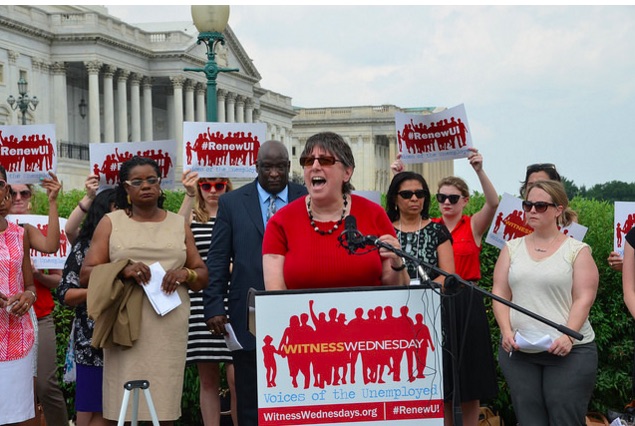
Sammie Moshenberg from the National Council of Jewish Women speaks at an event combating unemployment in Washington, DC, June 18, 2014. (Photo: Center for Effective Government)

“We went to Preterm because anti-abortion legislators have been aggressively working to push abortion out of reach for Ohio women,” Lisa Weiner-Mahfuz, RCRC vice president of programs and fund development, told Truthout. “This includes unnecessary restrictions on abortion care providers, like Preterm, to force them to close. Ohio RCRC believes it’s time for the progressive religious community to stop silently watching women be attacked for their decision to have an abortion and start sharing their beliefs out loud.”

The decision by clergy to move from private, closed-door pastoral counseling sessions into public activities like the clinic blessing was further provoked by recent attempts to defund Planned Parenthood. The threat against the reproductive health organization galvanized faith groups throughout the United States, among them Catholics for Choice, the National Council of Jewish Women, the Muslim Education Center for Creative Academics, the Union for Reform Judaism, the Unitarian Universalist Women’s Federation and the United Church of Christ, prompting them to ramp up their visible support for reproductive rights and gender justice.

They mobilized quickly, among other things, gathering signatures from more than 50 denominational heads and prominent religious leaders on a letter to the Senate affirming widespread religious support for choice. “A world without Planned Parenthood would be disastrous for women and their families,” the missive declared. As part of a massive outcry from Americans in every corner of the country, the effort succeeded: At least for now, Planned Parenthood funding is safe.

Of course, that’s good news, but the progressive faith community is not retreating in the face of the averted crisis. Instead, it’s taking affirmative steps to promote gender equity more broadly. Furthermore, feminists of faith are linking reproductive well-being to efforts to improve sexual health, end rape culture, promote LGBTQ equality and stop domestic violence. They’re also working to protect immigrants, and ameliorate poverty and hunger, placing these issues under the broad rubric of reproductive justice. And although this effort is not wholly new – religious reproductive and social justice groups have existed for decades – the fact that clergy are taking to the streets and entering the halls of Congress is noteworthy.

Carol Hornbeck, a marriage and family therapist who has been involved in faith-based reproductive justice work since the 1980s, sees these moves as imperative and says that without an intersectional analysis of oppression, religious bodies will become irrelevant.

“Many mainline Protestant churches are fighting for their survival,” she said. “At the same time, the church renewal movement is trying to be authentic and bring millennials into organized congregations. Many of the millennial women they hope to attract have had abortions and have been more open and outspoken about this than previous generations. These young women have no patience for the silence of the church on important social issues – whether Black Lives Matter, reproductive justice or LGBTQ inclusion – and are reinventing the institution.”

At the heart of the reinvention, Hornbeck adds, is a willingness to tackle controversial topics, speak truthfully about lived experiences and call out hypocrisy.

This is music to divinity student Abbi Heimach-Snipes’ ears. Now in her final year at Chicago’s McCormick Theological Seminary, she says that when the most recent attacks on Planned Parenthood became public, she and her peers felt “frustrated and upset” but saw the right-wing assault as inseparable from the fight for racial justice, and against homophobia, transphobia, sexism and the violence that disproportionally impacts low-income communities of color.

(Article continued in right column)

Question related to this article:

Protecting women and girls against violence, Is progress being made?

Abortion: is it a human right?

(Article continued from left column)

But how best to use the power of the institutional church – or other established religion bodies – to address these concerns? Although Heimach-Snipes is no stranger to political protests, regularly attending demonstrations and rallies, she said that many congregations can do more to advance a progressive political agenda. She calls the church she attends, Urban Village, a model and describes a recent Sunday gathering that confronted sexual violence.

“One of the pastors there, Rev. Emily McGinley, has organized a sermon series on sexuality,” Heimach-Snipes said. “A few weeks ago she preached on Second Samuel, about the rape of King David’s daughter, Tamar, by her brother Amnon. Tamar’s father and his other sons silenced her and did not hold Amnon accountable. This led to more silence and more terror. Rev. McGinley spoke about power dynamics and tied the story to today’s rape culture. We then looked at ways we can begin to stop the silence.” Heimach-Snipes described the sermon and subsequent discussion as powerful, even profound.

In addition, she added, each Sunday, Urban Village invites congregants to share the issues they’re struggling with. Whether it’s sexual violence, substance abuse, police brutality, landlord-tenant conflicts or something else, the stories become part of what Heimach-Snipes calls “community memory.” This, in turn, serves as a way to publicly address trauma, abuse or injury while simultaneously acknowledging the testifier’s strength and problem-solving abilities. Churches like Urban Village may not be entirely typical, but they’re not anomalous – all over the country congregations are serving as conversational launching pads and are taking action on issues that impact their communities.

On a more policy-driven level, faith-based advocacy groups around the United States are engaged in educational work to promote increased access to services and entitlements. The National Council of Jewish Women, for example, is part of a coalition to support HEAL (Health Equality and Access Under the Law) for Immigrants and Families, a federal bill to extend Medicaid and Child Health Insurance Program benefits to lawful immigrants, and is pushing lawmakers to support the EACH Act, intended to overturn the Hyde Amendment and allow Medicaid recipients to use their coverage to pay for abortions. They’re also urging Congress to pass the Women’s Health Protection Act to make it unlawful for states to single out reproductive health facilities for stricter regulation than other types of medical centers.

What’s more, like other reproductive justice proponents, the National Council of Jewish Women’s advocacy goes beyond abortion and birth control to include improving community health, with goals that involve raising the minimum wage, ending police brutality and promoting gun control.

Still other groups, like the Catholic Network Lobby and the New Sanctuary Movement, are promoting women’s rights by focusing on unfair taxation, immigration reform and opposition to punitive welfare policies.

“Abortion access does not play an active part in our work,” said community organizer Nicole Kligerman of the Philadelphia New Sanctuary Movement. “But other reproductive health-care issues are paramount. We know the importance of prenatal care and early intervention but mothers and babies can’t get nutritional support through the Women, Infant, Children program [WIC] if they’re not citizens. This inequity occurs at the intersection of child welfare, reproductive health and immigrant rights.”

Placing reproductive health into a broad social justice frame holds great significance for feminists of faith who understand that moral and ethical choices have political implications. Do we believe we have the capacity to make thoughtful decisions for ourselves? Does free will give us the right to decide when and whether to become parents? Does it allow us to be who we are and love who we love? Or does it condemn us for anything that deviates from expected norms?

For RCRC’s Lisa Weiner-Mahfuz, promoting reproductive justice requires us to think about the kind of world we wish to live in. “We can’t ignore that abortion is still a trigger in the ways it has always been a trigger,” she said, “but it is tied to a broader agenda that is all about policing Black, Brown, disabled, poor, queer, and immigrant bodies, especially if they’re female.” This is why, she says, RCRC has developed a comprehensive training plan to enable clergy to provide compassionate pastoral care and equip them to be reproductive justice advocates in their congregations and communities.

“We have a large number of multifaith religious leaders, all of whom affirm that reproductive health centers are sacred spaces,” Weiner-Mahfuz said. “They’re working to build visibility so that it is clear that most people of faith support reproductive justice, LGBTQ rights and racial equality. We’re standing up and saying that theology should not be used against women, people of color or families. We’re amplifying the message that God’s love is consistent, and for everyone.”

(Thank you to Janet Hudgins, the CPNN reporter for this article.)
Canada: Students at Simon Fraser University launch divestment campaign

. . SUSTAINABLE DEVELOPMENT . .

An article by Emma Warner Chee, The Peak, SFU student newspaper

In light of the 50th anniversary of SFU [Simon Fraser University], Embark (formerly Sustainable SFU), SFU 350, and Divest SFU believe it is the perfect time for the university to become a leader in the climate justice movement, starting with a divestment from the fossil fuel industry. The groups are collaborating to launch a divestment campaign this fall that will see various actions and events in the months to come.

sfu
Embark is among three student groups pushing SFU to divest from fossil fuels. Image Credit: Lisa Dimyadi

The extraction and consumption of fossil fuels account for the greatest level of carbon emissions by humans, and are thus the greatest threat to the climate. A report from the UN’s International Panel on Climate Change last year indicates that if carbon emissions are not drastically reduced by 2017, and global temperatures rise by just two degrees celsius, the effects of climate change would be irreversible.

As fourth-year environmental science student and Divest SFU campaigner Tessica Truong pointed out, the impacts of climate change are already being felt in the global south.

Sea levels and temperatures are rising, land is disappearing, drought is causing food insecurity, and the occurrence and severity of natural disasters is increasing, all of which are causing displacement and creating climate refugees.

Truong stated, “It is unethical to be profiting from fossil fuels as an educational institution, when the effects of fossil fuels on the climate are being paid for by others around the world.”

Started in 2013, the Divest SFU campaign was created to petition the SFU Board of Governors to take their endowment fund investments out of the fossil fuel industry in an effort to limit the growth of the industry.

(Article continued in the right column)

Question for this article:

Despite the vested interests of companies and governments, Can we make progress toward sustainable development?

See comment below.

(Article continued from the left column)

They approached the board in the spring of 2014 with the backing of student groups on campus as well as many faculty members, some showing their support by signing off on an open letter to administration.

The university consequently adopted the United Nations’ Principles for Responsible Investment and also created the Responsible Investment Committee in 2014, the latter of which aims to “review and make recommendations related to responsible investment proposals,” among other responsibilities.

Following the presentation, SFU released this statement from former VP Finance and Administration Pat Hibbitts: “The Divest SFU students made a compelling case about the role of investment in economic policy and we considered their request seriously.” She continued. “This new policy provides for governance of our investment strategy consistent with the UN PRI and our investment objectives.”

However, as Divest SFU sees it, no definitive action has been taken toward divestment, and the campaign continues.

Divestment from fossil fuel campaigns have been taking off in universities across Canada, the United States, and Europe. Stanford University, for instance, has been successful in convincing their board of governors to divest from the coal industry, and is now working toward divestment from all fossil fuels.

At McGill University, students set up a tent city on campus to protest the university’s fossil fuel investment. UBC350 held a referendum in which 77 per cent of students and 62 per cent of faculty voted in favour of divestment. Other institutions, such as Vancity credit union, proudly state that they are not invested in the fossil fuel industry.

One of the main arguments against divestment is that with the world’s already heavy reliance on fossil fuels, it won’t change anything.

Truong acknowledged that “SFU alone will not stop fossil fuel industries, but we do have the power to change the direction, and show leadership.”

(Thank you to Janet Hudgins, the CPNN reporter for this article.)
Film review: The Impeccable Timing of ‘This Changes Everything’

. . SUSTAINABLE DEVELOPMENT . .

An article by Emily Schwartz Greco, Institute for Policy Studies

Writer Naomi Klein and her filmmaker husband Avi Lewis lucked out with the release of their new documentary, This Changes Everything. This film about why humanity must kick our fossil-fuel habit before it wrecks the planet arrived at an ideal time.

Klein film

For one thing, Hillary Clinton belatedly came out against the Keystone XL pipeline. The Democratic Party’s presidential frontrunner called the effort to funnel dirty oil extracted from Canada’s tar sands through six states a “distraction from the important work we have to do to combat climate change.”

And Royal Dutch Shell has put its plans to drill for Arctic oil on ice. Despite pouring $7 billion into that gambit, the company bowed to the bleak outlook for petroleum prices and environmental pressure.

Klein narrates the film, which illustrates many observations she made in her best-selling book with the same title. In print and on the screen, she and Lewis stoke optimism instead of feeding the sense of futility that often hinders climate action.

Lewis and Klein are Canadian, so it’s no surprise that the documentary dwells on Alberta. That’s the where the long-delayed Keystone XL pipeline, which Clinton embraced when she served in the Obama administration, would originate.

The film begins with footage of the industrial wasteland that tar sands mining has carved from the Canadian province’s mist-laced boreal forests.

A beige moonscape cross-cut by veins of gooey bitumen looks like abstract art, or mounds of mocha-fudge gelato, until viewers realize they’re glimpsing what used to be a verdant landscape straight out of a Nordic fairytale. Before mining oil from the muck below the forest floor, workers excise what the industry calls the “overburden” by felling primeval forest and scraping away the rich soil that sustains it.

(Article continued in the right column)

Question for this article:

Despite the vested interests of companies and governments, Can we make progress toward sustainable development?

(Article continued from the left column)

These gut-churning images, coupled with the disgusted response of native people witnessing the destruction of their ancestral lands, brings the long-term costs of powering our economy with fossil fuels into focus.

This Changes Everything also zooms in on folks in Montana, India, and everywhere in between on the frontlines of climate resistance. Increasingly, they’re winning battles.

The documentary also brings viewers to Fort McMurray, an Alberta boomtown where hard-drinking workers are becoming millionaires without growing any roots. There, boilermaker Lliam Hildebrand stares nervously into the camera. He labels tar sands mining “barbaric” and says he finds the prospect of shifting to wind and solar energy “exciting.”

After all, “the renewable energy industry would employ exactly the same workers that the oil sands does,” Hildebrand explains. “Pipefitters, boilermakers, electricians…There’s absolutely no reason to not make the transition.”

Following a limited release in theaters, the film will become an educational tool anchored to climate change discussions in communities large and small.

Lewis and Klein planned the release to coincide with the final negotiations for a new United Nations climate treaty, which will begin in Paris on November 30.

Their New York City premiere on October 2 coincided with the devastating floods that swamped Columbia, Charleston, and smaller South Carolina towns. More than two feet of rain fell in some areas. All that water killed 17 people, caused more than $1 billion in damage, and raised questions about how frequent this kind of extreme weather will become thanks to climate change.

Less than two weeks earlier, Leonardo di Caprio and other investors had announced in the Big Apple that their effort to move money out of oil, gas, and coal financial assets is gaining steam. The total value of personal and institutional holdings being divested of at least some fossil-fuel exposure has topped $2.6 trillion.

There’s never been a better time to discuss the benefits of ditching oil, gas, and coal.

(Thank you to Janet Hudgins, the CPNN reporter for this article.)
United States: Ad for drone pilots to refuse runs in Air Force Times

DISARMAMENT & SECURITY .

An article by Courage to Resist

On Monday, September 14, the Air Force Times, a weekly newspaper with a circulation of over 65,000 subscribers who include active, reserve and retired U.S. Air Force, Air National Guard and general military personnel and their families, published the advertisement below, carrying a message from 54 veterans urging US drone pilots to refuse to follow orders to fly surveillance and attack missions, citing international law. Courage to Resist is proud to have contributed to this historic effort, which was organized by Iraq Veterans Against the War, KnowDrones.com, Veterans for Peace, and World Can’t Wait.

drones

Retired and Former U.S. Military Personnel Urge Drone Operators to refuse to fly Missions

As retired and former members of the U.S. military, we urge U.S. drone pilots, sensor operators and support teams to refuse to play any role in drone surveillance/assassination missions. These missions profoundly violate domestic and international laws intended to protect individuals’ rights to life, privacy and due process.

“According to the Bureau of Investigative Journalism, as of September 1, 2015, up to 6,069 lives have been taken by U.S. drone attacks in Afghanistan, Pakistan, Yemen and Somalia. This figure does not include uncounted lives lost to U.S. drone attacks in Afghanistan before 2015, or in Iraq, Libya, the Philippines and Syria. All were killed without due process. These attacks, which are also terrorizing thousands, are undermining principles of international law and human rights such as those enumerated in the U.N. International Declaration of Human Rights, written in 1948 with the blood of the atrocities of World War II freshly in mind. The United States is a signatory to this declaration.

“Those involved in U.S. drone operations who refuse to participate in drone missions will be acting in accordance with Principle IV of the Principles of International Law Recognized in the Charter of the Nuremberg Tribunal and the Judgment of the Tribunal, The United Nations 1950: ‘The fact that a person acted pursuant to order of his Government or of a superior does not relieve him of responsibility under international law, provided a moral choice was in fact possible.’

“So, yes, you do have a choice — and liability under the law. Choose the moral one. Choose the legal one.”

(Thank you to Janet Hudgins, the CPNN reporter for this article.)

Question for this article:

‘Do Unto Others:’ Pope Francis’ Call to Action

FREE FLOW OF INFORMATION

An article by John Dear in the Huffington Post (reprinted consistent with the principles of “fair use”)

“Hope and healing, peace and justice!” That’s what Pope Francis called us to this morning as he addressed Congress. “Summon the courage and the intelligence to resolve today’s many geopolitical and economic crises,” he said.

johndear
Photo by Win McNamee, Getty Images
click on photo to enlarge

“Our efforts must aim at restoring hope, righting wrongs, maintaining commitments, and thus promoting the well-being of individuals and of peoples. We must move forward together, as one, in a renewed spirit of fraternity and solidarity, cooperating generously for the common good.

I was with Pope Francis yesterday, saying Mass at Catholic University, and heard him reflect on a passage from the Gospel of Matthew, where Jesus instructs us to “go forth and proclaim good news to all nations.” It was inspiring and energizing to hear him send us forth. “Keep moving forward, going out into the world with the Gospel,” he said.

Today, with his address to Congress, Pope Francis did just this. I heard his speech as a call to action. And I heard a specific “to do” list: End the death penalty, poverty, hunger, rampant capitalism, the exclusion of immigrants, war, the arms trade, and environmental destruction.

He offered his call to action by invoking four great Americans — two that everyone knows, and two others that have been my lifelong guides, who many still do not know: Abraham Lincoln, Martin Luther King, Jr., Dorothy Day and Thomas Merton.

With Lincoln, he invoked the great liberator who ended slavery. With King, he invoked the great dreamer who imagined what we could be — more just, respectful, equitable and nonviolent. With Dorothy Day of the Catholic Worker, he called us to end poverty and hunger, and pursue social justice and peace. With Thomas Merton, the monk and author, he invited us to the life of contemplative peace, oneness with creation, and the search for God.

In a gentle way, he asked us to use the Golden Rule as our guide. The Golden Rule is mentioned in every religion, and cited by Jesus in the Sermon on the Mount: “Do unto others as you would have them do unto you.”

“Let us treat others with the same passion and compassion with which we want to be treated,” he said.

Let us seek for others the same possibilities which we seek for ourselves. Let us help others to grow, as we would like to be helped ourselves. In a word, if we want security, let us give security; if we want life, let us give life; if we want opportunities, let us provide opportunities. The yardstick we use for others will be the yardstick which time will use for us. The Golden Rule also reminds us of our responsibility to protect and defend human life at every stage of its development.
Then he got down to business. End the death penalty, he said emphatically. “I am convinced that this way is the best, since every life is sacred, every human person is endowed with an inalienable dignity, and society can only benefit from the rehabilitation of those convicted of crimes.”

Invoking Dorothy Day of New York, he said we need to continue the fight to end poverty and hunger. “I would encourage you to keep in mind all those people around us who are trapped in a cycle of poverty. The fight against poverty and hunger must be fought constantly and on many fronts, especially in its causes.”

“I call for a courageous and responsible effort to ‘redirect our steps,’ and to avert the most serious effects of the environmental deterioration caused by human activity,” he said urging us to end environmental destruction. “I am convinced that we can make a difference.”

(Article continued in right column)

Question(s) related to this article:

Where in the world can we find good leadership today?

(Article continued from left column)

Then Pope Francis invoked Thomas Merton, “a man of prayer, a thinker who challenged the certitudes of his time and opened new horizons for souls and for the Church. He was also a man of dialogue, a promoter of peace between peoples and religions.”

My new book, Thomas Merton Peacemaker, examines Merton’s teachings of peace and nonviolence. I hope you will all get it and study it. Merton calls us all to be peacemakers, to make peace with ourselves, with one another, with God and with creation. Merton spoke against racism, nuclear weapons, the Vietnam War, and all forms of violence, and he often did this by dialoguing with others.

Invoking Merton’s way of dialogue and peace, he invited world leaders to end war.

Being at the service of dialogue and peace also means being truly determined to minimize and, in the long term, to end the many armed conflicts throughout our world. Here we have to ask ourselves: Why are deadly weapons being sold to those who plan to inflict untold suffering on individuals and society? Sadly, the answer, as we all know, is simply for money: money that is drenched in blood, often innocent blood. In the face of this shameful and culpable silence, it is our duty to confront the problem and to stop the arms trade.

“To imitate the hatred and violence of tyrants and murderers is the best way to take their place,” he said. Francis wants us to refuse the money made from war, the money drenched in the blood of the poor, the blood of Christ, and become peacemakers.

It seemed to me that the TV commentators were completely helpless to respond to such a vision and call. Most of the politicians seemed to applaud politely out of courtesy. I think his message, delivered with humility and grace, probably went over all our heads.

Nonetheless, Pope Francis calls each one of us to rise above ourselves and get to work with the task at hand. He urges us to do what we can to end the death penalty, poverty, hunger, exclusion of immigrants, war, greed, the arms trade, and environmental destruction. He calls us to be like Jesus and St. Francis, people of the Golden Rule.

This week, my friends and I organized over 360 demonstrations across the United States, called “Campaign Nonviolence,” a coordinated, nationwide campaign where tens of thousands of people spoke out against the whole spectrum of violence — war, poverty, nuclear weapons, and environmental destruction, and for a new culture of peace and nonviolence. From Wilmington, Delaware to Honolulu, Hawaii, joined that call for justice and peace. For a detailed list of events, and to join, see: www.campaignnonviolence.org.

This is the kind of action that Pope Francis calls for. We need a new national and global grassroots movement for peace, justice and nonviolence, and that means, we all need to get involved, to rise to the occasion as he has, to take a stand, speak out, take to the streets, and keep moving forward toward a more nonviolent world.

My hope and prayer is that we will heed the call and do our part for “hope and healing, peace and justice.”

Ashland (Oregon, USA): Culture of Peace Commission Launches with World Peace Flame and OSF Oracle

DISARMAMENT & SECURITY .

by David Wick

The Ashland Chief of Police, an Oracle from Oregon Shakespeare Festival, and the World Peace Flame from Wales come together to launch the Ashland Culture of Peace Commission. Monday, September 21st, the United Nations International Day of Peace is the introduction of the historic Ashland Culture of Peace Commission along with the hopes of many people around the world.

Ashland
Ashland Community Tiles for Peace Wall – Ashland Library Main street

Ashland’s 1st Annual Culture of Peace Festival and Peacebuilding Resource Fair are being held 4:00pm – 8:00pm at the Ashland Elk’s Lodge, Basement Level and alley entrance (Will Dodge Way). Mayor John Stromberg provides a welcome at 5:00 pm, to be followed by an introduction of the Commission members, a lighting ceremony from the World Peace Flame in Wales (bring a candle to participate), predictions for the future of the Commission by the OSF Head Over Heels Oracle (Michele Mais), and a dedicated performance by Dancing People Company.

The Ashland Culture of Peace Commission is unique in the United States, and the world, and is acknowledged and supported by the Global Movement for the Culture of Peace at the United Nations. This culminates two years of work by a local citizens group working with the community and the Ashland City Council to create this one year pilot Commission.

Members were invited through the use of the Pathways To Peace, Peace Wheel (www.ashlandcpc.org). This process attracted the current fourteen people from various sectors of the community and more will be added. This includes members such as Police Chief Tighe O’Meara, Amy Blossom Manager of the Ashland Library, Editor of the Daily Tidings Newspaper Bert Etling and Joanne Lescher, counselor in Non-Violent Communications. The Commission will soon include students from Ashland High School and Southern Oregon University.

The Ashland Culture of Peace Commission (ACPC), endorsed by the Ashland City Council, is a body of diverse citizens who have a goal of an Ashland that identifies itself as a culture of peace, both as a commitment to itself and a presentation to the world. Essential elements are working with City Government and the Community to maintain and enhance respectful and caring relationships between all sectors of society and the environment upon which they depend. The Commission will work with serious concerns that are facing the Ashland community now, and in the future.

The Peacebuilding Resource Fair will have information and demonstration tables focused on local Peacebuilding resources such as mediation, conflict resolution, Non-Violent Communication, Restorative Justice, Collaborative law, and inner peace practices. There will also be musicians, poetry, and a grand finale dance.

A press conference will be held at 12:00 pm, September 21st with Police Chief O’Meara, Legal Counsel Eric Sirotkin and other Commission members at the ACPC office 33 First St, Suite 1, Ashland (First St/Lithia Way across from the Post Office).

For additional information www.ashlandcpc.org or contact Executive Director, David Wick 541-552-1061, davidwick111@gmail.com.

Questions for this article: