Why traditional African agriculture, community food forests and control over productive land matter more than ever
. . SUSTAINABLE DEVELOPMENT . .
An article special for CPNN by Ina Pietschmann, International development professional and sociologist, resident of Zanzibar for 16 years, married to a Zanzibari and actively involved in the local community.
Zanzibar, the historic spice islands off the East African coast, is known for its cultural heritage, its role in the Indian Ocean slave trade and its lush tropical scenery. Behind the image of an idyllic tourist destination, however, the islands face growing pressure on their food supply. Rapid population growth, tourism expansion, urbanization and commercial agriculture are reshaping traditional livelihoods and intensifying competition for productive land. A brief statistical analysis of these developments is presented in the second half of this article.
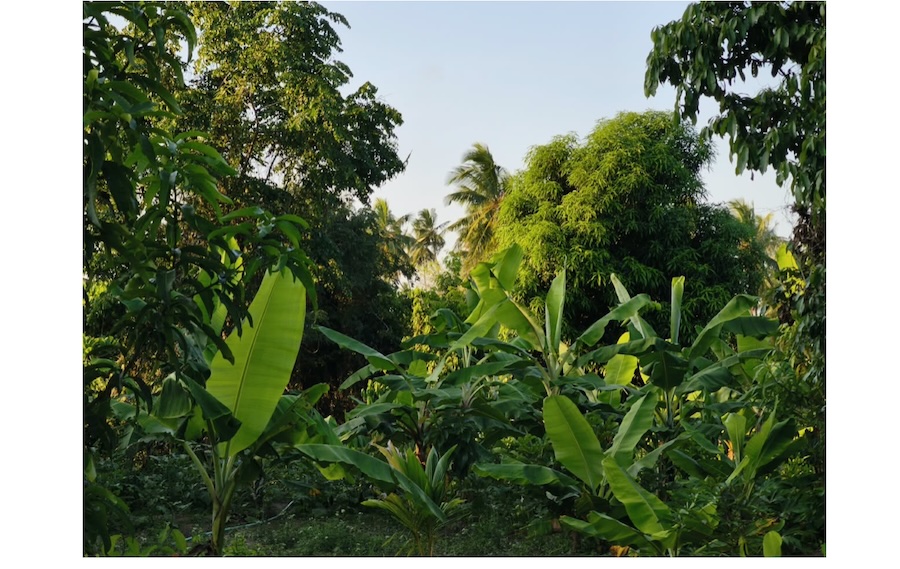
The increasing pressure on Zanzibar’s productive agricultural land poses serious challenges to local food production and raises important questions about the future of food sovereignty on the islands.
Food sovereignty is about more than growing enough food. It requires secure access to productive land, the preservation of traditional crops and farming knowledge, ecological resilience, and the ability of local communities to determine how their food is produced and distributed. Protecting these foundations is essential to maintaining local livelihoods and reducing dependence on external food supplies.
Traditional agroforestry offers one way to combine local food production with the protection of existing ecosystems and agricultural knowledge. This approach combines trees, food crops and sometimes livestock on the same land, working with existing ecological systems rather than replacing them. The FAO recognizes this as a longstanding form of sustainable land management.⁶ Across East Africa, multi-layered home gardens, including the well-documented Chagga systems around Kilimanjaro and Zanzibar’s own practice of growing crops beneath coconut palms, show how food production, cash crops and biodiversity can coexist.⁷
Protecting ancestral land is more than a conservation or policy issue. For island families, land carries family histories, traditional knowledge and a sense of belonging. It provides food in difficult times and a degree of independence when incomes are uncertain. Once such land is cleared for construction or commercial use, much of that inheritance is lost permanently. When the cost-of-living rises, selling land is often one of the few options families have. It is easy to speak about protecting ancestral property; it is much harder for a family that needs money for everyday necessities.
Those of us who have the means should be willing to do more. Supporting local communities, protecting mature forests and preserving agricultural land cannot be left only to government. Over the past few years we watched rapid, often unregulated development and the clearing of mature forest move closer to our own home.
Using our private resources, we gradually acquired 25 hectares of mature, forested land, away from the main tourist areas, from local families who needed to sell because of financial pressure. We did not see these purchases as opportunities for development or speculation. We saw a chance to protect an existing forest, keep its traditional agricultural use alive, and create a place where local families, friends and wildlife could continue to share the land.
From the outset we decided that the families who sold the land should not lose the opportunity to cultivate it and benefit from its produce. They remain welcome to grow food there, together with other community members and friends. In this way they can receive the money they need without permanently losing access to the agricultural resources they have long depended on. Money from a sale can be spent; once land is cleared, fenced or turned into a hotel, the chance to grow food on it is usually gone for good.
We regard our ownership as a form of stewardship. We have taken on the financial responsibility for acquiring and protecting the land, but ownership does not give us the right to exclude the community or extract maximum private return. We see ourselves as custodians of land that should continue to provide food, shelter for wildlife, and usefulness for future generations. This approach shares much with the idea of steward-ownership: assets managed for a lasting purpose rather than primarily for the enrichment of their owners.⁸
In practice the first priority has been to preserve the mature forest already standing. A few clear rules apply to everyone: existing trees must not be cut down, permanent structures are not permitted, rubbish must not be dumped, and natural forest must not be cleared to create monoculture plantations. Mature trees cannot simply be replaced. They form part of a living ecosystem, holding soil, moderating the local climate and supporting birds, insects, small mammals and fungi.
(Article continued in right column)
(Article continued from left column)
We therefore cultivate food within the existing forest rather than clearing it. Local families grow traditional vegetables, cassava, sweet potatoes and other adapted crops between the trees. Additional fruit trees have been planted, more than 1,000 so far, carefully integrated into the landscape. Most of the crops are consumed by the community and families cultivating the land, while some are sold locally, helping us cover the wages of our farm workers. Cloves and cashew nuts are also grown for sale.
Alongside these activities, we have established a small chicken farm and invested in solar-powered irrigation to support food production while reducing reliance on the electricity grid. Importantly, we do not intend to cultivate every hectare. Substantial parts of the forest remain undisturbed so that wildlife can continue to live there.
Day-to-day care of the land is a shared effort. We have employed three local farm workers who look after the forest, maintain the paths, support cultivation and help protect the trees and wildlife. Former landowners, neighboring families and friends also cultivate designated areas and contribute to keeping the land clean and productive. While our family finances the land, employs the farm workers and provides the basic infrastructure, the wider community contributes its knowledge, labour and care. The forest remains a productive and welcoming place rather than an enclosed private property.
We want the land to stay a place where local people can gather and enjoy nature. Across Zanzibar, many spaces that were once open to communities are being taken over by private developments. We are therefore planning a small, local farm-to-table gathering place, open on weekends, where people can meet, enjoy food grown on the land and spend time together in a natural setting, while also helping to cover the costs of maintaining the forest. By keeping this forest accessible, we hope to preserve a little of the shared community spirit that has long been part of island life.
What we receive in return goes beyond money. We benefit from the food grown on the land, the peace of the forest, the pleasure of seeing it flourish, and the satisfaction of knowing that a living place of culture and belonging is being kept for the next generation.
The following statistical analysis highlights the challenges currently facing Zanzibar and underscores the urgent need to strengthen food sovereignty.
With a population exceeding two million, Zanzibar recorded only 85,182 formal-sector employees in 2024/25, approximately one for every 24–25 residents.¹ Although this figure excludes informal employment, self-employment and subsistence farming, it shows how many people still depend on livelihoods outside the formal wage economy. Agriculture remains central. The 2023/24 agricultural survey counted 150,194 agricultural households, roughly 40 per cent of all households. Access to land is a persistent problem: in the 2019/20 Agricultural Census, nearly 49 per cent of farming households reported that their available land was insufficient.²
Tourism accounts for a large share of economic activity, while Zanzibar’s Development Vision 2050 promotes the shift from traditional subsistence farming toward more commercial and export-oriented production.³ These changes bring investment, but they do not automatically create better employment or keep more food available for local people. They can also increase pressure on land and redirect production away from local needs. Aggregate statistics alone cannot tell us who controls agricultural land, who benefits from commercialization, or how much food remains accessible to communities.
As tourism and urban development compete for land, Zanzibar’s capacity to feed itself is under strain. The islands already rely heavily on food brought in from elsewhere. Official figures show that the value of direct imports of food and live animals rose from about TZS 109 billion in 2020 to TZS 194.5 billion in 2024.⁴ These numbers do not even include food coming from mainland Tanzania. Between 2023 and 2024, the area planted with major food crops, fruits and vegetables fell by roughly 14.6 per cent, while recorded production dropped by about 27 per cent.⁵
In conclusion, economic development has its place, but not every piece of land needs to be cleared or turned into profit. Some areas must remain forest, others should continue to provide food. Once mature forests and productive agricultural land are lost, they cannot easily be recovered. Those who have the means can choose to act as stewards. Small, concrete actions of this kind, repeated by more people, can help ensure that productive land and living forests remain part of Zanzibar’s future.
Notes
¹ National Bureau of Statistics and OCGS, Formal Sector Employment and Earnings Survey 2024/25.
² FAO, Annual Agricultural Sample Survey 2023/24; National Sample Census of Agriculture 2019/20.
³ World Bank, Tanzania Economic Update, 2026; Revolutionary Government of Zanzibar, Zanzibar Development Vision 2050.
⁴ Office of the Chief Government Statistician (OCGS), Zanzibar Statistical Abstract 2024.
⁵ Ministry of Agriculture, Irrigation, Natural Resources and Livestock, Zanzibar Agricultural Sector Transformation Framework 2025–2035.
⁶ FAO, Agroforestry module, Sustainable Forest Management Toolbox.
⁷ Harvard GSD on Chagga home gardens; FAO on coconut-based systems in Zanzibar.
⁸ Purpose Economy, “What’s Steward-Ownership?”
– – – – – –
If you wish to make a comment on this article, you may write to coordinator@cpnn-world.org with the title “Comment on (name of article)” and we will put your comment on line. Because of the flood of spam, we have discontinued the direct application of comments.