DISARMAMENT & SECURITY .
Special to CPNN from Timmon Wallis
How the world can achieve verifiable, irreversible global nuclear disarmament before it’s too late.
We are at the moment facing a very backwards trend in pretty much everything to do with international relations. The last remaining treaty in nuclear arms control has recently expired. And the response from Trump was, “if it expires, it expires” . . .
Trump is surrounded by people who have a vested interest in keeping the nuclear weapons business going for as long as they can.
So this is where the Treaty on the Prohibition of Nuclear Weapons (TPNW) comes in. But what is the use of this treaty if the US and the other nuclear powers have not joined it? In fact, all the countries that are in the TPNW are already in the NPT, where they promised not to develop nuclear weapons. So what is the point of another treaty that just makes that same commitment?
Article 1e of the TPNW bans assisting, encouraging, or inducing anyone, in any way, to engage in any of the activities prohibited to a States Party of the treaty.
Treaties, as you know, are agreements between governments. The governments must not develop, manufacture or stockpile nuclear weapons. But this clause refers to anyone, not just governments. In other words, people, corporations, banks, insurance companies – the parties to the treaty must not assist anyone involved in the development, manufacture or stockpiling of nuclear weapons. And the people and corporations that are involved do not just have to be in or based in that country. The TPNW says “anyone.”
So, theoretically at least, the 74 countries that have so far joined the TPNW are forbidden under this treaty from having anything to do with the corporations that develop, manufacture or stockpile nuclear weapons.
Now here’s the thing. The two dozen major nuclear weapons companies don’t just operate in the US or the UK or France. These are multinational corporations. They have operations all over the world, including in many of the countries that have already joined the TPNW.
They also have offices in other countries, they have contracts and projects, they sell their products and services to those countries. They also have suppliers – a whole supply chain – involving many other countries, to obtain the resources and the parts they need. And crucially, they have investors in those countries.
So far, only Ireland has fully divested its sovereign funds and major banks from the nuclear weapons companies (along with Switzerland, which is not even in the treaty) but others should follow – including countries like Austria, South Africa, New Zealand, Philippines, Indonesia, Mexico… These are not insignificant countries and the impact on these companies could be huge.
Another clause in the TPNW that is crucially important for putting pressure on these companies is Article 5, which obliges all parties to the treaty to adopt national legislation that applies the prohibitions of the treaty to persons, including “legal” persons in the country, and defines legal penalties for violations of those prohibitions. As I pointed out, treaties apply to countries, but by passing laws in each country which make it illegal for anyone in that country to have anything to do with nuclear weapons, the TPNW is once again tightening the noose on these companies and the people who work for them – especially CEOs, members of the board of directors and other high level vice presidents and so on.
In Ireland, once again our test case for this, the Prohibition of Nuclear Weapons Act was passed in 2019, making it offense, punishable by up to life in prison, for anybody in Ireland having anything to do with nuclear weapons, including assisting anybody else having anything to do with nuclear weapons. So now it’s not just the sovereign fund that belongs to the state and is therefore required to divest from these companies, but also the banks and anybody else with investments in Ireland.
(Continued in right column)
Can we abolish all nuclear weapons?
(Continued from left column)
Clearly if more and more countries take on these responsibilities of the TPNW, the companies will find themselves under more and more pressure from governments as well as from investors, suppliers, customers and even workers working for those companies.
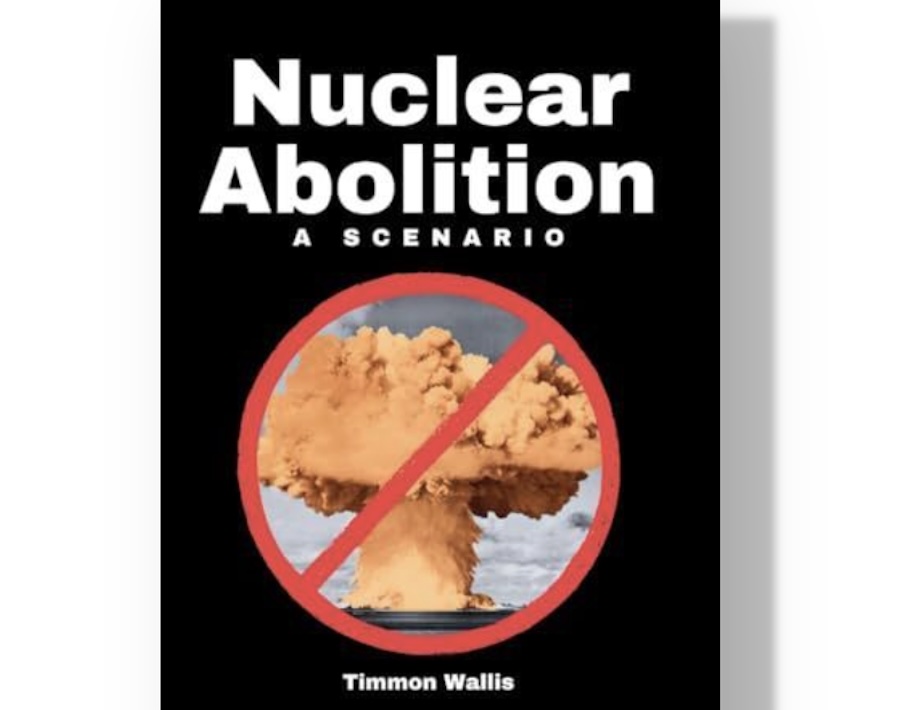
My book, Nuclear Abolition: A Scenariois imagines a scenario where more and more of the states parties to the TPNW are moving on to these next steps, as more countries are also signing and ratifying the treaty.
Currently we have 74 countries who have ratified the TPNW.
We have another 25 countries who have signed the treaty but not yet ratified it. That makes 99 so far, a majority of the 197 countries in the world able to sign international treaties.
We then have another 40 countries who have been consistently voting for the treaty but have not yet signed it themselves.
We have another 12 countries who have been abstaining…
Including, for instance, Switzerland, where campaigners just succeeded in collecting over 100,000 signatures to put it on the ballot; including Australia, whose Prime Minister is personally committed to the TPNW, whose party has voted to join the TPNW, and just won a re-election with a strong mandate.
Then we have at least 20 countries who are under enormous pressure to join the treaty, including countries in NATO that have government ministers committed to joining the treaty, including the former Prime Minister of Iceland, as well as opinion polls showing overwhelming support from the general public…
I already mentioned the ruling party in Australia is committed to signing the TPNW. So is the ruling party in Norway, and the coalition government in Spain. The previous coalition in Germany was also committed to joining the TPNW, although clearly the current government is not.
Who knows what it will take for one of these countries to join the TPNW, and then another, and another and another. Sooner or later, it will happen. I offer some possible scenarios that could lead to this in my book . . .
Sooner or later, we’re either going to get these countries on board for the elimination of nuclear weapons or we’re going to have a nuclear war. I certainly hope it’s the former.
But it’s also not just these European countries that ultimately have to get on board with this. My book then looks at the situation within the US. The peace and anti-nuclear movement in the US is certainly much weaker than it is or has been in Europe. But there are important steps being taken, and I will highlight just a few:
I hope you all heard a few years ago that the city council of New York voted to divest from the nuclear weapons companies? A few other large cities have already done so, including Oakland, CA. Most recently Philadelphia also voted to divest from nuclear weapons.
My own small city of Northampton, MA has not only divested from these companies, but announced that it will not do business with any of these companies. It has notified these companies that they are not eligible to bid for city contracts.
And there is currently legislation pending in the MA state legislature to do both of these things. It is unlikely to pass in this current session, but there is a growing movement in support of this…
Altogether, these steps being taken across the US and around the world may or may not be enough to pressure the nuclear weapons corporations into seeking other ways to make a profit. After all, these corporations don’t exist in order to make nuclear weapons. They exist in order to make a profit for their shareholders.
Once it starts to become unprofitable for them to be involved in the nuclear weapons business, they will move on to other things – as many of them did in the 1980s when faced with divestment, boycotts and public opprobrium. And while there were many factors at play which led to the fall of the Berlin Wall and the end of the Cold War, the pressure on nuclear weapons corporations at that time was certainly one of them.
Those corporations, like General Electric and Ford Motor Company, not only pulled out of their involvement with nuclear weapons. They demanded that Congress and the Reagan Administration take steps to restore public confidence in those corporations, by cutting back on the nuclear arms race and signing agreements with the Soviet Union.
Pressure on the corporations “worked” then, and it can work again! And with Trump and Putin at the helm, we can only hope it works before it’s too late.
– – – – – –
If you wish to make a comment on this article, you may write to coordinator@cpnn-world.org with the title “Comment on (name of article)” and we will put your comment on line. Because of the flood of spam, we have discontinued the direct application of comments.