Category Archives: Europe

Several Hundred Detained as Russians Protest Mobilization

FREE FLOW OF INFORMATION

An article from Moscow Times

Several hundred people have been detained across Russia on Wednesday as rallies against a military mobilization declared by President Vladimir Putin for the war in Ukraine took place in areas from the Far East to the capital Moscow.


Wednesday’s protest against mobilization in Ulan-Ude (t.me/Baikal_People)

According to the independent OVD-Info police monitor, at least 1,386 protesters have been detained  nationwide so far with at least half of the count recorded in the capital Moscow.

It added that a majority of those detained were women.

Police in Moscow reportedly handed some detainees summons to the military enlistment office regardless of their experience.

The Vesna opposition movement as well as supporters of jailed Kremlin critic Alexei Navalny called on Russians nationwide to take to the streets on Wednesday evening to oppose the Kremlin’s decision to bolster its forces in Ukraine with a “partial” mobilization. 

The first protests took place across cities in Siberia and the Far East, where dozens were arrested, often just minutes after the rallies began, according to local reports.

Small groups of protesters gathered in Ulan-Ude, the capital of the republic of Buryatia; Yakutsk, the capital of the republic of Sakha; and the Far East cities of Khabarovsk and Irkutsk.

(Continued in right column)

Questions related to this article:
 
Can the peace movement help stop the war in the Ukraine?

(Continued from left column)

Protesters in Ulan-Ude were seen carrying handwritten signs reading “No war! No mobilization!” and “Our husbands, fathers and brothers don’t want to kill other husbands and fathers.”

In the Siberian city of Tomsk, a female protester carrying a sign reading “Hug me if you are also scared” was among the 15 people detained shortly after the start of the protest, according  to local Telegram news channel Ulitsa Barkhatnaya.

In Novosibirsk, Russia’s third-largest city, video published  to social media showed a protester shouting “I don’t want to die for Putin or for you!”

Protests then took place across the cities in Russia’s Volga-Ural region. At least 45 people were detained in the region’s largest city Yekaterinburg, while dozens others were arrested in Perm, Chelyabinsk and Ufa, the capital of the republic of Bashkortostan, according  to OVD-Info. 

In the capital Moscow, several hundred people gathered on the central Stary Arbat street amid heavy police presence. Protesters could be seen chanting “No war!” “Send Putin to the trenches!” and “Let our children live!” in videos published to social media. 

In St. Petersburg, protesters who gathered near the central St. Isaac’s Square were quickly encircled by police, according to videos  from the scene. But others continued  to march through the city center. 

Rallies also took place in the city of Arkhangelsk in the Far North, the southern city of Krasnodar, the Baltic exclave Kaliningrad and others.

In Kazan, the capital of the republic of Tatarstan, a small group of female protesters marched through central streets chanting “Peace to the world. No to mobilization!” after the initial rally was dispersed.

A total of 300,000 Russian reservists are expected to be called up for military service during the campaign, according to Defense Minister Sergei Shoigu. 

But the mobilization efforts could be more far-reaching given the vague wording of the mobilization decree, according  to human rights lawyer Pavel Chikov, who has been helping Russian soldiers opposed to the war.

Russia: Pop Diva Alla Pugacheva Comes Out Against the War

FREE FLOW OF INFORMATION

An article from Moscow Times

Alla Pugacheva, Russia’s most beloved pop singer, posted on Sunday on her Instagram account an appeal to the Russian Ministry of Justice asking to be named a “foreign agent” in solidarity with her husband, comedian Maxim Galkin.


TV host Maxim Galkin and singer Alla Pugacheva on Sept. 8, 2021

“Please include me in the ranks of foreign agents of my beloved country,” her text read, “since I am in solidarity with my husband — an honest, decent and sincere man, a true and incorruptible patriot of Russia who wants his Homeland to flourish in peace, with freedom of speech, and wants an end to our boys dying for illusory goals, which has turned our country into a pariah state and made life a burden for our citizens.”

After the Russian invasion of Ukraine, Pugacheva, Galkin and their children left for Israel. Galkin spent the summer touring in Israel and Europe with stand-up comedy shows that were highly critical of the war and Russian leaders. He performed sold-out shows in Jurmala, Latvia, where the family traditionally spend their summers.

(Continued in right column)

Questions related to this article:
 
Can the peace movement help stop the war in the Ukraine?

(Continued from left column)

In August, Pugacheva returned to Russia and was quoted in the Russian state press saying that she’d come back “to put things in order, in my head and in your head.” State media also wrote that she planned to send her children to school on Sept. 1.

Galkin was declared a foreign agent on Sept. 16.

Pugacheva joins a now long list of Russian rock and pop musicians speaking out against the war, including DDT frontman Yuri Shevchuk; Andrei Makarevich (Mashina vremeni), Boris Grebenshchikov (Aquarium); Oxxxymiron (Miron Fedorov); Svetlana Loboda; and Noize MC (Ivan Alexeev). (See articles in CPNN on March 22 and March 12.)

The Kremlin on Monday declined to comment on Pugacheva’s statement.

(Editor’s note: The importance of Alla Pugacheva is explained by Sergey Aleksashenko in his blog Behind the Iron Curtain.)

“Pugacheva is an iconic figure for the 50+ generation—i.e., the main base of support for Putin, his policies, and the war in Ukraine. On the other hand, the singer has almost 3.5 million followers on Instagram, which speaks to her popularity and authority with a younger audience.

“I think the Kremlin made a grave mistake when it attacked Pugacheva by declaring her husband, Maxim Galkin, a foreign agent. It is no secret that until then, Pugacheva had openly taken an anti-war stance but at the same time did not make such outspoken statements. If Pugacheva decides to continue the public discussion about the senselessness of the war, the Kremlin should prepare for an uphill battle.”

Calls for Peace Mark Six Months of ‘Senseless’ War in Ukraine

DISARMAMENT & SECURITY .

An article from Common Dreams (licensed under Creative Commons (CC BY-NC-ND 3.0). Feel free to republish and share widely.-)

While Russia presses on with its lumbering invasion of Ukraine and Western nations led by the United States keep sending billions of dollars in arms and aid to bolster Ukrainian resistance, peace advocates on Wednesday marked the war’s six-month anniversary—and Ukraine’s independence day—with renewed calls for peace.


UNICEF video based on children’s drawings from Ukraine

Decrying the “senseless war,” United Nations Secretary-General António Guterres told  the world body’s Security Council on Wednesday that “the people of Ukraine and beyond need peace and they need peace now. Peace in line with the U.N. Charter. Peace in line with international law.”

Writing for the U.K.-based Stop the War Coalition, journalist Shadia Edwards-Dashti noted  that “the war has been a disaster for the Ukrainian people, resulting in tens of thousands of Ukrainian casualties and displacing more than 13 million people—just shy of a third of the population. On the Russian side, some estimates suggest up to 75,000 are dead or injured.”

“From the very start of the invasion the Western response has focused on the military solutions,” she continued. “Within a week of the invasion, NATO forces had drummed up their biggest military mobilization in Europe since the end of the Cold War. The aim from the start was a decisive military victory against Russia. As a result, negotiations have been discouraged and chances for peace squandered.”

(Continued in right column)

Questions related to this article:
 
Can the peace movement help stop the war in the Ukraine?

(Continued from left column)

“We simply cannot allow this six-month war to drag on for years as some analysts are predicting, Edwards-Dashti added. “Decisive victory for either side looks remote. The only possible solution is a process of negotiation. As the economic crisis deepens and Western governments threaten to raise defense spending, we in the West must intensify our call for peace and sanity.”

Anatol Lieven, director of the Quincy Institute for Responsible Statecraft’s Eurasia program, warned  that while NATO countries “can now afford to be less afraid of Moscow” given the Russian military’s battlefield woes, “the risk of unintended escalation to nuclear war does however remain very real.”

“Since nuclear weapons are the one area in which Russia remains a superpower, there is an obvious temptation for Moscow to engage in nuclear brinkmanship,” he added, “and anyone who decides to walk along a brink runs the risk of falling over it.”

Martin Kimani, Kenya’s ambassador to the U.N., similarly cautioned  that “unless the Ukraine war is stopped through dialogue and negotiation, it could be the first of a series of conflicts that future historians will name the Third World War.”

“Such a disaster would be different from the last world wars, and all the wars before them,” he said. “The dangers of direct conflict between nuclear-armed powers means that most of their confrontations would be undertaken by proxy. Africa and the rest of the world would be thrown into a mirror of the Cold War.”

Ukrainian President Volodymyr Zelenskyy marked the war’s six-month anniversary and his country’s independence day by hailing Ukraine’s unexpected success in resisting Russia’s invasion.

“Every day is a new reason not to give up,” he said  in a video address from central Kyiv. “Because having gone through so much, we have no right not to reach the end. What is the end of the war for us? We used to say, ‘peace.’ Now, we say, ‘victory.'” 

Asked in an interview with NPR if she sees “any negotiated way out” of the war, Norwegian U.N. Ambassador Trine Heimerback replied: “I think that’s the question we all have. Right now, I don’t think we are too optimistic, unfortunately.”

James Kariuki, Heimerback’s British counterpart, said the issue of negotiations is “for the Ukrainians” to decide.

“But,” he added, “the best way to end the conflict would be for Russia to withdraw its troops and end its illegal occupation.”

UK: Mayor of Winchester hosts peace event to mark the A-bombing of Nagasaki

. . DEMOCRATIC PARTICIPATION . .

An article from the Hampshire Chronicle

The Mayor of Winchester, Cllr Derek Green, hosted Winchester’s fourth Mayors for Peace event to commemorate the 77th anniversary of the atomic bombing of Nagasaki.

More than 40 guests were present at Abbey House on August 9, representing Winchester City Council, Hampshire County Council, the University of Winchester, community organisations and a number of faiths groups in the city.

Mayors for Peace is an international, non-political organisation with a membership of more than 8,500 cities and regions, including 85 in the UK. It aims to realise a world without nuclear weapons, support safe and resilient cities and promote a culture of peace. Winchester joined in 2020.

Cllr Green said: “I was delighted to host the Mayors for Peace event. I share the spirit of my fellow Mayor of Nagasaki in his message to the event, who stated, ‘I hereby declare to do the utmost to realise the abolition of nuclear weapons and everlasting world peace’.”

Presentations included an experience of living through the bombing, read by members of SGI-UK, who organised the event.

The University of Winchester showed the ginkgo saplings they are growing from seeds of trees that survived the atomic bombing, presented last year by the Mayor of Hiroshima to the Mayor of Winchester. These will be used in schools as part of a developing education programme.

(article continued in right column)

Question related to this article:
 
How can culture of peace be developed at the municipal level?

(article continued from left column)

PeaceJam spoke of their work to inspire young people for the future. Former PeaceJam director Sally Milne recalled working with Prof Sir Joseph Rotblat, a prominent nuclear physicist who renounced nuclear weapons and became a Nobel Peace Prize Laureate.

Winchester’s City of Sanctuary movement highlighted how conflict is driving refugee flows all over the world – and raised the frightening prospect of nuclear weapons being used in the current conflict in Ukraine.

The event ended on a positive note with a song from a Ukrainian choir and a determination among everyone present to work more closely together to do everything in our powers to ensure that the second atomic bombing of Nagasaki, will be the last experienced by humanity.

John Brackstone, director of faculty operations for Education and the Arts at the University of Winchester, said: “It is a great honour that the University of Winchester can help to nurture these saplings and create a suite of materials that bring the themes around the ginkgo tree’s survival of Hiroshima, global peace and environmental awareness into a format that is accessible and appropriate for primary school children.”

Caroline Millman of PeaceJam UK, said: “PeaceJam UK was grateful and proud to be part of such an inspirational and thought-provoking occasion and have the opportunity to connect with like-minded people who also have a genuine respect for humanity.”

Chair of Winchester City of Sanctuary, Both Flint, said: “Winchester City of Sanctuary’s vision is for Winchester to be a welcoming place of sanctuary for all, a peaceful space where people can feel safe and protected. We cannot do this alone which is why it is so important to work together, with partners and our wider community to promote peace and sanctuary and a world free from conflict. We stand in solidarity with Mayors for Peace and partners like SGI-UK and Peace Jam and look forward to working with both more closely.”

Paul Williams of event organisers SGI-UK, said: “I’m pleased that our Buddhist organisation for culture, education and peace was able to be an effective catalyst to bring together such a wonderful group of partners, working together under the Mayors for Peace banner”.

Moscow TV protester plays ‘Russian roulette’ with risky comeback

FREE FLOW OF INFORMATION

A dispatch from Agence France Presse (AFP) published by Radio France International (copyright 2022 AFP)

Marina Ovsyannikova, who denounced Russia’s intervention in Ukraine during a live TV broadcast, knew that coming back to Moscow would be akin to playing a game of Russian roulette.

Speaking to AFP in an interview, the 44-year-old mother of two, who returned from Europe last month, said she understood she could be arrested at any moment.


Photo Stringer AFP

“I decided to play Russian roulette,” the former editor at Channel One television said, sitting on a bench in central Moscow in an elegant black dress.

“If they make this decision, they will arrest me in a single day. It will only take a few seconds,” she said after dropping her 11-year-old daughter off for art lessons.

In March, Ovsyannikova shot to prominence for interrupting a live TV broadcast to denounce President Vladimir Putin’s military intervention in Ukraine.

In the months following her protest, Ovsyannikova spent time abroad, working for Germany’s Die Welt for three months.

In early July, she made the “difficult decision” to return home when her ex-husband, an employee of Kremlin-backed broadcaster RT, sued her for custody of their two children.

Since her widely publicised protest, Ovsyannikova has been fined several times and is due to appear in court again on Monday over discrediting the Russian army.

She will also be attending custody hearings.

Public criticism of Russia’s intervention in Ukraine has been outlawed, and most government critics have either fled the country fearing prosecution or ended up behind bars.

Ovsyannikova said however she would continue speaking up.

“I am a fighter, I continue to actively denounce the war,” she said cheerfully.

“I do not plan to stop, I am not afraid despite the constant intimidation from the authorities.”

‘Putin the murderer’

Since her return, Ovsyannikova came out to support opposition politician Ilya Yashin in court, staged a protest with a poster calling Putin a “murderer” and published anti-government posts online. She was briefly detained by police near her home in mid-July.

Ovsyannikova, who does not currently have a permanent job, works as a freelancer for foreign media. Most of Russia’s independent media have either been shut down or operate from abroad.

(Continued in right column)

Questions related to this article:
 
Can the peace movement help stop the war in the Ukraine?

The courage of Mordecai Vanunu and other whistle-blowers, How can we emulate it in our lives?

How can just one or a few persons contribute to peace and justice?

(Continued from left column)

he journalist, who worked for state TV for 19 years, said she had recently sold her car to bring in some extra money.

Her protest has drawn hostile reactions from many quarters.

Pro-Kremlin officials and former colleagues have accused Ovsyannikova of betraying her country. Critics in Ukraine and the West have claimed she is a spy still embedded in the Russian state media.

Many members of the Russian opposition have blamed her for jumping ship in an opportunistic move and seeking fame.

Ovsyannikova rejects the allegations.

“It is convenient for the authorities to constantly create new conspiracy theories around me, people already don’t know what to believe,” she said.

But Ovsyannikova admitted she had made mistakes in the past and has stayed “too long” in her comfort zone, without “finding the strength” to leave state television sooner.

For her, inaction and indifference, embraced by many Russians, are a form of “self-preservation” fuelled by fear.

“Our people are really very frightened,” she said.

“Even those who understand the absurdity, the horror of what is happening prefer to stay silent.”

In a throwback to the Soviet times, many Russians now criticise authorities only “in their kitchens” where nobody can hear them, she said.

‘Unenviable fate’

Apart from facing criticism in Russia and abroad, Ovsyannikova said she also had to fight a “war at home.”

She said her mother had become a victim of state propaganda, her son turned against her and she had to fight for the custody of her children.

“My fate is unenviable,” Ovsyannikova said.

She stressed, however, that her problems were nothing compared to the suffering of the Ukrainian people, faced with an offensive that has claimed thousands of lives and displaced millions.

Authorities have not announced the opening of any criminal investigation against Ovsyannikova. But her repeat convictions of discrediting the Russian army may lead to a criminal conviction, punishable by up to 15 years in prison.

Ovsyannikova believes that authorities will be reluctant to draw more attention to her case, pointing to her “solid international support”.

Ovsyannikova said she would like to be able to leave the country together with her daughter.

For now, she will stay in Russia.

She is under no illusion that official pressure on her will grow.

“They will intimidate me further,” she said.

Using an old Soviet expression, she said authorities under Putin could punish just about anyone.

“Give me the person and I’ll find the crime.”

“Sometime they’ll give a war and nobody will come”

DISARMAMENT & SECURITY .

“Sometime they’ll give a war and nobody will come.” – Carl Sandburg, The People, Yes, 1936.

A press survey by CPNN

In recent weeks the press in the United States is filled with news about the difficulty to recruit into the military.

Bloomberg; “Military Recruitment Woes Endanger National Security.”

Fox News: “Lawmakers sound alarm over US military recruitment crisis”.

New York Times: “With Few Able and Fewer Willing, U.S. Military Can’t Find Recruits.”

Washington Post: “the Defense Department faces dramatic shortfalls bringing in new troops.”

(Continued in right column)

Question related to this article:
 
Can we see an increase in anti-war consciousness?

(Continued from left column)

At the same time there are also press reports about a problem of military recruitment in Russia

New York Times: “Russian forces desperately need new soldiers. Already, the government is using what some analysts call a “stealth mobilization” to bring in new recruits without resorting to a politically risky national draft. “Russia has a problem with recruitment and mobilization,” said Kamil Galeev, an analyst specializing in Russia. “It is basically desperate to get more men using any means possible.””

Newsweek: “The Center for Countering Disinformation suggested that these thousands of vacancies indicate the losses of the Russian army, and “the general problem with the recruitment of military personnel.”

Radio Free Europe: (for the war in the Ukraine) “Russia is facing a systemic manpower issue, and they are using multiple ad-hoc methods to fill in the gaps with volunteers, mercenaries, prison battalions, and personnel from other parts of the government like the national guard.”

Deutsche Welle: “Personnel shortages may be forcing Russia to turn to “non-traditional recruitment,” according to the UK intelligence update. “This includes recruiting personnel from Russian prisons for the Wagner Private Military Company. If true, this move likely indicates difficulties in replacing the significant numbers of Russian casualties.”

The problem of military recruitment in Russia is compounded by attacks on recruitment stations. According to the Moscw Times in May there had already been eight such attacks by means of Molotov cocktails.

Nonviolence International: Calling for Peace in Ukraine

DISARMAMENT & SECURITY .

An article by Paige Wright for Nonviolence International (NVI)

NVI-Ukraine has worked for years to promote peace & reconciliation in Ukraine.

1) NVI-Ukraine serves as the coordinator of the Eastern European Network for the Global Partnership for the Prevention of Armed Conflict (GPPAC). GPPAC is the longstanding network of peace groups in the region. GPPAC has long worked to ameliorate internal ethnic, religious and community conflicts in Ukraine and the region. You can see statements from GPPAC below on the current war.

2) NVI-Ukraine hosts a nascent Ukrainian Stop the War Coalition. This is a network of groups in Ukraine working to nonviolently resist the Russian invasion and to support the Russian anti-war movement. See below for details on its membership.


Andre Kamenshikov speaking in the video of Civil Resistance in Ukraine and the Region

3) NVI-Ukraine is currently focusing on how to address ordinary Russian citizen with anti-war messaging. Although Russia is a dictatorship – public opinion does matter a lot. In fact, the Russian government is not able to currently sell to its own population the concept of an all-out war against Ukraine, thus it uses euphemisms such as a “special military operation” etc. Due to this – the government cannot announce a full mobilization, it does not have the legal instruments to send people to the battle zone against their will and so on.

As the war drags on, Russia’s key military objectives remain unfulfilled. The Russian government is tempted to carry out more and more measures which will gradually put the entire country in a de-facto state of war, even if war is never officially announced. This cannot be done without significantly increasing pressure and demands on all of society. Our hope is that if anti-war attitudes and resistance will continue to grow, while the motivation of those who support the government remains insufficient, this will put the country’s leadership in a situation where it will have no other option as to seek peace and discontinue its imperialist policies. You can see NVI’s internal public opinion and messaging reports here.

4) NVI-Ukraine continues to work closely with a variety if international efforts to facilitate visits, meetings, delegations, humanitarian efforts, and project explorations. We would like to draw attention the work of Nonviolent Peaceforce, Patrir, and PAX. We also speak out to the media on nonviolent alternatives in Ukraine, Russia, and the region. See below for media interviews.

Ukrainian Stop the War Coalition

Nonviolence International-Ukraine is supporting the Ukrainian Stop the War Coalition (USWC) which is building a network of activists and groups to resist the Russian invasion and to support peacebuilding efforts that can provide a platform for future reconciliation. The USWC is focusing on

1) supporting nonviolent resistance to Russian occupation,

2) promoting war-resistance, both passive and active, in Russia and Belarus,

3) strengthening the social fabric in Ukraine created by the war, such as between internally displaced people and their host communities.

NVI is asking for supporters to donate generously. Nonviolence International, based in DC, will provide administration and fiscal sponsorship support.

Steering Committee

Andre Kamenshikov, Global Partnership for the Prevention of Armed Conflict (GPPAC), regional network coordinator for Eastern Europe, 30 years of practical experience in civil peacebuilding and humanitarian work in Russia, Ukraine and post-soviet states. Based in Kyiv.

(Continued in right column)

Questions related to this article:
 
Can the peace movement help stop the war in the Ukraine?

(Continued from left column)

Olha Zaiarna, GPPAC regional liaison officer, researcher with experience in both government and public institutions working on peacebuilding and conflict management. (Based in Kyiv)

Dmitro Zvonok, socio-psychologist, trainer at the Ukrainian Peacebuilding School initiative, dialogue facilitator, developer of a number of educational games for dealing with conflicts on a community level, internally displaced person from eastern Ukraine.

Igor Semivolos, Head of Association for Middle Eastern Studies of the Ukrainian Academy of Sciences, founder of the Ukrainian Peacebuilding School initiative.

The USWC will focus its efforts in the following 3 areas. However, given the fast-moving events on the ground, priorities may understandably shift.

Nonviolence International is proud that Andre Kamenshikov, NVI Ukraine director, was part of this impressive gathering.

Civil Resistance in Ukraine and the Region

How does civil resistance work and what can it achieve? This panel shares how civilians are using strategic civil resistance to diminish the power and impact of the Russian military.

In Ukraine, civilians replace road signs to confuse Russian military vehicles, they block roads with cement blocks and iron pins, and they have set up a complex humanitarian aid system with neighboring countries. Within Russia, protests and resignations by universities, media outlets, and professionals denounce the military invasion. Join us to learn more about the strategy of civil resistance in Ukraine and the region.

Panelists include leading experts in civil resistance, some joining us from the frontlines in Kyiv.

As a member of the Global Partnership for the Prevention of Armed Conflict (GPPAC), Nonviolence International supports and endorses the following statement made by GPPAC. We note that the tensions around Ukraine and the potential for war will have destructive consequences for all citizens and all nations involved. Now more than ever do we stand for diplomacy in a coalition with other nonviolent actors. We hope you do the same.

GPPAC Statement on the situation around Ukraine, February 24, 2022

As a global network of peacebuilders, GPPAC is gravely concerned by the situation around Ukraine. We condemn the military operations launched by Russia today on February 24, in violation of international law and the Charter of the United Nations. We call for an immediate cessation of all military actions which threaten the lives and livelihoods of citizens of all countries involved. In particular, we urge:

* All parties to uphold obligations under international humanitarian law regarding conduct during wartime.

* The international community to provide humanitarian assistance to the people of Ukraine.

* Third parties, especially EU countries, to provide safe haven for those people who do not wish to take part in wars of aggression.

* The international community must pursue all possible efforts urgently to resolve this crisis through non-violent, diplomatic means, and support antiwar and humanitarian efforts of civil society as well as do everything possible to guarantee the safety and security of the people of Ukraine.

Please see NVI’s database of Nonviolent Tactics.

There is enormous civilian resistance to this war around the world. In Russia, hundreds of thousands of people have protested with signs and chanting in the streets and more than 7000 have been arrested. In Ukraine we see enormous civil resistance with tactics including various kinds of blockades, mutual aid, changing streets signs, boycotting Russian products, direct appeals to soldiers, singing. Please visit our database of 350 tactics that can inspire people around the world to do something at this time.

On our website you will find a collection of our current resources on Ukraine including press releases, media appearances, statements we support, and shared perspectives. We hope that these not only inform you about Ukraine and nonviolence efforts surrounding it but also that it inspires you to walk with us in nonviolence and support peace activists bravely taking on this stand.

The World’s First Ever Practice-based PhD in Cultural Diplomacy

FREE FLOW OF INFORMATION

Received at CPNN from Christelle Walker (WAALMPSA)

The University of Salford, School of Arts, Media, and Creative Technology in Manchester, UK, proudly announces that the first ever degree of Doctor of Philosophy, PhD by published works in the field of Cultural Diplomacy is conferred to Dr. Mosi Dorbayani, a Canadian practitioner, and a well-regarded scholar in the field.

Questions related to this article:

What is cultural diplomacy?

According to Salford’s Doctoral School, this PhD is the first ever practice-based research degree in the field of Cultural Diplomacy, which looks at the subject matter beyond typical International Relations or Political Science. It brings Cultural Diplomacy to the global communities around the world.

Prof. Dr. Alan Williams, the lead supervisor on this project adds: “what makes this work unique, is the way that it combines management and business theories with international relations and the arts. It examines arts and music, cross-cultures, cultural products, and creative industries, as well as their roles in economic developments, well-being, and social welfare. It provides new definitions, guidelines and methods in the practice of Cultural Diplomacy.”

Further on that note, the Salford Practice as Research Centre of Excellence (PaR) highlights that the topic of ‘Cultural Diplomacy: The Role of Music and Creative Industry in Establishing Dialogue and Understanding for Social Impact’, by Dr. Dorbayani, contains several real-life case studies on how Culture and Artistic Productions could / can impact societies socially and economically, and establish dialogue and understanding at local, national or even international levels. It shows in practical ways how for example song writing can address global audiences to advance a Cultural Diplomacy agenda.

Source: University of Salford – Research with Impact

Vienna: first Meeting of States Parties to the Treaty on the Prohibition of Nuclear Weapons

DISARMAMENT & SECURITY .

An article from The International Campaign to Abolish Nuclear Weapons (ICAN)

The historic first Meeting of States Parties to the Treaty on the Prohibition of Nuclear Weapons concluded in Vienna today 23 June with the adoption of a political declaration and practical action plan that set the course for the implementation of the Treaty and progress towards its goal of the total elimination of nuclear weapons.

States parties met amid heightened tension and growing risks of the use of nuclear weapons, following Russia’s invasion of Ukraine and its threats to use nuclear weapons. Addressing the opening session of the meeting, United Nations Secretary-General Antonio Guterres said, “The once unthinkable prospect of nuclear conflict is now back within the realm of possibility. More than 13,000 nuclear weapons are being held in arsenals across the globe. In a world rife with geopolitical tensions and mistrust, this is a recipe for annihilation.”

During the meeting, many states parties condemned Russia’s actions, expressing their determination to move ahead with implementing the TPNW and eliminating nuclear weapons, based on the catastrophic humanitarian consequences of their use and the growing risks that such use could occur. These discussions were supported by harrowing testimony from survivors of use of nuclear weapons in Hiroshima and Nagasaki (Hibakusha) and representatives of communities harmed by testing of nuclear weapons in the Pacific, Kazakhstan and elsewhere, which illustrated the grim reality of nuclear weapons and highlighted the importance and urgency of the meeting’s work.

Nagasaki survivor Masao Tomonaga said “This political declaration is a very strong document, despite many difficulties we face. With this powerful document we can go forward, and all Hibakusha support this,it is a great document to make my city, Nagasaki, the last city ever to suffer from an atomic bombing”. 

Representatives of youth groups emphasized the need to engage young people in universalizing and implementing the treaty, and the role that they could play in helping to achieve the treaty’s aims. A delegation of parliamentarians from 16 countries (including nine NATO members) highlighted the work of parliamentarians in building support for the TPNW domestically, persuading governments to join, and speeding the processes of ratification.


The meeting concluded with the adoption of a Declaration  and Action Plan. In the Declaration, states parties expressed their alarm and dismay at threats to use nuclear weapons, and condemned unequivocally “any and all nuclear threats, whether they be explicit or implicit and irrespective of the circumstances.” Affirming that the TPNW is needed more than ever in these circumstances, the states parties resolved to “move forward with its implementation, with the aim of further stigmatizing and de-legitimizing nuclear weapons and steadily building a robust global peremptory norm against them.”


The Declaration reiterated the humanitarian basis of the treaty and the moral, ethical and security imperatives which inspired and motivated its creation and which now drive and guide its implementation. States parties resolved to move ahead with implementing all aspects of the treaty, including the positive obligations aimed at redressing the harm caused by nuclear weapons use and testing. They also reaffirmed the complementarity of the treaty with the international disarmament and nonproliferation regime, including the Nuclear Non-proliferation Treaty (NPT), and undertook to continue to support the NPT and all measures that can effectively contribute to nuclear disarmament.

(Continued in right column)

(Click here for an article in French .)

Question related to this article:
 
Can we abolish all nuclear weapons?

(Continued from left column)


The Declaration concluded that “In the face of the catastrophic risks posed by nuclear weapons and in the interest of the very survival of humanity … We will not rest until the last state has joined the Treaty, the last warhead has been dismantled and destroyed and nuclear weapons have been totally eliminated from the Earth.”


The Action Plan contains 50 specific actions for taking forward the mission of the treaty and realizing the commitments made in the Declaration. The Action Plan includes actions on universalization; victim assistance, environmental remediation and international cooperation and assistance; scientific and technical advice in support of implementation; supporting the wider nuclear disarmament and non-proliferation regime; inclusion; and implementation of the treaty’s gender provisions.

The meeting also took a number of decisions on practical aspects of moving forward with implementation of the treaty. These included:

* Establishment of a Scientific Advisory Group, to advance research on nuclear weapon risks, their humanitarian consequences, and nuclear disarmament, and to address the scientific and technical challenges involved in effectively implementing the Treaty, and provide advice to states parties.

* Deadlines for the destruction of nuclear weapons by nuclear-armed states joining the treaty: no more than 10 years, with the possibility of an extension of up to five years. States parties hosting nuclear weapons belonging to other states will have 90 days to remove them.

* Establishment of a program of intersessional work to follow the meeting, including a coordinating committee and informal working groups on universalization; victim assistance, environmental remediation, and international cooperation and assistance; and work related to the designation of a competent international authority to oversee the destruction of nuclear weapons.

On the eve of the meeting, Cabo Verde, Grenada, and Timor-Leste deposited their instruments of ratification, which will bring the number of TPNW states parties to 65. Eight states told the meeting that they were in the process of ratifying the treaty: Brazil, Democratic Republic of the Congo, Dominican Republic, Ghana, Indonesia, Mozambique, Nepal and Niger.


ICAN Executive Director Beatrice Fihn welcomed the outcome of the meeting and the many concrete actions agreed. “This meeting has really been a reflection of the ideals of the TPNW itself: decisive action to eliminate nuclear weapons based on their catastrophic humanitarian consequences and the unacceptable risks of their use. The states parties, in partnership with survivors, impacted communities and civil society, have worked extremely hard over the past three days to agree on a wide range of specific, practical actions to take forward every aspect of the implementation of this crucial treaty. This is how we are building a powerful norm against nuclear weapons: not through lofty statements or empty promises, but through hands-on, focused action involving a truly global community of governments and civil society”
 
Read ICAN’s preliminary analysis of the Declaration and Action Plan here.

Further reading:

– Experts and governments meet to discuss the Humanitarian Impact of Nuclear Weapons

– Caribbean nations rally behind UN nuclear weapon ban treaty

– Namibia ratifies UN nuclear weapon ban treaty

– Saint Kitts and Nevis ratifies UN nuclear weapon ban treaty on Nagasaki anniversary

– Belgian Parliament to vote on ending nuclear weapons

The Bourgogne Franche-Comté collective for the abolition of nuclear weapons

DISARMAMENT & SECURITY .

Press release n° 29 – June 16, 2022 received at CPNN de L’Institut de recherche sur la Résolution Non-violente des Conflits (translation by CPNN)

France must be an observer at the UN meeting in Vienna from June 21 to 23, 2022

Demonstration in Dijon and interview at the Regional Prefecture

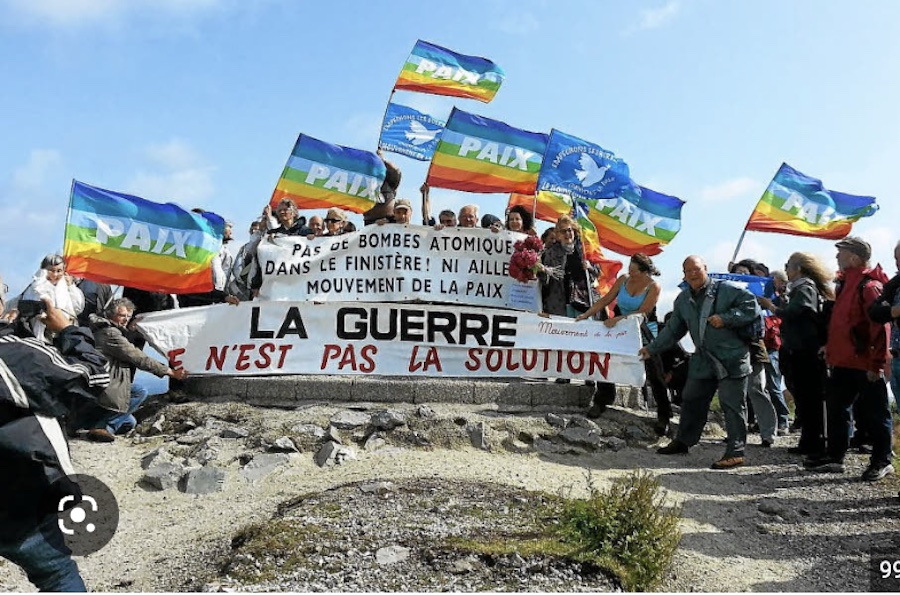
On June 16, 2022 at 12:30 p.m., 13 whistleblowers from the ‘Collectif Bourgogne Franche-Comté pour l’abolition des weapons nucleaires’ unfurled banners in Place Darcy in Dijon asking France not to shun the Treaty on Nuclear Weapons. Prohibition of Nuclear Weapons (TPNW). A delegation met a representative of the Prefect on this subject at 2 p.m.

Nuclear weapons leave no one safe. They do not prevent conventional warfare, as the news claims, but they protect the aggressor. They are only an instrument of terror against populations and they divert astronomical sums of money that should be devoted, in particular, to the fight against climate change. They are ineffective, dangerous, illegal, undemocratic, demotivating, immoral and ruinous.

The Treaty on the Prohibition of Nuclear Weapons (TPNW) was adopted by a majority of States (122) at the UN on July 7, 2017. It is the only treaty that legally prohibits nuclear weapons. It entered into force on January 22, 2021, notably complementing other instruments, such as the Nuclear Non-Proliferation Treaty (NPT).

The UN will host from 21 to 23 June 2022 in Vienna the first meeting of the States Parties to the TPNW with in particular European partners such as Germany, Austria, Finland, Ireland, Malta, Norway, Switzerland, Sweden. Some take part in this process as an observer.

The ICAN France Campaign, led by a large number of organizations, asks the President of the Republic not to isolate our country from a multilateral process led by the UN. France should participate as an observer in the first meeting of States Parties to the TPNW.

France, which never ceases, whatever its government, to say that it is a responsible State, does not have the right to isolate itself from the international and European scene. It does not have the right to refuse dialogue with a view to acting for our human and environmental security in the face of the nuclear arsenals which constantly threaten us; it must be present as an observer State at the first meeting of the TPNW. Can we imagine for a single moment that France leaves its seat empty at this UN meeting, thus siding with absentees such as authoritarian or dictatorial powers (Russia, China, North Korea)?

(Continued in right column)

(Click here for the French version of this article.)

Question related to this article:
 
Can we abolish all nuclear weapons?

(Continued from left column)

An action near Valduc

The same day at 5 p.m. in Moloy, near the site of the Commissariat for Atomic Energy and Alternative Energies (CEA) in Valduc, which maintains and modernizes 290 French nuclear weapons, whistleblowers deployed banners .

The banners call for:

– compliance by France with article 6 of the Non-Proliferation Treaty (NPT) to which it acceded in 1992 and of which it violates the spirit and the letter, while it asks other States to respect international law,

– France’s accession to the Treaty on the Prohibition of Nuclear Weapons (TPNW),

– and the reconversion to peaceful activities of the CEA-DAM sites, including that of Valduc.

Actions in Paris, London, Berlin, Barcelona, ​​Turin and Faslane

Between June 16 and June 18, actions have been or will be carried out in Paris on the occasion of the next meeting in Vienna, but also in London, Berlin, Barcelona, ​​Turin and in front of the Faslane base (Scotland) which houses British nuclear submarines, so that the countries of Europe support the dynamics of the TPNW.

How can citizens support the TPNW?

– Read and distribute the op-ed by 56 French parliamentarians in Le Monde on June 18, asking that France be an observer in the meeting of States Parties to the TPNW in Vienna

– Write to your Mayor, so that your municipality signs the Cities’ Appeal of ICAN for nuclear disarmament, and ask your Deputy and Senator for France to join the TPNW.

– Ask your bank about its funding of the atomic bomb by participating in the action campaign on this topic.

– Learn about nuclear weapons, international security issues and defending democracy.

– Take part in the citizen vigils, especially in Bordeaux from August 6 to 9, 2022.

The vigils and non-violent actions carried out by the ‘Collectif Bourgogne Franche Comté for the abolition of nuclear weapons’ are part of ICAN, ‘International Campaign to Abolish Nuclear Weapons’, Nobel Peace Prize 2017. They follow up previous UN victories: banning biological weapons (1972), chemical weapons (1993), anti-personnel mines (1997), and cluster munitions (2008).

Watch the video “The Beginning of the End of Nuclear Weapons”. Discover the history with photos of the actions in Dijon and Valduc since 2014. Inform those around you about the seven vices of nuclear deterrence. Read the study on French military nuclear waste.

The Bourgogne Franche-Comté collective for the abolition of nuclear weapons http://abolitiondesarmesnucleaires.org – abolitiondesarmesnucleaires@orange.fr – 06 14 24 86 96 ■