Category Archives: EDUCATION FOR PEACE

Federico Mayor: A Culture of Peace, Now More Than Ever

EDUCATION FOR PEACE .

A book review by Ángel Aguas from Noticias Obreras (translation by CPNN)

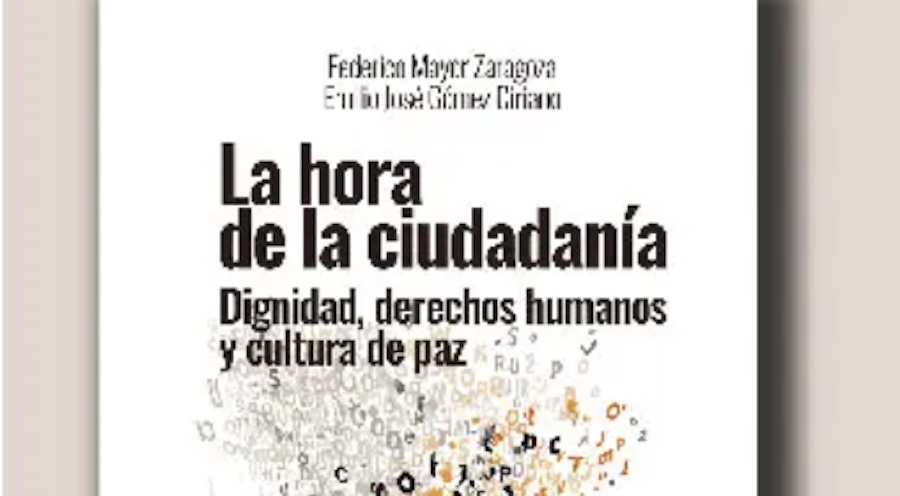
The Hour of Citizenship: Dignity, Human Rights, and a Culture of Peace
Federico Mayor Zaragoza and Emilio José Gómez Ciriano
HOAC Editions (2026)
84 pages

The recent statement by Pope Leo XIV, addressed to the Diplomatic Corps accredited to the Holy See, that “war is back in fashion and the enthusiasm for war is spreading,” confirms the growing global trend of recent years. In this context, the new publication from HOAC Editions of the Catholic Workers’ Brotherhood (Hermandad Obrera de Acción Católica) champions peace as the only alternative for building a future of hope for all humanity.


(Review continued in right column)

( Click here for the original version in Spanish.)

Question for this article:

What are the most important books about the culture of peace?

(Review continued from left column)

This book recapitulates, in his own words, the extensive pacifist legacy of Federico Mayor Zaragoza, professor and former president of UNESCO, among many other things. When Emilio José Gómez Ciriano, university professor and co-author of the book, invited him to participate, no one knew it would be Mayor Zaragoza’s posthumous work, as he passed away on December 19, 2024.

“This work emerges as an urgent manifesto and an ethical and prophetic compass. It is not only an analysis, but a call to civic action in the face of what its authors perceive as a dangerous global drift toward militarization and the abandonment of humanist foundations…”

Culture of Peace, Now More Than Ever

– – – – – –

If you wish to make a comment on this article, you may write to coordinator@cpnn-world.org with the title “Comment on (name of article)” and we will put your comment on line. Because of the flood of spam, we have discontinued the direct application of comments.

Mexico: Ethics as a Path to a Culture of Peace at the University of Colima

… EDUCATION FOR PEACE …

An article from Comentario

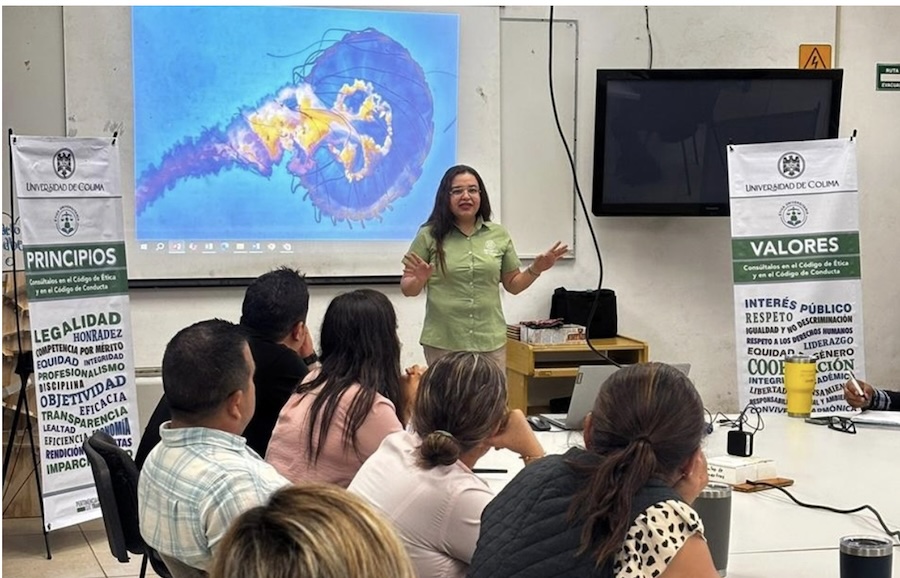
The Ethics and Conflict of Interest Prevention Committee of the University of Colima conducted a series of training sessions for staff from High School 1 and the Faculty of Accounting and Administration in Colima. These sessions focused on the practical application of principles, values, and rules of integrity in university workplaces.

(Continued in right column)

(Click here for the Spanish original of this article)

Question for this article:

Where is peace education taking place?

Is there progress towards a culture of peace in Mexico?

(Continued from left column)

The activities were led by Rosa Elizabeth García Uribe, the institution’s Comptroller General, and Brenda Lizeth Aguilar García, Director of Administrative Obligations Research. They emphasized the importance of strengthening ethical conduct in daily work as the foundation for respectful and harmonious coexistence.

These actions were supported by the General Directorate for Integral Development, the area responsible for promoting the cross-cutting theme of a culture of peace at the University of Colima. This support helped consolidate a comprehensive vision focused on respect, dignified treatment, and the promotion of human rights within the university community.

During the sessions, participating staff demonstrated openness and dynamism, and recognized the importance of the institution creating training opportunities that strengthen an organizational culture based on integrity, ethics, and peace.
– – – – – –

If you wish to make a comment on this article, you may write to coordinator@cpnn-world.org with the title “Comment on (name of article)” and we will put your comment on line. Because of the flood of spam, we have discontinued the direct application of comments.

School Day of Non-violence and Peace

FREE FLOW OF INFORMATION

by CPNN

The School Day of Non-Violence and Peace is celebrated on January 30.

This year the day was celebrated in Spain, Mexico and Cuba.


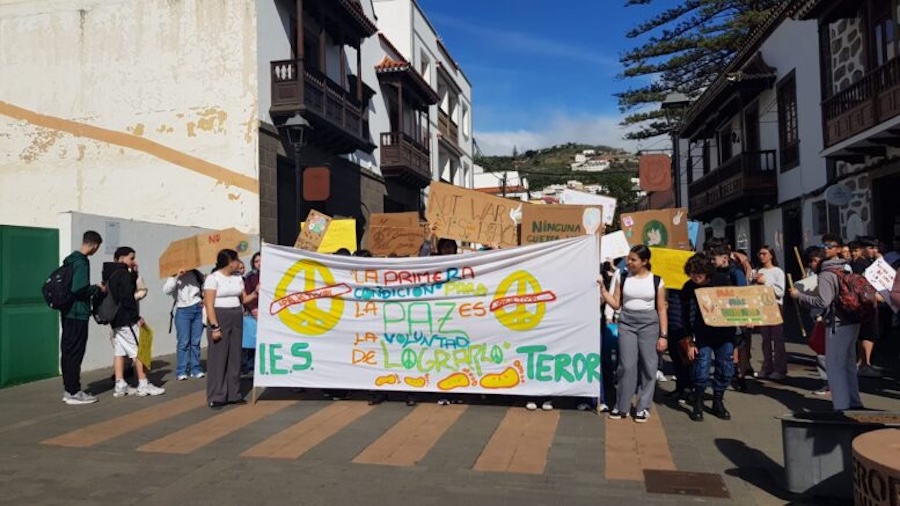
March by the students in Teror.

According to Wikipedia, this day was proposed by the Spanish poet Llorenç Vidal Vidal in Majorca in 1964 as a “starting point and support for a pacifying and non-violent education of a permanent character.”

Vidal chose the date of January 30 to commemorate the great prophet of non-violence and peace, Mahatma Gandhi, who was assassinated on this day in 1948.

It was popularized in France in the 1970’s by the Gandhian disciple Lanza del Vasto in his utopian  Communauté de l’Arche.

The day is recognized by UNICEF in Spain.

In Palma, on the Island of Mallorca in Spain, 3,500 primary and secondary school students took part in the School Day of Non-Violence and Peace event. The celebration included the reading of a peace manifesto by student representatives, followed by a concert by the musical group Pèl de Gall. Afterwards, doves were released, a universal symbol of peace and of the commitment to promoting coexistence and the peaceful resolution of conflicts.

In the Mediterráneo secondary schools in Spain,  representatives from each secondary school group read their manifestos on behalf of their classes, linking their pledges to the chain of commitments from the previous group. This gesture symbolized the unity of all students in a shared commitment to positive and respectful coexistence. The grand finale was a reading of the poem “White Souls” by the high school students.

In schools of Zaragoza, Spain, there were artistic creations and exhibitions, fundraisers and charity runs, speeches and poems, music, games, and gatherings in the playground between students of different grades… all promoting peace, non-violence, and kindness.

In the Huerto Escolar Ecológico school in the Canary Islands of Spain, students made presentations for peace and non-violence on their school radio station.

In the Tafira – Nelson Mandela secondary school of the Canary Islands, students listened to “Poetry Committed to Peace” played over the school’s public address system during the first few minutes of each class and the 7th-grade students prepared an “Images for Peace” exhibition.

In the Teror secondary school , also in the Canary Islands, the event began with a march by the students, carrying a banner with the slogan ‘The first condition for peace is the will to achieve it’, and chanting in unison, “Who are we? IES de Teror. What do we want? Peace.” In the Manifesto for Peace read by the students, they also emphasized this message: “Peace is not just the absence of war. Peace is respect, dialogue, equality, and justice.”

The secondary school of La Aldea de San Nicolás in the Canary Islands presented the official video clip of the song “Let us live in peace”.  This audiovisual project is the result of intensive collaborative work aimed at raising awareness among the school community and the general public about the importance of coexistence, mutual respect, and the peaceful resolution of conflicts.

In Salamanca, Spain, the event included the reading of a manifesto, accompanied by a musical performance by a teacher from the Divino Maestro school, followed by the formation of a large circle for peace. Afterwards, the Mayor of Salamanca received a delegation from the school in the Reception Hall.

Continued in right column)

(Click here for the article in Spanish)

Questions related to this article:
 
How can we be sure to get news about peace demonstrations?

(Continued from left column)

In Villacañas, Spain, a large globe, the work of local artist Manuel García Mochales,was installed in the Plaza de España. Throughout the day, the various participating schools added their artwork and messages to this piece, transforming it into a collective symbol of Villacañas’ commitment to peace. The celebration also included musical accompaniment and the performance of a song that was sung together by all attendees, highlighting the importance of education as a fundamental pillar for building a culture of peace.

In Barcelona, Children from Turó Blau School, Elisenda de Montcada School Institute, Bosc de Montjuïc Institute, Pedralbes Institute, and Caterina Albert Institute shared a series of learning experiences and reflections on “Invisible Violence”. The event was facilitated by the Escola de Cultura de Pau.

Ecologistas en Acción. based in Madrid, took part in the planting of olive trees on the occasion of the School Day of Non-Violence and Peace on January 30. This is part of the campaign entitled “There is no peace without justice.” of the Palestinian Tide platform, comprised of more than 60 educational organizations.

In Lleida, Catalonia, Spain, A total of 1,500 children participated in the commemoration of the School Day of Non-Violence and Peace. The boys and girls left messages of peace on maps installed in the squares of Pau Casals, Magnolias and Sant Jordi. The schools Sant Jordi, Minerva, Sant Josep de Calassanç, Països Catalans, Enric Farreny, Màrius Torres, Parc de l’Aigua, El Carme, Frederic Godàs, Esperança, Maria Rúbies, Joan Oró, Santa Anna, Sant Jaume Les Heures, Santa Maria de Gardeny and FEDAC participated.

In Cieza, Spain, the San José Obrero School in Cieza once again transformed its commemorative day for the School Day of Non-Violence and Peace into a pedagogical and artistic experience. This time, students and teachers climbed onto the deck of a ship to present the play “Pirates of the Sea of ​​Peace”. With the theme that “peace is not conquered, it is built,” students and teachers explored diverse cultures to understand how each people live in harmony, learning the values of each place and performaing a traditional dance from each region.. During the performance, they docked at various ports to receive lessons from each community they visited, including China, Hawaii, Africa, India and Mexico.

The Football Club of Seville, Spain celebrated the day by a series of actions with the Entre Amigos Association in the Polígono Sur neighborhood to combat school absenteeism and bullying.

In Santander, Spain, to celebrate the School Day of Non-Violence and Peace, the mayor placed a plaque to rename the park next to La Anunciación Scholl as “La Paz Park” and a group of children from the school sang a song for peace..

In Peñaranda, Spain,  the school community of La Encarnación celebrated Peace Day in the school auditorium. The students carried symbols related to this commemoration, and a manifesto in favor of peace and against violence was read..

In Vitoria-Gasteiz , in the Basque region of Spain,  a total of 1315 students from all the Church schools in the capital of Alavesa – shared a central event in the New Cathedral for the School Day of Non-violence and Peace. The program included testimonies from several students, music, a prayer, and a manifesto for peace.

In Léon, in the Northwest of Spain, the educational community of the Divina Pastora School commemorated the School Day of Non-Violence and Peace. Students from each grade level created a peace pledge.

In Zocalo Monclova, Mexico, an event was held at the Ignacio Zaragoza Secondary School with educational and municipal authorities. The municipal government reiterated its commitment to promoting initiatives that strengthen a culture of peace in schools.

In the Yucatan, Mexico, the State Center for Social Crime Prevention held a soccer tournament to commemorate the School Day of Non-Violence and Peace.

In Holguín, Cuba, the group Friends of Cuba, based in Victoria, Canada, held a solidarity meeting at the “Ronald Andalia Nieves” school, coinciding with the School Day of Non-Violence and Peace. Accompanied by representatives from the Party, the Government, and the Cuban Institute of Friendship with the Peoples, as well as neighbors and local students, the visitors participated in political and cultural activities and planted a tree as a symbol of brotherhood and commitment to a fairer world.

– – – – – –

If you wish to make a comment on this article, you may write to coordinator@cpnn-world.org with the title “Comment on (name of article)” and we will put your comment on line. Because of the flood of spam, we have discontinued the direct application of comments.

Mexico: USEBEQ Trains 5,000 Teachers to Foster a Culture of Peace

… EDUCATION FOR PEACE …

An article from Quadratin Querétaro

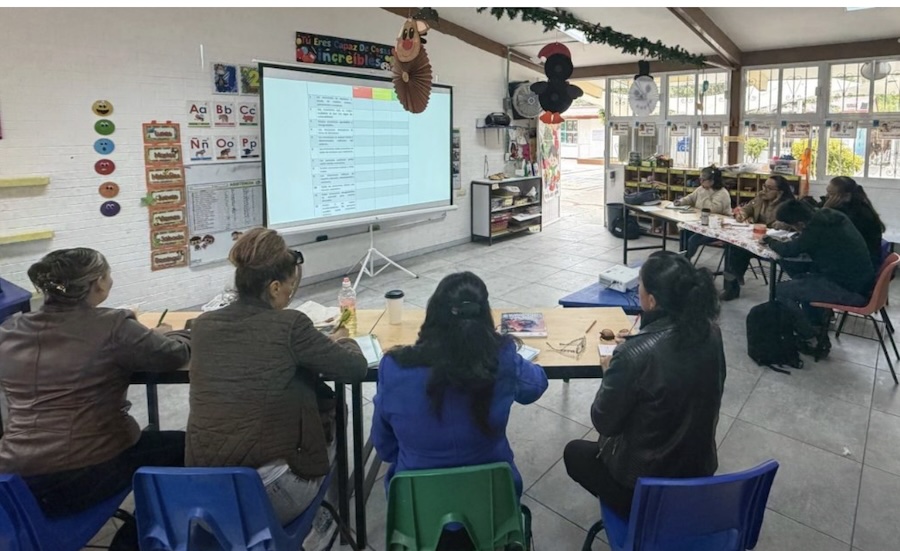
With the goal of creating environments of respect, dialogue, and collaboration, where school communities interact harmoniously, learning to resolve conflicts peacefully, in order to foster a culture of peace, the Basic Education Services Unit in the State of Querétaro (USEBEQ) trained 5,114 teachers from the early childhood, preschool, primary, and secondary levels in the state.

(Continued in right column)

(Click here for the Spanish original of this article)

Question for this article:

Where is peace education taking place?

Is there progress towards a culture of peace in Mexico?

(Continued from left column)

According to Irene Quintanar Mejía, General Coordinator of USEBEQ (Basic Education Services Unit of the State of Querétaro), this strategy aims to prevent risky situations and safeguard the well-being and safety of students, teachers, and administrative support staff. She stated that it is therefore necessary to work continuously to strengthen the mechanisms for addressing and detecting these situations, thereby creating spaces of peace and healthy coexistence in school environments.

Regarding the culture of peace, USEBEQ offers various training sessions and workshops on self-care, the value of healthy coexistence, the responsible use and management of social media and digital citizenship, and the recognition and management of emotions. In the last year, these programs have reached 26,374 children and adolescents, 11,595 parents or guardians, and 5,450 teachers.

– – – – – –

If you wish to make a comment on this article, you may write to coordinator@cpnn-world.org with the title “Comment on (name of article)” and we will put your comment on line. Because of the flood of spam, we have discontinued the direct application of comments.

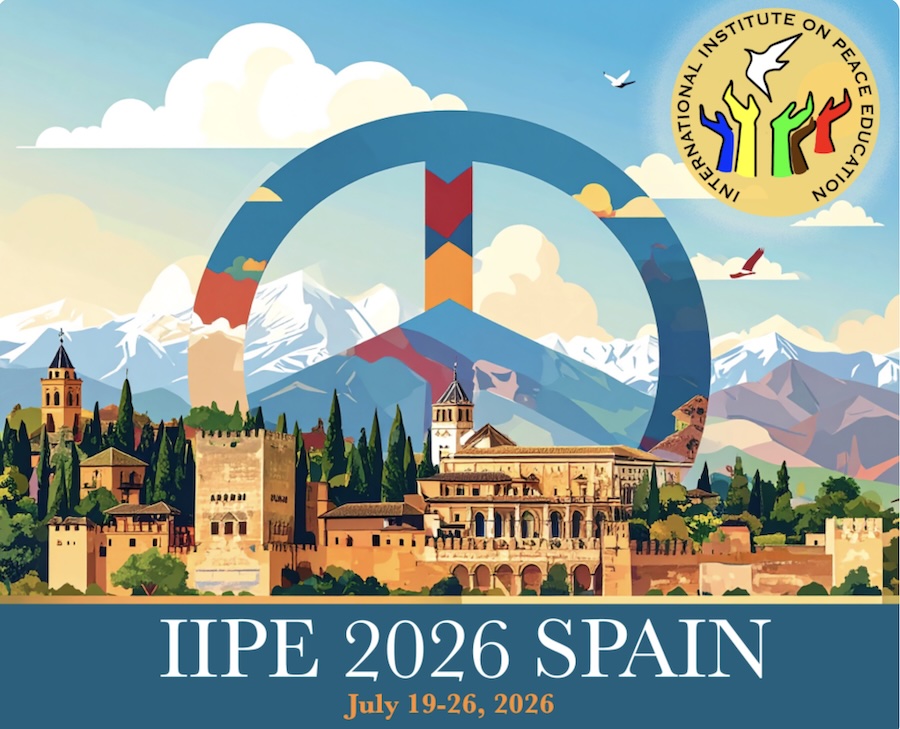
International Institute for Peace Education 2026 Spain

… EDUCATION FOR PEACE …

An announcement from the International Institute for Peace Education

We invite all formal and non-formal peace educators, academics, activists, NGO actors, and education-focused peacebuilders to apply to join the 2026 International Institute on Peace Education from July 19-26 in Granada, Spain.

IIPE 2026 Spain will convene 60 educators from around the world for a week-long, residential, learning community experience in peace education. A rich exchange of peacebuilding research, academic theory, best practices, and actions will be shared through IIPE’s evolving dialogical, cooperative, and intersubjective modes of reflective inquiry and experiential learning.

IIPE 2026 Spain is organized by the IIPE Secretariat in partnership with a network of former IIPE participants in Spain in partnership with national, regional, and local NGOs and universities. The Institute will take place at the Colegio Mayor Jesús María of the University of Granada.

Granada: A Tapestry for Peacelearning

Granada, Spain, is a global crossroads, a historic melting pot of civilizations. Located in the Spanish region of Andalucía (part of ancient Al-Andalus), it has been the center of coexistence for multiple cultures. At various periods, the rich cultures of Europe, Africa, and the Americas have coexisted in dialogue with each other, forming a dynamic intellectual and artistic flowering that can still be seen today in the extraordinary architecture and gardens. Spain, in turn, is a European country marked by interconnectedness as its hallmark. Due to its history over the years, it has been a dynamic social and political actor in relation to the problems of the Mediterranean region, Europe, and Latin America. Today, it is an essential and fertile space where perspectives converge to understand the negotiations, dilemmas, and challenges of global peace. 

IIPE 2026 Spain at the University of Granada aims to draw out the parallel challenges of deep ecological thinking and intercultural relations. We aim to channel the spirit of Granada as a historical center of tolerance, dialogue, and intercultural symbiosis. Andalucia’s Medieval intellectual, artistic, and architectural achievements reflect a “vision of a culture of tolerance [which] recognized that incongruity in shaping individuals as well as their cultures was enriching and productive” (Menocal, 2002, p. 11).

(Continued in right column)

(Click here for a version in Spanish)

Question for this article:

Where is peace education taking place?

(Continued from left column)

Today, we recognize our interdependence and the interrelatedness of perversely complex challenges: climate crises; militarization, arms proliferation, and the use of lethal violence; and structural violence, such as discrimination, exclusion, colonialization, and domination in all its forms. These dangers are evident today in unbearable conditions of displacement and migration, climate catastrophes, and endless wars. All of these beg for vision, dialogue, and pedagogy that reaches across borders.

Pedagogy, research, and evaluation in peace education have undergone remarkable development over the past 25 years. IIPE 2026 Spain will constitute a learning community, a mini-ecosystem, in which the implications for peacelearning will be considered. Together, we hope to deepen our understanding and connect with each other through these initial questions: How has this professionalization changed peace education? Can the intersubjectivity and warmth of learning together continue with greater instrumentalization? Can we engage rational thinking and interrelate it with sentipensar, feeling-thinking that validates emotions and sentience? How does the concept of Gaia shift the ecological relational paradigm for peace? How can educational policies preserve indigenous learning and incorporate popular culture as the field advances?

In addition, the question of human relations with the more-than-human world will be raised. How might human relations evolve again so that we can reclaim the understanding that our survival depends on the health of the Earth, air, water, soil, and other living systems? New questions, new options, and new perspectives will be encouraged.

Reference: Menocal, M.R. (2002). The ornament of the world: How Muslims, Jews, and Christians created a culture of tolerance in Medieval Spain. Little, Brown.

How to Apply

Applications are invited from peace educators who are teachers and/or academics, as well as activists, NGO actors, and others involved in civil society and governance. Our goal is to bring diversity and plurality of experience to shed light on these pressing peace issues.

APPLY NOW

About the IIPE

The International Institute on Peace Education is a weeklong residential experience for educators and scholars hosted in a different country every other summer. The Institute facilitates exchanges of theory and practical experiences in teaching peace education and serves to grow the field. In serving the field, the IIPE operates as an applied peace education laboratory that provides a space for pedagogical experimentation; cooperative, deep inquiry into shared issues; and advancing theoretical, practical, and pedagogical applications. Since its inauguration at Teachers College, Columbia University in 1982, the IIPE has been hosted in 18 different countries, bringing together thousands of experienced and aspiring educators, academics, professional workers, and activists in the field of peace education from around the world to exchange knowledge and experiences and learn with and from each other in its intensive residentially based learning community.  The objectives of each particular institute are rooted in the needs and transformational concerns of the co-sponsoring host partner(s), their local community, and the surrounding region. (Click here for more information.)

– – – – – –

If you wish to make a comment on this article, you may write to coordinator@cpnn-world.org with the title “Comment on (name of article)” and we will put your comment on line. Because of the flood of spam, we have discontinued the direct application of comments.

Nonviolence International is growing!

EDUCATION FOR PEACE .

An email received from Sami Awad, Co-Director of Nonviolence International

Last year I joined NVI as Co-Director, stepping in the productive shoes of David Hart, and this year we have added staff members Zoya Craig as Director of Operations and Finance and Bianca Peracchi, as Coordinator of Programs and Communications. NVI previously never had more than 3 core staff people.

In the past, much of our work focused on fiscally sponsoring courageous grassroots organizations around the world. Many of these courageous groups, such as the Freedom Flotilla, are too politically frightened to be sponsored by others. That work continues and remains essential. 

But this year, we stepped into a new chapter: NVI is shifting back to become a global hub for nonviolence training, leadership development, understanding collective trauma, and strategic support for movements resisting violence, oppression and injustice.

As much as the Palestinian cause envelopes my life, I, like my uncle Mubarak, who founded Nonviolence International, want nonviolence and our powerful tools to be globalized.

(Article continued in right column)

Question related to this article:

Can peace be guaranteed through nonviolent means?

(Article continued from left column)

If you care about nonviolent resistance in Palestine, we hope you will join us to support nonviolent resistance in other places such as Syria, Sahrawis, Kashmiris, West Papuans, Rohingyas and many other locations. We recently re-energized the Western Sahara Solidarity Committee and had two of our staff members deported by Moroccan occupation agents.

This shift means more impact and it also means we need your support more than ever.


Will you help us reach 100 monthly donors so we are able to do more?

This is the future of Nonviolence International: to be and grow as the backbone and a training center, a leadership incubator, a global movement connector, and a support system for communities resisting climate chaos, militarism, racism, gender violence, and economic inequality, with courage and vision.

By the way, I hope to see you in 2026. I am planning to travel widely to promote the work of NVI and also my new book, Sacred Awakening. If you are interested in having me speak or train in your area let me know soon.

Thank you for believing in this work. 
Thank you for believing in what is possible.

In peace,

Sami Awad

Co-Director

Nonviolence International

P.S. We have a few slots open in our Nonlinear Leadership Training that I am leading beginning January 10th. We have participants from all over the world.

Nonviolence International
https://www.nonviolenceinternational.net/
– – – – – –

If you wish to make a comment on this article, you may write to coordinator@cpnn-world.org with the title “Comment on (name of article)” and we will put your comment on line. Because of the flood of spam, we have discontinued the direct application of comments.

Mexico: Equality and Inclusion Secretariat and Viral Network Launch Call for Participation in the “Hip Hop for Peace” Project

EDUCATION FOR PEACE .

An article from the Government of the State of Nuevo León

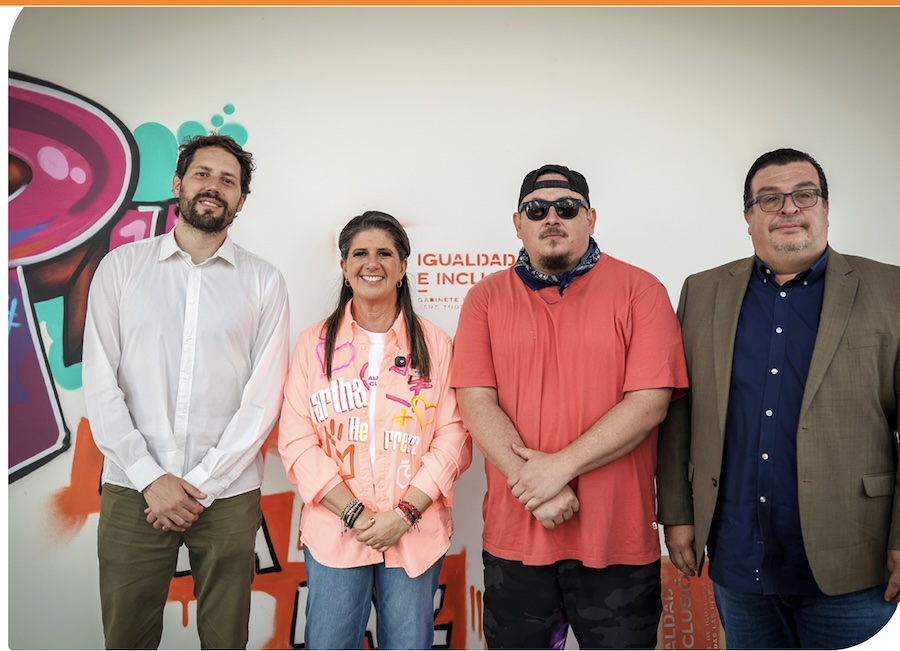
To promote support for urban culture, community participation, and violence prevention, the Secretariat of Equality and Inclusion, the Secretariat of Public Security, the Viral Network organization, and the Bendito Estilo collective have invited young people and urban artists from across the country to participate in the national project “Hip Hop for Peace.”

At a press conference held at the Independencia Community Center, Martha Herrera, Secretary of Equality and Inclusion, Pablo Almuli Cassigoli, Project Coordinator for Red Viral, and Jesús Héctor Grijalva, State Advisor on Penitentiary Policy, presented the project that seeks to empower young people and make them protagonists of social change.

The head of the Secretariat of Equality and Inclusion emphasized that the event aims to cultivate peace through artistic expression.

“This is the first time since the Government of Nuevo León has embraced urban culture, that we have managed to use Hip Hop as a public policy tool, as a reintegration strategy, and as an engine for building peace,” explained Martha Herrera.

She added that the voice of young people through music transforms communities from exclusion to integration. The call for applications is primarily aimed at young people throughout Mexico in contexts of exclusion or risk, young people in prisons and community centers in Nuevo León, neighborhood collectives, established artists, teachers, cultural promoters, and anyone who believes in the power of art as a response to violence.

The program seeks to combat the stigma surrounding Hip Hop and channel emotions that rarely find other legitimate spaces for expression, through the creation of original songs with a message of peace.

(Click here for the original article in Spanish.)

(Article continued in the right column)

Question for this article:

What place does music have in the peace movement?

Is there progress towards a culture of peace in Mexico?

(Article continued from the left column)

The goal is to assemble a diverse team in each state that combines different disciplines of hip hop: rap, music production, audiovisual production, and graffiti.

During the press conference, the local artists of the Hip Hop for Peace collective were presented: El Jaiper, Chilo Carranza, Nexxo Emme, Tinta Prieta Damisela, Marily Mach, Giga Timba, and Danriv. Representing Community Centers will be the group “BETA HOUSE,” comprised of Ricardo Gerardo Argaiz Garcia “RK,” Roberto Carlos Cruz Martínez “Tyago Cruz,” and Luis Alfredo Moreno Maldonado “Ploki Moreno,” as well as solo artists Marvin Alexis García Cida “Zoket,” José Luis Martínez Bermea “Relyan Bermea,” Raúl Darío Villanueva González “Radio 24 Siete,” and Iván Yahir Castillo Ibarra “Enece.”

The Hip-Hop for Peace project is a joint effort led by Red VIRAL and the Bendito Estilo collective, in partnership with the United Nations (UN), the National Commission for Mental Health and Addictions (CONASAMA), Youth Integration Centers (CIJ), the Secretariat of Security and Citizen Protection through the Decentralized Administrative Body for Prevention and Social Rehabilitation, and the Mexican Institute of Industrial Property.

Additionally, at the local level, state human rights commissions, security secretariats through state prison systems, cultural secretariats, youth institutes, as well as civil associations and representatives of the private sector have joined the initiative.

Young people, urban artists, collectives, and anyone interested in the call for submissions can send their original song, which should include a message of peace and be up to 5 minutes long.

Participants must send their name, state, age, discipline, and a sample of their work before October 20th to hiphopporlapaz@gmail.com.

– – – – – –

If you wish to make a comment on this article, you may write to coordinator@cpnn-world.org with the title “Comment on (name of article)” and we will put your comment on line. Because of the flood of spam, we have discontinued the direct application of comments.

Mexico: UATx Seeks to Consolidate a Culture of Peace Within Its Community

… EDUCATION FOR PEACE …

An article from ABC Noticias de Tlaxcala

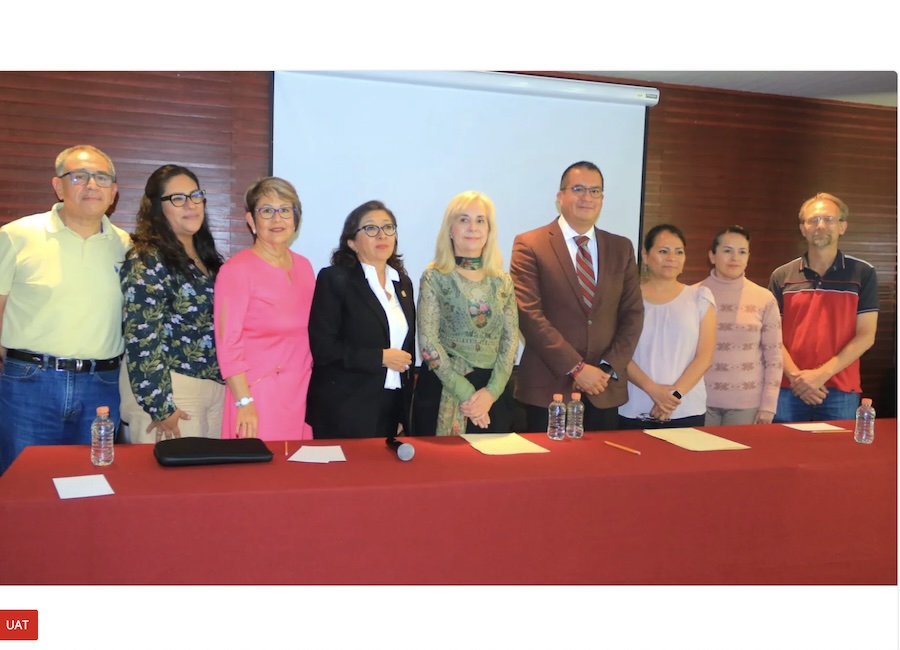
In Mexico, mediation and restorative justice must become a reality through academic programs in higher education institutions, stated Dr. Patricia Lucila González Rodríguez during the conference Mediation and Restorative Justice from the perspective of gender at the Universidad Autónoma de Tlaxcala (UATx). The conference is being held at the initiative of the Secretariat of Scientific and Graduate Research and the research centers of this institution.

The UATx seeks to promote reflection, training, and research activities that contribute to reducing structural violence and consolidating an authentic culture of peace for the benefit of society.
(Article continued in right column)

(click here for the original version in Spanish).

Questions for this article:

Is there progress towards a culture of peace in Mexico?

(Article continued from left column)

In her presentation, the specialist explained that cultural change involves the gradual development of new working methods aimed at integrating the culture of peace, including alternative dispute resolution mechanisms.

In welcoming the speaker and the audience gathered in the “Exchange and Mobility Auditorium,” Dr. Margarita Martínez Gómez, Secretary of Scientific Research and Graduate Studies, stated that universities are key spaces that contribute to processes of social transformation by raising awareness and sensitizing the importance of a culture of peace.

In this regard, she emphasized that the Autonomous University of Tlaxcala involves all stakeholders to build a society free of violence, where all members of this community develop skills and tools that allow for the creation of democratic, supportive, and empathetic environments.

The conference was moderated by Dr. Omar Vázquez Sánchez, Coordinator of the Center for Legal-Political Research (CIJUREP). Dr. González Rodríguez is a researcher at the Institute of Legal Research of the National Autonomous University of Mexico, coordinator of the research line “The Accusatory Criminal System in Mexico,” and an expert on crime, violence, human rights, gender, and the accusatory criminal process.

– – – – – –

If you wish to make a comment on this article, you may write to coordinator@cpnn-world.org with the title “Comment on (name of article)” and we will put your comment on line. Because of the flood of spam, we have discontinued the direct application of comments.

Mexico: Civil Society in Juárez Promotes Law on a Culture of Peace and Reconciliation in the Country

… EDUCATION FOR PEACE …

An article by Jonathan Álvarez in Yo Ciudadano (translation by CPNN)

Organized civil society in Ciudad Juárez is promoting the national consolidation of the General Law on a Culture of Peace and Reconciliation, which will be presented to the Senate of the Republic in the next legislative session in September.

This Wednesday (July 9), a series of dialogues and working groups began at the State Commission on Human Rights (CEDH), with the participation of nearly 25 civil society organizations that contributed their proposals to enrich the law’s content.

The working groups included the topics of disability, gender violence, childhood, youth, and security and justice.

The initiative for the law was promoted by organized civil society in Ciudad Juárez and aims to “inject a culture of peace into the country,” said one of its main promoters, Silvia Aguirre Lomelí, director of the Family Center for Integration and Growth (CFIC).

“With this law, we will educate from preschool to postdoctoral levels in peace strategies such as mediation, restorative justice, rebuilding the social fabric, and emotional literacy,” she explained.

(Article continued in right column)

(click here for the original version in Spanish).

Questions for this article:

Is there progress towards a culture of peace in Mexico?

(Article continued from left column)

Aguirre Lomelí recalled that the idea and need for the creation of the General Law for a Culture of Peace and Reconciliation initiative arose from the effects of one of the most violent periods in Juárez, 2008-2009.

She added that, since the formation of the CFIC association 15 years ago, the need to promote this law was identified after meeting people affected by violence and the pain it generates.

After knocking on several doors with federal public servants, this year the bill was revived by Senator Juan Carlos Loera de la Rosa (Morena), who organized discussions to strengthen the bill.

“This law aims to reach the deepest reaches of society and institutions to foster, from the roots, the establishment of a culture of peace and reconciliation in our country in schools and other institutions,” he stated in an interview.

Loera de la Rosa said the law would be introduced in the next legislative session, which runs from September to December of this year.

For her part, Sandra Ramírez, director of the civil association Colectiva Arte, Comunidad y Equidad, believed the new law should articulate other laws that have justice as a cross-cutting theme.

“Justice must come first to put victims at the center, and with this comes a state of peace (…) it must reflect a state of peace, but not understood as the absence of conflict, but rather as the administration of justice,” she emphasized. She added that the expectation is that the dialogue and promotion of this law will bring the issue of peace and justice back into the public eye.

On the other hand, Leslie Molina, director of the Somos Autistas Juárez association, which serves children with neurodivergences, considered it essential that the law consider the eradication of all forms of discrimination as an important attribute for peace.

– – – – – –

If you wish to make a comment on this article, you may write to coordinator@cpnn-world.org with the title “Comment on (name of article)” and we will put your comment on line. Because of the flood of spam, we have discontinued the direct application of comments.

Mexico: UNAM cannot remain neutral in the face of escalating violence and the resurgence of authoritarian views: Rector Lomelí Vanegas

… EDUCATION FOR PEACE …

An article from UNAM: National Autonomous University of Mexico

In presenting the “Culture of Peace: A University Seedbed” strategy, UNAM Rector Leonardo Lomelí Vanegas affirmed that this institution cannot remain neutral in the face of the growing escalation of violence, the resurgence of authoritarian views, religious extremism, nationalism, and xenophobia.

“Our mission is to foster critical thinking, generate alternatives, and sow hope. Peace must emerge both in the classroom and in families and communities, fostered in all daily practices and manifested in words that engage in dialogue rather than confrontation,” he asserted after signing the Agreement creating the University Program for a Culture of Peace and the Eradication of Violence.
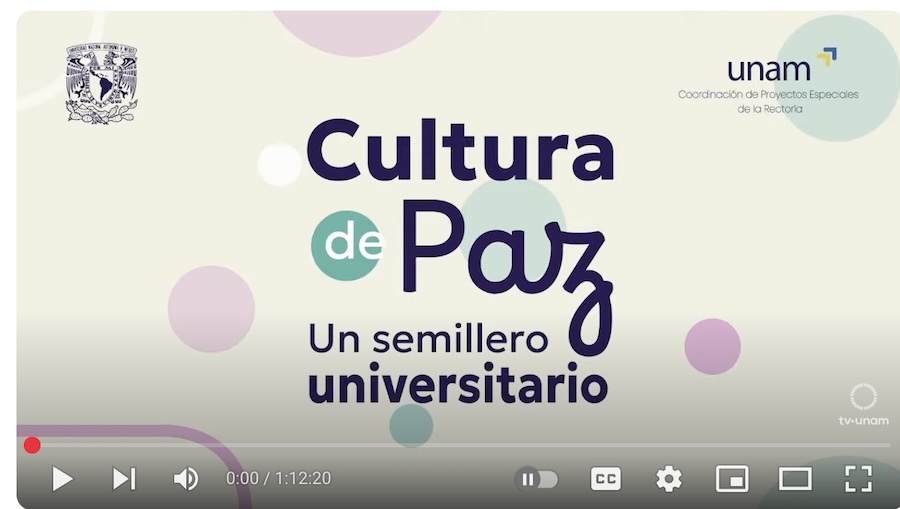

Video of the conference

Accompanied by the Secretary of Public Education of the Government of Mexico, Mario Delgado Carrillo, and the 1992 Nobel Peace Prize winner, Rigoberta Menchú Tum, Lomelí Vanegas stated that today the University is taking a firm step with this strategy that aims to fundamentally change the frameworks of interaction and the processes through which we make decisions and promote a culture of peace, understood as justice, inclusion, mutual respect, sustainability, and cooperation.

“Violence is a culturally learned behavior, and as such, it can be eradicated. Peace is not its passive opposite, but part of the same process: it is chosen and practiced with awareness and commitment.” It also demands far-reaching cultural changes, political will, and the active involvement of public and private institutions and civil society,” he stated.

The rector explained that the University Program is structured around strategic axes such as training and teaching, applied research, university advocacy, strengthening protocols and encouraging community mediation in situations of violence; the promotion of peace through words, art, and cooperation; and the creation of networks with national and international actors working to build lasting peace.

The actions will be concrete, measurable, and have a direct impact: courses for new students, a specific assessment by campus, and a cross-cutting subject on Culture of Peace and Mediation starting next year, he added in the Auditorium on the ground floor of the Rector’s Building.

He also emphasized that peace in the future depends on what we are capable of imagining, building, and defending collectively today. UNAM has the strength, the capabilities, and the duty to become a hotbed of peace within and outside our borders. “Let us make it a space where justice, equality, solidarity, and plurality flourish even more. May this university initiative inspire us to make peace a concrete experience: not an unattainable horizon, but a way of educating through care and inhabiting, together, a dignified present.”

The rector expressed his concern about the situation prevailing in cities across the United States, particularly in Los Angeles, California, where migrant detentions have sparked protests. He indicated that it is very important that the actions taken by nations to regulate migratory flows be respectful of human rights and adhere to the international legal framework and that of each country.

He emphasized UNAM’s solidarity with migrants who are going through difficult times, condemned violence, regardless of its source, and indicated that the National University joins the President of the Republic’s call for peace and against any provocation.

(Continued in right column)

(Click here for the original version in Spanish.)

Question for this article:

Where is peace education taking place?

(Continued from left column)

Promoting values


​​In his speech, Mario Delgado celebrated the National University’s promotion of a culture of peace, which will necessarily be present in education. The new Mexican school project promotes respect for life, human dignity, equality, non-violence, the promotion of dialogue, and the pursuit of peaceful agreements in the classroom, the school environment, and the community.

In addition, it disseminates values ​​such as tolerance, respect for others, gender equality, non-discrimination, respect for diversity, the environment, and women.

In a video message, the Secretary of the Interior, Rosa Icela Rodríguez Velázquez, congratulated UNAM for the program, which will provide its community with the values ​​necessary to foster a culture of peace and proper conflict mediation.

“If we all contribute our grain of sand to the transformation of our beloved nation, we will achieve a better Mexico for our children, youth, and our next generations. Mexico is not condemned to war, but to peace,” she stated.

Likewise, the Secretary of Foreign Affairs, Juan Ramón de la Fuente, also in a video message, considered UNAM’s great success in promoting the program at this time, given that we are experiencing a critical global situation with 120 armed conflicts affecting more than 300 million people.

The global challenge, he noted, is enormous, and women’s participation in building and maintaining peace is fundamental, as there is compelling evidence that women are more effective at building and maintaining peace over time.

Nobel Prize winner Rigoberta Menchú Tum commented that education is the only alternative for building and guaranteeing a culture of peace. Therefore, she praised UNAM’s strategy to promote this culture, which includes the scientific community and the talent of our youth, so that they can grow in a plural, diverse world that is also challenging for human dignity.

“In UNAM’s history, education is fundamental to contributing to a humanity that yearns for peace as a common good, and above all, that emphasizes the need to create a leadership perspective capable of facilitating dialogue, mediation, and support,” she emphasized.

The director of the Norwegian Center for Conflict Resolution, Dag Nylander, emphasized his pride in participating in the National University’s initiative, which will serve to strengthen ties between his country and Mexico in the areas of peaceful conflict and dispute resolution and the facilitation of peace agreements.

He referred to the relevance of the strategy at a time when the world is experiencing one of the most conflict-ridden periods since the Cold War, and when it is necessary to strengthen the United Nations system and reinforce multilateralism. “We are fully committed to supporting initiatives that increase the chances of success of conflict resolution efforts and believe that interregional collaboration is key.”

UNAM’s Special Projects Coordinator, Néstor Martínez Cristo, presented the project: “Culture of Peace, a University Seedbed” which seeks to institutionalize the culture of peace and turn it into a cross-cutting axis in the university’s development policies.

It aspires to sow the seeds of a culture of peace among younger university students. The challenge is to build critical and empathetic citizenship. It also seeks to redefine the enormous work carried out daily at UNAM to prevent and address various forms of violence.

Also present at the presentation were the current president of the UNAM Governing Board, Elena Centeno García; the president of the Board of Trustees, Mario Luis Fuentes Alcalá; the former rectors of UNAM, José Sarukhán Kermez, José Narro Robles, and Enrique Graue Wiechers; as well as the head of the Office of the Secretary of Foreign Affairs, Roberto de León Huerta; and the UNESCO representative in Mexico, Andrés Morales. among other personalities from civil society organizations, universities and institutions working to promote a culture of peace.

– – – – – –

If you wish to make a comment on this article, you may write to coordinator@cpnn-world.org with the title “Comment on (name of article)” and we will put your comment on line. Because of the flood of spam, we have discontinued the direct application of comments.