Category Archives: EDUCATION FOR PEACE

The World Forum for the Culture of Peace in the Hague

… EDUCATION FOR PEACE …

An article from the International Peace Institute

The definition of peace has shifted in the United Nations community from the absence of conflict to a more active, “positive peace.” Looking at peace from this perspective requires a shift in focus from identifying and combating the causes of wars to understanding the factors that foster peace and inclusivity. To view a holistic perspective of peace, it is necessary to explore the connections among culture, peace, security, and development.


The “culture of peace” recognizes the link between peace, development, and human rights. Defined in 1999, the term seeks to tackle the root causes of conflicts emphasizing the importance of dialogue, negotiation, and cooperation among individuals, groups, and nations.

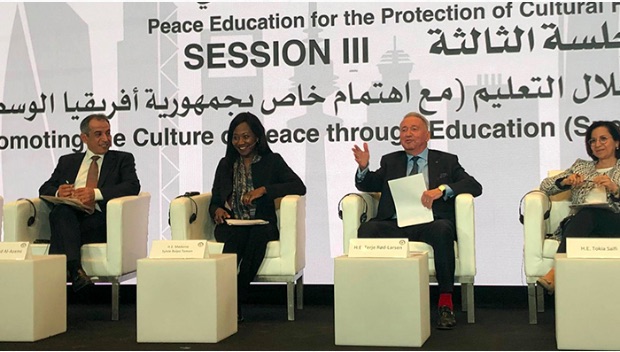
On June 13, 2019, the first annual World Forum for the Culture of Peace took place in The Hague on “Peace Education for the Protection of Cultural Heritage.” It was organized by the Abdulaziz Saud Albabtain Cultural Foundation with support from IPI, the International Committee of the Red Cross, the University of Leiden, and the Carnegie Foundation.

High-level representatives from around the world discussed the importance of peace education for the protection of cultural heritage with a particular focus on Iraq, Yemen, and the Central African Republic. The day-long forum ended with “Messages for Peace” from global leaders including:

María Fernanda Espinosa Garcés, President of the 73rd Session of the UN General Assembly (Video Message)
Marzouq Al-Ghanim, President of the Kuwaiti National Assembly
Abdulaziz Saud Albabtain, Chairman, Abdulaziz Saud Albabtain Cultural Foundation
Faustin-Archange Touadera, President of the Central African Republic
Marie-Louise Coleiro Preca, President Emeritus of Malta
Abdullah Gül, Former President of Turkey
Hassan Arfaoui, Representative of the President of Tunisia
Laurence Konmla, Special Envoy of the President of Liberia
Ammar al-Hakim, President of the Reform and Reconstruction Alliance of Iraq

(Article continued in right column)

Questions for this article:

What is the relation between peace and education?

(Article continued from left column)

In Session III of the forum, IPI President Terje Rød-Larsen moderated a panel on Promoting the Culture of Peace through Education.

Other Attendees Included:

Joke Brandt, Representative of the Dutch Government and the Secretary-General of the Ministry of Foreign Affairs
Erik de Baedts, President, Peace Palace / Carnegie Foundation
Prince Turki Alfaisal Alsaud
George Vella, President of Malta
Haris Silajdžiž, Former President of Bosnia and Herzegovina
Yousef bin Ahmad Al-Othaimeen, Secretary-General, Organization of Islamic Cooperation
Taieb Baccouche, Secretary-General of the Arab Maghreb Union and Former Minister of Foreign Affairs of Tunisia
Khaled al-Yamani, Minister of Foreign Affairs of Yemen
Peter Maurer, President, International Committee of the Red Cross
Hilal Al Sayer, President of the Red Crescent Society, Kuwait
Leoluca Orlando, Mayor of Palermo
Shaikh Mohammed Sabah Al-Salem Al-Sabah, Former Deputy Prime Minister and Minister of Foreign Affairs, Kuwait
Ali Al-Shukri, Representative of President of Iraq
Shaikha Mai bint Mohammed Al-Khalifa, President, Bahrain Authority for Culture and Antiquities, Kingdom of Bahrain
Abdullah Lamlas, Minister of Higher Education and Scientific Research, Government of Kurdistan Region, Iraq
Yusuf Goran, Minister of Higher Education and Scientific Research, Government of Kurdistan Region, Iraq
Michael Frendo, Speaker Emeritus of the Parliament of Malta and former Minister of Foreign Affairs
Hamed Al-Azemi, Minister of Education of the State of Kuwait
Madame Sylvie Baipo Temon, Minister of Foreign Affairs, Central Republic of Africa
Tokia Saïfi, Member of the European Parliament
Moukadas Noure, Minister of Education of the Central African Republic
Mounir Bouchenaki, Advisor to UNESCO for Cultural Heritage
Abdulqawi Ahmed Yusuf, President of the International Court of Justice
Carl Stolker, President of the University of Leiden

Africa: DUT’s ICON Introduces Peacebuilding Studies to International Students In DRC

… EDUCATION FOR PEACE …

An article by Nduduzo Ndlovu from the Durban University of Technology

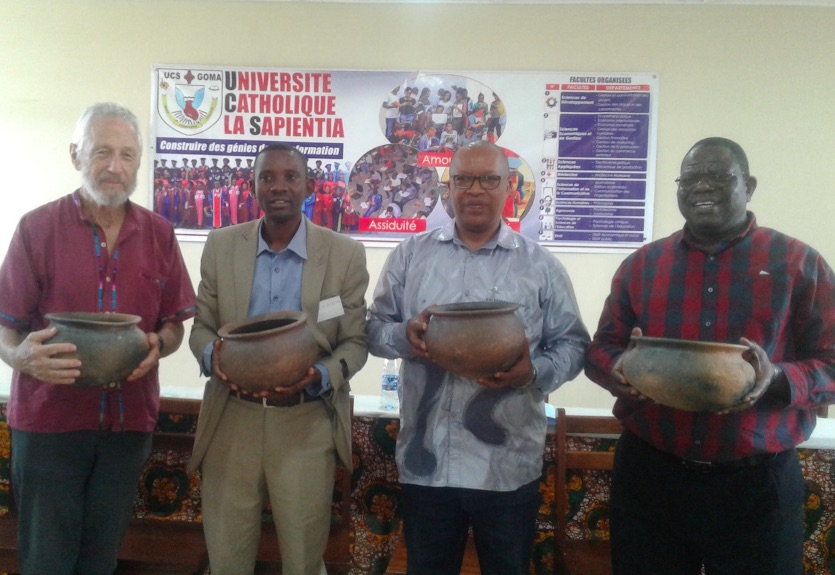
The International Centre of Nonviolence (ICON) based at the Durban University of Technology (DUT) hosted a five-day workshop at the La Sapientia Université Catholique, Goma, Democratic Republic of Congo from 10 to 14 June 2019


Pictured: Prof Geoff Harris, Dr Joseph Rudige, Fr Innocent (Rector of La Sapientia Université Catholique) and Dr Chrys Kiyala.

The main aim of the workshop was for each of the six participating universities to develop a draft strategic plan to introduce postgraduate studies in peacebuilding. Subsidiary aims included promoting the use of participatory action research and building relationships between universities in the Great Lakes region.

“The six universities have begun working on strategic plans to establish Peacebuilding within the next couple of years; they have established a coordinating committee and are exploring ways of collaborating with each other; and three members of their academic staff will commence PhDs in Peacebuilding at DUT next year,” said ICON’s Professor Geoff Harris.

(Articles continued in right column)

Questions for this article:

What is the relation between peace and education?

Where is peace education taking place?

(continued from left column)

The workshop was led by Professor Geoff Harris and Dr Chrys Kiyala from ICON, assisted by Dr Joseph Rukema from Sub – Saharan Africa University, Goma. There were 22 participants,18 from five Congolese universities, two from a University in Burundi and two student observers from the Sub-Saharan University of Africa. One participant – Theodore Mbazumutima is a recent PhD graduate in Peacebuilding from DUT and another participant – Josephine Mauwa Kimanu is a current PhD student with DUT.

Prof Harris elaborated on some of the aspects of the workshop. “We used a participatory and experiential learning approach. Some lectures were necessary but the best learning,we feel, took place in small groups as participants wrestled with the issues and came up with promising insights. We did not prescribe how peacebuilding programmes should be organised. This can happen in a number of ways and we were aware that many factors will influence the choices which any University will make,” he said.

“We encouraged the use of participatory action research, an approach with which ICON has particular expertise, and helped participants to develop draft plans of how they might set up their own peace programme and the shape these might take,” he added.

Prof Harris also expressed appreciation at the commitment from Rector of La Sapientia Université Catholique that his University will coordinate future cooperation between the five universities with DUT. “It is very likely that three of the participants will commence PhD studies with ICON in 2020. Overall, we are confident that the workshop will act as a springboard for efforts to develop a culture of peace in the region,” said Prof Harris.

The workshop was funded by a grant from the NRF’s KIC Africa Interaction programme and enjoyed generous hospitality from La Sapientia Université Catholique.

Argentina: The T20 Summit and the 14th World Congress of Mediation and a Culture of Peace: Integrating approaches

… EDUCATION FOR PEACE …

An announcement from T20 Argentina

The aim of this meeting is to cross the converging work agendas of the T20 and the Congress of Mediation and a Culture of Peace. It looks to open an enabling framework to prepare possible bilateral and/or multilateral meetings with international speakers that will be in Argentina from September 17. The T20 Summit and the 14th World Congress of Mediation and a Culture of Peace will take place in Buenos Aires during the same week. The strongest point of convergence between the T20 and the World Congress is the agenda of global governance, social cohesion and the legal basis we should pay attention to to understand the challenges of the international arena.

(Article continued in right column)

(click here for a version in Spanish).

Question for this article:

Mediation as a tool for nonviolence and culture of peace

(Article continued from left column)

What is the 14th World Congress of Mediation and a Culture of Peace?

This is a meeting which brings together international professionals to exchange practices that help to address conflict and to construct a culture of sustainable peace in Latin America and the world. The Congress is a space to learn about the national and international progress of alternative methods to resolving conflicts (MARC), focusing on the equal access to justice and the construction of societies that are more responsive, inclusive and equal.

Tentative agenda

16:00: Opening of the meeting and presentation from the T20 Argentina. This will be given by Gustavo Martinez (Executive Coordination Secretariat of CARI and the T20) and Pablo Ava (Director of Public Policy and Research of the T20).

16:10: Institutional presentation from CARI’s International Law Institute – Leopoldo Godio (CARI Consulting Member and member of the International Law Institute).

16:20: Institutional presentation from the 14th World Congress of Mediation and a Culture of Peace – Raquel Munt (National Director of Mediation and Participatory Methods of Conflict Resolution).

17:00: Conclusions on “Social cohesion and peace construction: integrating approaches” by Bautista Logioco (Official from the United Nations Peacebuilding Fund).
17:30: Questions, comments and the closing of the meeting

Location: CARI [Consejo Argentino para las Relaciones Internacionales]

Michoacán Mexico: Training for culture of peace and non-violence

… EDUCATION FOR PEACE …

An article from Urbis TV México

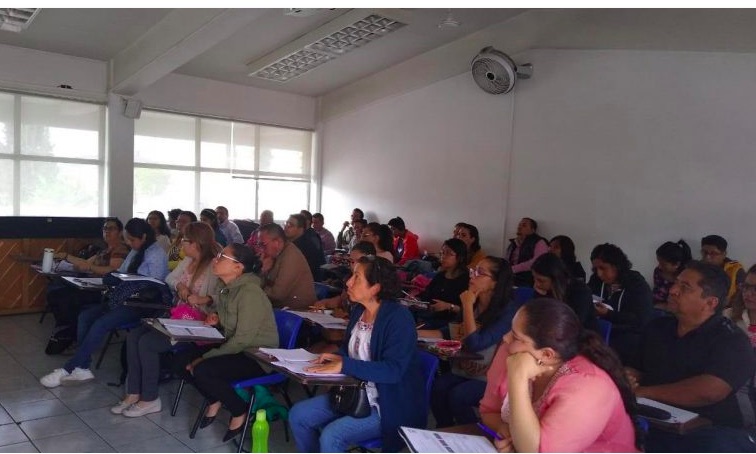
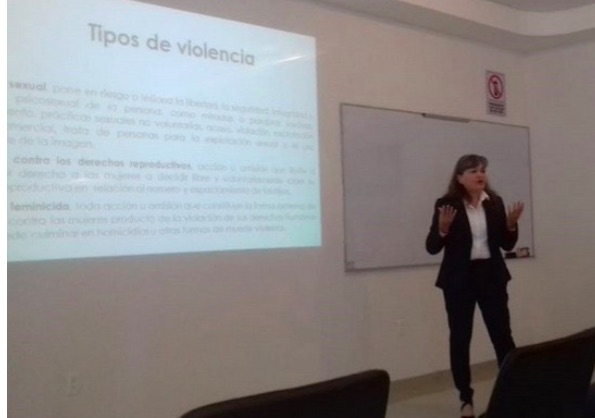
With the objective of promoting harmony, respect and the conflict resolution, the Attorney General of the State of Michoacán (FGE) through the Alternative Mechanisms for Dispute Resolution Mechanism (CMASC) ), carried out a training called “Culture of Peace and Nonviolence” with the staff of the Federal Electricity Commission (CFE).


The main objective was to give the workers tools that allow them to reinforce values ​​such as respect and the culture of peace, generating confidence and cordiality in the labor environment.

(Continued in right column)

(Click here for the original Spanish version of this article.)

Question for this article:

Where is peace education taking place?

(Continued from left column)

“The training reinforces values, attitudes and behaviors that reject violence and prevent conflicts, trying to solve problems through dialogue and creating a friendly work environment,” said the Coordinator of Restorative Justice Programs of CMASC, Elfega Rojas Calderón, who gave the talk.

The speaker said that it is very important, first of all, to privilege respect among people to avoid the generation of conflicts, but when conflict occurs, communication can be a determining factor to solve the problem.

She also said that, although it may be common that people are immersed in conflict in the workplace and in the daily life, there is a great opportunity to avoid them or reduce the risk of falling into them, as long as among people, the culture of peace can be reinforced.

During the presentation, the official also explained the relevance of the Alternative Dispute Resolution Mechanisms when people are victims, so she invited the attendees to know more about what these mechanisms and the advantages that they provide to guarantee access to justice for citizens.

The workshop “Culture of Peace and Nonviolence”, is framed in a series of training sessions that are given monthly to staff, fostering a cordial work environment, based on the Culture of Peace. It was carried out at the CFE’s facilities at Arboledas Valladolid, Morelia.

The activity was also developed in teleconference with the Regions of the CFE of Zamora, Uruapan, Carapan and Apatzingán, with a total of 109 people involved.

The FGE reaffirms its commitment to respect, guarantee and promote the human rights of people and the dissemination of the culture of peace among citizens.

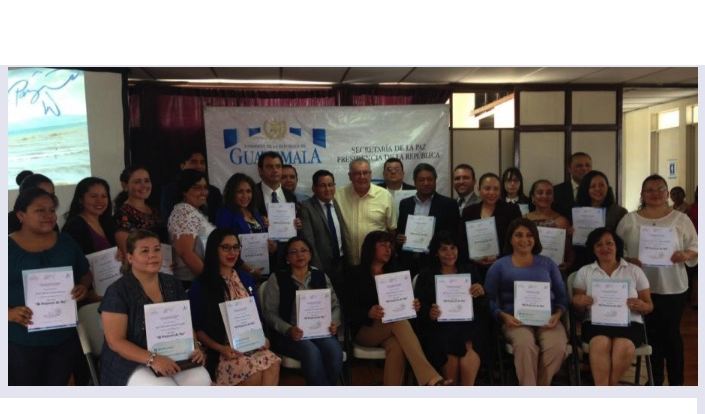
Guatemala: SEPAZ Graduates 82 ‘Multipliers of Peace’

… EDUCATION FOR PEACE …

An article from Guatemala Radio TGW (translation by CPNN)

The Secretariat of Peace (SEPAZ), through the distance mode of the School of Culture of Peace, organized the virtual course “My Peace Project” with the aim of encouraging participants in the values ​​of a culture of peace and non-violence.


SEPAZ executed three levels of training; in the first level, the conduct, values ​​and traditions of peace established in other countries were determined in reference to the Peace Agreements; at the second level, peace mechanisms were established; and on the third level, the creativity of the participants was engaged to form a culture of peace project.

(Continued in right column)

(Click here for the original Spanish version of this article.)

Question for this article:

Where is peace education taking place?

(Continued from left column)

The requirements for the people who participated in the virtual course “My Peace Project” were the following:

– Have completed the Virtual Diploma of Culture of Peace.
– Interest in generating proposals in favor of coexistence in Culture of Peace.
– Knowledge in the use of technology.
– The commitment to seek to carry out the Project Proposal.
– A minimum degree of empathy with others.
– Desire to get involved in the development of activities for peace.

Recognition to the «Multipliers of Peace»

During the closing ceremony Rigoberto Casasola, Deputy Secretary of Peace, presented the diplomas to the Peacemakers that culminated the virtual course “My Peace Project”, which lasted three months.

The project involved 82 people, including 55 women and 27 men in the age range of 18 to 61 years of age.

Mr. Andrés Chipix obtained the highest rating. He expressed his happiness upon receiving recognition from Casasola.

The Deputy Secretary of Peace highlighted the importance of these courses to form a “culture of peace” in Guatemalan society and to discourage recourse to violence.

Mexico: CODHEM fulfills its mission of promoting the culture of peace and respect for Human Rights

EDUCATION FOR PEACE .

An article from Asi Sucede

The Human Rights Commission of the State of Mexico (Codhem), through its Executive Secretariat, carries out an intense training and awareness-raising work to promote a culture of peace and respect for human rights, most recently for the populations of the municipalities of Chimalhuacán, Otzolotepec, Xonacatlán, Atlacomulco, Huixquilucan, Ixtlahuaca, Ixtapan de la Sal, Jiquipilco, San José del Rincón and Toluca.


click on the photo to enlarge

(Click here for a Spanish version of this article)

Question related to this article:


What is the best way to teach peace to children?

The executive secretary, Ricardo López Franco, said that this activity responds to the innovation policies established by the ombudsperson Jorge Olvera García to reinforce the promotion and socialization of human rights. The activity includes lessons given to students of different educational levels: in Chimalhuacán, on human rights; in Huixquilucan and Xonacatlán, the human right to a healthy environment; while in San José del Rincón, the prevention of addictions.

Promotion Circles of Human Rights, Values ​​and Duties were formed in the College of Bachelors of the State of Mexico (COBAEM) of Atlacomulco, with a goal to promote a better coexistence in the family and social environment.

Information Modules for the Promotion of Human Rights were established in schools and public squares in Chimalhuacán and San José del Rincón, as well as at the Crime and Delinquency Prevention Fair in Otzolotepec. The modules provided an opportunity to listen to the people and deliver training material on duties and human rights.

For elementary school students, the Art Gallery on Human Rights program was launched to encourage them to express themselves in an artistic way about how they understand and experience their rights to education, family life, and good health, among others subjects.

In Huixquilucan and Jiquipilco schools, puppet theaters were presented with different themes to strengthen the self-esteem of boys and girls and motivate the teaching-learning process. The puppet characters of Madi and Macario help them to know their values, human rights and duties.

PAYNCoP Gabon organizes a conference on the challenges of building peace in Africa

… EDUCATION FOR PEACE …

Sent to CPNN by Jerry Bibang, Coordinator of PAYNCoP Gabon (translation by CPNN)

As part of the celebrations for the 10th anniversary of the death of President Omar Bongo Ondimba, the National Coordination of the Pan-African Youth Network for Peace Culture (PAYNCoP Gabon) organized, on Saturday, June 8, at the House of the United Nations, a conference on the theme: “The new challenges of building peace in Africa.”


(click on image to enlarge)

The meeting which brought together mainly the leaders of youth organizations was punctuated by three communications. The first, led by Jerry Bibang, National Coordinator of PAYNCoP Gabon, focused on youth involvement in peace and security issues.

According to the speaker, young people are the most important age group in Africa and Gabon. As a result, they are the main artisans and victims of conflicts and wars. Therefore, it is important for them to be involved at all levels in peace and security issues. For the Coordinator of PAYNCoP Gabon, it is simply a question of implementing Resolution 2250, adopted since 2015 by the United Nations Security Council. This resolution recommends that states involve young people at all levels in matters of peace and security, particularly during prevention, mediation, conflict resolution and post-conflict activities. The involvement of young people is one of the challenges in peacebuilding, concluded the National Coordinator of PAYNCoP Gabon.

(click here for the French version)

Question for this article:

.

Mediation as a tool for nonviolence and culture of peace

For Dr. Jean Delors Biyoghe, the new challenges of peace-building are many and varied. They can be summed up in the good faith of mediators, the fragility of the states, the problem of bad governance, the securisation of cyber-space and many others.
 
Indeed, according to this political scientist, the actors in charge of mediations often have a conflict of interest when resolving crises or conflicts. How can you convince a Head of State to leave power peacefully and democratically if you yourself are undemocratic? the speaker asked. The obsolescence of conflict resolution strategies is also one of the challenges. Instead of building peace, we are witnessing the imposition of peace, the speaker noted. This is the case, for example, in Mali and the Central African Republic.

In addition, the rise of multinationals, coupled with the proliferation of fragile states, is another challenge to peacebuilding. According to the speaker, building peace requires that the social and economic needs of citizens are met. We can not really build peace if the vital needs of the people remain dissatisfied.

The third communication, provided by Theophane Nzame-Biyoghe, focused on the political and diplomatic action of Omar Bongo Ondimba as a champion of peace. The speaker reviewed the various crises and conflicts resolved by the former Head of State, particularly in Angola, the Central African Republic and the Congo … a commitment to peace that has earned him several international awards including the prize “Golden Laurel of Peace”, awarded by the International Peace Trophies Jury, the MANAHAE Peace Prize, awarded by South Korea in recognition of these efforts for the restoration of stability and the resolution of armed conflicts in the Central African subregion. For Theophane Nzame, Omar Bongo Ondimba leaves a legacy that all Gabonese should appropriate, even if peace remains an ideal in perpetual construction.

International Institute for Peace Education 2019: Cyprus

EDUCATION FOR PEACE .

An announcement from the International Institute for Peace Education

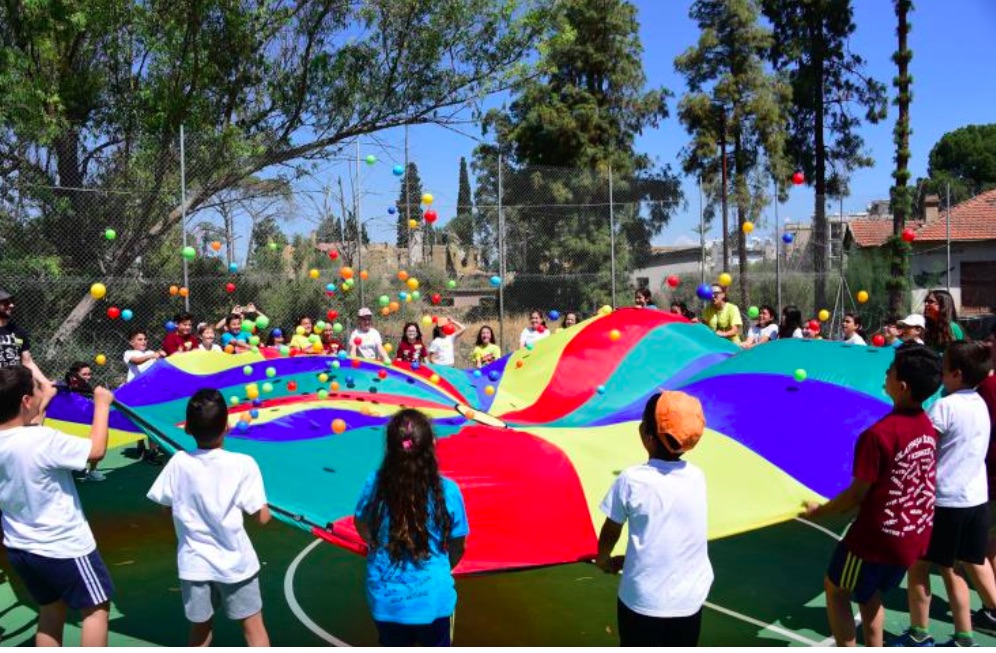
The 2019 International Institute for Peace Education (IIPE) will be held in Nicosia, Cyprus at the Home for Cooperation (H4C)  from July 21 to July 28, 2019. This year’s institute is organized in partnership with the IIPE Secretariat and the Association for Historical Dialogue and Research (AHDR).

IIPE 2019: Cyprus will convene educators from around the globe for a week-long, residential, learning community experience in peace education. A rich exchange of peacebuilding research, academic theory, best practices, and actions will be shared with participants from around the world through IIPE’s evolving dialogical, cooperative, and intersubjective modes of reflective inquiry and experiential learning.

IIPE 2019 will focus on global issues of particular relevance to Cyprus and the adjoining region of the Mediterranean, North Africa, Southern Europe, and the Middle East – the intersection of Asia, Africa and Europe. This region is characterized on the one hand, by turmoil and tension, and on the other by the rich perpetual movements of people, ideas and experiences. While peoples’ past and present are presented in grey terms, their shared history(-ies) of coexistence, cooperation and exchange are often neglected in official discourses. In this context, recent developments with regards to war, terrorism, migration and refugedom have led to the creation of monolithic narratives and rigid identities. These excluding narratives perpetuate violent conflicts and structural conditions that limit opportunities for sustainable peace and development. IIPE 2019 will emphasize the role of educators on all levels in addressing conflict in creative ways and offering alternatives to violence in contexts such as the Cypriot one. Educating for practical and theoretical methods is of paramount importance for the creation of inclusive identities and a critical hope for the region, and for humanity as a whole.

Being concerned with reconciliation and abetting conflict, we peace educators, theorists, researchers, students, and activists together face a serious challenge. On the one hand, dynamic transitions and tensions shape our present world: new movements of peoples are working for more dignity and inclusion, while at the same time forces of power are consolidating in ways that challenge how local, regional and global citizens can contribute to this vibrant transition in nonviolent, humanizing and ecologically viable ways. IIPE 2019 Cyprus’s inquiry is centered on how might we collectively frame the challenges we face in our diverse, particular, and shared spheres? How can a relational paradigm for peace help us theorize these challenges for more dignity, inclusion, and coordination? As we engage in deep listening and critical and reflective dialogue, what new understandings will we reach? What creative practices will emerge? In examining crossover issues, we aim to bring our best selves in relation to each other so that we might meld together our best theoretical, educational, and activist practices.

Peace education and its intersections with history, political theory, conflict studies, reconciliation, the philosophy of peace, justice, and democracy in challenging times are among the areas of inquiry that will be most relevant at IIPE 2019. Applicants are invited to offer contributions on these and other thematic areas including, but not limited to:

* Identities (and anti-racist education) in divided and/or multi-faith, multi-ethnic and culturally and linguistically diverse societies

* Memory and remembrance (collective memory, communal memory, family history and memory, memory transmitted through celebrations, museums, monuments, oral history, understanding of heritage…)

* National celebrations (memory transmitted through ceremonies, anniversaries, memorials, commemorations and celebrations)

* The philosophical basis for reconciliation and peace

* Dialogue for reconciliation

* History teaching and historical dialogue as means for peacebuilding: the role of history education in conflict or post-conflict communities; peace and reconciliation; teaching history in divided societies; history education and values, beliefs and human rights

* Gender and peacebuilding in divided societies; gender and history

* Civil society, global citizenship, and local participation

* Youth and entrepreneurship

* Public space and deliberation; the city as an educating agent

(continued in right column)

Question for this article:

Peace Studies in School Curricula, What would it take to make it happen around the world?

(continued from left column)

Experiencing Cyprus

Cyprus, the island of Aphrodite, the goddess of love and beauty, has been separated for over 50 years, and, apart from a divided capital, barricades, barbwires and checkpoints, it offers numerous opportunities for exploring ancient and recent civilizations and experiencing, first hand, manifestations of the willingness to defeat time and space barriers and create spaces for creativity, imagination and sharing. The ‘wondering peace educator’ will be offered the chance to explore issues of memory and remembrance, conflicting narratives and identity and public history, while, at the same time, he/she will engage in the exchange of ideas and examples on breakthrough initiatives that have the potential to turn the island into a hub of innovation in the fields of History for Reconciliation and Education for a Culture of Peace.

In particular, all participants will have the opportunity to experience the contextual conditions existing in Cyprus regarding the conflict and become acquainted with local breakthrough initiatives on history as a means for reconciliation and education for a culture of peace. This will be enhanced through an Open Public Day, excursion(s), and unique cultural experiences in Cyprus. IIPE 2019 will also facilitate an exchange with Cypriot educators, from all communities, via the Open Public Day, which will feature immersion and exchange opportunities exploring global obstacles and possibilities for peacebuilding through education in other contexts.

About The Association for Historical Dialogue & Research (AHDR)

The Association for Historical Dialogue and Research (AHDR), based at the Home for Cooperation (H4C) which is a hub for intercommunal collaboration, dialogue, and education for a culture of peace, is the host and core resource for IIPE 2019’s thematic focus.

The AHDR is a unique multi-communal, non-for-profit, non-governmental organization established in Nicosia in 2003 that envisions a society where dialogue on issues of history, historiography and history teaching and learning is considered a means for the advancement of historical understanding and critical thinking and is welcomed as an integral part of democracy and a culture of peace. The AHDR contributes to the advancement of historical understanding amongst the public and more specifically amongst children, youth, and educators by providing access to learning opportunities for individuals of every ability and every ethnic, religious, cultural, and social background, based on the respect for diversity and the dialogue of ideas.

Since its establishment, the AHDR has broadened its mission by promoting peace education in formal and non-formal settings and is currently bringing together school children of all ages from all communities on the island through the implementation of the ‘Imagine’ Project which has received acclaim from the UN Secretary General for its role in promoting contact and cooperation between the future generations of Cyprus.

Cyprus, through the work of AHDR and H4C, is recognized as a regional center for offering state-of-the-art services for education for peacebuilding and dialogue as a means for reconciliation.

About the International Institute on Peace Education (IIPE)

The International Institute on Peace Education is a weeklong residential experience for educators and scholars hosted in a different country every other summer. The Institute facilitates exchanges of theory and practical experiences in teaching peace education and serves to grow the field. In serving the field, the IIPE operates as an applied peace education laboratory that provides a space for pedagogical experimentation; cooperative, deep inquiry into shared issues; and advancing theoretical, practical and pedagogical applications. Since its inauguration at Teachers College Columbia University in 1982, the IIPE has brought together experienced and aspiring educators, academics, professional workers, and activists in the field of peace education from around the world to exchange knowledge and experiences and learn with and from each other in its intensive residentially based learning community.

Held annually at various universities and peace centers throughout the world, the IIPE is also an opportunity for networking and community building. that has spawned a variety of collaborative research projects and peace education initiatives at the local, regional, and international levels. The International Peace Bureau, in nominating IIPE for the 2005 UNESCO Peace Education Prize described it as “probably the most effective agent for the introduction of peace education to more educators than any other single non-governmental agency.” The objectives of each particular institute are rooted in the needs and transformational concerns of the co-sponsoring host partner, their local community, and the surrounding region. More widely, the educational purposes of the IIPE are directed toward the development of the field of peace education in theory, practice, and advocacy.

Applications are due March 15, 2019, and will be reviewed by the end of March/early April. Be sure to apply early for full consideration.

*The application deadline for IIPE 2019 has passed and we are no longer accepting applications.

Sponsorship and Support

IIPE 2019 is supported by a generous grant from the  Federal Foreign Office of Germany.

The conference is also under the aegis of the President of the European Parliament with the support of the Office of the European Parliament in Cyprus.

Cyprus: Teachers from both sides attend seminars on peace education

… EDUCATION FOR PEACE …

An article from Cyprus Mail (reprinted by permission)

Teachers from both sides of the divide attended two seminars on peace education on Saturday organised by the Bicommunal Technical Committee on Education.

In total 100 teachers – 50 Greek Cypriots and 50 Turkish Cypriots – participated in two bicommunal training sessions by international experts which took place at the Home for Cooperation in the Nicosia buffer zone.


Questions for this article:

Can Cyprus be reunited in peace?

What is the relation between peace and education?

The co-chairs of the committee, Dr Meltem Onurkan Samani and Dr Michalinos Zembylas also took part in the teacher training that is part of the ‘Imagine’ peace education programme. Participants were trained on how to promote peace, anti-racism and human rights through education.

This is a new initiative introduced during the current academic year by the committee. The committee was established after the agreement between the two leaders in December 2015, to implement confidence-building measures in the two educational systems. Part of the committee’s mandate is to promote contact and cooperation between students and educators from the two communities.

“The overall aim of the teacher training is to help increase contact and cooperation between teachers of the two communities in Cyprus, based on a holistic understanding of developing their knowledge, skills and attitudes on education for a culture of peace and non-violence,” a written statement said.

So far, 10 mono-communal training sessions have taken place with 250 teachers participating from all areas across the island.

‘Imagine’ is under the auspices of the Bi-Communal Technical Committee of Education and implemented by the Association for Historical Dialogue and Research (AHDR) and the Home for Cooperation (H4C) with the support of the Federal Foreign Office of Germany and the UN Peacekeeping Force in Cyprus.

Barueri, Brazil: Culture of Peace Project is launched at meetings of parents in all municipal schools

… EDUCATION FOR PEACE …

An article from Correio Paulista (translation by CPNN)

55 Municipal Schools of Elementary School of Barueri (Emefs) are taking part in the “Culture of Peace” program carried out by the Secretary of Education. Talks, interactive activities between parents and children, music and other actions bring emotion and interactivity to all.


(Click here for the original article in Portuguese)

Questions for this article:

What is the relation between peace and education?

The program promotes school activities and projects that aim to structure the human relationships between the community it serves, creating positive relationships among all students, families and school staff.

The Education Secretariat aims to ensure that the Culture of Peace project goes beyond the classroom and moves forward to reduce violence numbers and increase empathy and harmony among teachers, students and their families.

According to Cineide Souza, the mother of a student of Emef Father Elídio, the meeting was very special. “We had a very important speech that warned about the misuse of social networks and the loneliness of the children. We could also declare our love to our children through messages on posters. The meeting was very beautiful and the direction of the school is to be congratulated. ”

School supervisor Vânia Santos was also happy with the implementation of the project. “Every song sung by the students, inspiring videos, panels and so many other meaningful activities filled our hearts with emotion, for in troubled times sharing peace and love brings calm and positivity to our souls. The positive energy of the Culture of Peace echoed throughout the city, thrilling every school community in a show of affection, affection, solidarity and love. The seed has been planted and we will certainly reap a lot of fruit.”