Category Archives: DEMOCRATIC PARTICIPATION

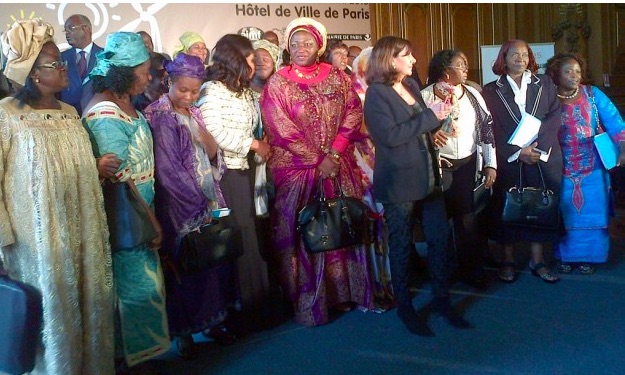
Women in Parliament: 20 years in review

. DEMOCRATIC PARTICIPATION .

From a report by Inter-Parliamentary Union (excerpts)

The past 20 years have witnessed an impressive rise in the share of women in national parliaments around the world, with the global average nearly doubling during that time – and all regions making substantial progress towards the goal of 30 per cent women in decision making.

parliamentarians

In 1995, delegates to the United Nations (UN) Fourth World Conference on Women unanimously signed the Beijing Platform for Action. Described as a “new agenda for women’s empowerment,” its mission statement called for the removal of all “obstacles to women’s active participation in all spheres of public and private life”. The Platform set a 30 per cent target for women in decision-making, to be achieved through a wide range of strategies, including positive action, public debate, and training and mentoring for women as leaders.

Over the last 20 years, countries around the world have made substantial progress towards this 30 per cent goal. The global average of women in national parliaments has nearly doubled, from 11.3 per cent in 1995 to 22.1 per cent in 2015 (+10.8 points). 2014, however, saw little progress in the percentage of women in national parliaments worldwide, with the global average rising only by 0.3 points, begging the question: have we reached the glass ceiling?

Global highlights

• Worldwide, women’s average share of parliamentary membership nearly doubled between 1995 and 2015, from 11.3 per cent in 1995 to 22.1 per cent in 2015. Their share gained ground in almost 90 per cent of the 174 countries for which 1995 and 2015 data are available.

• Over the same period, the number of single and lower houses with more than 30 per cent women parliamentarians grew from five to 42, and those with more than 40 per cent from one to 13. By 2015, four houses of parliament surpassed the 50 per cent threshold, one moving beyond 60 per cent women parliamentarians.

• The world’s highest ranking countries have become more diverse: the top 10, dominated by eight European countries in 1995, now include four in Sub-Saharan Africa and three each in the Americas and Europe.

• Far fewer single and lower houses elect less than 10 per cent women, dropping from 109 in 1995 to 38 in 2015. The number of all-male single and lower houses fell from 10 to five.

• In addition to shifting political circumstances, a crucial factor driving these changes has been the adoption of electoral gender quotas, which have spread from a small number of States in 1995 to more than 120 in 2015.

• After notable increases in recent years, growth in women’s average share of parliaments worldwide levelled off in 2014, rising only 0.3 points to 22.1 per cent. Women won 2147 of the 10,265 seats up for election or renewal in 2014. .

The impact of women in parliament

Scholarly studies, supported by interviews with male and female parliamentarians in the IPU Equality in Politics survey, indicate that women’s presence has changed parliaments around the world in tangible ways. New issues like violence against women or women’s health concerns, which might not otherwise have received the attention they deserve, are making it onto the political agenda. Women in parliament also contribute, at least in some contexts, to a more collaborative political environment, both within and across parties. Their presence emboldens more women citizens to contact their representatives, enhancing democratic communication and accountability.

(Click here for a french version of this article.)

Latest Discussion

Women in parliaments. Do they enhance democratic communication and accountability?

Editor’s comment: The latest statistics on percentages of women in parliaments have been posted by IPU on their website. Here are the top fifteen:
Rwanda 63.8%
Bolivia 53.1%
Cuba 48.9%
Seychelles 43.8%
Sweden 43.6%
Senegal 42.7%
South Africa 41.9%
Ecuador 41.6%
Finland 41.5%
Iceland 41.3%
Namibia 41.3%
Nicaragua 41.3%
Spain 41.1%
Mozambique 39.6%
Norway 39.6%

The permanent members of the Security Council are far down the list:

36: United Kingdom 29.4%
44: France 26.2%
54: China 23.6%
71: United States 19.4%
95: Russian Federation 13.6%

Readers’ comments are invited on this question.

Yamoussoukro, Côte d’Ivoire: Opening of ISESCO Regional Centre for Culture of Peace

. DEMOCRATIC PARTICIPATION .

an article by Abidjan.net

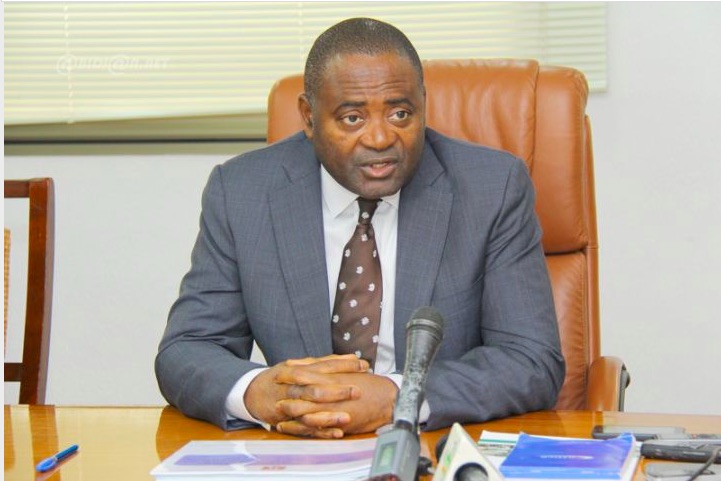
The Minister of Higher Education and Scientific Research, Gnamien Konan presided Thursday [16 avril] at the official opening in Yamoussoukro of the regional center for education for a culture of peace (CRECP) in the presence of Mr Najib Rhiati representative of the Islamic Organization for Education, Science and Cultural Organization (ISESCO), initiator of the creation of CRECP in Côte d’Ivoire.

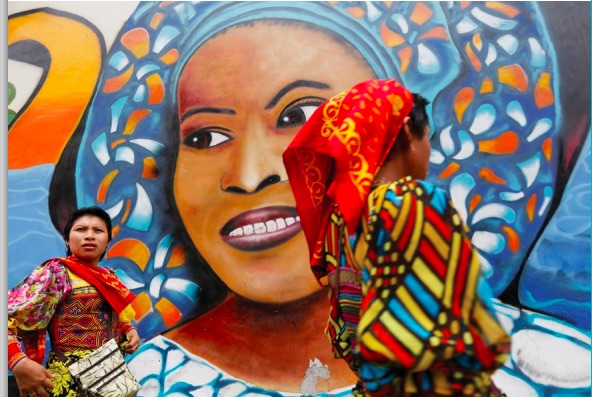
yamoussoukro

Click on the photo to enlarge

CREP is housed within the Félix Houphouët-Boigny peace foundation. It is intended to promote dialogue, human rights, justice and peace for a better world. It was conceived in 2008, and formalized by the signature of an agreement between the Republic of Côte d’Ivoire and ISESCO in October 2013.

(click here for the original French version of this article)

(Question for this article:)

How can we develop the institutional framework for a culture of peace?

The Houghouët-Boigny Foundation of Yamoussoukro: what is its contribution to the culture of peace?

“Its mission is to promote, in the French-speaking African states members of ISESCO, education for a culture of peace in educational systems and programs, to enhance the capabilities of their culture of peace trainers, and to facilitate the integration of education for a culture of peace in school and university curricula,” said Dr. Dieneba Doumbia, director of research for peace of FHB Foundation.

The current three-year plan of CREP provides an ongoing program of education in human values, according to the representative of the Director General of ISESCO Najib Rhiati.”This program aims to make the school a space of equality and human brotherhood, a space that will pave the way for the establishment of a common life based on the values ​​of peace and solidarity and established by children who will form a youth able to build the future, ” he said.

Gnamien Konan, for his part, explained that conflicts and tensions are born of lack of civic responsibility and lack of democratic participation. “The resulting violence destabilizes our economies, harms our education systems and destroys the legendary solidarity of African countries,” he lamented.

Also, he has hired CRECP facilitators to continuously conduct discussions in order to devise innovative and effective mechanisms and new attitudes that will educate people to the culture of peace, guaranteeing a harmonious development of our country.

Ecuador: 19 peace judges now working in 12 provinces

. DEMOCRATIC PARTICIPATION .

Redacción Justicia, El Telégrafo (abridged)

Peace judges are officials who help in solving conflicts in rural areas. This year the coverage will be extended to 6 more Ecuadorian cities. At least 20 people attend each week.

Ecuador
Click on the photo to enlarge
The first 19 peace judges were trained for 40 hours by the Judiciary. Photo by Cortesía

For example, early last year Berta Vaca acquired land of 2 acres in the Las Palmas province of Pastaza, but after a few months the Municipality of Puyo took about 10 meters from his property to build a country road in the direction of the area of Marianitas.

This action angered the woman who asked for clarifications to the original owner, Claudio Caicedo, who told him he would give the same extension in the rear of the property he bought her. That calmed her down.

However, the days passed and the procedusre was not done, Vaca put a rope across the road to prevent passage as a protest against what he considered to be an injustice.

This prompted the neighbors to approach Luis Alcócer, who was inaugurated in January as peace judge of Veracruz parish, province of Pastaza, where he has lived for 40 years.

The judge, well known by the 220 inhabitants of the area, immediately contacted the woman and the seller of the property, called them into his office, and after 30 minutes of dialogue the problem was solved.

The peace judge wrote up an agreement that Caicedo extended the property, which señora Vaca expected, and set down the new boundaries in writing. “It was not difficult to talk amicably, so we reached an agreement which avoided a legal dispute, and resolved the problem peacefully,” said Alcócer.

The director of the Justice Council of the Judiciary, Patricia Salazar, reported that as of December, 2014, there were 19 peace judges at work in 17 parishes in 12 provinces of the country. “Judges are appointed by the community of which they are resident and the Judiciary trains them how to reach amicable agreements that are essentially based on the will of the parties,” she said. . .

Peace judges are volunteers and are not paid, nor charge for their services to users, but the commitment is to meet eight hours a week with the inhabitants of their sector, which they can do at the offices of the parish. “The Judiciary helps with furniture, computer, printer and access to direct consultation with legal counsel of the organization,” said Salazar.

The official said the 19 judges are dealing with an average of 20 cases a week. “This has prevented those in conflict from having to go to court, which would have generated a waste of time and money for the citizen and the state,” she added.

This has encouraged the Judiciary to encourage the participation of more peace judges. “There are about 2,000 rural parishes in the country that we want to reach with this program and we believe that by the end of 2015 we will add another 80 judges to this initiative of spreading the culture of dialogue as a means of peaceful settlement of disputes”. ..

(click here for the original Spanish version of this article)

Other articles related to this one:

Ivory Coast: Music Festival from 21 to 26 April in Abidjan for “peaceful elections” in Africa

. . DEMOCRATIC PARTICIPATION . .

an article by Africatime

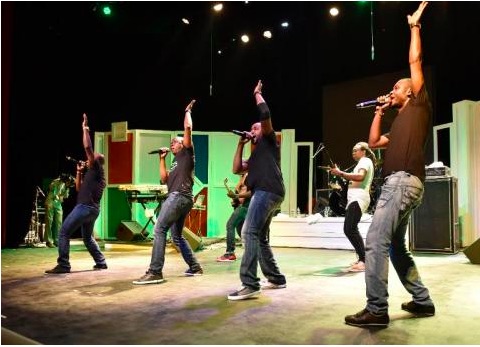
The Femua, a music festival bringing together ten renowned African artists will be held from April 21 to 26 in Abidjan in favor of “peaceful elections” on the continent, where several elections will be held this year, said the organization.

Abidjan
click on photo to enlarge

“We can not sit idly by when there are very controversial elections in both Congo (DRC and Congo -Brazzaville), Burkina Faso and Togo,” according to Salif Traoré (stagnate: A’Salfo) the leader of the Ivorian group Magic System.

“Music unites our vibrations, lowers our blood pressure and get across a message for peaceful elections”, said A’Salfo, who has been an Ambassador of Unesco for “Literacy and Culture of Peace” since 2012.

The festival of urban music in Anoumabo (Femua), created in 2008, brings together for the 8th edition ten renowned artists including Fally Ipupa (DRC), Freshlyground (South Africa), Joel Sebunjo (Uganda), Bracket (Nigeria), Philip Monteiro (Cape Verde), Habib Koité (Mali) and Smarty (Burkina Faso).

From 21 to 26 April, the Femua mainly take place in Anoumabo, a poor neighborhood of Abidjan with muddy streets, and both precarious dwellings and modern homes.

“We will launch a message from the ghetto, where the disputes arise that inflame the country,” insisted the singer, A’Salfo.

The ghetto of Anoumabo saw the birth of Magic System, star group of Ivorian music, which since its first success “Premier Gaou” , has been shown often on the screens of Africa and Europe.

Nigeria, the richest country in Africa has just experienced a democratic change applauded by the people and the international community, but the conduct and outcome of other African elections seem more uncertain.

The UN expressed its alarm Wednesday “about the directions being taken” by Burundi before its parliamentary and presidential planned in May and June. This is also an election year in Ivory Coast, Burkina Faso, Togo and Guinea.

(click here for the original French version of this article)

Latest Discussion

How should elections be organized in a true democracy?

What place does music have in the peace movement?

Latest reader comment:

CPNN receives more and more articles from Africa about initiatives that contest the European model of “winner-takes-all” elections, and demand that elections should only be part of a broader democratic process that seeks consensus and compromise.

This fits with the pre-colonial systems of justice in Africa, when there was no monotheism and no single supreme god, no single supreme law, no single “truth” provided by divine intervention, but rather a compromise among many different “gods,” perspectives and “truths” arrived at through a process of mediation, for example, the “palabra.”

Closing of the World Social Forum: Citizens of the world versus terrorism and oppression

. DEMOCRATIC PARTICIPATION .

an article by Sihem Oubraham, El Moudjahid, Algeria

The 13th edition of the World Social Forum (FMS) 2015, which took place over four days in the Tunisian capital, completed its work yesterday under the slogan of “all-out solidarity with all oppressed peoples.” The WSF 2015 was marked by a series of activities of participants at the Farhat Hachad campus in El- Manar Tunis.

moudjahid

I must say that this 13th edition was difficult to organize by the Tunisians since since it came barely a week after the terrorist attack on the Bardo Museum. In response, the WSF organizing committee reaffirmed that “terrorism can not win, and will not stop us in Tunisia.”

In fact, we can say that the 2015 WSF is a success.

We must also say that the WSF 2015 was marked by strong Algerian participation with no less than 1,200 participants. No less than 200 associations are involved in the WSF-2015 in Tunis, including the UGTA (General Union of Algerian Workers), student organizations, the Nada network for the defense of children’s rights, and the National Association of youth exchanges (ANEJ). “This is a mosaic, and that’s a first,” according to Ali Sahel, coordinator of the delegation and chairman of the ANEJ. Workshops were programmed by them. This is the promotion of youth activities in Algeria and lectures on the “right to self-determination of the Saharawi and Palestinian people”, “Interventions versus the right to national sovereignty” or “stopping the exploitation of shale gas” .

In the WSF work program, many different events were held, including debates between politicians and international cultural and musical events. Participants in the demonstration of the Youth Committee of the World Social Forum, which began last Tuesday with the slogan “A youth movement that works for change”, called for constitution of a front of young people.

“The 2015 edition of the WSF is an important step towards universal activism advocating socio-economic change through the participation of more than 50,000 people representing 5,800 organizations including 270 related to youth,” according to the coordinator of the Youth Committee of the WSF, Mr Makhlouf Zied. He welcomed the increase in the number of participants after the Bardo attack” which illustrates the great solidarity shown towards Tunisia by the international community.” In a statement to El Mujahid, on the sidelines of the closing of the 13th edition of the WSF, Makhlouf said that “the WSF will continue its commitment to this goal with began in Porto Alegre in Brazil.” The Forum has “helped accomplish a perceptible socio-economic change in Latin America, including Argentina, Venezuela and Brazil,” he said.

For his part, Dr. Louay Aoudi, representative of the Association Forum of Palestinian youth in the diaspora, said that “the Palestinian cause is limited now to geography, but concerns the whole of humanity, being a struggle against Zionism, the fascist capitalism and a spearhead for freedom. ” He also estimated that the WSF 2015 Tunis is “a tool for the unification of the world’s youth forces” “to get free from the clutches of Zionism and marginalization.”

Click here for the original French version of this article.

(This article is continued in the discussion board on the right side of this page)

Continuation of article

For Mac Caraminda Lorin, representative of the WSF organizing committee in Montreal in 2016, “The record participation in the 2015 WSF in Tunis reflects the great sympathy of the world’s youth in Tunisia after the latest attacks.” “We are also here to express the concerns of young Canadians with the strike by nearly 50,000 students in protest against the austerity policy. This space is a good opportunity to exchange experiences and views on these common problems of young pending the 2016 edition in Canada, “she said.

According to the organizers, considering the context of the WSF 2015, “the demand for climate justice, and beyond, an environmental justice, is the expression of a questioning of a system of production and consumption which has no future and an environmentally predatory relationship by man. Increasingly social movements and intellectuals worldwide, interpret this crisis not only as a financial crisis or as a failure of capitalism, but more deeply as a true crisis of civilization. The very foundations of the system, economic, social, environmental, cultural and political, are challenged by a large part of humanity who see them as the source of economic, social and political injustice in the world, and as the source of damage to the earth “.

Finally, it should be noted that the Assembly of Social Movements of the WSF 2015 called for strengthening solidarity with the peoples of the world who struggle daily against imperialism, colonialism, exploitation, patriarchy, racism and injustice.

Toward a Culture of Peace Commission for Ashland, Oregon (USA)

.. DEMOCRATIC PARTICIPATION ..

by Eric Sirotkin, Ashland Culture of Peace Initiative

[Editor’s note: The following remarks were submitted on February 2 by Eric Sirotkin on behalf of the the Ashland Culture of Peace Initiative to the City Council Study Group on a City of Ashland Culture of Peace Commission.]

Ashland

Scene from Ashland proposal video

If you could have one chance to speak to the world’s most powerful political body, what would you say? When Václav Havel, the former political prisoner and then President Poet/playwright of the Czech Republic, got his invitation to speak to a joint session of the United States Congress he said that “the salvation of the this human world lies nowhere else than in the human heart, in the human power to reflect, in human meekness and in human responsibility.”

He told people preoccupied with getting reelected that they should “put morality ahead of politics, science, and economics” and that “the only genuine core of all our actions–if they are to be moral–is responsibility.”

Responsibility is “that fundamental point from which all identity grows” Thus, Havel declares, “I am responsible for the state of the world,” and he calls it a “responsibility not only to the world but also ‘for the world,’ as though I myself were to be judged for how the world turns out.”

A CULTURE OF PEACE

In 1999 the United States along with the International Community approved the adoption of the Declaration and Programme of Action on a Culture of Peace which defined the culture of peace as a goal much broader than the traditional idea of peace as the absence of war or violence. It called upon individuals and government to take actions to build and expand a culture of peace.

What is a culture of peace? In your discussions today you may want to share what it means to you. But also respect that it’s not the same for everyone and it’s not always easily translated. For us it has meant many things, but primarily it is a “way of life” that solves problems through dialogue and works to balance and expand respectful relations, even between people who disagree.

It is an idea whose time has come. Over 75 million people signed the Manifesto 2000, committing themselves to cultivate a culture of peace in daily life.

You don’t hear about these efforts in the traditional media.

But on the Transition to A Culture of Peace Blog website (http://decade-culture-of- peace.org/blog/), it mirrors the words of Vaclav Havel to Congress some decades before:

“…over the past few decades, the consciousness is growing that we must cultivate and create a culture of peace to replace the culture of war. If you believe, as I do, that the ultimate force in world history is the consciousness of people, then you can see why I believe that the world is on the verge of a great transformation. What is still lacking, however, is an institutional framework outside of the nation-state to make it possible.”

This is where we believe that you all play an essential and historic part.

(Continued into discussion)

ASHLAND CULTURE OF PEACE COMMISSION

(Continued from main article)

As a group of concerned citizens we have been engaged in a process that not only is intended to institute a Culture of Peace Commission in Ashland, but also has been meant to model it. We know we could go to the voters and get this approved, but as we told you in our packet we want to work with you and use our collective wisdom to come up with something that works for everyone.

In our individual meetings with you over the past month we have worked hard to resist charging forward, learning to apply the very principles inherent in the culture of peace to our own process. We’ve listened deeply and reflected individually and as a group, on your suggestions and your wise input gleaned from years of working within the City. It has convinced us that we all want the same thing.

COMMONALITY

Few disagree that we want to be embody a culture of peace. Adrienne Rich once said: “We all go to sleep dreaming of a common language.”

In many ways Ashland has key elements of a culture of peace:

Hundreds gathering each year for the International Day of Peace Feast for Peace;

Annual commemorations of Hiroshima and Nagasaki that question aggression and strongly urge us to remember something greater;

Mediation school Programs that help children look at conflict differently; • Courses in Compassionate Listening, Restorative Justice Circles;

• Local programs produced like Immense Possibilities that help us to listen
and build a more connected community;

Since 1998 Ashland has been part of the Global Mayors for Peace 6,538 member cities in 160 countries & regions; http://www.mayorsforpeace.org/english/index.html

We are as Mayor Stromberg said in his State of the City address a city in the “quality of life business”…it’s in our” lifeblood. “ A community that institutionalizes a culture of peace becomes one that, in the Mayor’s words “attracts students and their

families regionally and nationally to this extraordinary and celebrated community.” We have listened to the important goals set out by the Mayor and all of you over the past months

A city that attracts young people

b) A city Council that in reality is working every day to build a peaceful culture;

c) The complications and limitations of the current commission process.
So we are more and more convinced from our discussions with you that we all want the same thing.

So what do we do?

We wish to hold off on a vote on any permanent Culture Peace Commission or in holding an election to implement it and follow some of your advice.

#1 – FORM AN INDEPENDENT ASHLAND CULTURE OF PEACE COMMISSION: This entity formulated outside of City Government would choose representatives from all sectors of the community – Like the Peace Wheel – Education Business Culture Science Environment Religion
Law Habitat

It would hopefully have a Liaison from the City Council and I understand that Pam Marsh has been willing to serve in such a capacity.

. …more.

Nigeria: Why we facilitated Abuja peace accord —Ben Obi

. . DEMOCRATIC PARTICIPATION . .

an article by Nigerian Tribune

The Special Adviser to the President on Inter Party Affairs, Senator Ben Obi, has stressed the need for political stakeholders at all levels to buy into the key ingredients of the peace accord, which was recently signed in Abuja, by presidential candidates and chairmen of registered political parties, including President Goodluck Jonathan of the Peoples Democratic Party (PDP) and General Muhammadu Buhari of the All Progressives Congress (APC).

2041 Nigeria

Presidential candidates Muhammadu Buhari (left) and Goodluck Jonathan (right)

Speaking with newsmen in Abuja, Senator Obi whose office and that of National Security Adviser (NSA) created the platform and facilitated the epochal event, stressed that the Abuja ceremony was not meant to be an event in itself but the beginning of a wider nationwide process involving all political stakeholders, security institutions, civil society bodies and youth group across the country.

He stated that in developing the programme of the Peace Accord,they had in mind the implementation of a broad range of strategic objectives that would be co-owned by the major campaign organs of the leading political parties at the national, zonal, state, local government and ward levels.

The presidential adviser reiterated that key components of the peace accord included public sensitisation, youth education, peace building projects and community-wide awareness campaigns involving not just all the tiers of political campaigns but also traditional rulers, community and religious leaders.

He said some of the processes would involve workshops, seminars and town hall meetings on a continuous basis until the culture of peace and non-violent conducts during and after elections were inculcated into the Nigeria people, especially the youth.

He further charged that even though his office and that of the NSA took the lead in facilitating the Peace Accord, the responsibility now lies with the leaders and the people to own the agenda and drive it forward to its logical conclusion.


Latest Discussion

How should elections be organized in a true democracy?

Latest reader comment:

CPNN receives more and more articles from Africa about initiatives that contest the European model of “winner-takes-all” elections, and demand that elections should only be part of a broader democratic process that seeks consensus and compromise.

This fits with the pre-colonial systems of justice in Africa, when there was no monotheism and no single supreme god, no single supreme law, no single “truth” provided by divine intervention, but rather a compromise among many different “gods,” perspectives and “truths” arrived at through a process of mediation, for example, the “palabra.”

Here are some of the articles:

Ghana Youth Coalition wants politicians to commit to peace in 2012

Women’s World in Nationwide Sensitization [Sierra Leone]

Varsities vouch for peace ahead of general elections (Kenya)

Zimbabwe: Christian denominations launch peace initiative

Rethinking Post-Election Peacebuilding in Africa

Nigeria: Why we facilitated Abuja peace accord —Ben Obi

Dominican Republic: Attorney General, Justice & Transparency Foundation promote culture of peace

. DEMOCRATIC PARTICIPATION .

an article by El Periodico

In order to join efforts to strengthen the system of mediating conflicts and promoting a culture of dialogue in the country, the Attorney General and Justice and Transparency Foundation (FJT) will implement a series of actions for the prevention and resolution of conflicts at the family, school, work and community levels.

In this regard a joint cooperation agreement was signed by the Attorney General of the Republic Francisco Dominguez Brito and by FJT president Trajano Vidal Potentini Adames, and as a witness, the CEO of the National Conflict Resolution System of Public Prosecutions ((SINAREC), Angel Gomera.

Attorney General Dominguez Brito expressed his appreciation for the support and the willingness expressed by the Justice and Transparency Foundation to strengthen and expand the concept of reconciliation and conflict resolution as an alternative to the system of justice in cases of conflicts that can be resolved with understanding and respect for the dignity of each of the parties.

“This step contributes greatly to strengthening the justice of reconciliation in the Dominican Republic,” said the Head of Public Prosecutions.

For his part, Trajano Vidal Potentini highlighted the commitment of the authorities of the Attorney General to undertake what he called a new culture that established the Code of Criminal Procedure for the issue of reconciliation, which he described as essential for the development and harmony of the judicial system.

“We are very satisfied to be part of these efforts to establish a culture of peace, even more, of the community and in the neighborhoods to bring the good news that is developing in the direction of alternative dispute resolution,” said the FJT president.

As part of the commitment it was agreed to strengthen and disseminate community models that fit the needs, conditions and criteria for prospective or future centers of mediation, negotiation and conciliation in family, school, work and community order.

Also it was agreed to prepare and present a bill to support the application and development of alternative dispute resolution methods as a public policy to be implemented in the country.

The Public Ministry will ensure the presence of members of this institution trained in the application of the alternative methods of dispute resolution programs that are being developed by the foundation.

The agreement, which was signed at the headquarters of the Public Ministry in the Centro de los Héroes, will be effective for one year.

(Click here for a Spanish version of this article)

Question related to this article:

Rethinking Post-Election Peacebuilding in Africa

. DEMOCRATIC PARTICIPATION .

an article by Society for Peace Studies and Practice

The 9th International Conference and General Assembly of the Society for Peace Studies and Practice will take place from 9-13 August at the Igatius Ajuru University of Education in Port Harcourt, Rivers State, Nigeria. Its theme will be “Rethinking Post-Election Peacebuilding in Africa.”

The call for papers provides the following analysis:

There are three phases: pre-election, election, and post-election . . . Where the first two phases are well handled, the post- election environment is peaceful but where they are poorly managed, the post-election environment is usually crisis-ridden. Given that not much work exists on post-election questions and their management in Africa, the Society for Peace Studies and Practice would like to commit it 2015 to addressing this critical issue, shedding more light on the nature, impact and management of post-election environment in Africa. Our particular interest is how to build peace after elections. . .

How do we restore healthy relationship between political actors after elections? What should be the role of winners and losers of elections? What should be the role of the judiciary, political parties, the media, electoral management bodies, private but prominent citizens in preventing post-election violence and other forms of political instability? What are the existing global best practices in post-election peace building? There will be special panels on post-election peacebuiling in Nigeria covering the 1999, 2001, 2003, 2007, 2011 and 2015 elections. . .

The conference program will consist of Commissioned Papers (Plenary Session) and Open Theme/Special Panels (Parallel Sessions). Potential participants are therefore invited to submit abstract proposals to the organizers.

In the event of the abstract being accepted, the deadline for submission of full draft paper will be 30th May 2015. Details are available at http://www.spsp.org.ng .

The Society for Peace Studies and Practice (SPSP) is a Not-for-Profit organisation that promotes non-violent approach to conflict resolution, through multi-level research, advocacy and actions that strengthen local capacities that will bring about a sustainable culture of peace.

The Society began as the brainstorm of a group of passionate advocates of the postgraduate programme of the Peace and Conflict Studies, Institute of African Studies, University of Ibadan, in 2003 seeking to prioritize conflict management as a professional practice and how to streamline the ethics that will guide scholars and practitioners in the field of peace building.

Initially spearheaded by staff and student members from the University of Ibadan led by Professor Isaac Olawale Albert; the Society was formally initiated and registered with the Corporate Affairs Commission (CAC/IT/NO.21194) as a Not-For-Profit Civil Society in 2004 and has gained national outlook and acceptance with its network of branches spread all-over Nigeria and beyond.

Question related to this article:

How should elections be organized in a true democracy?

CPNN receives more and more articles from Africa about initiatives that contest the European model of “winner-takes-all” elections, and demand that elections should only be part of a broader democratic process that seeks consensus and compromise.

This fits with the pre-colonial systems of justice in Africa, when there was no monotheism and no single supreme god, no single supreme law, no single “truth” provided by divine intervention, but rather a compromise among many different “gods,” perspectives and “truths” arrived at through a process of mediation, for example, the “palabra.”

Ghana Youth Coalition wants politicians to commit to peace in 2012

Women’s World in Nationwide Sensitization [Sierra Leone]

Varsities vouch for peace ahead of general elections (Kenya)

Zimbabwe: Christian denominations launch peace initiative

Rethinking Post-Election Peacebuilding in Africa