Category Archives: DEMOCRATIC PARTICIPATION

Restorative Justice in Brazil: Culture of Peace instead of Punishment

. . DEMOCRATIC PARTICIPATION . .

A blog from Justica Restaurativa em Debate

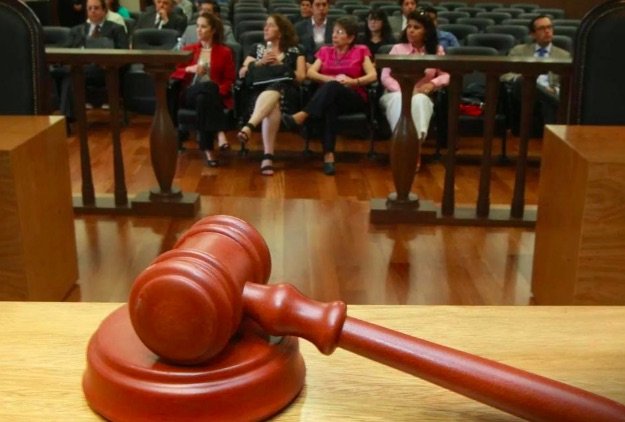
The Seminar on Restorative Justice, held by the National Justice Council (CNJ) on Monday and Tuesday (17 and 18/6), was an important step to advance the Judiciary in the application of this modality of conflict resolution and an opportunity to disseminate in society the precepts of a culture of peace instead of the principles of punishment.

The event brought together representatives of almost all state courts and judicial policy makers [emphasis by CPNN] at the Superior Labor Court (TST) in Brasilia in the debate on the current stage of Restorative Justice in the country. In addition, ongoing experiments and the guidelines to be adopted have been presented so that this method of dispute resolution is more intensely employed in Brazilian courts.


The message is optimistic, according to the coordinator of the Restorative Justice Management Committee of the CNJ, counselor Valtércio de Oliveira. “By holding this seminar, I felt that magistrates and servants are motivated to advance in this public policy of Restorative Justice.”

The counselor reported that the majority of the courts of law sent judges and servers to the seminar and that these representatives will be the multipliers of the methodology precepts in the states. “And with the backing of the CNJ,” he said. Valtércio also said that Restorative Justice is a seed that will germinate and grow, gaining more and more supporters.

Restorative Justice is, according to Resolution 225/2016, an “orderly and systemic set of principles, methods, techniques and activities of its own, aimed at raising awareness about relational, institutional and social factors motivating conflicts and violence, and through which conflicts that generate harm, concrete or abstract, are resolved in a structured way. ”

(article continued in right column)

(Click here for the original article in Portuguese)

Discussion question

Restorative justice, What does it look like in practice?

(article continued from left column)

With a different approach to the phenomenon of violence, this method of conflict resolution works with the accountability of aggressors and the repair of the damage in a way that allows the recomposition of broken social bonds.

The suggestions presented by seminar participants will support the formulation of a Development Plan to disseminate the practice of Restorative Justice. The idea is that planning becomes a guideline to the courts for applying the practice based on listening to victims and offenders and seeking redress for damages arising from aggression, violence and crime.

In the seminar, magistrates, servants and judicial policy makers highlighted the benefits of restorative justice as a counterpoint to the culture of punishment, especially in a context marked by the increase in crime in the country and an increase in the number of prisoners in the penitentiary system. According to data from CNJ’s National Bank for Prison Monitoring (BNMP), Brazil’s prison population is more than 800,000 inmates.

Workshops

During the morning of Tuesday (18/6), four workshops were held on the following topics: Implementation and structure of the Restorative Justice Policy, Training and improvement, Inter-institutional, inter-sectoral and interdisciplinary system articulation and Implementation of safe and qualified spaces for Restorative Justice.

During the discussions, suggestions were made for the Judiciary, the Council, courts, magistrates and civil servants. The proposals include: conducting research by the CNJ to verify the effectiveness and effectiveness of this methodology of conflict resolution; articulation with the Executive Branch, the Public Ministry, Public Defenders and the Brazilian Bar Association (OAB) to disseminate Restorative Justice as an alternative way of combating crime; definition of a specific public policy for the actions of the practice.

Participants also suggested actions to sensitize judges on this modality of dispute settlement, especially criminal magistrates; formation of Restorative Justice nuclei in prisons, schools and communities; and courses for the formation of people with profiles for the practice of Restorative Justice.

 At the end of the meeting, Judge Alexandre Takashima of the Court of Justice of Santa Catarina, who coordinated the debates, said that all the suggestions will be analyzed when the National Plan for Restorative Justice is formulated. The CNJ is expected to hold a public hearing on the subject in the second half of the yer.

Mexico: Ambassadors of Peace Project in the City Hall of Tláhuac

.. DEMOCRATIC PARTICIPATION ..

An article from the Heraldo de México (translation by CPNN)

Embajadores de la Paz is a very noble project, whose objective is to add more people to promote and strengthen values, starting from culture, education and human rights.

The need to strengthen the social fabric through actions that allow society to develop in a better way, requires the commitment of all sectors so that, working as a team, we can achieve the much desired peace, said the deputy of the City Congress of Mexico, Rigoberto Salgado Vázquez.

The legislator explained that as part of his work as an elected representative is to generate the necessary conditions so that the residents of Tláhuac can have better tools to improve their quality of life, including respect for their human rights, better coexistence, as well as decent and safe environments and environments.

He pointed out that the objective of strengthening values, citizen empowerment and human rights as basic tools to achieve tranquility and well-being in the community, is to contribute to eradicating violence and to a better life for children and youth.

“We must recognize that there is a problem in the social fabric, which affects young people mainly, and that is why we are contributing to the rescue of spaces and those sectors that need help and better opportunities to improve their quality of life, starting from the Culture of Peace, “said Salgado Vázquez.

The Peace Ambassadors project arises from the need of the inhabitants of Tláhuac to raise their voices and demand from their leaders better living conditions, “where legislators must be the link between the neighbors and the authorities in order to resolve their problems. lawsuits, “acknowledged Salgado Vázquez.

(continued in right column)

(Click here for the Spanish version of this article.)

Questions for this article:

How can culture of peace be developed at the municipal level?

(continued from left column)

“We have a responsibility with our community, with the neighbors, with the youth and children of Tláhuac, but it is also important that we join efforts and work as a team, since it requires the participation of all to achieve the objectives set,” he stressed.

The deputy explained that with this model an education will be promoted through workshops, forums, conferences, and thus be able to take the message to the families, communities, towns and colonies of Tláhuac, with the firm conviction of exercising the practice of peace.

“Peace is action, it goes beyond imagining a static moment; It is a series of activities that lead us to a state of well-being, through culture, learning, respect for the environment, as well as various challenges that must be put into practice.

He added that these actions were supported by a 30-hour training for two weeks, where participants developed skills to detect conflicts, alternatives to solve them, exchange ideas, encourage participation and a healthy coexistence for the welfare of the community in Tláhuac.

“It is important to create the links that allow us to reach the whole community, make them participants in decision-making and assume the commitment to contribute to generate better scenarios where a Culture of Peace predominates.”

In addition to this, measures to promote respect for human rights will be put into practice, as well as ensuring equality between women and men, generating opportunities for participation, exchange of ideas, through understanding, tolerance and solidarity.

“We are immersed in a complex social context, where violence takes over our spaces, breaking the tranquility of people, so it is essential to implement actions that allow us to recover and repair the social fabric, mainly in adolescents” added Salgado Vázquez.

The legislator for Tláhuac recalled that the issue is raised in the third article of the Declaration and Program of Action on a Culture of Peace implemented by the United Nations Organization, as a universal right that requires the full attention of governments and legislators.

“We are sure that together we will achieve our objectives, that we will live better and that we will have the peace necessary to develop day by day and be better citizens, more committed, participatory and supportive, generating an identity and taking care of our surroundings, and that this type of actions will be can sign in other scenarios of our city, “he said.

He added that this project aims to forge Ambassadors of Peace to focus their community work in the construction of shared welfare and peace, to generate social capital, especially in the various territories where needed.

Friendship – a Pathway to Peace

.. DEMOCRATIC PARTICIPATION ..

By Irene Kai and David Wick, co-founders of the Ashland Culture of Peace Commission

A foreign language professor at the Southern Oregon College (currently SOU) took a group of students on a bus trip to Guanajuato Mexico to learn immersion Spanish and the Mexican culture every year in the 1960s. In 1969, Señora Chela established a sister school relationship with the Southern Oregon College and the University of Guanajuato. She also established the sister city relationship with the Mayors of Guanajuato and Ashland. The Amigo Club was born. During the fifty years Ashland has formed a wonderful and close relationship with Guanajuato. Students flow between the two universities, faculty and city officials visit both cities, there are marriages between students, and some of Señora Chela’s students from Guanajuato went on to become a Governor, Minister of Economics and officers of the Mexican Government.


World Peace Flame ceremony in Plaza de la Paz, the Peace Plaza
(click on image to enlarge)

In April of this year, a delegation of fifty people from Guanajuato with their Mayor, City Council members, faculty from the university and the president of the Peace Commission visited Ashland. During their stay, they visited the World Peace Flame Monument at the Thalden Pavilion. The Mayor from Guanajuato was so inspired by this iconic symbol of Peace in Ashland that he asked if Ashland Culture of Peace Commission (ACPC) would assist him to install a World Peace Flame in Guanajuato. This would be the first World Peace Flame in Latin America. He invited us to visit Guanajuato with the Ashland delegation the following month to celebrate the 50th anniversary of the Sister City relationship.

(Continued in right column)

Questions for this article:

How can culture of peace be developed at the municipal level?

(Continued from left column)

When we arrived in Guanajuato, we were embraced as if we were family members. The instant warmth, open heartedness was immediate. During our stay, we learned so much about the beauty, history, art and the culture of the people and the city, especially the heartfelt closeness of the 50-year relationship everyone held dear. Wherever we went, we were serenaded by music and showered with genuine affection. The week-long celebration was packed with programs from 8am to 11pm daily. One of the programs that was requested by the Mayor of Guanajuato was having a peace ceremony conducted by ACPC at the Plaza de la Paz, the Peace Plaza in the center of the city, in order to set the intention to bring the World Peace Flame to Guanajuato in the very near future. Irene brought the candle she lit from the original World Peace Flame in Wales and gifted it to their city. The mayor lit the candle with a young school girl, a symbolic gesture of passing peace to the next generation. Most nation’s history is recorded by periods of war, at this gathering, we were writing history for our next generation, our commitment to peace. Ashland proclaimed itself a City of Peace on 5/16/2017. We also guided Guanajuato to join the International Cities of Peace after the ceremony.

Why is friendship important? As we know, long term friendship builds a strong bond, especially one for 50 years. We see each other face to face, share our joy and challenges of our children, grandchildren and life in general. Inspire and lift each other up when times are tough and go out having a grand time just enjoying each other as well. There is no difference between personal friendship and a sister cities relationship, it’s only in a different scale. As with most things of value, this is an investment with a Return On Investment on many levels. Strong bonds between cities may become a saving grace in the world.

The University of Guanajuato and SOU share knowledge and encourage students to immerse in different cultures. When they are exposed to something new, they tend to be open to learning in a safe environment instead of being fearful and lash out. They will become better global citizens with a bigger capacity of tolerance. When city officials share ideas on how to manage and govern, through open dialogue of friendship, the conversations become instructive and valued.

At this time, there is such a lack of civility in our daily interactions on all levels, personal attacks become the normal course of dialogue. The deep friendship between Guanajuato and Ashland deserves to be nurtured and cherished, like in any family, we are teaching our children how to build good relationships.

When Guanajuato installs the World Peace Flame, Ashland and Guanajuato will be the first Sister Cities in the world with sister World Peace Flames.

Spain: What a city of peace should be like, according to youngsters in Barcelona

.. DEMOCRATIC PARTICIPATION ..

An article from Info Barcelona

The public audience with the city’s youth culminates months of debate based around the topic ‘Barcelona, city of peace’, with 250 children gathering in the Saló de Cent hall to represent the 37 participating schools and put forward their proposals for fostering a culture of peace in the city in front of representatives from political groups.


(Click on image to enlarge)

(continued in right column)

(Click here for the Spanish version of this article.)

Questions for this article:

How can culture of peace be developed at the municipal level?

(continued from left column)

From last September through to April this year, over 1,630 pupils from 37 Barcelona schools have been putting together their proposals and making a detailed approach to this year’s topic: understanding Barcelona as a city of peace which backs basic rights and where people live side by side in harmony.

The students proposed a school subject on emotional and ethical education, more support for young people in centres for minors, talks on combatting sexism and racism, a protocol for school bullying and more.

The public audience  with the city’s youth promotes a participatory process for children and young people between the ages of 11 and 17 from different city schools (final year primary of primary school, secondary school and baccalaureate, as well as special education) to put forward ideas to improve life in the city.

The topic for the 25th public audience, for the 2019-2020 school year, is ‘Barcelona coeducator’.
 

Benin: The Youth Movement for the Preservation of Peace and Democracy raises awareness of Atacora youth on non-violence

. DEMOCRATIC PARTICIPATION . . .

An article from Agence Benin Presse

The Youth Movement for the Preservation of Peace and Democracy has held an action “Its now or never” to raise the consciousness of the youth of Atacora for nonviolene and the culture of peace in the upcoming electoral period. It was held on Saturday [April 13] on the esplanade of the House TV5 Natitingou in the presence of the Atacora Prefect, Maguidi Kora Gbéré, Mayor Antoine N ‘da and the regional delegate mediator of the Republic of Atacora and Donga, Dieudonné Kiatti.

The day of peace included theatrical and artistic presentation, with the key word peace, speeches promoting non-violence and citizen and patriotic behavior, the release of two white doves, a symbol of peace and the lighting of “the flame of peace.

(Article continued in right column)

(Click here for the original version of this article in French.)

Question related to this article:

How should elections be organized in a true democracy?

(Article continued from left column)

The movement “It is now or never”, coordinated nationally by, Moutardine Tangaou, is necessary to maintain Benin on the path of democracy that it has follosed since February 1990. “We are fighting exclusively for peace, because there have been new events in our country that have caused us a fear of inheriting an unmanageable country,” said the national coordinator. He urged politicians to open avenues of dialogue, and he said he was proud to see several other organizations following suit by preaching peace.

“In Benin we have no enemies even less adversaries, we are just people with different opinions, a difference that is the richness of Beninese culture,” said the regional delegate of the Ombudsman of the Republic of Atacora and Donga, Dieudonné Kiatti. In the name of the mediator of the republic, he urged the youth to cultivate everyday acts, actions, attitudes and behaviors of peace.

Before lighting and raising the flame of peace to demonstrate their deep commitment to this cause, the Atacora Maguidi Prefect Kora Gbéré and the Mayor of Natitingou Antoine N’da, welcomed this initiative of the youth movement for the safeguard of peace and democracy. They also invited all the people of Benin and especially the youth of Atacora to engage in peace as the weapon of battle.

With a motto taken from the quote of Felix Houphouet Boigny “Peace is not an empty word but a behavior”, the movement “It’s now or never”, will cross all Benin with stops in some cities of the country.

Mexico: Agreement of municipality of Saltillo with State Attorney General to promote the culture of peace

.. DEMOCRATIC PARTICIPATION ..

An article from El Diario de Coahuila (translation by CPNN)

With the objective of promoting the Culture of Peace and in compliance with Article 17 of the Political Constitution and the National Law on Alternative Dispute Resolution Mechanisms in criminal matters, the State Attorney General Dr. Gerardo Márquez Guevara and the Mayor of Saltillo, Ing. Manolo Jiménez Salinas, have signed a collaboration agreement for “Mediation and Pacification”.

The agreement proides that the State Attorney General’s Office, through the General Directorate of Alternative Dispute Resolution Mechanisms (MASC), will rake actions to promote the Culture of Peace by disseminating criminal, community and school mediation, as well as training mediation facilitators in the schools.

The State Attorney General, Gerardo Márquez Guevara, states that peace is fundamental to promote and access human rights, security and justice. The Head of the Office of the Prosecutor reiterated his commitment to carry out activities to promote the peaceful resolution of conflicts and promote the transformation of these through dialogue, empathy, cooperation and resilience.

(continued in right column)

(Click here for the Spanish version of this article.)

Questions for this article:

How can culture of peace be developed at the municipal level?

(continued from left column)

“We must promote peacebuilding processes in the school community as a form of crime prevention, encouraging socializing institutions such as schools, families and communities to identify alternative methods and apply mediation in different areas.”

Márquez Guevara pointed out that through the different programs available to the Office of the Prosecutor, girls and boys are made aware of the importance of resolving conflicts in a peaceful and collaborative manner through dialogue. Saltillo will have peacekeeping agents to maintain peace and security so that Human Rights, access to justice and mechanisms of citizen participation can prevail at all times.

Meanwhile, the Municipal President of Saltillo, Manolo Jiménez Salinas, acknowledged the support that the Attorney General’s Office has given the municipality, said that this alliance is a parallel strategy to keep Saltillo safe, with peace and order.

“Through this agreement with the Office of the Prosecutor, we enter a family of neighbors, strengthening our social fabric and preparing mutual support as mediators, to generate consensus and prevent problems from escalating to the point that they must involve the State Power of Attorney.

Also attended the signing of the agreement were Liliana Salinas de Jiménez, Honorary President of DIF Saltillo; Carlos Robles Loustaunau, Secretary of the City Council; Aiko Miyuki Rendón Carreón, Director of the State Center for Alternative Dispute Resolution Mechanisms (MASC), and other public officials.

El Salvador: Associations present project to promote a Culture of Peace

.. DEMOCRATIC PARTICIPATION ..

An article from Informa TVX (translation by CPNN)

The Association for the Development of El Salvador (CRIPDES) and the Research and Specialization Association on Ibero-American Issues (AIETI), have presented the project “Active and Strengthened Citizenship”, with the aim of promoting the culture of peace in 7 municipalities of La Libertad and San Salvador.


Video of the project

(Article continued in right column)

(Click here for the article in Spanish)

Questions for this article:

How important is community development for a culture of peace?

(Article continued from left column)

The representative of AIETI, César Apesteguia, said that the project for the culture of peace will last for 2 years, and will have an investment of more than 300 thousand euros.

For its part, the representative of CRIPDES, Ana Martínez, explained that the project will benefit children, young people and women, since they are the most vulnerable sector of the population.

The associations stated that the municipalities where the project will be implemented will be: Tacachico, Comasagua, Colón, Zaragoza, El Paisnal and Guazapa.

Likewise, they emphasized that young people, women and representatives of the ADESCOS will be trained to implement a citizen participation policy, as well as how to enforce their rights.
 

SADC delegates to discuss women, youths’ role in strengthening peace and security in the region

.. DEMOCRATIC PARTICIPATION ..

An article from Xinhua

Southern African Development Community (SADC) delegates will come together for a high level engagement regarding the role of women and youth in strengthening peace and security in the region, on March 14, in Namibia’s capital Windhoek.


The discussions will promote the Declaration of Peace and Cessation of War (DPCW) and a culture of peace, said Media Coordinator of the International Peace Youth Group (IPYG), Roberto Goreseb on Wednesday.

(continued in right column)

Questions for this article:

The culture of peace at a regional level, Does it have advantages compared to a city level?

(continued from left column)

Namibia’s Youth Council and the IPYG and other partners will host the event on the margins of the SADC Council of Ministers meeting, set for March 15 to 16.

Goreseb said the participants will discuss topics that include collaborative governance and the role of women and youth in promoting peace and security in southern Africa and the rule of law and a culture of peace, and the values of the DPCW as a solution to violence and intolerance.

“The expected outcomes will be that participants will be able to identify the current role women and youth are playing in promoting peace and security and the results of these efforts,” he added.

Currently in Southern Africa there are three countries that have given national support to adopt the DPCW including Eswatini, Seychelles and Comoros.

The expected outcome of the meet is that the number of countries that support DPCW would be increased to include more countries of SADC resulting in the southern African region being at the forefront of the promotion of peace, he added.

Mexico: Cuitláhuac García issues decree for Culture of Peace and Human Rights Directorate

. HUMAN RIGHTS .

An article from El Dictamen

The governor of the state of Veracruz, Cuitláhuac García Jiménez, has issued the Decree to form the General Directorate of Culture of Peace and Human Rights, as part of the Declaration of the Emerging Program for Crisis of Serious Violations of Human Rights in Matters of Disappearance of Persons in the State.

This decree reforms, adds and repeals various provisions of the Internal Regulation of the Government Secretariat and indicates that from this Thursday until the creation of the State Search Commission in the Entity, the attention to cases of missing persons will be made through of the General Directorate of Culture of Peace and Human Rights, under the Ministry of Government.

(Article continued in right column)

(Click here for the original Spanish version of this article.)

Question related to this article:

How can we develop the institutional framework for a culture of peace?

(Article continued from left column)

Among the powers of the head of the aforementioned unit are to assist in institutional strengthening through the design, implementation, management, strengthening and consolidation of public policies on culture and education for peace, in accordance with the constitutional and legal provisions on of human rights.

In addition, it will elaborate and coordinate the State Human Rights Program, in collaboration with the bodies of the State Public Administration, Autonomous Bodies and Civil Society, in accordance with the guidelines of the National Human Rights Program, the State Development Plan, and Sectoral, Regional, Institutional and Priority Programs.

Once approved by the head of the State Government Secretariat and published in the Official Gazette of the State, its implementation and compliance will be monitored and its evaluation coordinated.

Studies and thematic research on human rights will also be carried out, in order to analyze the information that originates from them and thus propose public policies on the matter, considering the results of reports, rapporteurs, committees and working groups of organizations multilateral and international human rights

UN agriculture agency chief calls on world’s mayors to make ‘global commitments local realities’

.. DEMOCRATIC PARTICIPATION ..

An article from UN News

It is important to make “global commitments local realities,” José Graziano da Silva, Director-General of the Food and Agriculture Organization (FAO), told the meeting and UN Headquarters, discussing common challenges to the Sustainable Development Goals (SDGs), such as climate change and food security.


Video of the meeting

The special event, From Global Issues to Local Priorities was co-hosted by María Fernanda Espinosa Garcés, President of the UN General Assembly, alongside Mr. Graziano da Silva.

About 68 per cent of the world’s population is expected to live in urban areas by 2050 – mostly in Africa and Southeast Asia, where hunger and poverty are highest.

He said that it is essential to engage local authorities to achieve SDG 11 –promoting sustainable cities and communities – fundamental for achieving all the other goals.

Focusing on SDG 2, which calls for the eradication of hunger and all forms of malnutrition, as well as the development of sustainable agriculture, he pointed out that the number of people suffering from both hunger and obesity has increased over the last three years, especially in urban areas where “people are more likely to eat cheaper processed food high in trans fats, sugar and salt.”

“We urgently need to transform our food systems,” he underscored. “We need to put in place food systems that offer healthy and nutritious food for everyone, while preserving our natural resources and biodiversity” by integrating actions “from the production to the consumption of food.”

(continued in right column)

Questions for this article:

The culture of peace at a regional level, Does it have advantages compared to a city level?

(continued from left column)

City dwellers can no longer be considered food consumers and rural communities food producers. 

“Sustainable development calls for the strengthening of rural-urban linkages based on a territorial approach,” he said, pushing for “a rural-urban continuum.”

Turning to the New Urban Agenda, which was adopted at Habitat III in 2016 during the Quito Conference, Mr. Graziano da Silva said the FAO Framework for the Urban Food Agenda would be launched in Rome on 7 March.

Sustainable development requires “a systems thinking, rather than granular responses,” he argued, adding that the Framework presents ideas to generate employment, strengthen local food value chains and reduce the high levels of food waste found in many cities.

Indicating that some 80 per cent of all food produced globally is now consumed in urban areas, he said that urban consumers would be “a very effective entry point in promoting the transformation to more sustainable agricultural production and value chain development.”

“Implementing the food systems approach may be challenging”, he concluded, “but it is fundamental to ensure healthy and nutritious food for all while safeguarding the planet for future generations.”

Also speaking at the meeting was UN Habitat Executive Director Maimunah Mohd Sharif, who delivered her remarks through video message.

A host of mayors, former mayors, economists and urban development experts shared experiences of effective local practices, innovative strategies and lessons learned in addressing global challenges including climate change, food insecurity and malnutrition, food supply and consumption sustainability, and people’s wellbeing from a sustainable and resilient food system perspective.

(Thank you to Phyllis Kotite, the CPNN reporter for this article.)