Category Archives: DEMOCRATIC PARTICIPATION

Brazil: Rio Branco City Hall starts Culture of Peace Festival this Friday

.. DEMOCRATIC PARTICIPATION ..

An article from AC Jornal

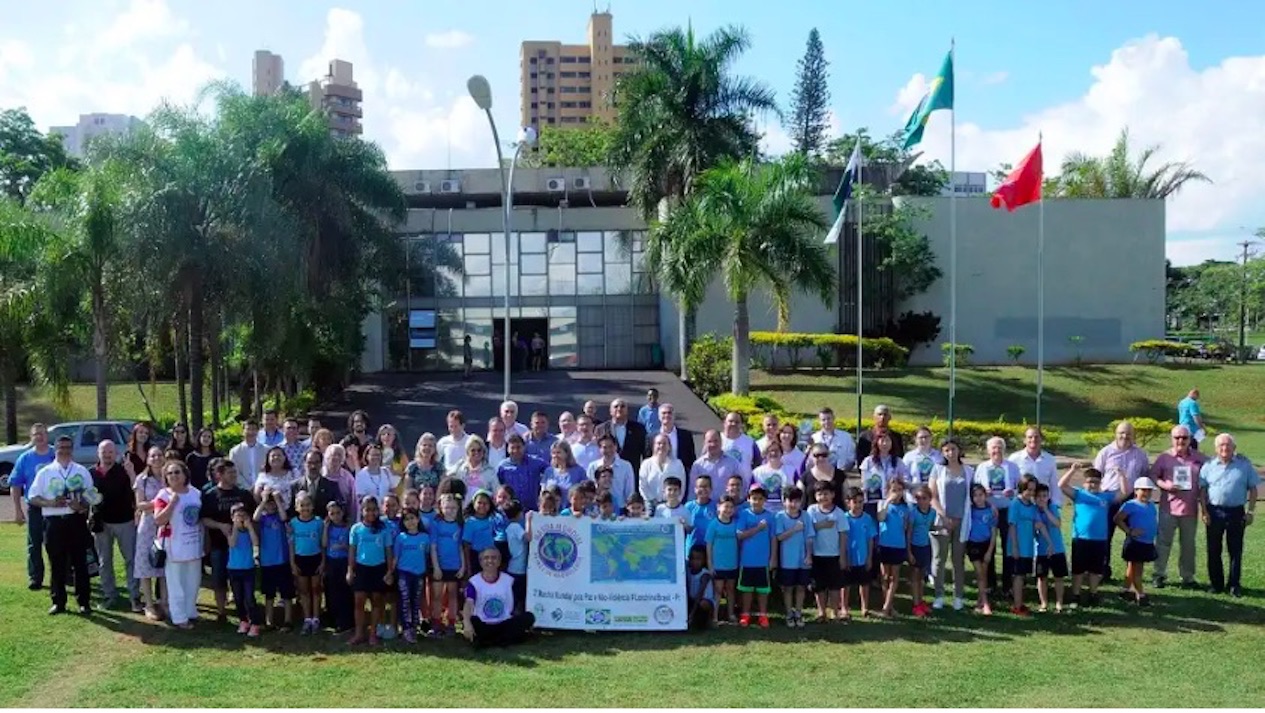
The Rio Branco City Hall, through the Garibaldi Brazil Culture, Sport and Leisure Foundation (FGB), starts the Culture of Peace Festival this Friday, 4, at 19h, at the Lydia Hammes Cultural Center. The project, which is sponsored by the Ministry of Citizenship and supported by parliamentary amendment of former Federal Representative Angelim, will bring 10 artistic occupations to two spaces of the city: Centro Cultural Lydia Hammes (Bairro Velho Velho) and Cacimbão da Capoeira (Centro).

(continued in right column)

(Click here for a Portuguese version of this article)

Questions for this article:

Can festivals help create peace at the community level?

(continued from left column)

The activities will be held in October and November 2019. The first event will have the theme “Black Empowerment”, and will feature presentations by Samba Girls, Capoeira Senzala, and slam with May Dourado and Matheus MB. Admission is free.

Four other themes will be brought to Lydia Hammes on October 11, 18 and 25 and November 1. They are: Youth, Forest Peoples, Women’s Empowerment and LGBTQI + Rights. The same themes will be addressed at Cacimbão da Capoeira, on November 3, 10, 17 and 24 and December 1.

“This project aims to fill our city with art and culture that address important themes of affirmative politics. We are very pleased to see projects like this, as it is proof that Mayor Socorro Neri cares about what is essential: our humanity,” says FGB President Sérgio de Carvalho.

Peace Tournament / PAYNCoP Gabon Promotes Peace Culture and Resolution 2250

. . DEMOCRATIC PARTICIPATION . .

from Jerry Bibang

As part of the commemoration of the International Day of Peace, the National Coordination of the Panafrican Youth Network for the Culture of Peace (PAYNCoP Gabon) took part, Saturday, September 21, in the Peace Tournament, organized by the United Nations system in Gabon.

During this event, PAYNCoP Gabon spoke to young people about the attitudes, values ​​and behaviors to adopt to cultivate the “culture of peace”. These include respect for others, the rejection of all forms of violence, solidarity with the needy, living together, forgiveness and dialogue.

(Article continued in the right side of the page)

( Click here for the French version of this article.)

Question for this article:

How can sports promote peace?

(Article continued from the left side of the page)

Also, the public was sensitized, through an illustrated guide, on resolution 2250 (youth, peace and security), which urges UN member states to put in place mechanisms that allow young people to participate actively in youth issues. peace and security at all levels of the consolidation or peacekeeping process.

Alongside this outreach, PAYNCoP Gabon also donated school supplies to the children of the Rainbow orphanage “to show them the love and solidarity that should guide all our actions,” explained Jerry Bibang, the National Coordinator of PAYNCoP Gabon. “This is an opportunity for us to thank our partners who are leading these activities, including the United Nations Regional Office for Central Africa (UNOCA) and UNESCO,” he added.

Initiated by UNOCA, the Peace Tournament is an activity that celebrates, in communion and conviviality, peace as a universal value without which it would be impossible to envisage sustainable development. This year, the competition brought together eight teams including the Economic Community of Central African States (ECCAS), the Directorate General of Human Rights, the French elements in Gabon, the National Gendarmerie, the Pan-African Youth Network for the culture of peace, the United Nations System and the National Police who won the competition. Plans were made to continue the tournament next year.

Essonne, France: From Grigny to Hiroshima, the path of a high school girl for Peace

. . DEMOCRATIC PARTICIPATION . .

An article from Actu

Inès Lakehal, a 17-year-old Grigny high school student, has been sent by her commune to Japan for a week to raise her voice in favor of peace.

She is only 17 years old, and yet Inès Lakehal can now claim to have attended one of the most important diplomatic and solidarity gatherings of youth. During the summer, the high school girl was sent by her commune to the land of the rising sun for a week, as part of a program of actions led by the non-governmental organization Mayors for Peace.

Objectives: to represent Grigny during the Japanese commemoration ceremonies of August 6 in Hiroshima and then attend the International Youth Conference for Peace in the Future with about forty other adolescents of different nationalities. “This experience has been very rewarding,” says Inès Lakehal. It was the first time that I traveled alone, as far outside France, and that I had to use English continuously. Fortunately I had prepared well, “she continues with a laugh of relief.

Enthusiastic about peace since she was 11 years old, Inès has been very involved in her city. Being fluent in Shakespeare’s language, she had the right profile as well as motivations to be accepted for participation by Mayors for Peace.

(article continued in right column)

(Click here for the French version of this article)

Question related to this article:

How can culture of peace be developed at the municipal level?

(article continued from left column)

Workshops and cultural visits

Divided in two stages, the typical Japanese day for Inès during the week was divided between thematic workshops on peace in the morning and cultural visits of the country in the afternoon (city of Uwajima, walks with the traditional Yukata summer kimono …). The high school student told us she met during this trip people who were “really incredible, engated, all of them eager to make peace”.

“I had many exciting and constructive peace conversations. I realized that many clichés we have about certain nationalities are completely false. I am thinking in particular of this young Iranian girl who was in my group. One of the most adorable people in the world, so open and advocating peace between states, even though in Europe we have such a bad image of Iran.”

A future career in politics or diplomacy?

Now rich in her various commitments and always keen on peace, Inès does not rule out directing her future and career towards politics or diplomacy. “Since the end of my studies at the municipal council of college students in Grigny, I have worked with its students to enable them to adapt to new roles and find new ideas and projects.”

The young lady recognizes that the participation in high spheres of political decision can sometimes lead to disenchantment. “Having the chance to participate at these levels has given me a passion and desire to continue in this direction. But it is a complicated environment. I didn’t realize this before because in Grigny the setting is like a cocoon, a big family where everyone knows each other,” she says.

150 French communes within the NGO

Mayors for peace was created in 1948 by the mayors of Japanese cities bombed during the Second World War Hiroshima and Nagasaki. It is a non-governmental organization with special consultancy status with the Economic and Social Council of the United Nations.

Its main lines of action concern the promotion and education of a culture of peace, support for the UN Charter and the development of multilateral security organizations, stopping wars and peaceful settlement conflicts, as well as disarmament and elimination of nuclear weapons. Involving more than 6,000 municipalities in 160 countries, Mayors for peace includes 150 communes in France. The president of the hexagonal branch turns out to be … Philippe Rio, the mayor of Grigny.

Côte d’Ivoire: Béoumi: Traditional leaders launch a caravan for peace

.. DEMOCRATIC PARTICIPATION ..

An article from L’intelligent d’Abidjan (translation by CPNN)

Several months after the inter-communal crisis in the department of Béoumi, chiefs and traditional chiefs, members of the Chamber of Kings and Traditional Chiefs of Côte d’Ivoire and the Royal Court of Sakassou began Wednesday, August 14, 2019, an awareness campaign for the culture of peace and cohesion in this department.

(Article continued in right column)

(Click here for the original French version.)

Questions for this article:

How important is community development for a culture of peace?

(Article continued from left column)

“We will go to all villages in the department of Béoumi to promote peace, rally, harmony and unity around the values ​​that unite us all,” said the head of this mission Nanan N’goran Koffi 2, also president Regional Chamber of Kings and Traditional Chiefs of Côte d’Ivoire. The launch of this campaign was later marked by a meeting with the heads of villages and Muslim guides of the department of Béoumi at the residence of the chief canton Kondéh in this city. At the kondêh chieftaincy and Muslim guides, Nanan N’goran Koffi 2, urged them to join this campaign which will last until October 5. Faced with the immensity of the task, he calls for the awareness of all. “We must bring our people together to eliminate the feelings of hatred and pride and to engage resolutely on the path of peace”, explained Nanan N’goran Koffi 2.

Nanan Ago Barthélémy, chief of the canton Kondéh and Bamo Kéïta, central imam of the mosque of Béoumi are committed and have committed all their collaborators to all implement to lead this campaign together to make the department of Béoumi, a haven of peace and cohabitation. “We need to make every effort to facilitate this campaign in our 98 villages. The chief cantons and traditional chiefs of the Gbêkê region are united around us. Ivory Coast is united around us. It is up to us to seize this outstretched hand of the chief cantons and traditional chiefs, “said Nanan Ago Barthélémy.

South Africa: Global Youth Peacemaker Network initiative offers ‘real hope for Cape Flats’

.. DEMOCRATIC PARTICIPATION ..

An article from Independent Online

Cape Town – Mother-of-five Georgina Fabrick, a community activist, lives in a very violent area in Bonteheuwel close to a drug den. Against all odds, she remains committed to presenting her sons with the best possible opportunities to rise above the gang violence and horrifying murder statistics devastating communities on the Cape Flats.

Having listened to a former Ugandan child soldier, Benson Lugwar, 24, recount how he has turned his life around after being forced to maim, murder and pillage, Fabrick has renewed hope. 

This was at Wednesday’s launch of the Whitaker Peace and Development Initiative’s (WPDI) Youth Peacemaker Network project on the Cape Flats.


The 45 youths taking part in a five-year private-public partnership to promote peace and sustainable development on the Cape Flats. Photo: Louis Neethling

The 49-year-old Fabrick, who is acting as a consultant and assisted in the interview process to select 45 local mentors from across the Cape Flats – referred to as a “trainer of trainees”, who will receive training for a year – said: “What I heard today has most definitely given me hope for the Cape Flats. 

“I was sceptical at first but I can see that in a very short space of time, they have achieved something.

“I’ve had enough of local NPOs and other organisations coming into our communities, getting the funding and making no difference at all, and within two months they are gone.”

The WPDI is the brainchild of Unesco special envoy for peace Forest Whitaker, an iconic Hollywood actor and director who has been inspired by the legacy of Nelson Mandela and Archbishop Emeritus Desmond Tutu. 

The Cape Flats programme is a five-year private-public partnership with global bank BNP Paribas and consumer finance business RCS.

It promotes peace and sustainable development on the Cape Flats by training young men and women to fulfil the roles of peacemakers and entrepreneurs in their communities.

Since its establishment in 2012, the WPDI has partnered with young community leaders from the southern region of South Sudan, Tijuana in Mexico, Northern Uganda and parts of the US, positively impacting more than 300 000 people living in some of the most violent communities in the world.

With such high levels of unemployment, becoming a gangster is the choice many youths make either out of fear, for economic reasons or to boost their social status.

(Article continued in right column)

Questions for this article:

How important is community development for a culture of peace?

(Article continued from left column)

“At the moment the gangsters are the role models and we need to change that mindset. If we are going to change anything about the communities, we need to change the mindset,” said single mother Fabrick.

“My belief is that if you take something away, replace it with something. If you take the gangsters away, replace it with something positive. Tell them there are other options out there.

“Maybe it’s time for someone looking in from the outside like WPDI to come in and do something. I was amazed recently to find out how many organisations are out there actively receiving funding in Bonteheuwel, yet our community is still suffering.”

Lugwar, 24,  who runs his own micro-lending business,   is a WPDI trainer of trainees and still studying, said: “I was forcefully abducted in 2002 by the Lord Resistant Army in Uganda on my way to school when I was eight years old. I stayed in the bush for three years.

“I used to live in violence which is worse than what people are experiencing in Cape Town. I was caned and threatened with death if I didn’t kill, burn houses, cut off people’s ears and noses, beat and rob people.”

When he returned home on escaping, he discovered all his relatives and his father were killed, moving in with his mother after he had undergone trauma counselling. In 2017, his life took a significant turn for the better when he joined the WPDI.

“I learned so many things about conflict resolution, life and business skills, information and communications technology. It brought a lot of change and I started reprogramming how I saw things.

“After that one-year internship training, I became more empathetic towards people and their situations. Seventy-five percent of the people in my community have been affected by war, but WPDI has helped bring young women and men together to bring about change in our environment.

“What is needed is the collective responsibility of all community leaders and organisations to bring about peace.

“Training in life and business skills help give the youth focus because they might be committing crime because they have no money and are trying to survive.

“When we fix the mind, create awareness and show them how to be creative to generate an income, that’s when things can change.”

The WDI believes it can help incentivise the youth of Cape Town, who have the “potential to become active vectors of positive transformation”. 

This will be done, among others, by instilling a culture of peace through community dialogues as well as courses in conflict resolution in schools on the Cape Flats. The trainers of trainees will educate 350 people from communities across the Cape Flats to become social development ambassadors.

The  WPDI  will provide their trainers with resources to develop educational projects and small businesses, building resilience and increased opportunities. 

Their Community Learning Centre in Athlone will provide a hub where the youth and residents can attend courses and use computers.

The WPDI is set on empowering the youth on the Cape Flats and emboldening them with the courage to believe their destiny isn’t fixed – it’s in their own hands.

Ivory Coast: National Symposium of Religious Leaders, Kings and Traditional Chiefs for a Culture of Peace and Non-Violence

. . DEMOCRATIC PARTICIPATION . .

An article from Abidjan.net

The Abbot Jacques Kouassi, Priest of the Diocese of Yamoussoukro, during the panels that punctuated this Tuesday, August 13, the first session of the work of the National Symposium of Religious Leaders, Kings and Traditional Chiefs for a Culture of Peace and Non-Violence, wondered if politicians in Ivory Coast want peace or only power?

It is under the banner of “Conflict Management and Reconciliation in Côte d’Ivoire” that religious leaders, kings and traditional leaders have worked out their roles and responsibilities for effective use of inter-ethnic alliances in the resolution of community and/or political conflicts.

(Article continued in right column)

(Click here for the original French version of this article.)

Question related to this article:

How should elections be organized in a true democracy?

(Article continued from left column)

As a contribution, Father Jacques Kouassi took the opportunity to sound the alarm by asking his peers to carry out an analysis of what needs to be done for the good of everyone and not that of a political party.

Faced with the recomposition of the Independent Electoral Commission adopted by parliamentarians and challenged by the Ivorian opposition, he invites kings and traditional leaders to pass judgment on this to avoid the mistakes of the past.

“Without passion, let’s think about it because that’s how it starts. We religious leaders, we are going to talk, but are those who must listen, are they ready to listen? Many of us want to speak, but we must speak not to take sides but for the good of Côte d’Ivoire, “says Father Jacques Kouassi.

Reacting to the ambition of this panel to set up a conflict resolution committee to inform the state authorities, he regretted the fact that in Africa in general and particularly in Côte d’Ivoire, the authorities find it difficult to distinguish between the resources of the state and those of their political party.

He asked if the authorities would be ready to settle conflicts without bias when knowing that it involves ​​his political adversary?

“I asked myself to know, do the politicians really want peace or only want power? Do politicians in Ivory Coast want peace or seek power? ”

He says he asks himself this question constantly, without having an answer.

Guber poll: When Ijaw elders converged on Yenagoa [Nigeria]

. . DEMOCRATIC PARTICIPATION . .

An article by Omoniyi Salaudeen from Sun News Online

Worried by the previous experience of violence and electoral malfeasance in Bayelsa State, concerned stakeholders under the auspices of the Ijaw Elders’ Forum on Wednesday, July 31 converged on Yenagoa. They were there to brainstorm on the peaceful way to achieving a free, fair and credible governorship poll slated for November 16. 


Rear Admiral Jonah (Rtd), addressing participants

The conference, with the theme: Peaceful and Credible Governorship Election and Good Governance in Bayelsa State: Building Consensus Through The Ijaw Charter and IJaw Nation Code of Ethics, Leadership and Governance, drew participants from across all walks of life, including the diplomatic corps, political parties and the aspirants. The event was just for one thing: non-violent and credible election.

Flowing from the tune of the discussion at the conference, no one was left in doubt as to the imperative of the urgent need to change the narrative about Bayelsa being perceived as a violence-prone state. All participants unanimously condemned violence in whatever form as a means of aspiring for leadership position.

The guest speaker, Dr Austin Tam George, in his paper entitled: ‘Electoral Violence and Superstition of Power,’ aptly captured the essence of the sensitization workshop. In his presentation, he outlined some of the factors that promote electoral violence. These include contempt for people, lack of confidence in the electoral process, culture of impunity as well as lack of compelling message, among others. He described the entrenched culture of impunity as the greatest danger to democracy, blaming the worrisome trend on absence of deterrence. “Without prosecution of those involved in violence during election, this culture of impunity will not stop. And it endangers democracy. What we have now is democracy without the people. Electoral violence can only produce mediocrity. There can be no visionary leadership where election is characterized by violence. There can no transparency and accountability from leaders who emerge through violence. Electoral violence diminishes everyone,” he posited.

The Chairman of the event, King Bubraye Dakolo, traditional ruler and Ebenanaowei of Ekpetiama Kingdom, set the tone for discussion in his earlier opening address. He urged all aspirants to eschew violence during and after the election, adding that anyone found to instigate violence should be ex-communicated.
“An election is about brain and not about gun. Let the game be a peaceful one. I will also like to suggest that all aspirants should be made to take an oath that they will not encourage violence and anyone who encourages violence should be ex-communicated,” he stated.

The deputy governor, Rear Admiral Gboribiogha John Jonah, who commended the organisers of the conference for the peace initiative, in turn charged the traditional rulers to ensure that the message of peace is taken to the grassroots. He also used the occasion to call on the Independent National Electoral Commission (INEC) to be fair to all.

(Article continued in right column)

Question related to this article:

How should elections be organized in a true democracy?

(Article continued from left column)

“Where an election is not free and fair, there will always be a reaction and you cannot predict the reaction,” he noted.

The Secretary of the IEF, Mr. Efiye Bribena, told the audience that the international community had expressed its strong support for the peace initiative, promising to sanction anyone involved in violence during the election.

“The global community is interested in the election coming up in November. They are partnering with us to have a free and credible election. Their absence in today’s event is due to security reports. They have called in to apologise for the unavoidable absence and expressed the readiness to sanction anyone involved in violence,” he said.

A major feature of the event was the signing and affirmation of non-violence agreement by the governorship aspirants as a demonstration of their commitment to a peaceful and credible election.
Signatories to the agreement included the Deputy Governor, Rear Admiral Gboribiogha John Jonah (retd) (People’s Democratic Party- PDP), Dr. F. Erepamo Osaisai, Kemela Okara, Mrs Diseye Nsim Poweigha (All Progressives Congress- APC), Speaker of the House of Assembly, Tonye Isenah and Eneyi Zidougha, chairman, Inter Party Advisory Council.

The conference, which was a follow up to the earlier workshop held in May, aimed at building an enduring culture of peace and tolerance from the top to the grassroots. The Chairman, BoT, G24 Embasara Foundation and former Executive Secretary/Chief Executive Officer of the Nigerian Content Development and Monitoring Board, Arch Amagbe Denzil Kentebe, speaking with the reporter on the sidelines of the event, assured that the initiative would be sustained beyond the election period.

His words: “We have been having radio programmes where we are talking directly to Bayelsans.  Everybody in one way or the other is trying to disseminate this information. This agitation for violence is coming from the top. And that is why we are targeting political actors to make them agree to a peaceful process. The good thing about getting the politicians, who are always the culprits, together is to make them affirm that they will not be violent-prone.

“Violence comes in when someone doesn’t have something to offer. It is a very expensive programme that we have. And don’t forget we are doing it from our own personal contributions because we believe that if there is no violence during election in Bayelsa State, we will have the best of leadership. And the best of leadership will always ensure great development. What we are trying to do is to change the narrative.”

The peace conference was a collaborative effort of Ijaw Elders’ Forum, Lagos State chapter, Ijaw Professionals Association (IPA), Ijaw Nation Forum, G24 Embasara Foundation and Ijaw Women Connect Worldwide, Diplomatic Corp, Centre for Democracy (CDD) and Ijaw Nation Development Group (INDG).
Dignitaries in attendance at the occasion included: Bayelsa State Deputy Governor, Rear Admiral Gboribiogha John Jonah (retd), King Bubraye Dakolo, Gen. Paul Toun – Chairman, Board of Trustees, Ijaw Professionals Association, Dr. Austin Tam-George – Fmr. Hon. Commissioner of Information, Rivers State, Barr. Efiye Bribena – Secretary, Ijaw Elders Forum, Lagos, Rt. Hon. Tonye E. Isena – Speaker, Bayelsa State House of Assembly, Barr. Iniruo Wills – Co-convener of Embassara Foundation,  and Denzil Amagbe Kentebe – Chairman, Board of Trustees, Embassara Foundation.

Building infrastructures for peace

. . DEMOCRATIC PARTICIPATION . .

An article by Saul Arbess and David Wick for the Ashland Tidings

Much in the way that we have a military, energy and financial infrastructure, we also need an infrastructure for peace, a critical oversight in virtually all governments in the world.

In nearly every state, military infrastructure exists, often the most heavily financed, resourced and comprehensive infrastructure of government. They are in a high level of readiness for both defense and potential aggression against other states or responding to internal conflict, typically by suppression, thus favoring war and a military view of security — that is, an armed, unstable peace.

The military approach relies on threat rather than the creation of an enduring culture of peace, based upon our common security as citizens of planet Earth and the human right to peace and security of the person and community.

A good definition of infrastructure for peace comes from the United Nations Development Program: “An infrastructure for peace is a network of interdependent systems, resources, values and skills held by government, civil society and community institutions that promote dialogue and consultation; prevent conflict and enable peaceful mediation when violence occurs in a society.”

One could see infrastructure for peace as a parallel structure to the generally highly developed and readily mobilized military infrastructure with its national, regional and local organization, except that an infrastructure for peace is not hierarchical, but most effective when organized from the bottom up — that is, intervention should occur at the level where conflict is manifest and utilize traditional peace-building methods with trusted leadership at each level, not necessarily politicians.

A principal strength of infrastructure for peace is that it develops a permanent peace-building structure on the ground at all levels, rather than an ad hoc system of responding to conflict as it arises and then disbanding until the next conflict event occurs. An infrastructure for peace would allow for early warning and intervention in potential conflict scenarios and timely responses when violent conflict has emerged.

At the local level, the Ashland Peace Commission can be seen in this light. At the state level, there is the Democratic Party of California’s resolution calling for the state to create a department of peace. At the national level, there is the U.S. Institute of Peace that unfortunately only has the powers of persuasion, and the current bill for a U.S. Department of Peacebuilding.

(Article continued in right column)

Question related to this article:

How can we develop the institutional framework for a culture of peace?

(Article continued from left column)

Canada has created the position of Ambassador for Women, Peace and Security with both domestic and international responsibilities, supporting the role of women in all aspects of peace work.

In every case and at every level, the goal is to transform conflict by peaceful means, with violence not seen as an option. This means that all parties to a conflict are represented — both those directly involved and external interests as well, and are adequately resourced to present and support their interests in the absence of coercion.

Restorative Justice is an excellent model for this approach, active in many countries, including the U.S.

To build an infrastructure for peace nationally, there is the movement for departments or ministries of peace promoted by the Global Alliance for Ministries and Infrastructures for Peace. Currently the Solomon Islands (2005), Nepal (2007), Costa Rica (2009), the Autonomous Region of Bougainville – Papua New Guinea (unknown date) and, most recently, Ethiopia (2018) have created such infrastructures for peace.

Afghanistan is moving in this direction. In Africa, following electoral violence, both Ghana and Kenya have formed peace-building programs without a formal department as such.

Here are some guidelines for the establishment of infrastructures for peace:

1. It works best when there is a comprehensive strategy in place involving the government and all stakeholders at the national, regional and local level.

2. Each level in the structure needs to have some autonomy so that responses to conflict can be made rapidly at the appropriate level. Local peace committees can often function where government cannot or may be regarded with suspicion. Local peace committees have been effective in defusing electoral violence by creating a dialogue between opposing sides and insuring free and fair elections, mediation and reconciliation between parties.

3. Local peace committees are encouraged to utilize traditional and culturally appropriate decision-making structures, where legitimacy exists among the parties to conflict and not necessarily rely on modern state ideas of formal organization.

Saul Arbess is co-founder of the Global Alliance for Ministries and Infrastructures for Peace and the Canadian Peace Initiative. Arbess will be one of the speakers at the Ashland Global Peace Conference Sept. 21. He will be presenting a talk on infrastructures for peace. Conference information can be found at ashlandglobalpeaceconference.com. David Wick is executive director of the Ashland Culture of Peace Commission.

UN chief welcomes power-sharing deal between Sudanese military and opposition

…. HUMAN RIGHTS ….

An article from UN News

UN Secretary-General António Guterres said on Friday he was “encouraged” by reports of a newly-inked power-sharing deal between the Forces for Freedom and Change – a coalition of opposition and protest groups – and Sudan’s ruling military council.
The two sides have reportedly agreed to share power for three years, and then hold elections for a return to full civilian government. Mr. Guterres welcomed the decision to establish transitional governing bodies, and congratulated the African Union, Ethiopia and the regional Inter-Governmental Authority on Development (IGAD), for their role in mediating the talks.

Video from Deutsche Welle

News of the deal reportedly brought thousands of people onto the streets to celebrate and raised hopes that a peaceful transition of power can take place, following months of turmoil since December’s civilian revolt began.

(Article continued in the right column)

Questions related to this article:

How effective are mass protest marches?

(Article continued from the left column)

The Secretary-General, said a statement from his Spokesperson, is now encouraging all stakeholders to “ensure the timely, inclusive, and transparent implementation of the agreement and resolve any outstanding issues through dialogue.”

The statement also noted that Mr. Guterres welcomes the parties’ commitment to conducting an independent investigation into the violence perpetrated against peaceful protesters, including the events on 3 June, when security forces and militia fired on pro-democracy protesters in the capital Khartoum, leaving dozens dead and many more injured.

The UN chief expressed his solidarity with the people of Sudan, and reiterated the commitment of the United Nations to assist in the transition process.

Following a series of strikes and protests early in the year, long-time dictator Omar al-Bashir was overthrown by his top generals in April. Hopes were high that the military and opposition could reach a deal, but since the military-led violence of 3 April, talks were at an impasse until the latest round of negotiations began in the capital Khartoum earlier this week.   

Just last Sunday, there were nationwide demonstrations demanding the transfer of power to civilian hands, in which at least seven were reportedly killed, with more than 180 injured.

On Wednesday, UN human rights chief Michelle Bachelet called on Sudanese authorities to lift restrictions on the internet and launch independent investigations into all acts of violence against demonstrators, and allegations of excessive force, including attacks on hospitals. Ms. Bachelet said her office had received numerous allegations that excessive force had been used by security forces against protestors.

Council of Europe: Culture of peace preventing violence and terrorism

.. DEMOCRATIC PARTICIPATION ..

A written declaration from the Parliamentary Assembly of the Council of Europe

We, the undersigned, declare the following:

We recall Parliamentary Assembly Doc. 13407 of 29 January 2014, Written Declaration No. 562 and the Council of Europe “White paper on intercultural dialogue” and the European Cultural Convention of 1954, as well as the support of members of the Assembly for the United Nations General Assembly resolutions on the culture of peace and the Sustainable Development Goals (SDGs).

We consider that efforts to achieve peace in areas of conflict and to prevent extremist radicalism in all nations require commitment by national parliaments to mandate core education for a culture of peace and the SDGs in all levels of society and effective legislative measures and monitoring to prohibit incitement to terrorism in all sectors of society and media by “constructing the defenses of peace in the minds of men” (UNESCO preamble).
(continued in right column)

(Click here for a version in French>

Questions for this article:

How can parliamentarians promote a culture of peace?

(continued from left column)

We call upon the Assembly to support the initiative of the Inter-Parliamentary Coalition for Global Ethics as a strategic partner to promote implementation of the United Nations resolutions on the culture of peace and the SDGs through:

* national legislation in Council of Europe and United Nations member States for mandatory education on the culture of peace and the SDGs at all levels of education,

* strict legislative measures to prevent incitement to extremist violence and terrorism.

Written declaration No. 688 | Doc. 14939 | 28 June 2019

Signatories: Mr Antonio GUTIÉRREZ, Spain, SOC ; Ms Ulviyye AGHAYEVA, Azerbaijan, FDG ; Mr Jokin BILDARRATZ, Spain, ALDE ; Mr José CEPEDA, Spain, SOC ; Mr Boriss CILEVIČS, Latvia, SOC ; Mr Corneliu Mugurel COZMANCIUC, Romania, EPP/CD ; Ms Olivia DELGADO, Spain, SOC ; Ms Miren GORROTXATEGUI, Spain, UEL ; Mr Sabir HAJIYEV, Azerbaijan, SOC ; Mr Attila KORODI, Romania, EPP/CD ; Ms Carmen LEYTE, Spain, EPP/CD ; Mr Georgii LOGVYNSKYI, Ukraine, EPP/CD ; Mr Pere LÓPEZ, Andorra, SOC ; Ms Yuliya LOVOCHKINA, Ukraine, SOC ; Mr Marco NICOLINI, San Marino, UEL ; Ms Melisa RODRÍGUEZ HERNÁNDEZ, Spain, ALDE ; Mr Stefan SCHENNACH, Austria, SOC ; Mr Samad SEYIDOV, Azerbaijan, EC ; Mr Günter VOGT, Liechtenstein, ALDE ; Mr José ZARAGOZA, Spain, SOC