Category Archives: DEMOCRATIC PARTICIPATION

Burkina: The Movement for the Culture of Peace and Love of the Fatherland

. . DEMOCRATIC PARTICIPATION . .

An article from Le Faso

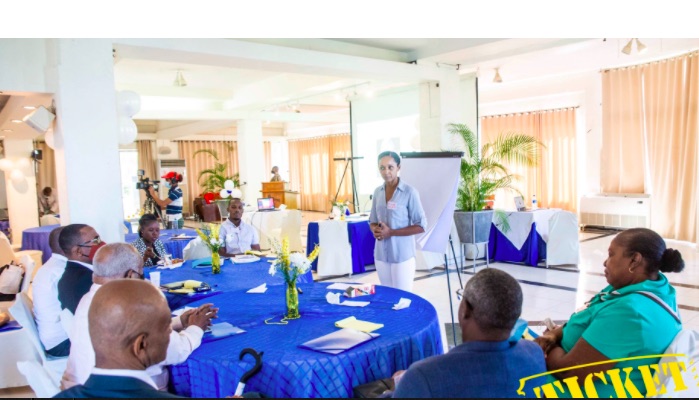
The Movement for the Culture of Peace and Love of the Fatherland (MPAP) held its second ordinary congress on August 29 and 30, 2020 in Bobo-Dioulasso. This meeting brought together the officers from 13 regions and the focal points of the 45 provinces of Burkina Faso under the theme: “Election year in Burkina Faso: what contribution for a free and transparent election, pledge of peace and social cohesion?”. The ceremony which took place on Saturday, August 29, 2020, was sponsored by the chef de canton des bobos mandarès.

The elections of November 22, 2020 crystallize debates both nationally and sub-regionally. They constitute a major stake for the consolidation of democracy and social cohesion.

(Article continued in right column)

(Click here for the original French version of this article.)

Question related to this article:

How should elections be organized in a true democracy?

(Article continued from left column)

According to the president of the Movement for the Culture of Peace and the Love of the Fatherland (MPAP), Samuel Kalkoumdo, these elections are being held in extremely difficult conditions, in that there are more than a million displaced people under conditions of insecurity that persist and make localities inaccessible. “In this condition, how can we succeed to hold free, transparent and universally accepted elections and avoid a social divide?” he asked.

It is in this context that the MPAP is committed to the quest for social cohesion, peace and living together through its congress held in the city of Sya. For the president of the MPAP, this is what motivated the choice of the topic of reflection which will allow the delegates to return home, seasoned and enlightened, to be real vectors of peace in their respective localities.

“The choice of this theme is imperative. In such a context, the country must be united. We must advocate social cohesion in order to be able to hope to build a bright future. All 45 provinces are represented at this congress. And during the two days of work, the delegates will be trained and steeped in experience,” he said.

Participants will take part in several communications, including one on the electoral process. “We are convinced that if people understand how the process is going, they will be less inclined to say without evidence that there has been fraud. The participants will be trained as association leaders, in order to be able to send a message of peace to the population,” explains the president of the MPAP. The Burkinabè shoujld cultivate peace by working for free and transparent elections accepted by all.

Culture of Peace in Guinea: Journalists Equipped with a ‘Common Ground Approach’ for Managing Rumors During Election Periods

. . DEMOCRATIC PARTICIPATION . .

An article by Adama Hawa Bah in Guinee 360 (translation by CPNN)

On the initiative of the international NGO Search for Common Ground, ten journalists from the written press and online media benefited from training on the roles and behaviors that journalists should adopt during elections: conflict-sensitive journalism, rumor management and the “Common Ground approach ”.

This USAID-funded project is part of the ” Electoral Capacity Building, Orderly Standards and Democratic Responsibilities” executed by Search for Common Ground with the theme ”the Common Ground Approach, the Journalist’s Role in election period and rumor management.”. The meeting served to remind media workers of their responsibilities before, during and after the elections.

(Article continued in right column)

(Click here for the original French version of this article.)

Question related to this article:

How should elections be organized in a true democracy?

(Article continued from left column)

“We know that the press plays a crucial role in the elections. We decided to talk to the media to remind them of their responsibilities in the conduct of his elections so that they do their job in a professional and responsible manner,” explained Fanta Conté, program manager at Search for Common Ground.

“We hope that these two days of work (25 and 26 August) will allow journalists to play their roles and do their work in a professional manner during this election period. After this workshop, we will establish a partnership with the participating bodies. They will produce articles on the electoral process but also on the promotion of peace because, it is important to educate citizens and to get people to understand how to participate in an election. … ”

Siba Guilavogui represented the editorial staff of the nimbanews.org site at this workshop. He was especially impressed by the quality of the modules provided by the trainers.

“I am very pleased with the quality of this workshop. The topics discussed were interesting. The presidential election will take place soon in our country and it is often peppered with violence. So as a man of the media, I have to know how to identify the right information to publish, to know how to give information that is in the sense of advocating peace instead of contributing to violence. ”

Nowadays, many people call themselves journalists without knowing the ethics and professional conduct of the profession, regrets Mantenin Sacko, a reporter who received the training. “I would like to thank the organizers for this great initiative, which has increased our knowledge of the journalistic profession. This training allowed us to learn much more about the social responsibility of journalists, and the behavior they should adopt during an election period. It also allowed us to understand a lot of things about life in society through practical exercises. It made a big impression on me,” she said.

US: WNBA players wearing T-shirts opposing Dream owner

.. DEMOCRATIC PARTICIPATION ..

An article from ESPN

WNBA players are wearing “Vote Warnock” T-shirts to games this week to support Rev. Raphael Warnock, who is challenging Atlanta Dream co-owner Kelly Loeffler (R-Ga.) for her U.S. Senate seat.

Last month, Loeffler wrote a letter to WNBA commissioner Cathy Engelbert objecting to the league’s promotion of Black Lives Matter — which is painted on the courts at IMG Academy in Bradenton, Florida, where the league is holding its restart — and advocating instead for teams to add American flags to jerseys.


Photo from Twitter – Sue Bird

Elizabeth Williams, a forward on the Atlanta Dream, told ESPN that the league’s executive committee began exploring the shirt idea as a response to Loeffler’s statements, because “for effective change to happen, there has to be policy changes. And so if we’re going to sit here and talk about wanting justice reform, part of that is making sure that we have officials in office that understand that.”

Williams said the Dream and other players have made a coordinated effort not to discuss Loeffler or her statements in recent weeks, and instead focused on how they could best support a candidate they felt better represented their political views.

“I think when all this stuff started happening with her, we didn’t want to feel like we were pawns,” Williams said. “We can only control so much about what the league does [in regard to Loeffler], and so for us, we wanted it to be bigger than that.

“That’s kind of been the theme of this season. So we wanted to make sure we could still keep the focus on our social justice movement, and funny enough, Rev. Warnock is somebody who supports everything that we support and just happens to be running in that seat. So it just worked out really well.”

Williams said Seattle Storm guard Sue Bird initially came up with the idea.

Bird told ESPN that participation in the campaign to support Warnock is voluntary and that all players have discussed the idea over Zoom calls while at IMG Academy, where the WNBA season resumed in late July.

“This was a situation where given what was said in regards to the owner of Atlanta and how, basically, she came out against a lot of what the women in our league stand for, I think was emotionally tough for a lot of the women in our league to hear that,” Bird said. “But very quickly we started to realize that this was only happening for her political gain. This was something that she wanted. And the more noise we made, whether it was a tweet saying to get her out, that was just playing into her hands.

“I’m not some political strategist, but what I do know is that voting is important. And I think our league has always encouraged people to use their voices and to get out and vote.

“So, what a great way for us to get the word out about this man, and hopefully put him in the Senate. And, if he’s in the Senate, you know who’s not. And I’ll just leave it at that.”

Last month, Loeffler told ESPN that she feared the WNBA’s public support for the Black Lives Matter movement could drive some fans away.

“I think a lot of people feel that they may not have a place,” Loeffler said. “They may feel excluded from this sport and other sports that make them feel like American values aren’t at the core of what we’re doing here.”

(Article continued in right column)

Question for this article:

How can sports promote peace?

(Article continued from left column)

She also contended that there is a difference between saying “Black lives matter” and the organization Black Lives Matter.

“I think we all agree the life of every African American is important,” Loeffler said. “There’s no room for racism in this country, and we have to root it out where it exists. But there’s a political organization called Black Lives Matter that I think is very important to make the distinction between their aim and where we are as a country at this moment.

“The Black Lives Matter political organization advocates things like defunding and abolishing the police, abolishing our military, emptying our prisons, destroying the nuclear family. It promotes violence and anti-Semitism. To me, this is not what our league stands for.”

Warnock released a statement through his campaign Tuesday saying he was “honored and humbled by the overwhelming support from the WNBA players. This movement gives us the opportunity to fight for what we believe in, and I stand by all athletes promoting social justice on and off the court.

“Senator Loeffler and those like her who seek to silence and dismiss others when they speak up for justice have planted themselves on the wrong side of history. We are in a moment of generational, transformative change, and there is no place in that movement for bigotry. We celebrate the courage and resolve of these players standing for justice, and I am proud to stand with them.”

Later Tuesday, Loeffler followed up with a statement of her own, saying, “This is just more proof that the out-of-control cancel culture wants to shut out anyone who disagrees with them. It’s clear that the league is more concerned with playing politics than basketball, and I stand by what I wrote in June.”

Following the Dream’s 81-74 loss to the Phoenix Mercury on Tuesday night, the players’ decision was a primary talking point.

“We definitely decided to wear it because he’s for Black Lives Matter,” guard Chennedy Carter said. “He supports the league and the movement, and we support him. We’re voting for Warnock.”

Forward Betnijah Laney concurred.

“He’s just somebody that also supports the Black Lives Matter — the movements that the WNBA is standing behind this year,” she said. “So, this is somebody that we’re supporting, as well.”

Also on Tuesday, the Seattle Storm defeated the Connecticut Sun 87-74. After the game, several members of the Storm spoke about the process.

“What we’re trying to do is first educate ourselves, and then educate everyone else. Initially, this kind of came from Sue — vote for Warnock. We had an opportunity to be on two separate Zooms with him and see what he stands for and what he’s fighting for,” forward Breanna Stewart said. “I think he’s someone who’s fighting to create change and fighting to be on the right side of things. Obviously, I’m not voting for Georgia, but continuing to use my platform to help with that — but I did vote today, just want to let you know.”

Guard Sami Whitcomb concurred, saying the players “are very concerned with leadership in this country and people that we want to be representing us and the morals that they represent. I think [Loeffler has] proven that she doesn’t represent us, she doesn’t represent our voices — not in this league, not in the community. Rev. Warnock does, so we’re putting our support behind him because of the person that he is and the type of legislation that he stands for. You can call it politics. We call it supporting the human race and morals.”

Seattle guard Jordin Canada added that this “is bigger than basketball. We’re more than athletes. To have someone in our league that doesn’t represent or support African Americans, who are 80% of our league, is disheartening, honestly, and sickening.”

Former Dream player Layshia Clarendon, who has written and spoken out about Loeffler’s comments, was also heavily involved in the planning of the WNBA players’ campaign.

“It’s important for us to support voting and the overall campaign to flip the Senate,” said Clarendon, who now plays for the New York Liberty. “We want people in office who support the same values and morals as we do. Rev. Warnock is pro criminal justice reform, for LGBT+ rights, and pro choice/reproductive rights. Those are the kind of people we want representing us, because that’s what our league stands for.”

Colombia: Details of the Non-Violence Secretariat to be created by the Mayor’s Office of Medellín

. . DEMOCRATIC PARTICIPATION . .

An article from San Andres (translation by CPNN)

The mayor of Medellín will present this Monday [August 3] to the municipal council the functions of the planned Secretariat of Non-violence, dedicated to guiding the construction of territorial peace in the Antioquia capital.

According to the founding document on its functions, the new agency, whose creation must be approved by the Council, will define and implement strategies for the prevention of violence and victimizing acts that affect the lives and environments of the inhabitants of the city.


The social manager of Medellín, Diana Osorio talks about the need to create the Secretariat of Non-Violence

Likewise, this new Secretariat, which replaces the initial idea of ​​a Peace Management, would be in charge of the “promotion of restorative justice and comprehensive security that allows the transformation of conflicts and the protection of life as a fundamental value.”

The entity would be made up of the Undersecretary of Restorative Justice and the Undersecretary of Construction of territorial peace. Its creation was planned from the office of the Medellín Social Manager, Diana Osorio.

(article continued in right column)

(Click here for the original Spanish version of this article)

Question related to this article:
 
How can culture of peace be developed at the municipal level?

(article continued from left column)

The Secretariat’s functions

The Secretariat of Non-Violence will have at least 14 main functions, among them, to accompany the design, formulation, implementation and evaluation of the Municipal public policy of Peace, reconciliation and coexistence, in accordance with the guidelines of the National Public Policy.

It must also implement policies, plans, programs and projects for training and generating a Culture of Nonviolence at the central and decentralized level, as well as leading research, social innovation and knowledge management programs and projects that contribute to the prevention of violence and the transformation of conflicts in the city.

It will also be a function of the agency to implement a model of care, assistance, accompaniment, protection and monitoring of the victims and re-incorporated ex-combatants to guarantee their rights, non-stigmatization and any reparations that may be necessary to promote peaceful coexistence.

It must also provide care and support for the reintegration of the prison population and adolescents in the criminal responsibility system, as well as the population at risk for the prevention of violence.

It will be in charge of coordinating, with entities such as the National Center of Historical Memory, the Casa de la Memoria Museum and civil society organizations, specific actions for the dignity of victims and the construction of collective memory in the territories of the Municipality of Medellín.

The Secretariat should also strengthen the processes and scenarios of conflict transformation and reconciliation, favoring the formation of networks of social and community organizations for citizen reconciliation.

And it must consolidate a process of articulation with the System of Truth, Justice, Reparation and Guarantee of Non-Repetition created after the peace agreements with the FARC. This system includes the Special Jurisdiction for Peace (JEP), the Commission for the Clarification of Truth, and the Unit for the Search of Persons reported as Disappeared.
 

USA: New Haven Alders Put Peace On The Ballot

DISARMAMENT & SECURITY .

An article by Thomas Breen in the New Haven Independent

Peace will be on the ballot this November — in the form of a nonbinding referendum asking New Haveners how they’d like Congress to spend the majority of the federal budget.

On the military, as is currently the case? Or on jobs, education, environmental sustainability, and other human services instead?


Monday night’s virtual aldermanic hearing.

During Monday night’s regular monthly meeting of the full Board of Alders, local legislators voted unanimously in support of adding that question about federal spending priorities to the Nov. 3 general election ballot.

The non-binding advisory referendum, proposed by the city’s Peace Commission, will ask New Haveners the following question: “Shall Congress prepare for health and climate crises by transferring funds from the military budget to cities for human needs, jobs and an environmentally sustainable economy?”

Hill Alder Ron Hurt urged his colleagues to vote in favor of the resolution that included the ballot update. He said the purpose of the resolution and nonbinding referendum is to give New Haven voters an opportunity to weigh in on whether or not they would like to see Congress and the President “end foreign wars, scrap all nuclear weapons, rebuild infrastructure, and develop a new economy based on renewable energy.”

According to a June committee hearing on the item, 53 percent of the current federal budget is devoted to military spending. Many who testified during that two-and-a-half-hour hearing spoke of the perversity of this country spending so much on weapons and vehicles of destruction when that money could instead be going to bolster the nation’s public health infrastructure, which has so struggled to keep up with the pandemic. The Department of Defense’s budget, meanwhile, has proven seemingly impossible to audit because of bookkeeping errors, deficiencies, and irregularities.

In a press release put out after the vote, Downtown/Yale Alder Eli Sabin, who is the aldermanic representative on the Peace Commission, applauded the move. He quoted Peace Commission Chair Joelle Fishman as saying, “this ballot referendum will allow New Haven voters to express their hopes and dreams, and perhaps inspire other cities to do the same, building the momentum needed to create the political will for every person to be treated with dignity and respect, for every person to have health care, housing, a living wage job, food security, in a peaceful and sustainable world.”

(Article continued on the right column)

Questions for this article:

Does military spending lead to economic decline and collapse?

How can culture of peace be developed at the municipal level?

(Article continued from the left column)

Westville Alder and Health and Human Services Committee Chair Darryl Brackeen, Jr. is also quoted in that release as saying that supporting the peace resolution “is the right thing to do and now it’s time to hear from the people.”

Peace Resolution

Below is the resolution adopted by the Board of Alders Monday night. The title of the resolution is: From the Peace Commission, a Resolution calling on Congress and the President to prepare for health and climate crises by transferring funds from the military budget to cities and states for human needs, jobs, and an environmentally sustainable economy and placing a non-binding advisory referendum to that effect on the November 3, 2020 New Haven municipal ballot.”

Whereas, the severity of the U.S. economic crisis, compounded by the 2020 COVID-19 pandemic, has caused severe budget shortfalls at all levels of government, necessitating a re-examination of national spending priorities; and

Whereas, every dollar spent on the military produces fewer jobs than spending the same dollar on education, healthcare, clean energy and other beneficial programs; and

Whereas, U.S. military spending has ballooned to more than half of federal discretionary spending – more than during the Cold War, the Vietnam conflict, or the Korean War; and

Whereas, the United States trails many other nations in life expectancy, infant mortality, education, housing, and environmental sustainability;

Now, therefore, be it resolved that the Board of Alders of the City of New Haven, Connecticut calls on the U.S. Congress and the U.S. President to end foreign ground and air wars; refrain from new military ventures; work toward an end to all nuclear weapons; reduce military spending in order to meet human needs; promote job creation; re-train and re-employ those losing jobs in the process of conversion to non-military industries; rebuild infrastructure; assist municipal and state governments; and develop a new economy based on renewable energy.

Be it further resolved that the most honorable City Clerk of New Haven is hereby directed to accomplish any and all actions necessary to place the following non-binding advisory referendum on the November 3, 2020 municipal ballot:

“Shall Congress prepare for health and climate crises by transferring funds from the military budget to cities for human needs, jobs and an environmentally sustainable economy?”.

US: Remembering Congressman John Lewis with gratitude

. DEMOCRATIC PARTICIPATION . .

Special to CPNN by Anne Creter, U.S. Dept. of Peacebuilding Campaign

Inspired from having just watched Rep John Lewis’s poignant Memorial Service, allow me to make some “good trouble” by sharing the following FYI.  Rep John Lewis is a true Peace Hero to us at the Peace Alliance because he was an original cosponsor of the first Department of Peace bill introduced in Congress by former Rep Dennis Kucinich on July 11, 2001 (along with then Rep Bernie Sanders!). 


Unlike Bernie who moved on to the Senate, Rep Lewis continued to faithfully cosponsor the bill in each of the 10 additional congressional sessions it has been reintroduced (presently HR-1111 sponsored by Rep Barbara Lee of Ca).  Few other Members of Congress have that long-enduring distinction.  

Our Georgia Dept of Peacebuilding Committee member had a wonderful relationship with Rep Lewis, so we often visited his office during our Advocacy Days in DC (first picture). 

(Article continued in the column on the right)

Questions related to this article:

Where in the world can we find good leadership today?


(Article continued from the column on the left)  
  
His Deputy Chief of Staff, Jamila Thompson, who just spoke at the Service, is in middle of the second picture.   

We will sorely miss him making “good trouble” — “necessary trouble” for the culture of peace in the beloved community of our one world.  

Here is a recent Peace Alliance tribute to Rep Lewis.  https://peacealliance.kontribune.com/articles/10053

If you are not already on the Peace Alliance list of individual / organizational endorsements for the Department of Peacebuilding bill, now is a great time to do so.  Thanks. 
https://peacealliance.org/wp-content/uploads/2020/07/DoPOrgEndorsements6-5-20.pdf

Guadalajara, Mexico: Online Diploma of Culture of Peace

.. DEMOCRATIC PARTICIPATION ..

An article from the Government of Guadalajara (translation by CPNN)

The Municipal President of Guadalajara, Ismael Del Toro Castro, has inaugurated an online Diploma of Culture of Peace and Civil Society Organizations: Paradigms, Innovation and Contemporary Action.

“It is very important today, on the subject of the culture of peace, that we can all be in this training process, in the new reality that is going to present itself in our environment and that forces governments and civil society to be even more closely linked on the subject of culture of peace, ”said the mayor of Guadalajara.

(continued in right column)

(Click here for the Spanish original of this article)

Questions for this article:

How can culture of peace be developed at the municipal level?

Is there progress towards a culture of peace in Mexico?

(continued from left column)

The objective of this online diploma course is to professionally train the members of Civil Society Organizations in the field of a culture of peace, in order to address the social problems that mainly affect vulnerable groups.

For her part, the councilor Rocío Aguilar Tejada, said that the diploma “will give us the necessary elements so that all the actions are aimed at achieving peace and thereby generate well-being for the people of Guadalajara.”

“The most important thing is what can be done in the various neighborhoods and districts, according to the new reality where we must work virtually. Above all, we must build peace in the neighborhoods and within the civilian associations”, said the Secretary General of the Guadalajara City Council, Víctor Manuel Sánchez.

José Carlos Izaguirre, coordinator and representative of the Consultative Council of Civil Society Organizations for Human Development, and Ernesto Samuel Rea, president of the Jalisco Bar Association, were also present at the opening of the event, carried out by electronic means.

Mayors and Ecologists on the Left in France: A “tour de force”

. . DEMOCRATIC PARTICIPATION . .

An article by Florent Le Du in L’Humanité (reprinted by permission) (translation by CPNN)

About twenty socialist, environmentalist and communist mayors gathered in the Loire Valley on Tuesday to build a network for sharing ideas and building common projects. Without aiming for the presidential election, they assure.


Among the mayors meeting in Tours on July 21, from left to right: Léonore Moncond’huy (Poitiers), Eric Piolle (Grenoble), Emmanuel Denis (Tours), Anne Hidalgo (Paris) and Johanna Rolland (Nantes). Guillaume Souvant / AFP

One hundred years after the famous Congress, Tours was once again, on Tuesday, at the heart of the debates of the Left, for a day. Green-pink-red elected officials – mayors, deputies or metropolitan presidents of twenty-one cities – gathered there for a working seminar, at the invitation of the new municipal councilor, Emmanuel Denis, who wishes to create a federation of town halls for “social ecology”. Anne Hidalgo (PS, Paris), Bruno Bernard (EELV, metropolis of Lyon), Nathalie Appéré (PS, Rennes), Johanna Rolland (PS, Nantes), Éric Piolle (EELV, Grenoble), and Léonore Moncond’huy (EELV , Poitiers) notably made the trip.

This meeting is a foreshadowing of the future, said the mayor of Tours. The voters have sent a clear message: they want an acceleration of the transition to renewable energy. Synergies must be set up between these cities, especially those that are ecologically advanced, a network of humanist cities.”

Three central themes

Ecology was widely discussed during this meeting, with the issues of 5G, clean transport, the development of bicycle networks, ecological transition and waste treatment. Beyond the environmental issue, elected officials also worked on the city’s policies in terms of youth and precarious employment, integration of working-class communities, reception of refugees, housing and a social and solidarity economy.

(article continued in right column)

(Click here for the French version of this article)

Question related to this article:
 
How can culture of peace be developed at the municipal level?

(article continued from left column)

“We spent the morning sweeping through the various topics around three central themes, which are solidarity, ecology and citizenship. For each of these subjects, it will then be necessary to have regular exchanges in order to build real common projects, continue to be inspired by what colleagues are doing and weigh in order to remove certain constraints”, explained Gaylord Le Chequer, deputy to the PCF mayor of Montreuil, Patrice Bessac.

“An ambiguity”

The Tours gathering is therefore the birth of a network for the convergence of ideas, exchanges of good practices and mutual aid. It is not a new movement with the Élysée in the sights, say the elected officials present. A few days ago, in the Journal du dimanche, the president of the metropolis of Lyon, Bruno Bernard, had mentioned “an ambiguity” on this subject and a need to “clarify things”. “This has been done, no personal ambition or prospecting for the future of national politics has been put forward,” he said on Tuesday at the end of the first half-day of work.

However, this network of left mayors has an interest in having a national resonance, according to Nathalie Appéré, PS mayor of Rennes: “We are not building a new left here, but a left of the territories which will have to be heard at the national level. It is essential to remove certain blockages, particularly on the ecological transition. We have battles to take to the government. According to Anne Hidalgo, “obviously, this convergence must also make it possible to transform 21 votes of mayors into one. We are decentralizers. We must finally get out of this archaism in which our country has been immersed for a very long time, this Jacobinism, this Colbertism, which means that everything is decided at the level of the ministries in Paris. ”

“Congress of Tours reversed”

Hidalgo, the elected mayor of Paris, had already announced, on the eve of the second round of municipal elections, the transformation of its “Paris en commun” platform into a “lasting political structure” with the objective of creating a “federation” with a view in particular to preparing the next electoral deadlines. Until then, all of the questions discussed during the Touraine seminar will then be divided into working groups. “With the health crisis we have become accustomed to meeting remotely, this is what we will do very regularly with all the mayors gathered here, and others like Michèle Rubirola in Marseille”, explained Emmanuel Denis. . Regular meetings like yesterday’s are also planned “in order to maintain momentum and never lose the connection”. The mayor of Touraine hopes to be able to hold this rally again in his city at the end of the year: “Since the split of the left took place in December 1920, we can celebrate this centenary by uniting it again. A sort of inverted Congress of Tours.
 

US  Conference of Mayors’ 2020 Vision for America: A Call to Action

.. DEMOCRATIC PARTICIPATION ..

Excerpts from the website of The United States Conference of Mayors

As the leading voice of America’s cities, The U.S Conference of Mayors is uniquely qualified to recommend a strategic vision for America. Since its founding in 1932, the Conference remains the place where America’s mayors – Democrats, Republicans, and Independents alike – come together in a collegial, cooperative, bipartisan manner to get things done.

The mayors of cities of all sizes, across all regions and all manner of demographic and socio-economic composition, are working side-by-side to solve problems, improve conditions, and create and catalyze positive change for the people we all serve.

Our Mayors’ 2020 Vision for America: A Call to Action platform of 12 priorities is organized under the Conference’s bipartisan focus on Infrastructure, Innovation and Inclusion. Together they represent a positive way forward.

* Protect and Advance Human and Civil Rights

(Continued in right column)

Questions for this article:

How can culture of peace be developed at the municipal level?

(Continued from left column)

* Re-imagine and Modernize the Nation’s Transportation Infrastructure

* Invest in America’s Water and Wastewater Systems

* Address Climate Change by Accelerating Clean Energy Use

* Embrace Efficient, Effective Modern Technology While Protecting Consumers and Cities

* Strengthen Education, Improve Schools, and Build the Workforce of the Future

* Join with Mayors and Police Chiefs to Support Public Safety for All

* Fix our Broken Immigration System

* Make Housing More Affordable and End Homelessness

* Guarantee Access to Affordable, Quality Healthcare and Critical Human Services

* Rewrite the Tax Code to Help Hardworking Taxpayers and Reduce Economic Inequality

* Promote American Exports, Fair Trade, and International Tourism

Colombia: The 2nd Latin American Congress of Restorative Justice

. . DEMOCRATIC PARTICIPATION . .

An article from El Litoral

The Ombudsman of Santa Fe, Raúl Lamberto, was the first speaker on Friday, July 3, the last day of the 2nd Latin American Congress of Restorative Justice, which took place on June 30 and July 1, 2 and 3, organized by the santafesina institution along with the General Defender of Lomas de Zamora, the Superior Council of the Judiciary of Colombia and the Ombudsman of Colombia.

On the occasion, Lamberto highlighted the scope of geographical representation and the large participation of listeners. “We have received innumerable messages from all over the world with their adherence, collaboration and encouragement towards this journey. They are very heartfelt messages for us because very important institutions of the world are accompanying us”, he pointed out and reflected:“ We have been the vehicle of something that society is demanding, in face of the emerging insufficiency of the penalty of criminal justice as a tool. It is clear that punitive power is not enough and with restorative justice we are on a path that is necessary. ”

Subsequently, the videos were shared with messages from different national and international references, including the president of the Latin American Ombudsman Institute, Cristina Ayoub Riche, the president of the Ibero-American Ombudsman Federation, Jordán Rodas Andrade, the president of the International Institute of the Ombudsman, Peter Tyndall, and the representative of the Ombudsman of the city of Buenos Aires, Dolores Gandulfo.

After the greetings, the General Defender of Lomas de Zamora,Eduardo Germán Bauche, took the floor and thanked all the participants and said: “Talk about restorative justice without thinking about the contribution that restorative practices make to the culture of peace. it is like leaving the issue unfinished and that is why it seemed important to us to close this Congress with the panel of restorative approaches”. After that, the panel of speakers began.

Restorative approach, culture of peace and social contexts

The speaker in charge of formally opening the last panel of Congress was the expert from the Conflict Prevention and Democratic Dialogue Roster for Latin America of the United Nations Development Program (UNDP), Cesar Rojas, who expressed: “We are living a unique situation , difficult, which we could call as a situation of insomnia in which many of us keep our eyes open, worried that there are many who have lost their lives and others continue to become infected and this, undoubtedly, distresses us in a special way, but also this insomniac situation keeps our eyes open to look at a set of unpublished, particularly significant structural developments.

In this sense, he elaborated: “Never before have we been so open to a conjunction of events, thanks to networks and connections. We have a kind of periscope receiving invaluable knowledge and information from different voices and from different parts of the world.”

Rojas also referred to forgiveness and pointed out that this “search is to generate a deep human alchemy in human beings, so that they can conjure up the pain that they carry within”, and he concluded: “It is expected that restorative justice can recover the interiority of those who are suffering, weighed down by pain, so they can once again recover, replace, repair and empower life. ”

Subsequently, and continuing with the panel of speakers, Glaucía Foley, who is coordinator of the Community Justice Program of the Court of Justice of the Federal District of Brazil, spoke, saying: “The culture of peace presupposes profound changes in two spheres , in the sphere of justice where it is necessary to guarantee rights, and in the political sphere where it is also necessary to transform the pattern of power domination”. Likewise, he considered that “restorative practices cannot be limited to an instrument of humanization of criminal justice, but must be combined with a transformative perspective of conflict and not only of the transformation of personal relationships between the people involved”, and proposed the use of the methodology of community circles “that allow a collective analysis of the circumstances in which conflicts arise, including those where structural violence is found and also its possible ways of overcoming them”.

In turn, the reference of the Colombian Ombudsman, Paula Robledo, reflected: “The scenario of the pandemic has allowed us to take advantage of the production of new knowledge from a respectful dialogue, where listening and reflections on restorative practices enrich a network of professionals, academics and public officials, committed to challenging indifference through training oriented to democratic values. ”

Finally, and closing the panels of exhibitors of the Congress, the Director of the Nansen Center for Peace and Dialogue (Norway), Alfredo Zamudio, spoke, who pointed out that “through experience we have been learning how the reunions when societies are broken by conflict”, and he elaborated:“ We speak of reunions and not of reconciliation in a process that begins when the parties understand that the broken history can be reconstructed and this happens when there is a real listening to the other”. He concluded: “In this way the dialogue that builds trust and repairs the damage is produced ”.

(Article continued in the right column)

(Click here for the original article in Spanish)

Discussion question

Restorative justice, What does it look like in practice?

(Article continued from left column)

At the end of his speech, he recalled an experience he had in Africa in which some sheikhs participated and, in order to avoid indiscriminate felling of trees, he placed in the center of the meeting the trunk of an old tree that he had found and asked if they could count all the rings on the trunk. When they reached 150 rings, he explained that these were the years of the tree’s life and that this specimen had surely given shade to their grandparents. “Through this emotional experience we managed to start a process of awareness,” he recalled.

After that, the conclusions of the Congress took place, which was in charge of the Coordinator of Relations with Citizens of the Ombudsman, Eleonora Avilés and the representative of the General Defender of Lomas de Zamora and the Public Ministry of the Province of Buenos Aires, María de los Ángeles Pesado Riccardi.

Sharing perspectives and experiences

Previously, on Friday morning, with the coordination of Mariana Apalategui, responsible for the area of ​​Mediation, Alternative Resolution of Criminal Conflicts and Restorative Justice of the jurisdiction of Juvenile Criminal Responsibility of Lomas de Zamora, the last panel of Sharing Views and Experiences took place, under the slogan “Public policies and restorative practices in juvenile criminal justice”.

The first to speak was Martiniano Terragni, from the Attorney General’s Office for Criminal Policy, Human Rights and Community Services in the Argentine Public Prosecutor’s Office. “I want to celebrate the organization’s effort to achieve a culture of peace and work in justice processes that move away from traditional justice,” said the also university professor, who asked: “We must avoid the reductionism of juvenile justice in the last twenty years which involves focusing on from when to punish a child.” He also defined three complexities that restorative justice must address: gender perspective, multiculturalism and an interdisciplinary approach. “It is a challenge for the future to take into account the gender perspective, which is not present in traditional justice,” he added.

For her part, Celia María Oliveira Passos, from the Institute for Advanced Solutions in Brazil, referred to how to conceive restorative justice with a vision over time and for this she divided it into four waves: linear view, systemic view, holistic view and integrative vision. “Restorative justice invites reflection on the construction of relationships in the personal, institutional and social dimensions. There are three axes that help us act following the principles and values ​​of restorative justice, “added the member of the Permanent Forum on Restoration Mediation and Practices of the Court of Justice of Rio de Janeiro.

In turn, Marcela Kern, of the Juvenile Criminal Responsibility Ombudsman of the Public Ministry of the province of Buenos Aires, outlined: “Since 2016 we began to do, almost without realizing it, restorative justice with adolescents. Today I consider that this is not only an indispensable tool for reaching agreements, but also for an individual healing process for young people. ” And then she added: “We carry out our task teaching adolescents to develop emotional intelligence and we do it with the 10 life skills recommended by the World Health Organization. The most important thing with adolescents has to do with listening ”. To finish, she showed a video with activities, work modalities and their results.

Then it was the turn of Mariela Prada, defender of Juvenile Criminal Responsibility and professor at the National University of Lomas de Zamora, who referred to interdisciplinary network practices in the juvenile criminal responsibility system with a restorative approach. “For those who experience a destructive act, restorative practices are a before and after,” he evaluated. And then she explained: “When people say that there is no justice, it is because traditional justice is not giving the answers that men and women need. We cannot continue trying to respond with legal and mathematical notions to a social problem ”. In reference to interdisciplinarity, she pointed out that in her area they train municipalities and at the same time receive training from them, which demands that we include youth.

Later, Lácidez Hernández, from the Prison Confraternity of Colombia, took the floor and recounted the work carried out in prisons with those convicted of violent acts in that nation marked by armed conflict. “Confraternity is inspired by restorative justice. In Colombia it has been difficult to carry out a project of peace, dialogue and respect for human rights. The violence has been cyclical. It just changes face. And in this context, the initiative was born in 2004 to apply restorative justice in the country’s prisons. Prisons are a reflection of this violent context, “she said, later detailing how the institution implements the methodology:” We help find victims of violence with their perpetrators. Restorative justice helps break crime circles and build a culture of peace that improves our societies. ”

Finally, Mónica Contreras Cabrera, National Coordinator of the Mediation Unit of the Superintendency of Education of Chile, recounted her experience in the pilot project of juvenile criminal mediation in that country, which is being used as a contribution to the reform of the law on adolescent criminal responsibility . She also referred to the importance of communities in the restorative justice process. “The community perspective of restorative justice is not new. Our practices have to be linked with the broader communities and, in that sense, I propose to introduce the ritual elements of the communities,” she reflected, and concluded: “Restorative justice in Latin America and the community element are evolving and have to take a own and different path, taking into account a more social and political aspect. In Latin America there are many social injustices and restorative justice must be able to respond in this context. ”