Category Archives: FREE FLOW OF INFORMATION

Peace appeal from leading chess players of Russia to the President of the Russian Federation

FREE FLOW OF INFORMATION

An article by Yana Metlyova in Championat (translation by CPNN)

Appeal to the President of the Russian Federation from Russian chess players.

We oppose military actions on the territory of Ukraine and call for an early ceasefire and a peaceful solution to the conflict through dialogue and diplomatic negotiations. It is unbearably painful for us to see the catastrophe that is happening these days with our peoples.


Ian Nepomniachtchi

We have always played for Russia in individual and, with particular pride, in team competitions. We believe that chess, like sports in general, should bring people together. The most difficult and prestigious international tournaments were held in our country at the highest level even in the midst of the pandemic.

Chess teaches responsibility for one’s actions; every step counts, and a mistake can lead to a fatal point of no return. And if this has always been about sports, now people’s lives, basic rights and freedoms, human dignity, the present and future of our countries are at stake.

In these tragic days, we think of all the people who found themselves in the center of this terrible conflict. We share the pain with our Ukrainian colleagues and call for peace.

The Ukrainian chess team is the reigning European champion, one of the best teams in the world along with ours. We played dozens of matches and hundreds of games. We have always put the game above politics – and the Ukrainians have responded to us in return. We ask you to give teams, players and ordinary people from both countries a chance for mutual respect.

We are for peace. Stop the war!

(Continued in right column)

Questions related to this article:
 
Can the peace movement help stop the war in the Ukraine?

(Continued from left column)

The petition is signed by:

Ian Nepomniachtchi, grandmaster, Honored Master of Sports of Russia, two-time Russian champion, European champion, vice-world champion, two-time world champion, European champion as part of the Russian team, winner of the FIDE Online Olympiad as part of the Russian team;

Alexandra Kosteniuk, grandmaster, Honored Master of Sports of Russia, 12th world champion, Russian champion, World Cup winner, three-time Olympic champion with the Russian team, two-time world champion and five-time European champion with the Russian team;

Daniil Dubov, grandmaster, world champion in rapid chess, European champion as a member of the Russian team and winner of two online Olympiads as a member of the Russian team;

Petr Svidler, grandmaster, Honored Master of Sports of Russia, eight-time champion of Russia, winner of the World Cup, five-time winner of the World Chess Olympiads as part of the Russian team, two-time winner of the World Team Championship as part of the Russian team, three-time winner of the European Team Championship as part of the Russian team;

Andrey Esipenko, grandmaster, winner of two online Olympiads as part of the Russian team;

Maxim Matlakov, grandmaster, European champion, European champion as part of the Russian team;

Kirill Alekseenko, grandmaster, participant of the Candidates Tournament, European champion in the Russian team;

Alexander Motylev, grandmaster, Russian champion, European champion, coach of the Russian men’s team;

Evgeny Naer, grandmaster, European champion, coach of the Russian women’s team;

Pavel Tregubov, grandmaster, European champion;

Anton Demchenko, grandmaster, European champion;

Mikhail Kobalia, grandmaster, senior coach of the Russian youth team;

Alexander Khalifman, grandmaster, FIDE world champion, two-time Olympic champion in the Russian team;

Valentina Gunina, Grandmaster, Honored Master of Sports of Russia, multiple champion of Russia and Europe in the individual competition, three-time Olympic champion with the Russian team, world champion, six-time European champion with the Russian team, winner of two online Olympiads with the Russian team;

Polina Shuvalova, International Master, World Junior Chess Champion, Russian Rapid Champion, World and European Champion as a member of the Russian team, winner of two online Olympiads as a member of the Russian team;

Alina Kashlinskaya, grandmaster, European champion, world champion and two-time European champion as part of the Russian team;

Igor Lysy, grandmaster, champion of Russia;

Dmitry Kryakvin, grandmaster, journalist;

Vladimir Barsky, international master, journalist;

Mark Glukhovsky, master candidate, organizer;

Maxim Notkin, international master, journalist;

Maxim Chigaev, grandmaster;

Anastasia Chigaeva, FIDE Master;

Olga Badelko, grandmaster;

Pavel Ponkratov, grandmaster;

Alexander Shimanov, grandmaster;

Igor Berdichevsky, grandmaster;

Ivan Rozum, grandmaster;

Ildar Khairullin, grandmaster;

Artur Gabrielyan, grandmaster;

Nikita Petrov, grandmaster;

Evgeny Gleizerov, grandmaster;

Artem Odegov, FIDE Master;

Konstantin Mesropov, International Master;

Svetlana Ershova, Women’s International Master;

Evgeny Egorov, international master;

Anna Volkova, organizer;

Eteri Kublashvili, FIDE Women’s Master;

Yana Sidorchuk, organizer;

Anna Burtasova, women’s grandmaster;

Denis Grigoriev, journalist;

Ilya Gorodetsky, candidate master, commentator;

Oleg Pervakov, grandmaster, multiple world champion in chess composition, journalist.

Russian regulator censors Ukraine war coverage, reporters told to toe Kremlin line

FREE FLOW OF INFORMATION

An article from Reporters Without Borders

Reporters Without Borders (RSF) supports the efforts of Russia’s independent journalists and media outlets to provide reliable news coverage despite the clampdown imposed by the Kremlin as a result of its war in Ukraine, which has increased the many obstacles they have already had to deal with.


Journalists work in the news room of the independent Dozhd (Rain) television channel in Moscow, Russia. © 2021 AP/Denis Kaminev, reprinted from Human Rights Watch

Читать на русском / Read in Russian

Russia’s media regulator, Roskomnadzor, has become a “Ministry of Truth,” as the independent Journalists and Media Workers Union courageously pointed out. The words “war,” “attack” and “invasion” are now banned  from the media. Only information from “official Russian sources” – the defence ministry – is now permitted. Information about military losses or troop moral had already been classified  since October. Any attempt to provide such coverage is liable to result in prosecution or inclusion on the “foreign agents” list.
 
Yesterday, Roskomnadzor blocked  access to at least six online media outlets because of their war coverage – Nastoyashchee Vremya, an online TV channel run by the Prague-based US broadcaster Radio Free Europe/Radio Liberty (RFE/RL), Krym Realii, an RFE/RL subsidiary in Crimea, the opposition media outlet The New Times, the student newspaper  Doxa , the Russian version of the Interfax-Ukraine news agency and the Ukrainian pro-government news site Gordon.

“The information war is in full swing in Russia,” said Jeanne Cavelier, the head of RSF’s Eastern Europe and Central Asia desk. “President Vladimir Putin needs to put all the media on a battle footing in order to justify the invasion of Ukraine to Russian citizens by concealing the war’s victims. But the Pravda era is over. We support independent media outlets that are providing reliable news coverage in this very fraught context.”
 
Prosecutions
 
Roskomnadzor has also initiated proceedings  against at least ten media outlets, including Radio Echo of Moscow, the popular news site Mediazona, Dozhd TV and the investigative newspaper Novaya Gazeta, for “disseminating false information.” Novaya Gazeta’s high profile editor, Nobel peace laureate Dmitry Muratov, posted a  video  calling for a major anti-war movement and published the newspaper’s 26 February issue in both Russian and Ukrainian in a show of solidarity. It was probably for posting his video – containing the word “war” – on its website that the trade magazine Journalist is also being prosecuted, although it later removed the video. 

(Continued in right column)

(click here for the article in French or click here for the article in Spanish.)

Questions related to this article:
 
Free flow of information, How is it important for a culture of peace?

How can we be sure to get news about peace demonstrations?

(Continued from left column)

Roskomnadzor accused these media outlets of publishing “false information about the shelling of Ukrainian cities and the death of civilians in Ukraine as a result of the actions of the Russian Army, as well as content in which the ongoing operation is called an attack, invasion or a declaration of war.”
 
After receiving warnings from Roskomnadzor, other media outlets deleted content that was not to the Kremlin’s liking because they feared that their websites could be blocked or they could be fined up to 5 million roubles (more than 50,000 euros). This was the case with Prospekt Mira, an online media outlet based in the Siberian city of Krasnoyarsk, which had to take down an article referring to explosions in Ukrainian cities.
 
Social media have also been targeted. Internet access providers have restricted  access to Twitter, while Roskomnadzor has begun restricting access to Facebook, as announced  on 25 February, after Facebook decided to reduce search engine result links to certain state-owned and pro-government media outlets. Pavel Durov, the founder of the encrypted messaging service Telegram, said he was planning   to restrict access to his platform in Ukraine and Russia because of the uncontrolled spread of fake news on many Telegram channels, but he later retracted.
 
Arrests of journalists
 
Journalists have been arrested over war-related reporting. Polina Ulanovskaya of the SotaVision website, and at least three other reporters from local news sites – 93.ru’s Valeria Dulskaya and Yuga.ru’s Valeria Kirsanova and Nikita Zyrianov – were summarily arrested while covering an anti-war demonstration in the southwestern city Krasnodar on 27 February. They were released  in the evening.
 
Three reporters with RFE/RL’s Russian service Radio Svoboda – Ivan Voronin, Artyom Radygin and Nikita Tatarskiy – were arrested while covering an anti-war protest in Moscow on 24 February, and spent six hours in a police station  before being released without charge when their lawyers intervened.
 
Novaya Gazeta journalists Ilya Azar and Ivan Zhilin, and two Radio Svoboda journalists, reporter Sergei Khazov-Kassia and cameraman Andrei Kiselev, spent more than two hours in a police station   on 26 February after being arrested while preparing to cover an anti-war protest in Belgorod, a city near the Ukrainian border.
 
When the two Novaya Gazeta journalists entered a hospital with a view to interviewing injured people who had been taken there, a guard asked them to leave, they reported in a story   published the same day. “Yesterday, a journalist from Belsat [a Belarusian exile TV channel based in Poland] was manhandled in this hospital and was forced to delete all of her photos,” they reported, added that “she says she saw more than we did.”
 
Harassment

As leading victims of the government clampdown, journalists have also protested, despite the risks. Some have been arrested while standing on their own with a sign criticising censorship – the only permitted form of protest. Pressure has been placed on others. For example, Elena Chernenko, the head of the business daily Kommersant’s foreign desk, was excluded from the pool of Kremlin-accredited reporters for publishing an open letter opposing the war that was signed by more than 300 journalists.
 
The state media are meanwhile moving into battle. The Rossiya 1 TV channel decided on 27 February to grant much more airtime to shows carrying government propaganda, such as the talk-show presented by Vladimir Soloviev, a star TV host who is the target of international sanctions . “In Russia, Russian officials and journalists should be purged if they don’t support Putin,” he said during his show  on 24 February.
 
Russia is ranked 150th out of 180 countries in RSF’s 2021 World Press Freedom Index.

Despite government crackdown, Russians continue to protest the war

FREE FLOW OF INFORMATION

A press survey by CPNN

CPNN has published several articles recently about Russian opposition to the war, including open letters from scientists, from cultural figures, and from the “Congress of Intelligentsia.”

Opposition continues to grow despite draconian, even ridiculous, measures by the Russian government to stifle protest. Protesters risked arrest by massing in public in St. Petersburg, as shown the the photos below from Deutsche Welle.

As of February 26, the most comprehensive account of the antiwar movement and government crackdown comes from Moscow Times as follows

Russia’s Anti-War Lobby Goes Online

The head of Russia’s state-run RT television is in no doubt. If fellow citizens oppose President Vladimir Putin’s action in Ukraine then they are no longer Russians.

Margarita Simonyan, editor-in-chief of the English language international news network, is never one to mince her words and is used to making cutting remarks on Twitter in defense of Putin who she refers to simply as “leader.”

“If you are ashamed of being Russian now, don’t worry, you are not Russian,” was her summation of the anti-war movement at home.

Several thousand Russians demonstrated against the Russian invasion of Ukraine, but the police reaction was the usual one when it comes to Kremlin critics: hundreds of arrests.

So the anti-war movement has moved online, where it is beginning to make itself heard and to garner support, some of it high-profile.

Ukrainian flags adorn profile pictures and teary-eyed emojis are scattered liberally among the online statements. The hashtag #NoToTheWar was trending on Twitter on Saturday.

Since early Thursday, when the invasion of Ukraine began, various Russian celebrities, journalists and bloggers have expressed their horror and helplessness, pleading for an immediate end to the war.

The popular video blogger and documentary filmmaker Yuri Dud saw one of his online posts get a million “likes.”

“I write these words for a reason. When my children grow up and discover this moment in history… and ask me ‘Dad, what did you do?’, I want to have written proof that I did not choose this regime and did not support its imperialist rage,” he wrote.

‘This must be stopped!’

Elena Chernenko, a journalist with the Kommersant daily, said she was excluded from the pool of journalists covering Foreign Minister Sergei Lavrov because she started an anti-war petition among her colleagues. 

An open letter from the arts and cultural fields on Saturday had the support of more than 2,000 actors, directors and other creative figures. 

They dismissed Putin’s argument that the invasion is a “peacekeeping” operation to save Russian speakers in eastern Ukraine.

“Forcing peace through the use of force is absurd,” the letter said.

Just as many doctors, nurses and paramedics have signed their own online missive.

“No matter how you seek to justify the use of lethal weapons, they are still lethal,” they wrote. 

And an anti-war petition on the change.org website has gathered more than 750,000 signatures in two days. 

Among the celebrities making their voices heard, including regulars on loyal public television, is popular singer Valery Meladze.

“This must be stopped!” was his message on Instagram on the first day of the invasion.

‘Shame added to suffering’

Dmitry Muratov, the 2021 Nobel Peace Prize laureate and editor-in-chief of the opposition newspaper Novaya Gazeta, expressed his shame in an online video.

“We are suffering,” said Muratov. “Our country, on the orders of President Putin, has started a war against Ukraine. And nobody can stop it. Therefore, to our suffering is added shame.”

In a highly symbolic move, the founders of the “Immortal Regiment,” an organization dear to the Kremlin because it is responsible for preserving the memory of the dead of World War II, called on the Putin “to cease fire,” describing the use of force as “inhuman.”

Moscow’s Garage museum of contemporary art, founded by Kremlin-linked oligarch and Chelsea FC owner Roman Abramovich, announced it would close on Saturday, refusing to “maintain the illusion of normality.”

Also two communist MPs who voted for the recognition of the independence of pro-Russian separatists in eastern Ukraine, have denounced the invasion of Russia’s neighbor. 

“I voted for peace, not for war. I voted for Russia to be a shield [for the separatists]… not for Kyiv to be bombed,” wrote MP Mikhail Matveyev.

Addressing the celebrities and “thousands and thousands” of anonymous Russians denouncing the invasion, Ukrainian President Volodymyr Zelensky thanked them and asked them to stop those who “lie to the whole world.”

Putin has described Zelensky and his government as “terrorists” and “a gang of drug addicts and neo-Nazis,” urging the country’s military to topple him.

(Continued in right column)

Questions related to this article:
 
Can the peace movement help stop the war in the Ukraine?

(Continued from left column)


In addition to the article from Moscow Times, here is information from other media sources:

________________-

Appeal of Russian NGOs to end the war from Echo of Moscow

_____________

Science diaspora against war from TRV Science
______________-

Draconian and ridiculous government censorship from Al Jazeera

Russia’s communications regulator has ordered media outlets in the country to remove reports describing the continuing attack on Ukraine as an “assault, invasion, or declaration of war” – or face being blocked and fined.

In a statement on Saturday, Roskomnadzor accused several independent media outlets of spreading “unreliable socially significant untrue information” about the shelling of Ukrainian cities by the Russian army and civilian deaths.

Among those sent warning letters were Echo Moskvy, a popular radio station, and Novaya Gazeta, the country’s top independent newspaper whose editor-in-chief Dmitry Muratov was awarded a Nobel Peace Prize last year.

Citing a request from the Prosecutor-General’s Office, the regulator said media outlets, including independent television channel Dozhd, will be blocked unless they remove the “unreliable information”.
____________

More anti-war actions from Yahoo News

According to OVD-Info, rights group that tracks political arrests, at least 460 people in 34 cities were detained over anti-war protests on Saturday, including over 200 in Moscow.

Open letters condemning Russia’s invasion of Ukraine kept pouring, too. More than 6,000 medical workers put their names under one on Saturday; over 3,400 architects and engineers endorsed another while 500 teachers signed a third one. Similar letters by journalists, municipal council members, cultural figures and other professional groups have been making the rounds since Thursday.

An online petition to stop the attack on Ukraine, launched shortly after it started on Thursday morning, garnered over 780,000 signatures by Saturday evening, making it one of the most supported online petitions in Russia in recent years

Two lawmakers from the Communist Party, which usually toes the Kremlin’s line, spoke out against the hostilities on social media.

Oleg Smolin said he “was shocked” when the attack started and “was convinced that military force should be used in politics only as a last resort.” His fellow lawmaker Mikhail Matveyev said “the war must be immediately stopped” and that he voted for “Russia becoming a shield against the bombing of Donbas, not for the bombing of Kyiv.”

Russia’s state communications watchdog, Roskomnadzor, charged that reports about “Russian armed forces firing at Ukrainian cities and the death of civilians in Ukraine as a result of the actions of the Russian army, as well as materials in which the ongoing operation is called ‘an attack,’ ‘an invasion,’ or ‘a declaration of war’” were untrue and demanded that the outlets take them down or face steep fines and restrictions.

On Saturday, Russian internet users reported problems with accessing Facebook and Twitter, both of which have played a major role in amplifying dissent in Russia in recent years.

___________________

Stop the War message on Telegram from UPI

On Friday, daughter of Kremlin spokesman Dmitry Peskov, Elizaveta Peskova, posted a “stop the war” message on a Telegram verified account with more than 180,000 followers, which has since been taken down, according to CNN.

___________________

Protests by Russian athletes from Perez Hilton

Russian tennis star Andrey Rublev performed a quiet protest on the court after his win on Friday, writing a simple message on the camera: “No war please” Later in a press conference the Moscow native expanded on his message, being incredibly selfless: “In these moments, you realize that my match is not important. It’s not about my match, how it affects me. What’s happening is much more terrible… You realize how important it is to have peace in the world and to respect each other no matter what, to be united. We should take care of our earth and of each other. This is the most important thing.”

Fellow Russian tennis star Daniil Medvedev also spoke out, saying:
“By being a tennis player, I want to promote peace all over the world. It’s just not easy to hear all this news. I’m all for peace.”

Alex Ovechkin, a Russian athlete from a different arena — literally, he’s a hockey star playing for the NHL‘s Washington Capitals — weighed in as well, saying: “Please, no more war. It doesn’t matter who is in the war — Russia, Ukraine, different countries — I think we live in a world, like, we have to live in peace and a great world.”

Meanwhile Russian chess grandmaster Yan Nepomniachtchi tweeted on Thursday: “History has seen many Black Thursdays. But today is blacker than the others. #нетвойне #saynotowar”

Thousands of Russian cultural figures sign open letter against the war

DISARMAMENT & SECURITY .

Information from Echo of Moscow (website later blocked by Russian government)

Over 17,000 signatures were listed on the following google document as of March 2.

We, artists, curators, architects, critics, art critics, art managers – representatives of art and culture of the Russian Federation – have initiated and sign this open letter, which we consider insufficient but necessary action on the way to peace between Russia and Ukraine.

On February 24, 2022, the Russian Federation launched a sudden, aggressive and open military offensive throughout Ukraine. The reason for him was declared “protection of residents of the DPR and LPR”, while military operations are carried out throughout Ukraine and in its major cities: Kiev, Lviv, Kharkiv, Odessa and others. Among the residents of these cities are a large number of our relatives, friends, acquaintances and colleagues. We demand to stop this war with Ukraine, which has lasted since 2014, – a sovereign and independent state – and start negotiating with it on a respectful and equal basis.

The war in Ukraine is a terrible tragedy for both Ukrainians and Russians. It entails huge human casualties, jeopardizes the economy and security, and will lead our country to complete international isolation. At the same time, it is absolutely meaningless – any coercion to peace through violence is absurd. The pretext under which the deployment of the “special operation” took place is entirely designed by representatives of the Russian authorities, and we oppose this war being waged on our behalf.

Now, first of all, we are concerned about the fate of Ukrainians, their lives and safety!

However, on behalf of the professional community, it is also important for us to say that the further escalation of the war will have irreparable consequences for artists and cultural workers. This will take away our last opportunities to fully work, speak out, create projects, popularize and develop culture, take away the future. Everything that has been done culturally over the past 30 years has now been jeopardized: all international ties will be broken, cultural private or public institutions will be preserved, partnerships with other countries will be suspended. All this will destroy the already fragile economy of Russian culture and significantly reduce its importance both for Russian society and for the international community as a whole. It will be almost impossible to study culture and art in such conditions.

We, artists, curators, architects, critics, art critics, art managers – representatives of art and culture of the Russian Federation – express our absolute solidarity with the residents of Ukraine and say decisively “NO WAR!” We demand an immediate stop of all hostilities, the withdrawal of troops from the territory of Ukraine and peace negotiations.

You can sign the open letter here. The full list of signatories will be updated.

(Continued in right column)

Questions related to this article:
 
Can the peace movement help stop the war in the Ukraine?

(Continued from left column)

Here is the original letter in Russian:

Мы, художники, кураторы, архитекторы, критики, искусствоведы, арт-менеджеры — представители искусства и культуры Российской Федерации — инициировали и подписываем это открытое письмо, которое считаем недостаточным, но необходимым действием на пути к миру между Россией и Украиной.

24 февраля 2022 года Российская Федерация начала внезапное, агрессивное и открытое военное наступление по всей территории Украины. Поводом для него была объявлена «защита жителей ДНР и ЛНР», военные же действия ведутся на всей территории Украины и в ее крупных городах: Киеве, Львове, Харькове, Одессе и других. Среди жителей этих городов — большое количество наших родственников, друзей, знакомых и коллег. Мы требуем остановить эту длящуюся с 2014 года войну c Украиной — суверенным и независимым государством — и начать вести с ней переговоры на уважительных и равноправных основаниях.

Война в Украине — страшная трагедия как для украинцев, так и для россиян. Она влечет огромные человеческие жертвы, ставит под удар экономику и безопасность, приведет нашу страну к полной международной изоляции. В то же время она абсолютно бессмысленна — любое принуждение к миру с помощью насилия абсурдно. Предлог, под которым произошло развертывание «спецоперации», целиком и полностью сконструирован представителями российской власти, и мы выступаем против того, чтобы эта война велась от нашего имени.

Сейчас в первую очередь нас беспокоит судьба украинцев, их жизнь и безопасность!

Однако от лица профессионального сообщества нам также важно сказать, что дальнейшая эскалация войны обернется непоправимыми последствиями для работников искусства и культуры. Это заберет у нас последние возможности полноценно работать, высказываться, создавать проекты, популяризировать и развивать культуру, отнимет будущее. Все, что было сделано в культурном плане за последние 30 лет, сегодня оказалось поставлено под удар: все международные связи будут разорваны, культурные частные или государственные институции будут законсервированы, партнерские отношения с другими странами будут приостановлены. Все это разрушит и без того хрупкую экономику российской культуры и существенно снизит ее значимость и для российского общества, и для международного сообщества в целом. Заниматься культурой и искусством в таких условиях будет практически невозможно.

Мы, художники, кураторы, архитекторы, критики, искусствоведы, арт-менеджеры — представители искусства и культуры Российской Федерации — выражаем свою абсолютную солидарность с жителями Украины и говорим решительное «НЕТ ВОЙНЕ!». Мы требуем немедленной остановки всех военных действий, вывода войск с территории Украины и проведения мирных переговоров.

Подписать открытое письмо вы можете по ссылке. Полный список подписавших будет дополняться.

Leftist President of Honduras Blocks Indigenous Community’s Eviction

…. HUMAN RIGHTS ….

An article by Andrea Germanos from Common Dreams (reprinted according to Creative Commons CC BY-NC-ND 3.0)

Honduras’ new leftist president on Wednesday intervened  to halt a court-ordered eviction of an Indigenous community from their ancestral lands following violent scenes of the attempted forced removal by police earlier in the day.

(Article continued in the right column)

Question related to this article:

What is the state of human rights in the world today?

(Article continued from the left column)

Human Rights Minister Natalie Roque shared  on social media that, with orders from President Xiomara Castro, lawyers and officials from her office went to the Tierras del Padre community, located just south of the capital of Tegucigalpa, to stop the evictions, saying the suspension was in accordance  with the law and authorized by the state.`

“We are not going to tolerate any aggression or blow against a pregnant woman or against a citizen or against a child,” presidential adviser Pedro Amador said on the scene,  according to  video circulated on social media

In a tweet, Roque accused judicial officials who’d approved the evictions of continuing “in the power of the dictatorship.” As  Agence France-Presse  reported  last month, “four of the five judges in the court’s constitutional chamber were named to their posts by the previous Congress, which was dominated by the right-wing National Party of former president Juan Orlando Hernandez.”

A statement from the country’s human rights ministry  called  the proposed expulsions—performed at the behest of a businessman and land developer who claims ownership of the area—a “clear violation of the human rights of over 100 families who live in the sector in an ancestral Lenca territory that dates from the year 1739.”

Chinese-Russian Text on Constructing a Community of Common Destiny for Mankind – A Crucial Peacebuilding Approach

FREE FLOW OF INFORMATION

An article by René Wadlow in the Transcend Media Service

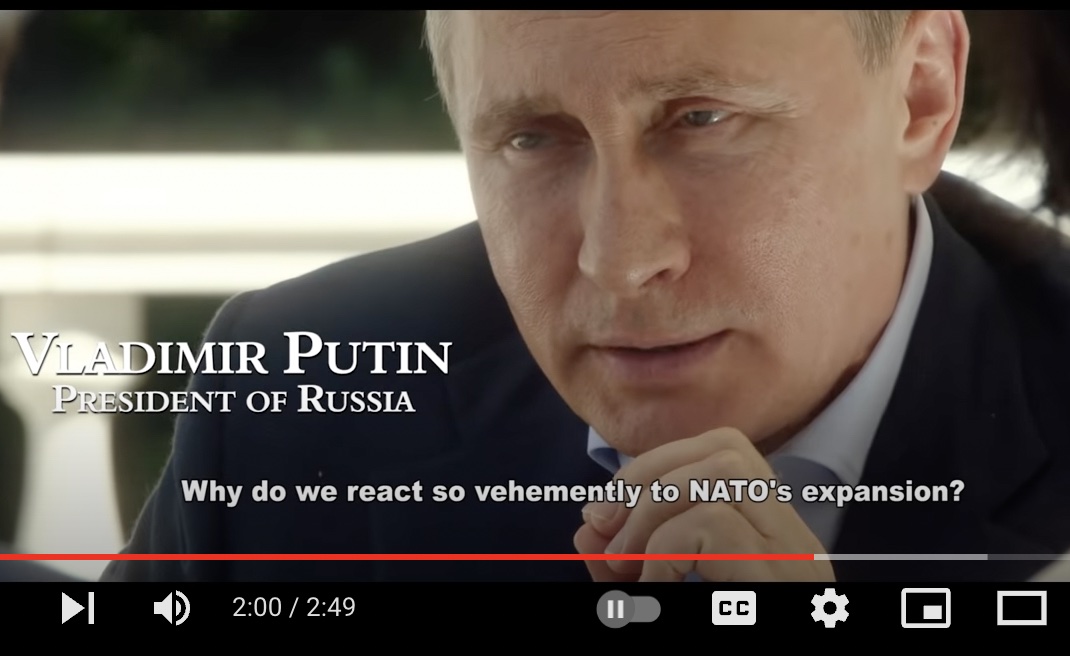
The presence of the Russian President to the start of the Winter Olympics led to an important Joint Statement which goes well beyond a press statement usual after bilateral meetings. Thus the Joint Statement must have been in preparation for some time and stresses current proposals of the two States. Thus it merits close attention. The Joint Statement highlights the concept of the community of common destiny for mankind:


Putin and Xi Jinping in Pekin

“The Russian side notes the significance of the concept of constructing a community of common destiny for mankind proposed by the Chinese side to ensure greater solidarity of the international community and consolidation of efforts in responding to common challenges.”

The Joint Statement sets out the political framework for its proposals.

“Today, the world is going through momentous changes, and humanity is entering a new era of rapid development and profound transformation. It sees the development of such processes and phenomena as multipolarity, economic globalization, the advent of information society, cultural diversity, transformation of the global governance architecture and world order. There is increasing interrelation and interdependence between States; a trend has emerged towards redistribution of power in the world; and the international community is showing a growing demand for the leadership aiming at peaceful and gradual development.”

(Article continued in the column on the right)

Question related to this article:
 
Free flow of information, How is it important for a culture of peace?

(Article continued from the column on the left)

The United Nations is to play a central role in this effort. The Joint Statement goes on to call

“to protect the United Nations – driven international architecture and the international law-based world order, seek genuine multipolarity with the United Nations and its Security Council playing a central and coordinating role, promote more democratic international relations, and ensure peace, stability and sustainable development across the world …The Charter of the United Nations and the Universal Declaration of Human Rights set noble goals in the area of universal human rights, set forth fundamental principles, which all the States must comply with and observe in deeds…Interaction and cooperation on human rights matters should be based on the principle of equality of all countries and mutual respect for the sake of strengthening the international human rights architecture.”

Economic development is stressed.

“ In order to accelerate the implementation of the UN 2030 Agenda for Sustainable Development, we call on the international community to take practical steps in key areas of cooperation such as poverty reduction, food security, vaccines and epidemics control, sustainable development, including green development, industrialization, digital economy and infrastructure connectivity.”

Given current world tensions and the possibility of armed conflicts, the Joint Statement stresses that

“The international community should actively engage in global governance to ensure universal, comprehensive, indivisible and lasting security.”

****

Full text of the Joint Statement of the Russian Federation and the People’s Republic of China  on the International Relations Entering a New Era and the Global Sustainable Development of 4 Feb 2022

US Must Take Russia’s Security Concerns Seriously

FREE FLOW OF INFORMATION

An article by by Natylie Baldwin in Antiwar.com

(Editor’s Note: In recent weeks, Russian President Putin has proposed new peace treaties between Russia and the US and between Russia and NATO. Google lists perhaps a hundred news articles that mention Putin’s proposals but nowhere in any of the articles could I find a reference to the actual text of the proposals or to the historical context that includes American assurances at the end of the Cold War that NATO would not be expanded towards Russia. Instead, the articles listed by google support American and NATO claims that that Putin’s proposals mask a justification for Russian invasion of the Ukraine. Finally, after a rather long and detailed search, I found the following article (not listed by google) that links to the treaty proposals and to the historical context. Here it is.)

Illustration from the blog of Natylie Baldwin

An American Russia expert recently observed that diplomacy is not a reward for good behavior. Rather diplomacy is a necessary activity required for averting war. Skilled diplomacy requires one to understand the perceived interests of the other side and what shapes those perceptions. This helps both sides to arrive at a mutually agreeable resolution that takes into account the most serious concerns of each. The Biden administration would be wise to give a fair hearing to the security concerns of the world’s other nuclear superpower at the upcoming meeting with Russia on January 10th in order to avert unnecessary escalation in Eastern Europe.

As Putin gets further into what could be his final term as president, he has decided to try to get a meaningful resolution to one of his top priorities: ensuring Russia’s national security. If he can successfully resolve this issue, he may feel freer to open up the purse strings and invest more in his other top priority: raising Russia’s living standards, which have fallen behind as a result of the austerity  that has been imposed as the Russian government has focused on macroeconomic stability to make the economy “sanction-proof.

He has started by offering a proposed draft agreement between  Russia and the US and one between  Russia and NATO that guarantee no further eastward expansion of NATO and no stationing of US/NATO troops in Ukraine or intermediate- and short-range missiles in Europe.

While it may seem like Russia is making extreme demands and offering no concessions of its own in return, one must keep a few points in mind. First, at the beginning of negotiations, parties will typically start with maximalist positions with the idea that they will be whittled down during talks to something they can live with. Second, Russia has genuine security concerns that many Americans are not aware of because most media has made little attempt to explain Russia’s perspective with regard to its disagreements with the US-led west.

(Article continued in the column on the right)

Question related to this article:
 
Free flow of information, How is it important for a culture of peace?

(Article continued from the column on the left)

Lacking some of the natural barriers that Americans take for granted, Russia has a history of invasions from the West, including Germany twice in the 20th century – having come through the Polish/Ukrainian corridor. Hitler’s invasion in WWII resulted in around 27 million dead Soviets and destruction of a third of the country. These perceived security interests are driven by historical experience and therefore represent a Russian view, not simply a Putin view.

With this heavy history, Mikhail Gorbachev was hesitant to allow a reunified Germany during 1990 negotiations with western leaders. Declassified government documents  reveal that in order to secure Gorbachev’s agreement, he was promised verbally more than once by US Secretary of State James Baker and other western officials that NATO would not move “one inch eastward.”

After the mutually negotiated end of the Cold War and subsequent dissolution of the Warsaw Pact, NATO had lost its reason for existence and had to resort to finding other justifications for remaining in business. This project was assisted by political ideologues , such as Zbig Brzezinski and Neoconservatives, as well as intense defense contractor lobbying  which helped spur NATO expansion rather than a re-negotiation of a European security architecture that would ensure the security of all parties. From Russia’s perspective, it made sense to ask: if the Cold War had ended, Russia had voluntarily given up its empire and was no longer an enemy, then why was NATO being expanded with Russia excluded from these new security arrangements?

Not only has the US overseen several rounds of NATO expansion since 1999, it has unilaterally withdrawn from several important treaties governing arms control. The first is the ABM Treaty, the abrogation of which Russia viewed as a threat to its nuclear retaliatory capability. There is also the INF Treaty, the dissolution of which will now allow the US to potentially station intermediate range missiles in Europe, representing another perceived danger to Russia’s security interests.

Then there was the US-supported coup that removed the corrupt but democratically elected leader of Ukraine in 2014, which sparked deeper dissension in a country that has political and cultural divisions that go back centuries. The cold hard reality is that Ukraine has more strategic and historical significance to Russia than it could ever have to the US thousands of miles away. Russia also has the advantage of proximity in the event of a military conflict. The US should seriously reconsider the wisdom of paying lip service to Ukraine’s military defense for any such scenario. Ukraine is the poorest  country in Europe and also one of the most corrupt . Ukraine would provide no benefit to NATO as a member and it’s safe to say that neither Americans  nor most Europeans  would be willing to die for it. Ukraine would be best served if it were militarily neutral and allowed to negotiate economically beneficial relations with both Russia and the West, with the most extreme political elements in the country discouraged from their most reckless inclinations.

It’s time for the US to get beyond its post-Cold War triumphalist mentality and pursue practical diplomacy with Russia. Insisting that all countries have the right to decide what military alliances they join without regard to the larger real world context is a nonstarter. Everyone knows the US would never take this attitude if Russia and China decided to lure Canada or Mexico into joining a military alliance with them.

The Russia of 2022 is not the Russia of the 1990’s. In order to get something, the US-led west will now have to give something. That means a willingness to seriously address Russia’s security concerns. It remains to be seen if the US is capable of the shift in mindset needed to rise to the occasion.

Colombia: Forum in the Valle del Cauca commemorates the five years of the signing of the Peace Agreement

FREE FLOW OF INFORMATION . .

An article from Government of Valle del Cauca

On November 23, 2021, the Secretariat for Territorial Peace and Reconciliation of the Government of Valle del Cauca, in its mission to promote spaces for reconciliation between the various actors of the armed conflict and generate a culture of sustainable peace, held the forum “Towards a Colombian countryside”. The forum looked at the Final Peace Agreement from the perspective from Valle del Cauca, five years after the signing of the Final Agreement. The Forum was held in alliance with the Truth Commission, the Special Jurisdiction for Peace (JEP), the ConPaz de la Pastoral program Social – Cáritas Colombiana, the Tuluá Mayor’s Office, the national initiative Tejiendo un Acuerdo para la Vida and the Central Unit of Valle del Cauca (Uceva).

Questions related to this article:

What is happening in Colombia, Is peace possible?

The event allowed the active participation of farmers, peasants, victims of the armed conflict, the reincorporated population and members of civil society.

An interdisciplinary and inter-institutional environment was fostered, allowing the exchange of knowledge regarding the implementation of Point 1 of the Final Agreement for the Termination of the Conflict and the Construction of a Stable and Lasting Peace, five years after its signature.

With this review of the event, the Secretariat for Territorial Peace and Reconciliation reaffirms its commitment to continue working for peace and reconciliation, fostering spaces for the exchange of knowledge, where different views are shared that generate reflection and dialogue around the implementation of the Final Peace Agreement.


Download here
the review document that collects the perspectives of the dialogues held at the event.

(Click here for a Spanish version of this article.)

López Obrador and the offer of asylum to Julian Assange: honest politics in a time of double standards

FREE FLOW OF INFORMATION

An opinion piece by Javier Buenrostro from RT (translation by CPNN)

Last Monday (January 3), in his first morning conference, Mexican President Andrés Manuel López Obrador appeared flanked by Jeremy Corbyn, a British MP and leader of the Labor Party between 2015 and 2020. Corbyn, who is one of the main references of the European left, has strong ties with Mexico since his wife, lawyer Laura Álvarez, is Mexican and for this reason maintains an important bond that extends to all of Latin America. For example, Corbyn does not stop pointing out that Gabriel Boric’s triumph in Chile a few days ago gives him joy and hope.A petition from United National Antiwar Coalition


Obrador (left) and Corbyn (right) at the January 3 press conference (photo from Reuters

Due to Corbyn’s presence, the Mexican press asked López Obrador about his offer of asylum to the Australian journalist Julian Assange , WikiLeaks founder and who is about to have served three years in a London jail and ten years deprived of his freedom, counting the time he was asylum in the Embassy of Ecuador in the United Kingdom.

The United States government is close to prosecuting Julian Assange on charges of espionage and attacking national security, after British judges accepted that the WikiLeaks leader could be extradited to that country. Given this , the possibility of asylum for Assange in a country has once again been considered , as a measure to protect human rights and freedom of the press and information.

Mexico, honoring one of its best traditions in foreign policy, which is that of giving refuge to those persecuted for political or ideological reasons, has on several occasions expressed its intention to provide asylum to Julian Assange, even in the face of the possible controversy and confrontation that could arise. ith the United States.

(Article continued in the column on the right)

Click here for the Spanish original of this article.

Question related to this article:
 
Julian Assange, Is he a hero for the culture of peace?

Free flow of information, How is it important for a culture of peace?

(Article continued from the column on the left)

López Obrador revealed that on December 23, 2020, he wrote a letter to Donald Trump asking the United States government to exonerate and pardon Julian Assange. In the letter, the Mexican president explained to his counterpart that, in his opinion, Assange was a person moved by ideals and principles, and that for that fact he should be worthy of compassion. Unfortunately, the letter was never answered.

Currently, according to Foreign Minister Marcelo Ebrard, Mexico’s asylum offer to Julian Assange is still in place and his lawyers are in contact , however, for procedural reasons, the offer cannot be made effective at this time . After ten years, Assange is still trapped in legal situations that have kept him confined all this time and one wonders if the United States will ever allow him to enjoy freedom in a host country.

Less than a month ago, Chinese artist Ai Weiwei posted a video on social media where he runs on a treadmill. It is a campaign that has the hashtag #RunForOurRights and that seeks not only the release of Assange but also to raise awareness about the defense of press freedom and human rights.

Ai Weiwei visited Assange in London in October 2016, while the WikiLeaks founder was in asylum at the Ecuadorian Embassy. Since then, the Australian activist’s health has deteriorated dramatically, even suffering from a stroke a couple of months ago. Thus, while the majority of people who believe in freedom of the press and information advocate that Assange should not die in prison, the United States, a country that calls itself the “defender of freedom” requests 175 years in prison for someone who defended the right to information of citizens. Such hypocrisy!

If things continue as they have in the last decade, it is more likely that we will see an extradition of Assange to the United States in the coming months rather than the approval of asylum in a country like Mexico. If Assange dies in prison, either in England or in the United States, his death should fall on the conscience of the justice systems of both countries and will be one more example of the false narrative of freedom of their societies that the official propaganda wants the world to believe, especially in the case of the United States.

Mexico, for its part, continues to uphold the tradition of asylum and refuge in some of the thorniest and most complicated cases in international geography. In the last century the Spanish Republicans, Jews and Communists and the thousands of Argentines, Chileans and Uruguayans who fled from military dictatorships were received in our country, in the López Obrador government Evo Morales was already given refuge following the coup in Bolivia. Now, the hand is outstretched for Assange and for freedom of the press and information.

If only the asylum could materialize, it would honor all involved international actors and put an end to an act of injustice and arbitrariness that the United States intends to carry out in continuation of its double standards and hypocrisy on freedom issues.

Peace and Justice Organizations call for Freedom for Julian Assange

FREE FLOW OF INFORMATION

A petition from United National Antiwar Coalition

Imprisoned Wikileaks founder, journalist and free speech champion Julian Assange today faces life imprisonment for telling the truth about U.S. war crimes in Iraq, Afghanistan and at the U.S. torture base in Guantanamo Bay.

Assange faces charges under the 1917 U.S. Espionage Act. Prosecution under that WWI anti-democratic law placed thousands of antiwar activists in prison for exercising their free speech right to protest WWI.

Ironically, the Dec 19, 2021 New York Times front-page two-part series entitled, Hidden Pentagon Records Reveal Patterns of Failure in Deadly Airstrikes, follows in Assange’s footsteps in reporting U.S. war crimes, yet The Times staff writers remain free.

Some 100 Times reporters evaluated Pentagon confidential document obtained under the Freedom of Information Act. These included reports on 50,000 U.S. airstrikes on Iraq, Syria and Afghanistan conducted under the Obama and Trump administrations. The Times on-the-scene reporters subsequently confirmed tens of thousands of civilian casualties – collateral damage.

“The [Pentagon] documents,” according to The Times, “identify children killed or injured in 27 percent of cases; in The Times’s ground-breaking reporting it was 62 percent.”

(Article continued in the column on the right)

Question related to this article:
 
Julian Assange, Is he a hero for the culture of peace?

Free flow of information, How is it important for a culture of peace?

(Article continued from the column on the left)

The Times and several other major publications worldwide reprinted much of the same Pentagon material that Assange’s Wikileaks released to the world. Yet Assange faces a life in prison for publishing the truth.

The persecution of Julian Assange by the U.S. government is a threat against free speech and free press. It is also a threat to the Peace Movement and all movements for social change since without information and the ability to speak and write freely about U.S. wars and war crimes we are greatly limited, and the people of the world are kept in the dark.

Therefore, Peace and Justice organizations and activists demand:

Free Julian Assange!
No to U.S. wars!
Freedom of the press!
Free journalists!
Free speech!

Initial signers:
Organizations:  United National Antiwar Coalition (UNAC), United for Peace and Justice (UFPJ), ANSWER coalition, Code Pink, Black Alliance for Peace, International Action Center, US Peace Council, Veterans for Peace, Women’s International League for Peace and Freedom (WILPF), World Beyond War, Global Network Against Weapons and Nuclear Power in Space, Popular Resistance, Alliance for Democracy, Ban Killer Drones, People’s Opposition to War, Imperialism and Racism, Free Palestine Movement, International Solidarity Movement (Northern Calif), Palestine Children’s Welfare Fund, Syria Solidarity Movement, NakbaTour, Resumen Latinoamericano, One State Assembly, Association for Investment in Popular Action, Upstate NY Coalition to Ground the Drones and End the Wars, Hamilton Coalition to Stop the War, Sanctions kill Coalition (Editor’s note: We have added CPNN.)

SIGN HERE