All posts by CPNN Coordinator

About CPNN Coordinator

Dr David Adams is the coordinator of the Culture of Peace News Network. He retired in 2001 from UNESCO where he was the Director of the Unit for the International Year for the Culture of Peace, proclaimed for the Year 2000 by the United Nations General Assembly.

Martin Luther King Jr.’s Poor People’s Campaign Reborn

…. HUMAN RIGHTS ….

An article by Amy Goodman & Denis Moynihan in Democracy Now

Martin Luther King Jr. would have turned 89 years old this Jan. 15. Assassinated at the age of 39 on April 4, 1968, his much-too-short life forever changed America. Among the landmarks of his activism are the 1955 Montgomery bus boycott, ending segregation in public transportation; leading the 1963 March on Washington, where he delivered his famous “I Have a Dream” speech; the passage of the 1964 Civil Rights Act and the 1965 Voting Rights Act; and marching with sanitation workers in Memphis, where he declared in his last speech, delivered on the eve of his death, “I’ve been to the mountaintop.” Often overlooked are the increasingly radical policy positions King took in his last years, from speaking out against the Vietnam War to forging a multiracial Poor People’s Campaign that sought, as King said, “a radical redistribution of economic and political power.” Now, 50 years later, a coalition has formed anew to organize poor people in the United States into what King called “a new and unsettling force” to fight poverty and forge meaningful change.


Illustration from Nation of Change

This renewal, called “The Poor People’s Campaign: A National Call for Moral Revival,” has an audacious agenda: “to challenge the evils of systemic racism, poverty, the war economy, ecological devastation and the nation’s distorted morality.” At the forefront is the Rev. Dr. William J. Barber II. Born just two days after the famous March on Washington, Barber grew up in the civil-rights movement. For over 10 years he served as president of the North Carolina NAACP, stepping down to lead this new campaign.

Back in 1968, King described the need for the Poor People’s Campaign, saying: “Millions of young people grow up in the sunlight of opportunity. But there is another America. And this other America has a daily ugliness about it that transforms ebulliency of hope into the fatigue of despair.”

(Article continued in the right side of the page)

Question for this article:

What’s the message to us today from Martin Luther King, Jr.?

(Article continued from the left side of the page)

Speaking this week on the “Democracy Now!” news hour, Rev. Barber reflected on how little has truly changed since King’s time: “Fifty years later, we have nearly 100 million poor and working poor people in this country, 14 million poor children. … Fifty years later, we have less voting rights protection than we had on August 6, 1965,” he said. “[Republicans] have filibustered fixing the Voting Rights Act now for over four years, over 1,700 days.”

“Every state where there’s high voter suppression,” Barber continued, “also has high poverty, denial of health care, denial of living wages, denial of labor union rights, attacks on immigrants, attacks on women.”

Barber says the answer is fusion politics: “We have black, we have white, we have brown, young, old, gay, straight, Jewish, Muslim, Christians, people of faith, people not of faith, who are coming together,” creating what he calls the “Third Reconstruction.” Part of this fusion includes reaching out to traditionally conservative Christians, like Minister Jonathan Wilson-Hartgrove. From a devout, white evangelical family, as a teen he served as a congressional page under South Carolina Republican Sen. Strom Thurmond, one of the fiercest segregationists of the modern era.

Wilson-Hartgrove heard William Barber preach, and has been a follower and a colleague ever since. The renewed Poor People’s Campaign is responding to poor, white evangelicals, Wilson-Hartgrove says: “These people who say, ‘Vote for me because I’m a good Christian leader’ are not serving your interests. You don’t have health care, you don’t have a living wage, because the same people who say they’re standing up for God and righteousness are, when they’re voting, voting against the interests of poor people, whether you’re black, white, brown or whatever.”

Barber sees transformation of the Deep South on the near horizon, but doesn’t claim it will be easy. Recent court victories against both racial and political gerrymandering in North Carolina will further empower African-Americans and other traditionally marginalized groups. But the real work will be done not in the courts, but in the streets.

Barber and Wilson-Hartgrove, along with the Rev. Liz Theoharis, co-director of the New York City-based Kairos Center for Religions, Rights, and Social Justice and co-chair of the modern-day Poor People’s Campaign, traveled to 15 states around the country in recent months, recruiting, organizing and training over 1,000 people. Barber said: “Our first action will be on the Monday after Mother’s Day. We’re going after 25,000 people engaging in civil disobedience over six weeks to launch a movement.” Their target: the U.S. Capitol and statehouses across the country.

Martin Luther King Jr. was robbed of life by a sniper’s bullet 50 years ago. But on this anniversary of his birth, this national holiday that people fought decades for, his vital work to empower the poor, lives on.

‘World’s First Solar Highway’ Opens in China for Testing

.. SUSTAINABLE DEVELOPMENT ..

An article by Lorraine Chow from Ecowatch

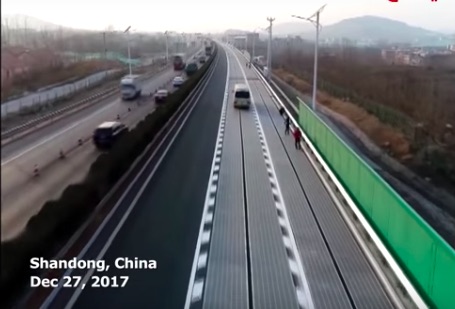
Jinan, the capital city of China’s Shandong province, opened on Thursday a kilometer-long stretch of solar expressway for testing, joining France and the Netherlands that have tapped into the nascent technology.


Frame from video

China’s new solar road consists of an insulating layer on the bottom, photovoltaic panels in the middle, and transparent concrete on top.

The solar panels cover 5,875 square meters and can generate 1 million kilowatt-hours of power in a year, or enough to meet the energy demands of about 800 homes, Qilu Transportation Development Group, the project developer, claimed.

(Continued in right column)

Question for this article:

Are we making progress in renewable energy?

(Continued from left column)

If the technology proves effective, the electricity generated by the panels could power everything from street lights to signboards, and even a snow-melting system on the road. Excess energy can get sent to state grid.

“The project will save the space for building solar farms and shorten the transmission distance,” said Xu Chunfu, the group’s chairman.

But this special road—which China has hailed as the “world’s first photovoltaic highway“—is designed to do a lot more than just harness the sun’s rays for electricity and allow cars to get from A to B.

The site also serves as a clean energy lab to test other technologies, including wireless charging for electric vehicles and providing internet connection.

As intriguing as the project sounds, solar roads have been dismissed by critics as too expensive for practical use. China’s road costs about $458 per square meter, which is much more expensive than, say, traditional asphalt.

Still, this project showcases China’s multibillion dollar plow into renewable energy. By 2020, the country is aiming to build 54.5GW of large-scale solar projects.

“With the development of solar power in China, the cost can be further reduced,” Xu said.

World Social Forums, Advancing the Global Movement for a Culture of Peace?

Here are the CPNN articles about the World Social Forum:

World Social Forum Heads to Benin: A Comeback for African Civil Society?

World Social Forum 2022 in Mexico: First two days

World Social Forum 2021

Brazil: World Social Forum concludes in Salvador

World Social Forum opens in Salvador de Bahia

On the way to the World Social Forum in Bahia

Brazil: Open Letter convenes World Social Forum 2018 in Salvador

Changing the system to address injustices: discussing with Mamadou Goita on the World Social Forum

Canada: World Social Forum: a success despite the low turnout

Canada: Forum social mondial : un succès malgré la faible participation

The city of Montreal hosts the 12th World Social Forum

La ville de Montréal à l’heure du 12ème Forum Social Mondial

Porto Alegre, Brazil: Fifteenth anniversary of the World Social Forum

Brasil: Evento fará balanço de ações dos últimos 15 anos do Fórum Social Mundial

World Social Forum in Tunis: Another world is possible, without the 1%

– – – – Links for the following articles published prior to 2015 do not work because they were made by a version of PERL programming that is no longer supported. With three easy steps, you can find the article by its number. First, click on it before returning to this page. Your browser will say that the article is not available but in the address listed you can see that it was located at ViewArticle=xxxx where xxxx is the number of the article. Returning to this page, then click here for the listing of all years. Then click on the year that contains the number for the article you seek. It will send you to the page where you can easily search for the article by its title. – – – –

Tunisia: The World Social Forum 2013 is underway

Tunisie: Le Forum social mondial 2013 s’est ouvert mardi

World Social Forum, Tunisia, 2013

Forum Social Mondial 2013 en Tunisie

Culture of Peace at the World Social Forum in Tunisia

World Social Forum in Belem, Brazil

Impressions from the Boston Social Forum

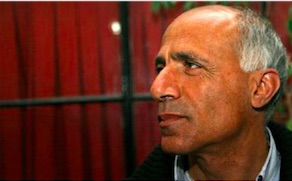
The courage of Mordecai Vanunu and other whistle-blowers, How can we emulate it in our lives?

Whistle-blowers may be considered as very important actors for a culture of peace.  As described on the CPNN page for values, attitudes and actions for a culture of peace, the culture of war is characterized by propaganda, secrecy, government control of media, militaristic language and censorship while the culture of peace is characterized by the free flow and sharing of information.  Whistle-blowers break the back of secrecy directly and dramatically.

Mordecai Vanunu’s courage continues the tradition of Daniel Ellsberg, who made known the Pentagon Papers during the Vietnam War and Karen Silkwood, who exposed nuclear pollution in the United States.  Ellsberg was persecuted by President Nixon and Karen Silkwood was murdered, as described some years ago in a very fine film starring Meryl Streep.

As the amount of government secrecy continues to increase, we may expect that the number of whistle-blowers will also tend to increase in the years to come.

Here are the CPNN articles on this subject:

Daniel Ellsberg Has Passed Away. He Left Us a Message.

Moscow TV protester plays ‘Russian roulette’ with risky comeback

US: Why Daniel Hale Deserves Gratitude, Not Prison

Glen Greenwald : My New Book on Journalism, Exposing Corruption, and the Resulting Risks, Dangers and Societal Changes

Following Chelsea Manning’s commutation, UN expert urges pardons for other whistleblowers

LuxLeaks: L’affaire et l’actu en Luxembourg

LuxLeaks: The case and the latest news from Luxembourg

Film: Truth, Deception and the Spirit of I.F. Stone

– – – – Links for the following articles published prior to 2015 do not work because they were made by a version of PERL programming that is no longer supported. With three easy steps, you can find the article by its number. First, click on it before returning to this page. Your browser will say that the article is not available but in the address listed you can see that it was located at ViewArticle=xxxx where xxxx is the number of the article. Returning to this page, then click here for the listing of all years. Then click on the year that contains the number for the article you seek. It will send you to the page where you can easily search for the article by its title. – – – –

An Easter letter about Mordecai Vanunu

Another Pulitzer for reporting classified info

‘Snowden did it for all of us’

International Peace Bureau awards the Sean MacBride Peace Prize to US whistleblower Bradley Manning

Interview with Edward Snowden:  The Latest Whistleblower

Ethiopian journalist Reeyot Alemu wins 2013 UNESCO-Guillermo Cano World Press Freedom Prize

La periodista etíope Reeyot Alemu gana el premio UNESCO-Guillermo Cano de Libertad de Prensa 2013

La journaliste éthiopienne Reeyot Alemu lauréate du Prix mondial de la liberté de la presse UNESCO/Guillermo Cano 2013

Whistleblowers Recognized for Courage, Sacrifice

Is Internet freedom a basic human right?

Here is the opinion of Mary Robinson, formerly UN High Commissioner for Human Rights:

“Having been UN High Commissioner for Human Rights, I am all too familiar with the argument that human rights is a ‘Western’ concept. The uprisings that began to shake the Arab world almost two years ago, and the developments that have followed, are one great example of the fundamental flaw in this argument. In Egypt, Tunisia and elsewhere we saw an unprecedented expression of the universal desire – long-repressed – for dignity and freedom. . .

“Unfortunately, the same tools and platforms that have helped these freedoms to flourish can be manipulated to restrict access to information, monitor dissident activity and exercise greater control over citizens. They offer perhaps as many challenges to these freedoms as they do opportunities. Just two weeks ago we saw Syria’s government cutting off internet and mobile access to the entire country, just as Egypt’s government did in January 2011. Others are using international fora to lobby for greater powers for governments seeking to restrict citizens’ internet freedoms in the name of ‘security’.

“The internet has given rise to a new space and new tools for human activity, but it does not require a new set of rules. The internationally agreed rights to freedom of opinion and expression, to peaceful assembly and association, and to take part in government are enshrined in the very document that we have celebrated on this day for the past 64 years. These covenants should be applied to the online world in exactly the same way that they apply to the ‘offline’ world. . . .

The slogan for this year’s Human Rights Day is ‘My Voice Counts’. In Egypt, we saw just how fervently people believe this to be true – each of us, whether we live under democracy or dictatorship, yearns to have some say in the decisions that affect our lives. The internet has provided us with new tools that strengthen citizen movements and promote greater democratisation and accountability; it has also proved a powerful tool for censorship and surveillance.

Only by protecting the internet as a space where respect for fundamental human rights prevails can we hope to see more Springs, more Awakenings and ever greater freedoms in years to come.

Here are the CPNN articles on this subject:

Australian MPs react to Julian Assange’s release

Amnesty International: Julian Assange’s five-year imprisonment in the UK is unacceptable

United Nations: CSW67 Opening statement: Digital rights are women’s rights

Tribunal in Washington Calls on President Biden to End Prosecution of Julian Assange and to Defend Rights of Journalists and Whistleblowers

Coronavirus reveals need to bridge the digital divide

GAPMIL gives Global Media and Information Literacy Awards 2018

In historic decision, CRTC rules that all Canadians must have access to reliable, world-class mobile and residential Internet

U.N. passes landmark resolution condemning internet shutdowns

NetGain: Let’s Work Together to Improve the Internet

USA: rock solid rules to ensure the Internet stays open and free

– – – – Links for the following articles published prior to 2015 do not work because they were made by a version of PERL programming that is no longer supported. With three easy steps, you can find the article by its number. First, click on it before returning to this page. Your browser will say that the article is not available but in the address listed you can see that it was located at ViewArticle=xxxx where xxxx is the number of the article. Returning to this page, then click here for the listing of all years. Then click on the year that contains the number for the article you seek. It will send you to the page where you can easily search for the article by its title. – – – –

United States: News and Press Freedom Organizations Stand Up for Real Net Neutrality

Brasil: Marco Civil da Internet começa a valer em junho

Brazil: Internet “bill of rights” to take effect in June

UN General Assembly backs right to privacy in digital age

Protecting fundamental freedoms, online and offline

Participatory budgeting, How does it work?

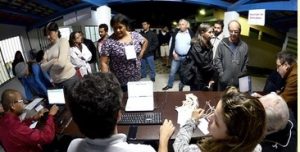
Reading CPNN, we can see that we are advancing towards a culture of peace in little steps throughout the world. A good example is the progress in Participatory Budgeting (PB) which is, in effect, democratic participation. News about PB may be found in local media, but not on the front pages of the international commercial media which does not consider it to be important. A number of these local stories (see below) were covered by the CPNN bulletin a few years ago.

Here are CPNN articles about participatory budgeting:

Two examples of Participatory Budgeting in Brazil

Mexico City reinforces the dissemination of participatory budgeting

Progress in Participatory Budgeting

– – – – Links for the following articles published prior to 2015 do not work because they were made by a version of PERL programming that is no longer supported. With three easy steps, you can find the article by its number. First, click on it before returning to this page. Your browser will say that the article is not available but in the address listed you can see that it was located at ViewArticle=xxxx where xxxx is the number of the article. Returning to this page, then click here for the listing of all years. Then click on the year that contains the number for the article you seek. It will send you to the page where you can easily search for the article by its title. – – – –

New York City: Participatory Budgeting: Catch the Fever!

Paraná, Argentina: vecinos votaron las propuestas para Presupuesto Participativo

Paraná, Argentina: residents will vote on proposals to implement through the Participatory Budgeting Process

The municipality of Alcoutim, Portugal, launches Participatory Budgeting

Alcoutim lança Orçamento Participativo Municipal [Portugal”>

Participatory Budget 2014: Sunday will be the vote [Trenque, Argentina”>

Presupuesto Participativo 2014: el domingo será la votación [Trenque, Argentina”>

No reason to fear the people: Participatory budgeting in Brazil

Sem medo de povo: Orçamento Participativo no Brasil

Computerized voting system for Participatory Budgeting in Ubatuba, Brazil

Sistema informatizado de votação  para Orçamento Participativo é destaque em Ubatuba, Brasil

Participatory Budgeting for Youth in Rosario, Argentina

Presupuesto Participativo Joven – Rosario, Argentina

3.500 personas participaron en etapa de diagnóstico del Programa Presupuesto Participativo [La Serena, Chile”>

3,500 people take part in the diagnosis stage of participatory budgeting in La Serena, Chile.

What are some good films and videos that promote a culture of peace?

Here are some films and videos recommended by our readers.

OCDS Video about Culture of Peace

Film review: Oliver Stone’s new JFK documentary

Film from South Africa: Everything Must Fall

Pre-screening of the film “The Forgiven” starring Forest Whitaker at UNESCO

Film: Truth, Deception and the Spirit of I.F. Stone

Film review: Disturbing the Peace

Snowden: Best Film of the Year

Documentary Review: “Where to Invade Next” by Michael Moore

Edward Snowden Congratulates Laura Poitras for Winning Best Documentary Oscar for Citizenfour

– – – – Links for the following articles do not work because they were made by a version of PERL programming that is no longer supported. With three easy steps, you can find the article by its number. First, click on it before returning to this page. Your browser will say that the article is not available but in the address listed you can see that it was located at ViewArticle=xxxx where xxxx is the number of the article. Returning to this page, then click here for the listing of all years. Then click on the year that contains the number for the article you seek. It will send you to the page where you can easily search for the article by its title. – – – –

WACC-SIGNIS Human Rights Award 2013 Goes to “Caminhos da paz”

Giving rice for free!

PLURAL+ 2012 Youth Video Festival on Migration and Social Inclusion

Projet de festival international de marionnettes

Interfaith Jury Awards ‘The Orange Suit’ in Fajr International Film Festival

Black International Cinema Berlin: May 2-6, 2012

Rio+20 Global Youth Music Contes

Fourth Contest of Animations for Peace

Photo Contest: Peace in Young People’s Eyes

Gaming for Peace and Justice

Film festivals that promote a culture of peace, Do you know of others?

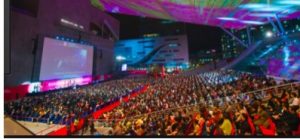
The following comes from the website of Signis, World Catholic Organization for Communication – Media for a Culture of Peace. They sponsor a number of film festivals around the world which emphasize the culture of peace.

Every day the media bring us more news of conflict, acts of terrorism, massacres, racism or xenophobia. It seems that we are drowning in a culture of hatred and war.

Let’s imagine instead for a moment that the world’s radio and TV stations were reporting on, and devoting a significant part of their programmes and broadcasts to gestures of reconciliation and acts of peacemaking. So alongside the culture of violence and war, which, of course, we cannot ignore, because it is part of what makes us human, they would develop in the media a Culture of Peace.

This does not have to remain only a dream. If every member of SIGNIS, radio, video and television producer, webmaster, educator, researcher and trainer, got involved in making programmes on those acts which are contributing to peace and in promoting gestures of reconciliation… all of us would have helped to increase the possibilities of helping to make the world a more peaceful place.

That is why the SIGNIS delegates, during their meeting in Cape Town in 2003, choose as the main objective for SIGNIS to work to promote a Culture of Peace through the media.

Here are CPNN articles on this topic:

Colombia: Cinema, historical memory and culture of peace

28TH FESPACO: Gold for Tunisia and silver for Burkina

Fifteen films bid for top prize in Africa’s premiere film fest

Burkina Faso: FESPACO will take place in February with the theme “African Cinemas and Culture of Peace”

Spain : Films for peace – ten years of MUSOC

The Páramo de Sumapaz, will be the scene of Colombian cinema festival

Brazil: Ecocine International Film Festival of Environmental and Human Rights

Mexico: Second Edition of the International Festival of Cinema for the Culture of Peace

MADRID: Fifth edition of the Film and Human Rights Festival

Burkina Faso: Blanche Bana wins the Sotigui Awards 2020

Iranian film “Castle of Dreams” wins at Religion Today filmfest in Italy

Burkina Faso : The 5th edition of Sotigui Awards looks at the contribution of women filmmakers to the culture of peace

Xalapa, Mexico: International Film Festival for a Culture of Peace

Korea: Busan Film Festival and creation of world culture

Challenge in Colombia: Peace displacing violence as inspiration for the arts

– – – – Links for the following articles do not work because they were made by a version of PERL programming that is no longer supported. With three easy steps, you can find the article by its number. First, click on it before returning to this page. Your browser will say that the article is not available but in the address listed you can see that it was located at ViewArticle=xxxx where xxxx is the number of the article. Returning to this page, then click here for the listing of all years. Then click on the year that contains the number for the article you seek. It will send you to the page where you can easily search for the article by its title. – – – –

Bridging the gap- -International documentary film festival

Taguatinga Film Festival accepting registration until the 30th ( Brazil )

Festival Taguatinga de Cinema tem inscrições abertas até o dia 30 (Brasil)

Human Rights Watch film festivals: Toronto and London

FESPACO 2013 : Preparations for an Excellent Festival of African Cinema

FESPACO 2013 : Des dispositions pour une belle fête du cinéma africain

International Festival of Nyamina, Mali: Cinema and Peace

Festival international de Nyamina, Mali : Cinéma et paix

If Only Everyone Wins Ecumenical Film Prize in Yerevan 2012

Black International Cinema Berlin: May 2-6, 2012

What are the most important books about the culture of peace?

As described in the book by Dietrich Fischer listed in the right column, Johan Galtung is indeed the most perceptive peace researcher of our time.

Not only did he predict the fall of the Soviet Union quite precisely, but he has also predicted the fall of the American empire.  Here are excerpts from his 2004 article, On the Coming Decline and Fall of the US Empire.

The prediction of the decline and fall of the US Empire is based on the synergy of 14 contradictions, and the time span for the contradictions to work their way through decline to fall was estimated at 25 years in the year 2000. There are more contradictions because the US Empire is more complex, and the time span is longer also because it is more sophisticated. After the first months of President George W. Bush (selected) the time span was reduced to 20 years because of the way in which he sharpened so many of the contradictions posited the year before, and because his extreme singlemindedness made him blind to the negative, complex synergies. . . .

(Editor’s note: As of 2018, Professor Galtung holds to his prediction that the American Empire cannot be maintained beyond 2020: “Trump contributes by making USA an impossible leader to follow. As long as he is in command–and nobody knows how long that will last, before he is removed by impeachment, Amendment 25, or the old US tradition of killing inconvenient presidents–rebuilding the US empire is difficult. . . . In short, I stand by my prediction that by Year 2020 the US empire is gone.”)

Here is the list of 14 contradictions posited in 2000:

I. Economic Contradictions(US led system WB/IMF/WTO NYSE Pentagon)

1. between growth and distribution: overproduction relative to demand, 1.4 billion below $ 1/day, 100.000 die/day, 1/4 of hunger

2. between productive and finance economy (currency, stocks,bonds) overvalued, hence crashes, unemployment, contract work

3. between production/distribution/consumption and nature: ecocrisis, depletion/pollution, global warming

II. Military Contradictions (US led system NATO/TIAP/USA-Japan)

4. between US state terrorism and terrorism: Blowback

5. between US and allies (except UK, D, Japan), saying enough

6. between US hegemony in Eurasia and the Russia India China triangle, with 40% of humanity

7. between US led NATO and EU army: The Tindemans follow-up

III. Political Contradictions (US exceptionalism under God)

8. between USA and the UN: The UN hitting back

9. between USA and the EU: vying for Orthodox/Muslim support

IV. Cultural Contradictions (US triumphant plebeian culture)

10. between US Judeo-Christianity and Islam (25% of humanity; UNSC nucleus has four Christian and none of the 56 Muslim countries).

11. between US and the oldest civilizations (Chinese, Indian, Mesopotamian, Aztec/Inca/Maya)

12. between US and European elite culture: France, Germany, etc.

V. Social Contradictions (US led world elites vs the rest: World Economic Forum, Davos vs World Social Forum, Porto Alegre)

13. between state corporate elites and working classes of unemployed and contract workers. The middle classes?

14. between older generation and youth: Seattle, Washington, Praha, Genova and ever younger youth. The middle generation?

15. To this could be added: between myth and reality.

Here are CPNN book reviews that we consider most important:

Federico Mayor: A Culture of Peace, Now More Than Ever

The Culture of Peace – Utopia or Alternative Security Policy?

Book: Culture of Human Rights for a future of Peace

Review of Against War: Building a Culture of Peace – a book by Pope Francis

Ecuador: The culture of peace is presented in an international digital magazine

Book Review of Revolutionary Peacemaking: Writings for a Culture of Peace and Nonviolence

Book review: On the frontlines of peace

Book review: Choosing Peace

Book review: World Parliament: Governance and Democracy in the 21stCentury

Book Review: Towards Less Adversarial Cultures by Ray Cunnington

Book review: A Student’s Guide to Starting a Career Working for Peace

Book review: Culture of Peace, A Utopia that is Possible

– – – – Links for the following articles do not work because they were made by a version of PERL programming that is no longer supported. With three easy steps, you can find the article by its number. First, click on it before returning to this page. Your browser will say that the article is not available but in the address listed you can see that it was located at ViewArticle=xxxx where xxxx is the number of the article. Returning to this page, then click here for the listing of all years. Then click on the year that contains the number for the article you seek. It will send you to the page where you can easily search for the article by its title. – – – –

The Nonviolence Handbook: A book review

Johan Galtung: Pioneer of Peace Research, edited by Dietrich Fischer : (a review)

Education for Conflict Prevention and Peacebuilding:  Meeting the global challenges of the 21st century

Reflective Peacebuilding: A Planning, Monitoring, and Learning Tool Kit

Gender Perspective on a Culture of Peace: A Book Review

Commemorative Publication of the UNESCO Chair of Education for Peace

Books on Peace Education: Call for Manuscripts

A Hero for Our Time: Book Review of Elise Boulding

Waging Nonviolent Struggle: A Book Review

African journalism and the culture of peace, A model for the rest of the world?

CPNN continues to find that African journalists give priority to culture of peace news, unlike media in much of the world that give priority to violence.  The articles are listed below:

Ugandan Journalist Wins Luxembourg Peace Prize

Changing the Narrative: Why West African Media Is Embracing Peace Journalism

Niger: 7th edition of the National Press Freedom Day under the theme “Journalism in the electoral period”

Decolonising peace journalism – and putting it to work in East Africa

PAYNCoP Gabon Works with UNESCO to Combat Covid19 Fake News and Violence Against Women

Peace promotion in the Sahel: The best award-winning radio productions

Togo: Catholic Church urges media to serve dialogue, peace and reconciliation

Morocco and Senegal promote gender equality through media

Making Waves: Local radio transforming perceptions of gender-based violence in Africa

Uganda has benefited from peace journalism

Senegal: A regional seminar on “The role of journalists and the media in preventing violence”

Cameroon: Community radio in the service of peace education

– – – – Links for the following articles published prior to 2015 do not work because they were made by a version of PERL programming that is no longer supported. With three easy steps, you can find the article by its number. First, click on it before returning to this page. Your browser will say that the article is not available but in the address listed you can see that it was located at ViewArticle=xxxx where xxxx is the number of the article. Returning to this page, then click here for the listing of all years. Then click on the year that contains the number for the article you seek. It will send you to the page where you can easily search for the article by its title. – – – –

Africa: Creating media channels to promote the culture of peace

Africa: Faire des médias des voies pour la promotion de la culture de la paix

Gao, Mali : Youth at school for a culture of peace

Gao, Mali : Les jeunes à l’école de la culture de la paix

Mali: The Radio Kledu broadcasts, “Anka Ben ! – Let’s make peace !”

Mali: L’émission «Anka Ben ! – Faisons la paix !» sur Radio Kledu

Somalia: Somali radio on peace mission

Culture of Peace: IDEM workshop for journalists in Mali

Culture de la paix : les journalistes à l’école de l’Idem

Pour une ‘culture de paix’ dans la presse du Cap-Haïtien

Second High Level Media Workshop on the African Peace and Security

Launch of the network of journalists for peace and security in Africa (Netpeace)