Tag Archives: Africa

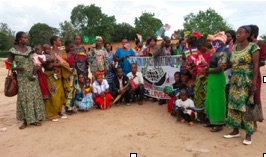
Community-based tours and stories in Alexandra, Soweto and more, South Africa

. SUSTAINABLE DEVELOPMENT .

an article by Daniel Adidwa, Tour2-0

Tour2.0 is a platform that takes you on a journey of discovery through authentic community tours and tour packages that are based on real African stories told by community members within the context of their community. Tour2.0 enables you to read about and experience any of our tours in Johannesburg and Pretoria in real life, allowing you to discover the uniqueness of every community on our platform.

Adidwa
Location of the 18 transfrontier peace parks in Southern Africa.

Each community has a unique story to tell. We enable the visitor to experience this uniqueness. This gets people to understand other cultures by immersing them in the community. And they come to appreciate the history of the different cultures.

We don’t do “pity tourism” geared toward driving donations. We share and expose tourists to the good stories within the community. We don’t turn a blind eye to the problems that communities face, but our emphasis is on the good.

For our purposes locals have to participate. The first point is the guide. The guide has to be a local person who tells the communities story. When the guide is local, the information is more insightful. Once the community realizes that the guides are local, they are more welcoming to visitors because they know they are being represented by a fellow community member. This makes them more willing to participate, for example to welcome the tourist into their home.

Another point is that the tourist eats local food prepared by local cooks. And they have the opportunity to buy arts and crafts from local artists so that their money remains in the local community.

Our aim is that after experiencing the tour the visitor leaves with an appreciation of that community, its history, culture, present state and where it is going.

For example within the township of Alexandra, a local guide is a young lady named Asanda Daza. She is a 22 year old from Alexandra who is passionate about her community. Her tour is named “Lights, gangs and all that jazz.” She takes tourists through Alexandra’s cultural district, with visits to King’s Cinema, a cinema where jazz greats like Hugh Masakela frequently played before being exiled during apartheid, and where the legendary Nelson Mandela came to watch movies when he lived in Alexandra.

She also has you visit Msomi gang headquarters to learn about the gang rivalry between the Msomi and Spoiler gangs from the 1950’s to the 1970’s.

Her tour ends at a local jazz club where tourist are entertained by local jazz artists and traditional singers.

Another example is Lebo’s Backpackers Tours in Soweto which also involves the community in all aspects of the tourist’s experience and which tells the rich story of Soweto.

Question related to this article:

How can tourism promote a culture of peace?

Comment by Liliana Mota, October 23, 2013

Why tourism?

Can tourism be seen as an instrument to achieve complicity between people’s minds?

“There is nothing better that connects two people’s mind than a good conversation” The above quote could be used to describe the effect which tourism has on people. Like a great conversation, tourism could be said to play a vital role amongst people all over the world. It fosters communication in all its senses, intercultural dialogue and mutual understanding.

In today’s world it is evident that there is a shortage of moral or ethical values amongst people across the different nations in this world, resulting in a globalised world lacking these morals and ethical values. Ignorance, the failure to consider the needs of others, and selfishness are a few of the ways which hinder us from embracing diversity and a common human perspective, which would result informal empathy, internal moral compassion, tolerance of differences, historical consciousness and interpretation. The above mentioned features are intrinsic, inherent and can be found in the practice of tourism.

Tourism has been emphasized as one of the most effective instruments which continue to tackle to tackle social and economical poverty, as well as encourage the culture of peace practice amongst people. In looking at the UN architecture, one is able to see the growing implications which the tourism sector has on the world and world policies. The touristic phenomenon has achieved a world record of 5% of world’s GDP contribution and is responsible for 235 millions jobs, according to the UNWTO’s data. Often the tourism sector counts more than 20% of the countries’ GDP.

On the negative side of this, it is evident that tourism focuses on economical matters, depriving any focus on the global implications of the constant interaction tourism encourages.

In the literal sense, tourism is nothing more or less than people meeting with the willingness to understand each other’s differences and point of view and simultaneously creating the opportunity for dialogue, mutual understanding and peace to take place.

Apart from tourism, various factors could be seen to play a role in encouraging integration and diversity amongst societies across the world. For example, the cultural segment has played an essential source of people’s integration and inclusiveness in developing countries.

Education has also played a significant role in encouraging integration, and incorporation amongst people all over the world. Education has been reconsidered and proposed to being the catalyst for exchange between countries, cultures and sectors, and most importantly for enhancing the lives of people by granting them the opportunity to leave their poverty stricken lives and societies in exchange a for better future which includes job and exchange opportunities.

In the tourism world, differences play the most essential role, differences among people represents the added-value. Being different is always a positive factor that usually motivates and encourages people to get to move and engage with each other and embrace the differences with the use of spiritual, religious and cultural meanings.

This notion of tourism needs to be addressed in multilateral governance discussions, where all the main actors, the international community, the ministerial and experts, private sector, local institutions and civil society engages are all present, and are all willing to work together in combined efforts and initiatives (from poverty alleviation to the promotion of awareness of sustainable development addressing special needs like regional development, urban planning and protection of natural and cultural landscapes). This combined approach of working at the local level within communities and at the national and international level, in order to reach and engage the poor, has been considered as potentially being the “one possible and effective answer” and effective approach towards the world’s poorest areas where it can make a difference.

The second edition of the Amani Festival fixed for mid-February in Goma

.. EDUCATION FOR PEACE ..

An article by Radio Okapi

Video: Goma music festival

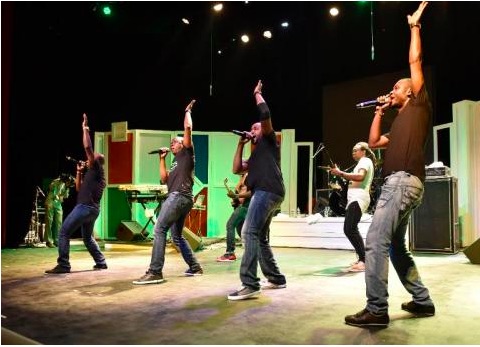
The second edition of the Amani Music Festival has been announced for the 13-15 February in Goma, the center of Nord- Kivu in the Democratic Republic of Congo. Under the theme “Dance for change and sing for peace”, the Festival will benefit from the support of a number of partners, including the UN peace force Monusco and the NGO Francopholies.

Scene from the video of the 2014 festival

The previous edition of the Amani Festival, organized in February 2014, drew thousands of residents from the Great Lakes Region.

In the following radio broadcast, the musician-artists Tiken Jah Fakoly and Habib Koite speak with the journalist Marcel Mayoyo.

(Click here for a French version of this article)


Question related to this article:

Sudan Open University Graduates Sign Peace Pledge

FREE FLOW OF INFORMATION

an article by AllAfrica News Service, press release from UNAMID

On 10 February 2015, thousands of people in El Fasher, North Darfur, attended a graduation ceremony organized by UNAMID for the students of the Sudan Open University.


Sudan Open University Graduates Sign Peace Pledge

The occasion, held under the theme “Darfur: Talk Peace Now,” included a musical concert, traditional dances and drama performances.

The highlight of the event was the signing of a peace pledge by graduates from 2006-2012. “As we have gained a lot through our education at the University, we pledge before everyone present here to become messengers for peace and development,” said Khalil Gamareldin, on behalf of the graduates.

UNAMID Deputy Joint Special Representative (DJSR), Abdul Kamara, addressed the gathering saying that such events motivate the youth to support peace initiatives through their education. Speaking to the new graduates, Mr. Kamara said, “Today’s ceremony represents a giant step for you, as it will enable you to begin contributing to the promotion of all peace initiatives using your newly gained education and credentials, through avenues that are now open for you, to place the agenda for peace in Darfur firmly on national, regional and international platforms.”

DJSR Kamara reconfirmed that the African Union and United Nations, along with other international partners, remain cogniscent of developments in the region, and will continue to work with the Government and all parties in the implementation of initiatives that can guarantee peace and security for all Darfuris. “UNAMID stands ready to support anyone, any group, any community, that is willing to work for better lives and livelihoods for the people of Darfur,” remarked UNAMID’s Deputy JSR.

On his part, Mr. Abu Abdelrahman, Chair, Sudan Open University, spoke about the work of the University in areas such as human resource development, social cohesion and the dissemination of the culture of peace. Additionally, he expressed his gratitude to UNAMID for its continued support.

“Focusing on learning and education can help address many of the significant issues Darfuris are dealing with,” said the Wali (Governor) of North Darfur State, Osman Kibir, reaffirming his support for speeding up the pace of education to bring about peace and development in the region.

Question related to this article:

Children’s Thoughts on Peace: Marking 1 Year of Civil War in South Sudan

FREE FLOW OF INFORMATION

an article by Tiffany Easthom, Nonviolent Peaceforce Country Director

Video: Nonviolent Peaceforce in South Sudan

[Editor’s Note: In South Sudan, where the danger of a full-scale war looms with the return of the dry season, Nonviolent Peaceforce provides training to nongovernmental organization workers, NP is able to spread protective coverage for civilians and at the same time mainstream protection methodologies. Over the next three months, NP will train 150 people in five areas in South Sudan. Here is a special message from South Sudan country director Tiffany Easthom.]

What is peace to you? For children in South Sudan it’s the little things that we often take for granted. A year after the conflict, children were asked to share their perspective on what peace means to them. They communicated this through art. Illustrations included images of water, school, planes, sharing, playing sports, and growing food. See their drawings here.

Looking back at 2014, we have faced many challenges together. It has been a year of heart- break and hardwork. We have laughed together and cried together as we struggled to come to terms with the reality of the terrible violence that has continued to shake the country. We have learned a great deal, and have been able to contribute to keeping conflict affected people around the country safe. We have welcomed many new colleagues into the family and have sadly bade a few farewell.

Through all of this tragedy, we have been able to continue to develop and improve both the programming and the operational sides of the house. All of these achievements are a testament to you – to each and everyone of you who makes their contribution, who fulfills their responsibilities and who contributes to making sure that we are doing everything we possibly can for improving the safety and security of conflict affected communities.

So as the year draws to a close, I am filled with gratitude and love for all of you and am looking forward to continuing our struggle together in the new year.

[Thank you to Janet Hudgins, the CPNN reporter for this article.]

Question related to this article:

Rethinking Post-Election Peacebuilding in Africa

. DEMOCRATIC PARTICIPATION .

an article by Society for Peace Studies and Practice

The 9th International Conference and General Assembly of the Society for Peace Studies and Practice will take place from 9-13 August at the Igatius Ajuru University of Education in Port Harcourt, Rivers State, Nigeria. Its theme will be “Rethinking Post-Election Peacebuilding in Africa.”

The call for papers provides the following analysis:

There are three phases: pre-election, election, and post-election . . . Where the first two phases are well handled, the post- election environment is peaceful but where they are poorly managed, the post-election environment is usually crisis-ridden. Given that not much work exists on post-election questions and their management in Africa, the Society for Peace Studies and Practice would like to commit it 2015 to addressing this critical issue, shedding more light on the nature, impact and management of post-election environment in Africa. Our particular interest is how to build peace after elections. . .

How do we restore healthy relationship between political actors after elections? What should be the role of winners and losers of elections? What should be the role of the judiciary, political parties, the media, electoral management bodies, private but prominent citizens in preventing post-election violence and other forms of political instability? What are the existing global best practices in post-election peace building? There will be special panels on post-election peacebuiling in Nigeria covering the 1999, 2001, 2003, 2007, 2011 and 2015 elections. . .

The conference program will consist of Commissioned Papers (Plenary Session) and Open Theme/Special Panels (Parallel Sessions). Potential participants are therefore invited to submit abstract proposals to the organizers.

In the event of the abstract being accepted, the deadline for submission of full draft paper will be 30th May 2015. Details are available at http://www.spsp.org.ng .

The Society for Peace Studies and Practice (SPSP) is a Not-for-Profit organisation that promotes non-violent approach to conflict resolution, through multi-level research, advocacy and actions that strengthen local capacities that will bring about a sustainable culture of peace.

The Society began as the brainstorm of a group of passionate advocates of the postgraduate programme of the Peace and Conflict Studies, Institute of African Studies, University of Ibadan, in 2003 seeking to prioritize conflict management as a professional practice and how to streamline the ethics that will guide scholars and practitioners in the field of peace building.

Initially spearheaded by staff and student members from the University of Ibadan led by Professor Isaac Olawale Albert; the Society was formally initiated and registered with the Corporate Affairs Commission (CAC/IT/NO.21194) as a Not-For-Profit Civil Society in 2004 and has gained national outlook and acceptance with its network of branches spread all-over Nigeria and beyond.

Question related to this article:

How should elections be organized in a true democracy?

CPNN receives more and more articles from Africa about initiatives that contest the European model of “winner-takes-all” elections, and demand that elections should only be part of a broader democratic process that seeks consensus and compromise.

This fits with the pre-colonial systems of justice in Africa, when there was no monotheism and no single supreme god, no single supreme law, no single “truth” provided by divine intervention, but rather a compromise among many different “gods,” perspectives and “truths” arrived at through a process of mediation, for example, the “palabra.”

Ghana Youth Coalition wants politicians to commit to peace in 2012

Women’s World in Nationwide Sensitization [Sierra Leone]

Varsities vouch for peace ahead of general elections (Kenya)

Zimbabwe: Christian denominations launch peace initiative

Rethinking Post-Election Peacebuilding in Africa

Launch of the Network Youth and Culture of Peace in Africa

FREE FLOW OF INFORMATION

an article by UNESCO Priority Africa (abridged)

Video: Youth and Culture of Peace in Africa

“It is often said that youth is the future – but for me, youth is the present,” said the Director-General on 13 December in Libreville surrounded by 90 young African men and women, coming from forty countries for the Libreville Pan African Forum — “African youth and the challenge of promoting a culture of peace”.


Youth participants in the Forum

The Forum was held from 11 to 13 December in Gabon, with the participation of Pascaline Mferri Bongo Ondimba, Honorary President of the Omar Bongo Ondimba Foundation, Ida Reteno Assonouet Minister of National Education and Technical and Vocational Education, President of UNESCO’s National Commission for Gabon, Anatole Collinet Makosso, Congolese Minister of Civic Education and President of the Conference of Ministers of the African Union responsible for youth, Rose Christiane OSSOUKA RAPONDA, Mayor of Libreville as well as Forest Whitaker, UNESCO Special Envoy for peace and reconciliation.

The event was marked by the official launch of the “Youth and Culture of Peace” Network, made up of National Youth Councils and youth organizations from Africa and its Diaspora, engaged in actions aimed at promoting a culture of peace. Gabon will host its secretariat.

The Forum also celebrated the strengthening of the partnership with UNESCO Special Envoy Forest Whitaker’s Foundation for Peace and Reconciliation (WPDI), which aims to promote young people’s ability to work for peace and development in their communities within fragile states. Forest Whitaker said to the young participants: “your generation is the one that will grow the seeds” of peace and prosperity, “the only limit you will encounter is your imagination.”

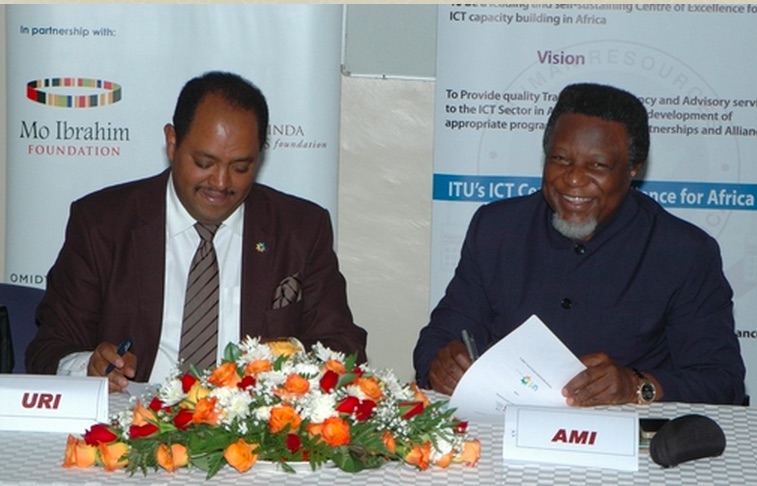
The Omar Bongo Ondimba Foundation for Peace, Science, Culture and the Environment also announced the creation of an international youth prize for the culture of peace that will reward the action of three youth organizations, who will share a total of 45 million CFA (nearly 85 000 USD). . .

The work of young people began three months earlier on an online platform created by UNESCO with the support of the Foundation and Omar Bongo Ondimba of Gabon National Commission for UNESCO. Soon, the young people took ownership of the tool to discuss joint activities of their network and its organization. This preparatory work has mobilized more than 200 youth organizations from Africa and its Diaspora. The meeting of Libreville allowed online discussions to continue through a series of participatory and prospective work that enabled them to consider their long-term strategies. Through these innovations in the methods of work, young people were able to develop an action plan and a structure of the network that they will finalize in the coming months via the online platform. At the end of the Forum, a bureau of the network was elected with two delegates from each of the six regions of Africa region, including the Diaspora.

Young participants from the Network concluded the event by singing the song that guided their Forum: “War does not pay; peace wants our arms”.

( Click here for the French version.)


Question related to this article.

Will UNESCO once again play a role in the culture of peace?

Most recent comment:

It is very appropriate that this new impulse for the culture of peace at UNESCO should come from Côte d’Ivoire, since the global movement for a culture of peace was initiated at a UNESCO conference in that country in 1989. See Yamoussoukro and Seville in the early history of the culture of peace.

Note added on September 2:

The official reports from the UNESCO Conference in Abidjian are now available:

English

French