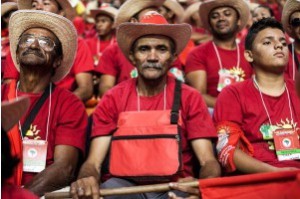
Montreal, Canada: Thousands of students protest cuts in night demonstration

. SUSTAINABLE DEVELOPMENT .

Larissa Rhyn, McGill Daily student newspaper (abridged)

An estimated 3,000 people, most of them students, took to the streets of downtown Montreal on March 24, with nearly 50,000 students on strike this week against the provincial Liberal government’s austerity measures. Police attempted numerous maneuvers to repress the demonstration, and although the protesters escaped kettling, the event resulted in four arrests: two for armed assault and two for mischief.

canada
Click on photo to enlarge

An estimated 3,000 people, most of them students, took to the streets of downtown Montreal on March 24, with nearly 50,000 students on strike this week against the provincial Liberal government’s austerity measures. Police attempted numerous maneuvers to repress the demonstration, and although the protesters escaped kettling, the event resulted in four arrests: two for armed assault and two for mischief.

The demonstration was also part of a Canada-wide day of action for accessible education called for by the Revolutionary Student Movement, a student group with chapters across Canada.

As the crowd was gathering at Place Émilie-Gamelin around 9 p.m., the Service de police de la Ville de Montréal (SPVM) blocked the Ste. Catherine and Berri intersection and declared the protest illegal under bylaw P-6, since the route had not been given to the police ahead of time.

Demonstrators marched for over two hours, chanting anti-austerity and anti-capitalist slogans. Around 9:30 p.m., shortly after the start of the demonstration, police blocked the intersection of Réné-Levesque and St. Laurent and attempted to break up the protesters. Although some projectiles were thrown from the crowd, the mass generally stayed calm and marched forward, leading police to open the blockade.

“The police [do] not have the right to obstruct us,” a university student from Quebec City told The Daily, expressing his dissatisfaction with the application of municipal bylaw P-6. “According to the law, we have the right to demonstrate when we feel like it and when we believe that a situation is unjust. And I know my laws.”

Pénélope, a CEGEP student, said that she was wary of police in the wake of violent confrontations with the SPVM at the strike week kick-off demonstration the previous day. “It was really bad. The police dispersed us extremely quickly. Afterward, they arrested a few and attacked others,” she told The Daily in French.

“We have the right to demonstrate when we feel like it and when we believe that a situation is unjust.”

A saxophone player among the protesters helped lighten the mood throughout the march. Demonstrators chanted “Avec nous, dans la rue!” (“With us, to the streets!”) to onlooking students as they passed McGill’s Bronfman building on Sherbrooke. . .

Actions will continue throughout the week as striking students continue to pressure the government to roll back its cuts to public services, including healthcare and education. One student from Cégep de Saint-Laurent explained that students gather at the CEGEP every morning for discussion and organization.

Léa, a student from Cégep du Vieux Montréal, spoke to the importance of continuing to mobilize students across the province.

“I think that [with its policies] of austerity, the Couillard government is not […] the best to move Quebec forward. [Instead], I think that the welfare state should be improved,” she told The Daily in French. “[To achieve this] we will need a group movement – it should not only be Montreal, but the entirety of Quebec.”

(Click here for an article in French on this subject.

Question for this article:

Movements against governmental fiscal austerity, are they part of the global movement for a culture of peace?

Readers’ comments are invited on this question.

Clôture du Forum social mondial : Les citoyens du monde contre le terrorisme et l’oppression des peuples

. PARTICIPATION DÉMOCRATIQUE .

an article by Sihem Oubraham, El Moudjahid

La 13e édition du Forum social mondial (FMS) 2015, qui s’est déroulée pendant quatre jours dans la capitale tunisienne, a clôturé ses travaux, hier, sous le signe d’une «solidarité tous azimuts envers tous les peuples opprimés».

moudjahid

En effet, le FSM 2015 a été marqué par une série d’activités des participants installés au campus Farhat-Hachad, à El- Manar, à Tunis.

Il faut dire que cette 13e édition a été organisée dans une conjoncture difficile pour les Tunisiens puisqu’elle est intervenue à peine une semaine après l’attentat dramatique du musée du Bardo. Partant de là, les membres du comité d’organisation du FSM ont tenu à réaffirmer le fait que «le terrorisme ne peut pas s’imposer, et ne pourra pas sévir en Tunisie».

L’évènement, l’édition 2015 du FSM est une réussite, a-t-on estimé.

Il faut dire aussi que le FSM 2015 a été marqué par la forte participation algérienne. La présence algérienne s’élève à pas moins de 1.200 participants. Pas moins de 200 associations participent au FSM-2015 à Tunis, parmi lesquelles l’UGTA, des organisations estudiantines, le réseau Nada pour la défense des droits de l’enfant ou encore l’Association nationale des échanges entre jeunes (ANEJ). «C’est une mosaïque, et c’est une première», selon Ali Sahel, coordinateur de la délégation et président de l’ANEJ. Des ateliers ont été programmés par ces derniers. Il s’agit de la promotion des activités des jeunes en Algérie et des conférences sur le “droit à l’autodétermination des peuples sahraoui et palestinien”, “les Ingérences et droit à la souveraineté nationale” ou la “défense du gaz de schiste”.

Au programme des travaux du FSM, plusieurs manifestations variées ont eu lieu, outre des activés en marge du Forum, dont des débats entre personnalités politiques internationales et des manifestations culturelles et musicales. Les participants à la manifestation de la commission des jeunes du Forum social mondial, qui a débuté mardi dernier, sur le slogan “Une jeunesse qui milite et œuvre pour le changement”, organisée dans la salle du Mondial, à Tunis, ont appelé à la constitution d’un front des jeunes. «L’édition 2015 du FSM est une importante étape sur la voie du militantisme universel prônant un changement socio-économique à travers la participation de plus de 50 mille personnes représentant 5.800 associations dont 270 en rapport avec la jeunesse», selon le coordinateur de la commission des jeunes du FSM, M. Zied Makhlouf.

Une jeunesse qui milite et œuvre pour le changement » Dans ce contexte, il s’est félicité de l’augmentation du nombre des participants après l’attentat du Bardo «ce qui illustre la grande solidarité manifestée envers la Tunisie par la communauté internationale», a-t-il estimé. Dans une déclaration à El Moudjahid, en marge de la clôture de la 13e édition du FSM, «M. Makhlouf a souligné que «le FSM poursuivra son engagement sur cette voie, depuis sa première édition à Porte Alegre au Brésil». Un Forum «qui a aidé à accomplir un changement socio-économique perceptible en Amérique latine, notamment en Argentine, au Venezuela et au Brésil», a-t-il précisé.

Cliquez ici pour une traduction anglaise de cet article.

(L’article est continué sur le droite de ce page.)

Continuation de l’article:

De son côté, M. Louay Aoudi, représentant de l’association de Forum de la jeunesse palestinienne dans le diaspora, a affirmé que «la cause palestinienne n’est plus limitée désormais à la géographie, mais concerne l’humanité entière, étant une lutte contre le sionisme, le capitalisme fasciste et un fer de lance pour la liberté». Il a, en outre, estimé que le FSM 2015 de Tunis constitue “un outil pour l’unification des forces de la jeunesse mondiale” «pour se libérer des griffes du sionisme et de la marginalisation».

Pour Caraminda Mac Lorin, représentante du comité d’organisation du FSM à Montréal en 2016, «la participation record à l’édition 2015 de Tunis reflète la grande sympathie des jeunes du monde pour la Tunisie après les derniers attentats». «Nous sommes ici également pour exprimer les préoccupations des jeunes canadiens avec la grève déclenchée par près de 50.000 étudiants afin de protester contre la politique d’austérité. Cet espace représente une bonne opportunité d’échanger les expériences et les points de vue sur ces problèmes communs des jeunes en attendant l’édition de 2016 au Canada», a-t-elle indiqué.

Par ailleurs, les organisateurs, situant le contexte du FSM 2015, précisent notamment que «la revendication d’une justice climatique, et au-delà, d’une justice environnementale, n’est que l’expression d’une remise en cause d’un système de production et de consommation qui n’a pas d’avenir et d’une relation de prédation de l’environnement par l’homme. De plus en plus de mouvements sociaux et d’intellectuels, à travers le monde, interprètent cette crise non pas seulement comme une crise financière ou comme un dysfonctionnement du capitalisme, mais plus profondément comme une véritable crise de civilisation, tant les fondements même du système économique, social, environnemental, culturel et politique sont remis en cause par une large partie de l’humanité qui les considèrent comme la source de l’injustice économique, sociale et politique dans le monde, et comme la source des dommages causés à la terre».

Il y a lieu de rappeler, à la fin, que l’Assemblée des mouvements sociaux, AMS, du FSM 2015, a appelé à renforcer la solidarité avec les peuples du monde qui luttent au quotidien contre l’impérialisme, le colonialisme, l’exploitation, le patriarcat, le racisme et l’injustice.

Boletín español, el 01 de abril 2015

. . MUJERES, IGUALDAD Y PAZ . .

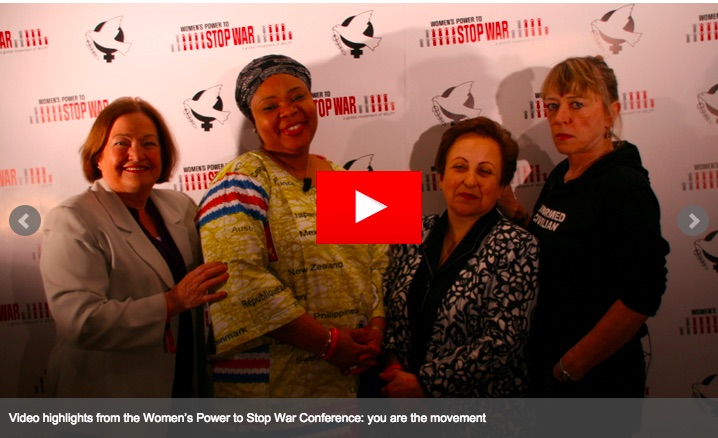
Marzo es el mes de la mujer. Se inicia el 8 de marzo con la celebración del Día Internacional de la Mujer. Este año, la organización internacional “Women Deliver” marcó el día con referencia a cinco periodistas cuyo trabajo se ha dedicado a las cuestiones de género. Además de celebraciones en India y Liberia, otras personas también fueron honradas en Argentina, Camerún, Bangladesh, Kenia, Pakistán, Filipinas, Senegal, Tanzania, Uganda y Estados Unidos.

Cada año, el mismo mes, las Naciones Unidas convocan a la Comisión de la Condición Jurídica y Social de la Mujer. Este año, la Comisión se dedicó al análisis del progreso y del seguimiento de la Declaración y Programa de Acción adoptado por la Conferencia Mundial sobre la Mujer en Beijing hace veinte años. Estableciendo un nuevo récord, más de 1.100 organizaciones no gubernamentales con un total de 8.600 personas se inscribieron para participar en el trabajo de la Comisión de este año.

En cuanto a la participación en la construcción de la paz, las discusiones han demostrado que, si bien existe un gran potencial, el progreso es lento. Las últimas estadísticas disponibles (1992 a 2001) muestran que sólo el nueve por ciento de los negociadores en las mesas de paz son mujeres.

En su discurso de encerramiento de la Comisión, el Director Ejecutivo del Departamento de la Mujer de la ONU, Phumzile Mlambo-Ngcuka, dijo: “Somos conscientes de que no existen caminos corto para el logro de la igualdad de género, el empoderamiento de las mujeres y los derechos humanos de las mujeres y las niñas. Además del camino que hemos recorrido, sabemos que hay desafíos por delante. Sabemos que debemos seguir trabajando sistemática e inquebrantablemente para producir la transformación en el seno de la familia, la sociedad, la economía y los espacios políticos y públicos”.

En preparación para la Comisión, un evento internacional de alto nivel fue organizado por Michele Bachelet, Presidenta de Chile. Su propósito fue evaluar los progresos que se han observado en el contexto de la igualdad de género durante los últimos 20 años y la estimación de lo que queda por hacer.

Mientras el mundo celebra el Día Internacional de la Mujer, la Corte Penal Internacional celebró a su primera presidenta, la jueza Silvia Fernández de Gurmendi de Argentina, y otras dos juezas que son sus vicepresidentas. Esta fue la primera vez que la Corte tuvo una gestión totalmente femenina.

Algunas áreas han visto un gran progreso. Por ejemplo, según el nuevo informe de las Naciones Unidas, la mortalidad materna mundial tuvo la más rápida reducción de nuestra historia. De hecho, se ha reducido a la mitad desde 1990. En tanto, en 2013, murieron menos de 6.400.000 niños menores de cinco años, en comparación con 1990. También desde 1990, once millones más de mujeres dieron a luz en un centro de salud, 8.4 millones de mujeres y niñas usan anticonceptivos modernos, y la atención postnatal para las mujeres aumentó en un veinticinco por ciento.

Para dar una idea del número de organizaciones que trabajan por las mujeres y la paz en el sur de Asia, un directorio se ha puesto en marcha y ya proporciona información detallada sobre 175 organizaciones en Afganistán (20) Bangladesh (32), Bután (3) India (38), Maldivas (2), Nepal (29), Pakistán (28) y Sri Lanka (25).

También en el sur de Asia, la Asociación de Trabajadores Autónomos, fundada por Ela Bhatt, ha estado trabajando desde 2009 para promover su campaña “medios de vida renovables” – conocido bajo el nombre de “Hariyali” en el idioma local – para proporcionar un acceso barato a la energía sostenible en toda la India. El acceso a la energía es esencial para empoderar a las mujeres que son marginadas de otra manera económica y políticamente.

La Revista de Mujeres Africanas ha dedicado recientemente un número especial a las mujeres africanas en el Poder / Política. En las palabras de la editora, “seguimos luchando contra el poder, hacer oír nuestra voz y hacer cambios sostenibles que se pueden sentir por las generaciones futuras.”

También en África, Esther Abimiku Ibanga, fundadora de la “Iniciativa para las Mujeres sin Muros”, en Nigeria, recibió el premio Niwano para la paz: “Desde su creación, la organización se ha convertido en una fuerte coalición de grupos de mujeres que colaboran a través de las divisiones religiosas y étnicas. Desde esta plataforma, las mujeres se colocaron en una posición ventajosa para elevar su voz en las convocatorias de la paz en zonas conflictivas de Nigeria “.

En el sur de Sudán la capacitación de equipos femeninos para el mantenimiento de la paz es una parte importante de la programación de la “Nonviolent Peaceforce“. Apoyan el desarrollo de equipos de unas 10 mujeres que trabajan para apoyarse mutuamente y su comunidad para la protección mujeres.

Por último, en América del Sur, el Premio Internacional de la Paz 2015 de Pax Christi se le concedió al Colectivo de Pensamiento y Acción Mujeres, Paz y Seguridad de Colombia, por haber hecho visible y alentar el papel esencial de la mujer en la paz en su país. También han sido premiados por su trabajo para promover una transformación ética de la sociedad colombiana en el camino hacia la paz sostenible.

El premio Pax Christi Internacional nos recuerda el importante papel que desempeñan las mujeres en todo el mundo en la transformación de conflictos y construcción de la paz a nivel local, nacional e internacional.


IGUALDAD ENTRE MUJERES Y HOMBRES

small photo

Comisión de la Condición Jurídica y Social de la Mujer: Implementación de la Plataforma de Acción de Beijing

DERECHOS HUMANOS


Amnistía Internacional : Un año demoledor

DESARME & SEGURIDAD


Beirut, Lebanon: Citizenship, Gender and Democracy Building International Roundtable Discussion

DESARROLLO SOSTENIBLE


Move the Money! The Global Campaign on Military Spending

LIBERTAD DE INFORMACIÓN


Sonia Ines Goéz Orrego on a speaking tour in the U.S. to share her experience building peace in Colombia

PARTICIPACIÓN DEMOCRATICA


ONU Mujer: Bachelet destacó participación de mujeres en puestos de poder

TOLERANCIA & SOLIDARIDAD


Gobiernos respaldan nuevas funciones para la Comisión de la Mujer

EDUCACIÓN PARA LA PAZ


US and Iran: Track II diplomacy through jazz

Bulletin français 1 avril 2015

. . FEMMES, EGALITE ET PAIX . .

Mars est le mois des femmes. Il débute le 8 mars par la célébration de la Journée internationale de la femme. Cette année, l’organisation internationale “Women Deliver” a marqué cette journée en désignant quinze journalistes dont les travaux ont été consacrés aux questions de genre.  Nous y trouvons entre autres, l’Inde, le Libéria,l’Argentine, le Cameroun, le Bangladesh, le Kenya, le Pakistan, les Philippines, le Sénégal, la Tanzanie, l’Ouganda et des États-Unis.

Chaque année, ce même mois, les Nations Unies convoquent la Commission de la condition de la femme (CSW). Cette année, la Commission a été consacrée à
l’analyse des progrès et du suivi de la Déclaration et du Programme d’action adopté par la Conférence mondiale sur les femmes à Beijing il y a vingt ans.  Établissant un nouveau record, plus de 1100 ONG pour un total de 8 600 personnes se sont inscrites pour participer aux travaux de la Commission cette année.  

En ce qui concerne la participation à la consolidation de la paix, les discussions ont montré que même s’il existe un grand potentiel ,  le progrès tarde à se réaliser. Les dernières statistiques disponibles (de 1992  à  2001 ) montrent en effet que seulement neuf pour cent des négociateurs à des tables de paix sont des femmes.

Dans son discours de clôture à la Commission, le Directeur exécutif du département ONU-Femmes, Phumzile Mlambo-Ngcuka a déclaré :« Nous sommes tous bien conscients qu’il n’y a pas de remède miracle pour la réalisation de l’égalité des sexes, de l’autonomisation des femmes et des droits humains des femmes et des filles. Compte tenu du chemin que nous avons parcouru, nous savons que d’autres défis nous attendent. Nous savons que nous devons continuer à travailler, de manière systématique et sans relâche, pour instaurer une transformation dans nos familles, nos sociétés, nos économies et nos espaces politiques et publics »

Toujours dans le cadre de la CSW, un événement international de haut niveau a été organisé par Michele Bachelet, Présidente du Chili. Son but était d’évaluer les progrès déjà constatés dans le cadre de  l’égalité des genres depuis  les 20 dernières années et l’estimation de ce qu’il reste à faire.

Alors que le monde a célébré la Journée internationale de la femme, la Cour pénale internationale a accueilli  sa première présidente, la juge Silvia Fernández de Gurmendi originaire d’Argentine, ainsi que deux autres juges femmes qui sont ses vice présidentes.  C’est la première fois que la Court a eu une direction entièrement féminine.

Certains domaines ont vu de grands progrès. Par exemple, selon le nouveau rapport présenté à l’Organisation des Nations Unies , le taux mondial de mortalité maternelle à eu la réduction la  plus rapide de toute notre histoire.  En effet, elle a été presque diminué de moitié depuis 1990. Parallèlement, en 2013, six millions quatre cent mille enfants de moins de cinq ans sont morts en moins par rapport à la même  année. 

Toujours par rapport à 1990, onze millions de plus de femmes ont accouché dans un établissement de santé, huit millions quatre cent mille  femmes et filles de plus utilisent la contraception moderne, et les soins post-natals pour les femmes a augmenté de vingt cinq  pour cent.

Pour donner une idée du nombre d’organisations travaillant pour les femmes et la paix en Asie du Sud, un répertoire a été lancé et déjà il fournit des informations détaillées sur 175 organisations en Afghanistan (20), le Bangladesh (32), le Bhoutan (3), l’Inde (38), les Maldives (2), le Népal (29), le Pakistan (28) et au Sri Lanka (25).

Toujours en Asie du Sud, l’Association des travailleuses indépendantes, fondée par Ela Bhatt, travaille depuis 2009 pour promouvoir sa campagne «moyens de subsistance renouvelables” – connu sous le nom d”Hariyali” dans la langue locale – pour fournir un accès pas cher à l’énergie durable à travers l’Inde . L’accès à l’énergie est essentiel pour émanciper les femmes qui sont par ailleurs marginalisées économiquement et politiquement.

Le Journal des femmes africaines vient de consacrer un numéro spécial aux femmes africaines dans Pouvoir / Politique.  Dans les mots de l’éditeur, “nous continuons à lutter contre le pouvoir, faire entendre nos voix et apporter des changements durables qui peuvent être ressentis par les générations à venir.”

Également d’Afrique, Mme Esther Abimiku Ibanga, fondatrice  de “Initiative  des Femmes sans murs ” au Nigeria, a reçu le 32e prix Niwano pour la paix: «Depuis sa création, l’organisation est devenue une forte coalition de groupes de femmes à travers les divisions religieuses et ethniques.  De cette plate-forme, les femmes ont été placées dans une position avantageuse d’élever leurs voix dans les appels à la paix dans les régions troublées du Nigeria “.

Au Sud-Soudan La formation des équipes feminines pour le maintien de la paix est une partie importante de la programmation de la “Nonviolent Peaceforce’.  Ils soutiennent le développement d’équipes d’environ 10 femmes qui travaillent à se soutenir mutuellement et dans leur communauté sur les questions de protection des femmes.

Enfin, en Amérique du Sud, le Prix international de la paix 2015 “Pax Christi” a été accordé au Collectif femmes, la paix et la sécurité pour la réflexion et l’action (Colectivo de Pensamiento y Acción Mujeres, Paz y Seguridad) de Colombie, pour avoir rendu visible et encouragé la contribution essentielle des femmes à la paix dans leur pays. Elles ont ete  également  récompensées pour leur travail de promouvotion pour  une transformation éthique de la société colombienne en tant que chemin vers la paix durable.

Le prix Pax Christi International nous rappelle le rôle important que jouent les femmes dans la transformation des conflits et dans la consolidation de la paix au niveau local, national et international.


FEMMES, EGALITE ET PAIX

Beijing

Commission de la condition de la femme: Application du Programme d’Action de Beijing

DROITS DE L’HOMME


Amnesty International: L’année 2014 a été terrible

DÉSARMEMENT & SÉCURITÉ


Beirut, Lebanon: Citizenship, Gender and Democracy Building International Roundtable

DEVELOPPEMENT DURABLE


Move the Money! The Global Campaign on Military Spending

LIBERTÉ DE L’INFORMATION


Foundation de la paix mondiale, D.R. Congo: Vision, Mission, Activités et Projets 2015

PARTICIPATION DÉMOCRATIQUE


Nigeria: Why we facilitated Abuja peace accord —Ben Obi

TOLERANCE ET SOLIDARITÉ


Un an du “Projet Revalorisation du Vivre Ensemble – REVE” au Niger

ÉDUCATION POUR LA PAIX


US and Iran: Track II diplomacy through jazz

Bulletin English April 1, 2015

. WOMEN, EQUALITY AND PEACE .

Women, equality and peace

March is the month for women, beginning with the celebration of International Women’s Day on March 8. This year the international advocacy organisation Women Deliver marked the day by celebrating 15 journalists who have dedicated their work to gender issues. Besides India and Liberia, other honorees hailed from Argentina, Cameroon, Bangladesh, Kenya, Pakistan, the Philippines, Senegal, Tanzania, Uganda, and the United States.

Each year in March the United Nations convenes the Commission on the Status of Women (CSW). This year it was dedicated to analyzing progress and following up the Declaration and Platform of Action adopted by the World Conference on Women in Beijing twenty years ago. Setting a new record, more than 1,100 NGOs and a total of 8,600 representatives registered to participate in the Commission’s work this year. With regard to peace building, their discussions showed that there is a great potential for progress, although it remains to be realized, since the latest available statistics show that women made up only 9 per cent of negotiators at peace tables between 1992 and 2011.

Inher closing speech at the CSW, UN Women Executive Director Phumzile Mlambo-Ngcuka said, “We are all aware that there are no shortcuts to realizing gender equality, the empowerment of women and the human rights of women and girls. Based on the road we have travelled, we know that there are more challenges ahead of us. We know we must continue to work, systematically and relentlessly, to bring about transformation in our families, societies, economies, and political and public spaces.”

In preparation for the CSW, a high-level international event was hosted by Michele Bachelet, the President of Chile, to assess the advances made towards gender equality in the last 20 years and what still needs to be done.

As the world celebrated International Women’s Day, the International Criminal Court got its first female presidency, Judge Silvia Fernández de Gurmendi of Argentina ,along with two other female judges as her Vice- Presidents. This is the first time the Court has had an all-female leadership

In some areas there has been great progress. For example, the global rate of maternal deaths is reducing faster than any time in history, according to a new report presented to the United Nations entitled “Saving Lives, Protecting Futures.” Maternal mortality has been nearly halved since 1990, and in 2013, 6.4 million fewer children under age five died compared to 1990. Compared to then 11 million more women have given birth in a health facility, 8.4 million more women and girls use modern contraception, and post-natal care for women increased 25 percent.

To give some idea of the number of organizations working for women and peace, in South Asia, a directory has been launched and already it provides extensive information on 175 organizations in Afghanistan (20), Bangladesh (32), Bhutan (3), India (38), Maldives (2), Nepal (29), Pakistan (28) and Sri Lanka (25).

Also in South Asia, the Self-Employed Women’s Association, founded by Ela Bhatt, has been working since 2009 to promote its “Green Livelihoods Campaign” – known as “Hariyali” in the local language – to provide cheap access to sustainable energy across India. Access to energy is vital in emancipating women who are otherwise marginalised both economically and politically.

The African Women’s Journal has just devoted a special issue to African Women in Power/Politics. In the words of the editor, “we continue to wrestle with power, make our voices heard and bring about lasting change which can be felt by the coming generations. ”

Also from Africa Mrs. Esther Abimiku Ibanga, the founder of “Women Without Walls Initiative” in Nigeria, has been awarded the 32nd Niwano Peace Prize: “Since inception, the organization has become a strong coalition of women groups across religious and ethnic divides. From this platform, women have been placed at an advantageous position of raising their voices in the calls for peace in the troubled regions of Nigeria.”

In South Sudan The formation of Women’s Peacekeeping Teams is an important part of the programming of the Nonviolent Peaceforce. They support the development of teams of roughly 10 women who work to support each other and their community on protection issues that target women.

Finally, in South America, The 2015 Pax Christi International Peace Award has been granted to the Women, Peace and Security Collective for Reflection and Action (Colectivo de Pensamiento y Acción Mujeres, Paz y Seguridad) in Colombia for making visible and encouraging the essential contribution of women to peacebuilding in their country and for their work to promote an ethical transformation of Colombian society as the path towards sustainable peace.

The Pax Christi International award reminds us of the important role that women play worldwide in conflict transformation and peacebuilding at the local, national and international level.

      
WOMEN’S EQUALITY

Beijing

UN Commission on Status of Women: Implementing the Beijing Platform for Action

HUMAN RIGHTS


Amnesty International: A Devastating Year

DISARMAMENT AND SECURITY


Beirut, Lebanon: Citizenship, Gender and Democracy Building International Roundtable

SUSTAINABLE DEVELOPMENT


Move the Money! The Global Campaign on Military Spending

FREE FLOW OF INFORMATION


The 15 Journalists Putting Women’s Rights on the Front Page

DEMOCRATIC PARTICIPATION


Nigeria: Why we facilitated Abuja peace accord —Ben Obi

TOLERANCE AND SOLIDARITY


A Year-long Project for “Living Together – REVE” in Niger

EDUCATION FOR PEACE

2045 jazz
US and Iran: Track II diplomacy through jazz

Gobiernos respaldan nuevas funciones para la Comisión de la Mujer

. IGUALDAD HOMBRES/MUJERES .

un artículo de la ONU Mujeres

La Comisión de la Condición Jurídica y Social de la Mujer de las Naciones Unidas concluyó hoy [20 marzo] su 59º período anual de sesiones con un acuerdo alcanzado por los Estados Miembros de las Naciones Unidas sobre las medidas para impulsar sus esfuerzos en favor de la igualdad de género y el empoderamiento de las mujeres.

csw
Haga click en la foto para ampliarla

Los Gobiernos que asistieron a la reunión acordaron nuevos métodos de trabajo de modo que la Comisión continúe fijando las normas referidas a la Declaración y Plataforma de Acción de Beijing de 1995 y afiance su función en la formulación de políticas mundiales y la coordinación de las acciones para su aplicación. Estos afirmaron las aportaciones fundamentales de la Comisión a la configuración de la histórica agenda sobre desarrollo sostenible posterior a 2015, cuya adopción está programada para septiembre en una cumbre mundial de Jefas y Jefes de Estado y de Gobierno.

Como el principal organismo de las Naciones Unidas para promover los compromisos intergubernamentales con la igualdad de género y el seguimiento de la Plataforma de Beijing, la Comisión reorientará su labor en coordinación con la del Consejo Económico y Social y el Nuevo Foro Político de Alto Nivel de las Naciones Unidas. Esto consolidará los esfuerzos para incorporar la igualdad de género en todos los debates y medidas mundiales sobre desarrollo sostenible.

Puesto que un gran número de ministras y ministros de gobierno se hacen presentes ahora en la Comisión, los Estados Miembros acordaron crear un segmento ministerial que será inaugurado en el próximo período de sesiones de 2016. Se espera que éste incremente la visibilidad de las preocupaciones actuales y que ofrezca oportunidades para demostrar un compromiso político de alto nivel para acelerar el progreso hacia la igualdad de género, el empoderamiento y la realización plena de los derechos humanos de las mujeres.

Expresando su felicitación a los Estados Miembros, la sociedad civil y el sistema de las Naciones Unidas por “un periodo de sesiones contundente, dinámico y ambicioso”, la Directora Ejecutiva de ONU Mujeres, Phumzile Mlambo- Ngcuka, dijo en su alocución: “Somos conscientes de que no existen atajos para el logro de la igualdad de género, el empoderamiento de las mujeres y los derechos humanos de las mujeres y las niñas. A partir del camino que hemos recorrido, sabemos que quedan más desafíos por delante. Sabemos que debemos seguir trabajando sistemática e inquebrantablemente para producir la transformación en el seno de la familia, la sociedad, la economía y los espacios político y público”.

Los Gobiernos acordaron afinar el foco del tema de examen anual de la Comisión. En adelante, los estudios de caso demostrarán las lecciones aprendidas en la aplicación de los compromisos asumidos en las sesiones anteriores de la Comisión. El Secretario General emitirá un informe especializado sobre los avances en el tema, a partir de datos nacionales y demás material pertinente. El proceso ayudará a superar las brechas entre las promesas hechas y un cambio cuantificable, y ofrecerá evidencias concretas acerca de cómo las normas internacionales pueden trasladarse en diferencias significativas en las vidas de las mujeres y las niñas.

Este 59º periodo de sesiones albergó diversas mesas redondas y paneles de alto nivel sobre temáticas cruciales, que van desde el aumento de la financiación para la igualdad de género a las responsabilidades de los hombres y los niños y la mejora en la desagregación de los datos en función del género. Los debates sobre las lecciones extraídas de los Objetivos de Desarrollo del Milenio darán nueva forma a la agenda de desarrollo posterior a 2015.

( Clickear aquí para la version francês o aquí para la version inglês)

Pregunta(s) relacionada(s) al artículo

Does the UN advance equality for women?

The following article by Lyndal Rowlands in the Inter Press Service, suggests that the UN is not making much progress on its commitments for women’s equality:

2015 marks anniversaries for two significant commitments made to increasing women’s participation at peace tables.

Yet despite the Beijing Platform for Action and the Security Council Resolution 1325 both committing to increasing women’s participation in peace building 20 and 15 years ago, respectively, there has been very little progress to report.

The latest available statistics show that women made up only 9 per cent of negotiators at peace tables between 1992 and 2011. That the most recent data is from 2011 shows that more work is needed even in basic areas such as data collection and reporting of women’s participation in peace building.

IPS summarises here four reasons we should value women’s participation at the peace table more, based on discussions at the 59th Commission on the Status of Women (CSW) over the past week.

Beijing Platform for Action Section E

Women and Armed Conflict Diagnosis

Strategic objective E.1. Increase the participation of women in conflict resolution at decision-making levels and protect women living in situations of armed and other conflicts or under foreign occupation. Actions to be taken.

Strategic objective E.2. Reduce excessive military expenditures and control the availability of armaments. Actions to be taken.

Strategic objective E.3. Promote non-violent forms of conflict resolution and reduce the incidence of human rights abuse in conflict situations. Actions to be taken.

Strategic objective E.4. Promote women’s contribution to fostering a culture of peace. Actions to be taken

Strategic objective E.5. Provide protection, assistance and training to refugee women, other displaced women in need of international protection and internally displaced women. Actions to be taken.

Strategic objective E.6. Provide assistance to the women of the colonies and non-self-governing territories. Actions to be taken.
Women Bring Commitment and Experience to the Peace Table
Often the first people invited to participate in formal peace negotiations are the people holding the guns and the last are women who have expertise in building lasting peace.

Zainab Bangura, Special Representative of the Secretary-General on Sexual Violence in Conflict, told a CSW side event on Tuesday last week, “In the Central African Republic, the only community where they were not killing each other was a community where the Christian women said, ‘These Muslim women are our sisters.’

“Why? Because the women in the community said, ‘We have lived together for the last 100 years’,” Bangura said.

In the Phillipines, Irene Santiago was a member of the government panel that negotiated peace with the Moro Islamic Liberation Front. Santiago came to the table with years of experience working with Christian, Muslim and Indigenous women leaders for peace.

Speaking at a CSW side event at the International Peace Institute (IPI) on Thursday, Santiago said that she knew that her years of experience working with civil society for peace stood her in good stead to make a significant contribution to formal peace negotiations, which she did.

Speaking with IPS, Santiago said women’s voices not only have to be heard, but that they also have to be acted on.

“For women. It’s almost never always about themselves, it’s always about our children, our husbands but also about our communities,” Santiago told IPS.

In Africa, women have fought to be included in peacemaking, even when their contributions have not been recognised.

Bineta Diop, Special Envoy on Women Peace and Security to the African Union, says that mediators need to be held accountable when they only invite the people who hold guns to the peace table and ignore women’s contributions.

“I have been involved in many crises where women were knocking at the door and saying we want to be at the table,” Diop said.

Ambassador Anwarul Chowdhury, known as the father of Security Council Resolution 1325, said that the determination of African women to be involved in peace negotiations should be seen as an inspiration by other countries.

Despite serious difficulties, war and conflict, African women have shown continued determination to hold their countries accountable, Chowdhury said.

Gender Equality in Peace Time Prevents Conflict
Also speaking at the IPI, Valerie Hudson, co-author of ‘Sex and World Peace’, said that her research has shown that the way women are treated within a country is one of the most accurate indicators of the quality of relations that country will have with other countries.

Diop agreed with Hudson, saying that countries that are likely to fall into conflict have higher levels of discrimination and inequality.

“Discrimination against women, especially the non-participation and non-inclusion of women in democracy is … one of the root causes of the conflict,” Diop said.

Ambassador Choudhury agreed with these sentiments, telling IPS, “I believe that no country can claim that their country is not in conflict if women’s rights are denied, if women’s equality is not ensured, if women’s participation at all participation levels is not there.

“I think that if we women are violated, if women’s equality of participation is not there we cannot say that we are at peace, we are in conflict with ourselves. This is a conflict which is happening within ourselves and within the countries. We don’t have to go into the traditional description of conflict, civil conflict or fighting with another country,” Chowdhury added.

Dr. Youssef Mahmoud, Senior Adviser at the International Peace Institute also speaking at the IPI event said, “A world where 51 per cent are ignored is a dangerous world for everyone. I can’t imagine why any men would be indifferent to this.”

Women Are Active In Civil Society
Several discussions at the CSW questioned why militaries were the primary actors in peace building, while non-governmental organisations (NGOs) and civil society’s expertise was not called on.

Related IPS Articles

U.S. Honours 10 “Extraordinary Women” for Courage and Leadership
Meet the 10 Women Who Will Stop at Nothing
Women Walk for Peace in the Korean Peninsula
Santiago told IPS that civil society, especially women, have a lot to contribute to humanise, to concretise, and to make peace negotiations relevant to people’s lives.

Winnie Kodi from the Nuba mountains in Sudan told reporters on Monday that civil society was vital to helping indigenous communities like her own that have been affected by conflict. She said that the main way her people were able to have their voices heard was by working together with NGOs and civil society.

Chowdhury told IPS he is advocating for the U.N. and governments to hold more consultations with civil society, saying that the involvement of women and of civil society is very important.

Santiago also called for renewed focus on the important role of NGOs in the area of women, peace and security,

“Again I see that why are we focusing on the UN as the locus of change,” she said. “To me it is not, it is the means, it is an important audience, but it is not the locus of social change.

“Let us form the global civic networks that we need to bring about the local global and civil change that we need” Santiago said.

Women Challenge The Causes of Conflict
Challenging militarism and militarisation was another theme discussed during the first week of the CSW, particularly by civil society groups at the parallel NGO forum.

Choudhury told IPS that increased militarism and militarisation is slowing down efforts for equality. “Increasing militarism and militarisation has really been effecting women in a very negative way. This is something that women should stand up against, we should all stand up against,” Chowdhury said.

Militarisation is also affecting indigenous women and men. Maribeth Biano, from the Asian Indigenous Women’s Network, told reporters on Monday that Indigenous women are hugely affected by militarisation in Indigenous territories.
Back to top
Profile PM MAIL

Les gouvernements approuvent de nouveaux rôles pour la Commission de la condition de la femme

. . . EGALITE HOMMES/FEMMES . . .

un article par ONU Mujeres

La Commission de la condition de la femme a conclu aujourd’hui [20 mars] sa 59e session annuelle par un accord avec les États membres des Nations Unies concernant les mesures pour stimuler ses initiatives en faveur de la promotion de l’égalité des sexes et de l’autonomisation des femmes.

csw
Cliquez sur le photo pour l’élargir

Les gouvernements participant à la réunion ont convenu de nouvelles méthodes de travail pour que la Commission continue à fixer les normes relatives à la Déclaration et le Programme d’action 1995 de Beijing et pour renforcer son rôle dans la formulation des politiques et la coordination d’actions à l’échelle mondiale en matière de mise en œuvre. Ils ont affirmé les contributions essentielles de la Commission dans le façonnement du programme majeur de développement durable pour l’après-2015, dont l’adoption par un sommet mondial de chefs d’États et de gouvernements est prévue en septembre 2015.

En tant qu’organe principal des Nations Unies de promotion des engagements intergouvernementaux en faveur de l’égalité des sexes et de suivi du Programme d’action de Beijing, la Commission poursuivra l’harmonisation de son travail avec celui du Conseil économique et social et du nouveau Forum politique de haut niveau des Nations Unies. Ceci renforcera les initiatives d’intégration de l’égalité des sexes à travers l’ensemble des actions et des débats mondiaux sur le développement durable.

Comme maintenant un grand nombre de membres de gouvernement participent à la Commission, les États membres ont convenu de créer un segment ministériel qui démarrera lors de la prochaine session en 2016. Il est destiné à donner une plus grande visibilité aux préoccupations actuelles et à offrir des possibilités de démontrer un engagement politique de haut niveau pour accélérer les progrès vers l’égalité des sexes, l’autonomisation des femmes et la réalisation pleine des droits humains des femmes.

Félicitant les États membres, la société civile et le système des Nations Unies pour « l’énergie, le dynamisme et la perspicacité de la session », la directrice exécutive d’ ONU Femmes, Phumzile Mlambo-Ngcuka, a déclaré dans son discours : « Nous sommes tous bien conscients qu’il n’y a pas de remède miracle pour la réalisation de l’égalité des sexes, de l’autonomisation des femmes et des droits humains des femmes et des filles. Compte tenu du chemin que nous avons parcouru, nous savons que d’autres défis nous attendent. Nous savons que nous devons continuer à travailler, de manière systématique et sans relâche, pour instaurer une transformation dans nos familles, nos sociétés, nos économies et nos espaces politiques et publics », a-t-elle ajouté.

Les gouvernements ont convenu de cibler davantage les efforts sur le thème de l’examen annuel de la Commission. Pour l’avenir, des études de cas démontreront les enseignements qui ont été retirés de la mise en œuvre des engagements pris lors des sessions antérieures de la Commission . . .

La 59e session comprenait un éventail de tables rondes et de panels de haut niveau portant sur des sujets essentiels, depuis le renforcement des financements pour l’égalité des sexes aux responsabilités des hommes et des garçons, en passant par une amélioration des données ventilées par sexe. Les discussions sur les enseignements qui ont été retirés des objectifs du Millénaire pour le développement renforceront le façonnement du programme de développement pour l’après-2

(Cliquez ici pour une version espagnole de cet article ou ici pour une version anglaise.)

Pregunta(s) relacionada(s) al artículo

Does the UN advance equality for women?

The following article by Lyndal Rowlands in the Inter Press Service, suggests that the UN is not making much progress on its commitments for women’s equality:

2015 marks anniversaries for two significant commitments made to increasing women’s participation at peace tables.

Yet despite the Beijing Platform for Action and the Security Council Resolution 1325 both committing to increasing women’s participation in peace building 20 and 15 years ago, respectively, there has been very little progress to report.

The latest available statistics show that women made up only 9 per cent of negotiators at peace tables between 1992 and 2011. That the most recent data is from 2011 shows that more work is needed even in basic areas such as data collection and reporting of women’s participation in peace building.

IPS summarises here four reasons we should value women’s participation at the peace table more, based on discussions at the 59th Commission on the Status of Women (CSW) over the past week.

Beijing Platform for Action Section E

Women and Armed Conflict Diagnosis

Strategic objective E.1. Increase the participation of women in conflict resolution at decision-making levels and protect women living in situations of armed and other conflicts or under foreign occupation. Actions to be taken.

Strategic objective E.2. Reduce excessive military expenditures and control the availability of armaments. Actions to be taken.

Strategic objective E.3. Promote non-violent forms of conflict resolution and reduce the incidence of human rights abuse in conflict situations. Actions to be taken.

Strategic objective E.4. Promote women’s contribution to fostering a culture of peace. Actions to be taken

Strategic objective E.5. Provide protection, assistance and training to refugee women, other displaced women in need of international protection and internally displaced women. Actions to be taken.

Strategic objective E.6. Provide assistance to the women of the colonies and non-self-governing territories. Actions to be taken.
Women Bring Commitment and Experience to the Peace Table
Often the first people invited to participate in formal peace negotiations are the people holding the guns and the last are women who have expertise in building lasting peace.

Zainab Bangura, Special Representative of the Secretary-General on Sexual Violence in Conflict, told a CSW side event on Tuesday last week, “In the Central African Republic, the only community where they were not killing each other was a community where the Christian women said, ‘These Muslim women are our sisters.’

“Why? Because the women in the community said, ‘We have lived together for the last 100 years’,” Bangura said.

In the Phillipines, Irene Santiago was a member of the government panel that negotiated peace with the Moro Islamic Liberation Front. Santiago came to the table with years of experience working with Christian, Muslim and Indigenous women leaders for peace.

Speaking at a CSW side event at the International Peace Institute (IPI) on Thursday, Santiago said that she knew that her years of experience working with civil society for peace stood her in good stead to make a significant contribution to formal peace negotiations, which she did.

Speaking with IPS, Santiago said women’s voices not only have to be heard, but that they also have to be acted on.

“For women. It’s almost never always about themselves, it’s always about our children, our husbands but also about our communities,” Santiago told IPS.

In Africa, women have fought to be included in peacemaking, even when their contributions have not been recognised.

Bineta Diop, Special Envoy on Women Peace and Security to the African Union, says that mediators need to be held accountable when they only invite the people who hold guns to the peace table and ignore women’s contributions.

“I have been involved in many crises where women were knocking at the door and saying we want to be at the table,” Diop said.

Ambassador Anwarul Chowdhury, known as the father of Security Council Resolution 1325, said that the determination of African women to be involved in peace negotiations should be seen as an inspiration by other countries.

Despite serious difficulties, war and conflict, African women have shown continued determination to hold their countries accountable, Chowdhury said.

Gender Equality in Peace Time Prevents Conflict
Also speaking at the IPI, Valerie Hudson, co-author of ‘Sex and World Peace’, said that her research has shown that the way women are treated within a country is one of the most accurate indicators of the quality of relations that country will have with other countries.

Diop agreed with Hudson, saying that countries that are likely to fall into conflict have higher levels of discrimination and inequality.

“Discrimination against women, especially the non-participation and non-inclusion of women in democracy is … one of the root causes of the conflict,” Diop said.

Ambassador Choudhury agreed with these sentiments, telling IPS, “I believe that no country can claim that their country is not in conflict if women’s rights are denied, if women’s equality is not ensured, if women’s participation at all participation levels is not there.

“I think that if we women are violated, if women’s equality of participation is not there we cannot say that we are at peace, we are in conflict with ourselves. This is a conflict which is happening within ourselves and within the countries. We don’t have to go into the traditional description of conflict, civil conflict or fighting with another country,” Chowdhury added.

Dr. Youssef Mahmoud, Senior Adviser at the International Peace Institute also speaking at the IPI event said, “A world where 51 per cent are ignored is a dangerous world for everyone. I can’t imagine why any men would be indifferent to this.”

Women Are Active In Civil Society
Several discussions at the CSW questioned why militaries were the primary actors in peace building, while non-governmental organisations (NGOs) and civil society’s expertise was not called on.

Related IPS Articles

U.S. Honours 10 “Extraordinary Women” for Courage and Leadership
Meet the 10 Women Who Will Stop at Nothing
Women Walk for Peace in the Korean Peninsula
Santiago told IPS that civil society, especially women, have a lot to contribute to humanise, to concretise, and to make peace negotiations relevant to people’s lives.

Winnie Kodi from the Nuba mountains in Sudan told reporters on Monday that civil society was vital to helping indigenous communities like her own that have been affected by conflict. She said that the main way her people were able to have their voices heard was by working together with NGOs and civil society.

Chowdhury told IPS he is advocating for the U.N. and governments to hold more consultations with civil society, saying that the involvement of women and of civil society is very important.

Santiago also called for renewed focus on the important role of NGOs in the area of women, peace and security,

“Again I see that why are we focusing on the UN as the locus of change,” she said. “To me it is not, it is the means, it is an important audience, but it is not the locus of social change.

“Let us form the global civic networks that we need to bring about the local global and civil change that we need” Santiago said.

Women Challenge The Causes of Conflict
Challenging militarism and militarisation was another theme discussed during the first week of the CSW, particularly by civil society groups at the parallel NGO forum.

Choudhury told IPS that increased militarism and militarisation is slowing down efforts for equality. “Increasing militarism and militarisation has really been effecting women in a very negative way. This is something that women should stand up against, we should all stand up against,” Chowdhury said.

Militarisation is also affecting indigenous women and men. Maribeth Biano, from the Asian Indigenous Women’s Network, told reporters on Monday that Indigenous women are hugely affected by militarisation in Indigenous territories.
Back to top
Profile PM MAIL