Sanctions against Israel: Round up from 2014

DISARMAMENT AND SECURITY .

An article by the BDS Movement (excerpts – one per month)

Here’s our round up of some of the key BDS developments of 2014. The Palestinian Boycott, Divestment and Sanctions National Committee (BNC), the coalition of Palestinian civil society organisations that works to lead and support the boycott, divestment and sanctions (BDS) movement, warmly thanks each and every person who supported and contributed to the BDS movement this year. . .

bds
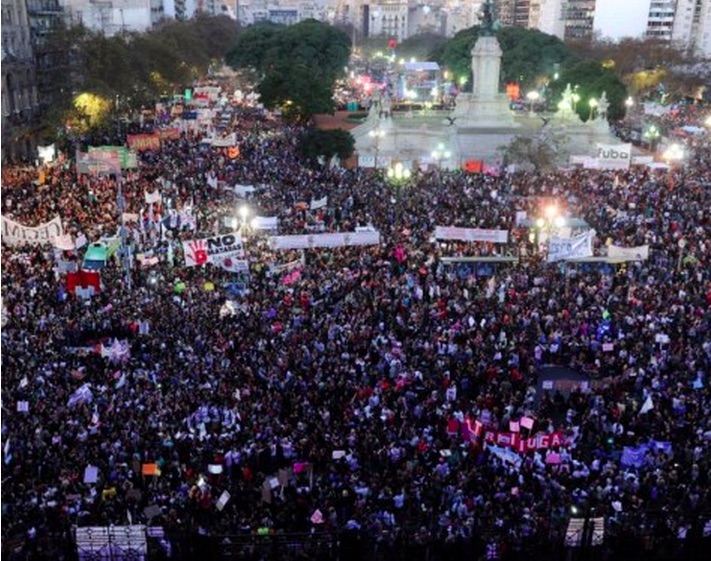
On August 9, hundreds of thousands of people took to the streets as part of an international Day of Rage initiated by groups in Gaza. Anti-apartheid hero Desmond Tutu called the day one of the biggest ever international mobilisations on a single issue. Photo from Getty images.

January:

In a move that laid the foundation for other European funds to follow suit later in the year, Dutch pension fund PGGM announced it was divesting tens of millions of euros from 5 of Israel’s biggest banks due to their deep involvement in Israel’s crimes against Palestinians. The fund manages the pensions of 2.5 million people. . .

February

Luxembourg’s state pension fund FDC excludes nine major Israeli banks and firms and one US company because of their involvement in Israeli settlements and human rights violations in the occupied Palestinian territories. Meanwhile, Denmark’s largest bank Dankse Bank blacklists Israel’s Bank Hapoalim over settlement construction. . .

March

. . . Victory in Galway as Irish students’ Union votes to join BDS movement
The motion at the National University of Ireland in Galway was passed by an almost 2 to 1 margin and follows on from the Teachers Union of Ireland’s 2013 endorsement of an academic boycott of Israel. . .

April

. . . Students at the University of New Mexico, Wesleyan University in Connecticut, and University of California Riverside vote to support divestment from companies that help Israel violate international law. Meanwhile, the largest student petition in Florida’s history calls for divestment.

May

The Bill Gates Foundation, one of the largest private foundations in the world, divests from G4S. A petition signed by more than 14,000 people and demonstrations outside Gates Foundation offices in London, Johannesburg and Seattle called on the the Gates Foundation to divest from G4S because of its role in providing equipment and services to prisons where Israel holds and tortures Palestinian political prisoners. . . .

June

Years of grassroots organising pays off as the Presbyterian Church (USA) general assembly in Detroit votes to divest its holdings from three US corporations – Hewlett Packard (HP), Motorola Solutions and Caterpillar – on the basis of their well-documented record of complicity in the oppression and denial of human rights of Palestinians.

(article continued in the right column)

Question related to this article:

Presenting the Palestinian side of the Middle East, Is it important for a culture of peace?

Israel/Palestine, is the situation like South Africa?

(article continued from the left column)

July

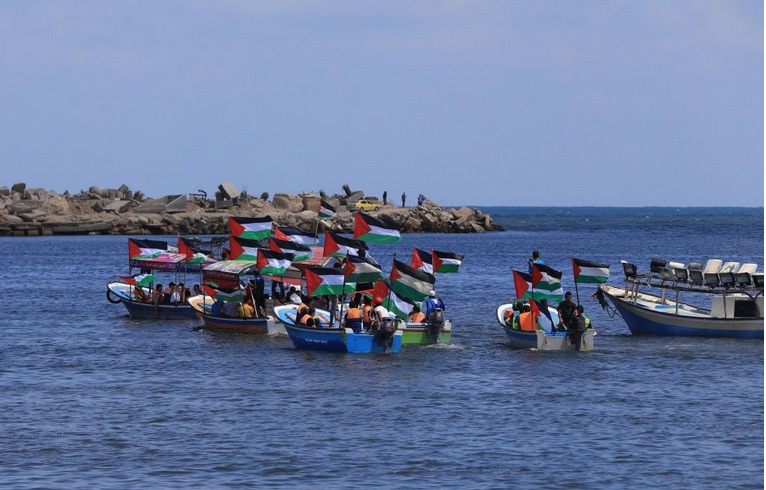
As Israel began its massacre of Palestinians in Gaza, governments and people of conscience across the world take action to pressure Israel to comply with international law and human rights. Key developments includes:

The Chilean parliament votes to suspend negotiations on a new trade deal with Israel, and Brazil, Chile, Ecuador, El Salvador and Peru withdraw their ambassadors.

A call for a military embargo on Israel launched by 6 Nobel laureates and dozens of celebrities is signed by more than 60,000 people. . .

Dublin city council passes a resolution calling for a military embargo and the suspension of the EU-Israel Association Agreement.

In Turkey, at least 12 local municipalities, a number of major business associations and a major trade union issue calls for a boycott of Israeli products . . .

August

Thousands of supporters of Palestinian rights in the San Francisco Bay take part in pickets and demonstrations that have prevented an Israeli ship from docking at the port in Oakland for four consecutive days. By the end of August, the unloading of Israeli ships has been prevented or disrupted at ports in Oakland, Tacoma, Seattle and Long Beach. . .

September

.. . French multinational Veolia, which has lost billions of dollars of contracts as a result of campaigns over its construction of infrastructure for illegal Israeli settlements, intends to “step back from Israel as a market place” and sell most parts of its Israeli interests during 2015.

October

SodaStream announces it is to close its factory in the illegal Israeli settlement of Mishor Adumim following a high profile boycott campaign against the company that saw retailers and investors across the world cut links with the company. . .

November

. . . The University of California at Los Angeles becomes the sixth of nine undergraduate campuses in the UC system to call for divestment, while the biggest ever student referendum at the University of Exeter calls for the student union to join the BDS movement. . .

December

The Brazilian state of Rio Grande do Sul cancels a major collaboration deal with Israeli military company Elbit Systems in the wake of protests over the firm’s role in oppression of Palestinians.

– See more at: http://www.bdsmovement.net/2014/round-up-13017#sthash.0bcXOTfS.dpuf

(Thank you to Mazin Qumsiyeh for pointing out this article to us.

Editor’s note. Since publishing this article, we have found comments both pro and con this controversial issue. For a comment against BDS, see https://www.transcend.org/tms/2015/06/bds-the-new-enemy.

And for a comment for BDS, see http://america.aljazeera.com/opinions/2015/6/is-bds-the-only-pro-israel-option-left.html

Finally, it should be noted that the boycott is effective. According to a UN report, foreign investment in Israel fell by 50% last year.

Speech of Sierra Leone Foreign Minister to the Organization of Islamic Cooperation

TOLERANCE AND SOLIDARITY .

Reprinteded from Sierra Express Media (abridged)

Asalamu Alaikum. It is a great honour and pleasure for me to address the 42nd Session of the Council of Foreign Ministers of the OIC. In doing so, let me at the outset, convey fraternal greetings from His Excellency, Dr. Ernest Bai Koroma, President of the Republic of Sierra Leone . . .

oic
Acting Minister of Foreign Affairs and Head of Sierra Leone’s delegation to the conference, Dr. Ebun Adebola Strasser King

The theme of this 42nd Session of the Council of Foreign Ministers “Joint Vision in Promoting tolerance and Rejecting Terrorism” is apt and appropriate. Indeed, we are convening at a time when the global community has had to grapple with the consequences of a range of natural disasters, deadly epidemics and, in particular, an increasing wave of terrorist insurgencies and unrests across the globe. . . .

On the sub-regional front, we are particularly grateful for the timely and coordinated response of the global community in complementing the efforts of our three countries; Guinea, Liberia and Sierra Leone in the fight against the Ebola scourge. As struggle to put the Ebola Disease behind us, we look forward to further support through the OIC Trust Fund for the most affected countries in addressing the humanitarian and post-Ebola recovery projects.

Despite the isolation, stigmatization, travel restrictions and economic difficulties endured by these countries; the Ebola Virus Disease (EVD) has now been considerably subdued as exemplified by the recent declaration of Liberia as Ebola free, single digits or zero infection rates in Sierra Leone and reduced infection rate in Guinea. . .

Mr. Chairman,

Peace and development are mutually reinforcing and therefore the more nations continue to dive into conditions of instability, the more elusive are the prospects for socio-economic growth and prosperity. Thus the urgency of the need to work together as a united front and with one voice in finding urgent solutions to the causes of conflicts and acts of terrorism cannot be over-emphasised.

Inaction, or doing little, is an unintended complicity in the commission of atrocities on the vulnerable sectors of society – women, children and the elderly, who are always the most affected in situations of conflicts, acts of insecurity and terror. Partial to the theme of this session, we must endeavour to undertake initiatives ranging from humanitarian activities to mediation with a view to nurturing and promoting the culture of peace and tolerance among peoples. Sierra Leone therefore welcomes dialogue and peaceful settlement of international disputes and will continue to work and support the efforts of the OIC in achieving a peaceful and stable society in all the member countries for its entire people to enjoy prosperity.

We wish to underscore that this noble organisation must strive to portray peace initiatives and ideas coupled with the humanitarian values of the region which must be used as a strong weapon in the fight against Islamophobia. Sierra Leone calls on the OIC to intensify its efforts to uproot terrorism, by sharing relevant information, respect and tolerate each other and to collectively condemn acts of terrorism anywhere in the world. . .

Question for this article

Film: Costa Rica Abolished its Military, Never Regretted it

FREE FLOW OF INFORMATION

An article by David Swanson (abridged)

The forthcoming film, A Bold Peace: Costa Rica’s Path of Demilitarization, should be given every possible means of support and promotion. . . In 1948 Costa Rica abolished its military, something widely deemed impossible in the United States. This film documents how that was done and what the results have been. I don’t want to give away the ending but let me just say this: there has not been a hostile Muslim takeover of Costa Rica, the Costa Rican economy has not collapsed, and Costa Rican women still seem to find a certain attraction in Costa Rican men.

costarica

How is this possible? Wait, it gets stranger.

Costa Rica provides free, high-quality education, including free college, as well as free healthcare, and social security. Costa Ricans are better educated than Americans, live longer, are reported as happier (in fact, happiest in the world in various studies), and lead the world in the use of renewable energy (100% renewable energy lately in Costa Rica). Costa Rica even has a stable, functioning democracy . . .

Costa Rica has developed a culture of peace, including an educational system that teaches children nonviolent conflict resolution. . . How did this come to be? The film provides more context than I was previously aware of. Rafael Calderón Guardia, president from 1940 to 1944, began the welfare state in a major way through a unique pre-Cold War coalition of support that included the Catholic church and the communist party. In 1948 Calderón ran for president again, lost, and refused to recognize the results. A remarkable man named José Figueres Ferrer, also known as “Don Pepe,” who had educated himself at Boston Public Library and returned to Costa Rica to start a collective farm, led a violent revolution and won.

Figueres made a pact with the communists to protect the welfare state, and they disbanded their army. And after his own troops threatened a rightwing coup, he disbanded his own army, that of the nation of Costa Rica, saying:

“Los hombres que ensangrentamos recientemente a un país de paz, comprendemos la gravedad que pueden asumir estas heridas en la América Latina, y la urgencia de que dejen de sangrar. No esgrimimos el puñal del asesino sino el bisturí del cirujano. Como cirujanos nos interesa ahora, mas que la operación practicada, la futura salud de la Nación, que exige que esa herida cierre pronto, y que sobre ella se forme cicatriz más sana y más fuerte que el tejido original.

“Somos sostenedores definidos del ideal de un nuevo mundo en América. A esa patria de Washington, Lincoln, Bolívar y Martí, queremos hoy decirle: ¡Oh, América! Otros pueblos, hijos tuyos también, te ofrendan sus grandezas. La pequeña Costa Rica desea ofrecerte siempre, como ahora, junto con su corazón, su amor a la civilidad, a la democracia” . . .

(Article continued in right column)

Question(s) related to this article:

Does Costa Rica have a culture of peace?

(Article continued from left column)

Figueres used a citizens militia and then disbanded it. He expanded the welfare state, extended the right to vote to women and Afro-Caribbeans, and nationalized banks and electricity. Then he retired peacefully, later to be elected president twice more, in 1953 and 1970. He lived until 1990, the victorious general who did what Eisenhower never dared: abolished the military industrial complex.

The U.S. government, under President Reagan, tried to force Costa Rica into military conflict, but Costa Rica proclaimed neutrality. It did not maintain this neutrality as absolutely as one might like, but it never became home to a big U.S. military base as did Honduras.

In 1985, Oscar Arias was elected president on a peace platform, defeating Calderón’s son campaigning on a platform of militarization. Although the U.S. was threatening sanctions, and although 80% of the Costa Rican people opposed the Sandinista government in Nicaragua, over 80% in Costa Rica opposed any militarization. Reagan scared Americans of communists in Nicaragua, but seems not to have scared the Ticos at all. On the contrary, Arias met repeatedly with Reagan, turned him down on at least all the main points, and gathered nations together to negotiate peace in Central America — for which he was given a Nobel Peace Prize that may have actually served an appropriate purpose.

What withstood Reagan’s pressure was not an individual or a political party, but Costa Rica’s culture of peace. A new threat came in 2003, when Costa Rica joined the Coalition of the Willing (to attack Iraq). Costa Rica provided only its name, no actual participation. But a law student named Luis Roberto Zamora Bolanos successfully sued his own government in Costa Rican courts and forced Costa Rica out of the coalition.

While the film doesn’t go into it much, the same lawyer sued Arias and others repeatedly to keep weapons companies and U.S. ships out of Costa Rican territory. In 2010 the U.S. helped overthrow the president of Honduras and flew him to Costa Rica. The U.S. uses its drug war as an excuse to put military ships in Costa Rican waters.

In 2010 Nicaragua took over a Costa Rican island, at least in the view of Costa Rica. Had Costa Rica possessed a military, a war would likely have begun. While Costa Rica did send its “police” to the area, not one bullet was fired. Rather the dispute was resolved in international courts, as all such disputes should be. . .

The film presents a fair portrait, flaws included. I watched it with my 9-year-old son who now wants to move there. The film includes video of past and current presidents, activists, professors, and journalists. It even includes extensive commentary from Luis Guillermo Solís Rivera as a long-shot presidential candidate seeking to uphold Costa Rica’s pacifist traditions in a manner that Japan’s president is of course not attempting. Then we see Solís surge ahead and win. He is now president.

Costa Rica is an inspiration to those of us seeking to abolish war.

Le Bénin encourage le dialogue interreligieux contre Boko Haram

. . . TOLERANCE ET SOLIDARITE . . .

Un article de La Croix

« Symposium international du Centre panafricain de prospective sociale pour la paix et le développement par le dialogue interreligieux et interculturel ». Tel est le titre du grand colloque organisé à Cotonou, au Bénin, du mardi 26 au jeudi 28 mai, en vue d’« une mobilisation générale contre le péril Boko Haram ».

benin

Ce colloque s’inscrit dans la continuité de celui consacré au dialogue interreligieux, organisé à Cotonou en mars 2014, sous la présidence du cardinal Jean-Louis Tauran, président du Conseil pontifical pour le dialogue interreligieux, qui avait mis l’accent sur les facteurs favorisant l’extrémisme islamiste violent : tensions entre les communautés ethnico-religieuses, illettrisme, faiblesse de la gouvernance, systèmes de justice inadaptés et insuffisance des dialogues interreligieux, notamment islamo-chrétien.

Annoncé par le président béninois lui-même, Boni Yayi, en novembre dernier, ce symposium est placé sous le signe de l’éducation à la paix et de la lutte contre l’extrémisme religieux en Afrique (Boko Haram, AQMI…).

« La force militaire ne suffira pas à annihiler ce mouvement djihadiste qui a fleuri sur le terreau de la déshérence d’une population ayant un accès très faible à l’éducation et à la santé », déclarait il y a quelques semaines le nouveau président nigérian Mohammadu Buhari, cité dans le communiqué de presse du colloque béninois.

« Ce symposium veut s’appuyer sur le dialogue interreligieux et interculturel pour tisser la paix autour de préoccupations concrètes de lutte contre la pauvreté », déclarait Albert Tevoedjre, ancien médiateur du Bénin et président du Centre panafricain de prospective sociale, lors d’une rencontre avec la presse le 20 mai.

Il s’agit d’établir « des rapports de confiance entre les fidèles de différentes religions en vue de mieux construire ensemble une société de développement et de paix et mobiliser les ardeurs autour de tâches concrètes reconnues prioritaires par tous », expliquait encore Albert Tevoedjre.

Portée par le gouvernement béninois, cette initiative africaine bénéficie de nombreux soutiens, dont ceux du Programme des Nations unies pour le développement (Pnud), de l’Unesco, de la Cédéao (Organisation économique créée par le traité de Lagos en 1975 et regroupant quinze États de l’Ouest africain)… En offrant sa disponibilité pour devenir « promoteur de la paix par un autre chemin », le Bénin veut aussi susciter un réseau de parlementaires africains pour « veiller à l’inscription dans la loi de finances de chaque État des moyens nécessaires à la réalisation des objectifs visés ».

Parmi les 200 participants de tous les continents annoncés, figurent divers universitaires d’Égypte, du Liban ou d’Indonésie, et des personnalités telles Abderhamane Sissako, réalisateur du film Timbuktu, ou Nassir Abdulaziz Al-nasser, représentant des Nations unies, ainsi que William F. Vendely, secrétaire général de Religions pour la paix et Francis Kuria Kagema, secrétaire général du Conseil africain des responsables religieux.

Plusieurs dirigeants africains sont également présents, à commencer par le président nigérian Olusegun Obasanjo, ainsi que de nombreux responsables musulmans africains et européens : Muhammad Saa Abubakar III, sultan de Sokoto au Nigeria ; Shaban Mujabe, grand mufti de l’Ouganda ; l’Algérien cheikh Khaled Ben Tounès, président mondial de l’association « Les Amis de l’islam » ; l’imam de Banguy (Centrafrique) ; Azzedine Gaci, recteur de la mosquée de Villeurbanne (France)…

Sont annoncées aussi de hautes personnalités de l’Église catholique : le cardinal burkinabé Philippe Ouédraogo, archevêque de Ouagadougou ; le cardinal nigérian John Onaiyekan, archevêque d’Abuja ; Mgr Jean Zerbo, archevêque de Bamako (Mali) ; Mgr Paul Simon Ahouanan, archevêque de Bouaké (Côte d’Ivoire) et président de la nouvelle Commission nationale de réconciliation et d’indemnisation des victimes (Conariv) ; Mgr Jean-Marc Aveline, évêque auxiliaire de Marseille…

(Cliquez ici pour une traduction anglaise)

Question liée à cet article:

Islamic extremism, how should it be opposed?

Benin encourages interfaith dialogue against Boko Haram

TOLERANCE AND SOLIDARITY .

An article from La Croix (translated by CPNN)

“International Symposium of the Pan-African Centre for Social Prospects for Peace and Development through Interfaith and Intercultural Dialogue”. This is the title of the conference organized in Cotonou, Benin, from Tuesday 26 to Thursday, May 28, for a “general mobilization against the danger of Boko Haram.”

benin

This conference is a followup to the one devoted to interreligious dialogue, held in Cotonou in March 2014, under the presidency of Cardinal Jean-Louis Tauran, president of the Pontifical Council for Interreligious Dialogue. It had focused on the factors promoting violent Islamic extremism: tensions between ethno-religious communities, illiteracy, weak governance, inadequate justice systems and lack of interreligious dialogues, especially Islamic-Christian.

Announced by the Beninese president himself, Boni Yayi, last November, the symposium is in the context of peace education and the fight against religious extremism in Africa (Boko Haram, AQMI , etc..).

“Military force will not be enough to annihilate the jihadist movement that flourished in the fertile soil of a population deprived of access to education and health,” according to the new Nigerian President Mohammadu Buhari, in the press conference of Benin.

“This symposium will be based on inter-religious and intercultural dialogue to build peace around practical concerns of fight against poverty,” said Albert Tevoedjre, former Ombudsman of Benin and President of the Pan-African Social Prospects Centre, during a meeting with the press on May 20 The initiative is to establish “trust between followers of different religions to build together a better society with development and peace and to mobilize the enthusiasm around concrete tasks whose priority is recognized by all”, he explained.

Sponsored by the government of Benin, this African initiative has many supporters, including the United Nations Development Programme (UNDP), UNESCO, the ECOWAS (Economic organization created by the Treaty of Lagos in 1975 by fifteen States of West Africa) … By offering its availability to become “peace advocate another way,” the Benin also wants to generate a network of African parliamentarians to “ensure that every State makes avalilable the resources needed to achieving these objectives. ”

Among the 200 participants from all continents are various academics from Egypt, Lebanon and Indonesia, and personalities such Abderhamane Sissako, director of the film Timbuktu, Nassir Abdulaziz Al-Nasser, UN representative, William F. Vendely, Secretary General of Religions for Peace and Francis Kagema Kuria, secretary general of the African Council of Religious Leaders.

Many African leaders are also present, starting with Nigerian President Olusegun Obasanjo, as well as many African and European Muslim leaders Muhammad Saa Abubakar III, Sultan of Sokoto in Nigeria; Shaban Mujabe, Grand Mufti of Uganda; the Algerian Sheikh Khaled Ben Tounès, world president of the association “Friends of Islam”; the imam of Banguy (Central); Azzedine Gaci, and the rector of the mosque in Villeurbanne (France) …

Also announced are leading figures of the Catholic Church, Cardinal Philippe Ouédraogo of Burkina Faso, Archbishop of Ouagadougou; Nigerian Cardinal John Onaiyekan, Archbishop of Abuja; Archbishop Jean Zerbo, Archbishop of Bamako (Mali); Bishop Paul Simon Ahouanan, Archbishop of Bouaké (Ivory Coast) and president of the new National Reconciliation Commission and compensation of victims (Conariv); Bishop Jean-Marc Aveline, Auxiliary Bishop of Marseille …

(Click here for the original French version of this article.)

Question for this article

Inician construcción de Asamblea por la Paz en el caribe colombiano

. LIBERTAD DE INFORMACIÓN .

Un articulo de Colombia Informa

El pasado sábado [30 maio] en la ciudad de Cartagena, con el apoyo de la unión sindical obrera -USO- y la empresa Ecopetrol, se llevó a cabo el primer encuentro regional de delegados y delegadas de diversos sectores y luchas del Caribe para proyectar la Asamblea Regional por la Paz. A la cita asistieron delegados de Atlántico, Bolívar, Sucre, Córdoba, Cesar y Guajira.

cartegana

El espacio tuvo como objetivo principal la planeación y coordinación de equipos dinamizadores de impulso en cada departamento para desarrollar asambleas departamentales previas a una gran Asamblea Regional Por la Paz. Los coordinadores del encuentro aseguraron que todos los propósitos planteados para este encuentro se cumplieron con éxito.

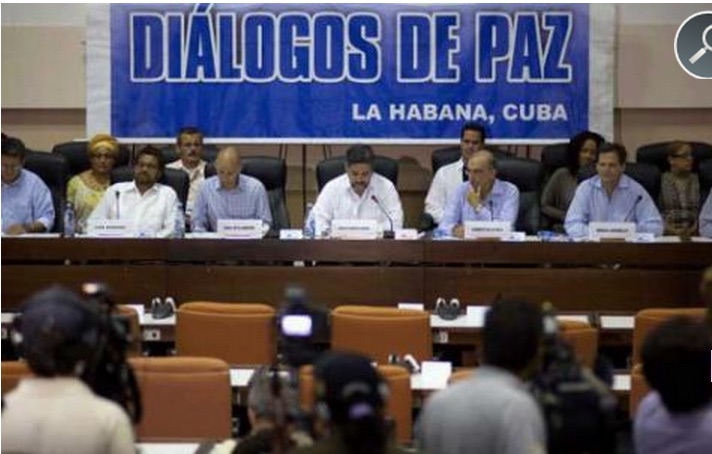
La Asamblea se realiza en el marco de los diálogos entre grupos insurgentes y el gobierno, resaltando el que se lleva a cabo en La Habana entre las Fuerzas Armadas Revolucionarias de Colombia -FARC- por su importancia para el país. Las organizaciones convocantes esperan que la segunda Asamblea Regional sea un espacio de participación “muy amplio en el que confluyan todos los sectores sociales presentes en los territorios para así recoger la ruta de acciones hacia la paz con justicia social, la paz con cambios que tanto anhela el país”.

Agregaron que en cada departamento de la región caribe existirá un equipo coordinador al que se pueden acercar las organizaciones que quieran participar de la iniciativa. Los temas a trabajar en la mencionada Asamblea serán la política minero-energética, el desarrollo Regional y de la mano a la educación. Finalmente la cultura de paz y los posacuerdos.

La USO históricamente ha trabajado en la construcción de la paz a partir de iniciativas regionales, especialmente en la ciudad de Barrancabermeja. También ha impulsado propuestas nacionales como la Asamblea por la Paz, realizada en conjunto con Ecopetrol en 1996. El sindicato ha liderado el desarrollo de múltiples iniciativas como la Asamblea de Trabajadores y Trabajadoras por la Paz como un espacio autónomo en el que se construyeron propuestas desde diferentes sectores para el país con relación a las transformaciones necesarias para la paz.

En el 2012 la USO y Ecopetrol firmaron en un acuerdo para la realización de la II Asamblea Nacional por la Paz que, por varios factores, solo hasta este año se materializará.

El equipo USO-Ecopetrol, encargado de la realización de la Asamblea, contara con un grupo de expertos para la consulta permanente entre quienes se destacan los académicos Alejo Vargas, Víctor de Currea, Francisco de Roux y Hernando Salazar.

La gran conclusión del espacio es que “la paz es un camino, un proceso de diálogos donde se reconstruye un orden justo, se mejoran las condiciones de vida y existe solidaridad. El horizonte es un país nuevo que exige esfuerzos en varios niveles: personal, familiar, comunitario, local, regional y nacional”.

( Clickear aquí para la version inglês.)

Question(s) related to this article:

What is happening in Colombia, Is peace possible?

This discussion question applies to the following articles:

Colombian villagers practice non-violent resistance
Legacy of a Nonviolent Political Leader: Governor Guillermo Gaviria of Colombia
Working for a Culture of Peace in the Valley of the Cauca, Colombia
Remise des Prix de la Fondation Chirac pour la prévention des conflits
Chirac Foundation Prize for Conflict Prevention
The University and the Peace Process in Colombia
La paz supera coyunturas y fronteras (Colombia y Venezuela)
Peace is not stopped by borders (Colombia and Venezuela)
Campesinos colombianos celebran primer acuerdo agrario de paz
Colombian Govt and FARC Reach Agreement on First Stage of Peace Talks
Colombia Campaña de la ONU “La Paz es mía”
UN Campaign in Colombia:
Presidente colombiano reactivará la Comisión Nacional de Paz
Colombian President to Reactivate National Peace Commission
FARC-EP y Gobierno colombiano avanzan en acuerdos para la paz
FARC-EP and Colombia Government advance in their peace accords
Colombia debe ser también la Nación más educada en derechos humanos: Presidente Santos
Colombia should also be the most educated nation in human rights : President Santos
Gabriel García Márquez and the peace process in Colombia
Colombia amanece con un presidente reelecto, esperanzada en la paz
Colombia awakens to hopes for peace with the re-election of their president
Mujer, ruralidad y memoria, entre los temas del congreso de paz (Bogotá, Colombia)
Women, rurality and historical memory among the themes of the Peace Congress (Bogotá, Colombia)
Sonia Ines Goéz Orrego on a speaking tour in the U.S. to share her experience building peace in Colombia
Pax Christi International Peace Award 2015: Women Collective for Reflection and Action (Colombia)
FARC-EP y Gobierno colombiano crearán Comisión de la Verdad
Planning for a Peace Assembly in the Colombian Caribbean
Inician construcción de Asamblea por la Paz en el caribe colombiano

Planning for a Peace Assembly in the Colombian Caribbean

FREE FLOW OF INFORMATION

An article from Colombia Informa (translated by CPNN)

The first regional meeting of delegates from various sectors and struggles in the Caribbean to construct a Regional Peace Assembly was held on Saturday [May 30] in the city of Cartagena,. The meeting was supported by the workers’ labor union -USO- and the company Ecopetrol. It was attended by delegates from Atlantico, Bolivar, Sucre, Córdoba, Cesar and Guajira.

cartegana

The main objective was the planning and coordination of facilitator teams in each department to develop departmental assemblies prior to a Regional Assembly for Peace. The organizers of the meeting consider that the meeting met with full success.

The Assembly takes place in the framework of the dialogue between the government and insurgent groups, which takes place in Havana between the Revolutionary Armed Forces -FARC- of Colombia which is of great importance for the country. The convening organizations expect the second Regional Assembly to have a wide participation “in which converge all social sectors present in the territories in order to collect the path of actions towards peace with social justice, peace with changes the country is yearning for. ” They added that in every department of the Caribbean region will have a coordinating team that can approach organizations that wish to participate in the initiative.

Themes considered in the Assembly included mining and energy policies, regional development and assistance to education. Finally, the culture of peace and followup of the agreements.

The USO has historically worked on building peace through regional initiatives, especially in the city of Barrancabermeja. It has also promoted national proposals and the Assembly for Peace, held in conjunction with Ecopetrol in 1996. The union has led in the development of multiple initiatives such as the Assembly of Workers for Peace as an autonomous space in which proposals were collected from different sectors for the country in relation to the transformations necessary for peace.

In 2012, the USO and Ecopetrol signed an agreement for the implementation of the Second National Assembly for Peace, which for various reasons, could not take place until this year. The USO-Ecopetrol team, responsible for conducting the Assembly will feature an expert panel for permanent consultation including professors Alejo Vargas, Victor Currea, Francisco de Roux and Hernando Salazar.

The grand conclusion of the meeting was that “peace is a journey, a process of dialogue in which a just order is reconstructed, living conditions are improved and there is solidarity. The challenge for a new country requires efforts at various levels: personal, family, community, local, regional and national. ”

(Click here for the orignal Spanish of this aricle.)

Other articles related to this one:

Truth and Reconciliation Commission: Canada guilty of cultural genocide against Indigenous peoples

… HUMAN RIGHTS …

An article from APTN National News

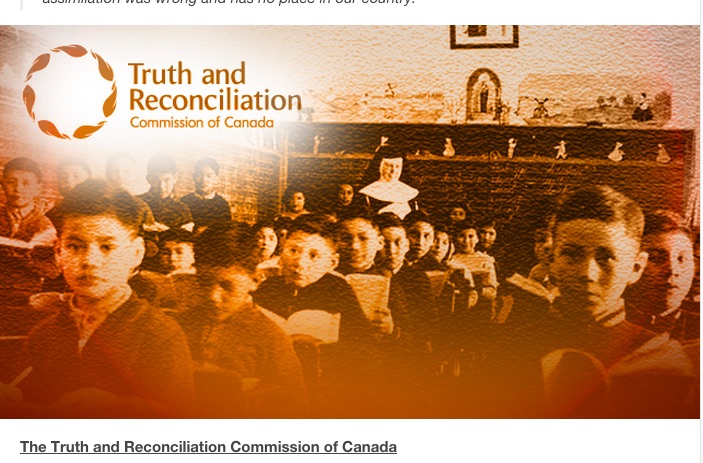
Canada is guilty of committing cultural genocide against Indigenous people, the Truth and Reconciliation Commission said in a summary of its final report released Tuesday.

trc-canada

The TRC builds a case that leads it to conclude Canada committed cultural genocide against Indigenous peoples and used Indian residential schools used as its main weapon.

“These measures were part of a coherent policy to eliminate Aboriginal people as a distinct peoples and to assimilate them into the Canadian mainstream against their will,” said the TRC report. “Residential schooling quickly become a central element in the federal government’s Aboriginal policy.”

The TRC unveiled two volumes and a summary of its final report which is expected to be released later this year. One volume was titled, What We Have Learned, and the other was titled, The Survivors Speak.

The TRC was created as part of the multi-billion dollar settlement agreement between Ottawa, the churches and survivors. About 150,000 Indigenous children went through Indian residential schools throughout the systems over century-long existence.

The TRC’s report said cultural genocide is defined as the “destruction of those structures and practices that allow the group to continue as a group.”

States that engage in cultural genocide aim to destroy political and social institutions by seizing land, persecuting spiritual leaders, banning languages, outlawing cultural practices, restricting movement and disrupting families so cultural values can’t be passed on to successive generations, said the report.

“In its dealing with Aboriginal people, Canada did all these things,” said the report.

The TRC report said Canada’s negotiation of treaties with First Nations were “marked by fraud and coercion.” The report said the federal government continues to stall on the implementation of treaties to this day.

The TRC suggests the only reason Canada bothered to enter treaties was because it couldn’t afford to subdue the Indigenous population through war. In 1870, the total of Canada’s budget was about $19 million. Across the border during the same time period, the U.S. was spending $20 million just to fight its “Indian Wars,” said the report.

Early post-Confederacy Canada had one goal in mind when it began negotiating treaty, said the TRC.

“The intent of the government’s policy…was to assimilate Aboriginal people into broader Canadian society,” said the report. “At the end of this process, Aboriginal people were expected to have ceased to exist as a distinct people with their own governments, cultures and identities.”

Canada’s first prime minister, Sir John A. Macdonald told the House of Commons in 1883 that residential schools would be one of the main weapons used to eliminate the “savage” before it grew to become incorrigible.

“When the school is on the reserve the child lives with its parents, who are savages, he is surrounded by savages, and though he may learn to read and write his habits and training and mode of thought are Indian,” said Macdonald, in a passage quoted by the report. “He is simply a savage that can read and write.”

(Article continued in right column)


Question related to this article:

Truth Commissions, Do they improve human rights?

(Article continued from left column)

The policy persisted into the 20th Century and was supported by Church leaders of all denominations running residential schools, the report said.

Supreme Court Justice Beverley McLachlin echoed the TRC’s findings in a speech delivered last Thursday when she said Canada committed cultural genocide.

The Harper government, however, has stated it does not support the view.

Canada’s attempts to wipe out Indigenous culture failed, but not without leaving deep wounds, said the report.

“Despite coercive measures that the government adopted, it failed to achieve its policy goals. Although Aboriginal peoples and cultures have been badly damaged, they continue to exist,” said the report. “Aboriginal people have refused to surrender their identity.”

The TRC report said Canada is getting another chance at reconciliation. The report notes that the 1996 Royal Commission on Aboriginal Peoples called on Canada to begin a process of reconciliation. That commission was triggered by the 1990 Oka crisis that saw armed Mohawks face down the Canadian military to protect a burial site from being turned into a golf course.

“In 2015, as the Truth and Reconciliation Commission of Canada wraps up its work, the country has a rare second chance to seize a lost opportunity for reconciliation,” said the report. “The urgent need for reconciliation runs deep in Canada. Expanding public dialogue and action on reconciliation beyond residential schools will be critical in the coming years.”

The TRC report said the relationship between Canada and Indigenous peoples is “deteriorating.” The report lists First Nations education, child welfare and justice as sources of “divisive conflicts” and “barriers” to reconciliation.

Prime Minister Stephen Harper has failed to live up to the promise of the 2008 apology, the report said.

“The promise of reconciliation, which seemed so imminent back in 2008 when the prime minister, on behalf of all Canadians, apologized to survivors, has faded,” said the report.

The report said too many Canadians are still ignorant of First Nations, Inuit and Metis history and it bleeds into the government sphere.

“In the public realm, it reinforces racist attitudes and fuels civic distrust between Aboriginal peoples and other Canadians,” said the report. “Too many Canadians still do not know the history of Aboriginal peoples’ contributions to Canada, or understand that by virtues of the historical and modern Treaties negotiated by our government, we are all Treaty people.”

The TRC lays out 94 recommendations it believes help mark the path toward reconciliation. The recommendations include:

Ottawa, the provinces and territories should fully adopt the UN Declaration on the Rights of Indigenous peoples.

Ottawa, in conjunction with Indigenous peoples, should develop a new Royal Proclamation on Reconciliation.

Ottawa should repudiate the Doctrine of Discovery and the concept of terra nullius.

Ottawa and Treaty nations should renew the Treaty relationship.

Ensure Indigenous peoples are full partners in Confederation by reconciling Crown and Indigenous legal orders.

The parties to the Indian residential school settlement agreement should sign a Covenant of Reconciliation.

A National Council for Reconciliation should be created.

The Pope should issue an apology to survivors of Indian residential schools.

Canada should mark the 150th anniversary of the country by creating a fund for reconciliation commemoration projects.

Ottawa should commit $10 million for the funding the National Centre for Truth and Reconciliation over the next seven years.

The Oath of Citizenship should be changed to include the following passage, “I will faithfully observe the laws of Canada including Treaties with Indigenous peoples, and fulfill my duties as a Canadian citizen.

(Thank you to Janet Hudgins, the CPNN reporter for this article.)
Edward Snowden: “Two Years On, The Difference Is Profound”

FREE FLOW OF INFORMATION

An article by Edward Snowden published in the New York Times and excerpted in the Amnesty International Blog

Two years ago today, three journalists and I worked nervously in a Hong Kong hotel room, waiting to see how the world would react to the revelation that the National Security Agency had been making records of nearly every phone call in the United States. In the days that followed, those journalists and others published documents revealing that democratic governments had been monitoring the private activities of ordinary citizens who had done nothing wrong.

snowden

Within days, the United States government responded by bringing charges against me under World War I-era espionage laws. The journalists were advised by lawyers that they risked arrest or subpoena if they returned to the United States. Politicians raced to condemn our efforts as un-American, even treasonous.

Privately, there were moments when I worried that we might have put our privileged lives at risk for nothing — that the public would react with indifference, or practiced cynicism, to the revelations.

Never have I been so grateful to have been so wrong.

Two years on, the difference is profound. In a single month, the NSA’s invasive call-tracking program was declared unlawful by the courts and disowned by Congress. After a White House-appointed oversight board investigation found that this program had not stopped a single terrorist attack, even the president who once defended its propriety and criticized its disclosure has now ordered it terminated.

This is the power of an informed public.

Read the full opinion piece at the New York Times.

Learn more about global surveillance and take action at http://amnestyusa.org/NSA/a>.

Question for this article:

The courage of Mordecai Vanunu and other whistle-blowers, How can we emulate it in our lives?

Latest comment:

Whistle-blowers may be considered as very important actors for a culture of peace.  As described on the CPNN page for values, attitudes and actions for a culture of peace, the culture of war is characterized by propaganda, secrecy, government control of media, militaristic language and censorship while the culture of peace is characterized by the free flow and sharing of information.  Whistle-blowers break the back of secrecy directly and dramatically.

Mordecai Vanunu’s courage continues the tradition of Daniel Ellsberg, who made known the Pentagon Papers during the Vietnam War and Karen Silkwood, who exposed nuclear pollution in the United States.  Ellsberg was persecuted by President Nixon and Karen Silkwood was murdered, as described some years ago in a very fine film starring Meryl Streep.

As the amount of government secrecy continues to increase, we may expect that the number of whistle-blowers will also tend to increase in the years to come.

FARC-EP y Gobierno colombiano crearán Comisión de la Verdad

. LIBERTAD DE INFORMACIÓN .

Un articulo Prensa Latina

Las insurgentes FARC-EP y el Gobierno colombiano acordaron hoy [4 jun] aquí poner en marcha una Comisión de la Verdad, la Convivencia y la No repetición, una vez que se alcance el acuerdo final de paz.

trc-colombia

Tal Comisión tendrá tres objetivos fundamentales, informó en conferencia de prensa Rodolfo Benítez, garante de Cuba en la Mesa de Diálogo establecida en esta capital desde 2012 entre las Fuerzas Armadas Revolucionarias de Colombia-Ejército del Pueblo (FARC-EP) y el Gobierno del presidente Juan Manuel Santos.

El primero de estos objetivos, es contribuir al esclarecimiento de lo ocurrido (…) y ofrecer una explicación amplia de la complejidad del conflicto (que por más de medio siglo ha afectado a Colombia), explicó Benítez, acompañado al cierre de la 37 ronda de pláticas por las delegaciones de paz gubernamental e insurgente.

La Comisión, agregó, deberá contribuir al reconocimiento de las víctimas como ciudadanos que vieron sus derechos vulnerados y el reconocimiento voluntario de responsabilidades individuales y colectivas.

Igualmente, dijo, deberá promover la convivencia en los territorios, por medio de un ambiente de diálogo y la creación de espacios en los que las víctimas se vean dignificadas.

Según precisó Benítez, la Comisión será un mecanismo independiente, imparcial, de carácter extrajudicial, que formará parte del sistema integral de verdad, justicia, reparación y no repetición que se ha de acordar en la mesa de negociaciones para satisfacer los derechos de las víctimas, terminar el conflicto y alcanzar la paz.

El garante cubano en estos Diálogos recordó que “el Acuerdo logrado sobre esta Comisión no puede entenderse ni definitivamente cerrado ni aislado del sistema que estamos comprometidos a construir y que aún no se ha concluido”.

También refirió que se continuará trabajando para acordar “otros mecanismos que permitan garantizar los derechos de las víctimas a la verdad, la justicia y la reparación, además de contribuir a garantizar a los colombianos la no repetición del conflicto”.

Por su parte, el jefe de la delegación guerrillera de paz, Iván Márquez, celebró la creación de la Comisión de la Verdad como mecanismo de justicia y reparación, al tiempo que pidió la apertura de los archivos del Estado sobre el conflicto para el esclarecimiento de la verdad en torno a esta larga confrontación.

¿Por qué reclamamos que se abran los archivos? Porque la paz necesita la verdad, identificar a los responsables supremos del conflicto social y armado para, a partir de la verdad histórica, acordar fórmulas de solución ya sean políticas, ya sean jurídicas, afirmó Márquez.

Asimismo, el líder guerrillero reiteró su rechazo a normas penales diseñadas para un solo destinatario (la insurgencia) y presentadas unilateralmente por el Gobierno.

( Clickear aquí para la version inglês.)

Question(s) related to this article:

What is happening in Colombia, Is peace possible?

This discussion question applies to the following articles:

Colombian villagers practice non-violent resistance
Legacy of a Nonviolent Political Leader: Governor Guillermo Gaviria of Colombia
Working for a Culture of Peace in the Valley of the Cauca, Colombia
Remise des Prix de la Fondation Chirac pour la prévention des conflits
Chirac Foundation Prize for Conflict Prevention
The University and the Peace Process in Colombia
La paz supera coyunturas y fronteras (Colombia y Venezuela)
Peace is not stopped by borders (Colombia and Venezuela)
Campesinos colombianos celebran primer acuerdo agrario de paz
Colombian Govt and FARC Reach Agreement on First Stage of Peace Talks
Colombia Campaña de la ONU “La Paz es mía”
UN Campaign in Colombia:
Presidente colombiano reactivará la Comisión Nacional de Paz
Colombian President to Reactivate National Peace Commission
FARC-EP y Gobierno colombiano avanzan en acuerdos para la paz
FARC-EP and Colombia Government advance in their peace accords
Colombia debe ser también la Nación más educada en derechos humanos: Presidente Santos
Colombia should also be the most educated nation in human rights : President Santos
Gabriel García Márquez and the peace process in Colombia
Colombia amanece con un presidente reelecto, esperanzada en la paz
Colombia awakens to hopes for peace with the re-election of their president
Mujer, ruralidad y memoria, entre los temas del congreso de paz (Bogotá, Colombia)
Women, rurality and historical memory among the themes of the Peace Congress (Bogotá, Colombia)
Sonia Ines Goéz Orrego on a speaking tour in the U.S. to share her experience building peace in Colombia
Pax Christi International – Peace Award 2015: Women, Peace and Security Collective for Reflection and Action (Colombia)