Bulletin English July 1, 2015

. CONFRONTING TERRORISM WITHOUT VIOLENCE .

The commercial mass media, always eager for headlines of violence, is having a good time telling us about all the atrocities committed by Boko Haram and the Islamic State, which have inherited their mantles from Al Queda. They give us the impression that we have found the new enemy and we have no choice but to go to war. They don’t give much priority to non-military approaches to counter the terrorism. However, such approaches do exist, as we see this month in the articles of CPNN.

Let us begin with the comprehensive strategy for “A Cultural Program to Reject Extremism and Violence” by Ismail Serageldin. It is not an abstract academic proposal but is based on the extensive experience of the organization he heads, the Bibliotheca Alexandrina in Egypt. He provides us with “seeds of hope” for a Cultural Transformation in the Arab World as an alternative to the fanaticism and “barbaric terrorism being displayed by the forces of the so-called “Islamic State” in Iraq and Syria.

According to the Elders, “There is no other option but to use the military option, but at the same time it is always important to understand that military operations can never succeed in dealing with these kinds of forces unless and until a good social and political strategy is implemented in the areas where these forces are not active” If force must be used it must be “after a political and social agenda has been constructed on what to do thereafter.”

While calling for nonviolent approaches, the Elders are clear that past military interventions have been a major cause for the increased terrorism we see in recent years. According to Elder Mary Robinson, “I think a lot of the problems stem from an unjustified and incredibly damaging war in Iraq. It humiliated, the “shock and awe”, the whole sense of it, and then, I think, it broke a trust somehow which is going to be very hard to rebuild.”

Serageldin is very clear that as a major cause of the rise of the terrorist Islamic State, “the American invasion of Iraq in 2003 and the subsequent mismanagement of the tense ethnic and religious cleavages in that society dealt a traumatic blow to the self-confidence of Muslims, who viewed the direct invasion by America and its allies of both Iraq and Afghanistan, as a direct humiliation of Muslims by the West. Furthermore, the systematic murder of civilians by the use of drones in Pakistan, Afghanistan, Yemen and elsewhere; all served to inflame sentiments of victimization that fed the Muslim majorities’ emotional despair.”

According to the peacebuilding specialist John Paul Lederach, what is needed is a policy of nonviolent engagement with the people in the groups that have been labeled as terrorists, rather than a policy of isolation. For example, we should be engaged with the women of Syria, at the heart of the region that is being terrorized, who are courageously promoting a culture of peace by stopping child marriage, uniting refugees and host communities, policing the streets, listening to marginalized groups, reopening schools, helping families survive, reforming corrupt courts, vaccinating children, disarming youth and mobilizing a movement for peace. A good example of engagement is the work of the Nonviolent Peaceforce, as described in their “Urgent Update from South Sudan.”

The Foreign Minister of Sierra Leone provides a voice of wisdom in her address to the Organization of the Islamic Conference. Faced with an “an increasing wave of terrorist insurgencies and unrests across the globe”, “we must endeavour to undertake initiatives ranging from humanitarian activities to mediation with a view to nurturing and promoting the culture of peace and tolerance among peoples.”

And in Benin, the conference for a “general mobilization against the danger of Boko Haram” concluded that ““Military force will not be enough to annihilate the jihadist movement.” Instead what is needed is “trust between followers of different religions to build together a better society with development and peace and to mobilize the enthusiasm around concrete tasks whose priority is recognized by all.”

      
TOLERANCE AND SOLIDARITY

benin
Benin encourages interfaith dialogue against Boko Haram

WOMEN’S EQUALITY


Argentina: Massive march against gender violence in front of the Congress

DISARMAMENT AND SECURITY


Gaza prepares to welcome Freedom Flotilla III

HUMAN RIGHTS


Truth and Reconciliation Commission: Canada guilty of cultural genocide against Indigenous peoples

FREE FLOW OF INFORMATION


Colombia: FARC and the Government Will Create a Truth Commission

DEMOCRATIC PARTICIPATION


The Challenge: A Cultural Program to Reject Extremism and Violence

SUSTAINABLE DEVELOPMENT


FAO: World hunger falls to under 800 million, eradication is next goal

EDUCATION FOR PEACE


Colombia: Teaching peace

Discussion question: Does Costa Rica have a culture of peace?

This discussion question applies to the articles Film: Costa Rica Abolished its Military, Never Regretted it and Costa Rica : An act of good sense, with global impact.

Here is the point of view on this question of Oscar Arias who was President of Costa Rica from 1986 to 1990 ad from 2006 to 2010. These are excerpts from his speech in 2015 to the Rotary Symposum “Partnering For Peace: Today’s Challenges, Tomorrow’s Successes” held at the Anhembi Palace, Sao Paulo, Brazil. Click here to read the full speech

. . . The truth is that in history’s darkest moments, we can find unexpected light. It was true with both of our World Wars, one of which generated the League of Nations, the other the United Nations. It was true of the violence that swept my own country, Costa Rica, in 1948, and led us to become the first country on earth to voluntarily abolish its armed forces.

. . . I am here to tell you that reduction in military spending can change a country and region forever. I know this, not because of my career or my studies. I know this because I am a Costa Rican.

As I mentioned earlier, Costa Rica abolished its army when I was just eight years old. By doing this, my country promised me, and all its children, that we would never see tanks or troops in our streets. My country promised me, and all its children, that it would invest, not in the weapons of our past, but in the tools of our future; not in barracks, but in schools, hospitals, and national parks; not in soldiers, but in teachers, doctors, and park guards. My country promised to dismantle the institutions of violence, and invest in the progress that makes violence unnecessary. In other words: My country decided that it had devoted its resources to war long enough, and that it wanted to devote the genius of its people to the science of averting war.
This resulted not only in a healthy, educated, and free society. It resulted in concrete gains for national and regional security.

When conflicts and civil wars swept our region in the 1980s, Costa Rica was able to maintain its stability and freedom from violence. What’s more, this enabled my little country to become the platform for the peace accords that gradually ended the unrest in our part of the world. And today, while the terrible consequences of drug trafficking in our region and consumption in the developed world are posing serious challenges to our government, Costa Rica continues to maintain its foothold in the world of peace.

The rest of the world can gain just as much. With tiny fractions of the funds currently spent on weapons and war, we could abolish preventable diseases such as malaria, or achieve basic primary schooling for all our children. Steps such as these would do much more for international security than any battle or bombing. I do not have to tell a room full of Peace Fellows that violence feeds off of illiteracy and desperation. If we can change the numbers of our military spending, we will shift the balance towards peace. . .

(text continued in right column)

(text continued from left column)

I have been asked many times since 1987, the year when Central America achieved the Peace Accords that ended the pervasive armed conflicts in our region, what the secret was to our success. All of you are far too expert in conflict resolution to believe that there was just one secret – but, of course, it is important to examine past successes for best practices, especially when history affords us so few examples of conflicts solved entirely through negotiation. Many factors aligned that allowed the presidents of Central America to come together in support of the Peace Plan I had drafted. However, one key element in the process was my decision to follow the example of Franklin Delano Roosevelt, and lock my fellow presidents into the negotiating room with me until we reached an agreement. Only by closing that back door, and with it, the easy way out to war, could we manage to cross the threshold of peace that had escaped us. We had to recognize that peace was the only acceptable outcome before we could rise above the status quo. We closed the door to war; we opened our hearts to peace. And our region was never the same. .

Finally, there is often a misconception that a peaceful solution can come from outside the region at war. Another lesson from Central America was that nations in conflict must create their own solutions, no matter how hard that might be. External players can help a troubled region reach a temporary truce, but lasting peace depends on the capacity of the governments involved to maintain their democratic institutions, deliver justice, protect human rights and ensure human development. Because of this, those governments must be the authors of their own plans for the future.

As the great French philosopher Guizot once said, “Pessimists are nothing more than spectators; it is the optimists who transform the world.” History is not written by those who predict failure for every new opportunity, or those who surrender before their greatest challenge. It is written by those who dare to dream. It is written by those who dare to sit down at the negotiating table, without preconditions. It is written by those who understand that the end of violence is the product of dialogue, not a prerequisite. It is written by those who dare to speak words of agreement in the face of terrible discord. It is written by those who realize that the ultimate act of courage is not to take up arms, but to lay them down – and those who find the strength to make that powerful choice. . .

I began my remarks in the dark, but I end them in the light. I end them in the light of reason that each of the Peace Fellows is ready to bring into the world. I end them in the light of hope – hope for a world where the numbers of lives and dollars wasted in pursuit of war march down towards zero. I end them in the light that shines forth when we cast off the bonds of violence; when we close the door to suffering; when we open the door, at long last, to peace in our time.

Colombia: Teaching peace

EDUCATION FOR PEACE .

Un blog de Ernesto Amézquita en Cronica del Quindio (translated by CPNN)

According to law 1732, adopted in 2014, the national government has issued the decree “by which the teaching of Peace is regulated in all educational institutions of the country”.

colombia
Click on photo to enlarge

It is foreseen in article number 2 that “to meet the constitutional mandate enshrined in the articles 22 and 41 of the Constitution, the teaching of Peace is compulsory.” It is so decreed that “the teaching will aim to create and consolidate a space for learning, reflection and dialogue on culture of peace and sustainable development which should contribute to the general welfare and improve the quality of life of the population.”

Historically it has been shown that it is much more productive, civilized and proactive to invest in peace instead of the criminal business of arms dealers, mercenaries and beneficiaries of war.

For Colombia, more than 60 years of violence, about 300,000 dead, millions displaced, thousands missing, wounded and false positives, massacres, millions of orphans; should be more than enough to say enough to the ignorance of death, the peace of the grave and yes to life, to peaceful coexistence, the rule of justice, concord and respect for difference.

As such, these new standards are a good contribution to teaching in the school, family, college; accompanied by administrative bodies, judicial, ecclesiastical, military, police, social, business, etc., to begin to fully implement the rejection of the warmongering, bullying, and all violent, aggressive or armed way of solving problems. Today we have alternative means, justice, both formal and informal, as specific mechanisms for he solution of conflicts.

The central of this law are the culture of peace and sustainable development to be implemented in the academic syllabus that must be incorporated before December 31, 2015, in the areas of social sciences, history, geography, politics and democracy constitution, life sciences, environmental education, ethics, human values ​​and principles.

It is clear that the teachers responsible for this initiative must be qualified, skilled and experienced in those academic areas, because otherwise the effort would be counterproductive. We don’t ask Satan to teach the Bible.

So, we must ask: When will the schools of Quindio and the rest of the country, both public and private, begin to incorporate into their academic programs, this officially mandated teaching? When will we Colombians begin to disarm our own spirits, and when will the communication media become truly objective, truthful and impartial?

With this in mind, let us welcome the teaching of peace, principles and values ​​that we have missed in these 60 years of war and fratricidal violence between brother and brother.

(click here for the original Spanish version of this article)

Other articles related to this one:

Colombia: La cátedra de la paz

. . . EDUCACIÓN PARA LA PAZ . . .

Un blog de Ernesto Amézquita en Cronica del Quindio

En desarrollo de la ley 1732 del 2014, el gobierno nacional acaba de dictar el decreto “por el cual se reglamente la cátedra de la Paz en todas las Instituciones educativas del País”.

colombia
Click on photo to enlarge

Se prevé en su art. 2º que “para responder al mandato constitucional consagrado en los arts. 22 y 41 de la Constitución Nacional, el carácter de la cátedra de la Paz, será obligatorio”. Se decreta así mismo que “la cátedra tendrá como objetivo crear y consolidar un espacio para el aprendizaje, la reflexión y el dialogo sobre la cultura de la paz y el desarrollo sostenible que contribuya al bienestar general y el mejoramiento de la calidad de vida de la población”.

Históricamente está demostrado que es mucho más productivo, civilizado y proactivo, invertir en la paz que en el negocio criminal de los traficantes de armas, mercenarios y beneficiarios de las guerras.

Para Colombia, más de 60 años de violencia, cerca de 300.000 muertos, millones de desplazados, miles de desaparecidos, heridos y falsos positivos, masacres, millones de huérfanos; deben ser más que suficientes para decir basta a la incultura de la muerte, a la paz de los sepulcros y sí a la vida, a la convivencia pacífica, al imperio de la justicia la concordia y el respeto a la diferencia.

En tal sentido, estas nuevas normas, son un buen aporte pedagógico para que desde la escuela, el colegio, la familia, la universidad; acompañados de entes administrativos, judiciales, eclesiásticos, militares, policiales, sociales, empresariales, etc., se empiece a implementar integralmente el rechazo al belicismo, al matoneo, al bullying y a toda forma violenta, agresiva o armada de resolver los problemas, desechando que ahora existen medios alternativos, de justicia, procesal, extra procesal, como mecanismos específicos solucionadores de conflictos.

Son ejes centrales de esta ley: la cultura de paz y el desarrollo sostenible a implementar en los pénsum académicos que deben incorporar antes del 31 de diciembre del 2015; en las áreas de ciencias sociales, historia, geografía, constitución política y democracia, ciencias naturales, educación ambiental, ética, valores y principios humanos.

Se sobre entiende que los docentes que orienten estas cátedras deberán ser calificados, cualificados y experimentados en las áreas académicas citadas, pues de lo contrario, el esfuerzo será contraproducente, ya que sería tanto como colocar a satanás a enseñar la Biblia.

Así las cosas, nos debemos preguntar: ¿Cuándo los centros educativos del Quindío y el resto del país, tanto públicos como privados, empezarán a incorporar en sus programas académicos, esta cátedra oficial?, ¿Cuándo los colombianos comenzaremos a desarmar nuestros propios espíritus, y la mayoría de medios de comunicación a ser verdaderamente objetivos, veraces e imparciales?

Sobre esos parámetros, bienvenida la cátedra de la paz, de principios y valores de que hemos adolecido en estos 60 años de guerra y violencia fratricida entre hermanos.

( Clickear aquí para la version inglês.)

Question for this article:

Peace Studies in School Curricula, What would it take to make it happen around the world?

This discussion question applies to the following articles:

Children as Peacemakers
Peace Education Center in Ghana
Asian Educators Symposium and Exchange Program: Creating a Culture of Peace through Education
Life-Link Program Promotes a Culture of Peace
Education for Peace: Le projet intégré prend tout son sens
‘Education for peace’ wins the Youth Excellence Award 2011 in Mauritius.
Convivencia y Protección Escolar: Bogotá, Colombia
Coexistence and School Protection: Student Project in Bogota Colombia
Convivencia y Protección Escolar: Red de Educadores en Bogotá
Coexistence and School Protection: Teachers Network in Bogota Colombia
Premios a la Promoción de la Cultura de Paz y la Convivencia Escolar.
Prizes for the Promotion of Culture of Peace and School Coexistence
Hawaii Teachers Impact NEA National Assembly – 3 Million Members to Support Peace Day
Gambia: Teachers Trained On Peace Building
Málaga destaca por fomentar la convivencia y la cultura de paz, según la Junta de Andalucía (Espagne)
The Junta of Andalucia (Spain): Malaga promotes coexistence and culture of peace
Cultura de Paz nas escolas do Norte de Minas, Brasil
Culture of Peace in the schools of Norte de Minas, Brasil
Formation des enseignants à la résolution non-violente des conflits (France)
Teacher training in nonviolent conflict resolution (France)
Álvarez Rodríguez firmará un acuerdo para aplicar “Cultura de Paz, Gestión de Paz” en las escuelas
Álvarez Rodríguez to sign agreement for “Culture of Peace, Managing Peace” in schools
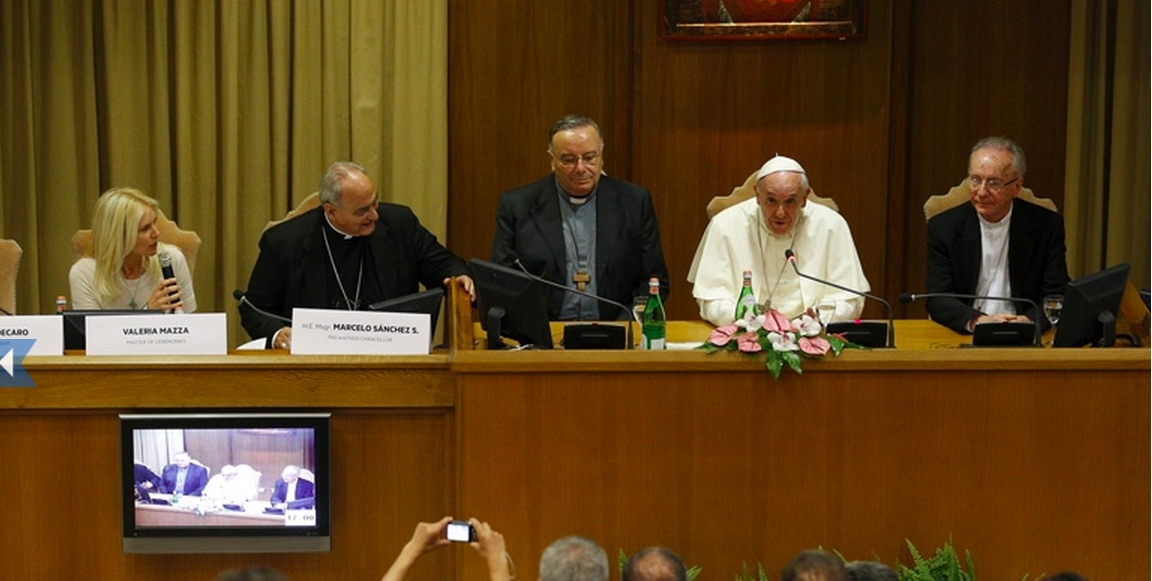
Gambia: PS Bouy Launches WANEP Peace Education Implementation Guide
Culture de paix et de non-violence dans les écoles : Le réseau ouest-africain pour l’édification de la paix lance son guide
The West African Network for Peacebuilding publishes its guide for culture of peace and non-violence in the schools
Prefeitura de São Luís e Unesco firmam parceria pela cultura de paz nas escolas (Brasil)
City of São Luís and UNESCO sign partnership for the culture of peace in schools (Brazil)
México: Urgente incorporar la cultura de paz a la educación formal
Mexico: Urgent to incorporate culture of peace in formal education
France: 12e Forum « La non-violence à l’école »
France: 12th Forum “Non-Violence in Schools”
Ghana: WANEP trains 150 peace Ambassadors in Tamale Schools

USA: Response to the Massacre in Charleston; Grieve, But then Teach and Organize Nonviolence

EDUCATION FOR PEACE .

An article by the Reverend John Dear in the Huffington Post (abridged and reprinted according to fair use)

Like millions of others, I’m grieving the death of the nine church folk killed in the unthinkable massacre inside Charleston’s Emanuel AME Church on Wednesday night. My heart goes out to the families and friends of the dead, and the church members, and I offer all my condolences, prayers, blessings and love. . .

John Dear
Click on photo to enlarge

Of course, this was a hate crime, an act of violent racism and domestic terrorism. Press reports claim that the insane young man who shot the church goers had just been given a gun by his father for his 21st birthday. No doubt he was a sociopath, an advocate of hatred and racism, a white supremacist, the normal product of our culture of guns, hatred, racism, violence and war.

Like millions of others, I feel swept up in grief. Where does one start? The police killings of African Americans such as Amadou Diallo, Oscar Grant, Trayvon Martin, Sean Bell, Eric Garner, Michael Brown, Tamir Rice, and Walter Scott (of South Carolina, in April)—these are just the well known names. Thousands have been killed. And the big massacres such as Virginia Tech college students, the Sandy Hook elementary school children, the Boston marathon runners and bystanders, and the Aurora, Colorado movie goers. One could go on.

But my grief mingles with the grief of the world, the quiet death of millions of children from extreme poverty and unnecessary disease, and the deliberate killing of children by the U.S. war machine.

Not too long ago, I spent days listening to teenagers in Kabul, Afghanistan, cry as they told me in detail how their loved ones were blown up by U.S. drones which dropped bombs upon them. I remember visiting the Catholic high school for girls in Baghdad and being surrounded by hundreds of girls who cried as they denounced the U.S. bombings and war. I recall the hundreds of people I met in the 1980s in Nicaragua, El Salvador and Guatemala who wept as they told me about the killing of their loved ones by U.S. backed death squads. I have witnessed the tears of grief brought on by the forces of death as well in India, South Africa, Egypt, Palestine, Colombia, Northern Ireland, and the Philippines.

For me, like all my activist friends, it is a lifetime of grief in solidarity with sisters and brothers around the world whose loved ones died by the systemic forces of greed, war, violence and death.

That’s why I see beyond the sickness of hatred, racism and sexism toward something deeper—an addiction to violence–to death itself–that inflicts nearly every living human being to some degree, an addiction which fuels the unjust national and global systems which bring death to so many poor people. It’s like everyone, especially us North Americans, is addicted to crack cocaine, yet we don’t know it, much less try to become sober. We’re all full of violence, and we go forward, not knowing what to do. So we maintain a culture of violence, torture, war and nuclear weapons as if that’s a perfect reasonable way to maintain a society. It’s as if we’re all living in a zombie movie.

(Article continued in the right column)

Question for this article:

Can peace be guaranteed through nonviolent means?

Are we making progress against racism?

(Article continued from the left column)

Consider the hundreds of devout Christians who attend prayer services, bible studies and Catholic masses at the Pentagon, and then go about the big business of mass murder. Or the thousands of devout Christians who attend church each Sunday in Los Alamos, New Mexico, and then spend the rest of the week devoutly building nuclear weapons. Think of the Jesuits of Baltimore who hold an annual Mass for War, who process their one hundred ROTC graduates up the main aisle at graduation mass to profess their Army Oath to Kill to the Blessed Sacrament, just as the Nazis did long ago. . .

We are all addicted to violence in one form or another. We have all surrendered to sociopathic killing in one form or another. We have refused the wisdom, the divine call, the spiritual heights of universal, loving nonviolence. But that is the only option ahead of us.

The real challenge before us, I submit, was laid down long ago by our national teacher, Rev. Martin Luther King, Jr. He invites each one of us to undergo the journey he went through toward active nonviolence. We have to renounce the ancient stupidity of “an eye for an eye thinking” (which Jesus outlawed when he commanded in the Sermon on the Mount, “But I say, offer no violent resistance to one who does evil”) and take up where Gandhi left off in his pursuit of truth and nonviolence. . .

In August, I’ll be hosting a national conference on nonviolence at the Hilton Hotel in Santa Fe, New Mexico. It’s sold out, but we will broadcast the entire historic two day event live on line for free, and I hope tens of thousands will watch it live (you can see it at: www.campaignnonviolence.org). We will have some of the nation’s greatest visionaries of nonviolence there, beginning with Dr. King’s friend Rev. James Lawson, whom King called the world’s greatest theoretician of nonviolence.

We will also broadcast live on line our peace vigils in Los Alamos, New Mexico, marking the 70th anniversary of the U.S. atomic bombing of Hiroshima and Nagasaki, on August 6th and 9th. (See: www.campaignnonviolence.org for details).

More, we are calling for a week of nonviolent action across the United States, from September 20th to 28th, as we mark International Peace Day, Sept. 21st. Last year, Campaign Nonviolence organized over 250 demonstrations against war, poverty, nuclear weapons and environmental destruction, and for Dr. King’s vision of a new culture of peace and nonviolence, in all fifty states. We hope to double that number this September, and we need more people to step up to the plate and get involved. That means, organizing a march, a rally, a prayer service or a lobby effort in your local community. If you are looking for some way to get involved, consider yourself invited. Here’s a concrete step you can take, in solidarity with thousands of others across the nation. As we take to the streets together, we will know that we are not alone. . .

Mother Jones was right. Don’t just mourn. Organize!

See you in the street!

US: Columbia University Will Divest From Private Prison Companies

… HUMAN RIGHTS …

An article by Tyler Kingkade for the Huffington Post (reprinted according to fair use principle)

Columbia University trustees voted (June 22) Monday to divest from for-profit prison companies because of concerns about mass incarceration, becoming the first major university to do so.

prisons
Photo from Columbia Prison Divest/Facebook

Columbia, in New York, owned more than 230,000 shares of Corrections Corp. of America, the largest private prison company, headquartered in Nashville, Rolling Stone reported last year. The school no longer owns those shares, law professor Jeff Gordon disclosed in April. The school still holds shares in G4S, a British prison and security services company.

The trustees’ vote pledges Columbia will not invest its endowment of more than $8 billion in for-profit prisons in the future. It follows a recommendation this year from the school’s Advisory Committee on Socially Responsible Investing, and was endorsed by university President Lee Bollinger.

“This action occurs within the larger, ongoing discussion of the issue of mass incarceration that concerns citizens from across the ideological spectrum,” Columbia trustees said in a statement. “We are proud that many Columbia faculty and students will continue their scholarly examination and civic engagement of the underlying social issues that have led to and result from mass incarceration.”

Gordon, chair of an advisory subcommittee, said the group is considering whether Columbia should divest from fossil fuel companies as a stand against global warming.

Students protested for months to get Columbia to divest from for-profit prisons, citing alleged violence and human rights abuses.

An article in The Guardian described a G4S facility in England as rife with drugs and alcohol. An American Civil Liberties Union lawsuit accused a Corrections Corp. of America-owned prison as permitting excessive violence and prison guards who laughed as they declined to treat prisoners’ injuries.

According to the ACLU, “several studies suggest that prisoners in for-profit prisons face greater threats to their safety than those in publicly-run prisons.”


Question related to this article:

Divestment, is it an effective tool to combat the violation of human rights?

Readers’ comments are invited on this question and article. See comments box below.

Addressing terrorism: A theory of change approach

TOLERANCE AND SOLIDARITY .

Excerpts from an essay by Paul Lederach in Somalia: Creating space for fresh approaches to peace building

Introduction

The recent “Holder vs. Humanitarian Law Project” U.S. Supreme Court decision of June 21, 2010 has sharpened the debate about engagement with blacklisted groups and has directly impacted the wider communities where designated foreign terrorist groups operate. Anti-terror legislation has consequences and relevance for peacebuilding organizations . . .

new somalia
click on image to enlarge

since 9/11 and even more with the “Holder vs Humanitarian Law Project” decision we have witnessed a divide emerging between two competing theories of change. The designated foreign terrorists list proposes a change strategy based on isolation. Peacebuilding proposes a strategy of engagement. . .

Conclusion

. . . I would make the case that isolation in the form of wide ranging terrorist lists was driven by desire to control future acts of terrorism. But the approach has little, if any, clear projections of a theory of change that addresses the complexity around the different contexts where it has been applied. It seeks to control violence in the short term but does not suggest how as strategy it contributes to desired change in the mid to long-term. Engagement as an approach includes concrete ideas about change over the mid and longer-term but does not have within its purview specific strategies aimed at controlling or preventing a particular act of terrorism in the short-term. Its purpose is not policing. Engagement strategies seek to change the conditions from which violence emerges, to locate and create the opportunities that make that change possible.

Policy recommendations

• Delineate with greater specificity the theory of change that supports terrorist listings with a particular focus on how it will meaningfully and strategically engage the affected populations. The assessment of the basic theory requires a careful compilation of evidence that assesses, in particular, whether it has increased or decreased a capacity to recruit, solidified or weakened more extremist leadership, and provided for shifts in the wider population toward nonviolent strategies of social change.

• Develop a clear end-game scenario for how geographies most affected or controlled by designated organizations will shift the justifying narratives and behavior from violence (and the use of terrorism in particular) toward nonviolent processes. This requires a specific strategy for how isolation contributes to constructive shifts in the wider civil society most affected by the terrorist listings.

• Based on what now appears to be compelling evidence, pinpoint how isolation of leaders (similar for example to policing approaches for criminal behavior) combines with robust engagement of local populations.

• Develop strategies that constructively impact the rise of second tier and secondary leadership. Given that many of these movements rely heavily on youth, a strategy that strategically approaches the growth of new and alternative leadership requires significant and varied approaches to engagement. Isolation as a blanket policy seems to hold little, if any, strategy for how alternative or future leaders will be different.

Question for this article

Islamic extremism, how should it be opposed?

. . . TOLERANCE & SOLIDARITY . . .

Here are remarks by General Djibril Bassolé , former Minister of Foreign Affairs of Burkina Faso, at a conference in 2023

I will answer your question by telling you what I have already explained to the panelists on the importance of dialogue. In most African countries that suffer from terrorist attacks, the origin of the aggressors has undergone a significant evolution.

Initially, it was exclusively an ideological and cross-border jihadism. In other words, the aggressors came from outside and often decided to die as suicide bombers. No dialogue was possible with such assailants.

Nowadays, jihadism takes the form of local or regional armed insurgencies. Young nationals of the targeted countries have massively enlisted in jihadist groups, in strategic and ideological alliances to wage armed struggles against their States. They attack the defense and security forces (symbols of State authority) and their fellow citizens with unprecedented violence.

Presumably, the jihadists offer them a more promising social project. You know, the regions in Africa in which they operate are generally desert areas, which are characterized by precarious living conditions. As I said to the panellists, the jihadist phenomenon is superimposed on pre-existing local tensions and crises that we must never ignore. We must recognize that feelings of marginalization and frustration exist in certain regions that are disadvantaged by nature and can push a section of its populations, mainly young people, to join terrorist movements in order to benefit from their guidance and support.

Given the complexity of the phenomenon, it must also be admitted that the military solution alone will not be able to eradicate it. To maximize the chances of restoring a lasting peace, States must promote channels of dialogue alongside robust military arrangements well suited to the nature of the terrorist threat because dialogue does not mean capitulation. A constructive dialogue needs a strong and credible state.

To establish a dialogue, a contact with the local insurgents, is essential. They are nationals who follow the jihadist movements because they have no other alternatives. A dialogue makes it possible first of all to better assess the situation of insecurity, to make a precise diagnosis and to identify the root causes of the massive adhesion of young nationals to terrorist actions.

Dialogue then makes it possible to reform the system of governance because I am one of those who think that in Africa, the centralizing Jacobin State as we inherited it from the colonizer is showing its limits. It will be necessary to reform the State so that it is better able to promote the general interest, to guarantee better governance, to ensure a better distribution of natural resources, in short, to give populations control of their destiny.

Finally, the dialogue will eventually make it possible to envisage peace talks or even negotiations, knowing that lasting peace generally passes through a national dialogue which will consolidate national cohesion.

In any case, dialogue is one of the typically African means of settling conflicts and easing tensions. I think that as Africans we must find our own ways to resolve the crises that have undermined our societies

– – –

For another response to this question, see The Elders debate “should military action be taken against Islamic State?”

– – –

This theme refers to the following CPNN articles:

Letter from Mali: a plea for peace

Burkina Faso: Living together: Traditional and religious leaders speak to their communities

Exclusive interview with General Djibril Bassolé from Burkina Faso on the sidelines of the Global Security Forum in Doha (Qatar)

Cameroon: A radio station for the protection of the Waza biosphere reserve

Civil society in northeast Syria promotes women’s role to fight extremism

Morocco: Combating the radicalization of young people via the Internet

Burkina Faso: Struggle against radicalization: Imams and preachers strengthen their knowledge

Ivory Coast: The Mohammed VI Foundation preaches the return to the sources of Islam through the Achâarite doctrine

Dakar: International Post-Forum Seminar on Peace and Security in Africa

Book review: A Moonless, Starless Sky by Alexis Okeowo

Challenge of Tackling Terrorism Threat Can Be Achieved through Solidarity, Secretary-General Tells African Union Peace and Security Council

The League of Ulema, Preachers and Imams of the Sahel Countries: Communication to counter extremism

Egypt : Launch of the 27th session of the International Conference on Islamic Affairs

Lancement de la 27ème session de la conférence internationale des affaires islamiques

Benin encourages interfaith dialogue against Boko Haram

Speech of Sierra Leone Foreign Minister to the Organization of Islamic Cooperation

Nonviolent Peaceforce: Urgent Update from South Sudan

The Challenge: A Cultural Program to Reject Extremism and Violence

The Elders debate “should military action be taken against Islamic State?”

Algérie: Séminaire sur l’islam et le rejet de la violence les 12 et 13 août à Laghouat

Algeria: Seminar on Islam and rejection of violence on 12 and 13 August in Laghouat

The Global Movement Of Moderates: An Effective Counter To Islamic State? – Analysis

Search for Common Ground: Take Action to End Violence against Civilians

Mali: The struggle against terrorism: Towards the creation of a global network of Ulemas

Togo in the struggle against terrorism: The “Pacific Magazine” plays its part

Togo Lutte contre le terrorisme : Le « Magazine le Pacific » joue sa partition

The Elders debate “should military action be taken against Islamic State?”

TOLERANCE AND SOLIDARITY .

Excerpts from the video of a debate on BBC World

Four of the Elders, Hina Jilani, Jimmy Carter, Mary Robinson and Kofi Annan, took part in a live broadcast debate on BBC World to discuss some of the world’s biggest issues, from Syria and Ukraine to migration and extremism. Here are excerpts from their response to the question “should military action be taken against Islamic State?

elders on isis

Kofi Annan: Yes, we cannot allow them to continue their brutality unchecked, but the region is so divided I think that left to themselves, they cannot stop them. One would need to have a coalition that brings together the regional powers, countries like Saudi Arabia, Iran, Turkey, maybe Qatar and Egypt, working with Russia, the United States and eventually other members of the Security Council, to make a common cause, to say we face a common danger and we cannot allow this to go on unchecked and come up with a common program to contain them. . .

Mary Robinson: I think that what Kofi is saying is what really needs to be done, that those that have different interests must come together because this is a devastating situation for the populations of Syria, of Iraq now, increasingly. . .

Jimmy Carter: I agree with what has already been said. I think this would be a perfect example for the United Nations Security Council to act in unity for the first time in many years, where all five permanent members agree on the threat of ISIS. We met with President Putin recently and he said that Russia fears ISIS as much as anyone else. This would be a perfect time for the United Nations Security Council to agree, to get all the members to agree that “Let’s work in unity.”

Hina Jilani: ISIS is not just hijacking the Islamic religion, but distorting it in order to put forward their own political agenda. I think it is not about religion. ISIS is about control. . . . It’s not about religion or any attempt to impose any kind of religious values, because those values are obviously values of peace, of tolerance, of humanity. . . .

There is no other option but to use the military option, but at the same time it is always important to understand that military operations can never succeed in dealing with these kinds of forces unless and until a good social and political strategy is implemented in the areas where these forces are not active. Because it is the people that matter. It doesn’t matter that they are in control of a territory. What matters is that in the territory are people who are suffering these terrible crimes.

You can’t fight violence with violence. That’s why – I’ve said it already – you have to have a proper social and political strategy . . . Yes, if necessary, military force must be used, but at the same time, the force must be used after a political and social agenda has been constructed on what to do thereafter.

(article continued on the right side of the page)

Question for this article

Islamic extremism, how should it be opposed?

Readers’ comments are invited on this question and article. See below for comments box.

(article continued from the left side of the page)

Kofi Annan: Let me comment a little on the use of force. Yes, we’ve seen the limits of the use of force and military intervention, and we need to have other aspects of policy that goes with it, both political and diplomatic and social programs, as has been indicated. It is frustrating to see the misery that the people of the region are going through. . .

Mary Robinson: I just want to get back to the question of the war in Iraq. I think a lot of the problems stem from an unjustified and incredibly damaging war in Iraq. It humiliated, the “shock and awe”, the whole sense of it, and then, I think, it broke a trust somehow which is going to be very hard to rebuild. I think it’s important that we recognize that the problems didn’t all start there [i.e. Syria]. The problem started, or was very significantly contributed to by a war that was unjustified. I remember I was UN High Commissioner for Human Rights at the time, and I pleaded not to go to war in Iraq

The Challenge: A Cultural Program to Reject Extremism and Violence

TOLERANCE AND SOLIDARITY .

Excerpts from a publication by Ismail Serageldin

[Editor’s note: The author is head of the Bibliotheca Alexandrina in Egypt, one of the most important cultural institutions in the Arab world. The full essay is well over 100 pages, and readers are recommended to read it in detail. The following excerpts are an attempt to provide some of the main lines of his proposal.]

serageldin
A Conceptual Model of Social Behavior

This essay represents my reflections . . . on the role
that the Library of Alexandria joining with all the cultural institutions of our society can play in confronting extremism and violence. The essay is composed of five major parts:

Culture in Egypt and the Arab world
On Extremism and Violence
The Dynamics of Cultural Change:
Elements of a Cultural Strategy:
Specific Programs

PART ONE: CULTURE IN EGYPT AND THE ARAB WORLD

. . . From isolationism to failed states to civil wars to new forms of barbarism, the political conditions in most of the Arab World could hardly be worse.

Violence is everywhere, terrorism and extremism are flagrantly challenging some governments who have but limited legitimacy, and millions have become homeless refugees both within their own countries and formally crossing frontiers into neighboring countries. Humanitarian crises are continuous.

We are witnessing a debacle of historic proportions. Why? Is it fair to refer to an Arab World? Or does each individual country have its own distinct identity and its own individual history that brought about its own demise?

For most of the Arab World, identity is based on culture, and specifically a shared language. . . Different Arab Countries have different histories and therefore have different identities, but they share an overarching identity of being Arab. . .

The fact is that we are all given multiple identities by birth and upbringing (gender, race, ethnicity and family, national origin) and usually we grow up learning the language of our milieu and accepting the religion of our parents. Most children adopt their parents’ religion and few convert to another religion at a later stage. We usually acquire some other identities such as group or club affiliations, political positions, etc. Fanatics want people to reduce their identities to one overarching identity, be it religious, ethnic, or political. This is obviously at the expense of pluralistic affinities and the multi-layered reality of modern society. This point has been forcefully made by Amartya Sen and by Amin Maalouf. . .

. . . the most extreme forms of barbaric terrorism being displayed by the forces of the so-called “Islamic State” in Iraq and Syria (ISIS) is a manifestation of the combination of several historic broad societal currents:

* The intellectual bankruptcy of many of the Arab regimes over long periods of reign preceding the revolutions of the Arab Spring. Their inability to renew the social contract in a meaningful fashion, and the continued monopolization of power by a mediocre elite that suppressed youthful talent and imposed a system of patronage for political and social advancement.

* The re-emergence of political Islam, long suppressed by a nationalist and secular political narrative, but given new wings by the Iranian revolution, the funding of the oil states and rich Arab individuals and the emergence of Hizbullah in Lebanon during the long civil war there and its role against the Israeli war in Lebanon. These and other factors were “topped up” by the return of the “Afghan Arabs” who were allied to the native Mujahedeen against the Soviet invasion of Afghanistan, which yielded the Taliban regime there.

(article continued on the right side of the page)

Question for this article

Islamic extremism, how should it be opposed?

Readers’ comments are invited on this question and article. See below for comments box.

(article continued from the left side of the page)

* The American invasion of Iraq in 2003 and the subsequent mismanagement of the tense ethnic and religious cleavages in that society dealt a traumatic blow to the self-confidence of Muslims, who viewed the direct invasion by America and its allies of both Iraq and Afghanistan, as a direct humiliation of Muslims by the West. Furthermore, the systematic murder of civilians by the use of drones in Pakistan, Afghanistan, Yemen and elsewhere; all served to inflame sentiments of victimization that fed the Muslim majorities’ emotional despair and consequent greater readiness to accept more extreme positions that would promise a return of a modicum of self-esteem and dignity in the face of perceived continued humiliation.

* The continued Israeli occupation of the Palestinian territories and the incompetence of Fatah and its leadership which brought forth Hamas in Gaza.

* The emergence of a powerful tyrannical bureaucracy, especially in Egypt, which stifles and alienates all who deal with it. This type of bureaucratic tyranny had already been identified as a cause of the youthful rebellion of the 1960s throughout the west.

So the manifestation of fanaticism and extremism is a renunciation of the more subtle and multi-layered reality of multiple identities. It is an effort that rejects equality of gender, and religions and seeks to impose its will by force. It draws on the religious fervor of new converts and on the bruised local identities of victimized people to mobilize forces against others, e.g. Sunni Arabs in Iraq in the last decade. It is sapping the energies of youth by ever more extreme displays of violence and rejection of any discussion. The cultural battle ahead is therefore one that must assert pluralism and exalt its enriching aspects, while it develops the more complex set of identities that each of us possesses. . .

CULTURES

. . . When we talk of the cultural scene, it encompasses a wide range of activities: literature (including poetry, plays, novels and short stories), the visual arts (including the graphic arts, painting and sculpture), music, dance, theater, cinema, architecture and the built environment. The cultural scene also involves journalism, TV and the Mass Media, as well as books and publications, plus the new domains of cyberspace and virtual reality. Artistic and cultural endeavors also require teaching and criticism, and the publications and venues needed for both. . .

Clearly, an exhaustive review of all the above would be beyond the scope of this essay. However, we can try to show some highlights that would touch upon much more than one angle or even a sector of activity, especially that it is one of our premises that we need to promote pluralism in all these cultural domains. . .

PART FOUR: ELEMENTS OF A CULTURAL STRATEGY

. . . But if in the end the cultural output produced by our artists and intellectuals is to have an impact, to be internalized in the system, we also need the context in which they produce that work, and within which the society that they address receives it. Thus issues of governance, of democratic representation and of inclusiveness need to be looked at and addressed in any reform effort. Authoritarian governments, even if they bring stability and security in the short term, will always end up alienating those who are excluded from decision-making and those who feel they have no future in that society. Public involvement in the public realm is necessary. The Agora and the Aeropagus cannot be just for the elite or for tolerated artists and intellectuals if societal change is what we hope for , profound societal change where society will marginalize the extremists and will reject violence and celebrate diversity and rationally debate issues for the country’s future.

To create a climate where pluralism will prevail, where a culture of science will permeate our way of thinking, and where human rights will be considered the most important treasure we possess as a society, recognizing that the abridgement of the rights of any of us is an abridgment of the rights of all of us, we must build a socio-cultural framework that equally promotes security and freedom of expression. . .

[Editor’s note: In part five of his essay, Serageldin proposes specific policies to facilitate the arrows in his diagram of a perceptual model of social behavior shown above: the influences of the Quran, the Sunna of he Prophet, Greek and Latin influcences, local influences, new ideas, mass media, education, modernizing influences and physical change, as well as the many arrows within the diagram for the integration of its components. He explains how the arts, cinema and theatre provide “seeds of hope.” He provides proposals for funding. And he concludes as follows.]

To respond to the challenge posed by the presence of extremism in our midst, and to defeat the armies of violence and terrorism, by the power of ideas that will spread throughout society, ensuring openness to the other, adoption of the new and the celebration of diversity and pluralism… A true Cultural Transformation — That is how we will respond to the Challenge!