FREE FLOW OF INFORMATION
an article by Ingeborg Breines, co-President International Peace Bureau
Dear members of the Nobel Committee,
I would hereby, as co-president of the International Peace Bureau (IPB), like to nominate the culture of peace initiative for the Nobel Peace Prize.
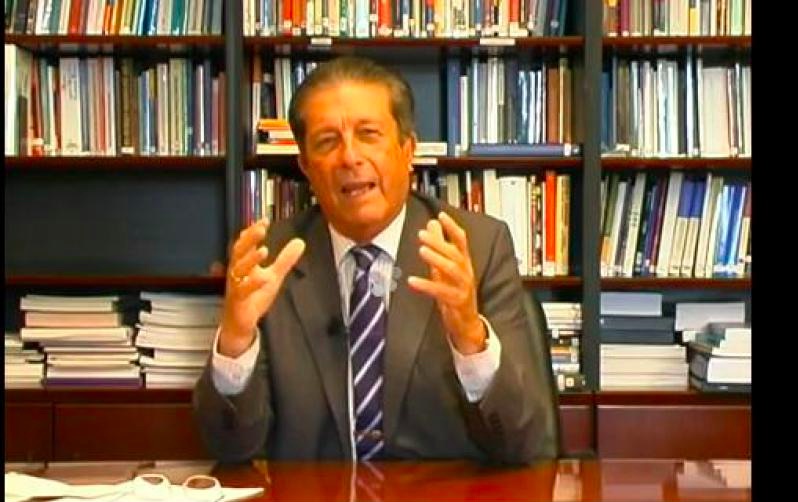
Federico Mayor
The Culture of Peace initiative would naturally be represented by UNESCO, the UN Organization for Education, Science and Culture, and its former Director General, Federico Mayor, for piloting the project, representing all those who tirelessly have been working – and continue to work – for human dignity, for equality, for conciliation, for disarmament, for democracy and for the transition from a culture of imposition and war to a culture of dialogue, alliance and peace.
The vision and the birth of culture of peace program came out of the UNESCO International Congress on Peace in 1989 in Yamoussoukro, Côte d’Ivoire. The UNESCO culture of peace program involved a huge number of partners such as governments, parliamentarians, intellectuals, educators, artists, civil society groups and lead e.g. to the International Year for a Culture of Peace, the Decade for a Culture of Peace and Non-violence for the Children of the World and a Plan of Action to facilitate implementation. Please see the historic background of the culture of peace initiative
The 11 September 2001 events and the ensuing war on terror, unfortunately undermined the hoped effects of the initiative, the hope of finally moving from force to words, from confrontation to dialogue. The culture of peace initiative has for some years mostly been honored and cherished by civil society, notably the peace organizations and the women’s organizations. But in September 2014, a UN High Level Forum took stock of achievements and stumbling blocks and made plans for future work related to the culture of peace, so desperately needed in this period of harsh and scary confrontations. A Nobel Peace Prize for the culture of peace would be an enormous boost to the initiative and the many people, institutions and organizations engaged.
The African continent has with UNESCO taken the lead in revitalizing the culture of peace initiative on a governmental level e.g. by organizing a conference, (Pan-African Forum “Africa: Sources and resources for a culture of peace in Angola in March 2013 and a meeting entitled Peace in the mind of men and women, in Yamoussoukro in September 2014 to mark the 25 years of the concept of a culture of peace and to launch the activities of the network of foundations and research institutions for the promotion of a culture of peace in Africa.
[Editor’s note: For more about Federico Mayor, see CPNN articles of March 25, 2012 and December 15, 2013.
This article is continued on the upper right of this page.
UNESCO, the UN institution to “build peace in the mind of men” in order to “save the succeeding generations from the scourge of war”, will celebrate its 70th anniversary 16th of November this year. It deserves, with all its virtues and defects, successes and failures, a recognition for peace building worldwide. It is actually quite difficult to understand how UNESCO with its mandate and high level of activity in favor of peace has gone under the radar of the Norwegian Nobel Committee for so long.
UNESCO’s as the intellectual and ethical body of the UN has deserved to get the Nobel Peace Prize on many occasions, for its work on international understanding, for its facilitation of an extensive cooperation between scientists, teachers, artists, cultural workers and journalists, for its focus on peace education in its broadest sense, for the safeguarding of different forms of our cultural heritage, for inspiring art and creativity, for its normative work in favor of humanistic ideals, and most of all for its extensive initiative for the culture of peace involving millions of people around the world. Other UN organizations, some perhaps with a more short-term humanitarian focus than a long-term humanistic one such as that of UNESCO, have received the Nobel Peace Prize. To-day, the UN is undermined in its function by lack of resources whilst global military expenditure continue to rise and bodies of the more affluent, such as the G6, G7, G20, the IMF and the World Bank, even NATO, dictate much of the world agenda. National security takes the lead over world peace and ideologies of short-term gains undermines the living conditions of both humanity and the planet. It is time to strengthen the global mandate of the UN, and especially honor UNESCO for its efforts in favor of “the people” and their needs and aspirations.
Federico Mayor managed in an unprecedented way during his period as Director General of UNESCO from 1987 to 1999 to make a platform for the involvement of Governments, a large number of professional groups and civil society movements in reflection and action on the then new concept of a culture of peace. Since 2000, his devotion to the ideals of a culture of peace and his many initiatives have been expressed through different channels, not least the Foundation for a Culture of Peace based in Madrid.
The culture of peace concept was first brought to the international community at a UNESCO peace conference in Yamoussoukro, the Ivory Cost, in 1989, and it was further defined and refined through a series of UNESCO meetings and conference involving thousands of scientists, teachers, cultural workers, artists, peace activists and personalities, both governmental and non-governmental. The governing bodies of UNESCO established a project and a program at UNESCO, with a large number of partners, and encouraged the UN to make the year 2000 the International Year for a Culture of Peace to be followed by the Decade for a Culture of Peace and Non-violence for the Children of the World (2001-2010). A Recommendation and a Plan of Action were developed to guide and inspire the work both at a governmental and civil society level. UNESCO developed with some Nobel Peace Prize Laureates a Manifesto for a Culture of Peace that was signed by more than 70 million people and presented to the Secretary General of the UN. The culture of peace vision appealed not least to women and young people who, also through new communication means, contributed strongly to develop the initiative into a broad movement. Many individuals, organizations and institutions find an added value to their own efforts for gender equality, human rights, disarmament or sustainable development in the more comprehensive culture of peace platform.
Federico Mayor was heading the UNESCO secretariat through the whole period when top priority was given to the culture of peace (1987 – 99). His tireless work and wisdom, his scientific mind and artistic ways of expressing himself, his enthusiasm and charisma made him an extraordinary “pilot”. For him, and for those of us who had the chance to work with him, the culture of peace initiative was a revitalization of the normative instruments both of UNESCO as such, and of the UN. He was critical of how the UN became more and more known for peace-keeping whilst peace building and peace-making was much more important to him. He was also very critical to high military costs at the expense of social expenditure. He was convinced that most people wherever they are in the world want peace and wanted to encourage people to express themselves more clearly on these issues vis-à-vis their governments. He wanted the culture of peace initiative to help clarify and strengthen the conditions for peace, and actively confront the culture of war and violence and its root-causes: poverty, deprivation, inequality, injustice and ignorance. He was firmly convinced that quality education, the learning to live together, is an indispensable tool for a culture of peace, fully in line with the preamble to UNESCO’s Constitution which reads: “Since war begin in the minds of men, it is in the minds of men that the defenses for peace must be constructed”.