Category Archives: Latin America

Brazil : Juiz de Fora City Hall launches culture of peace project in schools

.. DEMOCRATIC PARTICIPATION ..

An article from Prefeitura de Juiz de Fora (translation by CPNN)

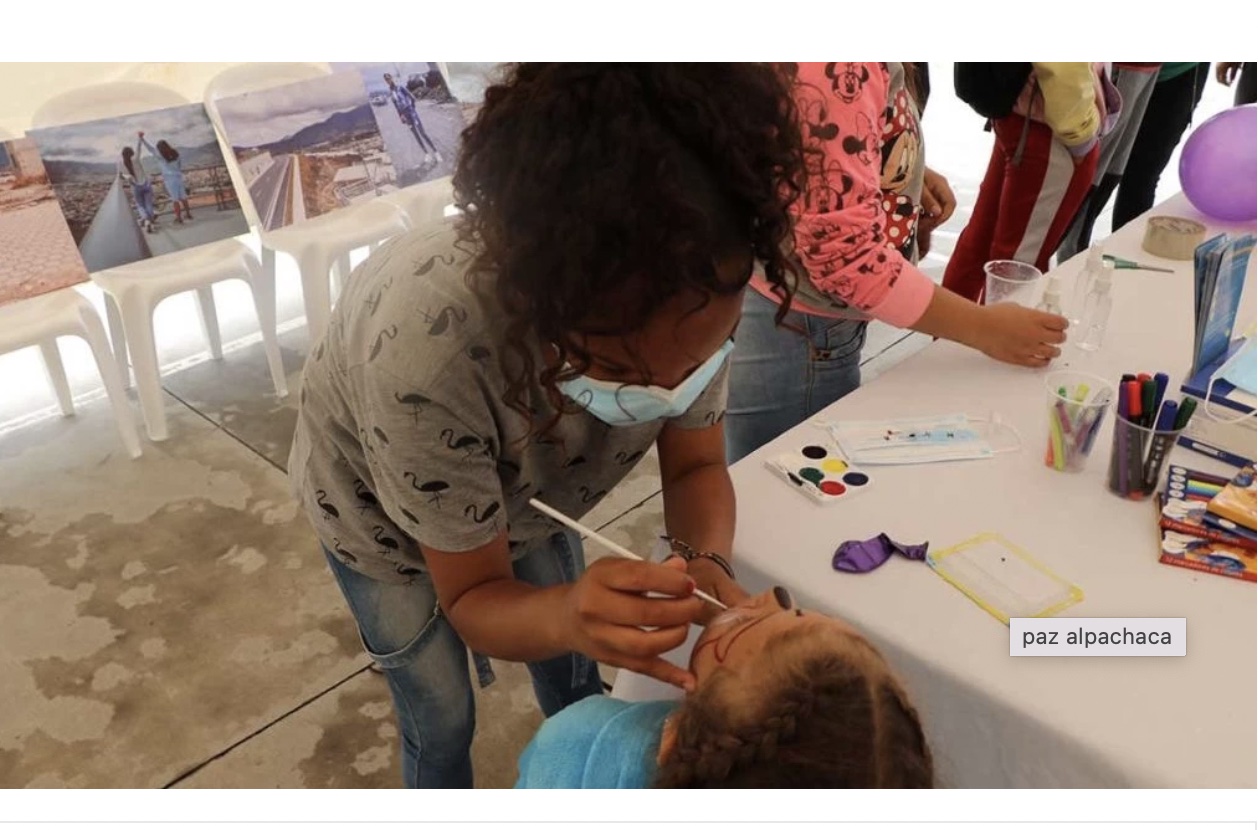
Next Saturday, March 26th, the Juiz de Fora City Hall (PJF) officially launches the project “Our School: Security, Citizenship and Culture of Peace”, which proposes activities that promote interaction, awareness and recognition of the school. as a space for education and construction of citizenship and a culture of peace. .

(continued in right column)

Questions for this article:

How can culture of peace be developed at the municipal level?

(continued from left column)

Students and their families will be invited to a series of activities, held at the Jovita de Montreuil Brandão Municipal School, in the Parque das Águas neighborhood, starting at 9 am. The project is an initiative of the secretariats of Urban Security and Citizenship (Sesuc) and Education (SE) in partnership with the Departments of Sport and Leisure (SEL), Health (SS), Sustainable and Inclusive Development of Innovation and Competitiveness (SEDIC) and Funalfa. This will be the first school covered by the project, which will be extended throughout the year to other municipal schools.

At 10 am, a Conversation Circle will address the topic of Female Entrepreneurship. The program continues until 1 pm, with presentations of parodies, music for children, storytelling, leisure and sports activities, theater, games with Palhaça Amora, beauty space for women, physical activity and dance.

(Click here for the Portuguese original of this article)

Chile – Interview with Alondra Carrillo: “The feminist transformation of the State is unavoidable, it is a fact”

. WOMEN’S EQUALITY .

An article by Nicole Martinez in El Mostrador (translation by CPNN)

The spokesperson for the 8M Feminist Coordinator has underlined the advances in terms of parity and gender perspective within the Constitutional Convention. Among some milestones, she highlights that “the Justice Systems Commission took a historic step forward by establishing that all jurisdictional bodies and all persons involved must be guarantors of substantive equality, and that all resolutions must have a gender perspective”. The constituent, who is part of the Constituent Social Movements, emphasized that the changes that have been achieved are here to stay, and that “we are never going to return to second place again. That is a commitment that we have made with ourselves, and also with future generations, with the girls of this country”.


Alondra Carrillo

Two women will go down in history as presidents of the Constitutional Convention (CC), and each commission has at least one woman among its two coordinators. They are part of the milestones that have marked the constituent process, where women’s leadership has been more substantive and visible than in other spaces of political deliberation. And it was not by chance, because behind these advances there was the work of the feminist world, which since the beginning of the process has advocated minimums such as gender parity in the election of conventional women and men.

The gender perspective has been in every discussion, in every commission and in every proposal, and has made concrete progress, such as in the first regulations approved by the Justice Systems Commission, which are already part of the draft of the new Constitution, regarding to the guarantee of equality and gender perspective in resolutions. In a few days, the first proposals related to sexual and reproductive rights will also begin to be voted on in plenary.

One of the representative voices of the feminist movement within the Convention is the constituent of the 12th district, Alondra Carrillo, who is a spokesperson for the Feminist Coordinator March 8 and also for the Constituent Social Movements. In an interview with El Mostrador, she addressed the main advances that feminist proposals have had in the constituent process, the gender perspective in political spaces and the vision before the feminist government, as defined by the President-elect, Gabriel Boric.

-The Constitutional Convention (CC) has been one of the political spaces that has innovated on gender issues. What is your diagnosis in these months of work in the CC in terms of gender issues and perspective?


-Feminists came to the Convention from many different places, and we also came with a perspective of transformation that reaches practically all areas of constitutional discussion.  Gender advancement is one of the forms of the feminist program, but it is not the only thing, to the extent that we also propose structural and comprehensive transformations in the way power is configured in our country.

In terms of gender transformations, there have been multiple steps forward, the first of which was taken during the process of drafting the regulations, where two guidelines were established. On the one hand, parity as a minimum for the presence of women and sexual and gender in State bodies. Parity that is not defined as 50/50, but in the expression is “at least half”.  Our presence must be at least half, so that there is no repetition of what happened in the election process that led to the Constitutional Convention and that resulted in the exclusion of many women in the name of 50/50 parity. Another guideline is to consider that patriarchal and gender violence is a form of political violence for which the entire constituent body has to assume responsibility. 

Now, we have advanced perspectives of parity democracy in each one of the organs of the State. It is part of the voting in particular of the Political System Commission. The Justice Systems Commission took a historic step forward by establishing that all jurisdictional bodies and all persons involved must be guarantors of substantive equality, and all resolutions musrt have a gender perspective.

Another of the transformations that are being debated these days, and that will arrive on Thursday at the plenary session of the Constitutional Convention, is the consecration of our sexual and reproductive rights, the right to decide on our bodies and on the exercise of our sexuality, including the right to a protected pregnancy and childbirth, and also the right to voluntary interruption of pregnancy, the right to comprehensive sexual education, the right to identity. And in these days the contributions of the Commission on Principles will also be debated, which establish substantive equality as a mandate to the State to remove all the obstacles that in fact prevent substantive equality among the people who inhabit our country.

(continued in right column)

(Click here for a Spanish version.)

Questions for this article

Prospects for progress in women’s equality, what are the short and long term prospects?

(continued from left column)

-Looking in perspective, from prior to the installation of the Convention and until now, have the priorities changed for the feminist movement?


-The feminist program against the precariousness of life with which we arrived at the Constitutional Convention continues to be the guiding compass of our activity within the Convention and also outside of it. These are points that will be discussed shortly, too, when social rights are debated in a feminist perspective. Among them, the right to work from a feminist perspective, which begins by recognizing all work that sustains life, including unpaid work, and a new comprehensive social security system, which includes a single care system sustained on the perspective of universality and solidarity.  Social rights such as housing, are demanded by the work of constituents and popular organizations in the construction of the Popular Initiative of Standards for decent housing with a feminist perspective. Housing is considered as a space where, on the one hand, we can exercise our right to pleasure and enjoyment, and, on the other hand, where the design of housing is designed to collectivize reproductive work, which consists of maintaining life on a daily basis. Today it is reduced to the private sphere, and in the private sphere it is highly precarious. That is to say, the mandate with which we came, which is a programmatic debate, has been expressed in the debate of the commissions to raise Popular Initiatives of Standard, and has informed the discussion in each one of the commissions of the CC.

-When you have raised these issues, when the gender approach has been included, there are sectors in the CC that have put up some obstacles and expressed reluctance, especially from a sector on the right. In general, how has the reception of these issues been within the Convention and how has dialogue been going on with the most critical sectors?


-Generally, the positions taken by the right within the Convention are widely publicized in the press. However, what is not so strongly highlighted on many occasions is the overwhelming transversality with which these perspectives have been advancing in the Convention.  So much so that, in its first vote, the article that establishes the gender perspective and substantive equality as mandates for the new justice system had more than 2/3 approval. After that debate, in addition, we have had complementary bibliography that we have made available to the sectors that raised objections at the beginning. We hope that as this discussion progresses, they will understand and open up to an inescapable question: the feminist transformation of the State is inescapable, it is a fact.

What we have seen is that there is a sector within the right, which is not even able to express itself, that resists accepting the transformations that are underway, and there is another sector that we hope can rise to the democratic debate and the openness that is taking place in the Convention to incorporate these transformations with an extraordinarily high majority.

-Based on the above, do you think that the milestones that have occurred within the CC, such as the two women’s presidencies and various female leaderships, in addition to these advances that you mentioned in terms of gender, are going to permeate other political spaces? ?


-Transformations in this sense are here to stay. We have always said: we are here to stay and we will never return to second place. That is a commitment that we have made with ourselves, and also with future generations, with the girls of this country. We believe that what is going to make it possible for this to continue to be sustained, for the process of transformation to continue to deepen, is the same condition that makes transformation possible in other aspects of this social, economic, political and cultural order, which is social, popular mobilization. As long as the feminist movement continues to be a strong movement, as long as we continue to understand that the path we have opened is a long-term path, and we do not allow patriarchal inertia to return,

-The incoming government of President-elect Gabriel Boric, who formally takes office on Friday, has defined itself as a feminist government. What are the expectations of that and how important is it that for the first time a government defines itself as such?


-I am part of a sector of the feminist movement that campaigned for Gabriel Boric from autonomy, because we put two issues at the center: on the one hand, the need to block the path of the extreme right that declares war on women, poor people and sexual and gender difference; and on the other hand, to maintain and defend the constitutional process that we have opened. We have our hopes pinned on the feminist movement and on its ability to sustain –as we defined in the Plurinational Meeting of Women and Dissidences that Fight, this year – the feminist program regarding the work of the Government. Never again are we going to delegate to others the continuity of the transformations that we have set out to carry out, and we know that their depth also rests on our presence, on a presence that sustains the programmatic alert permanently, so that the promises that are contained in the government program, and which coincide with the program of the feminist program, materialize in fact.

Medellín and Barcelona advance in the project “Without Rumors We Build a Culture of Peace”, to avoid prejudice and stigmatization of vulnerable populations

TOLERANCE AND SOLIDARITY .

An article by Yenifer Yepes Román for the Alcadía de Medellin

The Medellín Mayor’s Office, together with the Barcelona City Council, the Regional Corporation and social organizations are working on the construction of the project “Without Rumors We Build a Culture of Peace”, to counteract the transmission of disinformation, rumours, stereotypes and prejudices that affect human rights of people from vulnerable groups.


Photographer: Photo Mayor’s Office of Medellin

The strategy, which is now in its first phase, hopes to have a positive impact on LGTBIQ+ populations, women, Venezuelan migrants, the Afro-descendant population, indigenous people, the population with disabilities and peace activists who live in Medellín and in municipalities of the metropolitan area.

In the components of this project we do research, training, and participatory construction to generate an Antirumor Network of citizen culture and culture of peace. We invite all social organizations that want to join this work to contact us at the Secretariat of Non-Violence and together we fight against the rumors that affect citizens”, said the technical director for the Internationalization of the Secretariat of Non-Violence, Juan Camilo López.

(Article continued in right column)

(Click here for the original Spanish version of this article)

Question for this article

How can we reduce prejudice and exclusion?

(Article continued from left column)

This process is expected to increase the capacities of community organizations, institutions, social and sectoral networks in the city to detect and deconstruct rumors and stereotypes that affect coexistence, citizen dialogues for peace, recognition of diversities and inequalities. between the population, and to promote the peaceful settlement of conflicts.

The project has four phases that will continue until April 2023 involving journalists, businessmen, social groups, public officials and citizens in general. It is expected to create a broad territorial and citizen Antirumor Network, with 10 social and community organizations. The work has already begun in the 6-Doce de Octubre commune, the 16-Belén commune and the San Cristóbal district.

For us it is extremely important to participate in the project without rumors because people with HIV have been victimized by rumors since the 80s. , This topic generally does not appear in the scenarios of human rights”, expressed the project director of the Fundación Más que Tres Letras, Aron Zea.

The strategy is advanced, in an articulated manner, with the Barcelona City Council, which already has experience in anti-rumour pedagogical processes. In addition, the Regional Corporation and organizations such as the Picacho with a Future Corporation, young people from the Warmi Pacha collective, the La f@brica Foundation and the Foundation for Community Development (FDC) of Barcelona, ​​Spain, participate.

“This process is the best way in which we can contribute to establishing a culture of peace in Medellín. As a signatory, you would help us a lot to remove the stigma that has done us all so much harm and open up a more inclusive society,” said Wilmar Sucerquia, a signatory of the Peace Agreement.

The project invites citizens, when they see information that causes discrimination to stop for a moment, think, not share, assess the effect of its disclosure, invite reflection and, if necessary, denounce the message.

Colombia: Decriminalization of abortion is a triumph for human rights

. . HUMAN RIGHTS . .

An article from Amnesty International

The Colombian Constitutional Court’s ruling in favour of the decriminalization of abortion during the first 24 weeks of a pregnancy is a great triumph for human rights, said Amnesty International today.


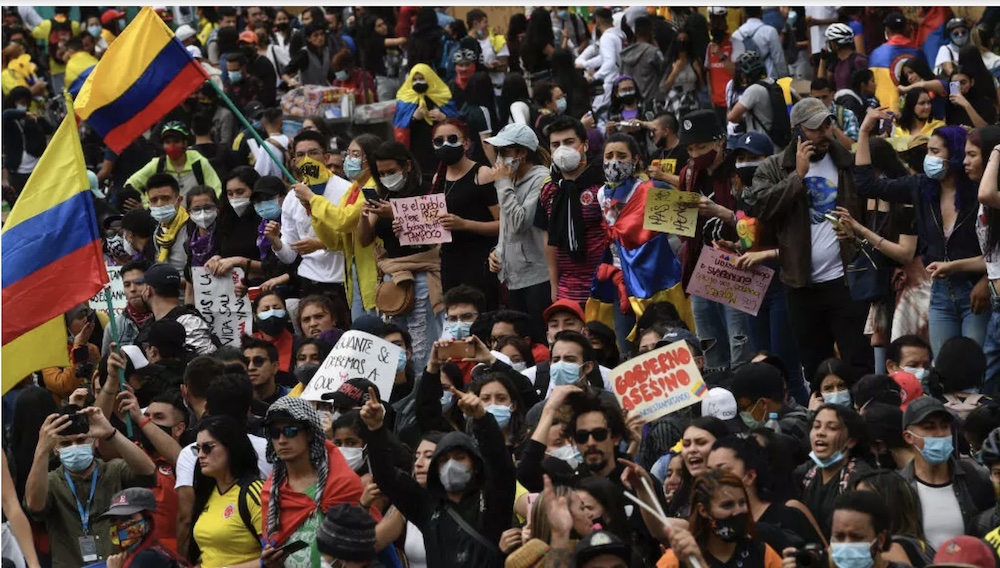
Photo by: Daniel Romero/Long Visual Press/Universal Images Group via Getty Images

“We celebrate this ruling as a historic victory for the women’s movement in Colombia that has fought for decades for the recognition of their rights. Women, girls and people able to bear children are the only ones who should make decisions about their bodies. Now, instead of punishing them, the Colombian authorities will have to recognize their autonomy over their bodies and their life plans,” said Erika Guevara-Rosas, Americas director at Amnesty International.

“Following the legalization of abortion in Argentina last year and the recent decriminalization in Mexico, this ruling is yet another example of the unstoppable momentum of the green tide in Latin America. We will not stop fighting until the sexual and reproductive rights of all women, girls and people able to bear children are recognized in the entire continent, without exception.”

The Constitutional Court approved the ruling to decriminalize abortion today during the first 24 weeks of pregnancy, with five votes in favour and four against. After 24 weeks, legal abortion will continue to only be permitted in cases of a risk to the life or health of the pregnant person; the existence of life-threatening fetal malformations; or when the pregnancy is the result of rape, incest or non-consensual artificial insemination.

(continued in right column)

(click here for the article in French or click here for the article in Spanish.).)

Question related to this article:

Abortion: is it a human right?

(continued from left column)

“Although decriminalizing abortion in the first 24 weeks is a vital step forward for abortion rights in Colombia, and for Latin America and the Caribbean, no one should ever be criminalized for accessing an abortion. It’s vital that we keep pushing for full access to safe and legal abortion in all circumstances in Colombia and beyond,” added Erika Guevara-Rosas.

Despite being a fundamental right established by the Constitutional Court in Decree C-355 of 2006, access to abortion is currently unequal and limited in Colombia. It is estimated that currently in the country there are 400,400 abortions performed each year, and that less than 10% of these procedures are performed legally, with a high concentration of services in the biggest cities.

Legal abortion is not only much safer than clandestine abortion, but also the cost of its provision in Colombia, compared to care for incomplete abortion,  is much lower  when performed in top-level institutions, using the techniques recommended by the World Health Organisation.

The criminalization of abortion exacerbates inequalities between women. The vast majority of those reported for clandestine abortions in Colombia are those who live in rural areas and almost a third  of them are survivors of domestic violence, sexual violence or personal injury. Therefore, instead of framework with greater guarantees of human rights, a framework of persecution against the most vulnerable women has prevailed.

Moreover, the criminalization of abortion has generated fear and stigma in health care providers,  causing them to avoid providing the service  of termination of pregnancy for fear of the social and legal consequences they may face. 

For more information or to arrange an interview, contact: Duncan Tucker: duncan.tucker@amnesty.org

Mexico : Renowned researchers share their experience of the UNESCO Chairs of the Latin American and Caribbean Region

… EDUCATION FOR PEACE …

An article from ZHN Zacatecas Hoy

In order to investigate the alternatives and strategies to implement a culture of peace program in educational systems, professors from the United Nations Educational, Scientific and Cultural Organization (UNESCO ), participated in a discussion entitled “Experiences of the UNESCO Chairs of the Latin American and Caribbean Region”.


Adolfo Rodríguez Guerrero

To initiate these activities, the program coordinator of the education sector of UNESCO in Mexico, Adolfo Rodríguez Guerrero, indicated that the function of these Chairs is to support the solutions of the problems of sustainable development that are being presented during the last 20 or 30 years.

He explained that the UNESCO Chains is a program that contributes actions and reflections. they contribute to the collective intelligence, knowledge and innovation that is generated by universities in search of global citizenship.

Rodríguez Guerrero stressed that this specialized unit of the United Nations in our country is working for sustainable development through two elements: a global culture of peace and sustainability through an educational innovation, that is, a change in higher education that promotes knowledge and learning digital through new information technologies.

The coordinator of the UNESCO Chair of the National Autonomous University of Mexico (UNAM), Gloria Ramírez Hernández, focused on explaining the importance of human rights in the work that has been carried out in these Chairs since 1992, promoting values, attitudes and behaviors that reflect respect for life and eradicate violence in all its forms.

(Article continued in right column)

(Click here for the original article in Spanish)

Questions for this article:

How can we promote a human rights, peace based education?

Is there progress towards a culture of peace in Mexico?

Will UNESCO once again play a role in the culture of peace?

(Article continued from left column)

She pointed out that these actions seek to reinforce the human rights and freedoms of each person, visualizing the culture of peace as a preventive action through the construction of democracy and the management of conflicts, resolving them with peaceful means.

Explaining her experience as a coordinator of this chair in the UNAM, the speaker highlighted her work of developing consciousness about the application of human rights. This is done by research, teaching and dissemination through fields of knowledge, lines of research and projects that seek to prevent violent attitudes.

One of these projects is the National Program of Education in Human Rights, which has the objective of promoting a culture of defense, promotion and response in human rights in all types, levels and modalities in a comprehensive approach that favors governance, democracy and peace.

Finally, the professor stated that “peace cannot advance without women”, and she mentioned that “conflict and humanitarian crises impede the access of women and girls to progress, including the right to food, education, security and health, as we are immersed in a social and economic collapse, especially in a post-pandemic context”.

For his part, the coordinator of the UNESCO “University and Regional Integration” Chair, Axel Didriksson Takayanagui, spoke about the transformation that must take place in the public university of the Latin American and Caribbean Region for a curriculum in a culture of peace and critical and analytical thinking.

The professor stated that the development of the Chairs UNESCO, will provide bases so that May of this year the UNESCO World Conference on Higher Education presents the importance of implementing a culture of peace, considering that as a priority human right for inclusion, equity and educational transformation.

With regard to this international conference, the renowned researcher commented that this is the third edition of this type of academic activity. It will take place at the University of Barcelona in Spain. “This will be a space in which models will be analyzed by innovators and visionaries in higher education from around the world.

The coordinators of these talks at the Autonomous University of Zacatecas were the university professors Juana Elizabeth Salas and Oscar Padilla.

El Salvador : MUPI promotes workshops on Culture of Peace

. EDUCATION FOR PEACE .

An article from Diario Co Latino (translation by CPNN)

The Museum of the Word and the Image (MUPI) continues the Culture of Peace workshops «Be authentic, non-violent» with a participatory methodology for the prevention of violence and education for peace, aimed at basic-high school teachers, community promoters and social and cultural managers.

Question for this article:

Where is peace education taking place?

This free face-to-face course, which began on November 15 of last year, is carried out through a public invitation. 20 people are participating, 3 men and 17 women. Each participant has obtained a comicbook, a theoretical manual and a practical manual. They are working on the validation of new topics that will be incorporated into these materials. In March, the presentation of practical work and the delivery of diplomas will take place.

The Culture of Peace Course “Be authentic, non-violent” is facilitated by Claudia Anay García and the anthropologist Anna Theissen, cooperating with the Civil Service for Peace-SCP Germany, within the framework of the INTERPAZ-AGIAMONDO project.

(Click here for the original Spanish version).

Leftist President of Honduras Blocks Indigenous Community’s Eviction

…. HUMAN RIGHTS ….

An article by Andrea Germanos from Common Dreams (reprinted according to Creative Commons CC BY-NC-ND 3.0)

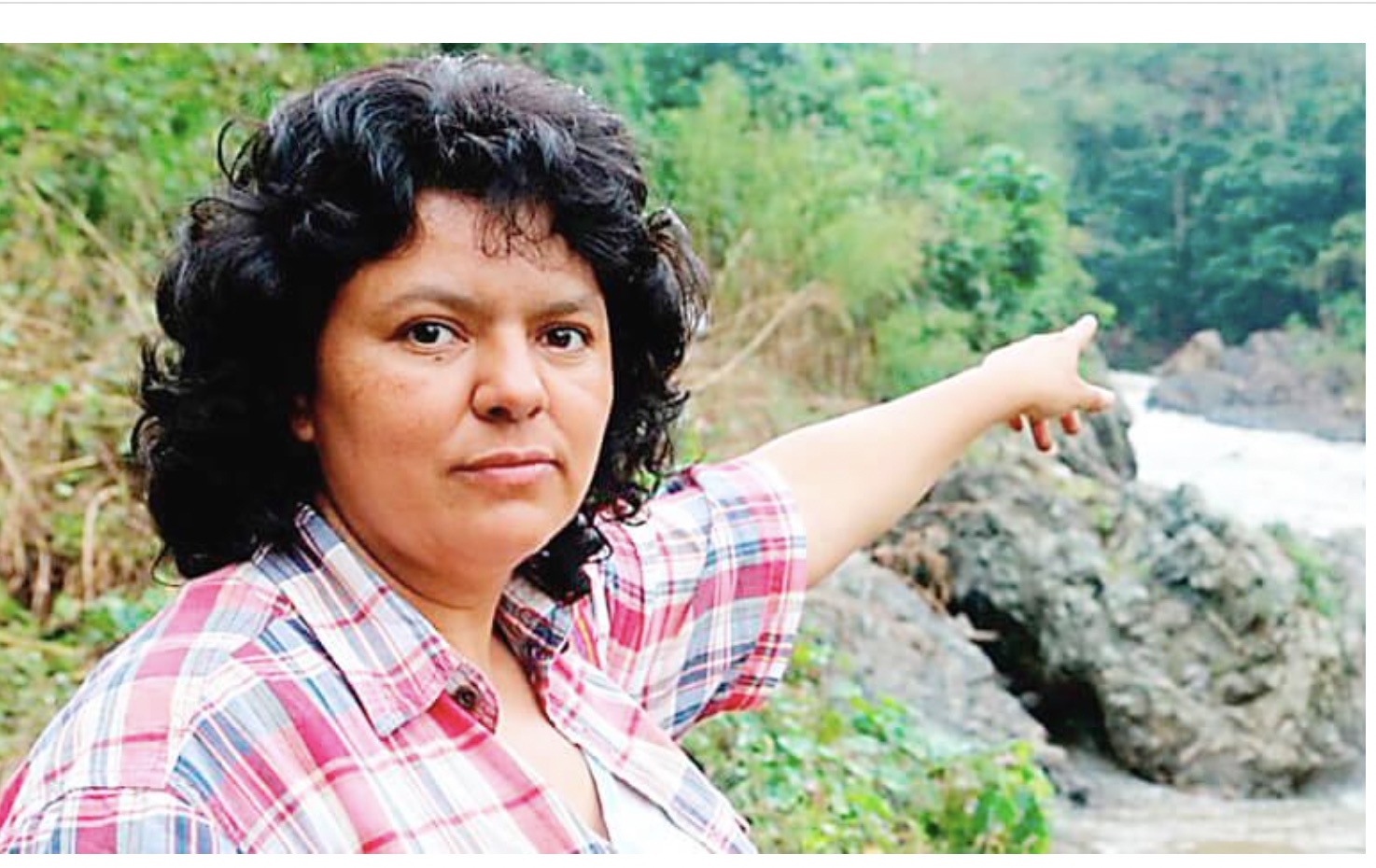
Honduras’ new leftist president on Wednesday intervened  to halt a court-ordered eviction of an Indigenous community from their ancestral lands following violent scenes of the attempted forced removal by police earlier in the day.

(Article continued in the right column)

Question related to this article:

What is the state of human rights in the world today?

(Article continued from the left column)

Human Rights Minister Natalie Roque shared  on social media that, with orders from President Xiomara Castro, lawyers and officials from her office went to the Tierras del Padre community, located just south of the capital of Tegucigalpa, to stop the evictions, saying the suspension was in accordance  with the law and authorized by the state.`

“We are not going to tolerate any aggression or blow against a pregnant woman or against a citizen or against a child,” presidential adviser Pedro Amador said on the scene,  according to  video circulated on social media

In a tweet, Roque accused judicial officials who’d approved the evictions of continuing “in the power of the dictatorship.” As  Agence France-Presse  reported  last month, “four of the five judges in the court’s constitutional chamber were named to their posts by the previous Congress, which was dominated by the right-wing National Party of former president Juan Orlando Hernandez.”

A statement from the country’s human rights ministry  called  the proposed expulsions—performed at the behest of a businessman and land developer who claims ownership of the area—a “clear violation of the human rights of over 100 families who live in the sector in an ancestral Lenca territory that dates from the year 1739.”

Argentina : Federal Network of Centers for Community Mediation and Training in School Mediation with an Example from Province of Buenos Aires

… EDUCATION FOR PEACE …

Articles from the Government of Argentina and Colegio de Escribanos, Province of Buenos Aires (translation by CPNN)

On December 16, the National Directorate of Mediation and Participatory Methods of Conflict Resolution, held the “National Meeting of the Federal Network of Community Mediation Centers and Training in School Mediation”.

Participants were judiciary officials coming from national, provincial and municipal executive governments; Presidents of Associations and foundations; National and Provincial Universities, all being members of the Network of Community Mediation Centers .
It was an enriching meeting, where experiences and developments of public policies for the strengthening of the Network were shared.

For the year 2022, an agenda of successive regional meetings and an annual closing event for the month of September are projected.

The objective of the “Juan José Cinqualbrez” Institutional Mediation Center is to carry out voluntary mediation (Law 13951), to disseminate mediation, its principles and characteristics, to train mediators, to create the Centers in each of the Delegations of the Association of Notaries, to organize conferences, forums, conferences, workshops, courses, sign collaboration agreements with national and foreign entities.

Our vision is to promote active social participation in conflict management, which will allow the co-construction of peaceful coexistence, and our mission is to contribute through processes of consensus and dialogue to access to justice for all social components.

Who are the mediators?

People trained and trained in resources and techniques in the art of managing conflicts, and effective communication. Their functions are:
°Accompany the parties within the framework of a trustworthy space.
° Guide the process.
° Facilitate dialogue between the parties.
° Balance the differences.
° Promote active listening.
° Maintain a climate of respect.
° To not judge or decide for the parties.

Question for this article:

Mediation as a tool for nonviolence and culture of peace

(Article continued from left column)

The Advantages are :
° It provides a trustworthy space for dialogue.
° It is a short and inexpensive procedure.
° The parties agree on the solution to their conflict cooperatively.
° It ensures the secrecy of what is manifested, helping to maintain bonds and to balance power.

The parties :
° They are the protagonists of the mediation process.
° They will go from being two parties in conflict to being two parties to the conflict.
° They can go to mediation by themselves or accompanied by their lawyers.

What is the mediation clause?

It is a provision suggested by the College of Notaries to be incorporated into all contracts and regulations in which the notary intervenes. It is about adding a legend where it is stipulated that “in the event that divergences or adversarial conflict situations arise between the parties to the contract (…), the grantors voluntarily agree to submit to the Voluntary Mediation procedure for its solution (Law 13951), through the intervention of the mediators of the ‘Institutional Center of Mediation of the Association of Notaries of the Province of Buenos Aires’ with headquarters at Avenida 13 No. 770 of the city of La Plata (or its Mediation Center of the Delegation… of said Institution, domiciled at…”

Where can this clause be inserted?

This clause may be, for example, in: sales tickets; lease contracts; loan contracts; constitution of mortgages; business partnership agreements; constitution of use; room, servitude; constitution of usufruct; constitution of civil companies; constitution of sports clubs; association statutes; statutes of neighborhood and development societies; constitution of foundations; horizontal property regulations; constitution and dissolution of condominiums, among others.

Mediation centers:

To find out about the Mediation Centers, click here.

Suggested clause

To access the suggested mediation clause, click here.

(click here for the original version in Spanish).

Panama : Management results in 2021 of the Coordination Office of the Community Mediation Program

… EDUCATION FOR PEACE …

An article from the government of Panama (translation by CPNN)

The Coordination Office of the Community Mediation Program presented the main results achieved during the management period corresponding to the year 2021, in order to make visible the efforts and collaborative work carried out by each of the team members.

The presentation was given by Thaiska T. Tuñón Solano, head of the Coordination Office, and community mediators from the Administration Attorney’s Office participated.

(Article continued in right column)

Question for this article:

Mediation as a tool for nonviolence and culture of peace

(Article continued from left column)

Tuñón highlighted that, despite the difficulties encountered in the current context generated by the public health situation, important results were attained. Among these, he highlighted the resumption of agreements with different local authorities and national and international organizations to guarantee the operation of the Community Mediation Centers, in addition to the participation in different virtual academic activities at the international level to strengthen national and international technical cooperation.

The actions carried out collaboratively with the Norwegian Council for Refugees were highlighted, as well as the sensitizations developed in the community by each of the Community Mediation Centers. Also, he mentioned that most cases continue to be initiated voluntarily, that is, that the citizen directly attends the Center to request the conflict management service without the intervention of a judge or other authority.

(click here for the original version in Spanish).

Centers for Mediation, Conciliation and Restorative Justice in the State of Mexico

… EDUCATION FOR PEACE …

An article from Hacienda Cuautitlan (translation by CPNN)

PROCESS

STAGES OF MEDIATION AND CONCILIATION

The mediation and conciliation services provided by the Center can be initiated at the request of the interested party or by referral from the Public Prosecutor’s Office or the judge who hears the matter, when the willingness of the interested parties to resolve their disputes through any of these methods is confirmed. This can begin before starting a judicial process, during the process or after it has concluded.


Click on image to enlarge.

1. REQUEST FOR MEDIATION AND CONCILIATION

The person interested in resolving their conflict through these channels must go personally or, where appropriate, through their legal representative with power of attorney to the State Center headquarters closest to their home with the original and a simple copy of their official identification , as well as the location data of the person you want to invite (full name, address and telephone number, if you know it).

If you wish to expedite this service, you can have the Service Request Form printed with the requested data.

2. START OF THE MEDIATION OR CONCILIATION PROCESS

Each Center has Secretaries or Operational Secretaries, who will verify if the conflict is susceptible to mediation, conciliation or subject to a restorative process, in accordance with the law. If so, a file is started that includes the data of both parties.

Finally, you will be provided with the date for the initial mediation or conciliation session, the corresponding file number and the name of the Mediator-Conciliator or Facilitator who will assist you.

The Secretary and/or Operational Secretary will make the invitation and turn it over to the Social Worker so that he/she invites the other person or persons to attend on the scheduled date; In addition, he reports the matter to the Mediator-Conciliator and Facilitator who will be responsible for assisting him.

3. INVITATION

A social worker comes to the house of the invited person delivers the invitation, letting him know that there is a person interested in discussing the conflict in common to seek alternative solutions, through mediation or conciliation.

(Article continued in right column)

(click here for the original version in Spanish).

Question for this article:

Mediation as a tool for nonviolence and culture of peace

(Article continued from left column)

4. MEDIATION AND/OR CONCILIATION SESSIONS

On the date and time indicated to the parties, the Mediator-Conciliator assigned to the matter waits for the parties.

If both parties show up, the session will begin, which takes place in a private and comfortable space. On the first occasion, the Conciliatory Mediator explains the purposes of the procedure, the rules that allow a respectful dialogue and ascertains the willingness of the parties to seek a solution to their dispute.

The Mediation or Conciliation sessions are oral and all that are necessary for the resolution of the conflict are carried out.

In each session, the people involved will have the opportunity to actively intervene, by expressing their needs, emotions, feelings and proposals, in an environment of trust, cordiality and respect guided by the assigned Mediator-Conciliator.

If the parties reach one or several points of agreement, it will be recorded in an agreement, a copy of which is given to those involved.

5. CONCLUSION OF THE MEDIATION OR CONCILIATION

In accordance with the Regulation of the Law of Mediation, Conciliation and Promotion of Social Peace for the State of Mexico, the request may be inadmissible or the mediation, conciliation or restorative justice procedure may be terminated, in case it becomes evident that the process of the alternative method is based on dishonest presentations.

6. AGREEMENT AUTHORIZATION

The head of the Mediation and Conciliation Center must ensure that the agreement does not contain dishonest consent, that it does not contravene morality or public order provisions, as prerequisites for its authorization.

When agreements are reached, they are signed by all the interested parties, include the fingerprints of the signatories, the signature of the Mediator-Conciliator who intervened and, finally, the signature of the head of the Mediation and Conciliation Center and the institutional seal.

7. EFFECTS OF JUDICATION

Once the agreement or agreement has been signed and authorized, it will have the same effectiveness between the parties as res judicata, and may be executed, in the event of non-compliance, by way of enforcement, provided for in the Code of Civil Procedures of the State of Mexico.

8. BREACH OF AGREEMENT

In case of non-compliance with the agreement, the parties have the right to choose whether to proceed to its execution by way of enforcement before the competent judge; or they initiate a new mediation or conciliation process.

http://www.pjedomex.gob.mx/conciliacion/#