Category Archives: DEMOCRATIC PARTICIPATION

Democracy Spring: Thousands Descend on US Capitol, Over 400 Arrested

. . DEMOCRATIC PARTICIPATION . .

An article by Scott Galindez, Reader Supported News (reprinted by permission)

Thousands of Americans have descended on Washington to launch one week of civil disobedience [as of April 12] under the banner Democracy Spring. Over 400 people were arrested today, and over 3,000 have pledged to risk arrest over the next week. Their main demand is to get money out of politics. Before the marchers made their way to the Capitol, Cenk Uygur of the Young Turks thanked the 200 people who walked 140 miles over 10 days from Philadelphia. Uygur pointed out that the mainstream media has ignored Democracy Spring and explained that the reason is that they are part of the establishment. Uygur said that the media don’t want money out of politics, they depend on that money when it is used to buy campaign ads. Uygur declared that while this is just the beginning, they are no longer coming for us, but we are coming for them.

democracy
Click on photo to enlarge and to see photo credit

Kai Newkirk, a lead organizer of the event, told the crowd that if “we don’t have a democracy that represents all of us, we are in danger of losing what makes America great.” Newkirk went on to say, “We are here to send a message that there will be a political price to pay for siding with the moneyed interests over the people.” The organization’s website says: “This week we began the process of taking back our democracy, with hundreds arrested in our first mass sit-in at the Capitol on Monday, April 11. Now day after day through Saturday, April 16th, we will continue to reclaim the Capitol in a show of hope and for the truly representative democracy we see in our hearts. Over 3,500 people, coming to DC from near and far, have pledged to risk arrest this week.”

Thousands marched from Columbus Circle to the east side of the Capitol, where hundreds of people, including Cenk Uygur and Kai Newkirk, made their way to the Capitol steps. They sat down and received warnings from the Capital Police to move away from the steps or be arrested. Many heeded the warning and moved away from the building. Hundreds, in what is being billed as the largest civil disobedience action ever at the Capitol Building, remained and were arrested one by one over five hours.

Before the arrests were made, Uygur addressed the crowd with a bull horn and the people’s mic from the Capitol steps. “It’s time for civil disobedience. They think they have all the power, but we have the people. We are tired of the corruption. We want free and fair elections. We want our democracy back! We want our government back! We want our country back! We want our Constitution back! We want our Congress back! Thank you all for fighting back!

(Article continued in right column)

Question related to this article:

How should elections be organized in a true democracy?

(Article continued from left column)

Why Democracy Spring? And Why Now?

According to the group’s website:

Every American deserves an equal voice in government. That is our birthright of freedom, won through generations of struggle. But today our democracy is in crisis. American elections are dominated by billionaires and big money interests who can spend unlimited sums of money on political campaigns to protect their special interests at the general expense. Meanwhile, as the super-rich dominate the “money primary” that decides who can run for office, almost half of the states in the union have passed new laws that disenfranchise everyday voters, especially people of color and the poor.

This corruption violates the core principle of American democracy – “one person, one vote” citizen equality. And it is blocking reform on virtually every critical issue facing our country: from addressing historic economic inequality, to tackling climate change and ending mass incarceration. We simply cannot solve the urgent crises that face our nation if we don’t save democracy first.

But if the status quo goes unchallenged, the 2016 election – already set to be the most billionaire-dominated, secret money-drenched, voter suppression-marred contest in modern American history – will likely yield a President and a Congress more bound to the masters of big money than ever before. And our planet and people just can’t afford that. But there is another possibility.

Democracy Spring is calling on Congress to pass four bills:

– The Government by the People Act and Fair Elections Now Act

– The Voting Rights Advancement Act of 2015

– The Voter Empowerment Act of 2015

– The Democracy for All Amendment

As the week goes on, many more high profile activists will risk arrest, including Mark Ruffalo, Gaby Hoffman, Lawrence Lessig, Talib Kweli, and Zephyr Teachout. The coalition putting on the event is endorsed by groups like the AFL-CIO, National Organization of Women, and MoveOn.org. On April 16th, Democracy Spring will be joined by Democracy Awakening, a broad coalition of organizations representing the labor, peace, environmental, student, racial justice, civil rights, and money-in-politics reform movements. According to their website, they “share a firm belief that we will not win on the full range of policy issues we all care about until we combat attacks on voting rights and the integrity of the vote by big money.”

They are fighting to protect voting rights, get big money out of politics, and demand a fair hearing and an up or down vote on President Obama’s Supreme Court nominee. Speakers will include Jim Hightower, William Barber II, and Annie Leonard.

Wilmington, Delaware, USA: Movement for a Culture of Peace hosts restorative practices forum

. . DEMOCRATIC PARTICIPATION . .

An article by Megan Pauly for Delaware Public Media

A community discussion Saturday hosted Wilmington’s Movement for a Culture of Peace focused on finding ways to deal with issues such as trauma that violent crime in the city is bringing into classrooms. Around 30 educators, activists and concerned community members participated in the event. Among them was Malik Muhammad, president of a restorative practices consulting group, Akoben, LLC. He says stressing connectedness and building positive relationships helps change behavior, not punishment.

Wilmington
Photo by Megan Pauly / Delaware Public Media

“The traditional approach to trauma has been one, individualized. So we’ve isolated those who’ve experienced trauma and attempted to deal with them on an individual basis,” Muhammad said. “That approach in and of itself isn’t necessarily a negative one, but we need to create environments of safety, connection, trust and bonding so that those who are facing trauma – whether it’s seen or unseen – are really feeling connected.”

Muhammad adds relying mostly on social workers and counselors to engage the students isn’t effective. He says teachers, administrators and even students themselves need to be involved.

In 2012, the state brought Muhammad’s organization in to hold four full-day workshops for around 145 education professionals. Since then, he’s worked with 16 of 19 Delaware school districts, tailoring workshops to their specific needs.

(article continued in right column)

Discussion question

Restorative justice, What does it look like in practice?

(article continued from left column)

Will Fuller, Principal at the Positive CHANGE Academy – the Red Clay School District’s alternative school – was initially skeptical of the broad “relationship building” concept, but has seen firsthand its positive effects.

“I thought hey, this is not going to work for our kids but what I noticed over the last two years is that the students really love the process. They’ve bought into the process, the culture has changed,” Fuller said. “The staff members have bought into the process; it hadn’t been overnight.”

Kelley Lumpkin, Success Interventionist at Baltz Elementary in Elsmere, says she’s also seen a positive shift in the school’s culture since these practices were implemented a few years ago.

But Lumpkin says she sees social media as a potential barrier to creating critical face-to-face connectedness.

“It’s not like the schoolyard where these arguments used to happen and they could see the effect, right there. And it might give them a cue to stop it,” Lumpkin said. “Now they’re doing it where they’re not even seeing the effect, they’re not seeing what happens to the child as they’re doing it and other kids tagging in. And then the come to school and the rumor mill has spread it to another 20 kids.”

Lumpkin says her approach to working with kids varies depending on the situation.

It could include a group discussion for 10-15 minutes, or an hour-long talk. For other school-wide issues, she’s even held them in the gym for the entire 5th grade.

Muhammad says his work in Delaware has largely been in New Castle and Kent counties. This year, he’s working with the Red Clay and Christiana school districts.

Mexico City: A system of mediation to be applied in all 16 delegations

. . DEMOCRATIC PARTICIPATION . .

An article by Lemic Madrid, Azteca Noticias

In Mexico City a system of mediation will be applied as an alternative means to resolve conflicts in the communities of the 16 delegations; With this action, citizens in the capital city will be able to reach agreement with authorities to resolve issues of security, services and urban infrastructure.

Mexico
City Prosecutor Rodolfo Ríos Garza

The Superior Court of Justice and the Attorney General of the capital will promote the training of mediators who will work to ensure access to justice and the rights of all parties in conflict, seeking a satisfactory solution for the benefit of the community.

“The major objective of community mediation is to consider all people as citizens with rational capacity to voluntarily settle their conflicts, so that they do not need to reach the courts … They will be supported by a community mediator who legitimizes the process,” according to the President of the Capital City Court of Justice, Edgar Elias Azar.

During his participation in the signing of the agreement to implement the system in the 16 delegations of the capital, he said that in criminal matters, this strategy has generated savings of resources and time by establishing a dialogue between the conflicting parties.

As for the city prosecutor, Rodolfo Rios Garza, he said the mediation system has generated dividends by ensuring compensation for damage and by shortening the time required for the settlement of a conflict by means of a dialogue between the two sides.

“This can be seen through the activity carried out by mediation units in law enforcement, which, from January 2015 to February 2016, recorded 7,326 processes, leading to the signing of 1,871 agreements and 860 agreements with reparations, thus achieving the proper settlement of disputes between the parties involved in a conflict of criminal content,” said the city prosecutor, Rodolfo Rios Garza. He indicated that these results led to the decision to extend mediation to other areas of public life.

(Click here for a Spanish version of this article)

Question related to this article:

Progress in Participatory Budgeting

. .DEMOCRATIC PARTICIPATION. .

Based on information on the website of the Participatory Budgeting Project

Participatory budgeting (PB) is a different way to manage public money, and to engage people in government. It is a democratic process in which community members directly decide how to spend part of a public budget. The process was first developed in Brazil in 1989, and there are now over 1,500 participatory budgets around the world. Most of these are at the city level, for the municipal budget.

participative budgeting
Video: Real money, real power: participatory budgeting

Though each experience is different, most follow a similar basic process: residents brainstorm spending ideas, volunteer budget delegates develop proposals based on these ideas, residents vote on proposals, and the government implements the top projects. For example, if community members identify recreation spaces as a priority, their delegates might develop a proposal for basketball court renovations. The residents would then vote on this and other proposals, and if they approve the basketball court, the city pays to renovate it.

There are so many cities and institutions implementing Participatory Budgeting that it is almost impossible to keep track of them all. However, the Participatory Budgeting Project presents a map showing twenty of the most developed and interesting PB processes in North America, Latin America and Europe that illustrate the diversity of PB models. Readers can click on the markers or view the tables underneath the map to see basic information about each process.

Here are seven of the twenty examples.

Brazil: Porto Alegre, with nearly 1.5 million residents, was the first city to launch a full PB process, in 1989. Since then, up to 50,000 residents have turned out each year to decide how to spend as much as 20% of the city’s annual budget. Participants attend a series of local assemblies, and after months of discussions budget delegates deliver a participatory budget to the city for implementation.

(Article continued in right column)

Questions for this article:

Participatory budgeting, How does it work?

(Article continued from left column)

Brazil: Belo Horizonte, population 2.5 million, has had a district-level PB since 1993, a Housing PB since 1996, and a digital PB (e-PB) since 2006. Through both local assemblies and online voting, residents allocate over $50 million per year.

Argentina: Rosario’s PB consists of an annual cycle in which over 87,000 city residents decide how to allocate around $9 million of the city budget. In this city of 1 million people, residents discuss spending ideas at neighborhood assemblies, elected delegates develop full budget proposals, and then residents vote on the proposals at another round of voting assemblies. The funds can be spent on both capital projects and services or programs.

USA: In 2009, PBP and Chicago alderman Joe Moore launched the first PB process in the U.S., in the city’s 49th Ward. In the current process, residents of three Wards decide each year how to spend $3 million of taxpayer money.

USA: New York City is host to the largest PB in the U.S. in terms of participants and budget amount. First introduced in 4 council districts in 2011, the annual PBNYC process now spans 24 Council Districts and lets residents directly decided how to spend $25 million in capital discretionary funds. 

Canada: Since 2001, Toronto’s public housing authority has engaged tenants in allocating $5 to $9 million of capital funding per year. Tenants identify local infrastructure priorities in building meetings, then budget delegates from each building meet to vote for which priorities receive funding.

Spain: Seville (pop. 700,000) is the largest European city to implement PB. From 2004-2013, residents decided on roughly 50% of local spending for their city districts, for capital projects and programs. They submitted project proposals online or in neighborhood assemblies, and after a series of meetings, locally elected budget delegates delivered the participatory budget to city hall for implementation.

USA: Working on creating a culture of peace in Ashland

. .DEMOCRATIC PARTICIPATION. .

An article by David Wick in the Ashland Daily Tidings (reprinted according to Creative Commons)

    “My experience and research have convinced me that the world is on the verge of the greatest change in human history: The transition from the culture of war that we have had for tens of thousands of years to a new culture,” and that new development, states UNESCO Director David Adams, “is a culture of peace.”

A 1999 United Nation’s Culture of Peace resolution called for a transformation from a culture of war and violence to one of peace. Aligned with this and Margaret Mead’s notion that it’s only been small groups of thoughtful committed citizens that have changed the world, a group of eight inspired local thinkers collaborated for two years before creating a Culture of Peace Proclamation with the Ashland City Council in March 2015.

Ashland
Click on photo to enlarge

The city’s proclamation, unanimously adopted by the council, says “(we) strongly encourage residents to work toward development of a Culture of Peace community, and pledge to lend appropriate encouragement and support to that effort.”

Soon an independent, community and citizen-based Ashland Culture of Peace Commission was created. Commission members were chosen to represent many aspects of Ashland’s culture: education, business, the arts, science, environment, religion, law and habitat. An active community support team was also formed. On Sept. 21, 2015, the UN International Day of Peace, the Ashland Culture of Peace Commission was launched in a community-wide celebration.

The commission and the community support team’s first actions have been to define the Ashland Culture of Peace as a community-wide movement dedicated to transforming our attitudes, behaviors, and institutions into ones that foster harmonious relationships with each other and the natural world.

Initial focus areas being developed are:

1. The Peace Ambassador Program — Training volunteers to be a positive presence in our community and on our streets, engaging in person-to-person dialogues and arranging peace forums on topics important to our community.

2. Peace Education — Offering exciting, skill-based and peace-focused learning experiences to schools in the Ashland School District.

(Article continued in right column)

Questions for this article:

How can culture of peace be developed at the municipal level?

(Article continued from left column)

3. Community Resource Directory — Identifying, listing, and dialoguing with organizations and people in our community who are already contributing or want to contribute to a culture of peace for Ashland.

4. World Peace Flame Monument — Establishing the venue and financial support for Ashland to be the 12th site in the world for the World Peace Flame, a symbol of peace, unity, freedom and celebration that will draw visitors from around the world.

5. State of the Culture of Peace in Ashland Report — Writing an annual report that will be presented to the community and City Council to provide a view into how we are doing in co-creating a Culture of Peace in Ashland.

Cities are the real societal structural level where a Culture of Peace can take root. The individual person is always the essential component for building peace through his or her daily choices, but it is the city that has the reach, authority, responsibility and influence to set the positive tone and direction for so many. When the City Council and Mayor adopted the Culture of Peace Proclamation, they strongly encouraged residents “to work toward development of a Culture of Peace community” and pledged “to lend appropriate encouragement and support to that effort.”

With our unique approach, Ashland has the opportunity to become a model of this new culture for cities around the world. It is about shifting mindset and behavior in all aspects of our societies to embrace humanity’s interconnectedness as we move from force to reason, from discord and violence to dialogue and peace-building. For sustained change there must be a larger context, a vision that inspires and unifies citizens to move forward. This vision has launched the Ashland Culture of Peace.

This is the first of a regular series of articles by the ACPC on various aspects of creating a culture of peace, both here and elsewhere. Next time we’ll address the question, “What is a Culture of Peace?”

Current commissioners include: Amy Blossom, Ben Morgen, Bert Etling, Bill Kauth, Catherine McKiblin, David Wick, Eric Sirotkin, Greeley Wells, Jack Gibbs, Jeff Golden, Joanne Lescher, Joe Charter, Norma Burton, Pam Marsh, Patricia Sempowich, Richard Schaeff, Tighe O’Meara and Will Sears. The original developers included some of the current commissioners, plus Elinor Berman, Irene Kai and Kathleen Gamer.

Contact David Wick via email at ashlandcpc@gmail.com, or drop by the ACPC office at 33 First St., Suite 1, Ashland. The commission’s website is at www.ashlandcpc.org.

USA: Building New “Nonviolent Cities”

.. DEMOCRATIC PARTICIPATION ..

An article by John Dear in Common Dreams (reprinted according to provisions of Creative Commons)

Last year, I was invited to give a talk on peace in Carbondale, Illinois. I was surprised to discover that in recent years, activists from across Carbondale had come together with a broad vision of what their community could one day become—a nonviolent city. They wanted a new holistic approach to their work, with a positive vision for the future, so that over time their community would be transformed into a culture of nonviolence.

johndear
(Image: Nonviolent Carbondale/Facebook)

They created a coalition, a movement, and a city-wide week of action and called it, “Nonviolent Carbondale.” They set up a new website, www.nonviolentcarbondale.org, established a steering committee, set up monthly meetings, and launched “Nonviolent Carbondale” as a positive way to promote peace and justice locally. In doing so, they gave everyone in Carbondale a new vision of what their community could become.

From the start, the Carbondale activists held their local organizing meetings occasionally before city council meetings, which they then attended together as a group. At city council meetings, they started suggesting and lobbying ways their city could become more nonviolent. Their movement eventually became based out of the main Carbondale Library. Over the years, they have done positive work with their police department, local schools and the school system, religious communities, the library system, and local non-profits. As grassroots activists, they have lifted up a positive vision of their community and brought it into the mainstream.

Over the years, they put their energies into their “11 Days” program – 11 days in March filled with scores of actions and events for all ages across the city. Twice their 11 days focused on peace; twice on compassion, and last year the focus was on food. One of the outcomes from last year’s 11 Days, for example, was a new organic food market started in the poorest neighborhood in town.

“Nonviolent Carbondale” offers a model for activists, movements, and cities across the country. With their example in mind, the group I work with, Campaign Nonviolence, [www.campaignnonviolence.org] is launching the “Nonviolent Cities” project using “Nonviolent Carbondale” as an organizing model for other cities.

Taking the lead from friends and activists in Carbondale, Campaign Nonviolence invites citizens across the U.S. to organize a similar grassroots movement in their city, to put the word “nonviolent” in front of their city, and to help others envision, organize and work for a nonviolent local community. As far as we can tell, this organizing tool has never been formally tried anywhere in the U.S., except in Carbondale. This movement is a new next step in the visionary, organizing nonviolence of Mahatma Gandhi and Martin Luther King, Jr.

Perhaps the key aspect of “Nonviolent Cities” is that each city will be summoned to address its violence in all its aspects, structures, and systems; to connect the dots between its violence; and to pursue a more holistic, creative, city-wide nonviolence, where everyone together is trying to practice nonviolence, promote nonviolence, teach nonviolence and institutionalize nonviolence on the local level, to really build a new nonviolent community for itself and others. We want not just to undermine the local and regional culture of violence, and end all the killings, but to transform it into a culture of nonviolence.

(Continued in right column)

Questions for this article:

How can culture of peace be developed at the municipal level?

(Continued from left column)

This means that “Nonviolent Cities” organizers would promote the vision, teach nonviolence, and inspire people at every level in their community to work together for a new nonviolent community and a new nonviolent future. That would include everyone from the mayor and city council members to the police chief and police officers, to all religious and civic leaders, to all educators and healthcare workers, to housing authorities, to news reporters and local media; to youth and grassroots activists, to the poor and marginalized, children and the elderly. Together, they would address all the issues of violence and pursue all the angles and possibilities of nonviolence for their city’s transformation into a more nonviolent community. The first goal would be a rapid reduction in violence and an end to killing.

Nonviolent cities would work to end racism, poverty, homelessness, and violence at every level and in every form; dismantle housing segregation and pursue racial, social and economic integration; end police violence and institutionalize police nonviolence; organize to end domestic violence and teach nonviolence between spouses, and nonviolence toward all children; work to end gang violence and teach nonviolence to gang members; teach nonviolence in every school; pursue more nonviolent immigration programs and policies; get religious leaders and communities to promote nonviolence and the vision of a new nonviolent city; reform local jails and prisons so they are more nonviolent and educate guards and prisoners in nonviolence; move from retributive to restorative justice in the entire criminal justice system; address local environmental destruction, climate change, and environmental racism, pursue clean water, solar and wind power, and a 100 percent green community; and in general, do everything possible to help their local community become more disarmed, more reconciled, more just, more welcoming, more inclusive, and more nonviolent.

If Carbondale, Illinois can seek to become a nonviolent city, any city can seek to become a nonviolent city. This is an idea whose time has come. This is an organizing strategy that should be tried around the nation and the world. The only way it can happen is through bottom-up, grassroots organizing, that reaches out to include everyone in the community, and eventually becomes widely accepted, even by the government, media, and police.

Two international groups pursue a similar vision–International Cities for Peace (www.internationalcitiesforpeace.org) and Mayors for Peace (www.mayorsforpeace.org, which has 6965 cities committed in 161 countries)—but, as far as I can tell, no U.S. group has ever attempted to invite local communities to pursue a vision of holistic city-wide nonviolence or organize a grassroots movements of nonviolent cities.

On our website, www.campaignnonviolence.org, we have posted “Ten Steps Toward a Nonviolent City,” a basic initial list of organizing tasks for local activists which includes: creating a local steering committee; finding a mainstream institution that can serve as a base; organizing a series of public meetings and forums; studying violence in the community; meeting with the mayor and the city council; and organizing a city-wide launch.

Gandhi once remarked that we are constantly being astonished by the advances in violence, but if we try, if we organize, if we can commit ourselves, he declared, we can make even more astonishing new discoveries and advances in nonviolence. With the example of “Nonviolent Carbondale” before us, we have a way to organize every local community and city in the nation, a way to envision how we can all one day live together in peace with justice, and the possibility of new hope. If we follow the example of Nonviolent Carbondale, we can help transform our culture of violence into something completely new—a culture of nonviolence. That should always be our goal.

New Alliance: Compassionate Cities and International Cities of Peace Join Efforts!

.. DEMOCRATIC PARTICIPATION ..

Excerpts from the websites of International Peace Cities and Charter for Compassion

    A compassionate city is an uncomfortable city! A city that is uncomfortable when anyone is homeless or hungry. Uncomfortable if every child isn’t loved and given rich opportunities to grow and thrive. Uncomfortable when as a community we don’t treat our neighbors as we would wish to be treated.”
    ~Karen Armstrong, Founder of the global movement, The Charter for Compassion

Charter for Compassion International and International Cities of Peace are now working together. In coordination, the organizations wil help you self-define and get to work in making your neighborhood, city, or state a more compassionate place for all citizens to thrive.

compassion
Video: Charter of Compassion Toolbox

The Compassionate network has an amazing Tool Box to help you get a baseline of needs, then create an action plan for progress. Every Compassionate City, due to their current work, will be added to our City of Peace network upon request. Every City of Peace can have direct access to the Charter for Compassion’s director, Marilyn Turkovich, and their Tool Box. Get in touch and start the good work of compassion. For details, send an email to info@internationalcitiesofpeace.org

The Charter TOOL BOX is a four-part model or framework for building a Compassionate Community. Every city of peace would benefit from this: How to Assess, Commit, Launch, and Sustain your compassionate action plan.

The text of the Charter for Compassion:

The principle of compassion lies at the heart of all religious, ethical and spiritual traditions, calling us always to treat all others as we wish to be treated ourselves. Compassion impels us to work tirelessly to alleviate the suffering of our fellow creatures, to dethrone ourselves from the centre of our world and put another there, and to honour the inviolable sanctity of every single human being, treating everybody, without exception, with absolute justice, equity and respect.

(Continued in right column)

Questions for this article:

How can culture of peace be developed at the municipal level?

(Continued from left column)

It is also necessary in both public and private life to refrain consistently and empathically from inflicting pain. To act or speak violently out of spite, chauvinism, or self-interest, to impoverish, exploit or deny basic rights to anybody, and to incite hatred by denigrating others—even our enemies—is a denial of our common humanity. We acknowledge that we have failed to live compassionately and that some have even increased the sum of human misery in the name of religion.

We therefore call upon all men and women to restore compassion to the centre of morality and religion ~ to return to the ancient principle that any interpretation of scripture that breeds violence, hatred or disdain is illegitimate ~ to ensure that youth are given accurate and respectful information about other traditions, religions and cultures ~ to encourage a positive appreciation of cultural and religious diversity ~ to cultivate an informed empathy with the suffering of all human beings—even those regarded as enemies.

We urgently need to make compassion a clear, luminous and dynamic force in our polarized world. Rooted in a principled determination to transcend selfishness, compassion can break down political, dogmatic, ideological and religious boundaries. Born of our deep interdependence, compassion is essential to human relationships and to a fulfilled humanity. It is the path to enlightenment, and indispensable to the creation of a just economy and a peaceful global community.

Participating cities

Almost 70 cities [in 45 countries] globally have affirmed the Charter for Compassion through city, community councils or other govenment entities. Affirming the Charter means that a community has identified issues on which they are working, and committed to a multi-year action plan.

Click here for list of participating countries and cities

USA: New Haven Peaces Out. A Bit

. .DEMOCRATIC PARTICIPATION. .

An article by Aliyya Swaby, New Haven Independent (reprinted by permission)

The public schools “restorative justice” plan and the resettling of refugees in town strengthened New Haven’s “culture of peace” this past year, according to a new report.

swaby
Almost 200 “pink out” for Planned Parenthood (Photo by Lucy Gellman, New Haven Independent).

Compiled by the New Haven Peace Commission, the third annual report — “The State of the Culture of Peace in New Haven” — incorporates anonymous statements from 15 local activists on the ways that the city is improving or stagnating in eight different categories.

The conclusion: New Haven is moving toward peace. But slowly.

The report judges peace in New Haven by eight categories based on the United Nations Culture of Peace initiative launched in 1989. Each category was developed as a contrast to a characteristic of the culture of war: sustainable and equitable development, democratic participation, equality of women, tolerance and solidarity, disarmament and security, education for peace, free flow of information, and human rights.

Report author David Adams was at UNESCO until 2001, where he worked on the “Culture of Peace Programme” for promoting peace efforts nationwide. Nations, Adams said, operate under cultures of war, dominated by armament, propaganda, economic inequality and authoritarian control. But cities need cultures of peace to be successful.

“Cities don’t have enemies. Countries have enemies,” he said. “If we want to change the world and make peace, we should work at the level of the city and not at the level of the state.”

The full report can be read here.

The activists spoke anonymously, so that they spoke honestly, Adams said. “What you see is that it’s not perfect, but the city does work for the culture of peace.” The adoption of restorative justice in New Haven Public Schools, allowing kids to work through their problems instead of suspending them for disciplinary issues, is a major step forward in promoting peace, he said.

The Peace Commission is working to set up meetings with the chairs of Board of Alders education and youth committees in order to push for permanent funding for the restorative justice program. “Restorative justice addresses fundamental problems in the culture of peace. If we can do it in the schools, we can do it in society as a whole,” he said.

(Article continued in right column)

Questions for this article:

How can culture of peace be developed at the municipal level?

(Article continued from left column)

New Haven’s Integrated Refugee & Immigrant Services (IRIS) jumped into the national media in November for welcoming a family of Syrian refugees after the governor of Indiana refused to accept them into the state. This is an example of a “solidarity program” promoting community despite inequality in the city, according to the report.

The report also tracks programs that have not lived up to expectations from past years. Though the first peace report in 2013 lauded jobs program New Haven Works when it was first created to address unemployment and under-employment, this year’s report calls those early hopes “largely unfulfilled.”

New Haven Works has found jobs for 500 people in 18 months. That number is a “drop in the bucket,” the report quotes an activist saying.

Another major area of stagnation in creating a culture of peace in the city, according to Adams, is lack of sustainable, equitable development. Though thousands of new apartments are being developed, many are luxury units, “far beyond the reach of those who are being forced out of Church Street South, not to mention families and individuals already homeless or in over-crowded housing,” the report reads.

The prominence of women in politics this year—including Mayor Toni Harp’s reelection and Board of Alder President Tyisha Walker’s election by fellow alders—is a good model for woman’s equality, according to the report.

And New Haven supported Planned Parenthood at a rally on the Green against nationwide attacks attempting to cut sexual health services for women, the report says.

But women are largely heads of their households among the urban poor and often employed part-time or for low wages without benefits, the report said. Many have husbands or boyfriends in prison or who cannot find jobs because of a record.

The first report in 2013 said it was too early to judge whether community policing would be effective in New Haven. The new report characterizes it as still a work in progress.

“It takes a while to change the police force,” Adams said. “Developing trust takes years … Hopefully it will continue to move forward.” In other cities, the police are seen as an “occupying army, not as the fabric of the city.”

Earlier this week, the Peace Commission met to discuss the report and consider issues to address next year. Adams said it will continue pushing for a permanent restorative justice program and will need to come to consensus on another task.

A half dozen people sit on the commission. “The problem is when a lot of people think of peace, they think of business between countries. But when you talk about a culture of peace and define it this way, it becomes clear that it’s something people can do in their daily lives,” Adams said. “It brings peace home.”

International Peace Forum Proposed by the Mayors of Madrid and Paris

.. DEMOCRATIC PARTICIPATION ..

by CPNN, based on dispatch from the Spanish wire service EFE

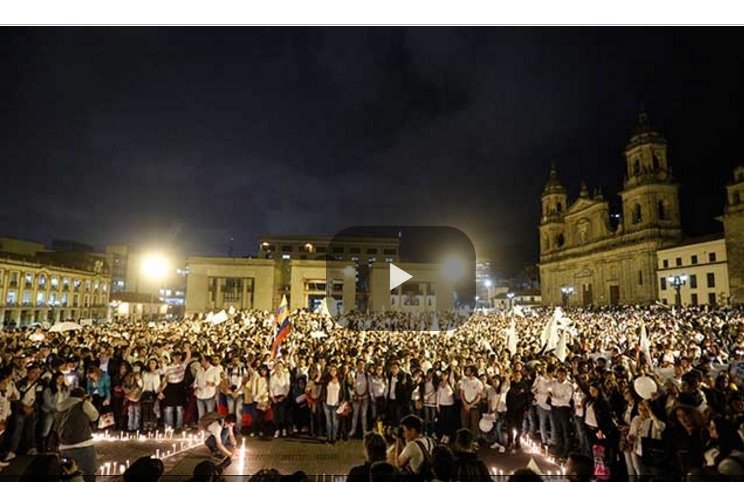
Once again it is the mayors of the world who are taking the lead for a culture of peace. Manuela Carmena, the mayor of Madrid, elected last year at the head of a socialist coalition, and Anne Hidalgo, the socialist mayor of Paris, are planning to hold an international forum against violence and for peace education in Madrid in the near future. Their announcement was made at a forum of mayors in Paris prior to the COP21 climate conference. The forum will invite leaders from local governments and civil society as well as peace specialists.

madrid forum
Mayors Hidalgo and Carmena. Photo from the twitter page of Mayor Hidalgo

Mayor Carmena recalled that the terrorist attacks in Paris on November 13, in which 130 people were killed, were similar to those in Madrid on March 11, 2004. Hence, their cities have a special reason and responsibility to work for peace. “How is it possible that young people who grew up in our cities have resorted to violence?” We must help them find another way forward.

We must draw lessons from the tragedies in our cities and find ways to resolve conflicts without violence.

Questions for this article:

Mayors for Peace – action priorities

. DEMOCRATIC PARTICIPATION .

Communiqué de Press from the 9th Executive Conference of Mayors for Peace

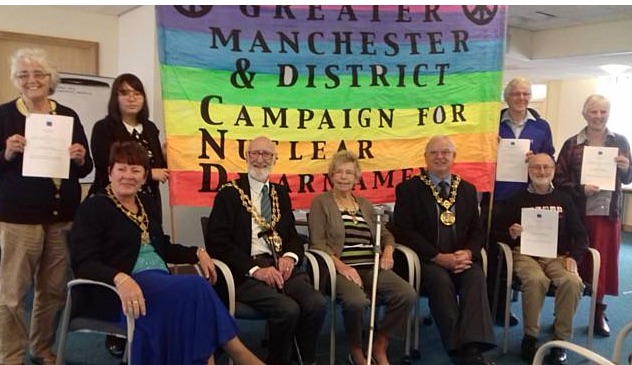
In November 2015, 33 years after Mayors for Peace was established, the number of member cities has exceeded 6,900 from 161 countries and regions and continues to grow. Mayors for Peace has now grown into an influential global network that can impact international public opinion calling for the abolition of nuclear weapons.

mayorsforpeace
Photo from Sinotables

The 9th Executive Conference of Mayors for Peace was held on November 12 and 13, 2015 in Ypres, Belgium. The participating mayors and representatives from the executive cities shared their respective activities towards nuclear abolition and regarding other challenges that their regions face.

They also discussed how to address such pressing issues as poverty, refugees, and climate change as well as how to contribute to nuclear abolition, and resolved to take concrete action with determination, in accordance to Article 3 of the Mayors for Peace Covenant.

Based on its deliberations, this Executive Conference adopted the following seven action priorities:

The Hiroshima Secretariat will take over the 2020 Vision Campaign to further promote it in cooperation with the executive and lead cities on the foundation built up by the city of Ypres, aiming at nuclear abolition by 2020.

Intensified activities for Mayors for Peace based on the 2020 Vision were identified as follows:

1) Strategic projects to promote the start of negotiations for a nuclear weapons convention

i) Citizen outreach by member cities

– Raise awareness of the humanitarian consequences and risks posed by nuclear weapons

– Strengthen efforts to promote petition drives

(Communiqué continued in the right column)

Questions for this article:

How can culture of peace be developed at the municipal level?

(Communiqué continued from the left column)

ii) Actions targeting national governments and policymakers

– Call on policymakers to visit the A-bombed cities

– Actions utilizing signatures and request letters

iii) Cooperative action with the United Nations

2) Concentrated activities to strengthen the Mayors for Peace management system

i) Expand membership

– We will strengthen recruitment efforts to reach 10,000 members by 2020.

ii) Conveying the A-bomb experience to future generations through youth exchanges

– We will promote youth exchanges among member cities, share the memories of the atomic bombings with the future generations, and strengthen the network of the executive cities. iii) Invite interns from member cities to the Hiroshima Secretariat

– To cultivate human resources that could help enhance Mayors for Peace activities, we will build up our intern program and strengthen the network of executive cities.

We will continue to facilitate such activities as distributing and cultivating seeds and seedlings of A-bombed trees, sharing the Flame of Peace, holding A-bomb poster exhibitions, screening animated films, providing A-bomb survivor testimonies through Skype, and promoting Hiroshima-Nagasaki Peace Study Courses.

We will remove the words “by 2015” included in Objective 3 of the 2020 Vision, and continue to call on national governments to work for nuclear abolition.

Along with our activities based on the 2020 Vision to eliminate nuclear weapons, we will address such pressing issues as poverty, refugees, and climate change, in accordance with Article 3 of the Mayors for Peace Covenant.

The next General Conference will be held in Nagasaki in August 2017. To reflect requests and proposals from member cities in the conference content, the Secretariat will conduct a survey of member cities in 2016 and will consider possible content based on the results.

We will send the Resolution adopted by the Executive Conference to the nuclear-weapon states and the United Nations, among others, as a consensus of Mayors for Peace, to urge them to accelerate the momentum for a legal ban of nuclear weapons.

We will send this Final Communiqué and the Resolution to all member cities.