Category Archives: DEMOCRATIC PARTICIPATION

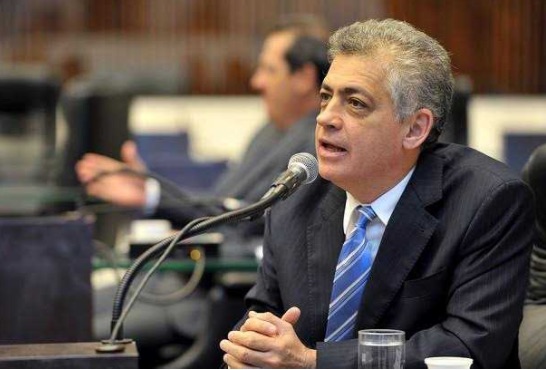
Madrid Mayor: “Cities can end the democratic apathy”

. . DEMOCRATIC PARTICIPATION . .

An article by Rubén Amón, Mathieu de Taillac, and Alessandro Oppes in El Pais English Reprinted for non-commercial purpose and abbreviated by CPNN

In this joint interview by EL PAÍS, Le Figaro and La Repubblica, Manuela Carmena takes stock of her first year in office and talks about politics, ideology and the larger role of cities in the world. . .

Madrid2

Question. Do you think there is a feminine sensitivity in the way public affairs are run in some places? There are female mayors in Paris, Rome, Barcelona, Madrid…

Answer. Yes. I have insisted repeatedly on the fact that women’s culture is more closely linked to daily, practical affairs. It is the culture of life. Development policies underscore the active role of women, their role in family economics. Poverty programs rely on women. If there had been women at the helm of Spain’s parties after the December 20 election, we would have had an agreement.

Q. What about the debate over big cities that take on state-level issues, from the environment to immigration?

A. Cities are taking on many powers that we have lawfully won. It happened with the refugees. We reached deals with the UNHCR to carry out a refugee welcome plan. We have the ability to set up structures, emergency services. It’s simpler for us than for a big state apparatus. We have taken in people who arrived through irregular channels. They were helped. We have networks that the state lacks. We have to move on from a functional role to one of real power. We are closer to the problems on the ground.

Q. Do you consider it necessary to implement a cooperation network among the great European capitals?

A. There is a link among the cities. There are common concerns. I am thinking about participatory budgets. We did it in Madrid, but they could be organized with other cities for common projects. Lisbon, Paris and Madrid form a historical axis. Cities can end the democratic apathy. And like [UN Secretary General] Ban Ki-moon says, apathy is poison to democracy. European cities can counter this lack of mobilization. We need a framework for the relationship among them. We are capitalizing on a way of living history. We are in a position to master a formal framework that that has surpassed the capacity of nations. Communications have put an end to borders, they have destroyed them. Cities have become the arena with the greatest potential for citizen empowerment.

(Article continued in right column)

(Click here for a Spanish version of this article)

Question related to this article:


How can culture of peace be developed at the municipal level?

(Article continued from left column)

Q. At the same time, a major competition is now underway over the “bounty” represented by Brexit.

A. There is a loyal competition underway. Madrid is very well placed – because of our growth potential, our young people’s talent and our competitive salaries. Also, Madrid is a very safe city, its transportation system is practically unmatched and the climate is extraordinary. We need to make the most of all those qualities.

Q. The Paris attacks led Madrid to organize a Peace Forum, to try to implement together with the French capital a preventive policy of sorts.

A. Yes, because we are aware that the big cities are also host to negative elements and a breeding ground for violence – from gender violence to young criminal gangs. It all needs to go through a pro-peace education. And it starts at school. We want children to learn the value of dialogue and mediation, and for them to learn to solve their own problems among themselves.

Q. But don’t you get the impression that all the major attacks in London, Paris, Madrid and Brussels have created a terrorist psychosis?

A. No matter how much cities feel psychosis over terrorism, citizens will not give up on life in their city. I did not see such a psychosis in Paris. I don’t see it in Madrid, either, despite our own experience with terrorism. Cities do no give up on the notion of life that easily. And they are less susceptible than it may seem from the outside.

Q. You’ve already said you will not seek re-election. What kind of city would you like to leave behind?

A. I would like to have achieved two things. For people to value the change in attitude, the closeness to the citizens, the clean ethics. And for them to appreciate the improvements to the city: Madrid will have more flowers, it will be greener and cleaner, more balanced and more fair.

(Thanks to the Global Campaign for Peace Education for publicizing this article).

Mexico: Presentation of the project “Oaxaca Intercultural”

.. DEMOCRATIC PARTICIPATION ..

An article from ADN Sureste (translated by CPNN)

Oaxaca, July 18. The project “Oaxaca Intercultural” is being organized by a number of cultural and social associations in order to strengthen cultural life and citizenship skills for coexistence and dialogue through the linkage of education and culture,

oaxaca
Click on photo to enlarge

Lucina Jimenez, Unesco expert consultant and director of the International Consortium for Art and the School A.C. (ConArte), said that the project has been launched with resources provided by the Federal Ministry of Culture thanks to legislative management by federal deputy Francisco Martínez Neri.

She explained that the themes of culture of peace and intercultural dialogue are the keystones for which ten organizations of civil society will support a series of projects in Oaxaca. The project will encourage reflection and dialogue about contemporary art production through academic exchanges in urban artistic and cultural sectors as well as with young speakers of indigenous languages.

For his part, the federal legislator praised the willingness of civic associations to join the project which shows that regardless of any differences, they can work together towards a common goal of dialogue and coexistence in Oaxaca through artistic and cultural activities.

It should be noted that the project began on Saturday and will continue until next August in various locations.

(Click here for the article in Spanish)

Questions for this article:

Michoacán, Mexico: Law Approved for Culture of Peace and Prevention of Violence

.. DEMOCRATIC PARTICIPATION ..

An article from Quadratin, Michoacán (translated by CPNN)

Morelia, Michoacan, July 15, 2016.- The Regular Session of the Congress of Michoacán has approved the recommendation of the committees of Justice and Public Security and Civil Protection, and approved the Act for a Culture of Peace and Prevention of Violence and Crime for the State. The purpose of the law is to provide additional institutional support to restore the social fabric and social inclusion, foster a culture of peace and a harmonious society and ensure public participation to protect the peace of our families and communities. Where appropriate, it aims to provide strong denunciation of crimes and serve the collective interest. This was announced by Deputy Wilfrido Lazaro Medina who presented the initiative which is now an approved Act of the Legislature.

Michoacan
Click on photo to enlarge

According to a statement, the President of the Commission of Public Safety and Civil Protection, said that this initiative was also strengthened in its technical aspects by an analysis and updating of legislation on public safety that was carried out in conjunction with the Ministry of State Security. Other contributions came from participants in the Diploma in Public Safety and Culture of Prevention of the Latin University of America, as well as observations by the State Center for Violence and Delinquency Prevention and inputs from civil society organizations and associations, citizens and experts on the subject.

Lazaro Medina said that peace is the social value that motivated him to present the proposed Law for the Culture of Peace and Prevention of Violence and Crime. He said “this represents a progressive reform of the law. It is not utopian but rational and possible to achieve a culture of peace through the observance of the rule of law. Our people need security and stability as a condition of being able to have a full life and exercise the rights and freedoms that our Constitution gives us.”

“There is no way to peace, peace is the way,” said Mahatma Gandhi. But we must also say that the path only exists if you build it through respect, tolerance, humility, generosity, dialogue, understanding, agreements and reconciliation. Only then can we construct a positive peace in the state, by doing our part in Michoacan, “he concluded.

(Click here for the article in Spanish)

Questions for this article:

WNBA’s Minnesota Lynx acknowledge shooting victims with t-shirts

.. DEMOCRATIC PARTICIPATION ..

An article by Brad Weiss at Fansided

The United States has been ravaged with shooting deaths over the past few weeks, and the WNBA’s Minnesota Lynx showed their support for the victims on Saturday. [July 9].

[Editor’s note. In the United States, the Minnesota Lynx basketball team has won the championship of the Women’s National Basketball Assocation in 2011, 2013 and 2015]

lynx
Photos from Minnesota Lynx @minnesotalynx
(Click on photo to enlarge)

The Minnesota Lynx are showing their support for change, as the team wore black warm-up shirts before their game against the Dallas Wings on Saturday night. On the front of the shirt, it read “Change starts with us — Justice & Accountability.” On the back of the shirt are the names Philando Castile and Alton Sterling, who were both shot and killed by police this past week.

Castile was killed by a suburban St. Paul police officer during a traffic stop, while his girlfriend uploaded the video to Facebook. The team is also showing support for the Dallas Police Department, as the shirt has their shield above the phrase “Black Lives Matter” on the back of the shirt.

Five Dallas police officers were shot and killed by a sniper on Thursday night, as they helped keep the peace during a protest over the killings of Sterling and Castle.

“If we take this time to see that this is a human issue and speak out together, we can greatly decrease fear and create change,” Lynx star Maya Moore said. “Tonight we will be wearing shirts to honor and mourn the losses of precious American citizens and to plead for change in all of us.”

Question for this article:

9th International Conference of Museums for Peace, Belfast, Northern Ireland

.. DEMOCRATIC PARTICIPATION ..

An article by Peter van den Dungen (Hon.), General Coordinator, International Network of Museums for Peace (INMP)

The 9th international conference of the International Network of Museums for Peace (INMP) will be held in Belfast, 10th – 13th April 2017. The conference is hosted by Ulster University, with the support of Visit Belfast.

museums

The conference theme, ‘Cities as Living Museums for Peace’, will highlight (among other subjects), Belfast’s social and political transformation from a divided, troubled city to one which models peace consciousness through post-conflict healing and reconciliation.

The conference invites participation from peace educators, including directors and curators of human rights and peace museums, artists, architects, journalists, policy-makers, as well as researchers, scholars, and students of such fields as education, history, museum studies, cultural memory studies, conflict resolution.

The opening day of the conference marks the 19th anniversary of the signing of the Good Friday Agreement, perhaps the most important and far-reaching agreement in the Northern Ireland peace process of the 1990s. The opening reception will be held at Stormont (Parliament Building), on the same estate where the historic agreement was signed.

The conference also marks the 25th anniversary of INMP – a global network of peace museums, memorials, gardens and other peace related sites that share the aim to cultivate a global culture of peace.

The call for paper, panel and poster presentations is now open, until 1st November. For more information and an application form, go to www.museumsforpeace.org or contact conference@museumsforpeace.org

Question for this article:

Londrina, Brazil: Fifth Municipal Conference on Culture of Peace

.. DEMOCRATIC PARTICIPATION ..

An event posted on the facebook of Londrina COMPAZ (translated by CPNN)

The Fifth Municipal Conference on Culture of Peace of the Londrina COMPAZ (Municipal Council of Culture of Peace) took place June 1 and 2. The event was open to the public with every citizen invited to participate. The conference theme was “Restorative Justice and the Culture of Peacebuilding.

Londrina
Judge Leoberto Brancher

“Positive thinking generates positive words and images that create a culture of peace in Londrina, and which radiates outward to all of Paraná and Brazil. A better world needs more positive relationships between people. For this change must begin within each one of us.”

The movement for peace and nonviolence in Londrina celebrates sixteen years, It is formalized by the creation of the Municipal Week of Peace and Municipal Day of Peace according to Local Governmet Act 8437. The law establishes a Municipal Organizing Committee for the event. Since May, 2008, COMPAZ and the organization Londrina Pazeando have performed this function.

According to journalist André Trigueiro, “there is no sustainable world without peace, and Londrina makes it tangible.” A pioneer in our region, he spoke about the contribution of the press in building a sustainable world.

Among the speakers were Professor Lia Diskin, co-founder of the Association Palas Athena, Judge Leoberto Brancher, Special Presidential Assessor for the diffusion of restorative justice in Brazil, and Paulo Roberto de Souza, Professor of the Course of Human Rights at the University UEM.

(Click here for the article in Portuguese)

Questions for this article:

The Peace Prize for city initiatives in conflict prevention, resolution or peace building

.. DEMOCRATIC PARTICIPATION ..

Adapted from the flyer and website of the UCLG City of Bogotá Peace Prize

Has your local government successfully worked to prevent or overcome conflict or to create dialogue? Or does it help local governments in conflict areas in their efforts to achieve or maintain peace? Then consider nominating it for the UCLG City of Bogotá Peace Prize!

prize
Click on image to enlarge

The UCLG City of Bogotá Peace Prize is a triennial award for (a coalition of) local governments that have implemented initiatives in conflict prevention, resolution or peace building, that are proven to have had a significant positive impact. The prize aims to contribute to full acknowledgement of the important but often overlooked role of local governments as peace building actors, thus creating a more effective approach to conflict resolution.

Nominations can be submitted through the website of the Peace Prize until the 30th of June 2016. The application form is online at : http://www.peaceprize.uclg.org/en/apply.

Nominated cases are assessed by a high level expert jury. The winning local government will receive a modest prize package worth €20.000, aimed at strengthening its peace projects and facilitating learning and exchange.

The first award ceremony of the UCLG City of Bogotá Peace Prize will take place at the UCLG World Congress in Bogotá, on 12-15 October 2016. Here, the local governments that will be nominated as finalists will get the opportunity to present their approaches and the jury will declare the final winner.

(Continued in right column)

Questions for this article:

How can culture of peace be developed at the municipal level?

(Continued from left column)

The members of the jury are:

Lakhdar Brahimi holds a commendable array of experiences in international relations and is now considered to be among the most prominent human rights and peace advocates in the world. His background has ensured him membership of the The Elders: a group consisting of independent global leaders working together for peace and human rights.

Dr. Tarik Kupusovic has been the Lord Mayor of Sarajevo during the second half of the war in Bosnia-Herzegovina and the siege of Sarajevo (1994-96). As President of the country’s Association of Towns and Cities he has established close relations with many cities and mayors of the world to restore the workings of local autonomous government in his country’s devastated cities.

Dr. Aisa Kirabo Kacyira of the Republic of Rwanda is the Deputy Executive Director and Assistant Secretary-General for UN-HABITAT providing critical leadership to promote sustainable cities and human settlements globally.

Dr. Tadatoshi Akiba is the former mayor of Hiroshima and has considerable experience in communicating the dire realities of atomic bombing and has brought great improvements to municipal policies in the field of fiscal health, transparency, citizen service and youth violence.

Rafael Grasa is the President of the International Catalan Institute for Peace. In his research, Professor Grasa focuses on the resolution and transformation of conflict, non-military aspects of security and human security, decentralized governance and prevention of violent behaviour.

Wim Deetman is the former mayor of The Hague and has been instrumental in positioning the city in the international peace and security domain leading to the International Criminal Court being situated in The Hague. As a legacy for his political engagement the Wim Deetman Foundation has been established in his name providing students from developing countries the chance to pursue a master`s degree in the area of peace and justice in The Hague.

USA: Ashland Culture of Peace Commission explores peace education

. .DEMOCRATIC PARTICIPATION. .

An article by Patricia Sempowich for the Ashland Daily Tidings (reprinted according to Creative Commons)

Among the eight sectors of the Peace Wheel that define the outreach of the Ashland Culture of Peace Commission (ACPC), education is key to developing a culture that promotes peace. Maria Montessori believed education is the most powerful and universal way to reconstruct society and said, “Averting war is the work of politicians; establishing peace is the work of education.”

Ashland

Peace is a learned behavior. The process of learning to be peaceful is a path of discovery that never ends. Engagement with others in the community through caring, compassion and empathy provides an environment of trust in which peace education thrives.

Peace education promotes knowledge, skills, attitudes and values that create change. It encourages living in harmony with oneself, others and the natural world. The Ashland Culture of Peace Commission has joined a growing international movement of people and organizations who are bringing forward active peace-building programs.

The ACPC Peace Education Team consists of two educators, two mediation professionals and a filmmaker. We recently met with Patty Michiels, the Director of Instruction & Human Resources for the Ashland School District (ASD). We discovered that the ASD is dedicated to peace building through the use of MindUp, developed by the Hawn Foundation.

MindUP teaches social and emotional learning skills that link cognitive neuroscience, positive psychology and mindful awareness training utilizing a brain-centric approach. It is a research-based training program for educators and children. This program is composed of 15 lessons based in neuroscience. Students learn to self-regulate behavior and mindfully engage in focused concentration required for academic success (for more,go to thehawnfoundation.org).

(Article continued in right column)

Questions for this article:

Where is peace education taking place?

(Article continued from left column)

The MindUp curriculum supports social skills and emotional health through a framework known as Positive Behavior Support. PBS offers peace education tools that encourage listening and compassion and promote an environment of understanding. These tools, along with other strategies, teach students how to deal with difficult emotions and conflict.

Another peace-building expression found in area schools is brought by Medford-based Resolve Center for Dispute Resolution and Restorative Justice.

Resolve describes restorative justice as “a philosophy and practice based on a core set of principles that emphasize healing and repair over punishment, inclusion over exclusion, and individual accountability with a high level of community support.”

Restorative practices are increasingly being used to improve school climate and culture and to address student behavior. Resolve has been active in four area school districts this year, and the number of school-based projects will double next year. Students, staff and parents of the John Muir and Ashland Middle Schools benefit from these practices.

The ACPC Peace Education team meets twice a month to discuss strategies, develop programs and plan educational events. Current plans are to follow the lead of the StarShine Academy Charter School in Phoenix, Arizona, and establish Eleven Days of Peace in September. Beginning on 9/11 and culminating on the International Day of Peace 9/21, Ashland will celebrate peace in our community and in our schools.

Plans already in development for the Eleven Days of Peace include essays and poems by middle and high school students and singing, dancing, art and circle games for elementary students. The essays, poems and artwork will be collected into a book — a culture of peace treasure created by Ashland students.

In the coming months, the Education Team will be inviting special guests to share a variety of Peace Education programs, art and activities with the community. If you would like to participate, please contact Patricia at comco219@ashlandhome.net.

With active peace building programs in our schools and community, Ashland is working to help our young people understand and value a peaceful society. The powerful tool of peace education will help our youth resolve problems by developing self-responsibility and respect for others, which engenders leadership.

For the first time, a Peace Plan for Cali, Colombia

. . DEMOCRATIC PARTICIPATION . .

An article from El Pueblo (translated by CPNN)

Establishing policies and guidelines in Cali and Valle for strategic and educational activities that promote a culture of peace, peaceful coexistence and reconciliation in southwestern Colombia: that is the purpose of the “Plan for Peace and Peaceful Coexistence”, a city project led by the Peace Advisory Council of Cali, under the administration of mayor Maurice Armitage.

cali
Counselor Rocio Gutierrez Cely
Click on photo to enlarge

According to Counselor, Rocio Gutierrez Cely, the “Plan for Peace and Peaceful Coexistence” is a guide prepared by the Peace Advisory Council, in consultation with different social actors such as the High Council for Peace and Human Rights of the Government of Valle, the Archdiocese, universities along with staff of the mayor’s office in Cali and agencies such as the Post-Conflict Advisory Council. The purpose is to engage the competencies of each organization in order to strengthen support, alliances and joint proposals that may be pursued by and with the population of Cali and Valle. ”

Advances of the “Peace Plan Agenda”

Counselor Rocio Gutierrez Cely presented the “Plan for Peace and Peaceful Coexistence” to the Mayor of Cali and his cabinet, which is working on several components, one of which has been called “Cali , city of peace promoters”. In making the presentation, he said “we have already made progress to strengthen actions to train leaders and community organizations, as promoters of peace through justice and reconciliation.”

Other joint strategies will be developed to reinforce the actions of the Peace Advisory Council of Cali. They already have the support of the High Commissioner for Peace and Human Rights, Fabio Cardozo Montealegre, for community reintegration and restorative justice, which is conceived as a means of alternative dispute resolution.

In conclusion, the Peace Counselor said that “peace is an attitude, a lifestyle that leads us to forgive, reconcile and to realize that as we prevent conflict and empower people, especially those living in vulnerable circumstances, we are building peace. We can do this by workshops and conferences. We need everyone to be involved regardless of their socioeconomic status or whether they are in the public or private sector. ”

(Click here for a Spanish version of this article)

Questions related to this article:

Civil society has a critical role to play in ensuring lasting peace in Latin America: Tunisian Nobel Peace prize winner Ali Zeddini, speaking in Colombia

. . DEMOCRATIC PARTICIPATION . .

An article by Civicus

BOGOTA, 25th April: Speaking at a press briefing to mark the opening of International Civil Society Week 2016, Nobel Prize winning Tunisian activist Ali Zeddini highlighted the role that civil society must play if there is to be sustainable peace in Colombia, Venezuela, Brazil and other Latin American countries.

Zedini
Ali Zeddini
Click on photo to enlarge

‘From the political crises in Venezuela and Brazil to the Colombian peace negotiations, civil society must have a role in the whole peace process, before, during and after’, said Zeddini, who played a critical role in the peaceful revolution and democratic transition in Tunisia.

‘Civil society is the conscience of a people and as such must participate in the defence of the people’s interests,’ added Zeddini. “Tunisia’s example shows that organised civil society can provide education and support to move away from violence and this can inspire other countries.’

Liliana Patricia Rodriguez Burgos, Executive Director of Confederación Colombiana de ONG (CCONG), the Colombian host organisation for ICSW 2016 welcomed Zeddini and civil society leaders, including Danny Sriskandarajah, Secretary General of CIVICUS, the co-organisers of the conference.

#ICSW2016 is the largest and most diverse gathering of its kind with over 900 leading activists, thinkers and media from 109 countries meeting this week to celebrate the power of people and movements to fight human rights, democracy and development struggles.

(Article continued in right column)

Question related to this article:

How can we develop the institutional framework for a culture of peace?

(Article continued from left column)

Venezuelan constitutional legal expert and LGBTI activist Tamara Adrián praised the role that civil society plays saying, ‘In Venezuela there are no government numbers on violence, teenage pregnancy, access to medicine, and how many people go hungry. NGOs and academics provide research and raise awareness on these key issues’.

The gathering happens against the backdrop of a global repressive trend of increased attacks on the people and organisations that defend our basic human rights.

‘Civil society is facing a global crisis’, said Sriskandarajah, ‘CIVICUS is tracking serious human rights violations in 101 countries, from dictatorships to democracies. Politicians fear dissenting voices. Anti-terrorism measures and the notion of insecurity are being used to shut down citizen action. Political and economic inequality are on the rise. From activists to social movements, lawyers to media, now more than ever we need civil society to stand together in solidarity against a global tide of government repression.’

Amongst the most brutal examples of repressive acts are the harassment, physical violence and targeted killings of human rights defenders, human rights lawyers and journalists, which continue to increase. In 2015 alone, 156 human rights defenders lost their lives and the murders of Berta Cáceres and her fellow activist Nelson García in Honduras in March highlighted again the on-going crisis.

In Latin America land, environmental, and indigenous rights activists are being specifically targeted as mines, agribusiness and megaprojects such as dams are being pushed through in countries including Brazil, Colombia, Guatemala, Honduras, Mexico, Paraguay and Peru.