Category Archives: HUMAN RIGHTS

USA: Prisoners in Multiple States Call for Strikes to Protest Forced Labor

…. HUMAN RIGHTS ….

An article by Alice Speri in The Intercept

Prison Inmates around the country have called for a series of strikes against forced labor, demanding reforms of parole systems and prison policies, as well as more humane living conditions, a reduced use of solitary confinement, and better health care.
prisoners
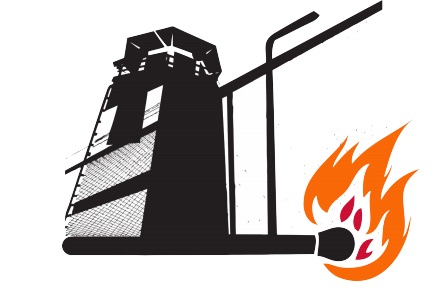
Graphic from the pamphlet for the National Prison Strike

Inmates at up to five Texas prisons pledged to refuse to leave their cells today. The strike’s organizers remain anonymous but have circulated fliers listing a series of grievances and demands, and a letter articulating the reasons for the strike. The Texas strikers’ demands range from the specific, such as a “good-time” credit toward sentence reduction and an end to $100 medical co-pays, to the systemic, namely a drastic downsizing of the state’s incarcerated population.

“Texas’s prisoners are the slaves of today, and that slavery affects our society economically, morally and politically,” reads the five-page letter announcing the strike. “Beginning on April 4, 2016, all inmates around Texas will stop all labor in order to get the attention from politicians and Texas’s community alike.”

The Texas Department of Criminal Justice, which oversees the state’s prisons, “is aware of the situation and is closely monitoring it,” spokesperson Robert Hurst wrote in a statement to The Intercept. He did not comment on the prisoners’ grievances and demands. Prisoner rights advocates said at least one prison — the French Robertson Unit in Abilene — was placed under lockdown today, but Hurst denied any prisons in Texas were on lockdown because of planned strikes.

The 13th Amendment to the United States Constitution bans “involuntary servitude” in addition to slavery, “except as a punishment for crime whereof the party shall have been duly convicted,” thus establishing the legal basis for what is today a $2 billion a year industry, according to the Prison Policy Initiative, a nonprofit research institute.

Most able-bodied prisoners at federal facilities are required to work, and at least 37 states permit contracting prisoners out to private companies, though those contracts account for only a small percentage of prison labor. “Ironically, those are the only prison labor programs where prisoners make more than a few cents an hour,” Judith Greene, a criminal justice policy analyst, told The Intercept.

Instead, a majority of prisoners work for the prisons themselves, making well below the minimum wage in some states, and as little as 17 cents per hour in privately run facilities. In Texas and a few other states, mostly in the South, prisoners are not paid at all, said Erica Gammill, director of the Prison Justice League, an organization that works with inmates in 109 Texas prisons.

“They get paid nothing, zero; it’s essentially forced labor,” she told The Intercept. “They rationalize not paying prison laborers by saying that money goes toward room and board, to offset the cost of incarcerating them.”

In Texas, prisoners have traditionally worked on farms, raising hogs and picking cotton, especially in East Texas, where many prisons occupy former plantations.

(Article continued in the right column)

(Article continued from the left column)

“If you’ve ever seen pictures of prisoners in Texas working in the fields, it looks like what it is,” Greene said. “It’s a plantation: The prisoners are all dressed in white, they got their backs bent over whatever crop they’re tending, the guards are on horseback with rifles.” In the facilities Greene visited, prisoners worked all day in the heat only to return to cells with no air conditioning. “The conditions are atrocious, and it’s about time the Texas prison administration had to take note.”

In 1963, in an effort to reduce the cost of running prisons, Texas began employing inmates to manufacture a wide array of products, including mattresses, shoes, soaps, detergents, and textiles, as well as the furniture used in many of the state’s official buildings. Because of labor laws restricting the sale of prisoner-made goods, Greene said, those products are usually sold to state and local government agencies.

Although they comprise nearly half the incarcerated population nationwide — about 870,000 as of 2014 — prison workers are not counted in official labor statistics; they get no disability compensation in case of injury, no social security benefits, and no overtime.

“They keep a high conviction rate at any cost,” reads the letter circulated by prisoners ahead of today’s strike, “all for the well-being of the multimillion-dollar Prison Industrial Complex.”

The Texas action is not an isolated one. Prisoners in nearby Alabama and Mississippi, and as far away as Oregon, have also been alerted to the Texas strike through an underground network of communication between prisons.

“Over the long term, we’ll probably see more work stoppages,” said Gammill. “In prison, you think it’d be difficult to spread information, but it actually spreads like wildfire.”

On April 1, a group of prisoners from Ohio, Alabama, Virginia, and Mississippi called for a “nationally coordinated prisoner work stoppage against prison slavery” to take place on September 9, the 45th anniversary of the Attica prison riot. “We will not only demand the end to prison slavery, we will end it ourselves by ceasing to be slaves,” that announcement reads. “They cannot run these facilities without us.”

Prison protests and strikes have seen a revival in recent years after a slowdown resulting from the increased use of solitary confinement to isolate politically active inmates. In 2010, thousands of inmates from at least six Georgia prisons, organizing through a network of contraband mobile phones, refused to leave their cells to work, demanding better living conditions and compensation for their labor. That action was followed by prison protests in Illinois, Virginia, North Carolina, and Washington. In 2013, California prisoners coordinated a hunger strike to protest the use of solitary confinement. On the first day of that protest, 30,000 prisoners across the state refused their meals.

Last year in Texas, nearly 3,000 detainees demanding better conditions seized and partially destroyed an immigration detention center.

In March, protests erupted at Holman Correctional Facility, a maximum security state prison in Alabama, where two riots broke out over four days. At least 100 prisoners gained control of part of the prison and stabbed a guard and the warden. Those protests were unplanned, but prisoners there had also been organizing coordinated actions that they say will go ahead as planned.

“We have to strain the economics of the criminal justice system, because if we don’t, we can’t force them to downsize,” an activist serving a life sentence at Holman told The Intercept. “Setting fires and stuff like that gets the attention of the media,” he said. “But I want us to organize something that’s not violent. If we refuse to offer free labor, it will force the institution to downsize.”

“Slavery has always been a legal institution,” he added. “And it never ended. It still exists today through the criminal justice system.”
2015: When Global Governments Trampled Human Rights in Name of National Security

…. HUMAN RIGHTS ….

An article by Andrea Germanos, senior editor and staff writer at Common Dreams. (reprinted according to principles of Creative Commons)

Governments worldwide in 2015 capitalized on supposed national security threats to trample over human rights. That’s Amnesty International’s assessment of global human rights in its latest report.

amnesty
Photo caption:
Protesters in London take part in a November 2015 action to protest a visit by Egypt’s president Abdel Fattah al-Sisi. (Photo:  Alisdare Hickson/flickr/cc)

“Your rights are in jeopardy: they are being treated with utter contempt by many governments around the world,” said Salil Shetty, Secretary General of Amnesty International.

Driving some of the government attacks on human rights are “misguided reactions… to national security threats,” including “the crushing of civil society, the right to privacy and the right to free speech; and outright attempts to make human rights dirty words, packaging them in opposition to national security, law and order and ‘national values.’ Governments have even broken their own laws in this way,” he continued.

“Millions of people are suffering enormously at the hands of states and armed groups, while governments are shamelessly painting the protection of human rights as a threat to security, law and order or national ‘values.'”

Looking at abuses “by the numbers,” the watchdog group found that:

• At least 122 countries tortured or otherwise ill-treated people;

• At least 30 or more countries illegally forced refugees to return to countries where they would be in danger;

• Over 60 million people were displaced from their homes;

• At least 113 countries arbitrarily restricted freedom of expression and the press; and

• At least 156 human rights defenders died in detention or were killed.

(Article continued in the right column)

Question(s) related to this article:

What is the state of human rights in the world today?

(Article continued from the left column)

In addition to rights and rights defenders being under attack, so “are the laws and the system that protect them,” Shetty said.

The new report covers a wide range of abuses, such as Ireland’s restrictions on and criminalization of abortion and Australia’s disproportionate jailing of Indigenous people and its denial of rights to asylum-seekers.

The United States and some of its allies fared poorly as well.
Saudi Arabia continued its crackdown on freedom of expression and association, locked up human rights defenders, and tortured prisoners. Women also faced discrimination by law and lacked protections from sexual and other violence.

Israel continued its “military blockade of Gaza and therefore collective punishment of the 1.8 million inhabitants there.”

The UK repealed its Human Rights Act and pushed forth surveillance laws. “The UK is setting a dangerous precedent to the world on human rights,” said Amnesty International UK Director Kate Allen.

And Egypt arrested thousands “in a ruthless crackdown in the name of national security.”

As for rights abuses in the U.S., the report states:

There was no accountability nor remedy for crimes under international law committed in the secret detention program operated by the CIA. Scores of detainees remained in indefinite military detention at the US naval base at Guantánamo Bay in Cuba, while military trial proceedings continued in a handful of cases. Concern about the use of isolation in state and federal prisons and the use of force in policing continued. Twenty-seven men and one woman were executed during the year.

“President Obama has often said the right thing but failed to turn his rhetoric into an agenda that makes human rights, in fact, a national priority,” said Margaret Huang, interim executive director of Amnesty International USA.

While numerous abuses are cataloged, Shetty stresses in the foreward that the report “cannot convey the full human misery of the topical crises of this last year, notably the refugee crisis—even now exacerbated in this northern winter. In such a situation, protecting and strengthening systems of human rights and civilian protection cannot be seen as optional.

“It is literally a matter of life and death.”

USA: We come to the gates of Hancock Drone Base today to install a memorial of Jerry Berrigan.

….. HUMAN RIGHTS …..

An article from warisacrime.org

Jerry Berrigan, who died on July 26, 2015 at the age of 95, was a husband, a father, a brother, a teacher and someone who – like his brothers Dan and Phil – dedicated his entire life to Jesus’ command to love one another. Jerry came to the base on a bi-weekly basis whenever he was able, in Jerry’s words, “to remind the base commander of our government’s pledge under the Fourth Geneva Convention of 1949, a treaty to safeguard non-combatant’s well-being in any warzone in which U.S. forces are engaged in combat.” And further, “to register horror and indignation at reports of bombing missions by drones in Afghanistan and Pakistan which resulted in the deaths of many innocent civilians; men, women and children.”

drone protest

As more and more evidence mounts regarding the illegality of U.S. drone policies, from the “Drone Papers” published by The Intercept, to the four drone pilots who have come forward to speak out about what this policy is doing, we bring Jerry’s image here to the gates to remember that this is where he would be, speaking out and putting his body on the line to say a clear “NO” to killing. Because Jerry Berrigan knew that it matters where we put our bodies.

In 2008 Jerry was asked by The Syracuse Post Standard if there was anything he would change in his life. Jerry replied, “I would have resisted more often and been arrested more often.” In our memorial today we use an image of Jerry from The Syracuse Post Standard where he is being arrested for opposing the U.S. invasion of Iraq.

As we are installing this Jerry Berrigan Memorial Drone Blockade, we also remember Mary Anne Grady Flores who is serving a six month sentence here in the Onondaga County jail because the courts in this county believe that the colonel at this highly armed base needs protection from citizens calling attention to the drone killings. We challenge the courts to apply the law as it was meant to be applied; to protect victims not victimizers.

Syracuse has a great history of men named Jerry and resistance to injustice. We call to mind “The Jerry Rescue” memorial that stands across the street from The Federal Court house where Syracusans in 1851 literally got in the way of the illegal and immoral Fugitive Slave law and the officials who tried take a man named Jerry back to enslavement in the South. They opened the prison gates for him to go to freedom. Our intent for this memorial today in honor of Jerry Berrigan, is to get in the way of the illegal and immoral use of killer drones. And to stand in solidarity with all those resisting other injustice – from Black Lives Matter to those putting their bodies to halt climate change.

Thank you Jerry Berrigan for your life and example. Your Spirit lives on!

In peace,

Beth Adams (Leverett, MA), Bev Rice (Manhattan), Bill Ofenloch (NYC), Brian Hynes (Bronx), Charley Bowman (Buffalo), Ed Kinane (Syracuse, NY), James Ricks (Ithaca), Joan Pleune (Brooklyn), Joan Wages (Roanoke, VA), Pete Perry (Syracuse, NY), Ray McGovern (Arlington, VA), Steve Baggarly (VA)

(Thank you to David Swanson for sending this to CPNN)

Question for this article

USA: Albuquerque March and Rally Against Hate! Sunday, Feb. 21 at 2pm at Albuquerque Civic Plaza

….. HUMAN RIGHTS …..

by Susan Schuurman

JOIN US TO DEMAND:
– Stop the hate! Stop the violence! We are all together!
– Let’s stand together with our Muslim and Arab American neighbors!
– Let’s stand together with immigrant workers and families!
– Let’s stand together with the Black community fighting for justice!
– Let’s stand together with refugee communities!
– Let’s stand together with women who only want access to reproductive healthcare!
– NO to racist, sexist and anti-LGBTQ violence! 
-Let’s stand together with Native Americans against bordertown violence and attacks on Native sovereignty! 
Defend those that are under attack!

albuquerque
To enlarge, click on photo

There are growing efforts to whip up hatred against people in our community. We can’t stand by while people like Donald Trump use their power and money to spread hatred against Muslims, Arabs, Mexicans, immigrants, refugees, LGBTQ people, women or anyone. Enflaming hatred, scapegoating and racist rhetoric have no place in our society. Sickening acts of violence against Mosques, women’s healthcare clinics, and ordinary people everywhere are on the rise. We are united against acts of violence, including inflammatory statements against any group.

This march of hatred cannot be unopposed. This is a dangerous moment and that’s why we all have to unite! Preying on people’s fears requires us to say that immigrants, Muslims, refugees and other assailed communities are not the problem. Espousing hatred and violence is the problem! We are the majority. An injury to one is an injury to all!

Join the February 21 mobilization to Unite Against Hate! Join together with your neighbors, families, workers and everyone to stand up to Trump and all forms of bigotry!

CALLED BY: ABQ UNITED FRONT AGAINST HATE
Organized and endorsed by Albuquerque Center for Peace and Justice, Islamic Center of New Mexico, Blessed Oscar Romero Catholic Community, ANSWER NM, Party for Socialism and Liberation, The Red Nation, SouthWest Organizing Project, New Mexico Faith Coalition for Immigrant Justice, El Centro de Igualdad y Derechos, United Voices for Refugee Rights, Friends of Sabeel ABQ, Coalition to Stop $30 Billion to Israel, Veterans for Peace ABQ, Stop the War Machine, Jewish Voice for Peace ABQ, Bernie Sanders at UNM, Encuentro, La Plazita Institute, Mujeres Colectiva, ABQJustice, Burque Media Productions, People’s Lapel Camera of Albuquerque, UNM SOAP (Students Organizing Actions for Peace), Rock Against Racism, St. Mary Magdalene ECC, SURG-NM (Showing Up for Racial Justice), The Rev. Angela Herrera, minister of First Unitarian Church, Pastor Janet Norden, of University Heights United Methodist Church and First United Methodist Church, Bernalillo County La Raza Unida, Los Jardines Institute, Santa Feans for Justice in Palestine, Progressive Democrats of America Central New Mexico (PDA-CNM), and Theater Grottesco.

Call 505-268-9557 if your organization or group would like to endorse and to find out more info about how to participate. Everyone who endorses call to action is welcome to help plan this event. We meet weekly on Thursdays at 4pm at the Peace Center.

abqpeaceandjusticecenter@gmail.com
abqpeaceandjustice.org
http://www.facebook.com/pages/Albuquerque-Center-for-Peace-and-Justice/163970810300920

Question for this article

UC System [California] Divests From Private Prisons Under Pressure From Students

….. HUMAN RIGHTS …..

An article from Care2 (reproduced as a non-commercial service)

On December 18, the University of California system quietly dropped a big bomb: It will be selling off its $30 million worth of investments in private prison corporations by the 31st of the month, thanks to considerable pressure from student groups. The move is a huge step for organizations concerned about inequalities in the justice system and the conditions at for-profit prisons, which definitely generate funds for shareholders, but don’t provide adequate living conditions for their detainees. The Afrikan Black Coalition is largely responsible for the divestment, as the group was the one to put forward a resolution demanding the sale, and representatives of the ABC met with UC officials to discuss disposing of the investments in an orderly fashion — typically divestment begins quietly before official announcements, to avoid creating instability in stock prices.

california
Photo credit: Richard Masoner

The University of California system has opted to divest holdings in controversial or harmful corporations before, as for example in 2006, when it dropped firms with investments in South Sudan, and earlier this year, when it pulled out of $200 million in oil and tar sands investments. As an economic tool, divestment sends an extremely powerful message, especially when it comes from huge institutional investors like statewide university systems. Mass sell-offs like this one can be used as grounds for other organizers to pressure different institutions to make similar moves, and they also set a model for other institutional investors considering ethical financial practices. In this instance, Columbia University set the bar by dropping for-profit prison investments over the summer [See CPNN article of June 27 this year]. Choosing to be selective not just about stock performance but social impacts is also part of the UC’s investment model.

(Article continued in right column)

Question for this article

Question: Divestment, is it an effective tool to combat the violation of human rights?

(Article continued from left column)

Dropping these investments will be a blip in the system’s massive portfolio of stock, but advocates say it’s the right thing to do. The prison system is plagued with racial and economic inequalities that contribute to a disproportionate number of incarcerated people of color and low-income people, with considerable overlap between these two groups. Between issues like racial profiling, fewer resources for judicial defense, and prejudices within the legal system, people are unjustly incarcerated simply for the crime of not being white. For-profit companies like Corrections Corporation of America have taken advantage of the growing privatization of the prison industry to generate $1.7 billion in revenue in 2011 alone. Geo Group, Inc. also generates substantial profits for shareholders annually through its networks of jails, prisons and immigration detention facilities. UC will be selling off all its shares in both.

These companies function not as public enterprises, but as corporations with the goal of cutting costs wherever possible. Many have substandard physical plants, insufficient staff, inadequate prison health care and food, high rates of physical and sexual assault, and other systemic problems. Even “three hots and a cot” isn’t guaranteed behind their walls, and in 2012, the Supreme Court actually limited the ability to sue private prisons for civil rights violations. This leaves prisoners with even fewer resources to advocate for their rights and safety behind bars. While groups like the ACLU advocate and litigate for prisoners stuck on the inside, one of the best ways to strike at the heart of the private prison system is to make it less profitable with steps like dumping shares and making it a toxic investment for potential institutional investors.

This move is a strong indicator that the UC system remains committed to regularly evaluating investments and determining whether it wants to continue sinking funds into endeavors that violate ethical guidelines. It also illustrates that organized and highly active student groups can make a big difference not just on campus, but in the world in general. With protest movements like Black Lives Matter getting more active and noisy in recent years, it’s clear that the next generation of youth is growing up with a mission to make the world a better place, and the courage to lobby those most in a position to do so.

[Thank you to Janet Hudgins, the CPNN reporter for this article.]

15 Indigenous Rights Victories That You Didn’t Hear About in 2015

….. HUMAN RIGHTS …..

An article by John Ahni Schertow, IC Magazine, a publication of the Center for World Indigenous Studies

Good news. Sometimes, it comes in the form of a cancelled hydro dam that spares 20,000 people from the burden of displacement. Other times, it takes the shape of a simple court admission that Indigenous Peoples do actually make the best conservationists.

indigenous
Mapuche “Not Guilty” (Photo: Ruben Curricoy Nañko)

In this day in age such stories are incredibly rare. They are even more difficult to find amidst the constant deluge of media that doesn’t matter. That makes them all the more valuable.

Indigenous rights victories give us all pause to celebrate, to reflect and to rejuvenate our own quests for justice.

May we encounter 10,000 more victories just like these in 2016!

1. JUSTICE FOR THE OGON

In a landmark decision last week, the Dutch Court of Appeals ruled that four Ogoni farmers from Nigeria can take their case against Shell to a judge in the Netherlands. Alali Efanga, one of the Ogoni farmers who, along with Friends of the Earth Netherlands, brought the case against Shell, said the ruling “offers hope that Shell will finally begin to restore the soil around my village so that I will once again be able to take up farming and fishing on my own land.”
The ruling by the Court of Appeals overturns a 2013 decision in favor of Shell, who, in another big hit to the multinational oil giant, agreed to clean up two massive oil spills in the Ogoni community of Bodo following a three-year legal battle in London.

2. WAMPIS AUTONOMY

The Wampis nation, who made international headlines in 2009 when they stood up to the government of Peru alongside their brethren the Awajun, took an unprecedented step foward by establishing the first Autonomous Indigenous Government in Peru’s history. Spanning a 1.3 million hectare territory – a region the size of the State of Connecticut – the newly created democratically-elected government brings together 100 Wampis communities representing some 10,613 people.

Speaking of the challenges that the Wampis Nation will now face, the newly elected Pamuk (first President) Wrays Pérez Ramirez, told Intercontinental Cry by phone: “We know that it will be difficult to get the National Government to support us and recognize our territory. It will seem unacceptable to the Government to have to consult us regarding any activity that could affect our territory. We know that it is going to be hard work but we are prepared. We are not going to stay silent not least when we have legal backing from national and international legislation regarding our right to self-determination and free, prior and informed consent. It will be difficult, but not impossible.”

3. PROTECTED LANDS

After five years of legal contests and what felt like a lifetime of uncertainty, Colombia’s Constitutional Court confirmed that Yaigojé Apaporis, an indigenous resguardo (a legally recognized, collectively owned territory), has legitimate status as a national park.

Comprising a million hectares of the Northwestern Colombian Amazon, the pristine forest region of Yaigojé Apaporis is home to numerous endangered species including the giant anteater, jaguar, manatee and pink river dolphin. It is also home to the Makuna, Tanimuka, Letuama, Barasano, Cabiyari, Yahuna and Yujup-Maku Indigenous Peoples, who share a common cosmological system and rich shamanistic traditions. Together these populations act as Yaigojé’s guardians, a role that was strengthened in 1988 when they successfully established the Yaigojé Apaporis resguardo over their traditional territory.

In the late 2000s Canadian mining multinational Cosigo Resources started trying to exploit a legal loophole in Colombia that would let them mine for gold inside the resguardo. The Constitutional Court’s decision brought a welcomed end to that dishonest effort.

4. INDIGENOUS PASSPORTS

On October 12, 2015, the day of Indigenous Resistance, Kichwa lawyer Carlos Pérez Guartambel entered Ecuador with a Kichwa passport, sending out a clear reminder to the international community that indigenous nations are not simply “bands” or informal groups whose rights stem from the good graces of UN member states, but actual nations.

Ecuador’s immigration authorities did not know what to do. After 30 minutes of hesitation, they decided to accept the Kichwa passport as a form of ID, stamped Guartambel’s immigration card (not the passport) and allowed him to enter Ecuador. Within a few hours, however, Ecuadoran state officials reversed themselves and denied the validity of the Kichwa passport. This can be seen in a video released by the Department of Immigration in the Ministry of the Interior. Minister Serrano ridiculed the Kichwa passport as a “fantasy” on Twitter, posting a montage of the Kichwa passport with the portrait of a cartoon character.

Later that afternoon, the Council of Government of ECUARUNARI, an organization founded in 1972 by 18 Indigenous Peoples and representing 14 different nationalities, met in Quito to distribute over 300 passports, including one to Salvador Quishpe, the Governor of the Amazon Province of Morona-Chinchipe. During the passport ceremony, the Kichwa leadership insisted that Indigenous passports were as valid as ancestral medicine, inter-cultural education, and Indigenous justice–all recognized in Ecuador.

5. “NOT GUILTY”

After more than three years of preparation, an Argentinian court vindicated three Mapuche land rights defenders in a first-of-its kind inter-cultural trial.

The case began in the Mapuche community of Winkel Newen on December 28, 2012, when Officer of the Court Veronia Pelayes, representatives of the Apache Oil Company and a contingent of police arrived with an eviction notification. The community defended itself by throwing stones, one of which hit and injured Pelayes and damaged a vehicle. It was this incident that lead to an accusation of “attempted homicide” against Relmu Ñamku and charges of “serious damages” for Mauricio Rain and Martin Velasquez Maliqueo. In the case of Ñamku, the public prosecutor called for a 15-year prison sentence — disproportionate given that eight years is the norm for manslaughter cases.

“The public prosecutor and oil companies in Zapala had a clear political intention with this trial, for it to be an ‘ejemplary punishment’ to intimidate and discipline other indigenous communities who defend their rights against the advance of oil exploitation in their territories,” said writer Maristella Svampa and law professor Roberto Gargarella.

Their attempt failed and instead this historic trial marks an important step in curbing attempts to criminalize indigenous leaders defending their territory.

6. WHAT’S IN A NAME?

The highest mountain in the United States recovered its original indigenous name, Mount Denali, for all official purposes, after a decades-long dispute. The name “Denali” has its origin in the language of the Koyukon people, who inhabit the area north of the summit. In the Koyukon language, “Denali” means “the tall one.” The 6,168-metre high mountain was officially known until now at federal level as Mount McKinley, in honor of an American president assassinated in 1901.

It is hoped that the U.S. government will restore the indigenous names of other monuments, parks and places including Devil’s Tower, the Yosemite National Park, the Grand Canyon, Mount St. Helens, and Mount Rainier to name a few.

7. BIOCULTURAL RIGHTS

Indigenous custodians from Benin, Uganda, Kenya and Ethiopia issued a challenge for the African Commission on Human and Peoples’ Rights to protect sacred sites, governance systems and custodians in a ‘decisive policy and legislative response’ to the new scramble for Africa and its impact on Indigenous territories.

(Article continued in right column)

Question for this article

Indigenous peoples, Are they the true guardians of nature?

(Article continued from left column)

In their statement, the custodians describe the centrality of sacred sites to their existence, writing that “Sacred natural sites are where we come from, the heart of life. They are our roots and our inspiration. We cannot live without our sacred natural sites, and we are responsible for protecting them.”

“We are deeply concerned about our Earth because she is suffering from increasing destruction despite all the discussions, international meetings, facts and figures and warning signs from Earth… the future of our children and the children of all the species of Earth are threatened. When this last generation of elders dies, we will lose the memory of how to live respectfully on the planet, if we do not learn from them now,” say the custodians.

8. TWO CENTURIES IN THE MAKING

Nearly 300 Poqomchi’ Maya families that make up the Primavera communities in the Guatemalan department of Alta Verapaz won a significant victory after negotiating a settlement with the Guatemalan Minister of the Interior, the Secretary of Agrarian Affairs, and representatives from Maderas Filips Dias/Eco-Tierra, a logging business that was seeking to harvest the land’s forests.

“This is a major victory, especially under these conditions of corruption,” said Rony Morales from the Union of Veracruz Campesino Organizations (UVOC), which worked closely with the communities to obtain this victory. “The fact [that] a community can finally win their land at no cost to the community is very important. For the other indigenous communities in San Cristobal Verapaz and the valley [of] Polochic that are in this same process, they have found hope in this victory.”

The Maya families struggled for over two centuries for the rights to their land, which was privately held for years as the Finca Primavera. They faced intimidation, nearly 25 assassinations, and over 50 arrest orders in response to their claims on the land.

9. BYE BYE HERAKLES

Herakles Farms, a New York based investment firm and the parent company of SG Sustainable Oils Cameroon (SGSOC) formally abandoned its plan to establish oil palm plantations astride the Iconic Korup National Park and Rumpi Hills Forest Reserve in Cameroon.

Supported by an “eco-friendly” non-profit owned by Bruce Wrobel, former Managing Director of Sithe Global and Founder of Herakles Capital Corporation, the oil palm project would have brought disastrous pollution resulting from pesticides, fertilizers and herbicides and sewage disposal; adversely affecting the health of animals in the Korup Park that depend on the water.

The project would have also degraded the livelihoods of the Baka, Bakola, Bedzang and Bagyeli –so-called ‘Pygmy’ peoples–who are are heavily dependent on the region for subsistence.

10. THE LAND IS OURS

After 18 years of continuous struggle, the Enxet Sur Indigenous community of Yexwase Yet finally received legal title to 10,030 hectares of their ancestral land in the Chaco region of Paraguay.

The hard-fought victory was tested just a few weeks after the President of Paraguay handed the title over to the community. A retired Paraguayan football star and his family attempted to move on to part of the 10,030 hectares claiming he had recently purchased it to build a cattle ranch estate.

“We called the police and the State prosecutor immediately and they told the footballer to leave, that he had no right to be there,“ Gabriel Fernandez, one of the leaders of Yexwase Yet, told Intercontinental Cry. “For once it was someone else being evicted. Now the land is really ours.”

11. NUCLEAR WASTE FREE

After a four-year, hard-fought campaign to keep the province of Saskatchewan free of nuclear waste, last Spring, the Nuclear Waste Management Organization (NWMO) announced that Creighton was no longer a contender in the organization’s siting process. It was the last of three Saskatchewan communities in the running to host a deep geological repository for the long term storage of spent fuel bundles from Canada’s nuclear reactors in Ontario, Québec and New Brunswick.

“This announcement is the culmination of four years of research, sacrifice, networking and hard work by a group of dedicated people with one goal: to keep nuclear waste out of Saskatchewan,” said Candyce Paul, a founding member of the Committee for Future Generations.

“The powerful Nuclear Waste Management Organization with all their money and all their experts could not beat back the duty we have to protect our future generations,” said Paul.

12. MAUNA KEA

The Hawaii state Supreme Court invalidated the permit allowing construction of the hugely controversial Thirty Meter Telescope atop the sacred mountain known as Mauna Kea.
The court said the state Board of Land and Natural Resources erred when it issued the permit before a contested case hearing was held for the $1.4 billion project.

The struggle to defend Mauna Kea, however, doesn’t end there. Officials behind the Thirty Metre Telescope (TMT) have said that they are now considering their next steps. Indigenous activists and allies, meanwhile, patiently wait for them to make their move.

13. PULLING ANCHOR

Cermaq, the Norwegian-based salmon farming company (that was recently purchased by the Japanese conglomerate Mitsubishi) pulled anchor on a new salmon farm inside Ahousaht territory north of Tofino in British Columbia.

Soon after dropping anchor on the salmon farm a group of five Ahousaht men stepped forward to tell Cermaq to get lost, vowing that they would risk arrest rather than see another salmon farm in their territory.

Ever since salmon farms started appearing on Ahousaht lands in 1999, the Ahousaht have observed an alarming decline in shellfish, salmon and herring populations. Aware of this, the group of activists, who came to be known as the Yaakswiis warriors, stated that the Cermaq salmon farm was not legal because the Ahousaht people had not been consulted, nor did they provide their consent.

14. MONSANTO LOSES AGAIN

Following a monumental win against the controversial ‘Monsanto law’ in Guatemala last year, the notorious biotech firm took another big hit after Mexico’s Supreme Court suspended a permit to grow genetically modified soybeans across 250,000 hectares on the Yucatán peninsula.

The judgement stemmed from a constitutional law in Mexico that requires the consideration of indigenous communities affected by development projects. According to the Supreme Court, Monsanto failed to consult the region’s famous Maya beekeepers who filed the case against Monsanto. The beekeepers warned early on that Monsanto’s plan would require the use of “glyphosate, a herbicide classified as probably carcinogenic.” Given that bees are extremely sensitive to their environment, the beekeepers explained that Monsanto’s project jeopardize their communities, their livelihoods and the environment.

The judge commented in the ruling that co-existence between honey production and GM soybeans is simply not possible.

15. BARAM DAM SHELVED

After maintaining a blockade for two straight years, Indigenous Peoples in Sarawak, Malaysia can finally breathe a sigh of relief. The Sarawak government decided to shelve the controversial Baram hydroelectric dam.

Commenting on the surprising move, Sarawak’s Chief Minister Tan Sri Adenan Satem stated that they decided to put the dam on hold out of respect for the views of the affected communities, adding: “If you don’t want the dam, fine. We will respect your decision.”

Had the project gone ahead, it would have flooded 20,000 Indigenous men, women and children from their homes.

In New York, Filipina Trafficking Survivors Launch a Co-op—And They Own Their Jobs

…. HUMAN RIGHTS ….

An article by Abigail Savitch-Lew, Yes! Magazine (abbreviated and reprinted according to provisions of Creative Commons)

In 2013, Judith Daluz was a nanny making $650 a week, waiting for her four children to arrive from the Philippines. With her hard-earned savings, she had started paying $1,500 a month for a one-bedroom apartment in the New York borough of Queens that she hoped would be big enough for all of them. She hadn’t seen her children in years. In 2006, Daluz had been trafficked to the United States as a domestic worker. Now, as a free, documented worker, she was able to bring her children to live with her—but worried about how she would support them.

Filipina
About half of the worker-owners of the Damayan Cleaning Cooperative are trafficking survivors. (Judith Daluz is front row, on right). Photo courtesy of Damayan Cleaning Cooperative.

Organizers at the Damayan Migrant Workers Association, a member-led organization helping Filipino workers understand and protect their rights, realized that many of its members had similar concerns. Established in 2002, the grassroots organization, led by Filipino survivors of human trafficking and other low-wage workers, has helped dozens escape abusive conditions, recover stolen wages, and pursue T visas, which allow trafficking survivors to remain in the United States. But many of Damayan’s members, once freed from forced labor, found themselves in another troubling, if less shocking situation: Even with better working conditions, they often had little job security and earned a pittance.

In June 2014, members of Damayan’s board heard that New York’s city council had set aside $1.2 million to fund a Worker Cooperative Business Development Initiative. The city directed money to 11 organizations with experience incubating cooperatives in low-income communities of color, allowing them to expand their reach to new entrepreneurs. It was the largest investment in cooperatives by any city government in U.S. history. In the last year, the initiative has helped facilitate the launch of 21 new cooperatives, provided guidance for 19 new worker-owned businesses that will open in 2016, and assisted 26 existing cooperatives. By the end of 2016, there will be 66 new worker-owned cooperatives in New York City. One of them is the new Damayan Cleaning Cooperative.
With support from an organization participating in the city’s initiative, Damayan launched its worker-owned cooperative in September—a natural next step from their anti-trafficking and anti-exploitation work. Damayan’s members envisioned an enterprise that both protects their rights as workers and is guided not by profit but by their needs and those of the community.

“They’ve already played the … capitalist global economy game. And that’s what they got,” said Tiffany Williams, director of the Break the Chain anti-trafficking campaign at the Institute for Policy Studies. “Why not create something that will be more egalitarian, more restorative?”

In 2006, Daluz left the Philippines to work as a housekeeper for a foreign diplomat living in an apartment on New York’s Upper West Side. Her employer promised her $1,800 a month—a salary that would help pay for one son’s college degree and another’s epilepsy medication. When she was about to depart, she learned he had decreased her pay to $500 a month. She boarded the plane anyway, thinking $500 was better than nothing at all.

Once she arrived, she was forbidden to speak to anyone outside the diplomat’s family, forced to work seven days a week, 18 hours a day, and subjected to abuse by the diplomat’s daughter. She washed dishes, scrubbed the family’s sheets and clothes in the bathroom tub, cleaned all four bedrooms and every strip of the window blinds, and took care of the daughter. The family kept Daluz’s passport and threatened to deport her if she reported mistreatment.

Because diplomats have immunity to civil and criminal prosecution, their employees are particularly vulnerable to abuse. In 2008, just after Daluz left her employers, the U.S. Government Accountability Office identified 42 cases of alleged abuse of diplomats’ household workers. The U.S. Justice Department is often hesitant to bring charges, Williams said, though there are rare exceptions. (In 2012, the Department to Justice helped a Damayan member secure more than $24,000 in back wages from the Ambassador for Mauritius.)

Even without the factor of diplomatic immunity, domestic workers are at risk for exploitation. Thanks to exemptions written into midcentury labor laws that some scholars believe were designed to exclude African Americans, domestic labor is one of the most poorly protected occupations in the United States. Household workers are still not offered the same federal protections as other workers for safety, medical leave, and sick days. In many states, home-care workers for the disabled and elderly were exempted from minimum wage and overtime laws until this year. Moreover, the nature of the work (including living with employers—often unofficially, behind closed doors, and with limited exposure to other people) makes workers susceptible to wage theft, abuse, and assault. Sixteen percent of the 377 labor trafficking cases reported this year by the National Human Trafficking Resource Center involved domestic workers.

(Article continued on right side of page.)

(Article continued from left side of page.)

Labor exploitation boosts profits in economic sectors beyond domestic work. Other members of Damayan came to the United States through nonagricultural guest worker visas like H-2, a program the Southern Poverty Law Center calls a “modern day system of indentured servitude”; and J-1, a source of cheap labor for hotels, food chains, and amusement parks. Many sectors—from hospitality to agriculture—benefit from the labor of migrants who have few protections, even when not technically trafficked, according to Williams. “[They are] just as vulnerable, are just as much suffering,” she said. . .

Recognizing a growing need for better work opportunities, Damayan’s members began seeking new solutions. They found an organization with an innovative strategy that was helping to empower the residents of the low-income Latino and Chinese neighborhood of Sunset Park, Brooklyn. 

Since 2006, the Center for Family Life, a program of the SCO Family of Services, a social services organization based in Sunset Park, has supported the growth of eight worker-owned cooperatives, including Si Se Puede! Women’s Cooperative, We Can Do It! Inc., and a child-care service called Beyond Care. The initiative started when women in one of the center’s English language classes reflected on their lack of access to the job opportunities provided through the center’s employment program. This inspired the center to research the Oakland-based organization Prospera (formerly WAGES), which has helped Latina women build cooperatives since the mid-1990s. The Center for Family Life and its members grew excited about the opportunities this alternative model could bring to the impoverished immigrant community of Sunset Park.

“In contrast to typical hierarchical and profit-driven businesses that really drive the money back to those with access and wealth, co-ops really place both the group of workers and the community at the center,” said Rachel Isreeli, the Center for Family Life’s worker cooperative developer. A traditional business might seek to maximize profits by paying less, requiring workers to use subpar equipment, or using so-called “flexible scheduling” to require shifts only when demand is high. In contrast, cooperative worker-owners are their own bosses, following standards set according to their own priorities.

The model was also attractive to Damayan for another reason: Participation in cooperative development could allow worker-owners to cultivate new leadership and social skills. Immigrants could build self-esteem, applying old skills many had been unable to use since arriving in the United States. And cooperatives could provide flexibility to worker-owners, who could speak their own language, control their schedules to accommodate child care, and build business practices according to their own values. For many of the women who brought experience in home care, nannying, or housecleaning, cooperatives also provided a path to less isolating, more empowered domestic work, creating a forum for workers to share information about bad clients. . .

Since its official launch on September 27, 2015, Damayan Cleaning Cooperative has acquired the contracts for The Nature Conservancy and the Brooklyn Community Foundation, which canceled an existing, cheaper contract in order to support Damayan’s business. 

“Your mission and your values [should] really reflect how you operate as an organization,” said Brooklyn Community Foundation Executive Director Cecilia Clarke, who sees her partnership with Damayan as an opportunity to bring “opportunities to those with least access”—including the nearly 40 percent of Brooklynites who are foreign-born. 

The cooperative hopes to gather enough contracts to allow each member to work at least 20–40 hours a week. In the long term, the members hope they can provide employment for other people in the community, including those who were initially interested in the enterprise but couldn’t make the time commitment. Daluz also thinks it might be interesting to expand the cooperative beyond office cleaning.

Perhaps most importantly for the individual workers, the Damayan Cleaning Cooperative adopted a wage requirement of $15 an hour, ensuring that all future contracts will give members as decent a livelihood as possible. (As of December 31, the statewide minimum wage will be $9 an hour). Though Daluz currently makes $16 an hour, she hopes she will one day be able to work full time for the cooperative, then take on additional work for “extra money.” Even with a higher wage, caring for four kids in New York City is not cheap. . .

“You feel free—you feel this is your business,” Daluz says. 

She speaks in metaphors and uses her hands to depict a plant that grows, then wilts with death. “This is a plant nearly grown up,” she says. “At the end it’s going to go away.” It’s a symbol, she explains, for the transience of human life, and therefore, the necessity of devoting one’s limited time to others.

“We’re not living forever. You make life easy, happy, [then others] are going to walk through your life in a nice way,” she says. “We can help other people in our community, people doing what we did before … slavery.”

* * *

Note: Abigail Savitch-Lew wrote this article for YES! Magazine. Abigail is a reporter based in Brooklyn. Her work has appeared in City Limits, Dissent Magazine, Jacobin, and The Nation.

Thank you to Janet Hudgins, the CPNN reporter for this article.

Reconciling Canada: Hard truths, big opportunity

…. HUMAN RIGHTS ….

An article by Ry Moran, Director of the National Centre for Truth and Reconciliation, published in rabble.ca

Yesterday [December 15] the Commissioners of the Truth and Reconciliation released their final report. Six years. Seven volumes. Thousands of pages.

Tens of thousands of tears.

canada

The materials contained within the reports will resonate for years to come but it will be up to us, collectively as Canadians, to determine whether the Calls to Action are implemented; whether the truth is fully acknowledged; whether reconciliation is achieved.

Through the work of the Commission I have witnessed thousands, sometimes tens of thousands, join together in collective actions of reconciliation and with the brave voices of Survivors leading the way, I have seen things change, both at home and abroad.

Last week I had the opportunity to visit the Organization of American States (OAS) located in Washington D.C.

I was part of a multi-person panel that included members of the Royal Winnipeg Ballet, former MP and well-known film producer Tina Keeper and Canada’s ambassador to the OAS. Two elders from Manitoba gave meaningful words of prayer and traditional perspective to open the day. Two dancers from the Royal Winnipeg Ballet performed an eight-minute version of the Going Home Star ballet which yet again left me moved and in awe of the power of the arts to convey emotion, truth and beauty all at once.

For me, the invitation was a call for deep reflection. What would I say to an international audience about this history we are trying to come to terms with?

For the past six years, much of my own work has focused on documenting Canada at its worst. The work of statement gathering and document collection for the Truth and Reconciliation Commission placed me in front of thousands of survivors — most of whom recounted terrible stories of abuse, neglect, pain and suffering. The documentary history we collected revealed long-standing knowledge that the residential school system was broken, mismanaged, misguided and deeply unethical.

Yet the residential school system endured for over 160 years.

We, as a country, are just now starting to come to terms with the sobering realization that the systematic destruction of indigenous cultures, languages, family structures, lands and ceremonies amounted to cultural genocide.

(Article continued in right column)


Question related to this article:

Truth Commissions, Do they improve human rights?

(Article continued from left column)

The cold hard truth is that Canada has failed indigenous peoples miserably.

Instead of protecting Indigenous rights, for many years our country eroded, attacked and beat those very rights out of Indigenous peoples. My own nation — the Metis nation — had guns turned against it when they sought to protect their way of life. Other nations have suffered the same. And we need remember that the attack on indigenous peoples through the residential schools attacked the most sacred of all bonds that exists in this world — that between parent and child.

What was I to say to an international audience with these historical realities of genocide and mass human rights abuse so deeply enmeshed in who we are as a nation?

I said that I remained proud to be a Canadian.

I remain proud to be a Canadian not because of who we were, but because I see us growing and embracing the calls for reconciliation that are now ringing out across the country.

Through the leadership of visionaries like Phil Fontaine, Paul Martin and Frank Iacobucci, massive achievements such as the Indian Residential Schools Settlement Agreement were made possible. The TRC Commissioners have brought us further down the path and additional truths will emerge from the critically important inquiry into missing and murdered Indigenous women and girls.

Yesterday we heard a tearful prime minister state that Survivors of the schools would never be forgotten and that a total renewal of the relationship between Canada and Indigenous peoples is needed.

Through words like these and the powerful leadership of the Truth and Reconciliation Commission, I sincerely believe we are reaching a tipping point where we as a nation are really beginning to take that long hard look in the mirror with new eyes.

Across the country, educators are rallying to the cry to incorporate a more accurate and fuller picture of the contributions of indigenous peoples in Canadian history. Universities are embracing indigenous achievement and inclusion, the courts are recognizing Indigenous rights time after time, and we now have a government actively listening to Indigenous peoples. We are transforming reconciliation from the leadership of a few to the collective will of the many.

Our nation’s treatment of Indigenous peoples should not and can not be a source of pride for us as a country. We need to address this and the work ahead of us is great.

But change is possible. We can change, we are changing, and I am very hopeful that this momentum we have collectively generated will continue.

I am excited about the future that lies ahead of us and I am proud to be part of this country that is embracing this cry for change and reconciliation.

(Thank you to Janet Hudgins, the CPNN reporter for this article.)

Nearly 100 Home-based Workers from 24 Countries Gather in Delhi to Adopt Historic Delhi Declaration on Workers’ Rights

…. HUMAN RIGHTS ….

An article from WIEGO, Women in Informal Employment Globalizing and Organizing

On February 8th and 9th, 2015, nearly 100 home-based worker representatives and supporters from 24 countries took part in a first-of-its kind global meeting in New Delhi, India, to draft and adopt the Delhi Declaration of Home-based Workers. The group also devised a five-year Action Plan to improve conditions for millions of home-based workers around the globe.

wiego

The two-day event was organized by Women in Informal Employment Globalizing and Organizing (WIEGO) and HomeNet South Asia (HNSA) to provide a platform for home-based workers, who are primarily economically and socially disadvantaged women, to build solidarity, share experiences and learnings and move toward unified action with the Declaration and five-year Plan.

Supported by WIEGO and HomeNet South Asia, participants worked collaboratively to formulate the Delhi Declaration and adopted it in the presence of honourable guests, Ms. Roberta Clarke, Regional Director, UN Women, Asia Pacific, and Ms. Devaki Jain, a well-known development economist.

“The home-based worker movement started 20 years ago,” says Chris Bonner, Director, Organization & Representation Program, WIEGO. “It’s been a difficult and slow process, but today’s achievements are really significant.”

The Delhi Declaration of Home-based Workers declares a commitment to supporting, building and strengthening related organizations and calls for the following key points to improve the lives of home-based workers:

Recognition of home-based workers as workers and as women who contribute significantly to improving their family’s income security and to the local and national economies;

Formulation and implementation of social protection and labour laws to live free from discrimination, poverty and depravation;

Systematic collection of data on home-based workers;

Recognition of rights to freedom of association and collective bargaining;

Building better and inclusive markets;

Formulation of effective local and national policies on home-based workers;

Extending social protection schemes and interventions to home-based workers;

Provision of essential urban infrastructure services to home-based workers;

Ratification of the International Labour Organization Home Work Convention, 1996 (no. 177).

(Article continued on right side of page.)

(Article continued from left side of page.)

The 60 organizations present also devised a five-year action plan to ensure implementation of the Declaration in the regions present, including Latin America, Africa, Eastern Europe, South Asia and Southeast Asia.

“I celebrate with you down a common road of equality and justice for all,” said Clarke. “We will stand with you and strengthen partnerships. We will stand with you in advocacy.”

About HomeNet South Asia

HNSA is the regional network of organizations of home-based workers. It currently has a presence in eight countries of South Asia. It works towards building regional solidarity among home-based workers, especially women workers, and empowering them to lead a life of dignity, free of poverty, by obtaining decent work and social protection, within a rights based framework.

See http://www.homenetsouthasia.net

About Women in Informal Employment Globalizing and Organizing

WIEGO is a global action-research-policy network that seeks to improve the status of the working poor, especially women, in the informal economy: through stronger organizations, better data and research, and fairer policies and regulations. Visit http://www.wiego.org

For more information or to interview organizers, home-based workers or researchers, please contact:

Shalini Sinha, Home-based Worker Sector Specialist, WIEGO, at +91-9810111368 or shalini.sinha(at)wiego(dot)org

Firoza Mehrotra, Director Programmes, HomeNet South Asia, at +91-9958323674 or mehrotrafiroza7(at)gmail(dot)com

USA: Our Economy Is Not Working: Joseph Stiglitz on Widening Income Inequality & the Fight for $15

…. HUMAN RIGHTS ….

An article and video by Amy Goodman, Democracy Now (reprinted according to provisions of Creative Commons)

The fight over income inequality gained national attention when fast-food workers walked off the job in hundreds of cities across the country on Tuesday demanding a $15-an-hour minimum wage and union rights. Some “Fight for $15” protesters rallied outside the Republican presidential debate in Milwaukee. During the debate, billionaire Donald Trump and other Republican contenders rejected calls to increase the minimum wage. We speak to Nobel Prize-winning economist Joseph Stiglitz, author of the new book, “Rewriting the Rules of the American Economy: An Agenda for Growth and Shared Prosperity.” “We’re saying something is wrong with the way our economy is working,” says Stiglitz. “The fact that at the bottom, minimum wage is as low as it was 45 years ago, a half-century ago, says something. … It’s not a living wage.”

stiglitz
Video of Stieglitz interview

TRANSCRIPT
This is a rush transcript. Copy may not be in its final form.
AMY GOODMAN: We turn right now to Joe Stiglitz, to the Nobel Prize-winning economist.

NERMEEN SHAIKH: The fight over income inequality gained national attention when fast-food workers walked off the job in hundreds of cities across the country on Tuesday demanding a $15-an-hour minimum wage and union rights. Some “Fight for 15” protesters rallied outside the Republican presidential debate in Milwaukee. During the debate, billionaire Donald Trump and other Republican contenders rejected calls to increase the minimum wage.

DONALD TRUMP: Taxes too high, wages too high, we’re not going to be able to compete against the world. I hate to say it, but we have to leave it the way it is. People have to go out, they have to work really hard, and they have to get into that upper stratum. But we cannot do this if we are going to compete with the rest of the world. We just can’t do it.

AMY GOODMAN: We end today with Part 2 of my interview with the Nobel Prize-winning economist Joe Stiglitz and his plan to address income inequality. He has written a new book called Rewriting the Rules of the American Economy: An Agenda for Growth and Shared Prosperity. I asked him what an agenda for growth and shared prosperity would look like.

(Article continued on right side of page.)

(Article continued from left side of page.)

JOSEPH STIGLITZ: Well, it is about rewriting the rules in a fairly comprehensive way. I mean, the basic—

AMY GOODMAN: Who writes them?

JOSEPH STIGLITZ: Well, that has to be done by Congress, and it has to be with a lot of popular support. And in a way, we’re beginning to do that. You know, the Fight for 15 movement, raising the minimum wage, that’s one of the rules. But one of our points is that we need a more comprehensive agenda than just raising the minimum wage, and that if we make—and the two words there, for “growth” and “shared prosperity,” so our view is that the only sustainable prosperity is shared prosperity and that one of the problems is that the way the rules have been rewritten since the beginning of Reagan has been to actually slow the American economy.

And let me give you one example. When you have corporations having a very shortsighted view, paying their CEOs such outrageous monies with less money spent on investment, of course you’re not going to make long-term investments that are going to result in long-term economic growth. And at the same time, there’s going to be less money to pay for ordinary workers. And paying that low wages to ordinary workers, not giving them security, not giving them paid, you know, family leave, all that results in a less productive labor force. So what we’ve done is we’ve actually undermined investments in people, investments in the corporation, all for the sake of increasing the income of the people at the very top. So there’s a really close link here between the growing inequality in our society and the weak economic performance.

AMY GOODMAN: We’re in the midst of an extended election year. But that goes to the issue of how we govern ourselves in this country, a very critical point. Let’s talk about what underlies these elections: campaign finances. How does campaign finance reform fit into rewriting the rules of the American economy?

JOSEPH STIGLITZ: Well, it’s actually absolutely essential. And, you know, the problem is that we’ve gone basically from a political system with “one person, one vote” to “one dollar, one vote.” And, you know, Citizens United made that worse. So, the only way that you can combat the force of money is, you might say, people power, people coming out. And we’ve seen this work. I mean, we’ve seen it work in raising the minimum wage. You know, just—we couldn’t do it in Congress, because the gridlock there, the money there, so we’ve done it in city after city—Seattle, Los Angeles, San Francisco, in New York. So, we’ve actually been able to see that this kind of uprising can work, even in a political system with money making so much difference.

(Thank you to Janet Hudgins, the CPNN reporter for this article.)