Tag Archives: Africa

Benin to introduce education for culture of peace

EDUCATION FOR PEACE .

An article from aContonou

Some 100 actors in the Beninese education system have been examining since Thursday in Cotonou the practical modalities of introducing, in the national education system, the manual on education for peace, human rights, citizenship, democracy and regional integration prepared by the Economic Community of West African States (ECOWAS).


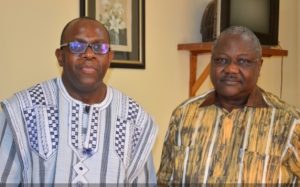
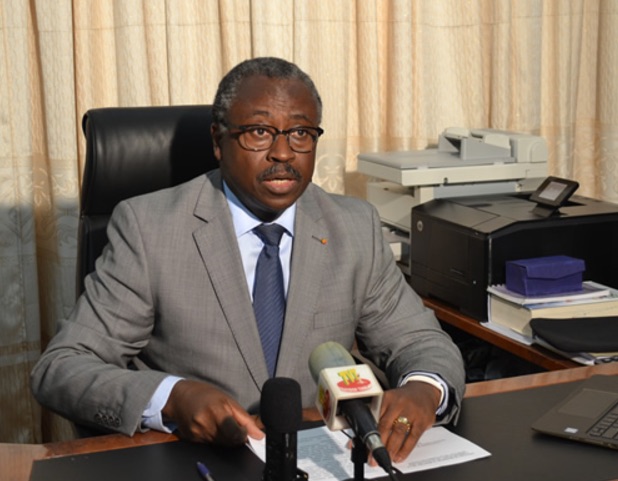
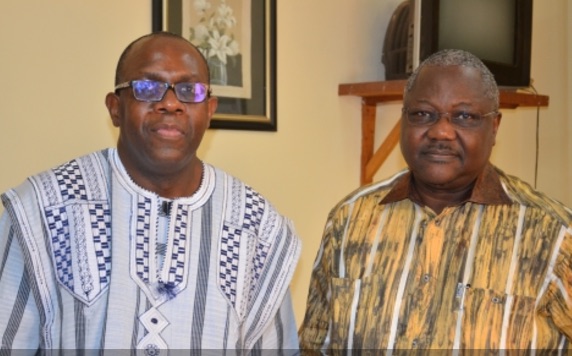
Paulin Hountondji, President of the National Council of Education © Autre presse by DR
Click on photo to enlarge

Speaking at the opening of the national workshop on education for a culture of peace in Benin, Paulin Hountondji, chairman of the National Council of Education of Benin, deplored the fact that this manual, published by the ECOWAS, is not in use in schools in the subregion and particularly in Benin while the need is urgent on the ground.

“Recognizing the limitations of the security approach that privileges military responses, ECOWAS has deemed it opportune and even imperative to develop, for all member countries of its space, this manual “to construct the defenses of peace in the minds of men.”

He also felt that with the exacerbation of religious terrorism and the tragedies that it brings to life on a daily basis in the world, in Africa and particularly in the West African subregion, the approach to peace by another path becomes a categorical imperative

(Click here for the original version of this article in French)

Question for this article:

2016 WFUNA Young Leader is Zimbabwean

TOLERANCE AND SOLIDARITY .

An article from the Herald

Zimbabwean youth Bernard Bebe has been selected as the World Federation of United Nations Associations Young Leader of 2016 following his outstanding contribution towards the United Nations Sustainable Development Goal 16.

Bernard, of the Zimbabwe United Nations Association ZUNA, was selected after a rigorous process supported by an evaluating committee composed of three members of the WFUNA Youth Advisory Council in addition to WFUNA secretariat staff.

The top three nominees were interviewed based on their contribution to the development of the UNA Leadership qualities, overall work on peace and security issues and their strong understanding of elements contained in UN Sustainable Development Goal 16.

Bernard had been actively involved in the field of peace for a year In 2013 he joined UNA-Zimbabwe whilst he was a second-year student at Bindura University of Science Education.

He is in the national team responsible for organising Peace Day in Zimbabwe through a coalition of peace activists from both civil society and the Government.

Currently, he is working to proactively counter religious conflicts through a programme called Religious Tolerance in which he is working mostly with different religious groups in Zimbabwe to cultivate a culture of peace.

(Article continued in right column)

Question for this article

Is there a renewed movement of solidarity by the new generation?

(Article continued from left column)

Bernard works mostly with youths from high schools and universities. He has also been actively involved in ending gender based violence against women and girls.

He is also a trained human rights activist who has a keen interest in promoting women rights.

Speaking after the nomination Bernard said he was humbled by the recognition from such a renowned world body.

“This shows that the world is now appreciating the efforts of youths and at the same time taping into their potential,” he said.

“UN Security Council Resolution 2250 on Youth, Peace and Security has empowered us youths to step up our efforts in bringing about peace in our community therefore I will continue towards the attainment of Sustainable Development Goal number 16 which focus on promoting peace, justice and strong institutions.

“My message to other youths out there is that lets use our time to volunteer and bring positive change to our community especially in as far as these sustainable development goals are concerned because we are the SDG Generation,” said Bebe.

WFUNA supports and encourages youth engagement and participation in the United Nations Associations and United Nations Youth Associations around the world through the WFUNA Youth Network.

Every year, WFUNA sets a theme and calls for nominations for young people from the WFUNA Youth Network working within that theme.

From the nominations, the WFUNA secretary-general and WFUNA youth advisory council select three young leaders to be interviewed.

After each nominee is interviewed, a final candidate will be selected as the WFUNA young leader of the year. A WFUNA young leader of the year has to be able to inspire other youth to be involved in global issues

Third Annual Africa Arts4Peace Forum to be held January 25-29

… EDUCATION FOR PEACE …

A document from the Africa Arts4Peace Forum

Building on the success of the first and second Africa Arts4Peace Forums in 2015 and 2016; as part of pre-events of the AU January Summits. The third Africa Arts4Peace Forum will be held from the 25 to 29 January 2017 in Addis Ababa, Ethiopia on the theme: ‘’Silencing the Guns by 2020; Role of Youth, Artists and Media’’. The meeting will discuss, strategize and co-create ways to strengthen youth, artistic and media leadership skills for the promotion of culture of peace; good governance, democracy and human rights in the realization of AU’s strategy on ‘Silencing the Guns’ by 2020 in Africa.

AAPI believes that the only viable and sustainable way to promote long lasting peace is to inculcate the culture of peace and non-violence in the minds of the citizenry and most especially the young (who are not only the future leaders, but the leaders of today). The forum and related activities will create a platform in which youth, artists, media and various stakeholders can co-create an ‘’action factory for peace’’, retool and advocate creatively for peace education, social justice, conflict prevention and non-violent conflict resolution strategies in Africa, using the AU and UN peace mechanisms as a prefix.

(Article continued in right column)

Question for this article:

Do the arts create a basis for a culture of peace?

(Article continued from left column)

The African Artists Peace Initiative (AAPI) www.aapiafrica.org is a Pan-African movement of artists and peace-makers, championing a culture of peace and non-violence in Africa. The overarching objective is to use ”ARTS” as a weapon and tool for nurturing a culture of peace based on values, attitude, and ways of life conducive to the promotion of peace among individuals, groups and society. The movement is inspired by the AU Constitutive Act, AU Make Peace Happen Campaign, AU 2063 Agenda and the UNESCO Culture of Peace and Non-Violence Campaign.

AAPI currently has 43 country coordinating teams , 80 celebrity ambassadors, and over 10,000 members across Africa and Diaspora.

NOTE: AAPI does NOT have funding to cover the travels and accommodation for applicants/participants. We are available to support you in booking affordable accommodation in Addis-Ababa and obtaining an Ethiopian Visa Upon Arrival for countries without Ethiopian Embassies.

Email: arts4peaceforum@gmail.com for all inquiries and further information

DEADLINE FOR REGISTRATION: 8TH JANUARY 2017

For the registration form, click here and scroll to the bottom of the page.

Second international conference on the culture of peace in Africa

FREE FLOW OF INFORMATION

An article from the Angola Press Agency

The 2nd international conference on the culture of peace in Africa, which ended Monday [December 12] in Luanda, is a testament to Angolan President José Eduardo dos Santos’ commitment to promoting durable peace on the continent, said the Director of the Regional Office UNESCO Multisectoral Program in the Countries of Central Africa, Felix Iyé.


A cultural event during the 2nd international conference on the culture of peace
click on the photo to enlarge

The representative of the United Nations Fund for Education and Culture (UNESCO) was speaking at the ceremony of the event sponsored by the Eduardo dos Santos Foundation (FESA), in celebration of his 20th birthday and his 73 year old patron, José Eduardo dos Santos.

Speaking to representatives of more than a dozen African countries, Cameroonian Félix lyé said that the event is a sufficient testimony of Angola and President José Eduardo dos Santos, in favor of promoting the culture of durable peace in Africa.

He added that in the world-wide concept of education and citizenship there is a conviction that peace can not have a lasting basis if respect for all is not encouraged in ways that foster a sense of belonging to a common humanity and help learners to become Citizens of the world, responsible and active.

The event, which was opened by Education Minister Pinda Simão and closed by his Youth and Sports counterpart, Albino da Conceição, was attended by representatives of the networks of research institutions to promote a culture of peace in Africa, led by Fesa, and Of other institutions, Cameroon, South Africa, South Sudan, Ivory Coast, Ethiopia, Senegal, Congo, Nigeria, Tunisia, Belgium, Botswana, Gabon, Uganda, Niger, among others.

The 2nd conference, a social object of Fesa, addressed the “prevention of violence and the promotion of a culture of peace in electoral period in Africa: What contributions of the network of foundations and research institutions.”

He also discussed the “role of young people in the prevention of violence and the promotion of a culture of peace in the electoral period” and a presentation was made of the campaign for the culture of peace in Central Africa: Two different words, one language: Peace [See CPNN articles from July 11 and July 20, 2016].

( Click here for the Portuguese original.)

(Article continued in right column)


Question related to this article.

The Luanda Biennale: What is its contribution to a culture of peace in Africa

Will UNESCO once again play a role in the culture of peace?

(Article continued from left column)

The 2nd international conference for the promotion of peace in Africa was held under the motto Prevention of Violence and Pormotion of the Culture of Peace in the Elietoral period in Africa.

[The following is added from another article from the Angola Press Agency

At the 2nd International Conference on the Culture of Peace in Africa, Education Minister Pinda Simão reaffirmed that the country has accepted the challenges of embarking on the Unesco Operational Strategy2014 / 2021, which identifies peacebuilding through the formation of a society Inclusive, peaceful and resilient, with a goal to maintain peace.

He added that at the same time there was a growing sense of responsibility and solidarity with other African peoples, such as coordinating efforts in the Great Lakes region, the Central African Republic, Guinea-Bissau and other territories seeking peace.

In this regard, he recalled that the concept of a culture of peace was born in Africa during the international conference on peace and the spirit of men organized by the United Nations Educational, Scientific and Cultural Organization (UNESCO in 1998 in Côte d’Ivoire).

Elucidating that the culture of peace consists in developing values, attitudes and behaviors that reflects and favors the coexistence and partnership founded on the principles of freedom, justice and democracy in all human rights, tolerance, solidarity, rejecting violence and dedicating itself to Prevention and conflict.

“As having its root causes and problem solving through dialogue and negotiation to ensure full exercise of its rights, as a member of participation in the process of development of the person and society,” he said.

For the minister, peace is a deeply rooted desire in humanity. It is the inspiration of a reconciled society and is the condition of a decent life, because to be human peace is not a natural process but culture. Therefore, it needs to be built, consolidated and cared for, educating for peace.

“Pope Paul VI reinforced the idea of ​​peace by presenting peace as the new face of development. This is not a ready thing is a continuous make, it is a dynamic and permanent process that affects all people and all institutions, “he stressed.

Winners of Youth Innovation Challenge to Engage in Peacebuilding in South Sudan

FREE FLOW OF INFORMATION

An article from PC Tech Magazine

The Youth Innovation Challenge for Peace was organized by United Nations Development Programme (UNDP) Community Security and Arms Control Project to specifically recognize the strength of youth-led initiatives and the impact of home-grown ideas on societies emerging from conflict. 132 youth attended the original introduction workshop when the competition launched in August 2016.


UNDP call for proposals

From there, 150 ideas were submitted and 26 semi-finalists were selected by an evaluation committee to participate in this week’s “ideation workshop”.

In a press statement, Eugene Owusu; Deputy Special Representative of the Secretary General, UN Resident Coordinator and UNDP Resident Representative, said; “The purpose of the challenge is not to reward ideas with dollars but to inspire and nurture creativity that would transform South Sudan.”

“ The challenge is about building a culture of peace and thrusting the youth at the forefront of creativity and social change, amplifying their ambition and smart use of new technology to engage and transform their society,” Owusu adds.

The participants received guidance and support for refining their ideas, structuring their proposals, and delivering effective presentations from UNDP’s Regional Innovation Advisor for Africa Mr. Mark Lepage and local open technology experts from Juba Hub (jHub).

Lightning-round sessions were held on Tuesday, where each project had seven minutes to present their idea in whatever format they chose.

Semi-finalists were judged based on a common set of criteria: clarity and presentation of their idea; creativity and originality of their idea; addresses the issue of engaging youth in peace; viability in the long term and financial sustainability; number of youth and general population who could benefit; implementable and realistic; scalable and replicable; and gender and social inclusion.

Winners

The overall winning proposal, taking home the top prize of US$10,000 was an individual submission from Mr. Kwaje called 64 Hands SACCO (savings and credit co-operative society), which combines social entrepreneurship with peace-building by providing South Sudanese small and medium enterprises access to a community-based source of financing.
64 Hands SACCO is designed to be propelled by youth drawn from all 64 tribes in South Sudan.

Kilkilu ana Comedy Extra placed second, with seed funding of US$6,000 to execute their vision of developing multi-lingual comedy performances to promote healing, understanding, and reconciliation. Their proposal focused on a pilot program to take place in IDP camps in and around Juba.

GOGIRLS-ICT Initiative won third place and will receive US$4,000 awarded to implement their proposed #TTOS-ICT project. The aim of the project is to engage, educate and empower women and girls in Science, Technology, Engineering and Mathematics (STEM) based fields through a philosophy of chain-based trainings. GOGIRLS-ICT Initiative focuses on mentoring and making meaningful social impact to address development challenges women and girls face in South Sudan which contribute to insecurity, like early and forced marriage, illiteracy, and unemployment.

The winning submissions will work closely with UNDP moving forward, with the ultimate aim of implementing their ideas on the ground in pilot programs.

Question related to this article:

Niger: Niamey opens a forum on the culture of peace through religious dialogue in the subregion

TOLERANCE & SOLIDARITY .

An article in Mali Actu (Source: Xinhua News Agency) (translation by CPNN)

Education for the culture of peace through intra and inter-religious dialogue is at the center of a forum of the Economic Community of West African States (ECOWAS) since Tuesday in the Nigerien capital, Niamey, under the presidency of the Head of State of Niger Mahamadou Issoufou. This important meeting, which is in its first edition will last two days, welcomes the delegations of the 15 member countries of ECOWAS as well as important religious figures.

niger
Niger President Mahamadou Issoufou, Archive photo / REUTERS / Brian Snyder

According to President Mahamadou Issoufou, in his opening remarks, this forum comes at a time when the Sahelo-Saharan zone, notably the Lake Chad basin, faces terrorist threats. “In this region, people kill, rape and plunder in the name of Islam. Elsewhere, we are witnessing the exploitation of other religions for political, economic and social purposes, “he said.

In his opinion, it is therefore normal to promote education for the culture of peace through intra-and inter-religious dialogue in the ECOWAS region.

According to Nigeria’s Minister of Culture, Assoumana Malam Issa, the forum aims to guarantee the economic development and social integration of the fifteen member countries of ECOWAS, an area that today faces “political and social crises and tensions, both thnic and religious, that slow down the momentum in which this organization was launched.”

Several socio-cultural factors are at the root of the instability observed in the member states. They include “misunderstanding, interpreting and distorting precepts within religions, ignorance, injustice (real injustice or suspected), and mutual suspicion, as well as intolerance and extremism, the root causes of conflict.”

Thanks to the remarkable presence of the different religious confessions of the countries, it should be possible “to establish an interreligious dialogue, to bring about harmonious relations between the religions, to discuss the peaceful coexistence through the education of the faithful on the need to build a culture of peace, to inculcate in religious leaders a culture of interreligious dialogue of action in order to transform religious pluralism into a factor of social development “.

ECOWAS was established in 1975 to promote the socio-economic integration of States through the free movement of goods and persons. It comprises 15 member states namely Benin, Côte d’Ivoire, Niger, Nigeria, Guinea Bissau, Senegal, Mali, Liberia, Sierra Leone, Burkina Faso, Togo, Cape Verde , The Gambia, Guinea-Conakry, and Ghana.

(Click here for the original French version of this article)

Question related to this article:

Goma, Democratic Republic of Congo: The commemoration of the International Day of Peace

FREE FLOW OF INFORMATION

Excerpts from a report sent to CPNN by Patrick Mulemeri, Congo Peace Network (translated by CPNN)

For the commemoration of the International Day of Peace, activities were held September 21, 2016, in the great hall of MWANGA college. 271 people attended, mainly composed young members of the CPN clubs [Congo Peace Network], their families, guests from partner organizations (Christian AID, UNJHRO, Counterpart International …), the delegation of the University students for peace and social sciences in Butare in Rwanda, as well as local authorities and young people from different local churches.

congo
Six young local musicians began the celebration
(Click on photo to enlarge)

After presentations of music, poetry and literature and accompanied by an exposition of artwork for peace, there were a series of speeches for peace.

Speeches by young university peace activists from Butare

The students from the Protestant University of Butare, which is in partnership with CPN, were represented by their delegate who spoke about peace in a regional context, as necessary for security, development and freedom. The benefits are not only for everyone at the present time, but above all for generations to come. They demand peaceful coexistance, because, as Gandhi liked to say, an eye for an eye will make us all blind.

(Article continued in the right column)

(Click here for the original version of this article in French)

Question for this article

What has happened this year (2016) for the International Day of Peace?

(Article continued from the left column)

Speech by youth from CPN clubs

The CPN youth speech criticized how young people are being manipulated and used by invisible players to destroy their own lives and society; instead, young people should be involved in the country’s development projects. They congratulated CPN for its training which makes them a vector of peace for development and rehabilitation of the country.

Speech for peace in English by a CPN youth.

A young CPN member read his speech in English. Beginning with decrying what happened in Kinshasa during the month of peace, he commented that while we commemorate the international day of peace, there are those in the refugee camps who suffer in all kinds of weather conditions after being forced to abandon their houses and their fields.

What we are living in the North Kivu province is far from “peace” because every second there are violations of human rights, murder, massacre, murder, kidnapping etc. Whole communities are being killed. We are told they are in conflict, although for decades they lived harmoniously together. Peaceful cohabitation between ethnic communities would not be a problem, were it not for invisible hands that work in the shadows to destroy peace.

Presentation of the book “1000 Youth Peace expressions of CPN”

The celebration of International Peace Day was also an opportunity for CPN to present the book “1000 Youth Peace expressions” which conveys the youth’s expressions of peace through drawings, essays, poems and music.

Africa: International Day of Peace

FREE FLOW OF INFORMATION

A survey by CPNN

The following events were listed in “Google News” during the week of September 17-14 under the key words “International day of peace” and “Journée internationale de la paix.” It is possible that there were articles in other local languages that are not listed here. For events elsewhere in the world, click here.

map of africa idp
(Click on image to enlarge)

As seen on the map above, there were articles about 16 events in 15 African countries.

Here are excerpts from the articles.

Burkina Faso: The Association of veterans, retired military, widows and orphans of war marked the event with a walk for peace. Who better than them can appreciate the value of peace?

Mali: The Malian Federation of Clubs , Centers and Associations of UNESCO, in collaboration with the GENOVICO program, commemorated the day with a panel discussion on the theme: “Culture of peace in schools and universities.”

Senegal: The world-renowned singer Youssou N’Dour sent a strong message to the world. “On 21 September 2016, I invite all nations and peoples to cease hostilities, and to eliminate causes of conflict.”

Madagascar: The ROTARY Club of Antananarivo Analamanga Ainga and the Regional Tourist Office marked the day by distributing pots of honey in the Garden of Antaninarenina. Traditionally, honey is a symbol of abundance and wholeness in the Malagasy society.

Togo: Togo- WANEP in collaboration with the Peace and Security Network for Women in ECOWAS held a round table to involve women in the peace process and development in Togo and elsewhere.

Casamance, Senegal: The Women’s platform for peace in Casamance, in the company of their sisters from Gambia, Guinea-Bissau and Sierra Leone, organized a series of activities around the theme of “The sustainable development goals as components of peace”

(Article continued in the right column)

(Click here for the original version of this article in French)

Question for this article

What has happened this year (2016) for the International Day of Peace?

(Article continued from the left column)

Rwanda, Burundi and DRC: Fifteen hundred young people from Rwanda, Burundi and DR Congo met in Goma to discuss peace. They took part in workshops on peace as well as a charity concert.

Algeria: On the occasion of the international Day of peace, the wilaya of Mostaganem organized a ceremony for the Emir Abdelkader prize, given to three personalities who contributed to the promotion of peace: Federico Mayor from Spain, Raymond Chretien from Canada and Lakhdar Brahimi from Algeria.

Dungu, Haut-Uélé, DRC: Over eleven thousand young students from Dungu in Haut Uélé province were sensitized on the culture of peace, during a workshop organized by the Youth Forum for the development of Dungu.

Guinea: The Convention of non-state actors of Guinea ( CANEG) and the African Crisis Group (ACG), two organizations of the civil society, organized a forum on peacebuilding in Guinea.

Benin: The executive president of the Pan African Social Prospects Centre, Albert Tevoedjre, called on Africans to learn to live together with a view to establishing lasting peace on the continent.

Nigeria: In collaboration with Edizwine Bar, the Coalition of youth leaders of the Niger Delta organized a peace march with a concert featuring top talent and regional artists.

South Sudan: The United Nations’ Funds, Programmes and Agencies, and the peacekeeping mission organized a number of events across the country, in collaboration with the National Platform for Peace and Reconciliation (NPPR) and other non-governmental organisations; alongside the launch of the 100 days of peace activism; a platform for all voices calling for peace, healing, and reconciliation to unite and send powerful messages to leaders and calling for a peaceful resolution to the current crisis.

Liberia: Delivering the keynote address at the indoor ceremony of the International Day of Peace held at the City Hall of Monrovia, The Executive Director of the Peace Building Office, Edward Mulbah, said that while Liberia had made tremendous progress made over the years to address the root causes of the 14 years of civil war, it was important to know that there were still challenges.

Rwanda: According to the National Unity and Reconciliation Commission, the day brings together several non-governmental organisations, international peace organisations, religious leaders and the local communities under the theme, “Building Blocks for Peace: The Role of the Youth in Promoting Sustainable Peace and Development.”.

South Africa: In partnership with UN Volunteers and ACCORD, students from Boston Media House and the Tshwane University of Technology interacted with peacekeepers in gaining a better understanding of the work of the UN in conflict resolution, peace and security.

Africa: CEDEAO: Women are called on to establish a durable peace

. WOMEN’S EQUALITY .

An article by Tata Sane for Le Soleil

Women have always been the fundamental actors in the search for peace. This was reiterated yesterday in the meeting organized by the Working Group, “Women, Peace and Security in West Africa”, in partnership with the United Nations Office for West Africa and the Sahel (Unowas). The activity is held in preparation for the International Day of Peace, edition 2016. It is, according to the representative of Senegal on the working group “Women, Peace and Security in West Africa,” a favorable opportunity to reflection and exchange on the mechanisms of action and intervention of women and youth to consolidate peace and sustainable security in the Sahel which has been strongly shaken recently by the threats of extremists.

cedeao
(Click on photo to enlarge.)

Diago Ndiaye believes that facing the terrorist threats that spare no nation, women must play their role in order to build a lasting peace. In his message issued on the occasion of this day, the Secretary-General of the United Nations stated that “peace can not be reduced to a simple truce. Peace means building on a global scale, a society in which people live free of poverty and everyone benefits from prosperity.” Therefore, sustainable development is essential for the establishment of a stable peace. Respect for human rights is also a prerequisite. “The lack of resources is often the cause of conflicts. Therefore, we must rely on the sustainable development program for 2030 to prevent conflicts by ensuring that no one is left behind,” added the Secretary-General.

(Article continued in the right column)

(Click here for the original French version of this article.)

Question for this article

What has happened this year (2016) for the International Day of Peace?

(Article continued from the left column)

A high-level panel on the role and position of women and youth in the processes and peace and security programs in Senegal was scrutinized. Considering the theme “Women’s Leadership, peace, security, conflict prevention, mediation and peacebuilding: What role for women? “Dr. Christiane Agboton Johnson recalled that the 17 sustainable development goals that have been chosen for this year all contribute to the building of peace.

The involvement of women and youth

Speaking of women’s role, Ms. Agboton remarks that all women have a role to play at different levels. However, she wondered how this can be done so that women become a force for change. “Today, after all is said and done, has this potential been realized? Women represent 50% of the population, but, nevertheless, conflicts persist. This is the meaning of my question about how they can become a force for change, “she said. The gender adviser to the United Nations Office for West Africa and the Sahel (Unowas) recalled Resolution 2250 of the United Nations on youth, peace and security.

Agathe Telou believes that this resolution comes at a time when all players require the involvement of young people in search of peace worldwide. “This resolution recognizes the efforts that young people provide to help establish peace and security in the ECOWAS space,” she advised. Mrs. Agathe Telou addressed the sub-theme “Youth, Peace and Security: Resolution 2250 of the UN Security Council.”

African Union: Call to ‘silence the guns’ on #InternationalDayofPeace

FREE FLOW OF INFORMATION

An article from Independent Online – South Africa

Johannesburg – The Chairperson of the African Union Commission (AUC), Nkosozana Dlamini-Zuma, has called for the “silencing of the guns” in Africa as the world commemorates International Day of Peace. “Today, Africa joins the rest of the world in marking the International Day of Peace or – Peace Day. Today, the African Union is engaging its Member States, and all its partners at political, institutional, private sector, civil society and community levels, to encourage all citizens to rally to the core of ‘silencing the guns’ campaign in Africa by 2020,” read a Wednesday press release by the AUC Peace and Security department.

African Union
caption: The Chairperson of the African Union Commission (AUC), Nkosozana Dlamini-Zuma, has called for the silencing of the guns in Africa as the world commemorates International Day of Peace. File picture: Salvatore Nolfi. Credit: EPA

This year’s theme for Peace Day is: “The Sustainable Development Goals; Building Blocks for Peace.”

Many AU Member States and their leaders are increasingly taking ownership of the SDGs, but more importantly of Agenda 2063: Africa’s blueprint for economic growth and social transformation.

“However, let us not forget that for as long as the gunfire continues to disrupt the tranquility of our blossoming societies and haunt the safety and security of our citizens, particularly of our women and girls, we will not achieve these noble aspirations for our people,” said Dlamini-Zuma.

(Article continued in the right column)

Question for this article

What has happened this year (2016) for the International Day of Peace?

(Article continued from the left column)

It is with this in mind that, the African Union declared 2016 the, “Year of Human Rights with particular focus on the Rights of Women”.

“It is disheartening that, in 2016, I continue to receive reports of incidences of sexual violence meted out against women and girls as a weapon of war, most recently from South Sudan, Central African Republic, Somalia and the Democratic Republic of Congo,” said the AUC chairperson.

“Today, I would like to reiterate the African Union’s zero tolerance of sexual and gender-based violence and exploitation. Sexual and gender-based violence has no place in our world: we must fight them relentlessly.

“As we commemorate Peace Day, the AU wishes to acknowledge efforts by Member States to minimise violence during elections,” she added.

“We continue to encourage political leaders and their supporters to use legal and peaceful means to address elections-related disputes. It is through these methods that we entrench and deepen our culture of democracy and peace on the continent.

“The AU Commission is also pleased with the establishment of the Mediation Support Unit, which will provide logistical and technical support in our mediation initiatives led by our Special Envoys.

“We will continue to enhance our initiatives in structural conflict prevention as well as increasing our post-conflict reconstruction and development programmes in countries such as South Sudan, Central African Republic and Somalia,” said Dlamini-Zuma.

The AU further commended the decision by Heads of State and Government to establish the Peace Fund, as well as to support 25 per cent of peace operation funding on the continent. This will provide predictable and sustainable funds to drive the goal of silencing the guns by 2020.