. WOMEN, EQUALITY AND PEACE .
Women, equality and peace
March is the month for women, beginning with the celebration of International Women’s Day on March 8. This year the international advocacy organisation Women Deliver marked the day by celebrating 15 journalists who have dedicated their work to gender issues. Besides India and Liberia, other honorees hailed from Argentina, Cameroon, Bangladesh, Kenya, Pakistan, the Philippines, Senegal, Tanzania, Uganda, and the United States.
Each year in March the United Nations convenes the Commission on the Status of Women (CSW). This year it was dedicated to analyzing progress and following up the Declaration and Platform of Action adopted by the World Conference on Women in Beijing twenty years ago. Setting a new record, more than 1,100 NGOs and a total of 8,600 representatives registered to participate in the Commission’s work this year. With regard to peace building, their discussions showed that there is a great potential for progress, although it remains to be realized, since the latest available statistics show that women made up only 9 per cent of negotiators at peace tables between 1992 and 2011.
Inher closing speech at the CSW, UN Women Executive Director Phumzile Mlambo-Ngcuka said, “We are all aware that there are no shortcuts to realizing gender equality, the empowerment of women and the human rights of women and girls. Based on the road we have travelled, we know that there are more challenges ahead of us. We know we must continue to work, systematically and relentlessly, to bring about transformation in our families, societies, economies, and political and public spaces.”
In preparation for the CSW, a high-level international event was hosted by Michele Bachelet, the President of Chile, to assess the advances made towards gender equality in the last 20 years and what still needs to be done.
As the world celebrated International Women’s Day, the International Criminal Court got its first female presidency, Judge Silvia Fernández de Gurmendi of Argentina ,along with two other female judges as her Vice- Presidents. This is the first time the Court has had an all-female leadership
In some areas there has been great progress. For example, the global rate of maternal deaths is reducing faster than any time in history, according to a new report presented to the United Nations entitled “Saving Lives, Protecting Futures.” Maternal mortality has been nearly halved since 1990, and in 2013, 6.4 million fewer children under age five died compared to 1990. Compared to then 11 million more women have given birth in a health facility, 8.4 million more women and girls use modern contraception, and post-natal care for women increased 25 percent.
Also in South Asia, the Self-Employed Women’s Association, founded by Ela Bhatt, has been working since 2009 to promote its “Green Livelihoods Campaign” – known as “Hariyali” in the local language – to provide cheap access to sustainable energy across India. Access to energy is vital in emancipating women who are otherwise marginalised both economically and politically.
The African Women’s Journal has just devoted a special issue to African Women in Power/Politics. In the words of the editor, “we continue to wrestle with power, make our voices heard and bring about lasting change which can be felt by the coming generations. ”
Also from Africa Mrs. Esther Abimiku Ibanga, the founder of “Women Without Walls Initiative” in Nigeria, has been awarded the 32nd Niwano Peace Prize: “Since inception, the organization has become a strong coalition of women groups across religious and ethnic divides. From this platform, women have been placed at an advantageous position of raising their voices in the calls for peace in the troubled regions of Nigeria.”
In South Sudan The formation of Women’s Peacekeeping Teams is an important part of the programming of the Nonviolent Peaceforce. They support the development of teams of roughly 10 women who work to support each other and their community on protection issues that target women.
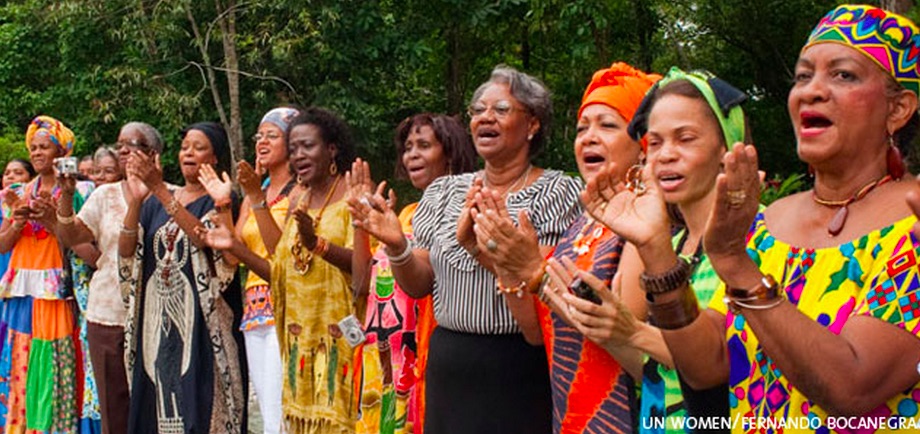
Finally, in South America, The 2015 Pax Christi International Peace Award has been granted to the Women, Peace and Security Collective for Reflection and Action (Colectivo de Pensamiento y Acción Mujeres, Paz y Seguridad) in Colombia for making visible and encouraging the essential contribution of women to peacebuilding in their country and for their work to promote an ethical transformation of Colombian society as the path towards sustainable peace.
The Pax Christi International award reminds us of the important role that women play worldwide in conflict transformation and peacebuilding at the local, national and international level.
|
WOMEN’S EQUALITY
|
HUMAN RIGHTS |
DISARMAMENT AND SECURITY |
SUSTAINABLE DEVELOPMENT |
FREE FLOW OF INFORMATION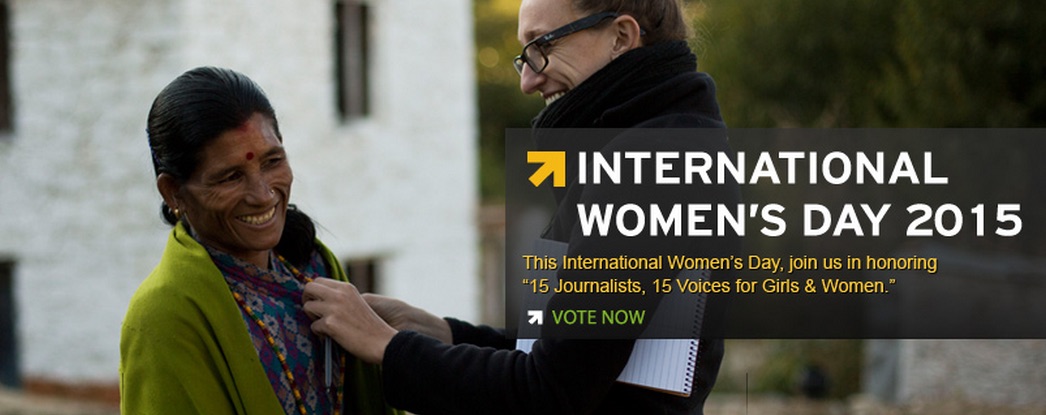 The 15 Journalists Putting Women’s Rights on the Front Page |
DEMOCRATIC PARTICIPATION |
TOLERANCE AND SOLIDARITY |
EDUCATION FOR PEACE |