Tag Archives: english bulletin

Bulletin English May 1, 2015

. . THE ANTI-AUSTERITY SPRING . .

A few years ago we had the Arab spring. This year one might say we have the “Anti-austerity spring.”

It hit the major news media with the astonishing electoral victory of the Syriza political party in Greece. As the historian Frances Fox Piven reminds us, the victory reflects not only a political party but also a social movement against government austerity policies. As she puts it: “unlike a lot of American leftists, Syriza doesn’t say there are two different tracks—there are political parties and then there are movements. Instead, they work together. . . you see a dynamic in which movements can create space for a political party, especially a political party of the left.”

The electoral success of Syriza has encouraged other European political parties to take up the struggle against austerity. In Spain, Podemos has rapidly become a major political force. As Ryan Rappa and Irene Pañeda Fernández explain, “Podemos, like Syriza, rose out of widespread frustration with fiscal austerity, endemic corruption, and the failure of longstanding political parties to do anything about it.” Also like Syriza, it arose out of a social movement, the 2011 “15-M” anti-austerity movement . In France, the new anti-austerity political party, Nouvelle Donne, has grown out of a social movement named after the 1930’s New Deal of the American President at that time: “Le Collectif Roosevelt”. An especially interesting article describes a meeting in Paris where representatives of Syriza and Podemos described their tactics to a young audience of activists with Nouvelle Donne.

In Ireland, the new anti-austerity political party is the AAA (the Irish anti-austerity Alliance). Like Syriza (Alexis Tsipras, 41) and Podemos (Pablo Iglesias, 37), its leader is a dynamic young political figure, Paul Murphy, who is even younger (32).

Piven reminds us that political parties will have to make concessions, while social movements can remain militant. In that regard, CPNN carries reports from anti-austerity social movements in Germany and Canada. In Frankfurt, Germany, there have been demonstrations called “Blockupy”, inspired by the Occupy Wall Street movement a few years ago in the US. And in Montreal, Canada, the students have held demonstrations and launched a major student strike against austerity policies.

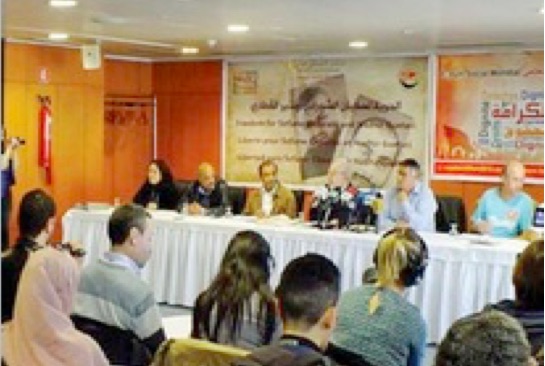
The anti-austerity movements were well represented last month at the World Social Forum where progressive social movements meet each year. This was the second year that the Forum took place in Tunisia, showing that the Arab spring is not completely dead!

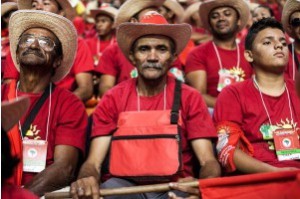
We are reminded by Raffaele Morgantini and Tarik Bouafia that Europe is just confronting what Latin American countries, especially Argentina, Bolivia, Ecuador and Venezuela have been dealing with for decades now. Over the years, they turned against the imposed austerity policies of the World Bank and IMF. Because of this, they have been denounced by the major mass media who follow the line of the big international banks and their governmental partners, and they have been subjected to sabotage by the same imperialist forces that controlled their countries a few decades ago.

We have posed the question, “Movements against governmental fiscal austerity, are they part of the global movement for a culture of peace?” and we hope that CPNN readers will respond. Considering the reversals that followed the Arab spring, and the crushing of the Occupy Wall Street movement in the United States, the anti-austerity movement may not have a smooth road ahead of it. But taking a lead from Latin America, it may also be strong enough to prevail. If so, it will provide a good model for the global movement for a culture of peace.


SUSTAINABLE DEVELOPMENT

France

Syriza, Podemos, Nouvelle Donne. The alternative to austerity

WOMEN’S EQUALITY


International Conference: Building Global Support for Women Human Rights Defenders

DISARMAMENT AND SECURITY


London: Confronting a world at war conference

HUMAN RIGHTS


WACC-SIGNIS Human Rights Award 2014 goes to “Taxi”

FREE FLOW OF INFORMATION


World Social Forum in Tunis: Another world is possible, without the 1%

DEMOCRATIC PARTICIPATION


Closing of the World Social Forum: Citizens of the world versus terrorism and oppression

TOLERANCE AND SOLIDARITY


USA: Discipline Reformers Get A “Restorative” Lesson

EDUCATION FOR PEACE


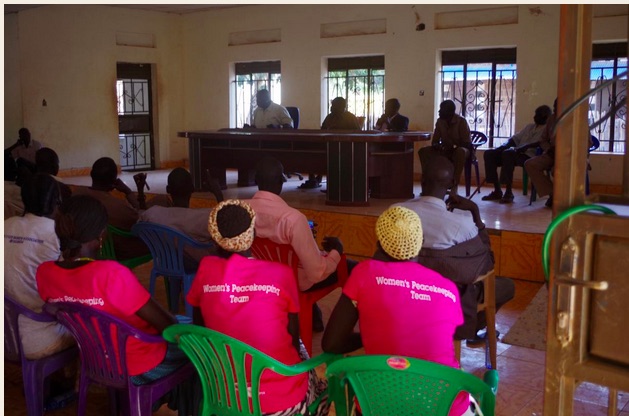
Nonviolent Peaceforce: Women’s Peacekeeping Teams incorporated into South Sudan communities

Bulletin English April 1, 2015

. WOMEN, EQUALITY AND PEACE .

Women, equality and peace

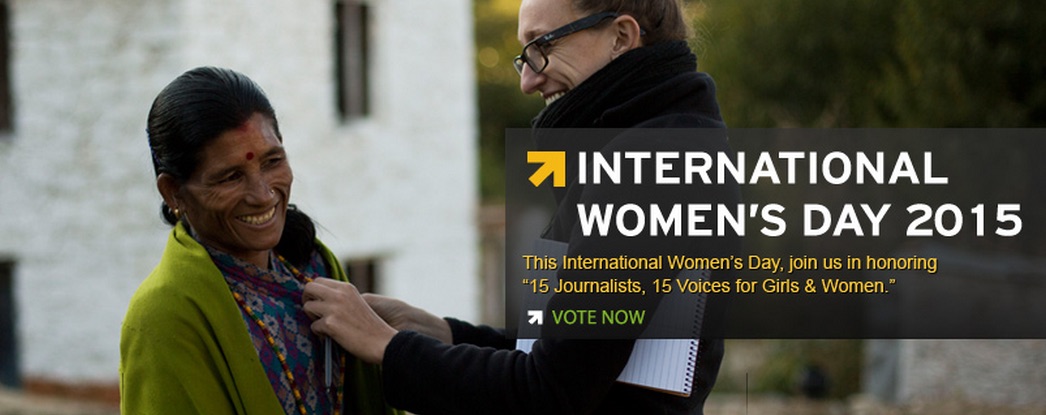
March is the month for women, beginning with the celebration of International Women’s Day on March 8. This year the international advocacy organisation Women Deliver marked the day by celebrating 15 journalists who have dedicated their work to gender issues. Besides India and Liberia, other honorees hailed from Argentina, Cameroon, Bangladesh, Kenya, Pakistan, the Philippines, Senegal, Tanzania, Uganda, and the United States.

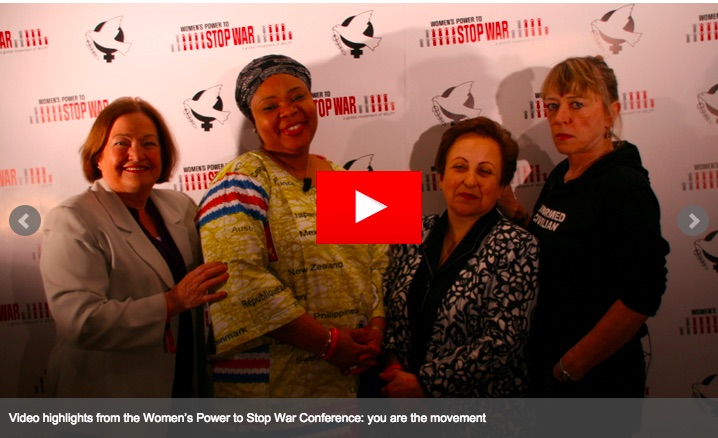
Each year in March the United Nations convenes the Commission on the Status of Women (CSW). This year it was dedicated to analyzing progress and following up the Declaration and Platform of Action adopted by the World Conference on Women in Beijing twenty years ago. Setting a new record, more than 1,100 NGOs and a total of 8,600 representatives registered to participate in the Commission’s work this year. With regard to peace building, their discussions showed that there is a great potential for progress, although it remains to be realized, since the latest available statistics show that women made up only 9 per cent of negotiators at peace tables between 1992 and 2011.

Inher closing speech at the CSW, UN Women Executive Director Phumzile Mlambo-Ngcuka said, “We are all aware that there are no shortcuts to realizing gender equality, the empowerment of women and the human rights of women and girls. Based on the road we have travelled, we know that there are more challenges ahead of us. We know we must continue to work, systematically and relentlessly, to bring about transformation in our families, societies, economies, and political and public spaces.”

In preparation for the CSW, a high-level international event was hosted by Michele Bachelet, the President of Chile, to assess the advances made towards gender equality in the last 20 years and what still needs to be done.

As the world celebrated International Women’s Day, the International Criminal Court got its first female presidency, Judge Silvia Fernández de Gurmendi of Argentina ,along with two other female judges as her Vice- Presidents. This is the first time the Court has had an all-female leadership

In some areas there has been great progress. For example, the global rate of maternal deaths is reducing faster than any time in history, according to a new report presented to the United Nations entitled “Saving Lives, Protecting Futures.” Maternal mortality has been nearly halved since 1990, and in 2013, 6.4 million fewer children under age five died compared to 1990. Compared to then 11 million more women have given birth in a health facility, 8.4 million more women and girls use modern contraception, and post-natal care for women increased 25 percent.

To give some idea of the number of organizations working for women and peace, in South Asia, a directory has been launched and already it provides extensive information on 175 organizations in Afghanistan (20), Bangladesh (32), Bhutan (3), India (38), Maldives (2), Nepal (29), Pakistan (28) and Sri Lanka (25).

Also in South Asia, the Self-Employed Women’s Association, founded by Ela Bhatt, has been working since 2009 to promote its “Green Livelihoods Campaign” – known as “Hariyali” in the local language – to provide cheap access to sustainable energy across India. Access to energy is vital in emancipating women who are otherwise marginalised both economically and politically.

The African Women’s Journal has just devoted a special issue to African Women in Power/Politics. In the words of the editor, “we continue to wrestle with power, make our voices heard and bring about lasting change which can be felt by the coming generations. ”

Also from Africa Mrs. Esther Abimiku Ibanga, the founder of “Women Without Walls Initiative” in Nigeria, has been awarded the 32nd Niwano Peace Prize: “Since inception, the organization has become a strong coalition of women groups across religious and ethnic divides. From this platform, women have been placed at an advantageous position of raising their voices in the calls for peace in the troubled regions of Nigeria.”

In South Sudan The formation of Women’s Peacekeeping Teams is an important part of the programming of the Nonviolent Peaceforce. They support the development of teams of roughly 10 women who work to support each other and their community on protection issues that target women.

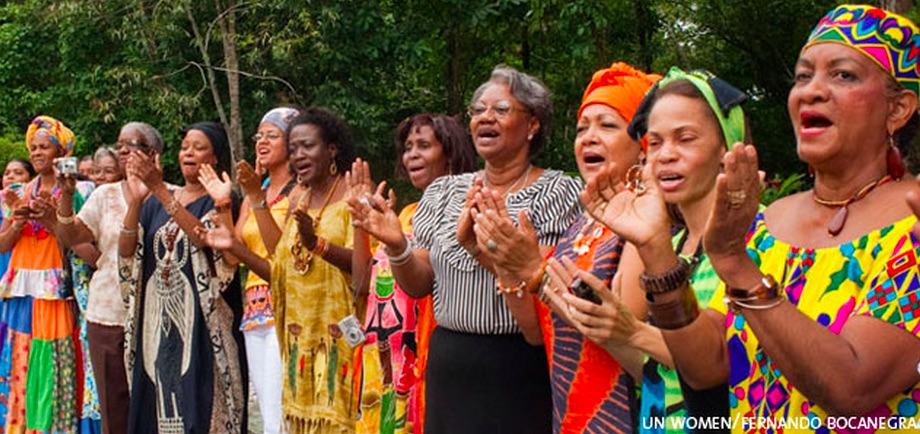
Finally, in South America, The 2015 Pax Christi International Peace Award has been granted to the Women, Peace and Security Collective for Reflection and Action (Colectivo de Pensamiento y Acción Mujeres, Paz y Seguridad) in Colombia for making visible and encouraging the essential contribution of women to peacebuilding in their country and for their work to promote an ethical transformation of Colombian society as the path towards sustainable peace.

The Pax Christi International award reminds us of the important role that women play worldwide in conflict transformation and peacebuilding at the local, national and international level.

      
WOMEN’S EQUALITY

Beijing

UN Commission on Status of Women: Implementing the Beijing Platform for Action

HUMAN RIGHTS


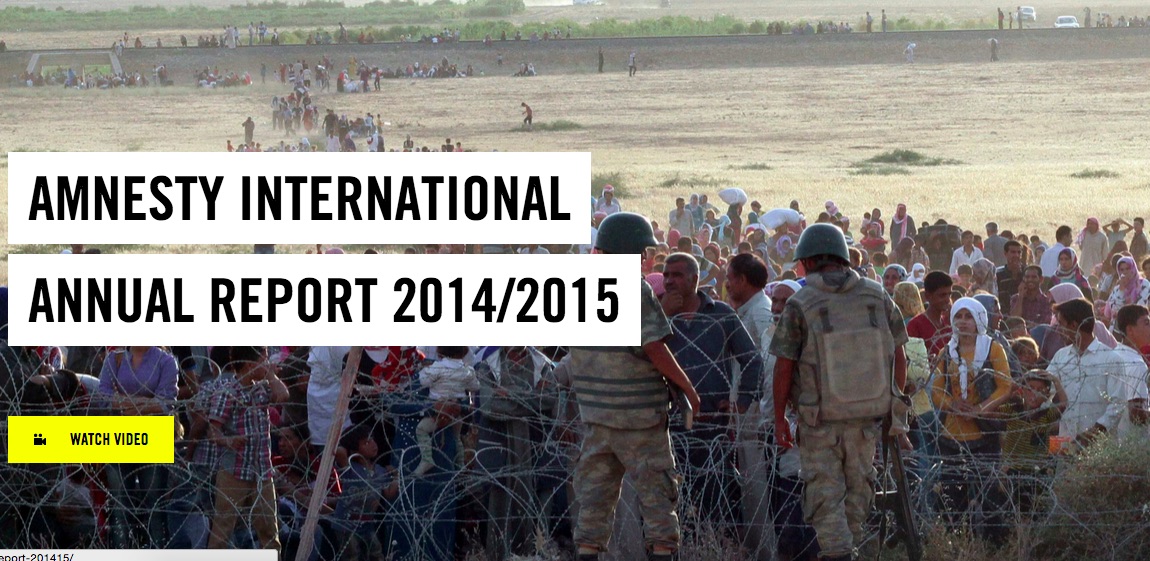
Amnesty International: A Devastating Year

DISARMAMENT AND SECURITY


Beirut, Lebanon: Citizenship, Gender and Democracy Building International Roundtable

SUSTAINABLE DEVELOPMENT


Move the Money! The Global Campaign on Military Spending

FREE FLOW OF INFORMATION


The 15 Journalists Putting Women’s Rights on the Front Page

DEMOCRATIC PARTICIPATION


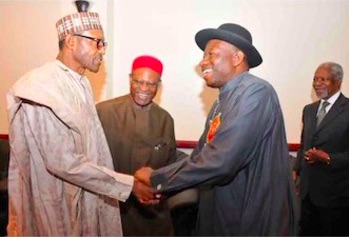
Nigeria: Why we facilitated Abuja peace accord —Ben Obi

TOLERANCE AND SOLIDARITY


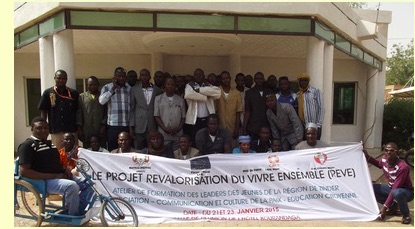
A Year-long Project for “Living Together – REVE” in Niger

EDUCATION FOR PEACE

2045 jazz
US and Iran: Track II diplomacy through jazz

Bulletin English March 1, 2015

. . . PEACE THROUGH TOURISM . . .

In his opening remarks to the recent symposium on Peace through Tourism in Johannesburg, South Africa, the Secretary-General of the United Nations World Tourism Organization, Taleb Rifai, listed three ways that peace can promote tourism:

“1. Tourism builds respect and mutual understanding and sparks billions of encounters that are steps towards understanding. It builds our education and it can be peace sensitive and makes travelers global citizens.

“2. Tourism improves livelihoods and creates many jobs. It can help communities value their place in the world and what they have to offer. It can help people value their music, art, gastronomy, etc.

“3. Tourism leads to reconciliation within and between societies. It can open up peoples’ minds to other visitors.”

On the three succeeding days, Feb 17-19, speaker after speaker illustrated how these themes play out in practice.

Encounters that are steps towards understanding are organized by Tour2.0 in the South African townships of Alexandra and Soweto, as described by Daniel Adidwa. As he says, “Each community has a unique story to tell. We enable the visitor to experience this uniqueness.”

Job creation was emphasized by David Scowsill, CEO of the World Travel and Tourism Council. Tourism “employs over 12 million people in Europe and 63 million in Asia and 8 million in Africa. . . It grows 1% faster than the rest of the global economy annually.”

And reconciliation is promoted by the Transfrontier Peace Parks in Southern Africa, as described at the conference by Paul Bewsher. Although the emphasis is largely on natural preservation, there are also examples of transborder cultural initiatives such as the !Ae!Hai Kalahari Heritage Park which is managed in part by representatives from the ‡Khomani San and Mier communities which were previously separated by colonial borders.

The International Institute for Peace through Tourism and its President, Lou d’Amore initiated the symposium, as previously reported in CPNN. The Institute is now expanding, as there was a large delegation, including 14 youth from the new IIPT India. They told CPNN that “For us tourism used to mean just seeing new places, but now we realize that it can be a chance to know new people and to promote peace.”

Another high-level meeting took place in Cambodia two weeks earlier with very similar goals. The Conference, run by the UN World Tourism Organisation (UNWTO) and the UN Educational, Scientific and Cultural Organization (UNESCO) tackled the question of how to harness the power of tourism and culture to alleviate poverty, create jobs, protect natural and cultural heritage and promote international understanding.


SUSTAINABLE DEVELOPMENT

unwto
Peace Through Tourism by Taleb Rifai, Secretary General of UNWTO

HUMAN RIGHTS


The Caribbean Union of Teachers promotes LGBT Rights

DISARMAMENT AND SECURITY


33 Latin American and Caribbean states call for negotiations on a nuclear ban treaty

WOMEN’S EQUALITY


Esther Abimiku Ibanga to receive the Niwano Peace Prize

FREE FLOW OF INFORMATION


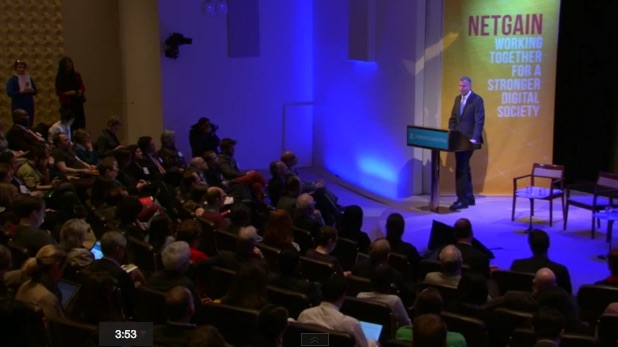
NetGain: Let’s Work Together to Improve the Internet
DEMOCRATIC PARTICIPATION


Rethinking Post-Election Peacebuilding in Africa

TOLERANCE AND SOLIDARITY


Abu Dhabi: Muslims Plan Peace Emissaries to End Conflicts

EDUCATION FOR PEACE

2045 jazz
Almería, Spain: Over 100,000 students participate in the network of centers “The school as a space of peace”