Category Archives: DEMOCRATIC PARTICIPATION

Ecuador: Rumiñahui for a Culture of Peace

.. DEMOCRATIC PARTICIPATION ..

An article from the Associación de Municipalidades Ecuadorianas

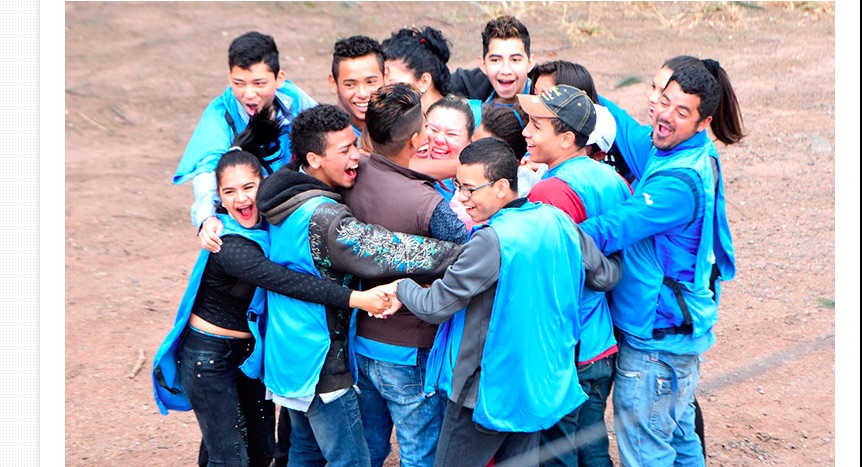
“Peace is not written with letters of blood, but with intelligence and heart,” is a phrase of reflection written on one of the many posters on the stands at the first “Nonviolent Initiatives Fair” held in the city of Rumiñahui on the initiative of the municipality of the town, on October 14, 2017.

The director of Citizen Participation of the municipal government, Angela Figueroa, thanked the inhabitants and the different entities for welcoming this initiative, which was born from hard work, from the grassroots of the community, little by little a culture of non-violence for the whole canton.

(continued in right column)

Questions for this article:

How can culture of peace be developed at the municipal level?

(continued from left column)

The Municipal Band of Rumiñahui, the Orquesta Patrulla 12, the Los Kitus Group and other artists were among those who participated in the event, which began at 10:00 am on boulevard Santa Clara.

The campaign was joined by the football team that is vice-champion of America, Independiente del Valle, Ambassador for Peace since 2016. Managers, coaches and players will join on October 18 during the match between Independiente and Delfin, corresponding to the National Football Championship, to send a message of peace to the country from the stadium of Rumiñahui Stadium.

This program was carried out within the framework of the national campaign “October for Peace and Nonviolence”, which calls on public and private companies, local governments and NGOs to raise the awareness of the community about respect for human rights.

The Municipality held the event for the second consecutive year with the promotion of activities including a cinema forum, assemblies, conversations and cultural caravans with themes of peace.

(Click here for the Spanish original of this article)

Lesotho: Local Government and the culture of peace

. . DEMOCRATIC PARTICIPATION . .

An article from Development for Peace Education NTLAFALO: THUTO, KHOTSO LE BOITJARO

In its partnership with the Independent Electoral Commission (IEC) for dissemination of election education, the Development for Peace Education (DPE) held a series of workshops on the theme of “Local Government and the Culture of Peace” covering its allocated councils in the Berea and Leribe districts. The targets of, and participants in, these initiatives were DPE election educators team leader, the chiefs and selected secondary schools’ teachers ; as well as regular (political) phone-in radio talk show callers and opinion shapers of all known radio stations.

This was done cognizant of the fact participation in elections whether local or general / general had stubbornly stayed low despite multi-pronged, multi-stakeholder efforts to reverse this trend, and there was need to enthuse largest sections of the population to own their government by participation in its formation or birth through a popular choice. This in turn would lend the government the necessary integrity in the face of the various contending interests making demands of either service or protection, concessions or restrictions from the government. This proposition contrasts starkly with the obtaining scenarios where the majority of the populace would seem to have taken an “exit” from the public affairs or matters of the state and governance, and consider these as areas for indulging in conflict and friction.

All involved in these workshops in the end expressed their appreciation of their ample opportunity, feasibility, and potential ease of reclaiming their citizenship at local level through participation in local government; where everybody knows everybody in close communities, their history, connections, and social and antisocial traits, and all categories of achievements –and those given mandate of running community affairs are easy to monitor, advise or censure. Holding people thus elected accountable, it was agreed, would ultimately eliminate frequently occurring conflicts, and reproduce the culture of peace for which Basotho were known from the times of Moshoeshoe.

The culture of peace was defined as avoidance of violence in all its forms and manifestations, and elimination of conflict by tackling the root causes, not merely its occurrence. The various forms of violation were canvassed, including physical, gender, cultural, political, economic; together with their contextualisation and justification and the challenges of the changing times and social structure. The eminent elements of the culture of peace enumerated as (1) tolerance as opposed to confrontation; (2) equality of all persons regardless of their state of ability, gender, economic and other status; (3) cooperation and understanding instead of conflict; (4)seeking of friendship and partnership as opposed to creation of enemies; (5)harmonious co-existence with nature instead of its selfish exploitation; (6) respect for human rights in contrast to wanton disregard of such rights; (7)peaceful resolution of conflicts through dialogue instead of resort to war; (8) participatory democratic governance as opposed to dictatorship and unaccountable rule. Members of each of these categories were briefed on their specific importance for which they were included in the activity, and the instrumentality of their role in promoting participation in local government (elections) as a vehicle for building local peace.

From the outset the regular-caller “opinion leaders” were excited to get to know one another through meeting physically, hailing from the different districts of the country. They included both men (in majority) and women. They said this fact alone created or added to an urge of mutual accommodation and acceptance of one another as “rivals” followed by sizeable communities of loyal listeners of competing political identities / parties and independents.

Many of them were not meeting for the first time, since the organisers had employed the stratagem of bringing them together in this fashion in its two previous campaigns of public awareness and opinion survey activities under the tags of “The Government I want” (started in August 2015), and “The Lesotho I Want” (started in January 2016). They were urged to regularise the need for participation in local elections in their public-debate interventions through radio, and preach the philosophy of tolerance; building upon the budding culture where as participants in this callers’ forum had begun to wear their different (political) identities without being enslaved by them as instruments of animosity and conflict. They pledged to uphold the culture of peace in popularising their various parties’ platforms and highlighting the importance of local participation.

The teachers and their schools were chosen as partners in a voter turnout drive through competitions for pupil to get their parents and guardians to votes, prize debates on importance of local government; and for their universally recognised role as agents of socialisation – in that behalf capable of planting lasting messages on impressionable minds, hence the importance of having them on the peace culture train.

(Article continued in right column)

Question related to this article:

How should elections be organized in a true democracy?

(Article continued from left column)

The chiefs were included for their role as traditional authorities and in that capacity the first peace officers in terms of national administration norms and law, and for their non-partisan, unifying as permanently present mediators of community relations at various levels and in various forms. While teachers protested that they were not allowed to take part in party politics whereas they were expected to teach about it, the chiefs often complained that their respectability in community, and some said even said in the eye of the ministerial authorities, had faded or declined since the arrival of local government as it was tacitly taken to replace them. For their part, the chiefs were motivated with a reward for a chief whose Electoral Division scored the highest rate of voter turnout. The sessions were accompanied by drama performances highlighting local government resourcing, integrity, and efficiency.

These working gatherings brought out the ever-present disaffection with the continuing powerlessness of the people’s elected councils, their resource starvation, friction between the traditional authorities and the elected representatives, the councils and the central government, the imposition of anti-people candidates by the main political parties, and the self-willed nature of councillors; the use of councillor status for self-aggrandisement including abuse and desertion of communities – where some councillors actually outmigrated to places more in keeping with their new status. An exciting redefinition of the relationship of these tiers and categories that emerged from the callers’ forum was that the councillor should be viewed as a developer (montlafatsi), the chief as the ruler (mobusi) and the Government as benefactor (mofani oa matlotlo) – where the Government is obligated by call of duty and national accountability to enable local communities control over their resources and monetary wherewithal to exploit them according to their own named priorities, the elected representatives see to the welfare of community, and traditional authorities maintain peace and resolve conflicts. It was maintained that if each of these three “drivers” stayed in their lane as defined, there would not be any of the frequently named collisions.

The interlocutors strongly felt that if the national parties did not impose their grand conflicts on the choice of local candidates, the local populace had a history of fellow feeling, mutual sympathy, and sharing that ensured solidarity and resilience to regular crises – and their choices of personalities to manage their affairs was always based only on proven mettle of honesty in community affairs. A case was mentioned of main ruling party candidate who was eminently known to have led “anti-people” capturing of local facilities like the bus and taxi terminus, informal traders’ “mall” and district football ground in Leribe, whose prospective election was likely to lead to a dysfunctional council as the local community with its vendors’ association and other community organisations were already preparing for a grand show-down with him/her.

It was vehemently voiced that the anticipated reforms should perhaps also seek a national consensus that local elections should not field party candidates, because they were imposed and the party members were voting only to their headquarters directives. Not only did party councillors see themselves as answering first to their parties, but when parliamentarians became ministers, they abused their powers to hijack / divert locally dedicated resource, materials and equipment to their own localities, e.g infrastructure and utilities installations. At another level the district councils, which are supposed to be apex and fusion of all expressions of self-government at the local level, were cited as often spending monies on its own priorities at the expense of the local councils’ priorities. Resource starvation leading to tokenisation of the councils, campaign lies and unfulfilled promises, unresponsiveness of the councils; nepotism and favouritism in recruitment and opportunities like bursaries, etc. were depressing local government spirit in communities and needed rooting out.

The chiefs’ forums threw up broadly the same concerns, while highlighting how local government could be turned into an opportunity for tackling these challenges. It was noted that sadly the inception or return of local government (the first such form of government goes back to colonial times in 1960) under the country’s “second democracy” in 1997 took place under a canopy of intense political conflicts (which could only express itself most tragically in 1998), and it was widely touted by the rulers as a replacement of an imposed” hereditary rule of the chiefs with rule by elected people’s representatives and consolidation of democracy. The friction that followed led to intra-council tensions and clashes between the chiefs and the councils; which were diffused with a deliberate intervention of the NGOs to provide training on the functions of the councils, roles of elected and traditional authorities thereon, and conflict management techniques.it was felt the politicisation of local government since the introduction of political parties as council contestants (as opposed to the Development Councils of the Military Council and early Basutoland Congress Party (BCP) rule) was responsible for bitter relations with the chiefs.

The chiefs contended that that while local government had taken away from them their means of supplementing their upkeep through control of local resources, it had also left them still substantially responsible for community welfare as the council didn’t exercise real powers nor had their own budgets. The chiefs therefore deserved equal remuneration with the councillors, whose higher emoluments supposedly made them look down on the former. They felt, however that councillors couldn’t be given more powers over the community since they were only seasonal while chiefs were permanent by birth right. They, however, said while the areas of responsibility sometimes conflicted – supposedly as a result of the ministers who were ignorant about or incompletely committed to, the full essence of government- the functions of councillors were developments, while chiefs were overseers of community affairs / welfare, protectors of the law and punishment of deviants threatening such developments and local tranquility.

Brazil: Community mediation centers begin to work in Recife and Olinda

. . DEMOCRATIC PARTICIPATION . .

An article from Diario de Pernambuco (translated by CPNN)

The conflict mediators trained by the Secretariat of Justice and Rights (SJDH) began to work in two conflict mediation centers opened in the districts of Rio Doce in Olinda and Bomba do Hemetério in Recife. The spaces are part of a set of eight that will be implemented in six districts of the metropolitan region and managed by four Non-Government Organizations (NGOs), with the support of the State Government through the SJDH, and the Conflict Mediation Program of the Executive Secretariat of Rights Human Rights (SEDH). The partnership was signed on July 18 with the NGO’s, Collective Mulher Vida, Grupo Ruas and Praças, Cáritas Brasileira NE2 and Grupo Adolescer.


Seminar for Community Conflict Mediators in Recife

The Bomba do Hemetério community nucleus is in operation at the Giganda do Samba, at Rua das Pedras. The space, managed by Cáritas Brasileira NE2, has four mediators and offers initial assistance on Monday from 8am to 1pm and on Friday from 2pm to 5pm. It is necessary for the interested party to present their identity card and inform the contact telephone number. After an initial evaluation, the mediation will be scheduled.

(article continued in right column)

(Click here for the original article in Portuguese)

Discussion question

Mediation as a tool for nonviolence and culture of peace

(article continued from left column)

In Rio Doce, the community nucleus works at the Composer Antônio Maria Polyvalent School, located at Avenida Acácias. In the space, which is managed by the Collective Mulher Vida, the service is carried out by three mediators, on Wednesday from 9am to 11am, and on Friday, from 2pm to 4pm. Those interested must attend the place with photo identification and proof of residence.

Santo Amaro is the next neighborhood to have a center inaugurated. This Tuesday, at 13h, the Adolescent Nucleus opens the doors for the population. On Thursday it is the turn of the Grupo Ruas and Praças to start serving the community. The inauguration of the space happens at 13.30.

The mediators underwent training lasting 40 hours of classes, taught between July 18 and August 08 by the technical team of the Conflict Mediation Program of SEDH, formed by a psychologist, social worker and lawyer. Among the topics covered in the training were human rights, culture of peace, conflicts, community mediation, the role of mediator and the social assistance network.

Brazil: Agrestina organizes first Culture of Peace Meeting

. . DEMOCRATIC PARTICIPATION . .

by Helena Lourenço

At a meeting on August 25 in Agrestina (Pernambuco, Brazil), representatives from nine communities agreed to create a provisional commision that will lead to the formation of a Culture of Peace Council in the region of Agreste.


Photo by Jocelim Valdemar / Decom – PMA

The event was held by the Women’s Thematic Chamber of the Agreste and Mata Sul Municipalities Consortium
 
Among those present were the coordinator of the Women’s Chamber of Comaqsul and regional coordinator of the Central Agreste of the State Women’s Secretariat, Betânia Ribeiro, Agrestina’s Secretary of Public Policies for Women, Emilia Alves, the president of the Brazilian Association of Women Folklore Festivals of Brazil – ABRASOFFA, Helena Lourenço, the representative of the Public Policy Managers for Women in the Agreste Central Region, Claudia Roberta, the mayor of Lagoa dos Gatos, Edmilson Moraes, and the invited speaker, David Adams.

The theme of the speech by Dr. Adams was: The Culture of Peace and Non-Violence. He spoke out of his experience as the Director of the United Nations International Year for the Culture of Peace (2000). During the international year, 75 million people worldwide, 15 million of them in Brazil, signed the Manifesto 2000, as part of the initiative to promote a culture of peace. This shows a great awareness of the need to change our culture for a change of culture of peace, “he said.

(Article continued in right column)

(Click here for a Portuguese version of this article)

Questions related to this article:


How can culture of peace be developed at the municipal level?

(Article continued from left column)

The proposal of the culture of peace seeks alternatives and solutions to these issues that afflict humanity as a whole, focuses not on the issue of violence, but on peace as a social state of dignity where everything can be preserved and respected. These points are one of the great challenges of building a culture of peace.

According to the United Nations, the culture of peace has eight aspects:
1. Education for a culture of peace. Tolerance and solidarity3. Democratic participation 4. Flow of information 5. Disarmament 6. Human rights 7. Sustainable development 8. Equality of gender

Dr. Adams said that “It is necessary to replace the culture of war with a culture of peace. This can be done by cities because they have no need for nuclear weapons, there is no need for war culture.

The speaker concluded that he has a dream to see Brazil recognized for spreading the culture of peace. “Brazil will be known worldwide for being a country that seeks a culture of peace, thanks to the young people who go to communities and favelas to work and learn about a culture of peace.

According to UNESCO, the culture of peace “is intrinsically related to the prevention and non-violent resolution of conflicts” and is based on the principles of tolerance, solidarity, respect for life, individual rights and pluralism. This discussion is strengthened by the growing vision of universal responsibility for the construction of a new world and places this theme as one of the main educational actions that promote effective sources of peace in the world.

COMAGSUL – It is the Consortium of Agreste and Mata Sul Municipalities and was born of the common needs between Agreste and Mata Sul municipalities, with populations below 70,000 inhabitants. The consortium’s mission is to promote regional integration, foster the socioeconomic and cultural development of Agreste and Mata Sul de Pernambuco, as well as strengthen Municipal Management through joint actions, seeking the exchange of experiences and cost reduction of public services management between two or more municipalities that are part of the consortium. Currently, the group of municipalities consortium is of 22 municipalities.

Two examples of Participatory Budgeting in Brazil

. . DEMOCRATIC PARTICIPATION . .

By the coordinator of the CPNN

I recently visited two cities in Brazil, Santos and Caruaru, where participatory budgeting is being practiced.

Participatory budgeting is an important instrument for promoting democratic participation, as it allows the citizen to debate and define the future of a city. In it, the population decides the priorities of investments in works and services to be realized each year, with the resources of the budget of the city hall. In addition, it encourages the exercise of citizenship, the commitment of the population to the public good and the co-responsibility between government and society on the management of the city.

Here are two examples.

Santos, Brazil: Participative Budget has already received 43 thousand votes

An article from the City of Santos

About 43 thousand people have already expressed their views on the priorities that the City Hall should adopt for 2018, through the Participatory Budget process. Next week, the total should reach 50 thousand participations (more than four times the goal, of 12 thousand, established in the PDR – Direct Participation in Results).

(article continued in right column)

(Click here for the original article in Portuguese)

Discussion question

Participatory budgeting, How does it work?

(article continued from left column)

An Ombudsman team was present today at the UME Auxiliadora da Instrucção, in Macuco, for elementary students to vote on the benefits they expect for Education. Teams were also present at the health units, street markets and supermarkets.

To vote, click here. Just enter, identify the neighborhood where you live and vote. The alternatives are provided within the fields of Citizenship and Social Action, Culture, Sports and Tourism, Environment, Public Services, Education, Health and Urban Mobility. You can choose one option in each of them.

* * * * * * * *

Caruaru, Brazil: Municipality to launch an application for popular participation

An article from Te Amo Caruaru

On Friday (25), the Secretariat for Planning, Budget and Management will hold a public hearing for the General Consolidation of “Mobiliza Caruaru”, in the auditorium of the Shopping Center Difusora, at 9:00 am, attended by the mayor of Caruaru, Raquel Lyra.

The main purpose is to show citizens the final result of the nine public sessions held in the Agreste capital, four in the rural area and five in the urban area. This process contributes to the structuring of municipal budget planning, which also includes the Budgetary Guidelines Law and the Annual Budget Law for 2018. The multi-year plan will be forwarded to the City Council by October 05, according to the legislation.

At that time, the application “Mobiliza Caruaru” will also be presented, initially available for Android phones. This mobile application will be another tool for the population to interact, as well as consolidate participatory and collaborative processes between the municipal government and civil society and its various organizations.

Mexico City reinforces the dissemination of participatory budgeting

.. DEMOCRATIC PARTICIPATION ..

An article from Milenio Diario, dated May 28.

Autonomous organizations and secretariats of the Government of the City of Mexico have joined the campaign of dissemination of the Capital Electoral Institute to promote the Citizen Consultation on Participatory Budgeting 2018.


Councilors of the Capital Electoral Institute will have the support of agencies and agencies of the Government of Mexico City in the dissemination of the Citizen Consultation on Participatory Budgeting 2018 (Cinthya Stettin)

During a meeting in the facilities of that electoral body, some of the dissemination actions that were carried out were detailed:

– Placing a banner on their respective websites with information about the Citizen Consultation.

– Installation of posters about the initiative in visible places of those institutions.

– Informational talks on the subject given to staff

– Placement of itinerant modules for the registration of projects within the facilities of these agencies and secretariats.

In order to encourage project registration, the dynamic of #TuPresupuestoChallenge will be activated, which means that all staff memberrs of a unit can registerr citizen projects. Also a video will launch a challenge to other units, so that they perform the same activity, in order to replicate it and generate more citizen proposals.

(continued in right column)

Questions for this article:

Participatory budgeting, How does it work?

(continued from left column)

Meanwhile, electoral councilor Pablo Lezama said that “for this citizen exercise, the goal is to have better registered projects and to insure that citizens receive all the information necessary to participate actively.”

He explained that IEDF staff has worked to establish better coordination and lines of action with local institutions to ensure that citizens receive adequate information about this exercise of democratic participation.

The meeting was attended by judges from the Capital Electoral Tribunal and representatives of the local Human Rights Commission as well as the Institute of Transparency, Access to Public Information, Protection of Personal Data and Accountability.

Likewise, the various local secretariats of Urban Development and Housing are added to this initiative; including Economic Development; Environment; Works and Services; Social Development; Health; Finance; Public Security; Civil Protection; Labor and Employment Promotion; and Science and Technology and Innovation.

Others In addition include the Comptroller of Mexico City, the Urban Management Agency, the Institute for the Integration of People with Disabilities, the System for Integral Family Development, the Attorney General’s Office and the Legal and Legal Services Council

Lezama added that last year they received around 20 thousand proposals in 30 days. For this year the deadline has been extended to almost 100 days for this activity, which expires on July 14.

He informed that the projects could be registered in person in any of the 40 district addresses of the IEDF and online in the page of that body election.

(Click here for the original Spanish article.)

Brazil: Restorative Justice: AJURIS and its Judiciary School sign agreement with Terre des Hommes and MPRS

. . DEMOCRATIC PARTICIPATION . .

An article from the AJURIS Superior School of the Judiciary of the State of Rio Grande do Sul

On August 11, in addition to marking the 73-year foundation of AJURIS [The Association of Judges of Rio Grande do Sul], as of today also marks a historic moment of strengthening ties between AJURIS, its Judiciary School, the Public Ministry of Rio Grande do Sul and the Canadian institute Terre des Hommes, with the signing of two agreements of inter-institutional cooperation for the strengthening of Restorative Justice and the construction of peace.

The organizations are in unanimous agreement that the country is going through a perioe of great social tension and it needs the promotion of dialogue, accountability and justice for the victims through restorative methods. The event was opened by two pioneers in Restorative Justice studies in the State and in the country, AJURIS vice-president Vera Deboni and Leoberto Brancher, the Coordinator of the Restorative Justice Program for the 21st Century of the Court of Justice of Rio Grande do Sol.

(article continued in right column)

(Click here for the original article in Portuguese)

Discussion question

Restorative justice, What does it look like in practice?

(article continued from left column)

AJURIS President Gilberto Schäfer said that the words that best expressed the moment were joy and gratitude for the formalization of the partnerships: with the Public Prosecutor’s Office, for the relevance in the Justice System, and with the Terre des Hommes, an organization present in 36 countries that is internationally recognized for promoting restorative juvenile justice: “We need to think of new ways to resolve conflicts as we are losing the ability to dialogue.”

The head of the Brazilian delegation of the Terre des Hommes Institute, based in Lausanne, Switzerland, Renato Pedrosa spoke about AJURIS which is recognized nationally as a reference in Restorative Justice and stressed that “the prosecution approach this way of doing justice is innovative,” he said, citing the pioneering of State. According to Pedrosa, the partnership is one of the important elements of Terre des Hommes planning, which, until 2030, aims to promote Restorative Justice in Brazil and Latin America.

Representing the Public Ministry of Rio Grande do Sul (MPRS), the Assistant Attorney General for Legal Affairs and coordinator of the Mediar Program, Cezar Faccioli, spoke about the satisfaction of the MPRS in arriving at this moment, in which a major change of culture is being proposed: “We started from a good place,” he said. In Faccioli’s evaluation, restorative methods open “the possibility of consensus and dialogue” and it would be important to include the entire Justice System, including non-state. “Produce justice by making peace,” he concluded.

The Director of the School of AJURIS, Judge Cláudio Luís Martinewski, also highlighted the relevance of the agreements and expressed the expectation that, increasingly, the result of these actions will expand and produce changes in society. The event also celebrated the 13 years of creation of the AJURIS School of Restorative Justice, where Martinewski also formalized the investiture of judges Fábio Vieira Heerdt and Andrea Hoch Cenne as vice-coordinators.

Councils, commissions and some initiatives of culture of peace in Brazil

.. DEMOCRATIC PARTICIPATION ..

An article by Myrian Castello, Fábrica dos Sonhos

Through initiatives and projects, some cities in Brazil have been promoting a culture of peace. The Culture of Peace, as opposed to the culture of war, aims to promote education for peace, human rights, sustainable and equitable development, participatory democracy, gender equality, free flow of information, tolerance and solidarity as a means of achieving and building peace.

Research about initiatives, commissions and councils made for this article found activities including interviews, forums, trainings, talk wheels and courses, in the cities of Londrina, Curitiba, Itapecerica da Serra, Santos and Recife.

(Continued in right column)

Questions for this article:

How can culture of peace be developed at the municipal level?

(Continued from left column)

In Londrina there is Compaz, a council that works to develop the culture of peace and non-violence and the Peace Media that is the media vehicle to spread the news of this culture in the region. More information can be found at this link.

In Itapecerica da Serra, there was a Peace Walk in honor of women.

In São José dos Campos through the education secretary, in the axis of Human Rights Education, activities were promoted for a culture of peace, including a Festival of Circular Dances and Culture of Peace.

Santos officially has an active Peace Commission and recently promoted the 1st Peace and Non-Violence Forum within the schedule of Education Week. The city has the potential to become a reference to the world on a culture of peace.

In Recife, the Community Center of Peace, COMPAZ Eduardo Campos, offers various services and activities with the purpose of guaranteeing social inclusion and community strengthening. More information can be found on their Web site and Facebook page.

Actions and initiatives like these and others are important to promote a culture of peace, which is necessary and urgent to change the culture of war in which we are inserted.

(Click here for the original article in Portuguese.)

El Salvador: Workshop for municipalities to strengthen their role in prevention of violence

.. DEMOCRATIC PARTICIPATION ..

An article from La Prensa Grafica

About 25 municipalities, belonging to the departments of San Vicente, Cuscatlán and Cabañas, participated in a training workshop organized by the Corporations of the Republic of El Salvador (COMURES) in Cojutepeque (Cuscatlán), with the objective of strengthening the role of municipal governments in the prevention of violence and their capacities to respond to the problems that are currently affecting the country.

The activity, which is part of the national day that COMURES develops from July 18 to August 29, 2017, at the scale of the 14 Departmental Councils of Municipalities (CDA), is carried out in coordination with the Secretariat of Governance of the Presidency, with the participation of the Legislative Assembly and the accompaniment of the United Nations Development Program (UNDP).

(continued in right column)

Questions for this article:

How can culture of peace be developed at the municipal level?

(continued from left column)

The purpose is to facilitate coordination between municipalities with various instances, such as public security, mainly to carry out actions and initiatives to prevent violence and crime in the territory.

Carlos Roberto Pinto Guardado, executive director of COMURES, explained that because of their impact on economic and social development, citizen security and violence prevention are issues that have been prioritized by municipal governments in the National Congresses of Municipalities, and incorporated In the permanent agenda promoted by the corporation.

“The approach of the theme seeks to strengthen a strategy that allows strengthening the leadership and role of municipal governments, for the construction of a sustained culture of peace with the participation of communities,” COMURES said in a statement.

“This is important,” said Pinto Guardado, “since municipal councils, as the first state authority in the municipalities, know the most sensitive needs and problems of the population, invest resources and implement policies and actions that are coordinated, organized and planned to reduce the factors that generate social violence in the territory.

Along these lines, COMURES with the support of cooperation agencies has created different instruments and tools.

(Click here for the Spanish original of this article)

Mexico: With alternative justice, hope advances in Chiapas

. . DEMOCRATIC PARTICIPATION . .

An article from Cuarto Poder (translated by CPNN)

Judge Rutilio Escandón Cadenas, president of the Superior Court of Justice and the Judiciary Council, considers that justice in Chiapas is now perceived in terms of transparency, promptness, sensitivity and impartiality thanks to the new judicial system throughout the country.

In the city of San Cristóbal de las Casas, the presiding magistrate spoke about the commitment of the Judicial Power to alternative means of conflict resolution which allows greater flexibility through the use of mediation, arbitration and conciliation, a new culture for security and justice.

Rutilio Escandón considers that there is no time for confrontations and discord, which should not be part of the human condition and environment in which we live; instead, it is time to adopt more fertile paths, with consistent and rational contributions that give a better vision of what we want for Chiapas.

With this new way of imparting justice, said the magistrate, the state is consolidating a culture of peace that can unite all peoples and communities. Through dialogue we can construct a system of justice that that is transformative and uplifts human rights .

“I invite everyone to take advantage of the State Center of Alternative Justice, instead of using the old judicial system. In this way, we can live in harmony, which is possible as long as we have the enthusiasm to work for unity among all of us and the conviction that we can achieve it”, concluded Rutilio Escandón.

(Click here for the original article in Spanish)

Discussion question